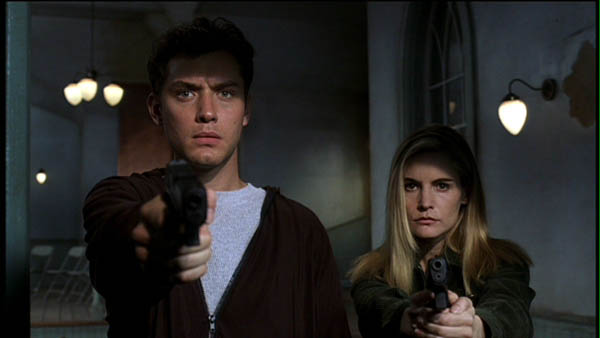
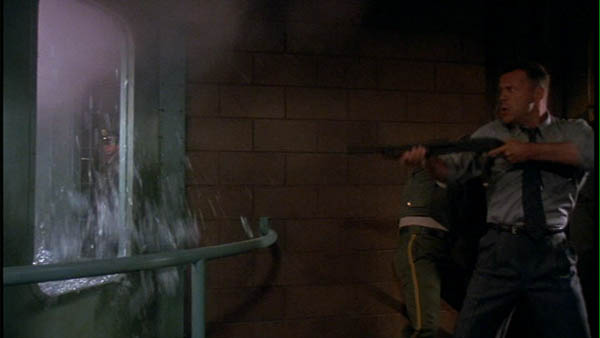
Wonderful anthology film, bunch of episodes connected with unexceptional cityscapes shot by one of the producers. I don’t know anything about the neighborhoods of Paris, but I guess each short is supposed to have its own local tone to it.
Montmartre
Man is cursing traffic, cursing everyone, alone and angry, then woman walks by and passes out next to his car. He acts the husband to other onlookers and lays her down in the backseat. She wakes up, they kinda like each other, she’s off to her tobaccologist (?) but they’ll meet up later. A nice opening piece, more like the kind of short that plays the film festivals than most of the other segments turned out to be… they were more episodes, excerpts, not stand-alone stories.
Director Bruno Podalydès starred himself, along with Florence Muller of Resnais’s Coeurs.
Quais de Seine
Boy’s friends are yelling insulting things to every woman who walks by, so boy gets away from them and helps up muslim girl. They like each other, it’s cute, her grandfather is nice to him, awww.
Director Guriner Chadha made Bride & Prejudice and Bend It Like Beckham.
La Marais
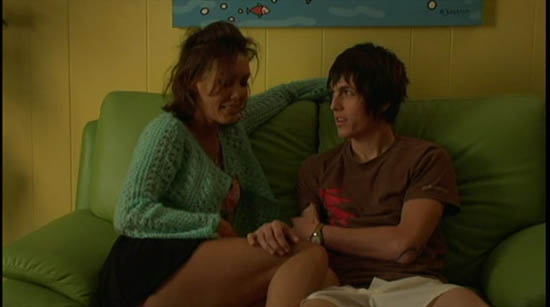
Jokey bit where dude helping artist Marianne Faithful at a press falls immediately for guy sitting on floor. Dude talks to him forever, tells him how they were destined to meet, gives his phone number, walks off, turns out guy on floor speaks no French, har!
Director Gus Van Sant lovingly photographs Gaspard (the boyfriend in A Very Long Engagement) and Elias (Elephant) in mostly long takes.
Tuileries
American tourist Steve Buscemi is waiting for his subway train and breaking the rules in his tour guide (“don’t make eye contact”), getting himself involved in the power games of two young lovers across the station and leading to his being beaten up with his souvenirs dumped all over him. Poor guy.
Directors Joel & Ethan Coen almost make up for The Ladykillers with this one. Katy was defeated by too-high expectations.
Loin du 16ème
Girl puts her own baby down at the babysitting place, then rides public transit to her job taking case of some rich lady’s baby, sings the same sweet song to both babies. One of the more obvious message-movies, but nice.
Director Walter Salles (Motorcycle Diaries) cast Catalina Sandino Moreno, of Fast Food Nation and Maria Full of Grace.
Porte de Choisy
Okay, Barbet Schroeder is a bald hair-care product salesman who goes to hardass Madame Li’s place to sell her stuff. First meeting doesn’t go well but she tries the stuff and calls him back, delighted. Sort of a choreographed musical comedy. Makes no damn sense. Best part is when he’s between meetings, bowling at a monastery and monks take away his cell phone.
Directed by Christopher Doyle, who I see is shooting a Rufus Sewell thriller and Gus Van Sant’s Paranoid Park next.
Bastille
Guy meets his wife for lunch, intending to tell her he’s leaving her for his mistress, but first she hands over a doctor’s note saying she has terminal leukemia. So he “rises to the occasion”, dumps his girlfriend, and spends the rest of his wife’s life doing things they used to love to do together, falls back in love with her and is destroyed when she dies. The only piece with a 3rd-party narrator, and one of my favorites.
Director Isabel Coixet made The Secret Life of Words and My Life Without Me… stars a guy from Va Savoir as the husband, the girl in a coma in Talk To Her as the mistress, and Miranda Richardson as the wife.
Place des Victoires
Kinda crappy despite two fave stars Willem Dafoe and Juliette Binoche. Her son died a week ago and she follows his phantom voice out to the plaza where Dafoe is a cowboy on a horse who lets her see her son once more. Katy liked it, I thought it was David Lynch-derivative.
Director Nobuhiro Suwa made some well-regarded Japanese movies I’ve never heard of before.
Tour Eiffel
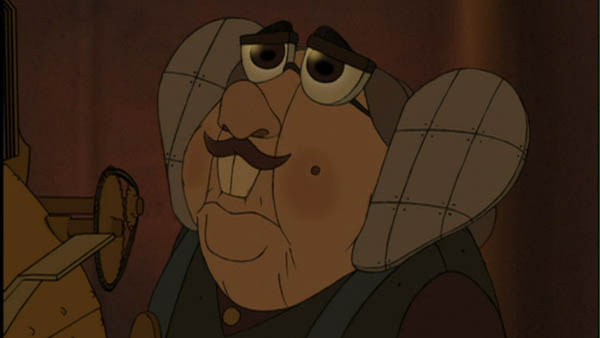
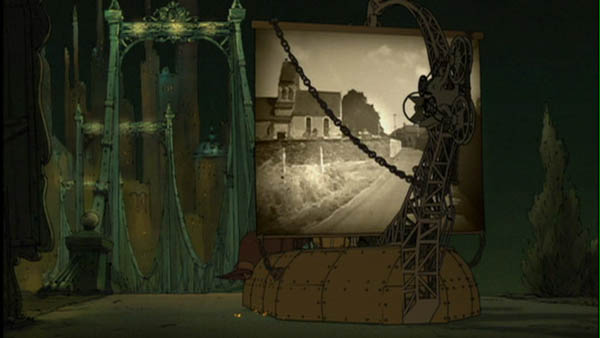
Kid describes how his mime parents first met. Awesome, funny, features identical twins, imaginary cars and lots of miming… the one short that the whole movie would be worth seeing just to catch.
Director Sylvain Chomet’s follow-up to the perfect Triplets of Belleville.
Parc Monceau
In a single shot, father Nick Nolte walks down the street with his daughter to where a friend is watching her son. He takes over babysitting and the friends go off together. Jokey because the dialogue at first makes it sound like she’s cheating on her husband (actually the son) with Nolte.
Director Alfonso Cuarón is into long takes now. I told Katy I was waiting for something to explode but she didn’t get me.
Quartier des Enfants Rouges
One of the better ones… Maggie Gyllenhaal has a kinda cute encounter with her drug dealer, then calls him up to order more (really to see him again), but he sends a flunky instead who steals her watch.
Director Olivier Assayas has apparently completed his new Asia Argento / Michael Madsen thriller.
Place des Fêtes
Another great one, man gets stabbed and as he’s dying, a girl he recognizes is trying to help him. He flashes back to his not-so-easy life in Paris and all the times he’s tried to talk to her. Sad movie.
Director Oliver Schmitz has made a buncha German films. The girl is Aïssa Maïga, the lead (bar singer) in Bamako and also appeared in Caché.
Pigalle
Guy is trying to have a role-playing night out with his wife – it doesn’t go as planned but they’re still alright.
Director Richard LaGravenese made Freedom Writers, seems a weird choice for this. Bob Hoskins stars with Fanny Ardant, whom Katy recognized from 8 Women.
Quartier de la Madeleine
On a creepy street with desaturated colors except for bright-red blood, model Olga Kurylenko is devouring Wes Craven when Elijah Wood interrupts her. Vampire love ensues.
Director Vincenzo Natali made Cube and Nothing, and has seen Sin City more than once.
Père-Lachaise
Spacey, businesslike guy’s on a pre-wedding honeymoon with cute girl, she kisses Oscar Wilde’s grave then decides he’s not romantic enough for her and storms off. He talks to Wilde’s ghost briefly then runs after her and quotes her some Wilde, which idiotically makes her fall back in love with him.
Director Wes Craven isn’t known for this kind of thing. Rufus Sewell and Emily Mortimer are the couple, Alex Payne plays Wilde.
Faubourg Saint-Denis
Blind boy gets phone call from girlfriend, apparently breaking up with him. He flashes back in high-energy Lola-style through their relationship, how he first met her thinking she was in trouble, falling for her rehearsal performance (she’s an actress). He’s fallen for it again and she’s not really breaking up with him. One of my faves.
Director Tom Tykwer made Perfume. Natalie Portman is the girl. This apparently existed as a separate short back in 2004.
Quartier Latin
Gena Rowlands and Ben Gazzara get together at a cafe to talk over their divorce at the end of a long marriage. Good one, Rowlands wrote.
Director Gérard Depardieu is probably a big John Cassavetes fan, appears himself as the waiter.
14th arrondissement
Another really nice one, American woman is narrating to her French class (?) about her trip to Paris. She’s kind of lonely and jetlagged, but everything falls into place for her at the end.
Director Alexander Payne made Sideways and Election, and actress Margo Martindale is in Rocket Science and played Swank’s mom in Million Dollar Baby.
Katy liked it, too.