Movie is set on Sunday Nov. 16, 1981.

The President: “Screw church.”

The Vietnam War was a show for the Russians, which we intended to lose, just to prove that we had the will to sacrifice troops for no good reason. General Burt Lancaster knows this and is going to force the President of the United States to publically admit it on the air. This is our premise.

Wait, it gets better. Burt will achieve this goal by taking over a nuclear missile station and threatening to launch nukes at Russia unless the President obeys.

Burt breaks in:
image

What goes wrong: Burt doesn’t count on the very evil military (who stay in power because of their legacy of secrets) being willing to kill his hostage, the President (who hadn’t even known about the vietnam conspiracy).

President Charles Durning (Waring Hudsucker, also in The Sting and Hi Mom):
image

Lancaster’s buds are Burt Young & Paul Winfield. Young gets shot in an almost-successful anti-Burt operation towards the end, and Winfield is mostly on Burt’s side but manages to reason with him a little, convince him of the futility of launching the missiles.

Winfield, of White Dog:
image

I don’t know a whole lot about Aldrich. This seemed a kinda low-budget effort, with a 70’s TV-movie look to it, except in the hugely stylish split-screens which sometimes divided into three or four simultaneous actions or angles.

image

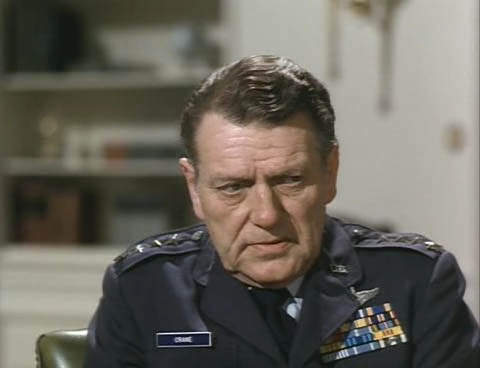
But wait, have I mentioned that Thee Great Richard Widmark plays Burt’s nemesis General MacKenzie?

image

Widmark does go to church, seen below with his wife, one of the only appearances of a woman in the film.

image

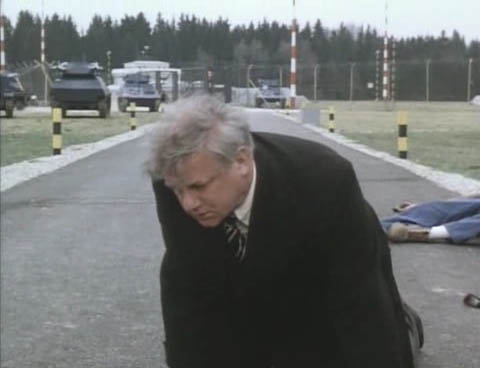
This was the final film of Charles McGraw (below), star of “The Narrow Margin”, appeared in “The Birds” and “The Defiant Ones” and “A Boy and His Dog”, and previously appeared with Burt Lancaster over thirty years earlier in “The Killers”.
image

Other things:

Paul Winfield: “Jive-ass honky!”

Widmark’s pager goes off in church, back when that was socially awkward rather than business as usual.

Multiple product-placements for Coke.

Burt: “Gentlemen, we are now a superpower.”
image

image

image

Starts with the ending, no opening credits.

Written by Aaron Sorkin, dude who made “West Wing” and “A Few Good Men”. Director of “Closer”. Where have Tom Hanks and Julia Roberts been? Only in one movie each for the past three years. Phil S. Hoffman stole the show just like everyone said. I watched all three of his 2007 movies in a two-week period, and would say he was the most likeable in this one. Tom’s assistant Amy Adams was the princess in “Enchanted” and a naked girl he almost has sex with was Emily Blunt from that fashion comedy.

Story of senator Charlie Hanks Wilson who, with the support of FBI nerd Hoffman and crush christian society woman Roberts, gets congress to eventually funnel a half billion dollars into arms and training for afghani forces to fight back soviet forces and thus turn the tide in the cold war towards the defeat of communism. It’s an engrossing and exciting story even though it’s just a buncha guys talking fast at each other and making phone calls, and the movie gets its reason to exist in the last few minutes. Half a billion for arms, then a year later Charlie can’t get one million approved for rebuilding schools in Afghanistan.

“These things happened. They were glorious and they changed the world… And then we fucked up the end game.”

Another movie with a killer ending. There were a bunch of those this year. Throws a ton of information your way but doesn’t quite connect all the dots for you, and avoids mentioning in postscript anything about our current Iraq/Afghan situation. Okay, so you’d have to be some kinda “August Rush” loving moron to not draw those connections immediately by yourself, but still Katy appreciated its restraint. I think Paul is complaining that it didn’t go far enough in criticizing the American war-waging machine, but I think it’s pretty awesome to drop this movie right before the presidential caucuses, in the middle of award season, starring three huge oscar winners, with an extremely relevant message to our wars in the middle east, and besides I’m not sure that Paul even saw it. I guess “Lions For Lambs” tried the exact same thing, but I hear it sucked. And I know the western union quote about message movies, but this week I’m into the idea that a mass-market movie should have something to say besides “look at all the pretty killing”, which is why I’m starting to think I like “Juno” better than “No Country For Old Men”.

This and “Enchanted” were the first movies I saw in ’08, but I’m behind on my journal entries so stuff like “The Savages” is showing up in January.

Katy liked it too.

BIG UPDATE: I got harshly corrected by the film group on this one, and now have to add that Charlie Wilson’s War (and everyone involved in its making) is fascist. And I’m not so sure that I like Juno anymore either. Bleah.

No opening credits, and started at the beginning, which it had to since it’s a tribute to classical disney storytelling.

From the director of 102 Dalmations, heh. Cartoon princess Amy Adams gets kicked out of cartoon fantasy land by evil queen Susan Sarandon and is found by Dr. McThingy and his precious daughter. But princess is chased by Prince Cyclops, who was about to marry her, and queen’s henchman Timothy Spall, who we just saw in Sweeney Todd. Cyclops is a buffoon and the princess finally realizes that, and McThingy comes around to falling for the princess and there’s an obligatory explosive action finale when Susan Sarandon turns into a dragon and chases people around. A tolerable and sometimes funny little kids flick. There are cartoon birds and pretty songs which were triple-oscar-nominated. Katy liked it.

A new movie that did not start at the end, and had opening credits! What’s the world coming to?

This year’s little miss sunshine indie-rock dream-team cast: Ellen Page from Hard Candy, boyfriend Michael Cera from Arrested Dev./Superbad, parents Allison Janney (West Wing?) and JK Simmons (Spiderman’s boss), and adoptive parents Jason Bateman (Arrested Dev.) and Jennifer Garner (Elektra). Ellen gets knocked up and gives the baby for adoption but restless Bateman breaks up his marriage so Garner gets baby by herself and Ellen starts hanging with Cera again, the end.

Waaay overbaked dialogue written by a showoff blogger and a cutey sitcommy setup made it the darling oscar-nom hit of the year. Movie is either a hateful, opportunistic, love-desperate mockery of teen pregnancy, abortion, adoption, marriage and parenthood… or, as Katy says, it’s great for being a funny and clever movie (which it is) which portrays real behavior and choices not commonly seen at the movies.

I’ll decide later.

As with “Before The Devil” which I saw the same day, it’s a bit of classical hollywood storytelling without a very innovative story. This one I loved, however, and “Devil” just seemed okay.

Directorial debut by Gilroy, writer of the Bourne trilogy and junk like “Armageddon”. Starts at the end (not quite the end), and don’t know about opening credits beause I was a few minutes late. Opens with the only calm moment in George’s few days (few weeks? I forget), his pulling off the road and wandering into a field to admire some horses. George is middle of the shot with his look of tired awe, on one side of the frame a horse very close, on the other George’s car idling down on the road. Just when I’m thinking “what, are they trying to show George as being caught between nature and technology?” the car fuckin explodes and the movie begins.

George is the company fixer at a law firm run by the awesome Sydney Pollack (Eyes Wide Shut) and is called in to deal with his good friend, the awesome Tom Wilkinson, who has gone nuts in the middle of a multi-year class-action suit defending a horrible company who hurt a buncha people… a company with a legal team run by the awesome Tilda Swinton. So it’s already shaping up to be a pretty awesome movie. Tom gets killed (set up as suicide) and George loses his faith, ends up with Tom’s evidence against the company he was supposed to defend, and presents it personally to Tilda in one of the most gratifying, well-deserved righteous climax scenes I can recall. What’s next is even better, with George just on fire, going downstairs and out to a cab, driving off in one long shot, camera fixed on his face as the closing credits roll and we watch George veeeerrry gradually loosen up, realizing that he’s won.

Starts in the middle, no opening credits.

Only awards it’s winning this year are for ensemble acting. Phil Hoffman is the debt-ridden drug-addict stealing from his employer and about to get caught, and Ethan Hawke is his spineless loser brother behind on alimony payments and sleeping with Phil’s wife. Their aged jewelry-store-running parents are Albert Finney (ugh, amazing grace) and Rosemary Harris (spiderman’s mom). Hawke’s ex-wife is Amy Ryan (from Keane) and Hoffman’s cheatin’ wife is Marisa Tomei (In the Bedroom).

So yeah, a real good cast (esp. an awesome Finney). Movie just seemed alright, though. Your standard crime story of desperate men getting a little greedy, going deeper and deeper over their heads, ending up with a lotta death and no money.

Phil coordinates the crime to knock off his parents jewelry store but delegates the actual holdup to Hawke, who hires a guy who shoots (and is shot by) their mom. Mom dies, dad wants revenge, goes to a known diamond fence (cool Leonardo Cimino, who was playing old-man roles twenty years ago), tracks down his own sons. The brothers are blackmailed by the girlfriend of the dude who died, so Hoffman wipes out the girl’s brother and Phil’s own drug dealer, gets himself shot and hospitalized where Finney fuckin’ kills him in the hospital bed. Ethan runs but is too big of a loser to get away.

Movie comes off kind of unengaging, shot not as coolly detached as “Little Children” with its silly narrator, but not exactly sympathetic either. Comes down to a sweet old couple with some extreme fuckup kids who destroy the family. Kind of depressing. Wouldn’t call it a must-see movie.

The Landmark theater of course played these Academy-ratio films in widescreen, ho-hum.

WHITE MANE, b/w, boy who lives on the marshes in southern France with his father and little brother (played by director’s son / star of Red Balloon) loves a wild horse, wants to capture it. Nearby ranchers also want to capture it. After a chase, boy rides the horse into the river and floats away, swept out to sea.

RED BALLOON, bright color, boy finds balloon which magically follows him around the city. Adults conspire to keep him away from his balloon, and other kids want to steal and destroy it. When the kids are successful, balloons from all over the city fly over and lift the kid up over Paris.

Jimmy says both movies are about the perils of acquisition. Both have somewhat the same ending… the kid getting (more or less) what he’d desired, a sense of freedom and imminent danger.

The two won a bunch of awards at Cannes, and Red Balloon got an original screenplay Oscar beating out The Ladykillers and La Strada. Remarkable for a movie with almost no dialogue. The two share excellent camerawork and primitive post-synched sound. I haven’t heard of anything else by photographer Edmond Séchan. Lamorisse made some other lesser-known children’s movies, including the earlier “Bim” and a widescreen Red Balloon sequel “Stowaway in the Sky”. The documentary he was filming over Iran when he died in an accident got an Oscar nomination after its completion. Best of all, he invented the board game RISK in ’57.

I wonder who was impressed by this? I guess reviewers are calling it “honest” and “human”. Jenkins’ “Slums of Beverly Hills” was authentic and funny, from what I can remember, but much more a typical Sundance indie-flick than a great promise of a new artistic voice. Here’s another autobiographical family portrait, more uncomfortable and sad than funny (but it still had its moments of humor). You want to give her credit for making a film about parents getting old, having to be put in a home, with kids not knowing what to do… but not so much credit that the movie can get away with being as uninteresting as this one ultimately is. Mostly consists of Phil Hoffman and Laura Linney underacting in totally drab settings, and I expect that I’ll have forgotten it by March. Has the bad fortune to come out the same year as “Away From Her”, which dealt more with the issues that I thought Savages would be dealing with… in fact, Savages is more about kids not wanting to deal with an elderly father who they never liked or got along with in the first place. The father’s shuffling from his girlfriend’s house (she dies in the prologue) to a home to a hospital to his death is all done reluctantly and with a minimum of effort. When the old man dies, the dark clouds disperse! Frustrated writer Linney suddenly has offers to publish her plays and Hoffman is bright and alert and everyone’s happy. I dunno, a pretty alright movie and not a waste of two hours, but I won’t go out of my way to watch her follow-up nine years from now.

Worst JL movie I’ve seen so far. I can’t believe this was the (directorial) follow-up to “Nutty Professor”.

Lewis is of course the title patsy. A famous singer/entertainer dies, and his handlers don’t know what to do with themselves. They want to continue their partnership, keep doing what they were doing, but how can they without a star to support? Enter clumsy bellboy Lewis. His character is sweet but SUCH a loser that it’s impossible to suspend enough disbelief to believe that the handlers would unanimously adopt him instead of taking maybe an hour to look around, or more likely holding a casting call.

Hardly ever funny, the romantic bit seems forced, movie’s sole reason to exist seems to be so Lewis could work with some high-class supporting actors, so here they are:

Everett Sloane (Disorderly Orderly, The Enforcer, Citizen Kane)
Phil Harris (Anything Goes, The Jungle Book)
Keenan Wynn (Piranha, Laserblast, Point Blank, Parts: The Clonus Horror)
Peter Lorre (M, Maltese Falcon, Mad Love)
John Carradine (The Howling, Frankenstein Island, Red Zone Cuba)

Ina Balin (The Projectionist 1971) is the girl, the heart of the picture, and Scatman Crothers gets one good scene.

Jerry is called the “king of comedy” once, and Ed Sullivan refers to having Martin & Lewis on the show before.

a patsy:
image

L-R: Lorre, Wynn, Lewis, Carradine, Balin, Sloane, Harris
image

this was his final film:
image

the mushy flashback scene:
image

funny ending, dismantling the set:
image

UPDATE: Senses of Cinema calls it “a discourse on comedy” and points to the scene where Jerry almost but never quite breaks all the priceless vases as an example of defying comedic expectations. See attached comment for a more thought-out opinion than mine.