“Why sometimes do images begin to tremble?”

From the film:

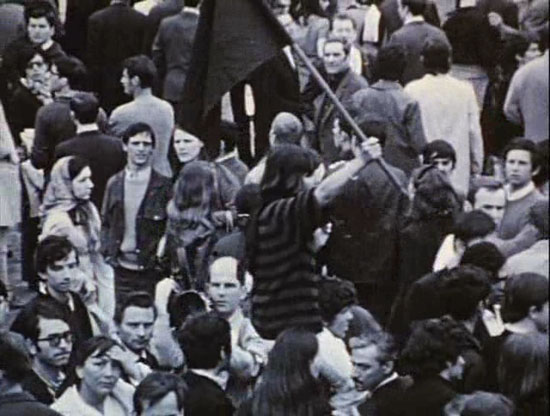
1967 saw the arrival of a rather peculiar breed of adolescents. They all looked alike. They would immediately recognize each other. They seemed to posses a silent but absolute knowledge of certain issues but to be totally ignorant about others. Their hands were unbelievable skillful at pasting up posters, handing paving stones, spraying on walls short and cryptic messages which stuck in the memory, all the while calling for more hands to pass on the message they’d received but had not completely deciphered. Those fragile hands have left us the mark of their fragility. Once they even wrote it on a banner. “The workers will take the flag of struggle from the fragile hands of the students.” But that was the following year.
image

Watched the 3-hour 2008 edit with English narration. There are so many versions of this out there… maybe next time I can watch the 2008 or 1977 French with subtitles.

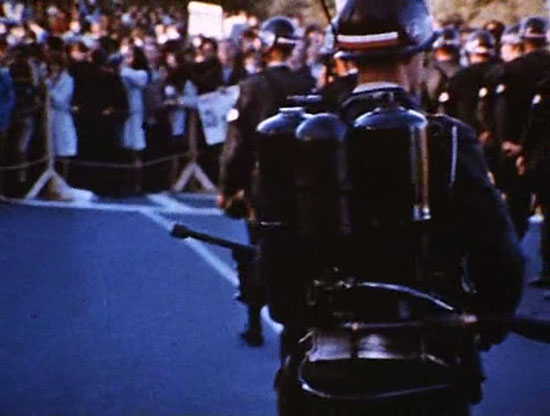
I thought I’d have more to say about it… three hours’ worth of Chris Marker’s most celebrated film, but I don’t really. Marker is mainly credited as an editor here, arranging others’ footage to show a bigger picture. There’s no wall-to-wall narration, just pops up occasionally. And I’m starting to notice a real sadness beneath many of Marker’s films… the same feeling in Chats Perches is present here. Glad I prepped a little by watching Sixth Side of the Pentagon and Battle of Chile, but I still had to check on wikipedia to see what exactly happened in Bolivia (Che Guevara killed Oct. 1967) and Prague (Jan-Aug 1968, attempted reform of Czech socialism led to 30 years of Soviet military occupation). The movie isn’t here to teach basic history of revolution – assumes you know something already, and since I quit reading The People’s History of the United States before it reached the 1900’s, I do not. Still, was able to follow the movie, thought lots of the footage was excellent, enjoyed watching and learned a little. Some segments have little gems of Marker wit in their editing or narration, but much of it is making connections between different scenes of revolution, both real and wishful, and thinking about what has been achieved, what might have been achieved. Really have to watch again sometime.
image

Either this was an early use of the electronic soundtracks that Marker would use in Sans Soleil and beyond, or the sound on my copy of the movie was pretty badly distorted. Or, more likely, both. The sound got worse during part two – there were some sections when I couldn’t make out any of the (English) dialogue.

image

Video and audio footage by: Pierre Lhomme (Mother and the Whore, Le Joli Mai, Army of Shadows), Etienne Becker (The Spiral, Le Joli Mai, Malle’s Calcutta), Michele Ray (Latcho Drom), Francois Reichenbach and his crew, Harald & Harrick Maury (The Owl’s Legacy, Day For Night, In the Year of the Pig), Théo Robichet (Band of Outsiders), Pierre Dupouey (Silence… on tourne), Raymond Adam (Jodorowsky’s Tusk), Paul Bourron of the Dziga Vertov Group, Willy Kurant (Far From Vietnam, Masculin-Feminin, Pootie Tang), Peter Kassovitz (Jakob the Liar), Paul Seban (Welles’s The Trial), Michel Fano (Rivette’s The Nun), Fernand Moskovitz (Last Tango in Paris), Yann Le Masson (Je t’aime moi non plus), Mario Marret & Carlos de los Llanos (À bientôt, j’espère), Jimmy Glasberg (Sans Soleil, Shoah), Robert Dianoux (Africa, I Will Fleece You), Jean Boffety (Thieves Like Us, Je t’aime je t’aime, Adieu Philippine), Robert Destanque (Joris Ivens’s The Threatening Sky), Hiroko Govaers (Terayama’s Fruits of Passion), Michel Cenet (Celine and Julie Go Boating), and an excerpt from Volker Schlöndorff’s The Lost Honor of Katharina Blum. That is quite a list of collaborators, though you never hear anyone talking about them.

image

English voices: Jim Broadbent (Brazil), Cyril Cusack (Fahrenheit 451), Robert Kramer (dir. Ice, Against Oblivion), Alfred Lynch (The Hill), and numerous British 1970’s TV actors.

“You can never tell what you might be filming.”

Quotes and other reactions:

Icarus Films calls it an “epic film-essay on the worldwide political wars of the 60’s and 70’s: Vietnam, Bolivia, May ’68, Prague, Chile, and the fate of the New Left.”
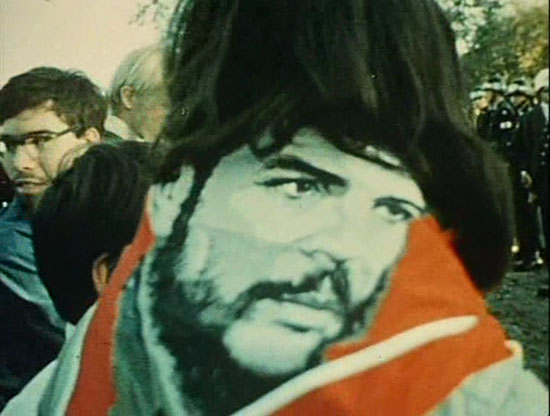
image

J. Hoberman: “Marker begins by evoking Battleship Potemkin, and although hardly agitprop, A Grin Without a Cat is in that tradition—a montage film with a mass hero. Unlike Eisenstein, however, Marker isn’t out to invent historical truth so much as to look for it. (The untranslatable French title, Le Fond de l’air est rouge, is a play on words suggesting that revolution was in the air but not on the ground.)”

Paul Arthur: “In its rhythms and editing structures, Grin tries to embody the very shape and textures of historical transformation, rendering the abstraction of change as an amalgam of rapid, plurivocal, uneven, and, at times, contradictory forces aligned in provisional symmetries encompassing past, present and future perspectives.”

image

Y. Meranda: “The editing de-emphasizes the narrative structure and instead stresses the poetical interrelationships of the sequences by putting almost all of them out-of-context. … Paralleling the visual editing, the sound editing is more based on poetical considerations than on intellectual ones. … Because there is very little attention paid to the intellectual arguments and because the style goes beyond making statements about a political ideology, A Grin Without a Cat becomes much more than a left wing documentary about the left: It achieves to be a poem about revolting against the system (and not just the political system), the conformity and the order. It suggests that it is an eternal struggle that is supposed to fail (as was in the case of the New Left) most of the times. This universality, achieved by Marker’s distinctive style, is what makes the film great.”

image

Excerpts from the Lupton book:

“Marker explicitly pitched the film against what he saw as the historical amnesia surrounding the period promoted by its treatment on television, where ‘one event is swept away by another, living ideals are replaced by cold facts, and it all finally descends into collective oblivion.'”

Movie is partially composed of outtakes from other projects. “Introducing the published script, Marker wrote that he had become curious about all the material that had been left out of militant films in order to obtain an idealogically ‘correct’ image, and now wondered if these abandoned fragments might not yield up the essential matter of history better than the completed films.”

“As a groundbreaking work of visual historiography, Le Fond attempts nothing less than to give cinematic form to the chaotic and contradictory movement of world history during the tumultuous decade that it covers.”

“The reappearance of cats, even in this thoroughly politicized context, is a signal that Chris Marker was beginning to re-emerge from the anonymity of unsigned militant productions and to reintroduce into his work the familiar tokens of his own distinct presence.”

image

Chris Marker:

Scenes of the third World War 1967-1977

Some think the third World War will be set off by a nuclear missile. For me, that’s the way it will end. In the meantime, the figures of an intricate game are developing, a game whose de-coding will give historians of the future – if they are still around – a very hard time.

A weird game. Its rules change as the match evolves. To start with, the super powers’ rivalry transforms itself not only into a Holy Alliance of the Rich against the Poor, but also into a selective co-elimination of Revolutionary Vanguards, wherever bombs would endanger sources of raw materials. As well as into the manipulation of these vanguards to pursue goals that are not their own.

During the last ten years, some groups of forces (often more instinctive than organized) have been trying to play the game themselves – even if they knocked over the pieces. Wherever they tried, they failed. Nevertheless, it’s been their being that has the most profoundly transformed politics in our time. This film intends to show some of the steps of this transformation.

More images:

image

image

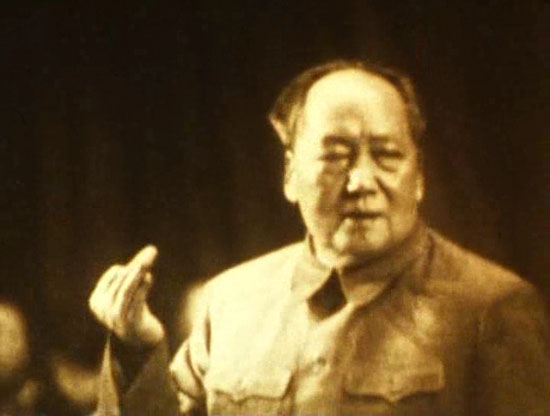
The Chairman:
image

Funeral in Prague:
image

Last footage ever shot of Salvador Allende:

image

Allende’s daughter, who would commit suicide in 1977:
image

Fidel in Russia:
image

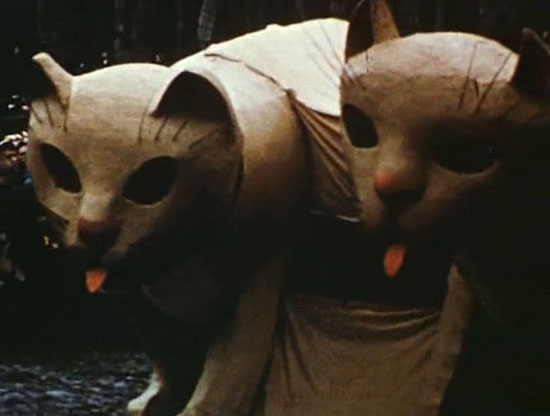
Enormous cats (no owls):
image

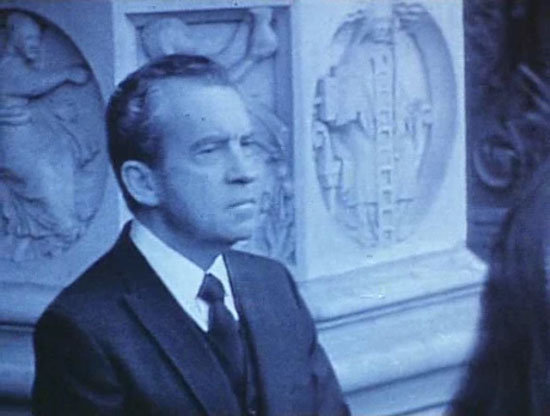
Nixon looks on:
image

image

My pick for film of the decade, so far.

image

cjsuttree:
“The end credits of 2046 feature subtle voiceovers documenting landmark historical events: the [1967] riot; TVB’s inauguration; “50 years of stability and prosperity” (in big-screen viewings the voice sounds like that of Margaret Thatcher); reports of economic downturn; protests about the Beijing massacre, 1989; the handover-to-China ceremony; and others.”


Aug 2021: “Love is all a matter of timing. It’s no good meeting the right person too soon or too late.” Watched this again with Katy, one of my all-time favorites.

The latest bit of historical bio-pic entertainment from Kapur (dir. of Bandit Queen, ugh). And it’s not great. One huge weakness is the writing. The writer of the original was here joined (very unsurprisingly) by the writer of Gladiator, so we’ve got very fakey-Hollywood-period-pic dialogue. Katy says this movie defeats the ending of part one, which showed Elizabeth’s transformation into the powerful virgin queen, by having her act all girlish and weak and man-crazy over the (admittedly dreamy) Clive Owen. Owen plays Sir Walter Raleigh, and Abbie Cornish (Stop-Loss) is a lady of the court who ends up with Owen after being practically thrown towards him by the Queen who wants to vicariously experience love, but the queen flies into a rage when Raleigh and the court girl marry. Most of the movie is concerned with this love triangle, but Spain also forms their Armada and attempts to conquer England before being singlehandedly defeated by Clive Owen. We also get a miniature version of the Mary Queen of Scots story (first filmed in 1895, updated in ’71 with Vanessa Redgrave, soon to be updated again by Phillip Noyce & Scarlett Johansson), played here by the great Samantha Morton.

So yeah, we’ve got Clive Owen, but all he does is look dreamy and act cool, even during battle scenes. We’ve got generic loud symphonic music, some bad CG effects and some confusing storytelling. But there are also very good performances (Blanchett, Morton) and some plain-good ones (Geoffrey Rush, Spanish ambassador William Houston), awesome (oscar-winning) costumes, great set design, but nothing tying it all together. Katy didn’t like it either, so I’m free to complain all I like.

Apparently the same love-triangle story was previously filmed as 1955’s The Virgin Queen with Bette Davis and Joan Collins.

My third feature by the celebrated Hou. I only half enjoyed/understood the other two, Goodbye South, Goodbye and Flowers of Shanghai, both seen on video, but I appreciated his short The Electric Princess Picture House. So I didn’t know what to think going into this, and neither did anyone, probably, seeing how it’s in French and a semi-remake of a 30-minute children’s classic. Hou’s pacing seems more suited to the big screen than home viewing, so I’m glad it played the Landmark, and Jimmy and I (who saw The Red Balloon together in the same theater earlier this year) both enjoyed it.

Juliette Binoche is a harried puppeteer mother, Simon Iteanu is her son, Hippolyte Girardot (Lady Chatterley, La Moustache) is the downstairs neighbor, and Fang Song is the kid’s new nanny. Song is an aspiring filmmaker with a handicam who loves the film The Red Balloon. Bleach-haired Binoche once worked as an au pair, feels abandoned by her husband, wants to kick out her downstairs neighbor so her older daughter can visit this summer (but can’t find the lease contract), and does marvelous voices for the Chinese puppet show she is directing. Simon seems like a happy kid, takes piano lessons, plays pinball, has a loving relationship with his absent older sister (seen in flashback, she cancels her annual summer trip to Paris late in the movie).

Then there’s the balloon. Simon sees it at the beginning and it follows him on the subway, then to his home and on a class field trip. Song sees it at one point, also… but neither of them ever touches it. It may just be a symbol of imagination, and not a real balloon at all. The camera moves slowly, fluidly, always seeming to hover balloon-like instead of resting, and blobs of red (clothing hanging to dry, a lamp) are often hanging in the frame when the balloon itself is absent.

Just as I was noticing the long length of the shots, a bus with a large Children of Men advertisement drove by – nice. Shot by the cinematographer of most Hou films, Pin Bing Lee, who also did In The Mood For Love with Chris Doyle. Score is light piano music (all staticky on our print), and it closes with the Bobby McFerrin-sounding song from the trailer.

None of these descriptions do justice to the film, which I’m starting to think is one of the few great films I’ve seen this year. Peaceful and calming to watch despite being set mostly in a cluttered, loud, claustrophobic apartment, there’s just enough story/character/action to play upon every emotion in the book without leaning too hard on any of them, leaving me feeling like I’ve experienced & felt so much within such a minimal framework. The characters aren’t desperate, but they don’t have an easy time either. One review described Binoche as a mother under siege, and with all that’s going on around him, Simon’s childhood is under siege too. But even while portraying conflict, the movie manages to ooze joy – so much joy that it’s put a major dent in my plans to watch all the commerce-driven Hollywood product out this summer. How could The Incredible Hulk compare?

“Look at my knees. Look at my knees!”
image

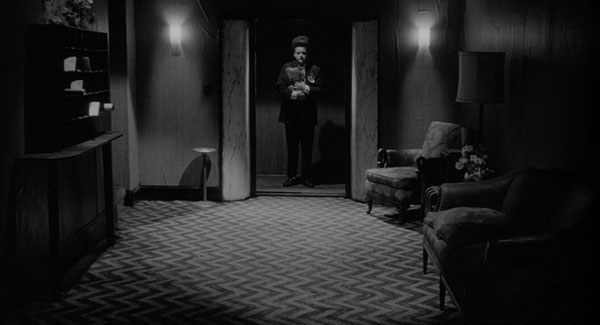
Things I’d forgotten about Eraserhead:

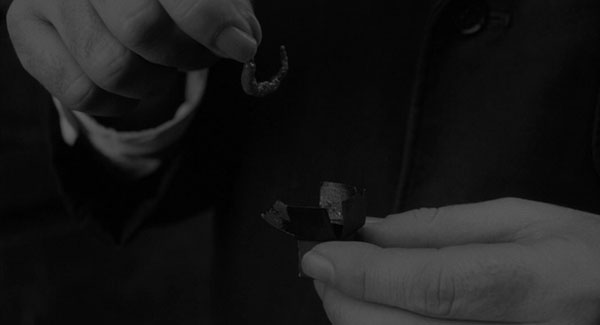
The curled insect-ring Henry gets in a tiny box in the mail and puts in a cabinet:
image

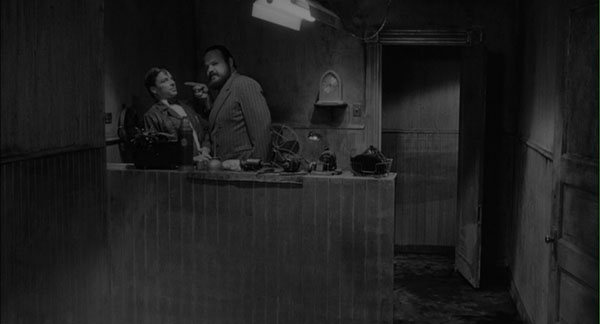
The sequence of events leading to the eraser factory. Henry enters the radiator, stands behind a railing, the baby’s head pops out of his neck, knocking his adult head on the checkered-floor ground. Blood pools, head falls into the pool and splats onto the street outside. A bum looks interested, his arm outstretched, but a boy grabs the head and runs, enters the factory. A man (Paul, below left) anxiously presses a buzzer until a bearded man (below right) comes out pointing his finger “OKAY, Paul!” Bearded man takes the boy into the back room where the eraser technician tests the head. “It’s okay.”
image

Kinda felt like I was going through the motions as cinephile and Lynch-fanatic going out by myself to watch Eraserhead on 35mm on the big screen… but WOW was it ever awesome. Such beautiful dark, dark imagery, and amazing to see it as intended sitting in a dark theater away from the comforts of home. Movie is a nightmare – that’s the most accurate description I can think of. Sure it’s a “horror film” among other things, but more importantly it is the closest thing I’ve seen to an actual filmed nightmare. There are no “dream sequences” because there’s no reality… the whole film follows a fascinating dream logic.

Made 30 years ago now. Mary’s mother Jeanne Bates (who also appeared in Mulholland Dr.) died last year. Sound man David Splet (who also worked on Days of Heaven and four other Lynch films) died in ’95. The actor who played Paul at the eraser factory, also in two John Carpenter films around the same time, died in ’98. Everyone else seems to be doing fine, but I also learned that assistant director Catherine Coulson later played the Log Lady on Twin Peaks, and co-cinematographer Fred Elmes (also shot five other Lynch movies and films by Cassavetes, Jim Jarmusch, Albert Brooks, Ang Lee, Mira Nair, and Charlie Kaufman’s new Synecdoche New York) is the only person listed on the whole IMDB to be born in Mountain Lakes, NJ. A hometown celebrity – and it’s a GOOD one!

Jack Nance was murdered Dec. 30, 1996. His final film was Lost Highway. Despite the IMDB’s claims, he’s not the same Jack Nance who co-wrote “It’s Only Make Believe” with Conway Twitty… wake up, IMDB.
image

Jack Fisk (below), alive and well and married to Sissy Spacek, has been production designer / art director on all four Terrence Malick films, two by De Palma, two by Lynch, and There Will Be Blood – an impressive career!
image

As Katy said, it’s like a whole new season packed into 2.5 hours. I liked the mexican vacation / food poisoning episode, and the Christmas one where Carrie watches Meet Me In St. Louis, but the others were ehhh. Not any better or worse than sitting down with the series for that long. Of course this means that the S&TC Movie is less damaging to the S&TC legacy than the new Indiana Jones movie is to its own series legacy. Jennifer Hudson was shoehorned into the plot, so now I’ve seen half of her movies.

image

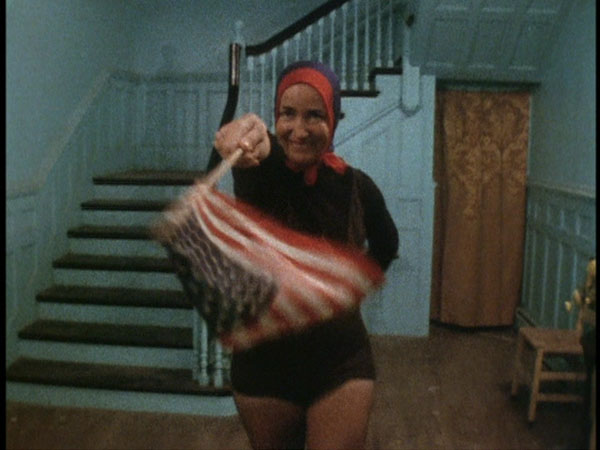
The always-fascinating adventures of Big Edie and Little Edie. I’d picked it as a must-see for our short-lived Documentary Month, then decided there was no time to waste since there’s a fictionalized version with Drew Barrymore and Jessica Lange later coming out this year. Katy liked it, I think, or at least we talked about it a lot. I love how Little Edie draws the Maysles into her arguments, flirts with them, tries to knock them over…

image

Listened to the commentary at work. Albert Maysles says when they were done editing, the first people they showed the film to were the Beales… they took it to the house and set up a screening in a room of the house they’d never been in before. After the movie ended, a long silence while little Edie paced the floor, then she looked up and announced “The Maysles have created a classic.”

image

The beginning of cinema verite, and the beginning of the most celebrated documentarian’s ongoing project to film America’s cultural institutions seemed like a fine place to start Documentary Month.

Movie is just what we thought it’d be, an unflinching look inside a Massachusetts state prison for the criminally insane. We see the inmates’ terrible conditions, their shower and recreation facilities, harassment from the guards. One inmate rebels against his circumstances (leading to force-feeding and death), another lucidly argues to whoever will listen that he doesn’t belong here and that the place is doing him harm. No wonder the state of Mass got hysterical when they saw what Wiseman had exposed, suing him to prevent the movie’s release while hurriedly renovating their prison system to address the imminent protests.

Worth watching for Shakespearian legend John Barrymore alone. He plays a stage director who is a huge drama queen himself, with wild hair to match. After an idiosyncratic casting session, he picks an inexperienced girl (Carole Lombard, later oscar-nom for My Man Godfrey, star of Mr. & Mrs. Smith and To Be or Not To Be) to be his new star and gives her a new name: Lily Garland. He directs the hell of her, telling her exactly where to move and what to do, and she obeys. Next thing you know, she’s the biggest star on Broadway, more famous than her still-celebrated director, and the two now have equally huge egos. Angry at him for being controlling, she sets off on her own, and he tries to create a new star to replace her, but fails hugely, and now he’s running from creditors and she’s starring in Hollywood films.

All that happens in the first half of a 90-minute movie. Then the two find themselves on the same train (the Twentieth Century, duh) headed back to New York and it gets crazy and I start forgetting plot details. She’s with her straight and proper boyfriend (where in Hollywood did she find him?) who is jealous of her former relationship with Barrymore. There’s a short man plastering “Repent!” stickers all over the train and gleefully writing bad checks for huge sums to everyone on board, including one to JB to stage the passion play with Lily Garland as Magdalene. Barrymore’s assistants (a publicist and a stage manager, I think) keep threatening to quit then rejoining JB’s schemes. It all works out in the end.

Hawks is said to have invented the screwball comedy with this one. Writers included Ben Hecht of His Girl Friday fame, and rumored help by Preston Sturges.

Watched in Boston instead of ponying up for pay-per-view. Katy liked it pretty well.

Carole Lombard is sad:
image

John Barrymore gives the conductor hell:
image

Left: Walter Connolly, playing Barrymore’s ever-faithful assistant. Right: the faux-rich, “repent now” loony played by Etienne Girardot. Both of these actors, along with stars Barrymore and Lombard, would be dead within ten years.
image

Kick-fight!
image