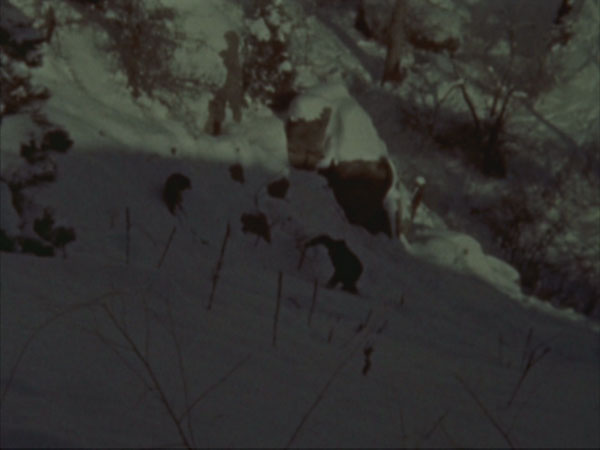
I’ve said the Brakhage set is my favorite DVD… and yet I’d never watched Dog Star Man all the way through, and never seen The Act of Seeing With One’s Own Eyes until lately. Soon after I got the discs, I had a traumatic experience with DSM. Thought I’d watch it at night lying on the couch with Coil’s Moon’s Milk (In Four Phases) album playing. I remember the image of a man (Brakhage himself, I believe) with his dog climbing a snowy hill, but I quickly fell asleep and had awful nightmares, my worst in years, and woke up not wanting to watch DSM anymore.

So some years later I tried again, this time with Sonic Youth’s Koncertas Stan Brakhage on the stereo, again at night on the couch. Dozed off again during sections of Part 1 and most of Part 2, but I got more of an impression of the overall film this time. It’s tremendously complicated, with ideas and techniques from his other films all run into a feature which actually plays as a feature… I didn’t realize you could extend a Brakhage film past the hour mark and it’d stay gripping. And I know it sounds bad for me to call “gripping” a movie which I can’t stay awake through, but I know what I mean, and I’m the only one who reads this stuff anyway.

Prelude:
image

Part 1:
image

Part 2:
image

Part 3:
image

Part 4:
image

“If I had to choose between Elmer and the itch, I’d start scratchin'”

image

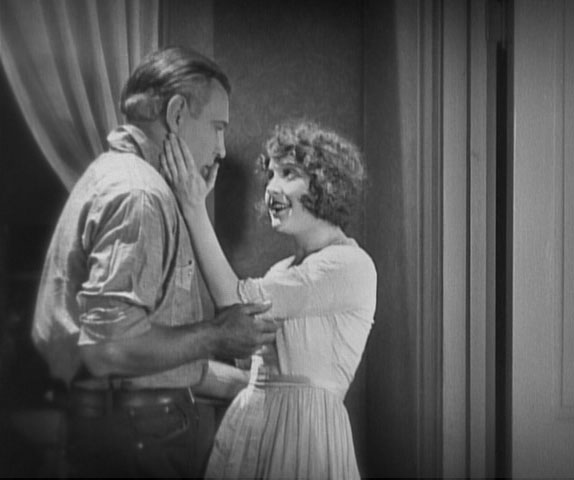
Kind of an unexpected story. Not that Street Angel was business as usual, plot-wise, but somehow I expected this one to be more normal and boring, which is maybe why I put off watching it for four months. Lazybones is a very lazy boy with an amazingly patient mother. He’s hot for neighbor Agnes Fanning but doesn’t do much about it, just expects her to marry him someday. Her sister Ruth is summoned home from college by their dour, domineering mother to marry snotty businessman Elmer, but Ruth has already been secretly married and widowed and has a baby. So she does the natural thing: puts the baby safely in a basket then jumps into the river to drown herself. This is the only act of free will performed by the Fanning sisters in the movie… they do everything their forbidding mother demands, to the ruination of both of their lives. Ruth spends the next 15 years unhappily married to Elmer, sneaking glimpses of her daughter through the window, having no more kids and finally dying of illness/madness, and Agnes breaks up with Lazybones and spends her days shut up in mother’s house, only learning the truth at the end.

Ruth (left) and Agnes:
image

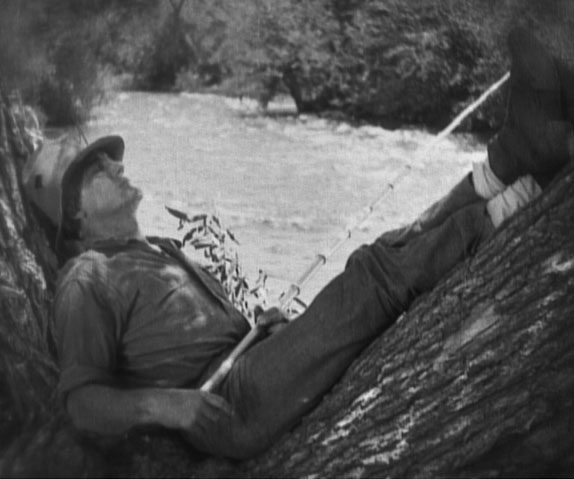
Lazybones, meanwhile, agrees to raise the baby (it’s a girl, his mother tells him). Raises her well with the help of mother, but doesn’t get any less lazy. He goes off to fight in the WWI trenches and stumbles into heroism when he sleeps through a battle and finds himself behind enemy lines, helping take 20 captives. Comes home and finds his adopted daughter has become a young woman, so he starts falling creepily in love with her, until she’s fortunately whisked away into marriage by a nice local boy. LB grabs his fishing pole and heads for the river, as if the last eighteen years was just one long afternoon.

image

Lazy Buck Jones was in 150+ westerns and this, and his grown stepdaughter (above) Madge Bellamy starred in John Ford’s The Iron Horse a year earlier, would later appear in White Zombie.

Emily Fitzroy (of The Bat and the original Gentlemen Prefer Blondes) played the evil mother of sisters Ruth (Zasu Pitts of Greed, Ruggles of Red Gap and Stroheim’s The Wedding March) and Agnes (Jane Novak of some Harold Lloyd shorts).

image

Senses of Cinema refers to Ruth’s “illegitimate daughter.” Has the author not seen the movie lately, or is it like Miracle at Morgan’s Creek, where we know that Hollywood must provide a girl with a lost or deceased husband in order to have a child, but it’s understood by the viewer that the girl wasn’t actually married – a complicit understanding between film and audience of the limits imposed by censorship? Ah, Michael Grost agrees: “While there is a censor-placating marriage ceremony for Ruth (Zazu Pitts in a great performance), this is a thinly disguised look at the problems faced by unwed mothers and illegitimate children. It recalls Way Down East (D. W. Griffith, 1920). The negative look at small town life, and the wasted lives full of pain of rejected people who live there, also recall True Heart Susie (D. W. Griffith, 1919).”

M. Grost again:

Borzage’s heroes love technology. The hero’s main passion is tinkering with his car. Unfortunately, he never does anything serious with this interest, unlike later Borzage heroes who become engineers or scientists. The hero’s car links him to high technology and progress in the opening scenes. By contrast, his well-dressed, well-to-do rival drives a lavish horse-and-buggy. This suggests that respectability and social prominence are linked to backward, anti-progress forces. Kit and her boyfriend eventually open a garage, while the hero is away at war. Such garages, run by the heroes of later Borzage films, are a principal locale of Borzage’s cinema: Big City, Three Comrades. They too are signs of technological modernity.

A. White for New York Press:

Comparing Lazybones to its contemporary literary landmarks The Great Gatsby, Manhattan Transfer and An American Tragedy helps define how movies transmit deep insight through visual power. Steve, a feckless young man at the dawn of the automobile age, anticipates the existential protagonists who wait for life to happen. Letting romance pass him by, Steve helps an unwed mother raise her child and then slowly awakens to passion. Borzage shows Jones and Madge Bellamy’s sensuality with startling erotic attention—throughout his career he was certainly a master of the romantic dual close-up—and this conveys a profound sense of lost opportunity, of everyday tragedy. And this insight compares well to 1925’s other cinematic landmarks: The Gold Rush, Greed, Seven Chances, The Last Laugh, Master of the House—less ostentatious but no less deep.

Lazybones doubtlessly influenced the Johnny Mercer-Hoagy Carmichael song that celebrated Southern ease; more proof that Borzage’s films once touched the core of pop mythology. (Just as Bad Girl and After Tomorrow are quintessential Depression-era films, containing emotional values the recovering nation still hurries to forget.) In its sublimely simple way, Lazybones epitomizes the potency of American pop art at its most morally sophisticated—the same greatness that is underrated in Spielberg.

A. Kendall for TCM:

Lazybones, made prior to Murnau’s arrival on the lot, helps illuminate the degree to which Borzage’s visual style was influenced by the emigre. Borzage is in full command of the emotionally complex characters and moments of bitter pathos that highlight his “prime” work, but it lacks the visual eloquence that Murnau brought to the studio. … The emotional texture of Lazybones is remarkable for a film of 1925, and it would surely stand alongside Borzage’s best-known works, were it not for a misguided turn in the final reel, when Lazybones falls in love with his adoptive daughter Kit, who has just come of age. The sudden shift from paternal affection to sexual desire derails our identification with the hero, and makes us aware of the filmmaker trying to pile more pathos onto the story than its narrative framework can support.

Wallace & Gromit’s Cracking Contraptions (2002)
Ten W&G shorts. I think these were made to promote the full-length film… of course I had the chance to watch them back then and somehow put it off for seven years. Anyway these are cute – faves were The Snoozatron (a machine that dresses G. up as a sheep and flips him on a trampoline so W. can “count” him and fall asleep) and The Turbo Diner (a table-setting device exactly a la Charley Bowers in He Done His Best).


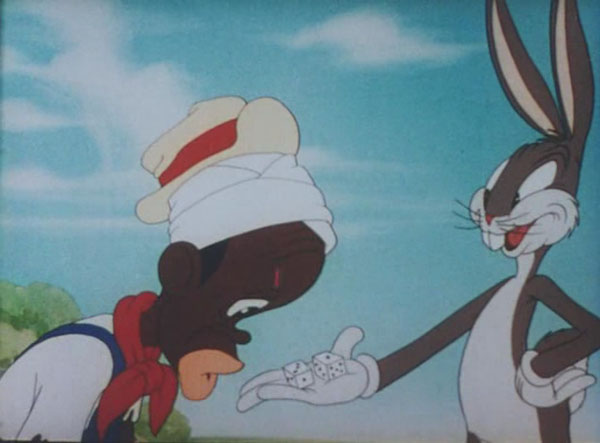
All This And Rabbit Stew (1941, Tex Avery)
Tex’s final Bugs short before moving to MGM. Hooray, now that I’ve watched those John Ford movies I can recognize that the offensive black stereotype hunter is based on Stepin Fetchit. I tried telling myself that if he didn’t look African the character would basically be Elmer Fudd – but then Bugs gets out of being held at gunpoint by shaking some dice and that idea goes out the window. Ouch.
image


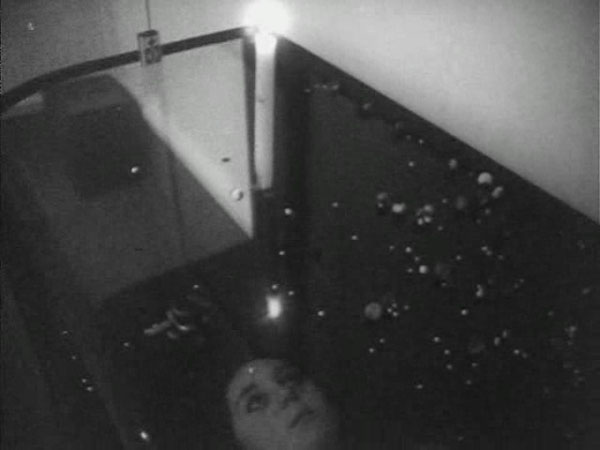
Vivian (Bruce Conner, 1964)
If you liked a girl in the 1960’s, you made an avant-garde film of her. Harvard Film Archive: “An ecstatic portrait of actress Vivian Kurtz that features footage of a 1964 Conner exhibition and couches a humorous critique of the art market.” Set to a pop song called Mona Lisa, loads of fun and only three minutes long. This would go on my “best of a-g” gift reel if it wasn’t such a problem to make such a thing.
image


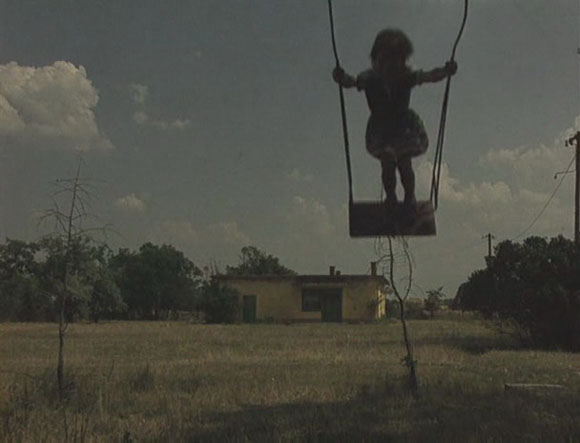
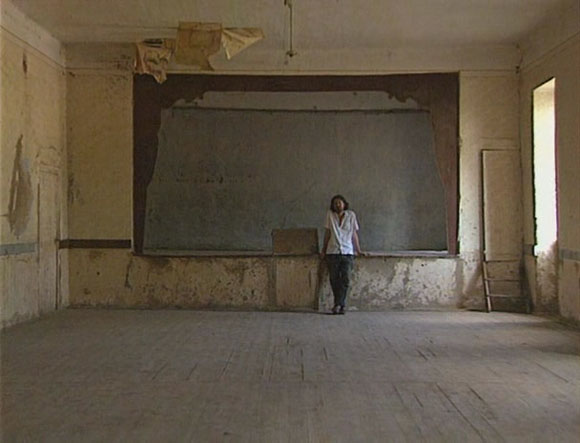
Journey on the Plain (1995, Bela Tarr)
Poems about friendship loss, life and death, each with a long tracking shot (imagine that), written by famed Hungarian poet Sándor Petöfi and performed by one of my favorite film music composers, Mihály Vig (Irimiás from Sátántangó, in color!). Suddenly in one scene 20 minutes in, he’s on a truck loudly playing a doomed keyboard. An odd movie, peaceful and beautiful. I would gladly watch again, paying more attention to the words of the poems.
image

image


Thriller (1979, Sally Potter)

A narrator goes over the story and characters of an opera, then analyzes it while staring into a mirror, memory and identity swirling about. Very art-film, told in black-and-white stills and scenes, narrator all heavily french-accented. Kind of entrancing, really, with repeated poses and images and phrases, never quite turning into something I can make sense of (though I hear it’s some kind of marxist-feminist critique of Freud and contemplation of human existence, thanks to a useful, knowledgeable and well-considered review on the IMDB – a rare thing indeed).

Sony Pictures: “a critical re-working of Puccini’s opera La Boheme, was a cult hit on the international festival circuit.” Sudden bursts of the shower theme from Psycho. “Yes, it was murder. We never got to know each other. Perhaps we could have loved each other.” I need to see it again, obviously, but I’m not dying to do so anytime soon.

from K. McKim’s great Senses of Cinema article

Potter’s 16 mm black and white cult hit Thriller (1979) overtly equates revision with survival; the film invokes formal conventions to interrogate the narrative necessity of Mimi’s death. Inscribing this inquiry within allusion to female murder victims (Thriller cites Bernard Hermann’s screeching Psycho score), Mimi questions the conventions that locate meaning in the death of a young beautiful woman. Scripted, edited, produced and directed by Potter, Thriller transforms the opera into, as the title suggests, a thriller that uncovers operatic form’s generic and gendered hypocrisy.

image

image


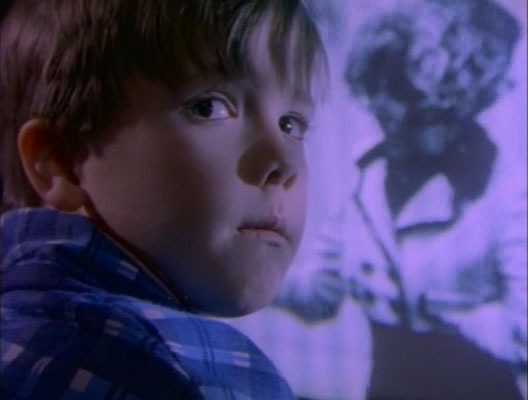
Dottie Gets Spanked (1993, Todd Haynes)
Wow, this was great. Boy with a mommy complex idolizes an I Love Lucy-esque TV show, wins a contest and gets to visit the set. Movie swirls with repression and fantasy and budding sexuality.

The distributor: “anticipates … Far from Heaven with its excavation of placid mid-century surfaces and deeply-buried emotions.” R. Lineberger: “This short film was commissioned by the Independent Television Service as part of a search for short films about American television. The pairing is perfect. Haynes is subversive, but approachable. His film deals with ominous and disturbing themes, but he never comes out and says anything objectionable. For example, Steven’s father is suggested to be violent, or at least sharply critical, but we never actually see any aggressiveness from him. The whispered consequences and punishments exist in glances, or in Steven’s thoughts.”

image

image


13 Screen Tests (1964-66, Andy Warhol)

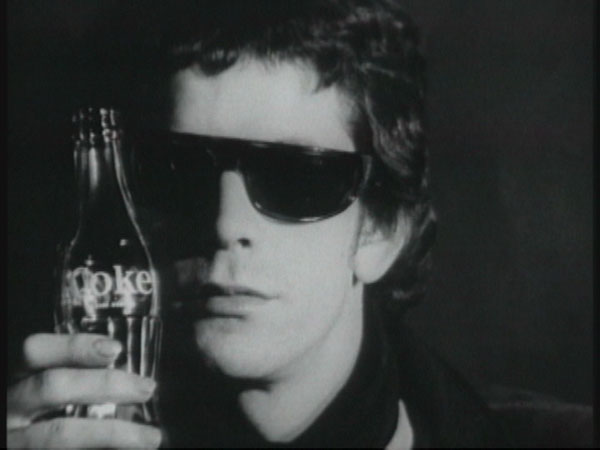
Rented Warhol’s screen tests sorta against my will (I just wanted to hear the new Dean & Britta songs) then proceeded to half-watch ’em while listening to the music. The films were better than I thought (that Edie Sedgwick has got something, and Lou Reed and Dennis Hopper are funny) and the music was worse (standard instrumentals, a few new songs and some covers). I did try watching a screen test straight through, the way I’m supposed to, to see if I experienced a sudden tingly appreciation for the Cult of Andy, but it didn’t work; maybe I picked the wrong one.

G. Comenas:

Factory visitors who had potential “star” quality would be seated in front of a tripod mounted camera, asked to be as still as possible, and told not to blink while the camera was running. … Some of the earliest Screen Tests were those included in Warhol’s film The Thirteen Most Beautiful Boys. … More than 500 Screen Tests were made. In addition to The 13 Most Beautiful Boys, some of the footage was incorporated into other compilation reels such as The 13 Most Beautiful Women (1964) and 50 Fantastics and 50 Personalities (1964).

LA Times:

Each test lasted as long as a single 100-foot roll of film. Each was shot at 24 frames per second and projected at two-thirds of that speed, a trick Warhol often used. Each took a little less than three minutes to film, and takes a little more than four to watch. The slow-motion effect adds a discernible flicker, heightens every movement and contributes to the dreamy, ghostly quality.
image

A lot like the trailer, but a ton better and with a sadder ending. Katy liked it too!

Much of the same crew as Chop Shop but all new actors – and as before, most of them have never acted in a film before (except for Red West, an old Hollywood vet). Set in Winston-Salem NC, near where Bahrani is from, Solo (Souleymane) is a cab driver who aspires to being a flight attendant but keeps failing the exam. He lives with pregnant girlfriend Quiera and her daughter Alex, is kicked out halfway through the movie, but probably not for good. Cheery, happy dude makes it his mission to solve cranky Red West’s problems, like a Wendy-and-Lucy-realism version of Happy-Go-Lucky. Red warms to him until he feels that Solo has interfered too much with his life and plans (threatening to reconnect Red with his estranged grandson, whom Red secretly visits working at a movie theater) then cuts Solo off. But Solo won’t allow himself to be cut off, sticks close to Red in the last couple days before his suicidal trip, and drives him up there with no further questions. Not the ending I was expecting

Tarsem’s previous movie The Cell had a crappy story and bad acting wrapped around a handful of intensely cool but disconnected imagery. This one has a simple but decent story and good acting, with about half the movie being intensely cool imagery, finely intertwined with the rest of the plot. A quantum leap forward!

The gimmick of not having a gimmick (no digital effects, etc) was distracting as hell. We were always “what country do you think that is” or “THAT isn’t a real place is it” or “aha, that’s GOT to be a digital effect” or “is the little girl acting or not, she seems so natural.” From online trivia we learn it’s a remake of a 1981 Bulgarian film and the little girl was often improvising.

Movie itself is a wonder. In Princess Bride’s framing story, grandpa Peter Falk is reading a great, classic storybook, so the bulk movie has to be great and classic, and it lives up – but in The Fall we have an unreliable narrator, suicidal, heartbroken, wasted on morphine, making it up as he goes along. In a sense this makes the story more unpredictable, but it’s also a huge cop-out because if the writing is poor you can say “oh it’s supposed to be poor, didn’t you get that?” And it is kinda poor. Our hero the masked bandit with his lost love and archnemesis kinda fizzles, and his side characters Luigi (“explosives expert” who only uses explosives once, suicidally at the very end), The Ex-Slave and The Indian just make poses and look beautiful against the exotic scenery, getting shown up by the problem-solving Charles Darwin and his pet monkey. So it doesn’t sound too good and it’s probably not, but if you’re gonna throw out images this nice, I’ll let your thin plot slide. Carried over from The Cell we’ve still got some nightmarish imagery too. When their guide The Mystic is captured, being chopped to death with an axe (barely offscreen), crying and repeating the safe word “googly googly”, small birds flying out of his mouth, that’s a thing that gets stuck terribly in my head while I’m trying to sleep.

Movie ends with a montage of Keaton and Chaplin stunt scenes, half of which I recognized, in a belated homage to stunt men (our hero is one, ended up in the hospital with the little girl by falling badly off a bridge). Weird. Nobody I’ve heard of in the cast, which makes sense. If you’re shooting a self-financed movie over four years in 20+ countries, you’re not gonna get many recognizable actors to sign up. However, Lee Pace (our storytelling hero) is now starring in Pushing Daisies.

Nic Cage goes to jail. Twice.

Harry Dean is a lovestruck sucker, gets killed by three characters who are far more prominent in the deleted scenes: Quiet Dropshadow (Jerry Horne in Twin Peaks), talky, over-friendly Reggie (black islander Calvin Lockhart, who played “Biggie Smalls” in Sidney Poitier film Let’s Do It Again, which I must see sometime), and creeeepy cane-walkin’ woman Juana Durango (Grace Zabriskie, even creepier in Inland Empire, also Laura Palmer’s mom). Alex de la Iglesia made some sort of a sequel featuring these three characters called Perdita Durango or Dance With The Devil. I guess it’s not really a sequel, but both films are based on novels by Barry Gifford, who also cowrote Lost Highway and Hotel Room.

Lynch has plenty of contenders for Creepiest Character In Film History – there’s Robert Blake in Lost Highway, Dennis Hopper in Blue Velvet… my personal pick is Willem Dafoe in Wild At Heart.

image

Crispin Glover also gets a bigger part in the outtakes, including the scene below where he’s almost discovered by our heroes working at a gas station. I can’t remember if the revelation that he impregnated cousin Laura Dern when they were younger was in the movie or not… I’m thinking it’s from the outtakes too.

image

“How many stars you think are up there, baby?”
“There’s a couple.”

“What’s happened to us is like war… easy to start… hard to stop.”

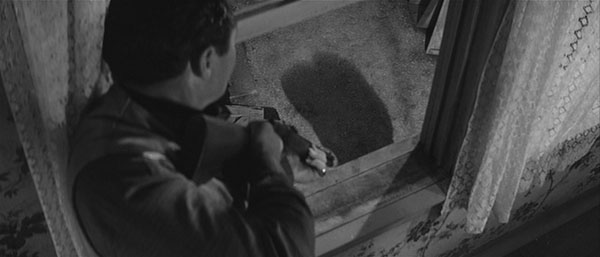
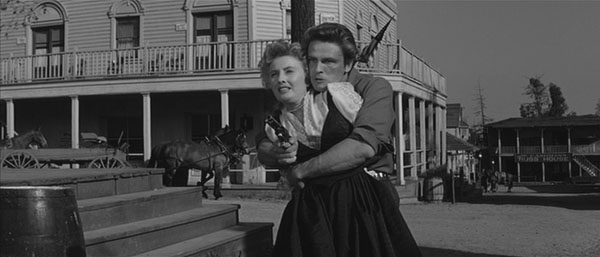
A wordless intro before the opening titles, so no dialogue until 4:30… and it’s only an 80 minute movie, so that’s significant. Once the action starts, of course, it barely lets up, led by a hero named Griff who talks like a hero should talk (sorta like the host of a news magazine show). The star is Barbara Stanwyck but she’s not in the movie half as much as Griff, which only serves to make her more of a presence when she is around.

Anyway, Griff is one of those western heroes who’s amazing with a gun, unbeatable, but hates to use it, haunted from having killed a guy some years ago. He’s an oxymoronically peaceful bounty hunter with his two brothers in tow – nice-guy Wes who falls in love with a local gunsmith girl and eager Chico who wants to be a gunfighter. Griff swaggers into town as Stanwyck’s unhinged little brother Brockie is shooting up the streets, and busts the violent asshole brother’s nose in one of the baddest-ass western showdowns ever filmed. This and Griff’s humiliating public arrest of one of her “forty guns”, a man wanted for robbery, causes a balance-of-power problem with Stanwyck, who formerly owned this town uncontested. But of course… the two of them fall in love.

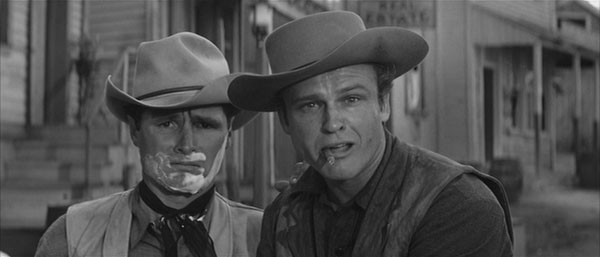
Charlie Savage (played by John Wayne’s stunt man) and Brockie (John Ericson of Bad Day at Black Rock):
image

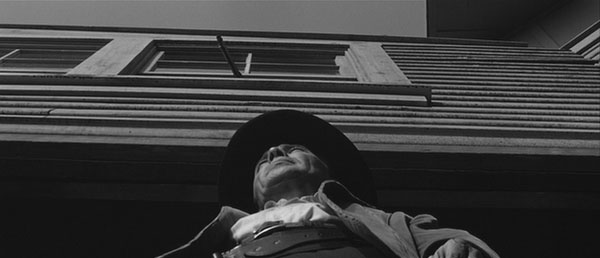
John the marshall is a slow-talkin’ goodly old man with bad eyesight whom Brockie shoots (not to death) just for the hell of it, but the cowardly nasal-voiced sheriff Logan and the local judge are friends of Stanwyck’s, so when Brockie is arrested he’s quickly let out. They have a harder time protecting Swain, the wanted man, since he’s got a federal warrant on him, so Charlie Savage kills him in his cell before Swain can say too much. Griff is on the case right away, knowing it’s Charlie because he’s the best shot in town (although why does it take the best shot in town to blast a guy through a prison window?). Charlie sets a trap for Griff, but young Chico interferes and kills Charlie.

image

“Now what did I do wrong?”
“Now you’ve killed a man.”

image

I’m out of sequence here but it doesn’t matter. Griff and Barbara have a symbolic love scene during a tornado and bond over their wild little brothers. Griff bathes in a barrel (but does not get shot up a la House of Bamboo). The movie breaks into a song about Barbara (“She’s a high-ridin’ woman with a whip”). And whenever a man and a woman are alone, the innuendo cranks way up, higher than I thought it could go in the 50’s (well, I suppose Will Success Spoil Rock Hunter was the same year). There’s talk of the death of the wild west, of a peaceful, civilized future.

image

But the kids still wanna play shoot-’em-up. Wes is predictably but still terribly, killed on his wedding day by Brockie, and that’s not the kind of thing Griff can let go. He shames the sheriff, who fails to kill Griff and so loses Barbara. The famed ending, in the writer/director’s own words:

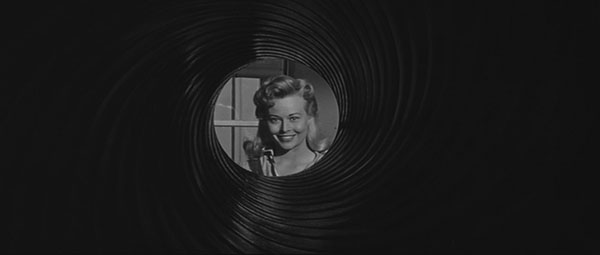
Brock knows Griff loves his sister and surely won’t shoot a woman. He’s wrong. Griff plugs Jessica in the leg and, as she slides to the ground, empties his pistol into the bastard brother.

Griff doesn’t kill Brock out of vengeance. He’s eliminating a cancer that’s terrorizing the community. But he’s disgusted with himself. By resorting to guns, Griff sees the last ten years vanish in a flash, as he becomes the killer he’s renounced.

My original script had Griff killing both Jessica and her brother, stepping over their corpses in a daze, throwing his gun down – this time for good – and walking up the dusty street without a pause. Nothing and no one exists for Griff anymore. The End. That version ran into trouble at the studio…

image

Instead Chico ends up marshall and Barbara runs after Griff as he’s leaving town and they ride away. A few months after China Gate (and somehow Run of the Arrow came in between them), the filmmaking is smooth as hell – scenes playing out in single long takes with powerful fast cutting during the action scenes.

Barbara, in her final year as a headlining movie star:
image

Fuller again:

My story hinged on America’s pervasive fascination with guns. Hell if I know why people think guns are sexy. I cooked up a helluva lot of sexual metaphors playing with the idea.

image

Our gruff hero Griff (far left) is professional tough guy actor Barry Sullivan (The Bad and the Beautiful). Gene Barry (on right, star of China Gate, played a fake Mexican in Red Garters) is brother Wes. Robert Dix (writer/star of Five Bloody Graves) is Chico, and in the light coat is Sheriff Dean Jagger (the beloved major in White Christmas, also in Lang’s Western Union):
image

Fuller:

With Forty Guns, I’d really hit my stride. I considered it one of my best efforts so far. Sure, there were some compromises – like the ending, but it came pretty close to my original vision. At the time, very few people were given the opportunity to write, produce, and direct their own movies.

image