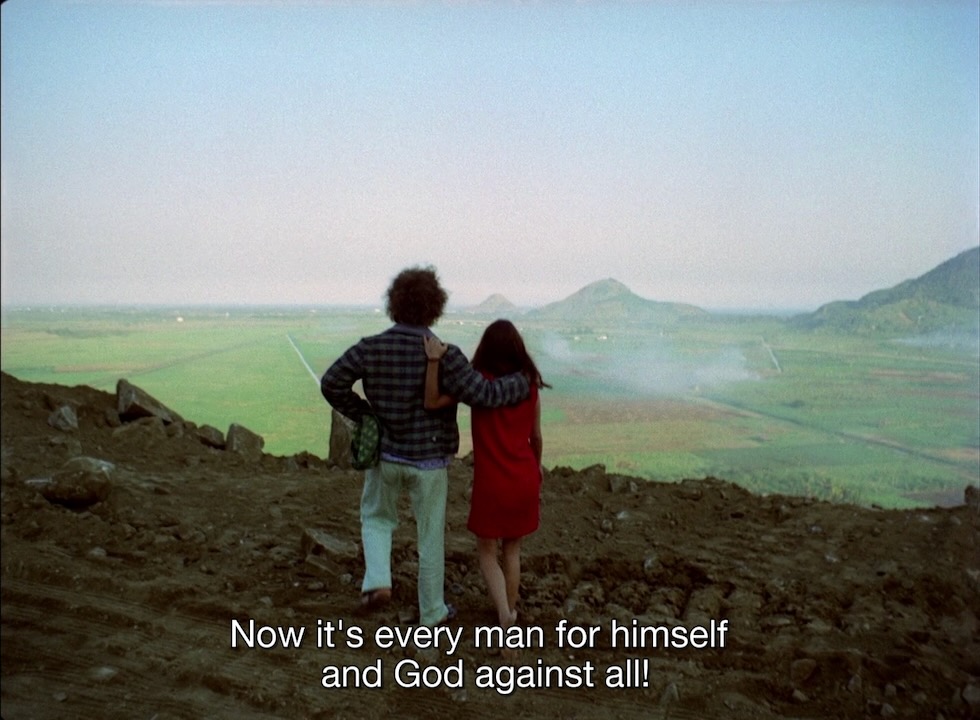
Same Vogel chapter as The Spanish Earth, “Left and Revolutionary Cinema: the West.” Useful to note that Vogel is never posting lists of his favorite movies, but the ones that illustrate a particular quality or movement – he spends half this chapter complaining about early 1970s Godard.

Unfortunately, the resultant films – from British Sounds to Tout Va Bien – prove that to “will” political cinema into being without the mediation of art is self-defeating. Despite brilliant sequences (reminiscent of the “old” Godard), these works are visually sterile, intellectually shallow, and, in terms of their overbearing, insistent soundtracks didactic, pedantic, dogmatic.


The Cry of Jazz (1959, Edward Bland)

“Rock and roll is not jazz.” Argument within a college(?) jazz club about whether only Black people could have created jazz, the white boys arguing that there are plenty of white players so race has nothing to do with it. Narrator Alex explains how music works (repeating chorus, changes/harmonies) and how jazz has evolved, culminating in the hottest group of today, the Sun Ra Arkestra. While the kids are stuck arguing in their musicless bland room, our camera hits the streets and the clubs seeking examples for Alex’s explanations. After a savage scene comparing Black life (pool game) to white life (poodle getting a haircut), eventually there’s a short debate over whether Americans have souls, concluding ambivalently: “America’s soul is an empty void.” For a half-hour movie that begins looking like a MST3K educational short, this sure takes some wild turns.

The two restraining elements in jazz are the form and the changes. They are restraining because of their endless repetition, in much the same way that the Negro experiences the endless daily humiliation of American life, which bequeaths him a futureless future. In conflict with America’s gift of a futureless future is the Negro’s image of himself. Through glorifying the inherent joy and freedom in each present moment of life, the Negro transforms America’s image of him into a transport of joy. Denied a future, the joyous celebration of the present is the Negro’s answer to America’s ceaseless attempts to obliterate him. Jazz is a musical expression of the Negro’s eternal recreation of the present. The Negro’s freeing worship of the present in jazz occurs through the constant creation of new ideas in jazz. These new ideas are born by improvising through the restraints of the form and the changes. Jazz reflects the improvised life thrust upon the Negro. Now, melody is one element which can be used in improvisation. The soloist creates this melody through elaborating on various details of the changes. The manner in which each change shall be elaborated upon is a problem of the eternal present. As Negro life admits of many individual solutions, so does the way in which a change can be elaborated upon. Of course the Negro, as man and/or jazzman, must be constantly creative, for that is how he remains free. Otherwise, the dehumanizing portrait America has drawn of him will triumph.

Editor Howard Alk worked on Dylan movies, and one of the jazz club girls grew up to be Magnolia‘s Rose Gator. Bland went on to arrange for Sun Ra in New York and compose orchestral works. From his NY Times obituary:

The British critic Kenneth Tynan, in a column for The London Observer, wrote that it “does not really belong to the history of cinematic art, but it assuredly belongs to history” as “the first film in which the American Negro has issued a direct challenge to the white.”


I’m a Man (1969, Peter Rosen)

“Police are always frightened.” John walks through a Connecticut town carrying a spear in order to provoke white people, then calls his wife to say he’s about to be arrested. The doc(?) interviews people from John’s court case: the whites think he’s incompetent, the blacks realize he’s an intellectual. John sees himself as a militant, says he expects to die poor and hated, but aims to increase freedom for his kids.


Wholly Communion (1966, Peter Whitehead)

Something completely different: document of a post-beatnik pre-hippie poetry reading in June 1965 at Royal Albert Hall. “This evening is an experiment” – with minor crowd disturbance or drama or movement, it’s mostly just guys reading poetry with better-than-decent sound recording.

Ginsberg listens and waits his turn:

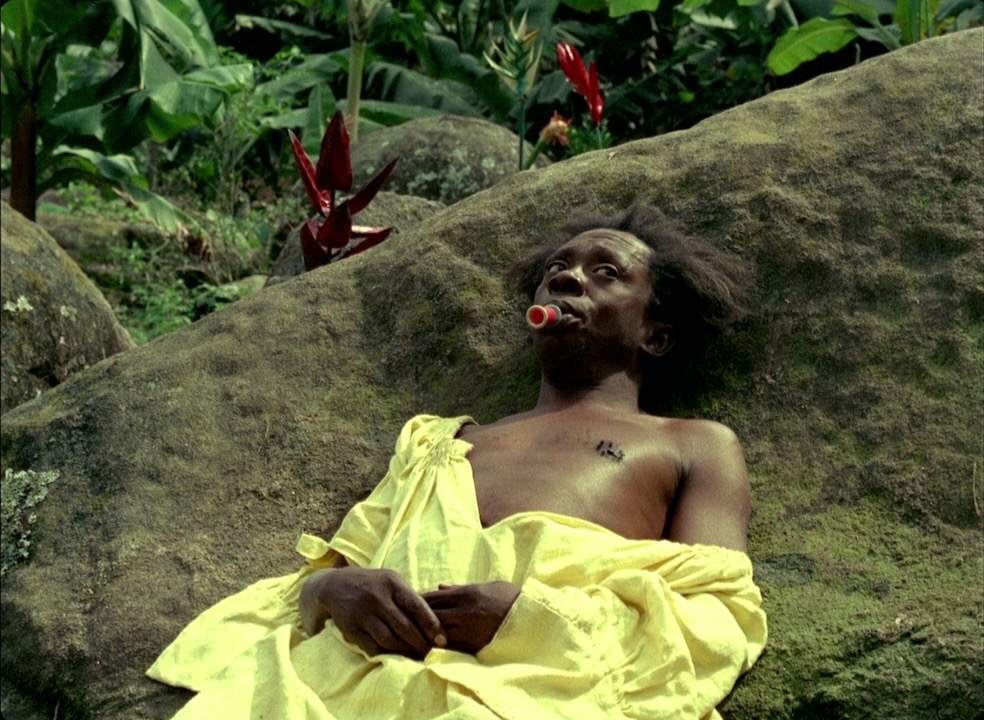
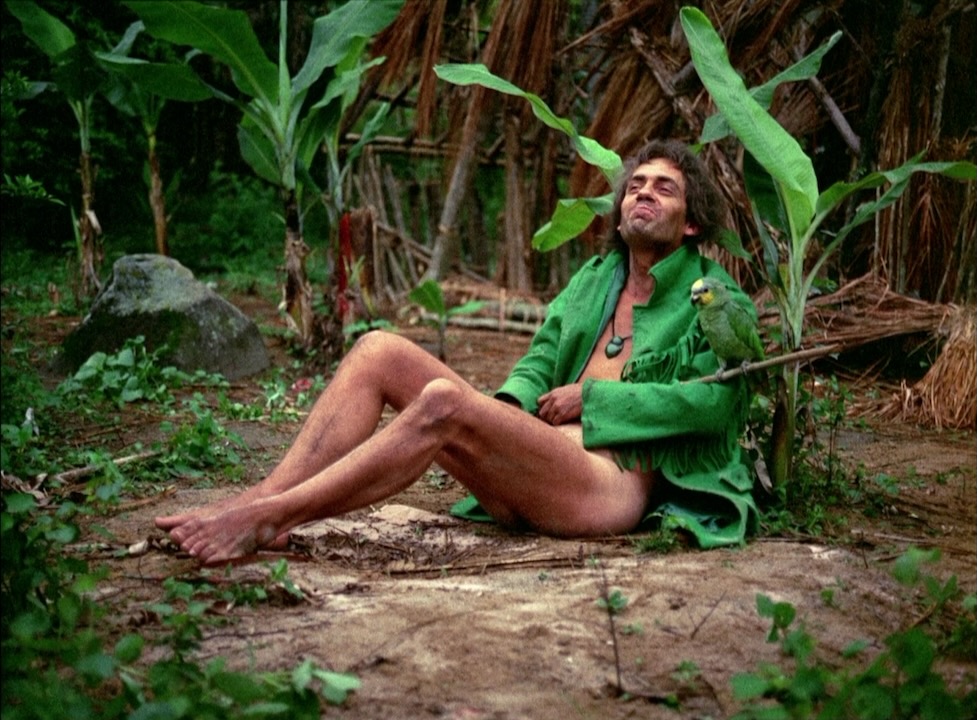
This one’s your standard sort of mysterious-stranger spaghetti-western with a few twists. Firstly, it’s a white western, snowbound like Track of the Cat (and moving around in the snow can go slowly, so you’ve gotta undercrank your movie a little). Hero Jean-Louis Trintignant (just before Maud’s and Conformist) is mute, hence the title. Then you’ve got a killer “Tigrero” who is always calm and polite, so they cast “Loco” Klaus Kinski (the spoken words and subtitles don’t always agree). The biggest twist for me is the ending, as the villains (corrupt bounty hunters) kill the sheriff, the hero, his girl, then all the families he was trying to protect.

The girl was much later in To Sleep with Anger:

L-R: corrupt Pollicut (a Bay of Bloodsman), the sheriff of Salvatore Giuliano, jailed Kinski

A tale of two icepicks and a handful of murders, in De Palma’s first Blow Up remake. Jumping back and forth in time, we follow Karen, who’s dating reluctant pornographer Chris, and her friend Tracey, who is withdrawing all her family valuables from the bank and putting them in an envelope under the seat of her illegally parked car then leaving the windows open. Introducing a creepy voyeur in a way that feels as if either De Palma or we the viewers might also be creepy voyeurs, and finally the movie’s secret weapon Otto, an undercranked maniac prankster, but not (on purpose) a murderer. Right as the murder mystery was escalating, Otto’s silent comedy bit takes over, his racing thoughts narrating the action.

Decent music, nice photography – the DP went on to shoot Basket Case and Brain Damage for Henenlotter. Against all odds, some of these people worked in movies again. Tracey is in Desert Hearts, Chris starred in a Fulci picture, and Otto became a De Palma regular, most notably starring as The Phantom of the Paradise.

Aka The Job, I watched this to see what it must be like to have a job (it sucks). Older brother goes to Milan to find work so maybe his little bro will be able to stay in school. First you gotta pass the interview, which seems to be one easy math problem, then a physical, which weeds out the desperate old guys. Then you’re mercifully given a post with nothing to do as a delivery boy’s assistant, and eventually a desk, along the way attending the saddest company holiday party ever, and attempting to connect with a hot girl who’s also the only person around your age.

After work:

Forgot I’d already seen something by Olmi – he did the best segment of Tickets. This was gloriously shot, a poetic upgrade to the early neorealists. Per Lawrence: “A collection of brilliant moments, some fleeting and improvised, others punchy and precise, fused together with an outlook at once generous and satirical”

Desk anxiety:

Kent Jones:

To say that Olmi identifies with Domenico, the young hero of Il Posto on the verge of a “job for life,” is to put it mildly. The pull of his narrative is fitted to Domenico’s inner turmoil, his curiosity and his romantic longing, like two pieces of wood joined by an expert carpenter. Even the lovely section in which the story veers off course to examine the private lives of Domenico’s future office mates (there are oddly similar tangents in Jacques Rivette’s Paris Belongs to Us and Jean-Luc Godard’s Band of Outsiders, made around the same time) feels like an illumination of Domenico’s own perceptions: these hushed vignettes represent the lay of the adult land, as well as a set of possible futures.

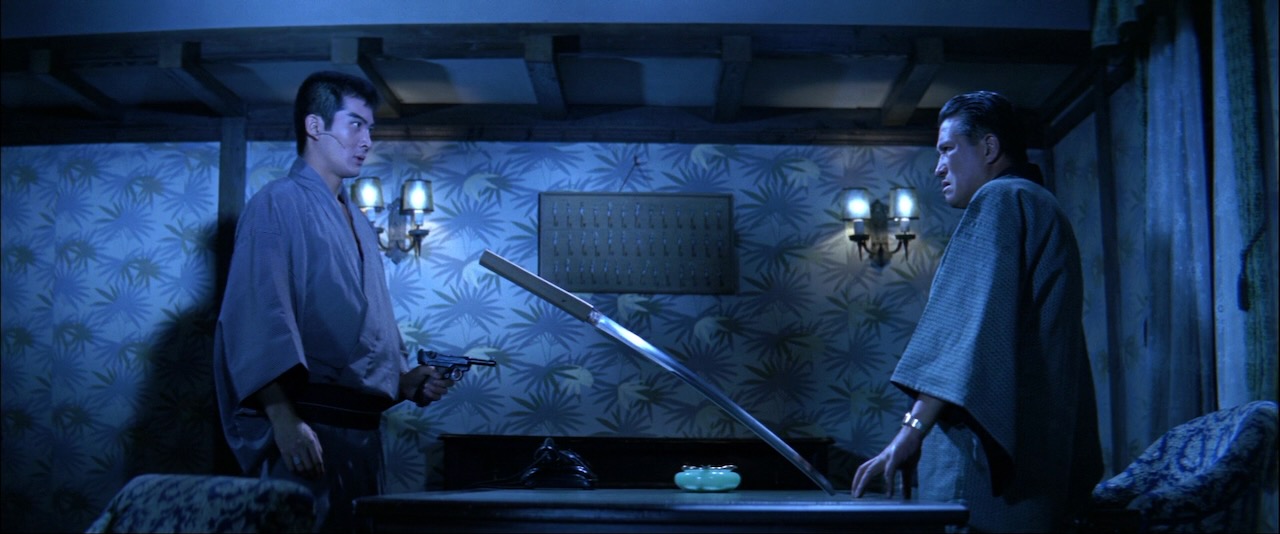
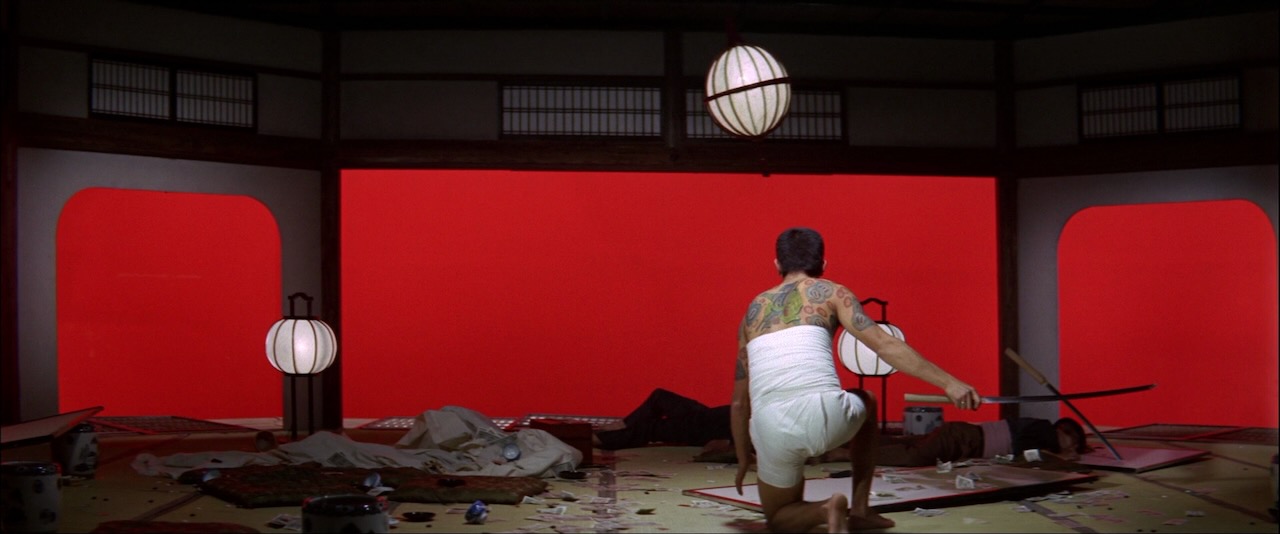
Boy lives with an adoptive family of scam artists, the parents both Oshima regulars (she’s the criminal’s wife in Violence at Noon, he’s an officer in Death by Hanging). They earn money by having the kid and mom Curly-Sue passing cars then shaking down the drivers. This life doesn’t bring Boy happiness so he’s hoarding his allowance to afford a train ticket out of town, but the others catch up, and carry on until one of their crashes proves fatal and a suspicious driver reports them. Kind of a true-crime story, adapted from news stories, and predicting a bunch of Kore-eda films. The Boy is really good but his lines are so post-dubbed that it sounds like he’s a talking doll having his string pulled.

Boy didn’t act again, but grew up to be Morrissey:

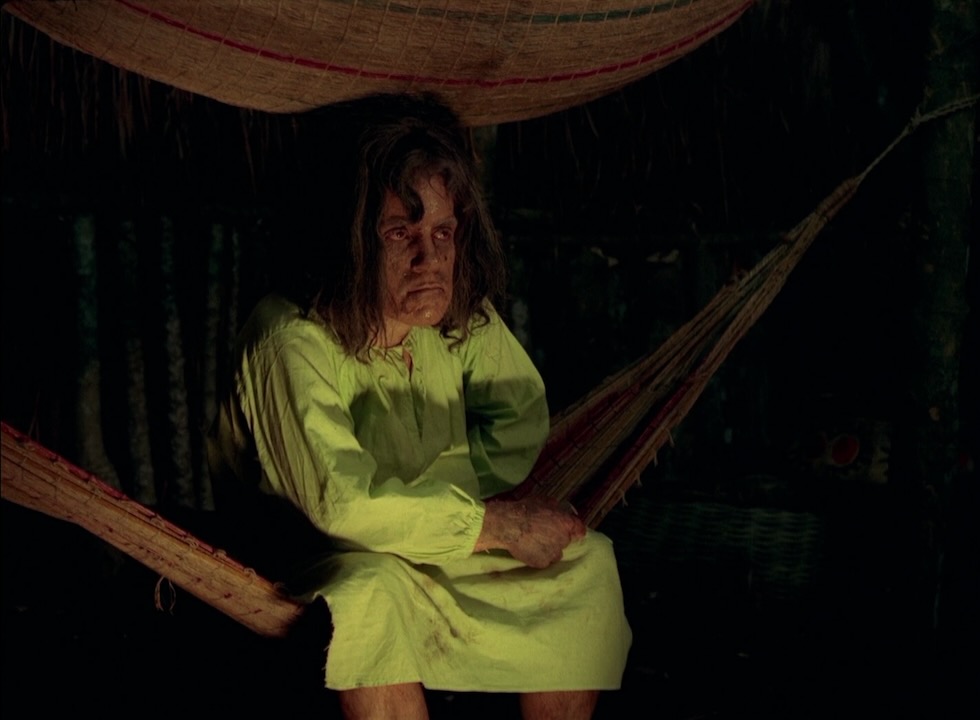
Wild 1920’s-set mad-scientist movie. The title and concept are more fun than the experience of watching it. I fell asleep with my finger on the screenshot key and had to delete ten thousand files the next day.

Can’t say you weren’t warned, I’m superdeformed (dig it):

Young doctor (lead actor from the also-nutty Goke, Body Snatcher From Hell) escapes from an asylum, seeking a half-remembered island, and finds a doomed circus girl who also half-remembers it. He makes his way to the shore right as his doppelganger dies, so he pretends to be that guy, saying “actually I’m still alive,” then hangs out with his weird family and sleeps with his sister.

Chair goals:

He makes it out to the family island and finds his madman web-handed dad who deforms people, and hopes to one day deform everyone… one at a time I guess, since he doesn’t have a Magneto-scale operation here. Dad reveals various hidden identities and plots and backstories – such as when he locked his wife in a cave, and she fed on the crabs that fed on her dead lover – then a cop who’d been posing as a family servant explains some more.

Dad is a disability-rights advocate:

But it’s true he has issues:

After all this, the young doctor’s sister-lover reaches the correct conclusion: “We will embrace atop the fireworks mortar. We will scatter magnificently across the great sky.”

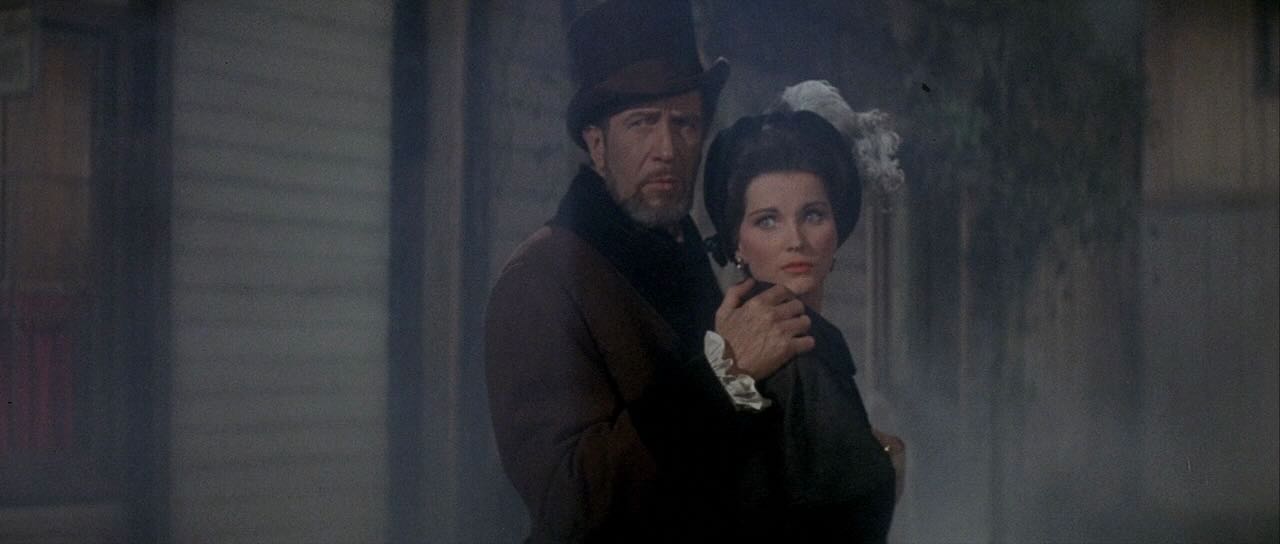
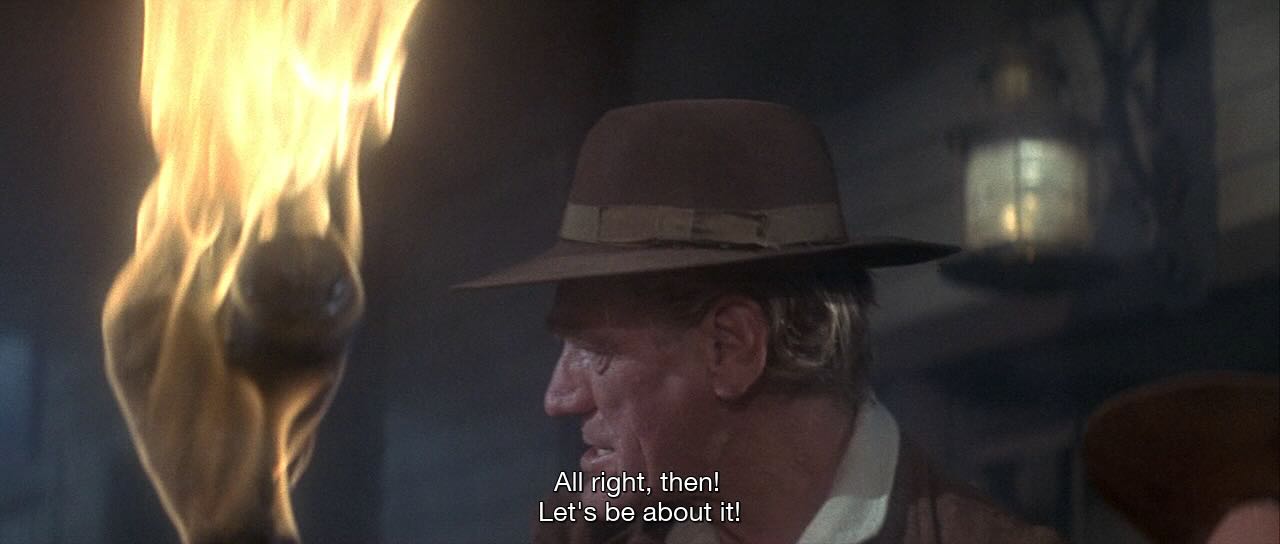
“That almost looks like an image from a Roger Corman Edgar Allen Poe movie” says the Messiah of Evil audio commentary the first time the lead girl gets to the beach. “Don’t mind if I do,” said I. This was the first of the Price/Poe movies, made the year after A Bucket of Blood, and the color is really nice but they didn’t have their groove down yet, it feels draggy and drawn-out.

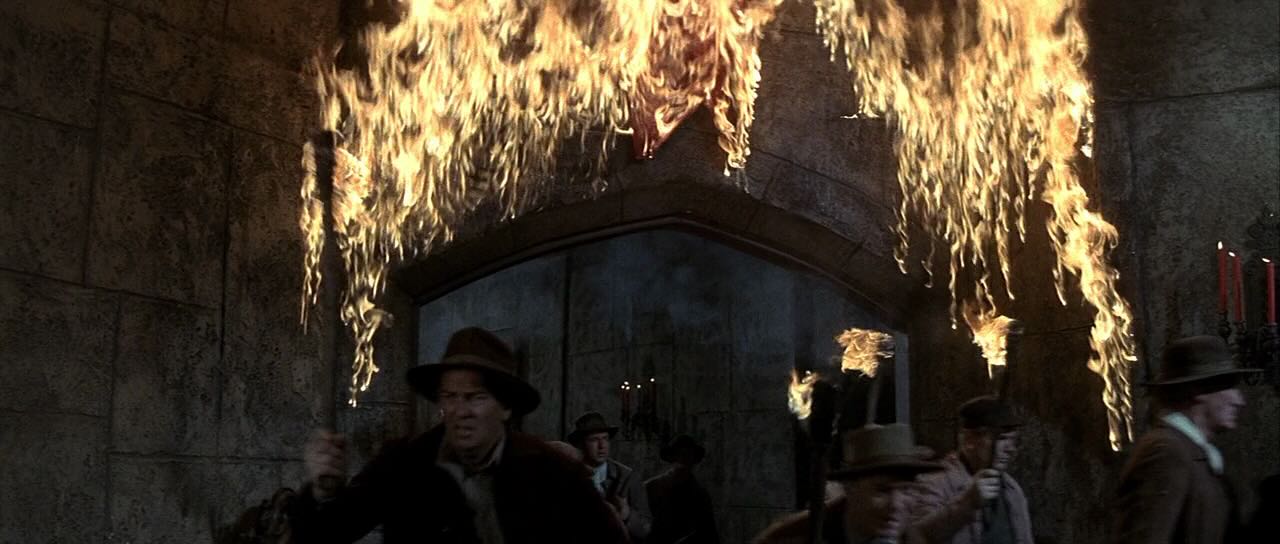
Visitor Phil makes a poor first impression, throwing a fit over being asked to remove his shoes indoors, then insists he’s the fiancee of sickly Lenore and is taking her away with him. Her brother Vincent disagrees (a delicate shut-in, this must be the performance the Burton cartoon was based on). Vincent goes on to explain that all his ancestors were evil and so is the house itself, and anyway, whoops, Lenore just died. But the butler slips and mentions catalepsy, so Phil goes barging through the family catacombs trying to rescue his beloved. She’s either driven insane from being buried alive or just wants revenge on her gothy depressive brother, and they go up in flames together.

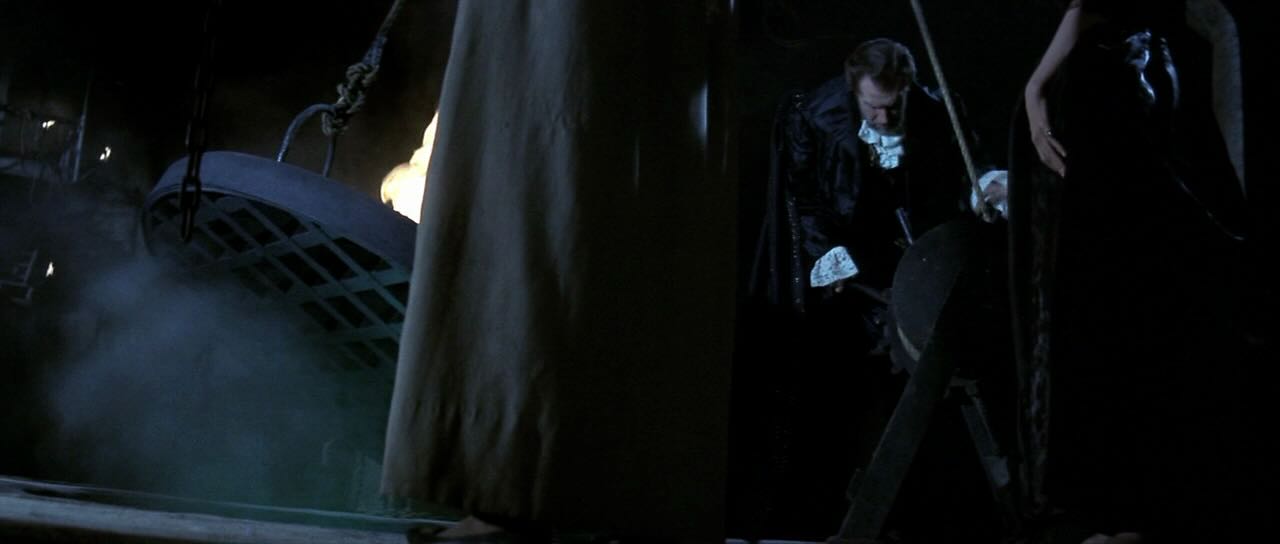
Ever since Tales of Terror I’m collecting shots of Price being throttled in front of fire:

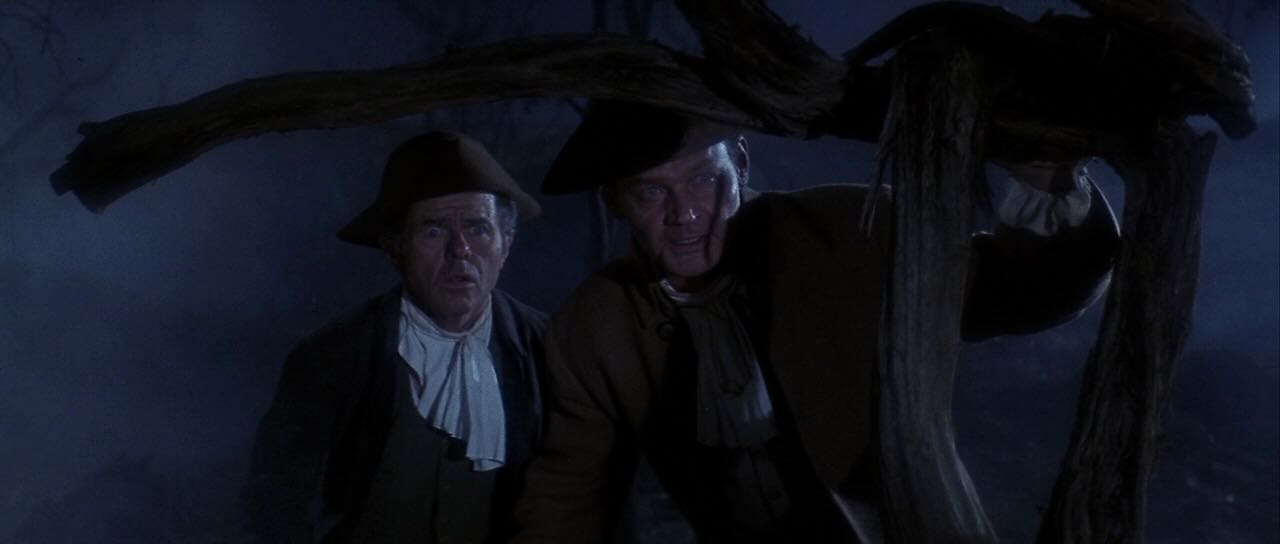
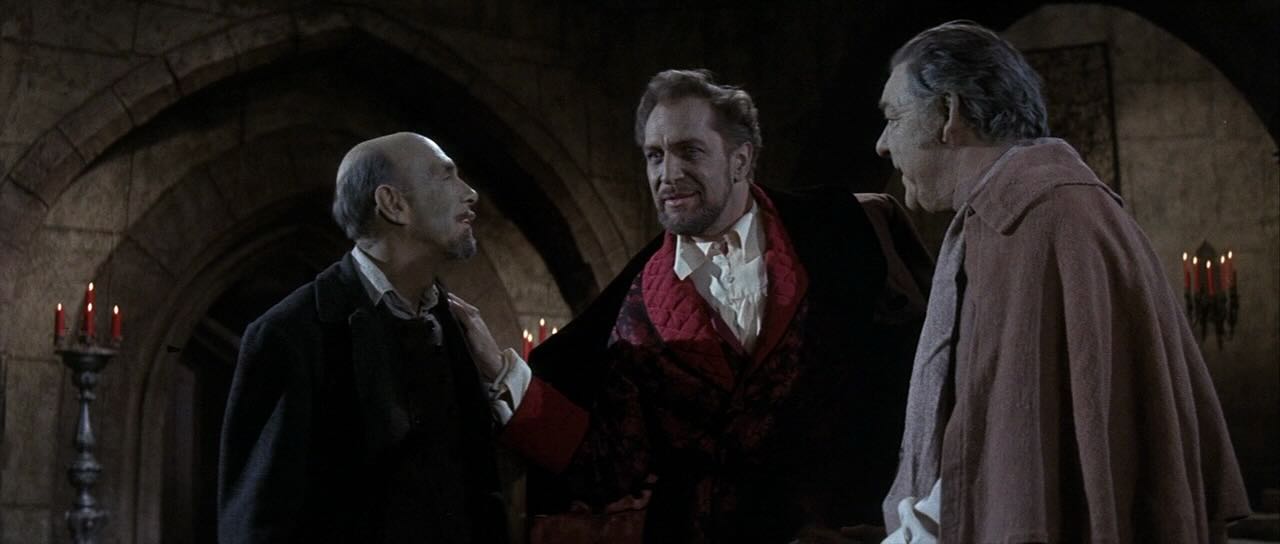
Phil was Mark Damon, who went on to exec-produce Universal Soldier: Day of Reckoning, and Lenore would guest-star on TV’s Batman. The butler is Harry Ellerbe of The Haunted Palace, which also has Elisha Cook Jr., so could’ve been an equally smart double-feature with Messiah of Evil.

Phil, having a foggy dream that used up the movie’s entire dry ice budget:

Muratova plays a local government official who hires Nina Ruslanova (of Khrustalyov, My Car! two decades later) as a maid. At other times they’ve both been in love with Vladimir Vysotsky. Psychologically true and beautiful drama. Nervous cutting between timelines, solid within each particular time and place. If this had been widely seen, the cold war would’ve not gone down the way it did.

Criterion did a giallo series and I went straight for the John Saxon movie. Nora is a young “New Yorker” visiting Rome (Letícia Román, also of a Russ Meyer erotic comedy and an Elvis flick). Her Aunt Ethel was being cared for by Dr. Saxon, dies almost instantly after he leaves, then Nora runs outside for help and is immediately mugged – tough town. She has a Blow-Up fever dream of a witnessed murder and ropes John Saxon into her madness, and I guess her landlady (Valentina Cortese, Masina’s friend in Juliet of the Spirits) has been doing some murders.

Italians are absolute goofballs. Last night I told Katy about Trap, and she asked how could a dumb movie be great, and as if to answer her, here’s Italy with one of the dumbest greatest movies of its era. Movies aren’t even allowed to be this beautiful or dumb anymore. Bava made this the same year as Black Sabbath and The Whip and the Body (which we just might watch this Shocktober). There are seven credited writers, which honestly makes sense.