In the midst of SHOCKtober I’m not gonna write anything about this that you couldn’t get from the letterboxd description and first few reviews, but yay journalism. Watched on Criterion with Katy, from the guy who made Up the Yangtze.
Tag: 2020s
Books of Blood (2020, Brannon Braga)
This SHOCKtober we are counting down the days until the new Hellraiser Remake comes out, and starting the celebration with this Clive Barker adaptation. Seems odd that another Books of Blood semi-anthology TV movie would come out so soon after the last one, instead of like a Masters of Horror-style Books of Blood series, or a Weaveworld adaptation, or really anything else. Trying not to focus on the fact that this (smells like content) movie and the new Hellraiser are both “Hulu originals,” maybe there’s still hope.
Kicking off the anthology framing story, hitmen Yul Vazquez (War of the Worlds) and Andy McQueen (Clifton Hill) are after the Book. But we’ll get back to them in a bit – first, Jenna (Britt Robertson of Scream 4) is sad since her parents don’t understand her, is off her meds, runs away since mom is “sending her back to the farm.” Jenna’s x-men superpower is she can loudly hear the sounds of people eating. She stops in an internet cafe and books an airbnb (what year is this?) in a spooky house with hosts Freda Foh Shen (Ad Astra) and Cronenberg regular Nicholas Campbell, has a noise-cancelled sleep paralysis nightmare and pukes CG bugs, then discovers the walls are full of people (“we relieved them of their eyes and tongues”).
You’d be depressed too if you lived in this house without curtains:

Airbnb hosts:

Next, a professional fraud-debunker (Anna Friel, not of Stephen King’s IT, but of Pierce Brosnan’s I.T.) is confronted by a “speaker for the dead” (Rafi Gavron: Aarfy in a previously-unknown Catch-22 miniseries). This guy seems to be the real thing, and Anna is convinced until he drunkenly admits his scam. Alas, the dead have highways, and the boy gets cut up by ghosts, becoming the valuable “book” the stupid hitmen think they’re looking for. And the depressed girl from part one goes back to the spooky house to be relieved of the burdens of seeing and speaking and be buried alive in their floor.
Have I mentioned that the dead have highways?

From the producers of Stallone’s Lock Up, King’s Dark Tower, King’s Bag of Bones, the Barker Dread, Final Destination, Unstoppable, Cabin in the Woods, and Family Guy (those are all different producers). The director worked with a more distinguished cast than this one on the series Cosmos, aka that show everyone thought I was talking about when I used to recommend the Zulawski movie.
Death Trip (2021, James Watts & Kelly Kay)
Happy SHOCKtober! Kicking off the season with a tried-and-true concept: a group of young people goes on a rural getaway, and things go badly. We’ve got ominous “no trespassing” signs and creepy neighbors, but the mumbly young people keep on smoking their drugs and being generally not smart, building ill will in the viewer until halfway through I started looking forward to their violent deaths.
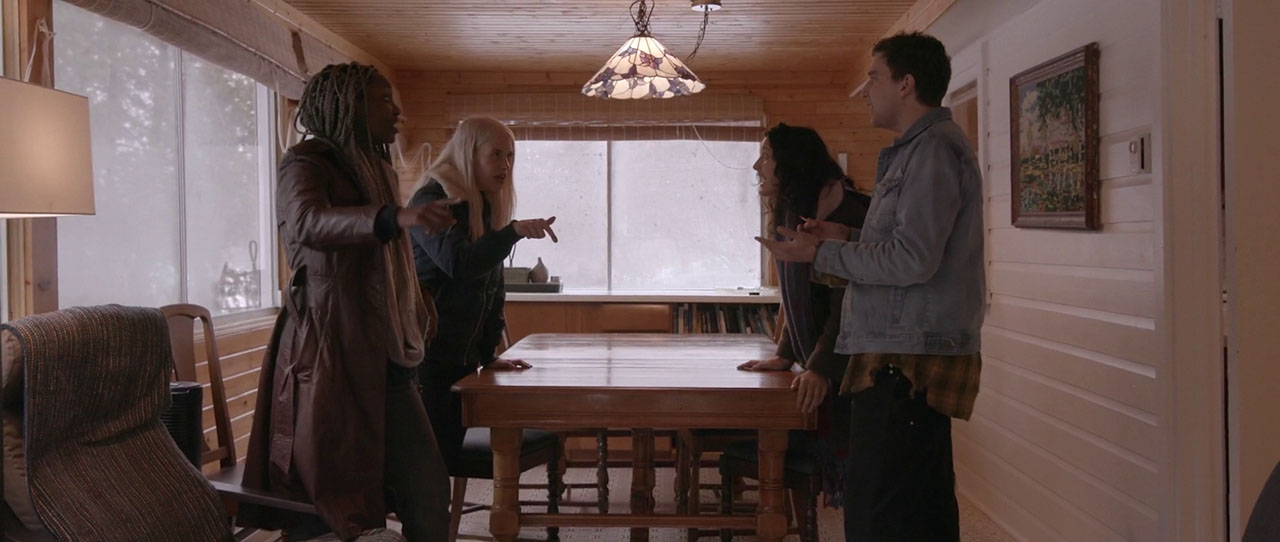
The movie likes to punctuate scenes where nothing dramatic happened with shock flash-forwards of our kids screaming and bloody. Kelly gets killed by a wood-wielding drifter, but wakes up just fine. It’s less dialoguey than these tend to be, with more drunken screwing around, and the music is all over the place, from strings to Drive.
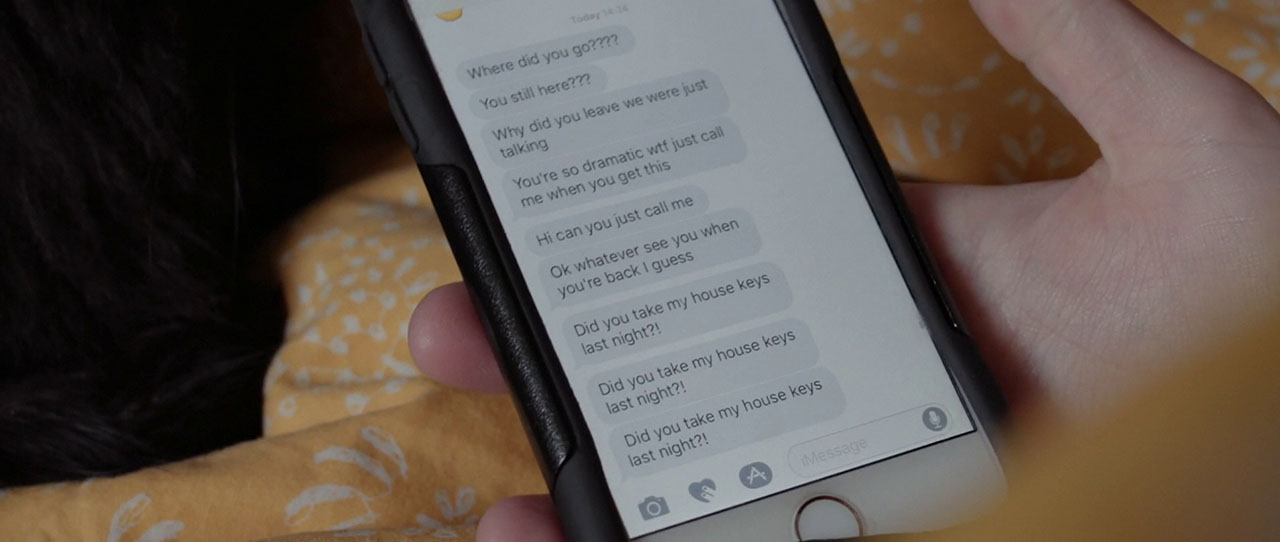
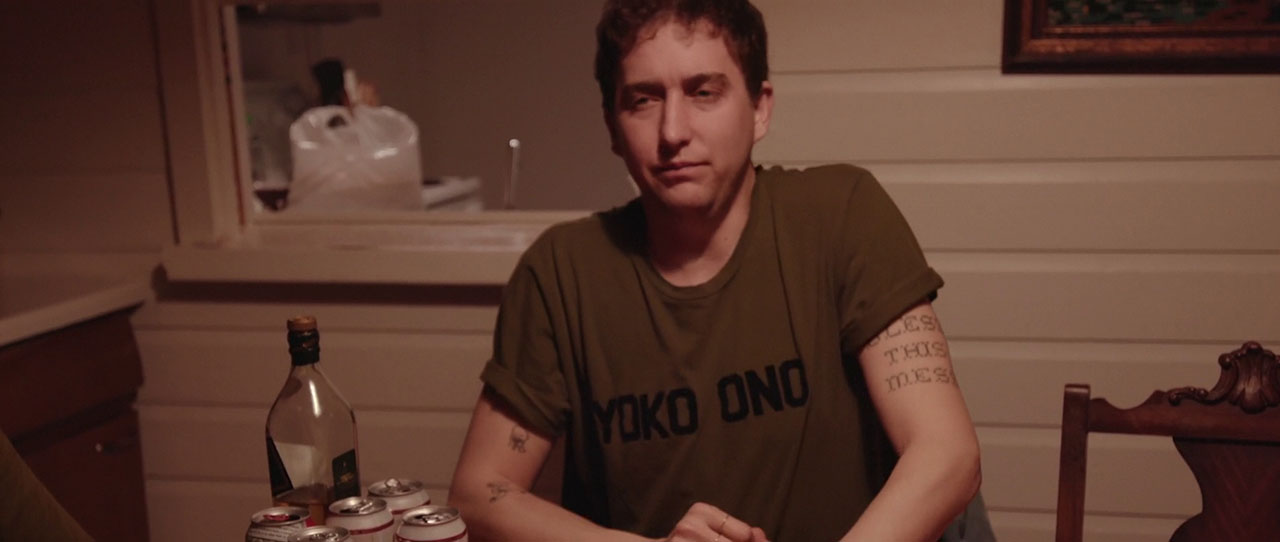
In the end the terror is within – it’s not the creepy neighbor but cabin host Garrett who starts killing people, and clumsily trying to kill more. He’s not much of a murderous mastermind, and it turns into an awkward wrestling match on the ice. Maybe not an enduring classic but a good time with some subverted expectations.
The look of a killer:
Three Thousand Years of Longing (2022, George Miller)
Three stars, raved the critics, “so garishly digital.” Two and a half stars, “a little boring.” But I see “the Idris Elba genie movie from the Mad Max guy,” and I can’t help myself, I go to the movies and watch it, expecting to be absolutely delighted. Who was right, me or the critics? I was right. Katy is not as easily delighted as I, DNF.
The Beta Test (2021, Jim Cummings & PJ McCabe)
Startup company is like that Ashley Madison cheater-dating site but without the participants’ knowledge or initiation, so it leads to some hot blindfolded sex, but also some misunderstandings and murders. Codirector Cummings boldly plays the lead Jordan, a guy whose side we’re not on from the very start (from my notes: “why is everyone getting killed but Jordan, when does he get killed?”) tracking down how he got caught up in this conspiracy, and doing a really good job of it. The murder-suicide by vape pen was novel. Jordan’s wife was The Death of Dick Long‘s Virginia Newcomb, and his hotel hookup was in Song to Song.

El Gran Movimiento (2021, Kiro Russo)
City-symphony intro with foreboding music. Among protests in La Paz, Bolivia, ailing Elder has arrived with his friends. They look for work, but Elder is getting worse. He’ll end up meeting old man Max who has been walking towards town having wolf visions, but not before we’re treated to an 80’s dance video in the street.
Wolfy Max:

I liked the onion ladies:

The Beatles: Get Back (2021, Peter Jackson)
Some notes I took along the way:
Day 2 opens with them looking thru Beatles fan magazines
Michael L-H is kinda an ass
Cutting between 1966+69 on “Rock & Roll Music” at end of day 4 is great
Mal is round-headed guy who plays anvil on Maxwell’s
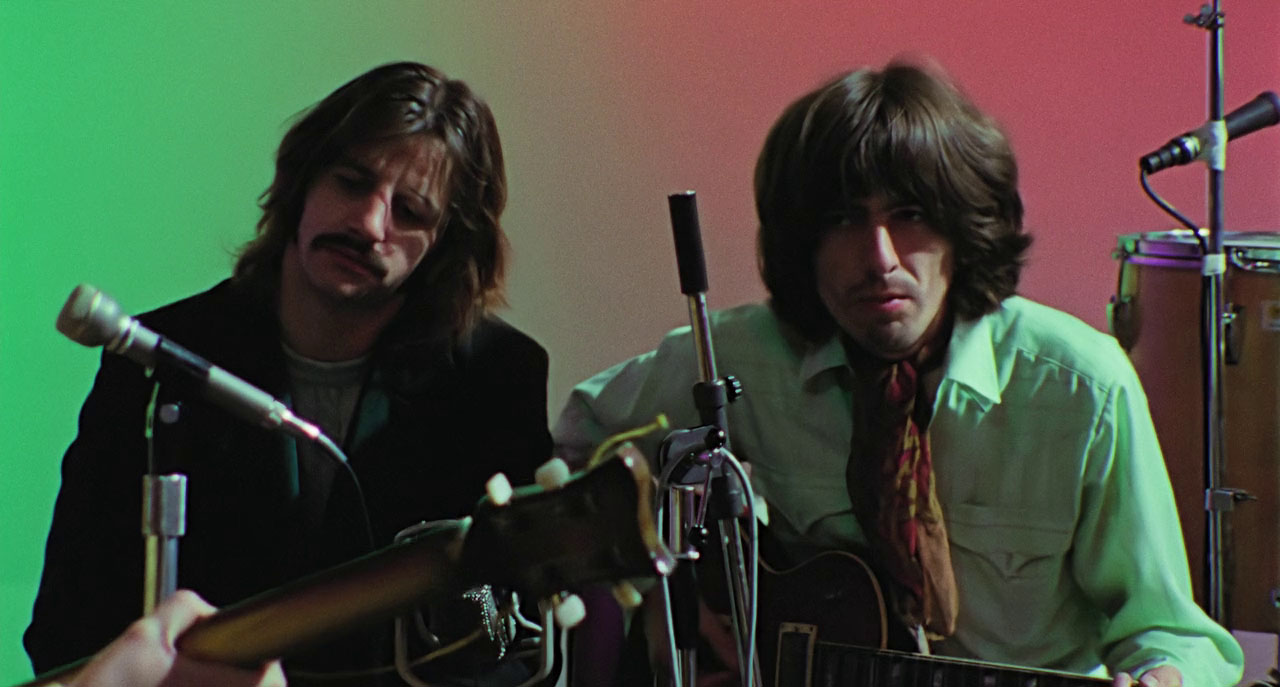

We know that it’s magic to spend time with the Beatles, but episode two presses its luck, showing us different views of a flowerpot while John and Paul argue near a hidden mic
Peter Sellers shows up after The Magic Christian sets arrive
Reminiscing on their India trip, discussing the footage, which we get to see

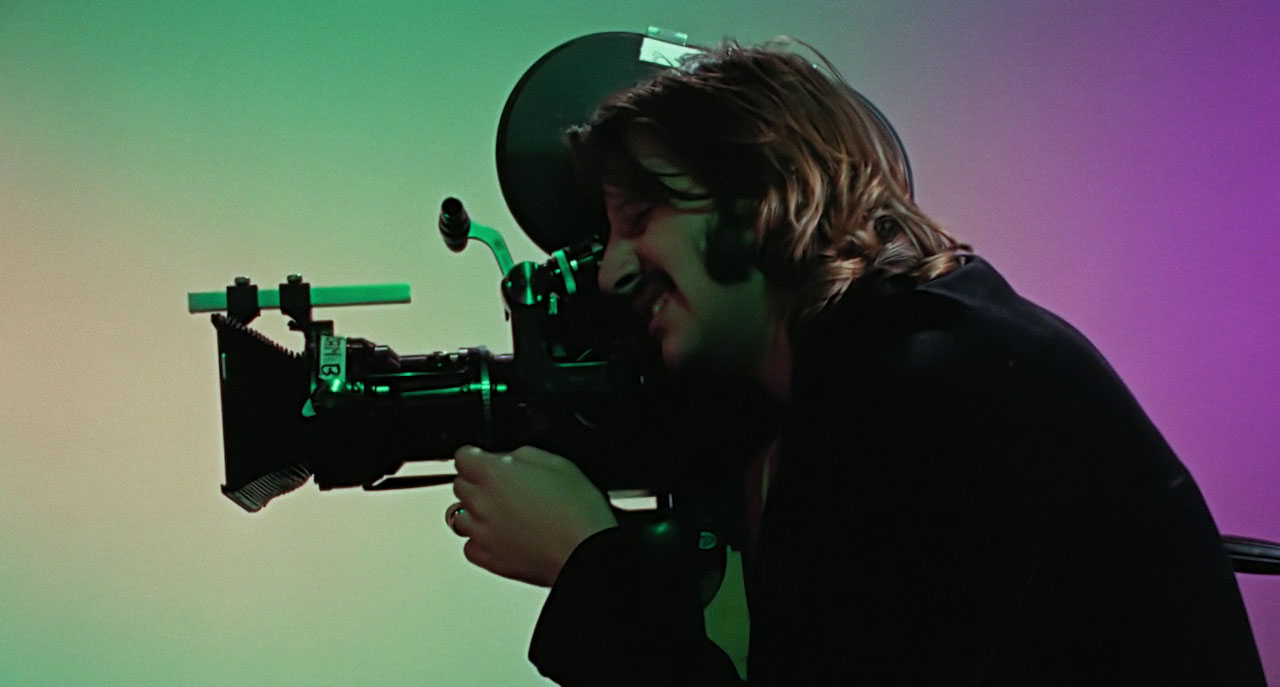

Michael and Glyn are credited with the roof idea
Jackson has overbaked everything since Frighteners
Soon before the concert, John simply sings the setlist, wow
During the concert the movie thinks we want to hear everything the teenaged chinstrap-chewing pigs say, but we’d like to hear the music please
Problems with the crowd interviews on the street: British people are boring, and clearly Beatlemania is over

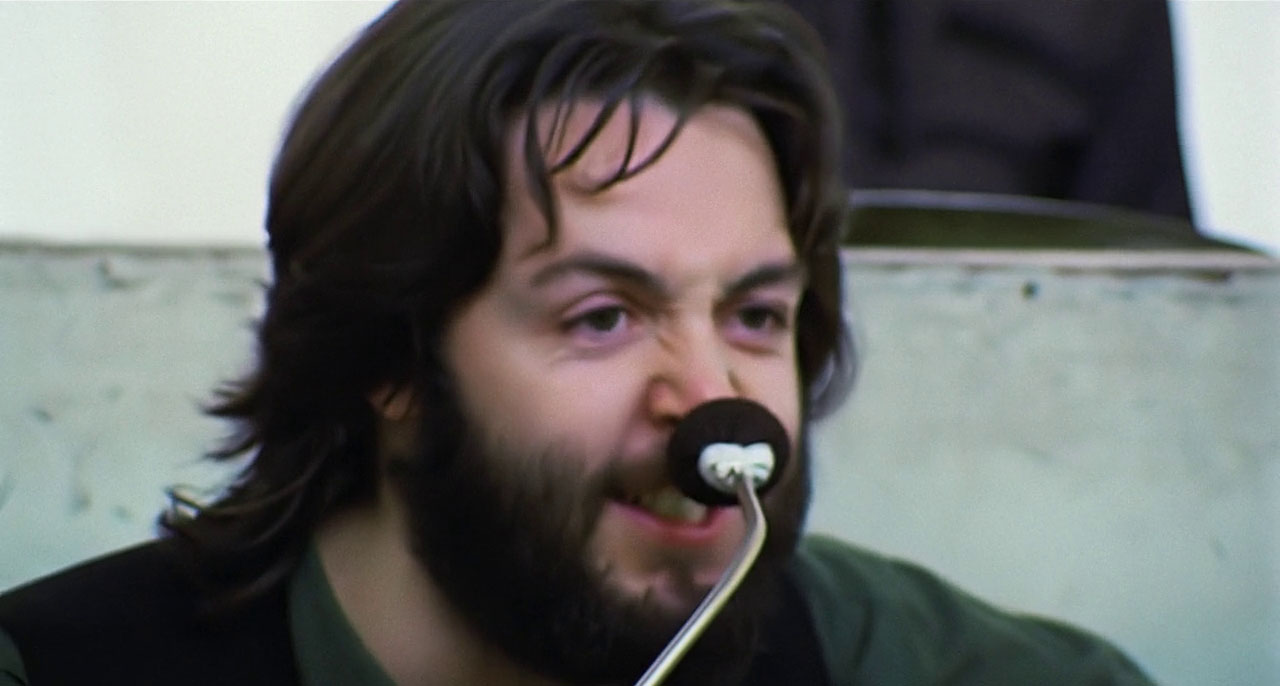

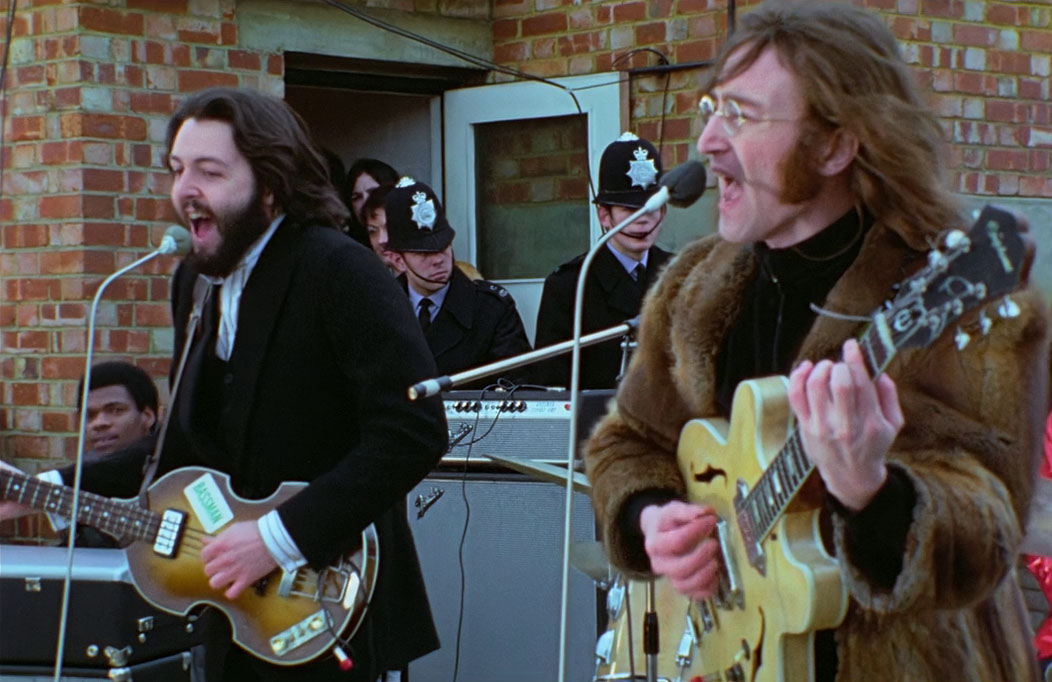
Beatlemania is back on in our house, though.
Aspirational Post-Beatles Media To-Do List
– The Magic Christian (1969)
– Ringo: Beaucoups of Blues (1970)
– George: All Things Must Pass (1970)
– John/Yoko: Plastic Ono Band (1970) + Imagine (1971)
– Paul: McCartney (1970) + Linda/Ram (1971) + Wings/Wild Life (1971)
– The Concert for Bangladesh (1972)
– Concert for George (2003)
– Beatles Anthology (1995)
– Beatles Love (2006)
– Rock and Roll Circus (1968)
– How I Won the War (1967)
– The Last Waltz (1978)
– Jimi Plays Monterey (1967)
– George Harrison: Living in the Material World (2011)
Inu-oh (2021, Masaaki Yuasa)
Cursed Mutant kids meet up and share a musical connection. Tomona was blinded by the magic sword that killed his father, and Inu-Oh was born a mutant due to a deal his serial killer father made with a magic mask. Stories of mutants and curses are usually good, and Yuasa’s animation is playful and unusual, especially when visualizing how blind Tomona “sees” the world through sounds. But then after a half hour it abruptly becomes a hard rock musical… returning to sum up the kids’ stories at the end, but too late. And while some directors will shoot the plot scenes normally then make the style come alive during musical numbers, Yuasa does the opposite. The whole hour of rock & roll theatrics is full of repeated shots and movements and angles, third-rate early-MTV stuff.
Flux Gourmet (2022, Peter Strickland)
One of Strickland’s insular alternate-reality weirdo movies, about an artistic residency by a group of “sonic caterers,” is secretly a comedy about bandmate relationships. “I’d say misunderstanding between us is probably the key to our sound.” Of course it looks excellent.
Fatma X2:

On the residency side of things, Gwendoline Christie (returning from In Fabric) is famed Director Jan. Beardy journalist Stones, documenting the musicians, is a Greek guy from Chevalier whose digestive issues are more fascinating to the group than to hilariously snipey Dr. Glock. After music performances, the invited audience “pays tribute” (sexually), which Stones also documents. And another music group was rejected from the institute, is now threatening violence. In a tie-in to Crimes of the Future, everyone in this movie wants to be in a culinary art collective.
Stones vs. the Doctor:

The band is led by Strickland muse Fatma Mohamed, who says within earshot of the others that they’re not a collective – she’s the leader and the others are replaceable. Ariane Labed and Asa Butterfield (Hugo himself) make up the rest of the trio. Asa is especially cute in this – his emo haircut sticking out through the eyeholes of his crime-catsuit is a nice touch.
On Letterboxd: “Some Might Say” by Oasis
