Only my second feature by Ruiz, as much as I’m always talking about the guy – and it’s kinda what I’d expected. Good movie with some weird craziness in the plot, but at the same time, it’s a French film, a classy drama about restrained rich people.

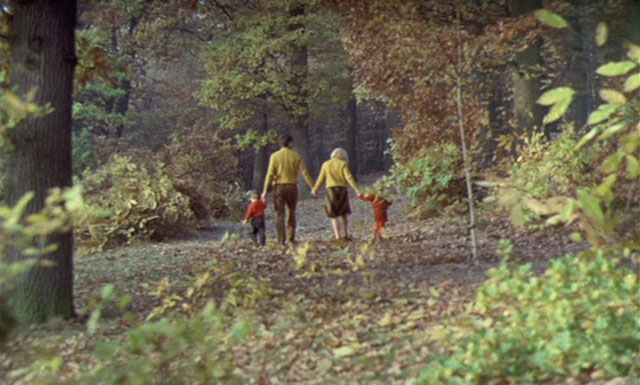
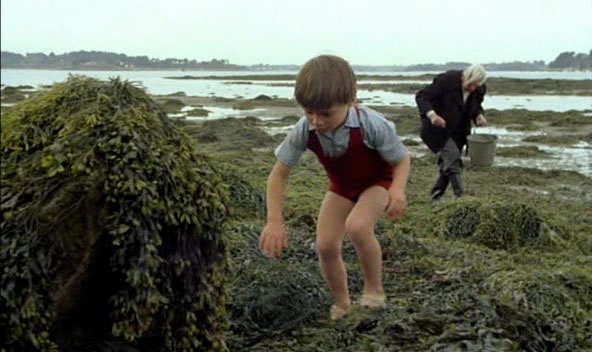
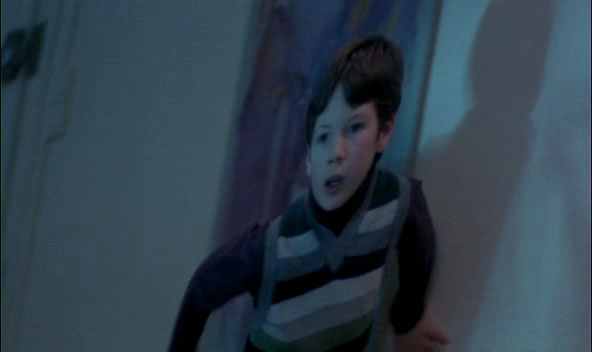
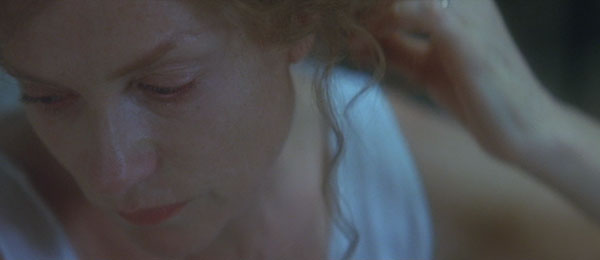
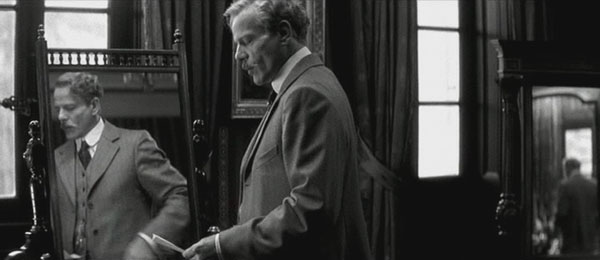
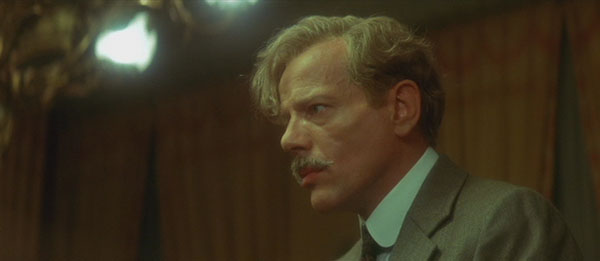
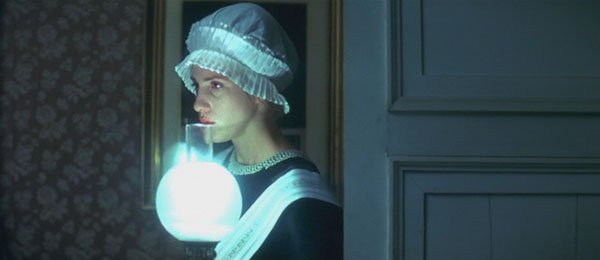
Camille’s dad is out of town – his mom (Isabelle Huppert, the year before The Piano Teacher), uncle Serge (Charles Berling of Summer Hours) and maid Helene are taking care of him until one day he announces that his real name is Paul and he wants to go home to his real mom. He guides Huppert to another woman’s apartment – she’s not home but creepy neighbor Edith Scob (also Summer Hours) shows them around.

image

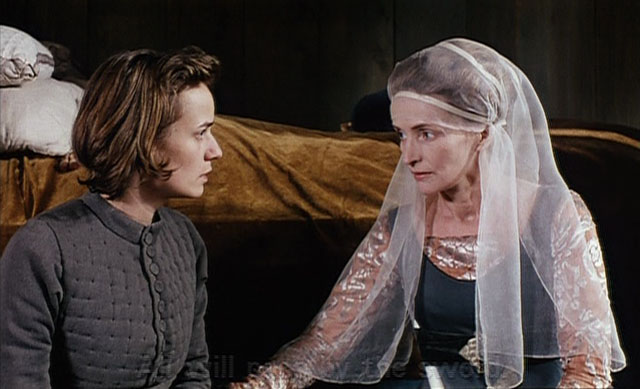
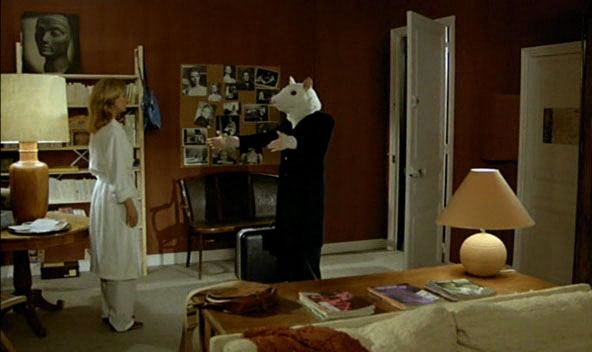
When beautiful Jeanne Balibar (the Duchess of Langeais herself) gets home, she tells Huppert about her son Paul who drowned two years ago, but also acts as if Camille is her Paul in the present tense. There’s no sense of paradox or surprise, nothing unusual, just these facts: Paul died and Paul is here. It’s not the kind of thing that could be done in an American movie without some character shrieking “how can that be? how can you say he died if you’re saying he is here in front of you?!” Huppert plays it cool though – invites Balibar to stay at her house so they can figure it out together.

image

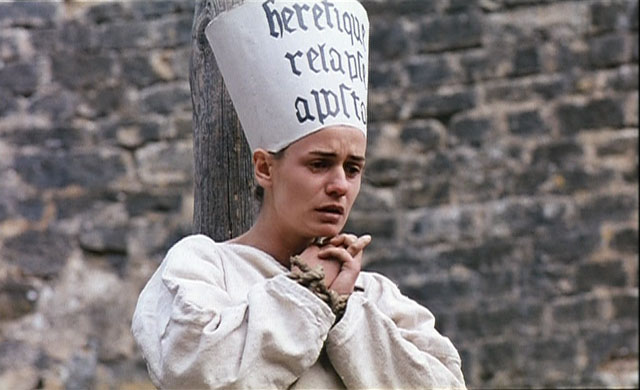
In the climax, Balibar kidnaps Camille/Paul and takes him to the barge where Paul had drowned. Huppert shows up and Balibar surrenders and apologizes, everything back to normal.

Ruiz uses a Sam Raimi anamorphic-lens-twisting effect:
image

Is it pertinent that the maid might be having an affair with the uncle? That Balibar is after the uncle as well? That Huppert’s grandmother died of sorrow because of some incest incident? That Balibar’s neighbor Edith Scob is just as creepy and mysterious as Balibar herself? That a family acquaintance dies in a car crash near the end? That Camille has a businesslike 10-year-old friend who everyone had assumed was imaginary? All combines into an overall sense of mystery about identity, parentage, relationships, and what can be known.

image

I thought I’d heard of Denis Podalydès who played Isabelle Huppert’s husband, but it’s actually his brother Bruno I’d heard of.

Unnerving, noticeable music by loyal Chilean Jorge Arriagada and not extremely impressive cinematography by Jacques Bouquin (The Film To Come, Life is a Dream) – he does that thing where the camera is always gliding slowly past the action an awful lot. Overall I dug the movie… looking forward to Ruiz’s other 99 features.

image

June 2014:
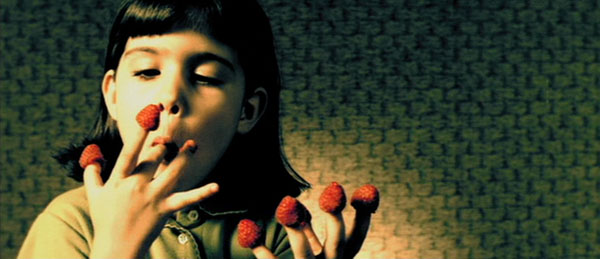
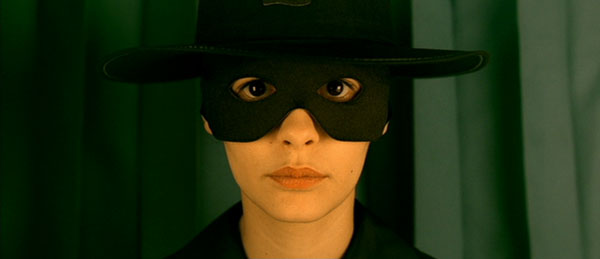
From a year when I was watching more movies than ever, and starting to get obsessed with my favorite filmmakers. Visually distinctive films that became instant all-time faves included Mulholland Drive, Pulse, The Royal Tenenbaums, Artificial Intelligence, Monsters Inc., Donnie Darko, Winged Migration, and Amelie. I’d caught up with Jeunet’s previous features on video (including the brilliant Alien Resurrection), always impressed by the atmospheric fantasy worlds, rube goldberg devices, intensely detailed production design, playful editing, cartoon camera angles and rubber-faced Dominique Pinon. With Amelie, he took his fantasy visions and hurled them into the present-day real world, creating a romance flick that keeps forgetting to be romantic because it (like the protagonist) is too easily distracted by everyday wonders.

July 2009:
image

image

The cigarette-counter lady in Amelie played a lead in Not On The Lips. She did look awfully familiar.

Our narrator was the VHS-watching realtor in Hearts/Private Fears

And holy crap, Katy knew just from the trailer that the veggie-stand guy starred in Angel-A.

image

image

The highlight for me here was Edith Scob. I only know her as the virgin Mary in Bunuel’s The Milky Way forty years ago, but she was totally recognizable as the deathbed matriarch here. I mean, yeah Juliette Binoche is always good, but Charles Berling (Scob’s costar in Ruiz’s Comedy of Innocence) was more the star here (and blonde L’Enfant star Jérémie Renier played their brother).

I heard this was a great movie, but right before it started I realized what I’d gotten myself into… an acclaimed family-secrets drama – surely another underwhelming handi-cam video a la A Christmas Tale or Rachel Getting Married. But no, fortunately this was the kind of filmmaking I can get behind, everything in order, with shaky cameras and close-ups only where necessary. Kind of surprising, really, that the director of hyperkinetic Irma Vep and Demonlover makes a classical-style family drama, but I’d seen Clean so I wasn’t too amazed. Another thing compared to the other recent dramas is that everything is supremely understated in this. Its themes are obvious, but they don’t come out in big emotional climaxes. The big payoff shot, Berling’s daughter framed in front of the family home, telling her boyfriend that she’s kinda sad that her grandmother is dead and the place is being sold, is tear-free and quickly interrupted and didn’t really hit me until a few minutes later in the parking lot.

Opening scene has three siblings at their mother’s house with Berling & Renier’s wives and kids (Binoche is too much the high-powered businesswoman to have time for a husband or kids), Scob talking privately about what will happen to the house and her possessions after she dies. Next scene a few months later, predictably, she is dead and the kids spend the rest of the movie deciding what to do with her house and possessions. It’s decided pretty easily that everything will be sold and the loyal servant (Isabelle Sadoyan, also a servant in Blue) will be dismissed, so there’s not much conflict, more the family members coming to terms with the property sale, the kids becoming the oldest living generation in their family.

“Time doesn’t matter, I’ve learned. It does as it likes.”

In the same week that I declared I wouldn’t watch any more French movies and then watched one anyway, I decided as long as I was transgressing I’d go ahead and watch another French movie and make it one which I’d actually like. And I did like it, but I didn’t exactly see what’s the big deal about it. The impetus for watching this now was the two articles on the film and director in this month’s Film Comment, so after watching, I read both of those and didn’t get a whole lot out of ’em. Now I’m thinking I shouldn’t have futzed about with High Art while I was sick, maybe just watched a zombie movie.

image

Gabrielle (Isabelle Huppert of The Piano Teacher and Time of the Wolf) leaves a note and walks out on her husband of ten loveless years.

image

Husband (Pascal Greggory of Time Regained) reads the note, questions the servants, gets upset… but then she returns a few hours later.

image

They argue, sometimes quietly among themselves, sometimes loudly in front of servants and guests. She’s upset, but always seems to have the upper hand.

image

Finally he cries out for her love, and she says there was never any. He walks out defeated, to never return.

image

Her affair is with her husband’s editor (an employee, I think), Thierry Hancisse of the last Costa-Gavras film. Don’t remember him having any dialogue. He’s at the house for two parties at the beginning and end of the movie (I think action spans a week) nervously reacting to their looks and words.

image

Gabrielle alternately confides in her servant Yvonne (Claudia Coli) and pretends to confide in her… acts cruelly superior to her and treats her with empathy. It’s an even more interesting balance than the one with her husband.

Based on Joseph Conrad. Same cinematographer as A Christmas Tale. Would’ve been nice to see this in theaters, all low light and heavy grain, switching between black/white and color. The three-review round-up on Indiewire/Reverse Shot says plenty about the film which I don’t feel compelled to repeat here. Nice batch of DVD extras which I might go through sometime.

The large family house still stands, where once lived two parents, two sons and a daughter (now grown with children of their own), and one best friend who often visited. They’re all somewhat miserable now, especially the daughter, a playwright who never smiles. The family reconvenes for the first time in years (after one had been banished for a time) in the big house because of a life-threatening illness. Old problems re-emerge, along with some new ones, and there’s a secret love affair involving the best friend. BUT ENOUGH ABOUT THE ROYAL TENENBAUMS, here’s the acclaimed new holiday picture from the director of the even-more-acclaimed Kings and Queen.

An IMDB review of K&Q calls Arnaud’s earlier 1996 drama “a rambling, shambling, thoroughly engaging 3 hour trip through the lives of a group of rambling, shambling, lost characters, made by a director looking to pour as much raw life into a film as possible and let the rest sort itself out. He has no interest in a well-knit story.” The same goes for this one, much to Katy’s frustration. This is roughly the same kind of movie as Happy Go Lucky, but instead of following the quirky life of one main character for two hours, we’ve got ten main characters for two and a half, so obviously we come away with less depth from anyone here than we did with Poppy in H-G-L – another Katy complaint. I liked the movie a fair bit. It’s an engrossing family sketch with great performances and no big scripted moments, fake-sounding climactic speeches or tidy resolutions, and the filmmaking was spot-on, tracking skillfully between a hundred different people and events (and featuring a hundred different music styles), cutting quickly without every becoming wearying or losing the threads of things. But then again, the Traumatic Family Drama isn’t really my bag, and while I’d happily watch this again over Rachel Getting Married (our last big family trauma film similarly featuring lots of shaky-cam cinematography), I’d even more happily forget both of ’em and sit through another show of Happy-Go-Lucky (or, ahem, The Royal Tenenbaums).

Junon (Catherine Deneuve, last seen in A Talking Picture) is sick (not visibly), needs marrow transplant. Her jolly, supportive husband Abel (Jean-Paul Roussillon of Same Old Song) rigorously calculates her chances of survival. Hot-tempered middle child Henri (star Jean-Do in Diving Bell and the Butterfly), eventual marrow donor, bounces around with his new girlfriend Faunia (Emmanuelle Devos, star of La Moustache and Read My Lips) joking around and getting people upset at him. Tormented oldest child Elizabeth (Anne Consigny, Jean-Do’s dictation assistant in Diving Bell) tries to protect her schizophrenic, suicidal teen son Paul, usually without the help of her husband Claude (Hippolyte Girardot, intrusive downstairs neighbor in Flight of the Red Balloon). Meek youngest child Ivan (filmmaker and regular Raoul Ruiz actor Melvil Poupaud) hangs out with wife Sylvia (Chiara Mastroianni of Love Songs and Ready To Wear, daughter of C. Deneuve and Marcello M.) and their two kids, and best friend/cousin/painter Simon.

Whew. So having introduced the characters, here’s where I lay out their story arcs and intersections, but I can’t think of a whole lot of those. There’s some to-do about Paul, a potential marrow donor, and whether his mental state is up for it. Junon and Faunia go shopping. Sylvia sleeps with Simon, in one of the only forward plot developments.

Easier to list are things the movie brings up which are not fully explored (or only barely). The childhood death of a sibling (who also needed a marrow transplant). Why Liz went from tolerating her brother Henri to hating him. Ivan’s reaction to catching his wife in bed with his cousin. And so on… but maybe it’s all comprehensible in hindsight, removed from the kinetic hustle of the movie. Take Henri’s Jewish girlfriend Faunia: a veiled attack on his possibly antisemitic mother, with whom he’s had a bitter history, plus, as an outsider who has never met the family, a window for the audience into the family home, someone for whom old family frictions can be described without the movie having to resort to narration (although it does – main characters talk to the camera), her outsider nature reinforced by her Jewishness on Christmas eve (she goes home before the day). Hmmm, that actually wasn’t so hard.

Shot by Eric Gautier, an impressive Assayas and Resnais D.P. who also did Into The Wild and Gabrielle. References include Shakespeare, Emerson, Funny Face, The Ten Commandments, The New World, and Angela Bassett’s ass.

A washed-up gambler (played by the writer/director) sits at a cafe recounting his life. We watch different episodes while he narrates. These episodes have no spoken dialogue except for this narration. So we are listening to Guitry talk for eighty straight minutes – no easy task.

Begins as a promising comedy. Our guy (“The Cheat”) steals from his mom, so isn’t allowed to eat the poison mushrooms that kill his entire family. Goes to live with an uncle, gets a job, this is when I start to realize that he’s never going to stop talking, and it gets less fun. It’s an okay movie, light, and funny at times, but seems nothing special.

Anyway, our cheat lives honestly and works hard after the mushroom incident, but seems to attract scoundrels. Eventually he embraces it and gets rich from cheating casinos – but one day his dealer is a guy who saved his life in WWI, and he takes it as a sign to stop cheating… but now he’s addicted to gambling, so he loses his fortune. Along the way he meets a woman who tries getting him to join her jewelry-robbing schemes, he marries a girl for tax purposes (it’s a business-only relationship, but years later he has sex with her in disguise, heh), he moves to Monte Carlo and becomes a croupier, and he tries to avoid an old woman (present-tense, in the cafe) who was his first fling back when he was an elevator operator.

I liked the opening credits best – filmed like one of those knowingly cheesy behind-the-scenes pieces from classic Hollywood, Guitry introduces all the major cast and crew on-camera. This is one of Guitry’s two most well-regarded films. I’m not gonna knock myself out to see the other (incidentally it’s Pearls of the Crown).

The missing link between Celine & Julie and Marie & Julien (with some Gang of Four thrown in).

Jane Birkin (under a decade before La Belle Noiseuse but looking two decades younger) and Geraldine Chaplin (eight years after Noroît) are working as actresses with Silvano (Facundo Bo) in a play performed in Silvano’s actual apartment. Play was ripped off from famous/rich playwright Clémont Roquemaure (Jean-Pierre Kalfon of L’Amour Fou and some Philippe Garrel movies). One day he’s in the audience, invites the three to perform a new play in his house, based on the sordid love triangle of himself, hanger-on magician Paul (André Dussollier, the realtor from Coeurs), and the now-missing Beatrice.

G. Chaplin and Paul:
image

House-fellow Virgil (László Szabó of Godard’s Passion and Made in USA) doesn’t have much to do until the end, when he shares wacky scenes with Birkin. He spends his free time translating Hamlet into Finnish (predicting Hamlet Goes Business points out Glenn Kenny).
image

Third-wheel Eléonore – Sandra Montaigu of Hurlevent:
image

There’s not actually a ton of love here, but there are lots of triangles… the film is rich with triangles. And magic and mystery – the girls see visions and premonitions in mirrors and through keyholes. And the mansion is visually insane (D. Cairns calls that first screenshot the “streaky bacon” room). And the premise gives us enough of Rivette’s performance/identity motif for at least two movies… I mean, the actor characters are portraying the other characters in the film… it starts to fold in upon itself and collapse like Bjork’s Bachelorette video. That the movie even has a conclusion (public performance of the play culminating in Beatrice’s mysterious reappearance) seems moot. This is three hours gladly spent in Rivette Country… not his best movie, but one of his most Rivettian. Like his Wild At Heart.

image

This was the full three-hour version, happily out on DVD. Jonathan Rosenbaum says: “Rivette’s 1983 two-hour Love on the Ground is a minor work, but at a 1989 Rivette retrospective in Rotterdam I saw a superior three-hour version-the first I knew of its existence. Rivette told me on that occasion that it was the only version he believed in; he implied that the release version merely honored his original contract.” JR later echoed that even the three-hour version is a minor work, and others would agree. Senses of Cinema calls it “a mere footnote”, Slant says “precious, lifeless, and ultimately meaningless.” Ouch. But J. Reichert at Reverse Shot, G. Kenny and D. Cairns all liked it, and I’m throwing in with them.

I haven’t found any online mention that the two lead actresses are named Emily and Charlotte – the names of the two famous Brontë sisters. Rivette’s next film would be an adaptation of Emily’s Wuthering Heights.

Barbet Schroeder makes an appearance after spending 20 years producing French New Wave films. He’ll spend the next 15 directing Hollywood thrillers.
image

It took me two or three years to finally watch The Golden Coach and then I loved it to pieces, so anticipation was unreasonably high for this one. At first it’s just another Renoir movie, light and magnificent even when being grim and serious, but as the plot threads started to mirror those of The Golden Coach (woman deciding between three lovers) it built to a similarly wonderful ending. So no, not up to Golden Coach standards, but close!

Jean Gabin:
image

This was Renoir’s big return to France, his first French movie since the distrastrously received Rules of the Game, so he made a nationalistic crowd-pleaser with lots of dancing girls, just to be safe. In the late 1800’s, Jean Gabin (fresh off Touchez pas au grisbi) is having financial trouble with his high-class variety theater, decides to buy a new place and revive the low-class can-can dance as a popular middle-class spectacle. Calls it the Moulin Rouge, ho ho. Recruits and trains non-dancers including washwoman Nini and gathers old favorite companions including hot-tempered star dancer (and part-time girlfriend) Lola, famous whistler Roberto, and singing assistant Casimir, and gains financial assistance from a visiting prince.

Trouble: Nini is fooling around with Gabin, also has longtime boyfriend Paolo, and is also being courted by the prince. Paolo tells her it’s over if she dances the cancan in public, and she breaks up with the prince (leading to his suicide attempt), so she tries to stick with Gabin, under the condition that he see no other girl but her. His reaction:
image

So now, boyfriendless, she throws herself joyously into the dance, choosing art over a steady love life, the same ending as The Golden Coach but in exhuberant dance instead of a solemn speech. Wonderful! Can’t believe Katy didn’t want to watch this back when I kept suggesting it in the apartment. Anyway, I’ll gladly watch again when she changes her mind.

Color and sound and costumes are all brilliant. Acting is usually great, and when it’s not, Renoir keeps things moving fast enough that you can’t tell. I was surprised when Gabin wakes up in bed with Lola – I’d forgotten that you could do that in 1950’s Europe. His scene at the end is great, sitting backstage tapping his foot, imagining the action on stage, knowing all the steps and smiling without having to see. The Criterion essay (or did I read it somewhere else?) points out that this scene lets us know that he choreographed the dance and practiced it with the girls over and over without showing us the actual practices… very effective.

Françoise Arnoul (Nini) had previously appeared in Antonioni’s “I Vinti”, is still acting today
image

María Félix (jealous Lola) was a huge star in Mexico. Giani Esposito (the prince) starred six years later in Rivette’s Paris nous appartient.
image

Franco Pastorino (Paolo) died a few years later, only appearing in one more film.
image

This is the earliest Michel Piccoli appearance I’m likely to see (his earlier films are quite obscure). That’s him in the blue.
image

Cameo by Edith Piaf:
image

Christ almighty is it ever dangerous out in the countryside. Jeez. Frenchman Alexandre Aja pointed out that it can be damned dangerous in the countryside with Haute tension (and similarly, in the American desert with The Hills Have Eyes) and now everyone wants to join in. So I’ve just watched French horrors Them (it’s damned dangerous in the countryside because of murderous children), Calvaire (it’s extremely dangerous in the countryside because of insane rural folks) and now Frontier(s) (it’s sure-as-shit dangerous in the countryside because of crazed, torture-happy, inbred, cannibalistic nazis). I am leaving 2007 French horror Inside on the shelf this year, because I get the point already.

An actress conveys trauma:
image

A Paris heist goes wrong, four thieves split for the country after dropping one off at the hospital to die. Yasmine, the dead guy’s sister, is traumatized. Two guys arrive at a country inn and are seduced by the hotties who work there then turned upon, captured by some sadistic dudes. The others arrive, are fed then turned upon, captured by sadistic dudes. Movie goes all Hostel on us now, with chains and power tools and horrific deaths. Yasmine’s boyfriend is killed and fed to her – she is traumatized. She’s discovered to be pregnant so they keep her around to breed new nazis – she’s cared for by a girl who seems too young to already have four deformed monster children but somehow does. Traumatized! Then comes the bloody revenge part of the show, where Yasmine goes allll ultraviolent on the nazis, fighting and chopping and sawing and chewing and shooting her way out of the compound, driving away extreeeemely traumatized and getting picked up by cops, haha.

At right: girl with four mutant children
image

Awfully bloody, and just short of being bloody awful, movie is full of flash action-editing and overwrought music. Bunch of actors I don’t know (the bulky simple guy was Samuel Le Bihan from Red, also star of Brotherhood of the Wolf). Director Gens was already working on his first Hollywood action movie Hitman (IMDB reviewer says “Guns, Blood, Boobies”) when this came out. Seems like a good match for him. New York Times gave this a passing grade because of references to France’s recent political strife – nazis vs. muslims! But as far as I could tell, only one of the thieves was muslim (and he got killed), and the nazis had German names/accents, not French, so I’m not seeing a cutting indictment of French society here, just more rural paranoia.