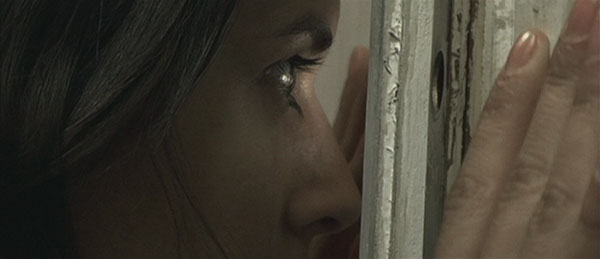
A high-quality euro-arthouse movie like Roman de gare (but probably better), more subtle than its subject matter would seem to warrant. Chabrol’s rep as the French Hitchcock is either exaggerated or based on his movies that I haven’t watched yet, because this and L’Enfer and Le Beau Serge aren’t so Hitchcockian.

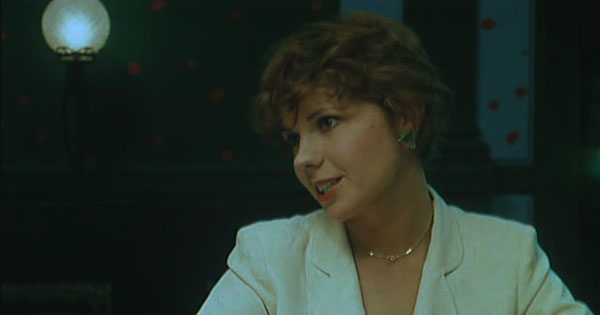
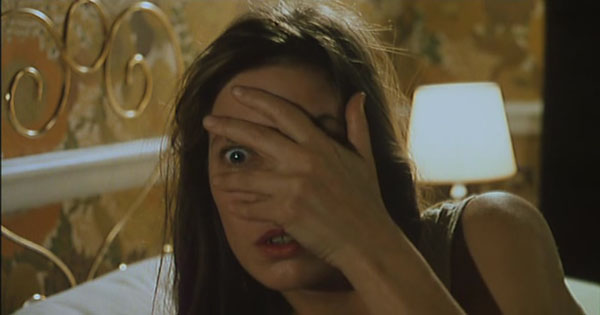
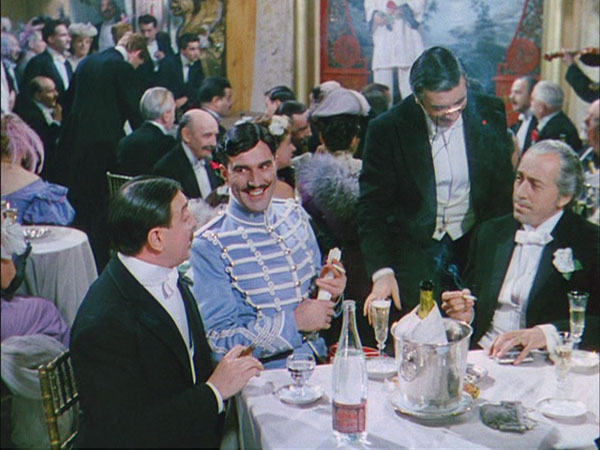
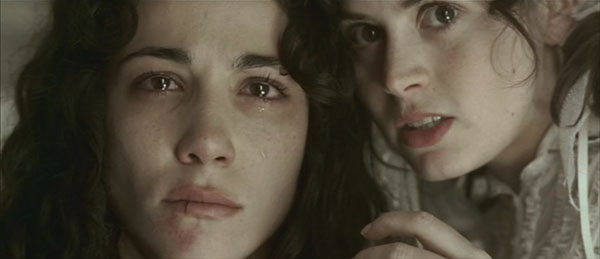
Gabrielle (Ludivine Sagnier of Love Songs and 8 Women) falls for rich old guy Charles (François Berléand of the Transporter trilogy and Au revoir les enfants). Charles has an unexplained antagonistic relationship with young flamboyant rich guy Paul (Benoît Magimel, the young lover in The Piano Teacher). Paul falls for Gabrielle and wants to marry her, take her away from Charles.

Paul looks dangerous; is dangerous
image

This isn’t all happening at once like the trailer implies, though. First G. has a long impassioned affair with lying, married, sexually deviant Charles, who often acts cold towards her and pretends he doesn’t want her anymore. Girls love that, so she keeps coming back. Then after he’s left her for good and she’s super-heartbroken, she finally agrees to go out with Paul, who arrives screaming with crazy hair, all Written on the Wind, being held in check by his chauffeur. He cleans up his act so G. will go out with him, but sometimes he loses it and tries to strangle her. Girls love that, so she keeps coming back, and a year later they get married. Then at a ball, Paul shoots Charles to death, goes to jail, and disowns Gabrielle, who goes on to act as the beautiful assistant that gets cut in half in her uncle’s magic show.

I liked, but didn’t love it. Fun ending, great acting. I thought Caroline Sihol as Paul’s mom looked familiar, but I haven’t seen anything else she’s been in (some Truffaut and Resnais and La Vie en rose). Based on a true story in 1906 New York, but transplanted to modern Europe. Movie contains a conspicuous mention of Woody Allen, who himself is from early-1900’s New York and transplanted to modern Europe.

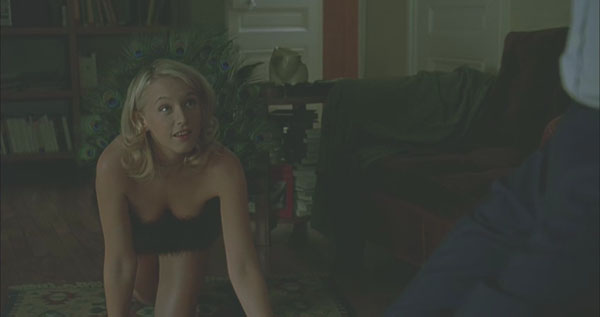
Gabrielle with peacock tail (washed-out color courtesy of online trailer)
image

There’s no shortage of online reviews for this… I liked best the one by K. Mitsuda in Reverse Shot:

Serving as both subject and object, Gabrielle is a deliberately confusing amalgam of striking dualities. […] The appeal Gabrielle holds for Charles and Paul in particular is symbolized in the shorthand of her last name: Snow. Attracted foremost to her youth and naivete – signifiers of virtue – the competing suitors often affectionately describe her as either “innocent” or an “angel.” […] Chabrol ingeniously suggests that the inability of the men to accept her complexity results in a reductive worldview that inexorably leads to a violent ending.

And S. Tobias:

The film takes the form of a thriller, but it doesn’t have the pace of one. Still, all that careful, deliberate table-setting allows Chabrol to establish the complex dynamic between the three characters and underline the role that money and privilege plays in sabotaging Sagnier’s life.

AKA The Ordeal. A single young dude, Marc Stevens, is a traveling, singing showman for old folks’ homes. His van breaks down somewhere (movie was shot in Belgium, France and/or Luxembourg) and he stays with Bartel, the Paul Giamatti-looking innkeeper. But Bart is way crazy, destroys Marc’s van, dresses Marc up as his ex-wife Gloria and threatens bloody revenge if “she” ever runs off again. Marc runs off, gets caught by villagers (sharing the delusion that Marc is Gloria) who rape him, gets re-caught by Marc who crucifies him, escapes again and gets his leg caught in an animal trap, and so on. It’s tough going for Marc until the townsfolk attack Bartel’s place and Bart is killed by a just-as-crazy Malcolm McDowell-looking guy. Marc runs off, pursued by Malcolm who sinks into the swamp. The end, although Marc is far from safe and sound, all hurt and hungry in a swamp with villagers possibly still looking for him. Also, as a side-suspense, a man named Boris is looking for his dog.

Marc watches Malcolm drown
image

This one goes less for sustained tension/suspense than Them did, more for bizarre WTF-horror. It’s an ugly, somewhat effective little film… good enough that I could give his next movie, another rural-horror starring Emmanuelle Béart and Rufus Sewell, a shot. No music except for a piano tune played during a Bartel’s visit to a Bela Tarr tavern. I guess the message here is “don’t stray outside the city and get lost in rural areas”, a message that has been well hammered home by previous horror movies.

Bartel seems like a nice guy deep down
image

Laurent Lucas, who did a fine job as terrorized Marc (except that when he’s most afraid, he kinda looks like he’s drunkenly grinning) was in mysterious films Pola X and In My Skin. Boris, who finally finds his dog, was in Luc Besson’s Taxi 4 last year. The dangerously deluded innkeeper appeared in Olivier Assayas’s Cold Water. And the cinematographer shot suspense films Joshua, Day Night Day Night and Irreversible.

Interviewer: “How do you think female viewers will react to Calvaire?”
Director: “Well, I realise my film could go over badly, even very badly. Though personally, I really think the film is feminist. It is a brutal work, like Deliverance or Straw Dogs, for example.”

WTF
image

This year, directors Dave & Xave helmed the Jessica Alba remake of The Eye, so it’s only fitting that a few months later their own movie got a Hollywood remake starring Liv Tyler. The Strangers also reportedly contains traces of Funny Games, a movie that remade itself, so it’s best to stay away from that whole mess.

Bound by love… separated by chainlink fence
image

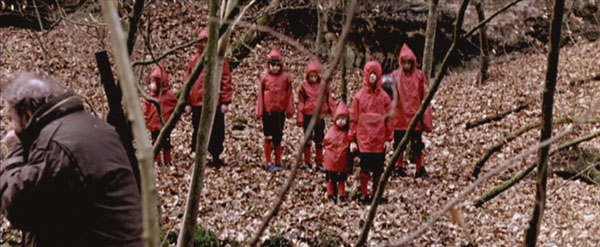
Producer Richard Grandpierre (Brotherhood of the Wolf) thinks he’s quite important, pastes his name all over the credits. Movie spends a lot of time setting up that its loving French couple (who have just moved to rural Romania) love each other. They are a teacher (Olivia Bonamy of La Captive) and a writer (Michael Cohen of Lelouch’s Les Mis) and they love each other. They feed the dog. They watch TV. Then, a half-hour in, their car disappears and people come in the middle of the night terrorizing them in their house. A couple of these “strangers” get hurt, possibly killed, but finally our loving couple is lost in the woods, led into the sewers, and wiped out by… children! Twist, they are children!

OMG they are children!
image

Everything is handheld shaky-cam, of course, to give us the proper sense of intimate urgency a la Blair Witch. The dude is pretty ineffectual, hurting himself early on, but the girl is our pseudo-survivor character, all tough and good-looking under pressure. Character/story-wise I preferred American horror The Descent, which this occasionally reminded me of, but Them def. had me jumping in the dark. Manages to sustain its suspense much better than most movies of this type, so even though nothing of interest is ever happening, it’s tense as all hell (and with good sound/effects). Guess that’s all you can ask.

Soon as she started crawling through a dark tunnel with a bright light at the end and I saw the distance was out-of-focus, I knew this would happen.
image

“Dario? Mr. Argento? Is anyone there?”
image

“Send this by pneumatic tube, quickly!”

This is now the earliest feature film I’ve ever seen (and the next two runners-up are also by Feuillade). Really this is five movies, each a multi-part serial, so maybe it’s the five earliest feature films I’ve seen…


PART ONE: IN THE SHADOW OF THE GUILLOTINE

The criminal master of disguise Fantomas is introduced robbing a rich woman of her jewels in a clumsy-ass fashion… he gets caught in her house then just walks up, looks at her threateningly, and walks away with them. They couldn’t think of a better scenario for the opening of their movie? I guess it shows that he’s an imposing character, and his appearing-ink business cards are cool (see bottom of page). Then it’s on to introduce Inspector Juve with his funny mustache and his reporter buddy Fandor. A man has been found murdered, so Juve questions his widow (Lady Beltham), who it turns out is having an affair with Fantomas. When inspector and reporter discover this, they easily capture the criminal, who is imprisoned to await the guillotine. But through a convoluted scheme, the widow springs Fantomas – she flatters an actor celebrated for portraying Fantomas on the stage to agree to meet her, and pays off the incredibly dense prison guards to spring Fantomas to come meet her at the same place (with the understanding that he’d be returned to prison within an hour) and they do the ol’ switcheroo – but Juve notices before the actor can be mistakenly executed (in the novel he was too late).

The regular Feuillade style is apparent here – people with comical mustaches who look conspiratorially into the camera, lots of crime, outdoor scenes with actors in cool black capes, convoluted scenarios and a plot that seems to be making itself up as it goes, helping the cliffhanger feeling.

Some nice outdoor shots in this movie. Feuillade is fond of long walls. I like them too.
image

The actor has all these admiring women, yet he sneaks off eagerly when he gets the letter from Lady Beltham? I guess her letter made her seem more “loose” than the ladies in his dressing room.
image

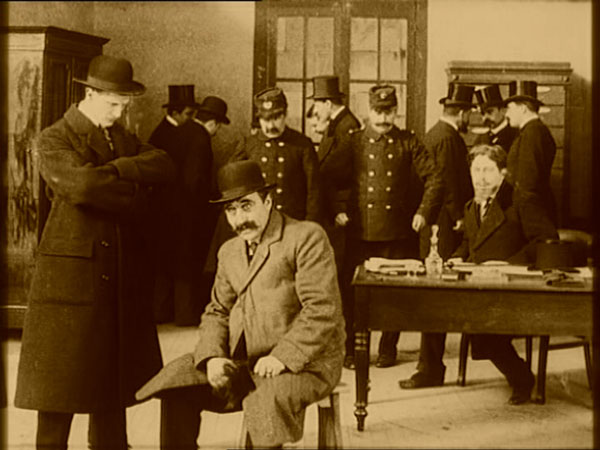
Juve, triumphantly stymied. Fandor (on left) looks on.
image


PART TWO: JUVE VERSUS FANTÔMAS

Opening credits are cool, showing the main actors crossfade into their characters-in-costume (in Juve’s case it’s changing into a hat, a fake mustache and a less-nice suit). At the start, Lady Beltham is presumed dead – but actually she’s organizing a gang of bandits who rob passengers on a train car then cause a train accident to cover up their crimes. Or was that another woman? Either way, our reporter is on the train and escapes with another passenger. He and Juve are lured into a gun trap, but they escape and tail the woman, getting her to lead them to Fantomas, who escapes by putting on his suit with false arms then simply running away, leaving Juve and Fandor each holding an arm. Brilliant! Okay, then Fantomas has a list of people he’s having mysteriously squeezed to death, so Juve wears spiked bands over his body when he goes to sleep and has Fandor hide in the room – wakes up being choked by a boa constrictor, ouch. Later, they’ve figured out where Fantomas hides out, so they storm the house and kill the boa (for real, on camera, uncool) but the criminal mastermind was hiding in a tank of water in the basement, escapes, and blows up the house!! Will the cops survive?? Great episode, action-packed.

great train robbery:
image

wrestling a boa – notice the spiked suit:
image

awwwwwesome closing shot – note sprocket holes:
image


PART THREE: THE MURDEROUS CORPSE

Oh man, this is not gonna be a strong plot summary. I was tired, and I thought it’d be 50 minutes but it was 90. Wasn’t doing anything else while watching but somehow I still got confused. So Juve is missing presumed dead from the house explosion and Fandor is investigating stuff on his own. Fantomas I think is dressed as an old woman who trades stolen goods, or maybe that was an actual old woman, and Juve is made up as a retarded homeless guy who helps her out. A dude is framed for a murder, then killed in prison, then abducted from the prison… WHY this happens I never figure out, but Fantomas makes gloves out of the man’s hands (seriously) and commits a bunch more murders leaving the dead dude’s fingerprints behind. The cops are, of course, mystified, but Fandor comes across a list of the murder victims in the order they’re killed. He finally hooks up with Juve again, Lady Beltham reappears for a minute, probably some other stuff happens but our heroes end up tracking Fantomas to a house and cornering him in the one place where there was a secret trap door. Whoosh, through the trap door and our heroes are empty-handed (actually they got the skin-gloves). NOT as radical an ending as the previous part, and maybe a bit long and convoluted.

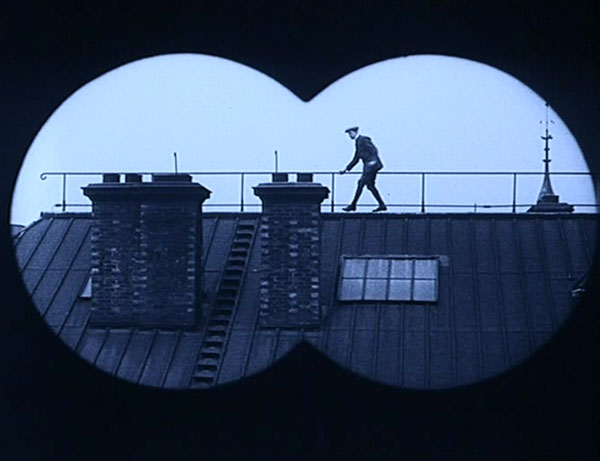
Fandor on the rooftops of paris:
image

Juve (in disguise) approaches Fandor (studying list of victims):
image

They’ve got him cornered! Note trap door and icky gloves:
image


PART FOUR: FANTÔMAS VERSUS FANTÔMAS

Juve is arrested straight away on suspicion of being Fantomas (what, because he couldn’t catch the guy?). The movie is telling us that the written situations are more important than the characters, since our hero Juve sits out most of the movie, making Fandor the hero by default. Fantomas reappears as Tom Bob (seriously, that’s his name!), American Detective. Lady Beltham has remarried and become the Grand Duchess Alexandra. She organizes a costume ball to collect reward money for the capture of Fantomas, and Fandor, not thinking things through, goes to the ball dressed as Fantomas. So do a police captain and Fantomas himself. A Fantomas-fight ensues, the master criminal escapes and the captain is killed.

After Juve is finally released, he’s captured about ten seconds later by Fantomas’s men, who believe that Juve is really Fantomas and want their share of the loot that they’ve helped steal (Fantomas ripping off his own men is a running theme). Fandor is on top of the plot and helps bag the men, capture the loot, rescue Juve and even capture Fantomas, but F. slips the men by walking them into two holes in the ground, the silliest escape in the whole series. I’m starting to doubt that this is a planned five-part series which is building up to something… think it’s just a regular movie franchise that makes it up as it goes along (nope, turns out they are closely based on a series of novels).

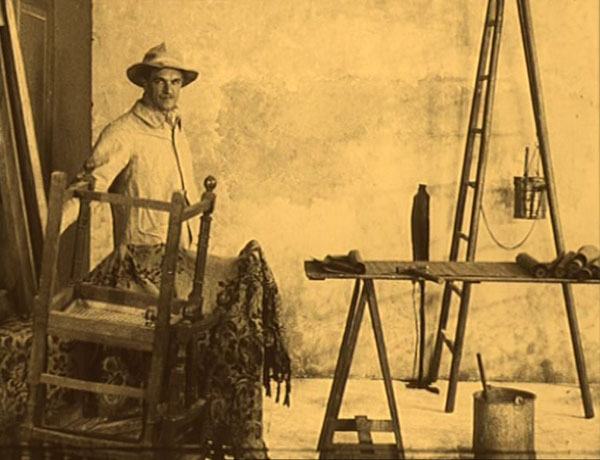
Left: “Tom Bob” Right-center: blood leaking from hole in the wall, 70+ years before Evil Dead 2
image

Fantomas vs. Fantomas at the costume ball:
image

Juve, kidnapped, hears Fandor hiding in the barrel. People are always hiding in barrels and baskets in these movies.
image

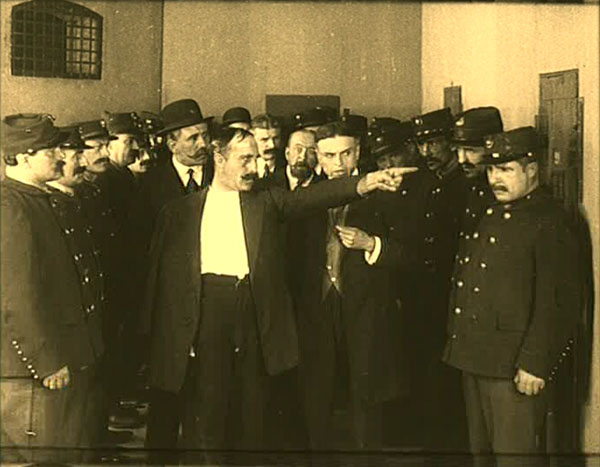
Juve fingers the crooked guard, an inside man who works for Fantomas:
image


PART FIVE: THE FALSE MAGISTRATE

I was hoping for an awesome ending but it seems the series peaked with part two. The plot gets more ludicrous, with Juve voluntarily taking Fantomas’s place in a Belgian prison under the logic that F. was gonna break out anyway, and Juve’s men can just catch him at the border to France. Of course Juve’s men suck at catching Fantomas, so F. runs around impersonating a judge while Juve rots in jail for the first hour of the movie. Fandor buzzes around of course, but doesn’t do all that much… this one is mostly about the criminal, with his disguises and lucky breaks, ripping off the wealthy and his own gang members.

These gang members scammed a rich guy and his jeweler, no big deal. F. takes it a step further, killing the thief with the jewels in a horrible way (he is rung to death inside a giant bell), killing the rich woman’s husband then blackmailing her for more money. Fandor finally figures out what’s up, Juve is released and they corner Fantomas… but a few hours earlier, as the judge, he’d told the warden to release the master criminal Fantomas secretly at midnight because it would actually be Juve in disguise. Juve, unwittingly this time, helps Fantomas escape again!

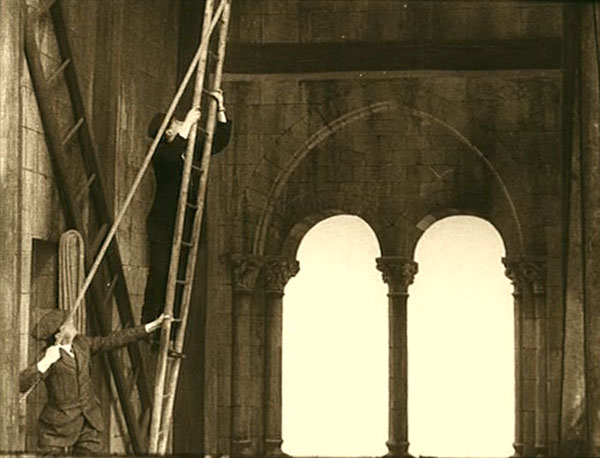
Fantomas helps dude up into the bell where jewels are hidden. Dude throws empty jewel case down and Fantomas takes away the ladder. The next day at a funeral when the bell is rung, blood and jewels rain down on the crowd. Wiiicked.
image

Note how the Belgian prison looks awfully like the French prison (above):
image

Fantomas, as the judge, feeling the pressure:
image

So is this one of the first great features of cinema? Does it meet expectation? Is it still a good movie today almost a century later? Is it as cool as that classic poster which now graces the DVD box cover? Well, no to that last one, but yes to the others. I still enjoy Judex better, but Feuillade’s crime serials are amazing fun, winking at the audience (sometimes literally) at times, getting cruel and serious at others, but always a good time to watch. And you can probably find someone who claims that they changed cinema forever… let’s see… yep, J. Travers says it introduces “not just the idea of a film series, but also [establishes] the crime thriller. The essential ingredients of film noir and the suspense thriller can be seen in this film which, remarkably, (when you consider when the film was made) still appears surprisingly modern.”

He qualifies the five movies: 1. most dreamlike and innovative, 2. best action, 3. most sophisticated, 4. most convoluted, 5. the weakest, comparatively mundane Each movie was divided into chapters with title cards – I didn’t realize each of these was a different serial episode! That means to see the complete Fantomas at the time of release, you would’ve had to go to the theater twenty-one times!

People are always mentioning how much the Surrealists loved these movies… I just read a whole website about it. Watched the bonus feature, wherein K. Newman immediately pronounces it “Phantom-ass.” Now I have to rethink the whole series, imagining Juve, wide-eyed, telling cops “this is the work of phantom-ass!” No wonder they eventually locked him up. Newman says the authors originally wanted to call it “Phant-o-moose” and now I think he’s just messing with us, under the “nobody watches DVD extras so we can say whatever we want” theory. Ahh, he says Diabolik was Fantomas-influenced – I can see that.

Edmund Breon (Juve) was in Les Vampires, took the 1920’s off, then appeared in fifty-some mostly British movies for the next two decades, waiting to die until after he’s been in Howard Hawks’ The Thing From Another World, a good move. René Navarre (Fantomas) was in movies through the 40’s, including a sound version of Judex. Georges Melchior (Fandor) barely made it into sound films. Renée Carl (Lady Beltham was in 180+ silent films – her only sound role was in Pépé le Moko (but last-billed).


“Did you folks in the audience just SEE that?”
image


This just in: a great article by David Bordwell on the series.

This is one of Buñuel’s anarchic sketch films (see also: Simon of the Desert, Phantom of Liberty) which he made in between his relatively more normal, subversive upper-class films (in this case between Belle de Jour and Tristana). I still think I appreciate his films more than I enjoy them, but the more of them I watch, the more I feel that his career is unassailable, that his last twenty years of filmmaking produced one long masterpiece. It turns out I had seen this before, though I barely remembered it. Must’ve rented the tape from Videodrome. Don’t think I finished it last time, because it got foggier around the halfway point.

image

Such a smart and well-researched movie, I don’t feel qualified to discuss it. I can discuss the cinematic aspects though. Good photography with no surprises, unusually long shots but not noticeably/showoffy long. Buñuel’s movies always feel the tiniest bit too slow for me, too perfectly calm and collected, the acting and sets and camerawork too high-quality for their content, which I suppose is the point.

The plot is a “picaresque”, two beggars wander into various scenarios during their long walk from Paris France to a holy pilgrimage spot in Santiago Spain – although it turns out they’re not on a pilgrimage themselves, they just heard there’s a huge crowd in Santiago where they can get rich on spare change. Different historical periods and bible stories blend into their present-day 1960’s voyage without anyone batting an eye. They meet Satan(?), the Whore of Babylon, and lots of people discussing the six central mysteries of Catholicism and their associated heresies. They do not meet Jesus, the Virgin Mary, the Marquis de Sade or the Pope, but they’re all in the movie via sidetracks from the main action (though one could argue that it’s all sidetracks). Plenty of surreal moments keep the movie lively even when the dialogue is all obscure religious debate.

image

French cinematographer Christian Matras was about Buñuel’s age, had also shot most of Max Ophüls’ best films, also The Eagle Has Two Heads with Cocteau and Grand Illusion with Renoir. Co-writer Jean-Claude Carrière (also an occasional actor) worked on most of Bunuel’s 60’s-70’s stuff and over a hundred other movies, including recent ones like Chinese Box, Birth and Goya’s Ghosts. The guy who played Jesus starred in Rohmer’s sixth moral tale a couple years later. Virgin Mary Edith Scob was in Franju’s Judex in the 60’s, and lately in some Raoul Ruiz films and the newest by Olivier Assayas. Of the two tramps, the older would be in the next two of Buñuel’s French films, and the younger would star in Clouzot’s La Prisonnière and Godard’s Détective.

image

In the DVD interviews, Ian Christie tries to make us feel better for not knowing the historical references – he says nobody knew them. He got a press kit. The film was influenced by The Saragossa Manuscript, which sounds cool. “What heresy means for him is a kind of metaphor, I think, for human beings’ fascination with arguing about the immaterial, the invisible, trying to bolt it down and make it literal.” Screening when it did, it was alternately seen as cleverly reflecting or having nothing to do with the political and social upheaval in late 60’s France. Interview with the writer and documentary on the DVD are both pretty alright, nothing that needs repeating here.

Our two bums with the whore of babylon:
image

Michel Piccoli as the Marquis de Sade:
image

Alain Cuny as the mysterious walkin’ guy:
image

L’Age d’or reference:
image

When the movie began, I immediately noticed Jean-Claude Brialy’s hair. Who is this guy? I’ve seen him in earlier films (Paris Belongs To Us, A Woman is a Woman and Le Beau Serge) and a later film (Phantom of Liberty) but I can’t remember him. I think he might be the guy on the right in my middle screenshot of Le Coup du berger but without the beard and the hair it is impossible to tell. That hair… so distracting. Laying on the couch, I alternated between taking in the luxurious outdoor camerawork and watching Brialy’s hair. The birds fought on me for the first ten minutes before Our Bird settled on the couch in front of my head and New Bird camped on my shoulder with his tail right in my eye. So I thought about the birds, and Brialy’s hair, and the sunlight in the film, then I realized that a half hour had passed and I still wasn’t paying attention to the dialogue.

Brialy & Laura:
image

So maybe not the ideal screening of Claire’s Knee… or maybe it was! Either way, I got the feeling that I liked the previous two movies better, despite expectations that this would be the masterpiece of the Six Moral Tales. Seems like the Tales are wearing themselves thin. Guy in picturesque location with distant girlfriend flirts with young girls but ultimately stays with his girlfriend… it’s La Collectionneuse again.

Claire:
image

This time the guy is bushy Brialy, spending the month before he gets married in his old home town (I think), possibly to sell the family home, though we never see him do anything productive. His co-conspirator (see also: Vidal in My Night at Maud’s) is an Italian writer with a distracting accent, Aurora. Brialy flirts first with big-haired 16-yr-old Laura, then with her (slightly older?) step-sister Claire, whose knee we don’t see until towards the end of the picture. Laura is happy to lightly play around and talk with Brialy but they both know there’s nothing serious, then he is briefly tempted by Claire, tries to break her up with her boyfriend, then comforts her when they are stranded in the rain together by rubbing the titular knee. He goes home to his fiancee, thinking himself a dark stranger who changed these two young girls’ lives, but Laura hardly seems to notice him in the last few days, and Claire is back with her boy two minutes after Brialy has left. Even if the rest of the story was nothing special, I liked this ending, which gives more of an inner life to the female characters than previous entries have done.

(R-L): Sad Claire, her knee, Brialy:
image

Beautifully shot by master of light Nestor Almendros the same year he did Bed & Board and The Wild Child for Truffaut. Hardly any of the actors besides Brialy had been in any films before, but most would appear in later Rohmer films from time to time. This won best film from both the U.S. and French critics societies, but lost a best-foreign Golden Globe (with fellow loser The Conformist) to an Israeli movie that isn’t out on video (which itself lost the best-foreign Oscar to The Garden of Finzi-Continis).

image

My (comparatively) negative feelings about this one extend to the DVD extras, too. First we’ve got a nothing TV interview with the cast, where we learn that Brialy has been Rohmer’s friend for a long time, and the girls somewhat enjoyed working on the film, and everyone is miffed that Rohmer won’t appear on the show himself. Then there’s The Curve by Edwige Shakti, a short based on a basic scenario by Rohmer. Shekti herself stars as the usually topless girlfriend of an art-obsessed young man. She challenges his remarks that he was drawn to her because she reminded him of different specific artworks. It’s a cute enough short, but its appeal lies more in watching the director’s breasts than in the uninteresting 30fps video work or the consciously Rohmer-talky dialogue.

The Curve:
image

Story begins March 17, 1871 and ends two months later. Watkins introduces the movie via his two commune reporters (one of whom is played by Peter’s son Gérard, who has also acted in They Came Back and Diving Bell and the Butterfly), showing the set (a factory on the former site of Georges Melies’ studio!) at the end of the shoot. The set is minimal – walls and rooms were constructed, and props seem accurate and well-placed, but you never doubt that you’re on a set – you can see the walls, the lights, sort of Dogvillian. And the camera – of course the actors talk directly to the camera, since this is a Peter Watkins film. The cameraman (Odd Geir Saether from Edvard Munch) is always mobile, always shooting full cartridges at a time to be (slightly) edited later on.

image

There are intertitles which comment on the action, fill in missing context, flash-back-and-forward, connect the revolutionary ideas of the commune with the present realities of France. People break out of character mid-scene to talk about the film and about their own present situations, to comment on the relevance of the film and of the commune – but they’re not talking to us, exactly, telling us what to do or think, it’s more that they’re working out their own thoughts and we can make what we will of it. That’s not to say the film is unbiased – it’s extremely pro-commune. The mass media is represented by a more traditionally shot right-wing telecast which gives twisted accounts of the events we see in the commune.

An official statement:
image

Most of the actors didn’t have screen credits before this one, but some have gone on to appear in other movies (The Barbarian Invasions, Eric Rohmer’s Lady and the Duke, Science of Sleep, Miracle at St. Anna, etc). They workshopped the story and their own roles, and came up with their own dialogue, full participants of the film. Some of this I learned from the very good hour-long doc on the disc The Universal Clock, which dares to ask questions (like whether Watkins is responsible for his own marginalization) as it discusses his career and the making of La Commune. This would actually be a fine standalone film to play before some of PW’s better movies for the uninitiated – it stands high above the usual DVD-extra fare.

Lots of death and guns in the movie, all offscreen. Nobody is ever shown killed, no actor ever plays dead:
image

There’s a lot to say about the Commune and I’m not gonna say it all here. I’m worn out on the topic from watching all seven hours on these DVDs, and I’m pretty sure I’ll remember the important stuff (plus PW’s excellent website has a good summary).

The hated bourgeoisie:
image

Was the film good, though? Well, it’s far from my favorite Watkins feature (I’d maybe put it above The Gladiators). While it’s not dry and academic, it’s not exactly immersive – and while I wouldn’t say there were unnecessary scenes or that it should’ve been shorter, it’s exhausting at its present length, a mountain of a movie. The guy’s got a point that films and videos should not have to fit the “universal clock” of a television schedule, but this one didn’t fit the clock of my work week, and even with Katy out of town and my evenings supposedly all to myself, it still took me three nights to watch. So it’s an extremely admirable production, in every sense, about an important topic, but unlike other monumentally long films (hello, Satantango) I’m in no hurry to see it again.

image

August is 2005 Month! Katy’s not participating in this one because she thinks it’s stupid, so I watched The Regular Lovers by myself. The idea is that I miss lots of really good top-ten-list movies each year, and after three years have gone by, they’re mostly out on video so it’s time to catch up. So sometime next year I’ll have 2006 Month, and so on.

“Have you seen Before the Revolution? You know, by… (stares into camera) BERTOLUCCI?”

Yes, it’s an answer film to B.B.’s The Dreamers from a couple years earlier, which starred Garrel’s son Louis (also of Ma mère and the recent Love Songs). In the Cinema Scope interview, Philippe doesn’t seem angry or bitter over B.B.’s film, nor does he say that Bertolucci told the story wrong and that his is the real story of May ’68. He diplomatically says that there are many stories, and this film is another of them. Philippe also, modestly, doesn’t even take full credit for the final film, calling it a collaboration between himself, Rivette cinematographer William Lubtchansky, and Godard (’64-’67) editor Francoise Collin – “it depended very much on who was most awake at a given morning.” So maybe this isn’t a Bertolucci attack, the historical correction to a previous film that The Lives of Others set out to be.

So did I like it? Not so much. The high-contract black-and-black-and-white cinematography was arresting, and Garrel lives in his scenes and characters for a long time, stretching out moments and silences, which I like, but the movie didn’t grab me. I don’t feel much kinship to the May ’68 obsessives out there. I can sympathize, but I’m worlds away from understanding the feeling, what the kids of Paris thought they were doing and what actually went on. The mood I get from this film and Grin Without a Cat and even The Dreamers is the same kind of thing from the end of Fear & Loathing in Las Vegas, the end-of-the-dream “breaking the wave” speech, only angrier.

Lead characters are named Francois and Antoine – couldn’t be in reference to Truffaut & Doinel, could it? Reviewers insist this movie is a French New Wave homage, but it doesn’t feel like anything actually released in the early 60’s. A doomed, doomed feeling pervades, especially in the second half. The first half I was having trouble telling all the young male characters apart, but that’s okay because there wasn’t much Story, only Revolution – the fighting in the streets eaten up by the total blackness on the edge of the frame, the blackness finally taking over in the occasional iris-out (another cool camera trick: twice you see flashes as they shot to the very end of a film reel). The second half is a doomed, doomed love story, with Francois finally left behind by his sculptor girl (Clotilde Hesme, also in Love Songs) and killing himself with pills, his dead body discovered by cops in the final shot, cops he’s spent the rest of the movie running from (when he wasn’t smoking opium at home with his buddies).

Other differences from the Bertolucci film: no sex onscreen (nothing more than kissing), no talk of cinema (other than the mention of B.B. himself). The stylistic bits (the photography, iris tricks and intertitles, bursts of piano music, a loud dance scene) don’t seem to be trying to make the movie stand out, make it self-consciously weird or interesting, which is good because today (the year of The Wackness) it takes much more to make a movie seem weird. Rather these quirks seem to fit in quite naturally. It’s getting strong comparisons to The Devil, Probably, another film I didn’t much understand. Part of this is my fault – I didn’t pay as much attention as I could’ve during the first half, and I watched it on DVD where it’s clearly a Theatrical Experience movie. Maybe I’ll try again sometime, or just skip back to another Garrel movie.

Character notes I took: “blonde girl Charlene is marrying Yvan… Luc is blonde guy… rich Jean wants black hair girl to pose… Antoine also rich.” IMDB doesn’t list character names, but I’m not dying to know where else I can see each particular ennui-filled young Frenchman so that’s okay.

image

image

image

image

Katy wanted to close out 1930’s Month with something Great, an acknowledged classic, something she is supposed to have seen but hasn’t, so I picked the one-time Greatest Film of All Time, Rules of the Game.

An amazing looking film indeed, with some fabulous, intricate staging. Some character, actor and plot notes before I forget them yet again:

image

from left to right:
1 Andre the pilot (Roland Tautain, played “the sailor” in Lang’s Liliom) just completed some impressively long news-making flight in order to impress Christine.
2 Octave (Jean Renoir, in his final role as a film actor. He wouldn’t make another film in France until The Golden Coach 14 years later). Friend to all, father figure and wannabe-lover to Christine, a short-lived fantasy. He turns darker (along with everything else) towards the end, realizing he’s a comic figure leeching off his rich friends, goes off to make a belated attempt to be self-sufficient.
3 Robert (Marcel Dalio, had appeared in Renoir’s Grand Illusion and would later have smallish parts in films by Hawks, Fuller (China Gate), Huston and Wyler), very rich but insecure, likes noisy mechanical inventions, has a gorgeous wife in Christine but also a long-standing affair (which he is trying to break off) with Genevieve (Mila Parély, would play one of Belle’s selfish sisters in Jean Cocteau’s Beauty and the Beast).
4 Austrian Christine (played by Austrian Nora Gregor, had been a star in the 20’s and 30’s, starring in Carl Dreyer’s Michael, killed herself ten years after Rules of the Game only having appeared in one movie since), a bit naive, thinks she belongs with Robert and that Andre is just a friend, until she catches Robert with Genevieve and it shakes her up.

image

Robert (right) with his “double”, Marceau the poacher (Julien Carette, my favorite actor in the group. He also appeared in the previous three Renoir films, later died from smoking in bed). Marceau wants respectability, gets hired by Robert as an indoor servant, but that doesn’t work out so well, goes off on his own at the end.

image

Christine again (left) with servant/friend Lisette (Paulette Dubost, was in Truffaut’s The Last Metro forty years later, also a couple by Max Ophuls in the 50’s), who is more devoted to Christine and her own position than she is to husband Edouard Schumacher (below). She’s Christine’s lower-class double, married to one man but wanting another.

image

Gaston Modot (Edouard) had been in films since 1909 and would keep it up till the 60’s, appearing in one of Renoir’s final films The Testament of Doctor Cordelier (and previously in Elena and Her Men, Grand Illusion and a couple others), also The Lovers and Children of Paradise. Even cooler, he played the main guy in L’Age d’Or. Edouard is jealous for his wife for good reason, since she’s happy to flirt with Marceau. He blasts through the house with his shotgun aiming for Marceau, later teams up with Marceau and aims for Octave, whom he suspects of hooking up with Lisette in the greenhouse. But due to costume changes he doesn’t realize it’s Andre with Christine in the greenhouse, and Edouard kills Andre.


Katy was disappointed, and disputes it being the greatest film of all time. Personally it’s only my third-favorite of the six Renoir films I’ve seen. I do love it, but I wonder about the best-film-ever label (recently surpassed by the new Batman on the all-time lists, actually), so let’s go to the DVD extras.

Ah, my old nemesis P.Bog reads the commentary, but it was written by Alexander Sesonske.

Renoir called it “a frivolous story” shot to avoid talking about the war… about “a rich, complex society where we are dancing on a volcano.”

Of André Jurieux’s radio speech in the opening scene: “His angry charge of disloyalty violates the rules of the game from the very start.”

Critics cried that Renoir cast an Austrian actress and a French jew to represent the French aristocracy.

“In a society of sharp class distinctions, Octave appears as a classless character.”

Plot shows two matched sets of husband/wife/lover/mistress and interceding friend:
1. Robert/Christine/Andre/Genevieve – Octave
2. Edouard/Lisette/Marceau/Christine(?) – and maybe Octave again.

Initially “The servants seem more sensitive to impropriety than their masters.”

“Those who know Renoir films may recognize a familiar figure, for Marceau is the incarnation of that nature god or pan figure who often graces those films from Tire-au-flanc in 1928 on. In a world where nothing is natural, it only appropriate that the nature god should appear as a little poacher in disguise and be pursued with deadly intent by a gamekeeper… But his influence remains the same. When he appears, erotic influences stir in human hearts. That these impulses are destructive rather than creative becomes one more Renoir comment on the corruption of this world.”