A good movie, watched with Katy and the solo piano score. Very “modern” story of Louise “Lulu” Brooks with her bobbed black hair and grinning sexuality and the trouble she causes all the men in her life.

image

Lulu’s gonna marry Dr. Scho(e)n, but his son Alwa is secretly in love with her… as are Lulu’s former pimp (?) Schigolch, the first lesbian character in film history Countess Anna, and even at the end Jack The Ripper. Hilarity doesn’t exactly ensue… Lulu stays semi-oblivious as the situation gets worse. She gets Schon in trouble at the opening of her own big stage show, causing the cancellation of his wedding and the fight that leads to his death at Lulu’s hands. Alwa grieves his father for all of a minute before grabbing Lulu and running off to hide, taking Schigolch (a drunken load) along for the ride. They end up destitute with Lulu cheerfully offering herself to a serial killer by the end.

image

Louise Brooks is electrifying, and the film looks terrific and kept our attention easily. Great piano score, more interesting and complex than the little sound sample on the menu would imply. The rare Criterion-issued film that is more interesting from a star perspective than a director/filmmaking one… everyone then and now has been more concerned with Louise Brooks as/is Lulu than anything else.

image

image

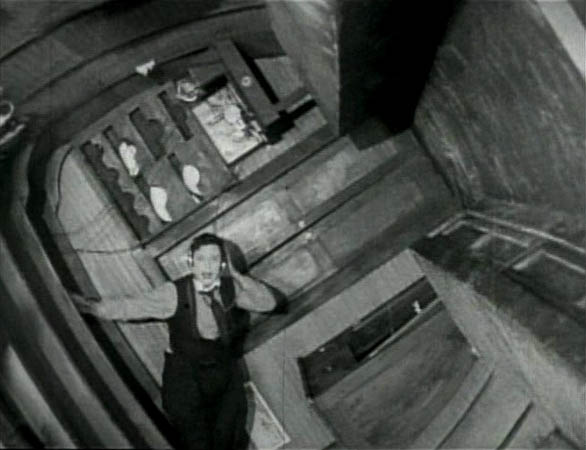
Watched the German version with orchestral score. Movie made me feel ten feet tall, with wings. Score is nothing to worry about, I turned the volume down… will have to try the harp score next time. Brilliant, full of harsh angles and crazed effects and loopy overacting. Presence! The movie booms with exclamation points! Guy Maddin must love it.

image missing

image missing

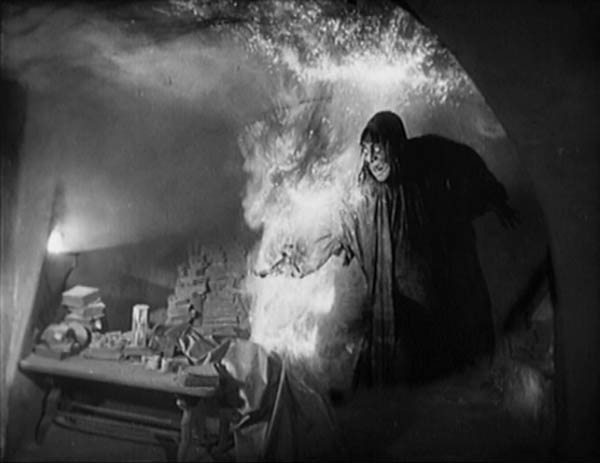
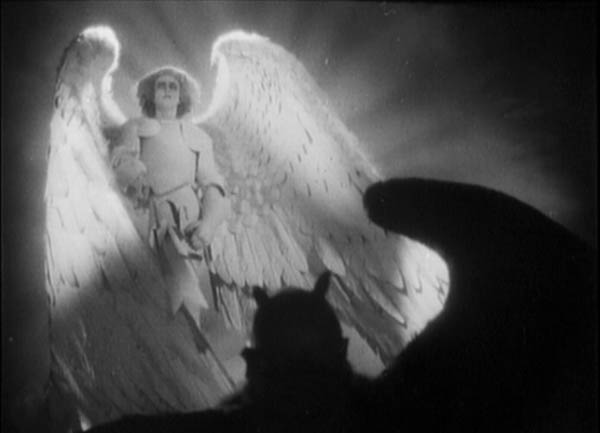
An angel stupidly bets the devil (err, Emil Jannings as Mephisto) that he can’t corrupt humanitarian scientist Faust (a swedish actor who died of pneumonia in the late 30’s), with the world at stake. Emil first brings a badass plague, then allows Faust the power to cure a few people to make him feel like he’s all good. Then, the devil offers Faust youth so he can lust after some very white young woman (Camilla Horn, who acted through the late 80’s). Faust never really gets the girl, though he sleeps with her once… then is blamed for killing her brother and flees on his magic carpet. The girl’s mother dies, she’s put in the stocks, has a baby, loses it homeless in the snow because nobody will help her, then is burned at the stake accused of killing her own child. Faust hears her cry for help at the last minute, holds her and they die in the fire together. Faust goes straight to hell but for some reason the world is saved?

image missing

image missing

Emil is awesomely sinister. Movie is a visual delight, a story well told, everything a movie should be. Will have to check out the commentary, the harp score, the export version, etc etc.

Under an hour long and just packed full of goodies. No reason not to watch this all the time.

BoaP1

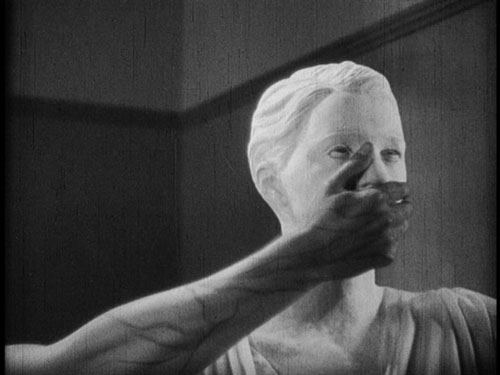
Poet grows a mouth on his hand, transfers it to an armless statue, awakening her. She traps him in the room but he escapes through the mirror into a Cocteau Crooked Hallwayâ„¢ where he peeps through some keyholes seeing drugs and death and poetry. Later a boy is knocked down by a snowball and left bleeding while the poet and the statue woman play cards. Then some Cocteau Mysterious Poetic Stuffâ„¢ floats the film to a close.

BoaP2

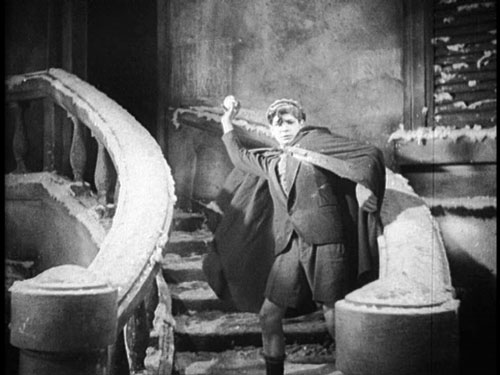
Dargelos and the Killer Snowball:

BoaP3

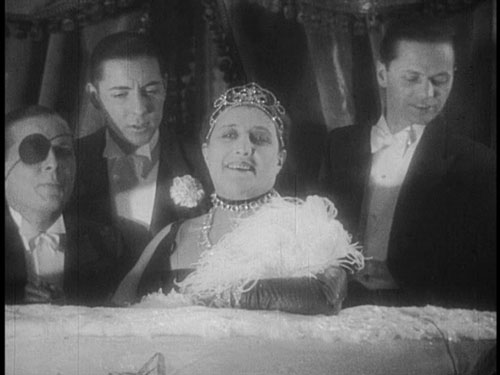
The scene below was originally shot with the Viscount who financed the film and his wife, for whom the film was some kind of birthday present. Cocteau: “But when their families saw that they were applauding a suicide, they forbade it. We had to reshoot the scene of the loges with extras.” The real Viscount fled Paris for a while and delayed the release of Blood of a Poet for over a year while the furor from the Viscount’s other production, Bunuel’s L’Age d’Or cooled down.

BoaP4

Cocteau calls the movie “a disturbing series of voyeuristic tableaux, a descent into oneself, a way of using the mechanism of the dream without sleeping, a crooked candle, often mysteriously blown out, carried about in the night of the human body.”

BoaP5

Ebert calls Cocteau’s Testament of Orpheus minor, and Les Parents Terribles a masterpiece. Of course I’ll have to watch both of them again.

Financed by the same guy who produced Blood of a Poet, it turns out. This one’s harder to remember than Un Chien Andalou for some reason. So…

Scorpion documentary intro (commentary guy leads us to believe that like a scorpion’s tail, the film is composed of five segments, ending in a sixth that is filled with poison), then bunch of decrepit guys in a shack hike away to fight the bishops, then group of people stumble upon the dead bishops. Group gets upset at our couple and takes the man away (who angrily kicks a dog). Possibly the first poop joke in the movies. Group lays cornerstone for what will be Rome.

L'age d'Or 1

Man kicks a violin down the sidewalk and guy with bread on his head walks through a field, while our man is being led down the street and our woman (speaking with sync sound) kicks a cow out of her bedroom. After she sees visions in her mirror, he kicks a blind man and escapes.

L'age d'Or 2

During a grand party at which the groundskeeper kills his son (to the approval of everyone present) and a fire kills a maid, our couple reconnects. During a concert after the party, the two sneak off to the garden to suck each other’s fingers and develop foot fetishes with statues. The minister of the interior shoots himself after a phone call and ends up on the ceiling, then it’s another touching scene in the garden. But our woman leaves our man for the conductor of the concert. The man hits the bedroom in a rage, spraying pillow feathers everywhere and tossing priests and burning trees out the window.

L'age d'Or 3

Finally, a Jesus-like man and three guys with fancy hats emerge from a 120-day orgy at a chateau. Jesus returns briefly to the chateau to kill a woman, losing his beard in the process. A bunch of scalps hang on a cross. The end.

L'age d'Or 4

Pretty interesting movie, and really fun in parts. The commentary actually helped on this one, too.

Chien 1

The guy on the commentary makes such a big deal of the opening scene, and everyone makes such a big deal of the opening scene, and I’ve made such a big deal of the opening scene, that I’d forgotten most of the rest of the film.

It does seem to be a lot better thought-out than it’s given credit for… not just a string of remembered dreams filmed nonsensically, but actual characters playing out various aspects of their relationship. Lots of fun imagery, even if Bunuel couldn’t get the framing right half the time.

Plenty of good stuff in there… the “androgyne” as the commentary calls her, the guy pulling grand pianos with dead donkeys on top and Salvador Dali’s priest towed along, the man in a slow-motion gunfight with himself… and that music.

Chien2

Watched the four-hour TCM reconstructed version over a few days. Liked it pretty well. Excellent intro to McTeague’s character: finds an injured bird while mining and picks it up… another miner knocks it out of his hand, so McTeague hurls the guy down a hill. Oh, and the slang between McTeague and Marcus is fun. The elderly neighbors and junk dealers provide nice counterpoints to McTeague’s relationship with his wife, and the movie keeps coming back to the heavy-handed theme of greed. I’d wondered if it had just been a four-hour movie in 1924 that Stroheim had edited himself whether anyone would talk about it half as much today. Is it THAT important a film, or is the fact that most of the footage was destroyed by the studio the thing that makes it important? Anyway, cool movie, glad I saw it. Not quite as nice as Sunrise (but what is?) and the story’s a bit of a bummer. Appropriate ending, anyway (and nicely tinted desert scenes).