Thought I’d watch some shorts tonight, starting with the Guy Maddin shorts listed in the previous post. Unintentional theme: none of them had any spoken dialogue!

Film (Emend) by Deco Dawson
Crazily-edited scratched, grainy black-and-white silent footage of hands? If I hadn’t already known that Dawson was involved with Guy Maddin (as editor and camera op on Dracula and Heart of the World), I easily would’ve been able to tell.

Film (Luster) by Deco Dawson
image
Same thing, except now it’s a boy shining shoes instead of a woman sewing. Some peephole photography and scary closeups of the bootblack-mascaraed boy. As far as falsely-aged avant-garde films go, this is thankfully closer to Maddin than Merhige, although it’s less captivating than it means to be. Good music.

Din of Celestial Birds by E. Elias Merhige
image
Some Begotten image manipulation meets the time tunnel from 2001: A Space Odyssey accompanied by minimalist music and too much MPEG artifacting. Merhige fans may ask “HOW does he do it?” but I’d like to know “WHY does he do it?” Did jobs dry up after Suspect Zero? Some cool time-lapse of plant life for a second there. Made in collaboration with Haskell Wexler’s grandson. There was a “visual philosopher” involved, ha! The actor who played “son of earth” in Begotten (the dude who gets dragged around by druids through the second half) played “son of light” in this (seen above).

Begone Dull Care by Norman McLaren
image
Handpainted film cut to jazz music, excellent in every way. I could watch this all day. First half is full explosive color, multiple layers, second half starts out all slow white scratch lines and finally gets crazy after a couple minutes.

Bread and Alley by Abbas Kiarostami (his first short)
image
Opens with a prolonged shot of a boy kicking a can down an alley to the Beatles “ob-la-di, ob-la-da”. Boy can’t figure out how to get down the alley without being chased by a dog. Puzzles it out for a long while, follows an old man but he only goes halfway. Finally braves it by himself and accidentally makes friends with the dog by feeding it. No dialogue. A very happy little movie.

The Running Jumping & Standing Still Film by Richard Lester & Peter Sellers
image
A jolly bit of madness out in a field. Not the funniest ten minutes of cinema I’ve ever seen, but worth watching. Some of these guys had a radio program called The Goon Show, which I’ve heard somehow led to this film which somehow led to Petulia and Strangelove and Steve Martin’s Pink Panther remake.

EDIT 2021: Watched The Running Jumping Etc. again in slightly improved picture quality, which didn’t elevate the comedy any – nothing new to report.

Guy Maddin: “My editor John Gurdebeke and I, hoping to release the powerful nectars of remembrance, have attempted to cut the film using a facsimile of the way we visit memories: We skip past the drab routines and the overly familiar events of yesteryear in our haste to arrive at our favorite and still potent recollections; once there, we rock back and forth over the cherished imagery, penetrating its pleasures, like a DJ scratching back and forth over the same sample of music, until we’ve used up what we need from that episode; then we race on to the next greedily consumed tableau of the distant past.” Glad to hear Maddin mention Martin Arnold in the commentary… the above sounds like something Arnold could have written.

The same editor worked on Brand, Dad, Caboose, Winnipeg, but not The Heart of the World, done by Deco Dawson, whose short-films dvd I will have to check out soon.

More bits from Maddin’s commentary below – all quotes are his.

“It’s the only one of my movies that I can actually re-watch with any degree of comfort.”

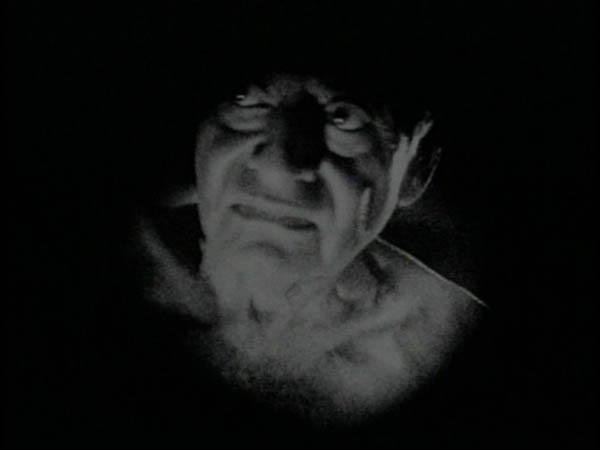
Louis Negin as Dr. Fusi [below] – cast because he reminded Guy of certain silent actors, particularly a guy who was cut from Greed. Also because of his hands, of course. Appeared in Rabid, played Truman Capote in 54, and returned as the blind seer at the intro/outro of Saddest Music.
image

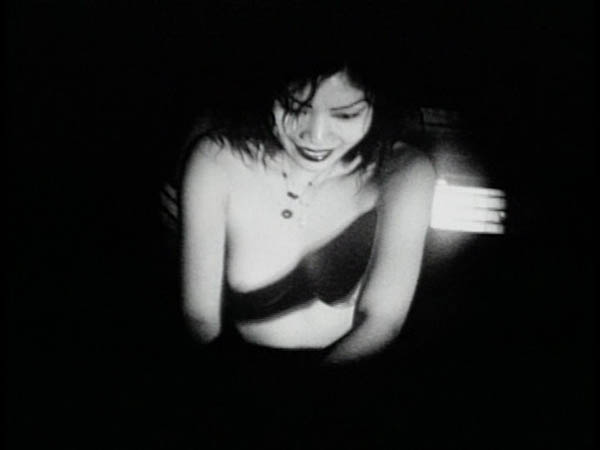
Amy Stewart as Veronica/The Ghost [bottom screenshot] – “the ultimate child brunette.” She returns in My Winnipeg as a Maddin.

Tara Birtwhistle, replacing Alice Krige who got sick at the last-minute. Wearing “the same cheap wig I had Isabella Rossellini wear a few weeks later”. Tara played Lucy in Dracula, here portraying Guy’s aunt Lil and renamed Liliom, “a name I obviously borrowed from Fritz Lang’s Liliom, not even knowing that Liliom was a male name until I watched the movie after filming this.” On aunt Lil: “I thought I would give her a character in this movie that she never got a chance to be… In real life she’s just a sweet, bridge playing, tea-sipping spinster.”

Melissa Dionisio as Meta [below], “the result of some kinda local star search here”
image

“Sorry for all the blurry intertitles. I forgot to focus the camera. … I usually use intertitles to clarify the plot, but here they seem to be just giving everyone an eye-ache.”

Darcy Fehr, playing “Guy Maddin” [below], appeared in Hospital Fragment.
image

Chas, the impotent patriarch. “I’d been reading a lot of Euripydes, which I devoured like Mexican comic books”.

“That’s my mom, by the way.” [below] She was made to wear blacked-out glasses so she couldn’t see the autobiographical shame on display. “We filmed this scene without my mom really knowing. I have yet to explain it to her”.
image

David Stuart Evans, as semi-evil police/hockey captain Shaky, also appeared in Clive Barker’s The Plague.

Mike Bell as Mo Mott, of course played the engineer in Nude Caboose. Mo Mott is the name of an actual Winnipeg hockey player.

Victor Cowie as Maddin Sr. [below], appeared in Careful and Archangel. “The first actor I ever hired.”
image

Premature Maddin biographer Caelum Vatnsdal (the awesome fake Jesus in Heart) has a bit part somewhere.

“I like it when stories artificially tie up loose ends.”

The DVD also has a behind-the-scenes bit on Brand Upon The Brain! and a bunch of new shorts. FuseBoy, a 2005 short set at a fuse box starring Guy, Shaky, Mo and Dr. Fusi from Cowards. Dr. Fusi’s performance is actually edited in from his audition tape, also included here. Rooster Workbook (aka The Cock Crew), a mental blend of female nudity and roosters, the closest thing spastic Maddin has done to porno (closer than both Sissy Boy Slap Party and Nude Caboose). I don’t know who played the nude girl because he lists 13 actors in the credits. Zookeeper Workbook (aka Maldoror: Tygers) involves a man getting eaten by a tiger and a woman juxtaposed with a dog. Chimney Workbook has a girl welding, bunch of birth metaphors and I couldn’t tell you what else. Somehow related to Rooster Workbook.

Medvedkin:

[working on the film train] I came across a very interesting type of peasant, the sort who’d entered a kolkhoz [communal farm] but didn’t feel the true power of it and wasn’t happy there. For such a peasant, life was hard. No one liked him much, he was laughed at, and he was very unhappy. I was thinking of him when I made Happiness. Every man is seeking happiness. Some see it in wealth, but the Russian peasant who struggled in poverty dreamt of it in his own way. … I tried to show the tragedy of such a man, and the effort he makes to find his ideal life. His dreams couldn’t be very elaborate, of course, they were on his own scale but in his own way he was looking for happiness. And in this film I tried to tell a story that’s funny, sad and tragic, the story of a peasant like him, Khmyr, for whom nothing goes right. His life is a struggle… and totally unexpected to him, at the end of the film he finds that there are others who care about him, friends, neighbors, the government too. And in a collective farm he comes close to happiness.

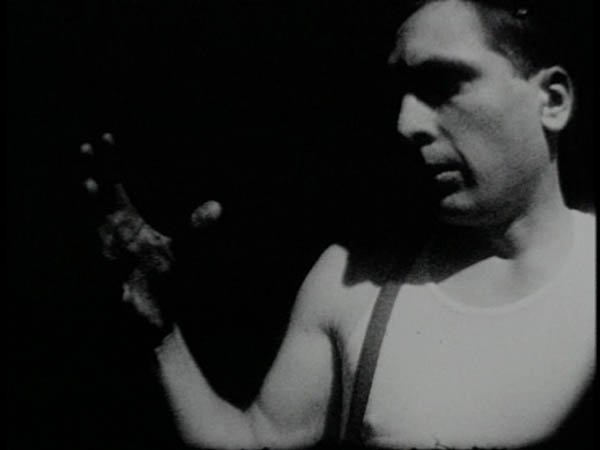
Funny movie, with good performances by the lead actors (first screenshot), some real surprising moments (second screenshot), some scenes that deserve to be well-known Classic Moments in film-school montages (third screenshot) and a good Ivan The Terrible beard shot (fourth screenshot).

image

image

image

image

More shorts from “The Movies Begin” disc 1.

President McKinley at Home (1897): the first president on film plays with his hat and looks uncomfortable.
image

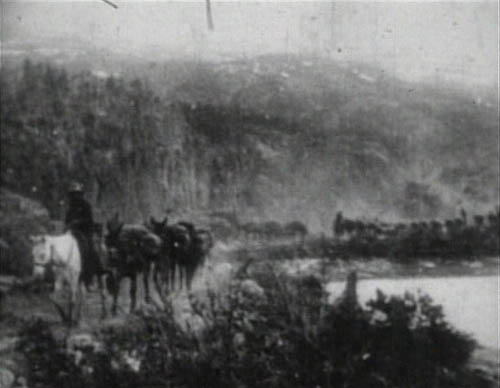
Pack Train at Chilkoot Pass (1898), reportedly recreated at the start of chaplin’s gold rush but I couldn’t say for sure.
image

Sky Scrapers of New York City from North River (1903)
image

Georgetown Loop, Colorado (1903) – those are passengers waving their hankies out the window to be on camera.
image

San Francisco: Aftermath of Earthquake (1906) – awesome film, I had no idea.
image

The Dog and His Various Merits (1908)
image

Moscow Clad In Snow (1908) – just what it says
image

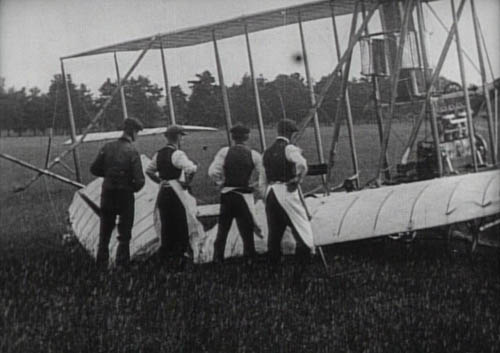
Aeroplane Flight and Wreck (1910)
image

The Kiss – The raciest, most controversial film of its time.
image

Serpentine Dances
image

Sandow
image

Comic Boxing
image

Cock Fight – some early animal cruelty from our man Edison, who would later outdo himself with the classic “Electrocuting an Elephant”.
image

The Barber Shop – Can’t imagine the appeal here, watching someone get a shave. One of the earliest films ever made and the “latest wonder” is a cheap/quick shave, not the motion picture itself?
image

Feeding the Doves
image

Seminary Girls
image

Swimming in the Sea
image

Children Digging For Clams – the best short for watching children dressed in silly period garb
image

Loading a Boiler, or, “the one where nothing happens”.
image

Dragoons Crossing the Sâone – dragoon: noun, cavalryman, a member of a European military unit formerly composed of heavily armed mounted troops.
image

Promenade of Ostriches – actually only one ostrich, also a camel and some elephants
image

Childish Quarrel
image

Lion, London Zoological Garden – more animals getting taunted for the camera
image

Photograph
image

Transformation by Hats
image

Carmaux: Drawing Out The Coke – coke: noun, the residue of coal left after destructive distillation and used as fuel.
image

Poultry-Yard – an inferior remake of Edison’s “Feeding the Doves”
image

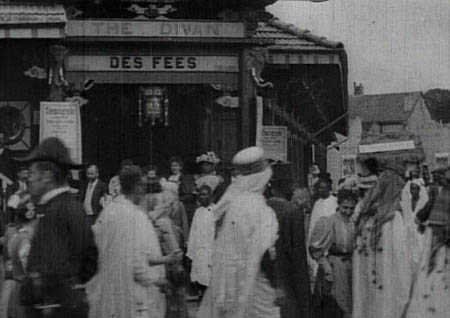
Arab Cortege, Geneva – first appearance of a black person in the cinema?
image

New York: Brooklyn Bridge
image

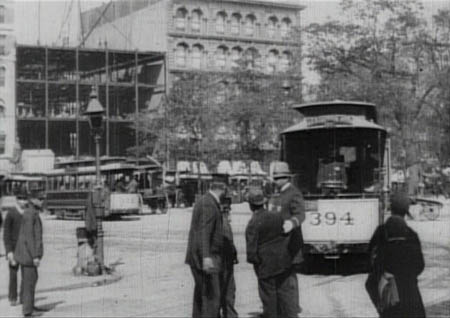
New York: Broadway and Union Square
image

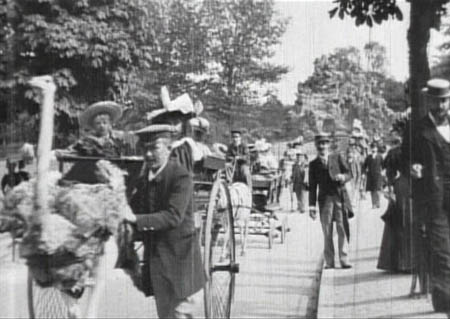
Policeman’s Parade, Chicago
image

The Boat
image
Keaton has built a boat in his garage, and takes his family out for a sail. Destroys the house getting the boat out, destroys the car getting the boat in the water, finally destroys the boat, leaving the four of them floating in a bathtub for a life raft, when his son pulls the drain plug. The boat itself is as complicated as The Electric House, with collapsing masts (for going under bridges) and makeshift repairs. Nice scene where the whole boat is rotating in a storm (actually rotating, not just a camera trick) while Keaton tries to stay right-side-up. Pretty sure I like this one more than Electric House… in fact, most of these are at least as good as that one. Don’t know why I obsessed on it for so long.

The Love Nest
image
I recognized Big Joe Roberts from Cops, the giant clear-eyed fat man. Turns out he plays the antagonist in almost every one of Keaton’s silent shorts. He died of a stroke shortly after Our Hospitality in October 1923. Big Joe plays the cruel, murderous captain of a whaling boat Love Nest that picks up Keaton who is stranded at sea. At the end, Keaton can’t launch the lifeboat alone, so he sinks the whole ship to float the small craft. Entire Love Nest sequence turns out to have been a figment of his food-and-water-deprived imagination… thinking himself stranded at sea for weeks, his boat is still tied to the dock.

The Goat
image
As in “scape”goat, turns out… there’s no goat here. Dead Shot Dan arranges to have the police photographer get a shot of bread-line refugee Keaton through a window, then makes his escape. Keaton sees the poster, thinks it’s for real and that he killed a guy he pushed down in another town, chased around by sheriff Big Joe Roberts, ending up accidentally in Big Joe’s own apartment. The escape from the apartment has one of my favorite series of gags, a chase through the building’s single elevator.

My Wife’s Relations
image
Running from cops, Keaton accidentally (preacher speaks Polish I think) gets married to a woman who’s trying to have him arrested. Comes home to her family of large, rough, intimidating men. Tries to fit in at first, then plots to escape, riding the train to Reno at the end.

The Scarecrow
image
Keaton is friends with Big Joe in this one. They live in a one-room house that inventively conceals a bath, bed, stove and kitchen table with ropes and hinges. Both men are competing for a woman (same girl played the wife in The Boat, her farmer father is played by Joe Keaton), leading to a chase scene where Keaton disguises himself as a scarecrow. Best part is Keaton in a dangerously high chase with a dog that can climb ladders (up and down!) which ends up going through the rigged house.

The Paleface
image
Keaton wanders into an Indian reservation right after they swear to kill white men in response to their land being stolen by oil barons… finds time mid-chase to make an asbestos suit, so after he fails to burn at the stake, he’s made an honorary member of the tribe. Now he and chief Big Joe team up against the scheming white men. Virginia Fox, hot girl from The Goat, Cops and others, plays the chief’s daughter, Keaton’s prize for saving the reservation at the end. She never gets much to do except to look pretty in a few close-ups.

These are all totally worthwhile shorts… think I’d choose Scarecrow and Goat to show off to others, if I ever had people over for a shorts-fest like I keep threatening to do.

Big Joe Roberts:
image

Supposed to be a full feature, but cut down to 45 minutes after initial screenings. Probably they cut most of the plot, since what we’re left with is a slowish intro, an awesome running-on-train-cars gag, then a huge dream sequence where Keaton goes inside a movie screen for the tightest collection of astonishing gags probably ever performed. Jumping right through his assistant, through a window into an old lady costume, riding the handlebars of a motorcycle, and an exploding billiards game.

image

image

The intro to the dream/movie sequence is great, scene-change backdrops changing under Keaton as he tries to adapt. Cute ending too, shy Keaton looking to the movie screen for advice on what to do with his girl. Only possible thing wrong with this movie is the horrid score on the DVD… will have to find something appropriate to play next time I watch it.

image

Buster is a nonathletic college kid, stressing academic achievement over sport. But when his girl falls for an athlete, Buster’s gotta prove his versatility on the field to win her back!

image

Or something along those lines. At the end, the jock is threatening to ruin her just by staying in her dorm room and not leaving. If it’s known that she was alone with him for more than a few minutes, her virginity will be in question, and she’ll have to leave college in shame. Fortunately, Buster pole-vaults through the window and pelts him with college memorabilia. A weird little movie, pretty funny but didn’t kill.

image

Also watched The Electric House (1922), a short from back when suicide was funny:
image