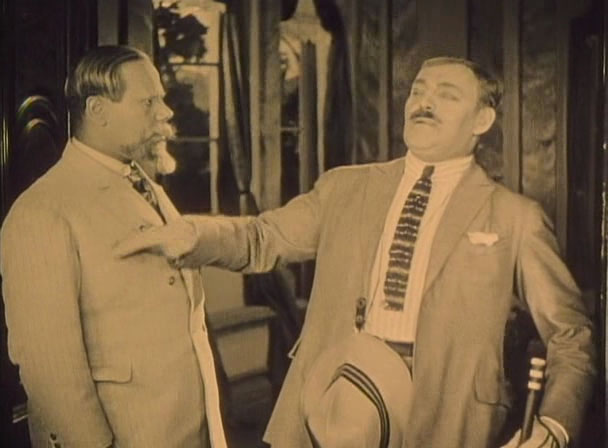
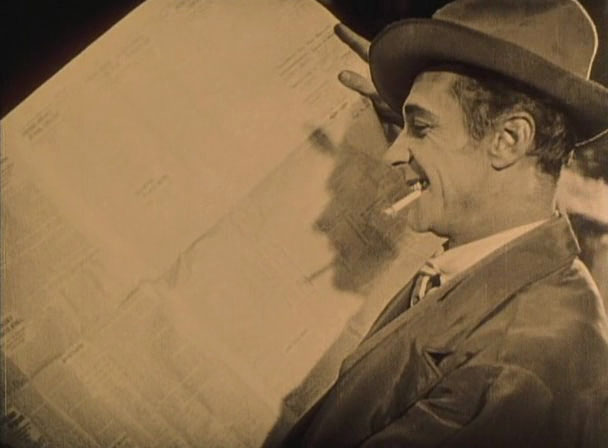
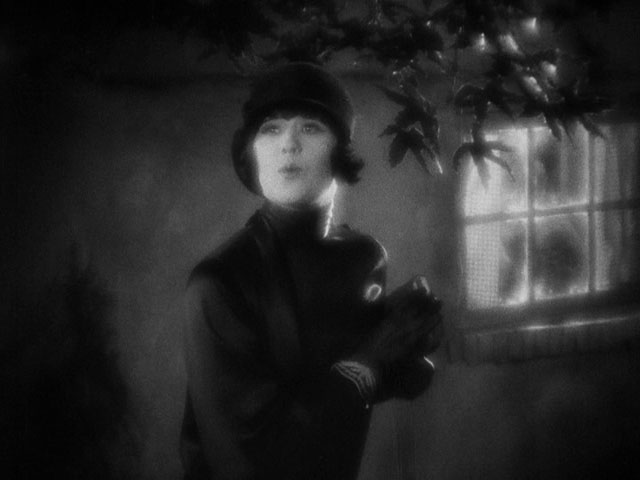
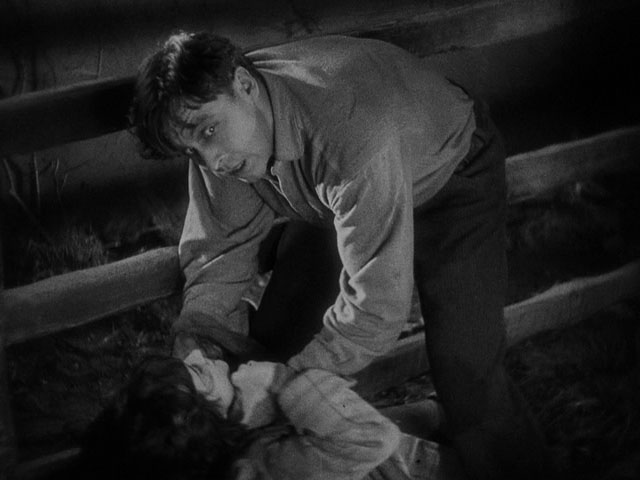
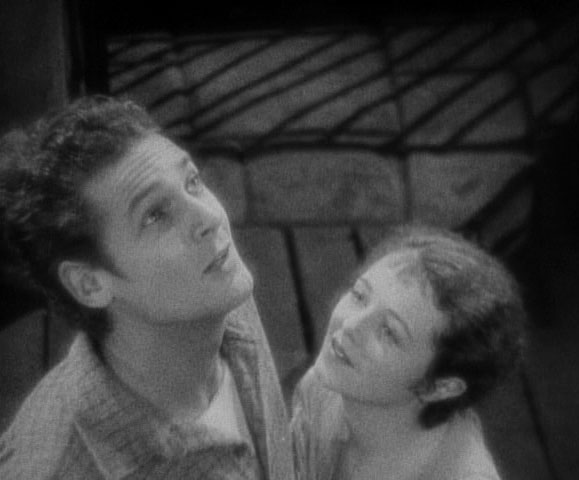
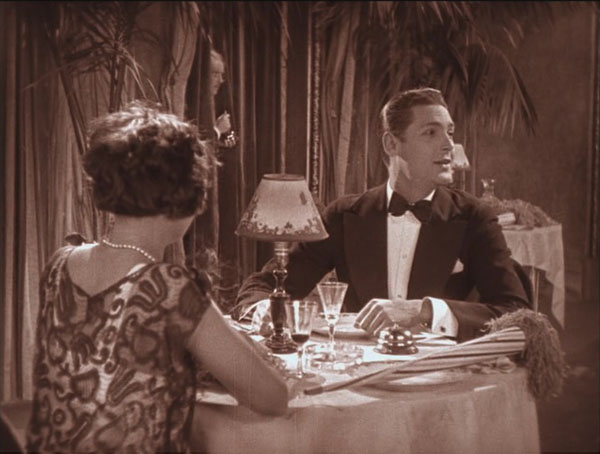
Grand duke Ramon of some little island (Abacco), not a thrifty fellow, is introduced throwing money into the water for diving natives, while his white-bearded treasurer Paqueno is taking a meeting about the island’s huge debts and given three days to repay them. I thought the rest of the movie would be between the duke and his finance guy, but white-beard disappears after he screws up in chapter four, replaced by a more charismatic character.

Meanwhile, a businessman named Bekker wants to buy part of the island to mine sulfur, which would clear the government debts but would turn this tropical paradise into a stinky sulfur pit, so the duke declines, leading Bekker to instead contact the local easily-located anti-government conspirators.

Bekker and the money man:
image

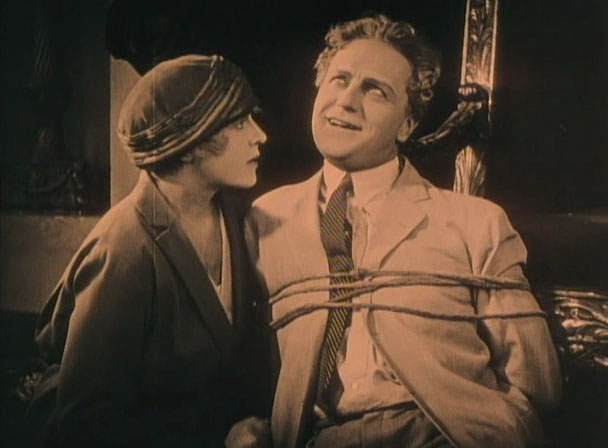
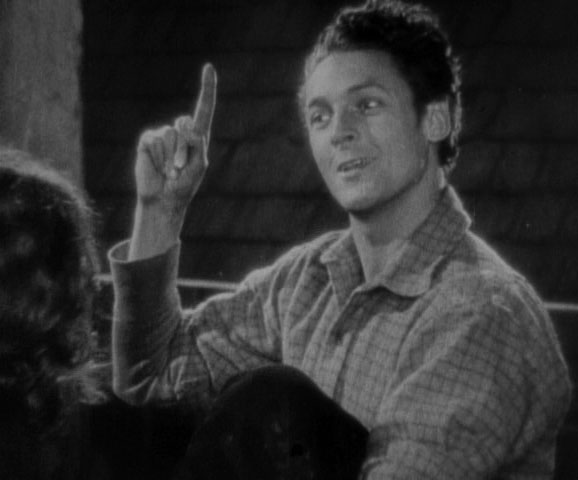
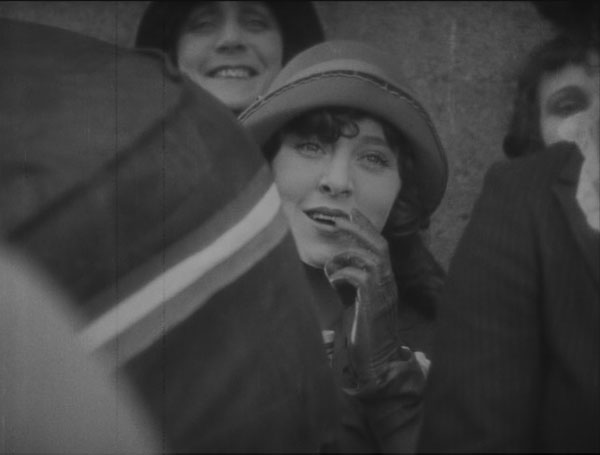
The Duke’s proposed way out of this mess is the love letter he’s received from Russian Crown Princess Olga, who wants to marry our duke despite her family’s objections. She finally heads to Abacco, “pursued by a descendant of Ivan the Terrible,” and bumps into…

image

Professor Philipp Collin, “a gentleman of changing names and professions,” our movie’s new hero! A master of disguise and trickery who has just broken into a blackmailer’s house and retrieved the purloined royal love letter (long story), he puts ugly old-woman makeup on the princess and pretends she’s his wife.

Lady and the duke:
image

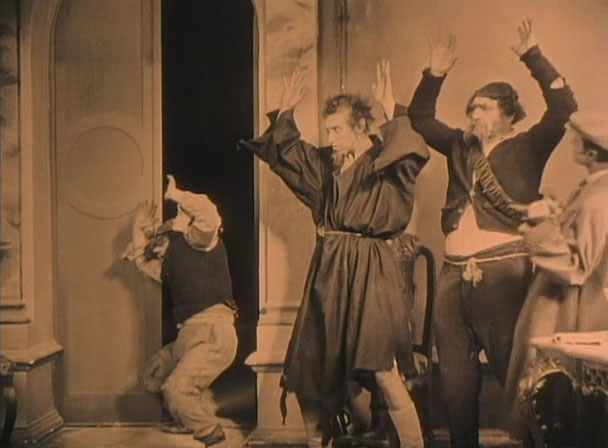
The princess manages to marry our duke, Collin makes a fortune in bond trading through his inside-info on the royal goings-on, and Bekker and the conspirators are easily defeated after they try to hang the duke.

image

Amusing comedy, packed with plot left-turns, broken into chapters so it plays like a serial. A few exciting motion shots (camera scrambling onto land from a boat). Movie is much better than its title.

A Nazi collaborator made a sound remake ten years later, after Murnau’s death

image

Grand Duke Harry Liedtke, who’d appeared in early Lubitsch films, was killed at home by Russian soldiers in ’45. Professor Alfred Abel, star of Metropolis and Phantom, was also in a Sirk film and tried his own hand as director. Princess Mady Christians came to the U.S. in the 30’s, played in the remake of Seventh Heaven and portrayed an old Joan Fontaine in Letter From an Unknown Woman.

image

Walter Rilla (which one was he again?) fled the nazis in the 30’s, returned later and played in the 1960’s Dr. Mabuse pictures. Max Schreck, after Nosferatu and The Street, plays one of the conspirators (which one?)

My favorite intertitle:
image

image

I watched the 90-minute export version this time (with translated czech titles?). The main problem I usually have with Sunrise is that it’s too long for the Lambchop double-album I like to play with it, and the main problem with the 90-minute version is that it’s too short for the Lambchop album. Somebody needs to cut a version of Sunrise that is exactly the right length for the Lambchop album! Next time I’ll try the French DVD that has ’em pre-synched so I can see how they did it.
image

The marriage-threatening amoral woman from the city, Margaret Livingston, apparently specialized in broken-marriage films in the silent era, appearing in films named Married Alive, After Marriage, Wandering Husbands, Divorce and Alimony.
image

Male lead George O’Brien worked regularly with John Ford and after 1932 exclusively appeared in Westerns, ending his career with Ford’s Cheyenne Autumn in ’64. I think I like him better than Charles Farrell.
image

Janet Gaynor won the first best actress oscar for this along with Seventh Heaven and Street Angel, would be nominated again in the sound era (A Star Is Born, 1937) and then retire.
image

The city:
image

Pig in the city:
image

Boat rescue:
image

Sunrise:
image

Charles Farrell is Chico, an athiest who works in the Paris sewers (I’m not sure what he does down there – looks like he’s doing his laundry, or fishing rags from the water) and dreams of being a mighty street washer up on the surface. Janet Gaynor lives with her abusive sister, possibly both as prostitutes. As usual for the beginning of a Borzage movie, Something Good happens to the guy (he’s given a better job) while Something Bad happens to the girl (a rich uncle comes to take them in, asks if they’ve been “clean” and Janet answers no, so relatives leave and Janet’s sister tries to kill her). Chico saves her but gets himself in a pickle with a cop… he says she’s his wife, so now the cop will come by Chico’s house tomorrow to verify the story.

Standing in the gutter, looking at the stars:
image

What to do!? If you said “why doesn’t Janet stay at his house for a day” then you’re as smart as the screenwriter. Chico lives on the seventh floor, whose set is actually seven stories high, as noted by the outrageous vertical tracking shot following the pair up the stairs. There’s some business about who’s sleeping where and some talk about God, work, fear of heights and whether Chico is a very remarkable man (he is), and the next day he buys her a wedding dress.

A very remarkable man:
image

I don’t know how long afterwards (a day? a year?), war breaks out, and it breaks out in a hurry – Chico has about an hour to report to duty. The war lasts a few years, he and his street-washin’ buddy flamethrow some dudes, the local cabbie is roped into a huge cab-driven troop movement (which actually happened, and which Borzage recreated with either an awful lot of cars or a clever model).

Papa Boul and what’s left of his cab:
image

Chico is feared dead, so Janet’s admirer back home (not a slimy villain or anything, just a suave dude who likes her) is making his move when Chico bursts in, alive but blind and believing in God, for a happy-ish ending (he’s still blind).

Chuck on the stairwell:
image

The story doesn’t sound like much, but it’s a gorgeous movie. The street set (which looks familiarly like the one from Street Angel) and the apartment are wonderful, and the war is remarkably shot (dig the silhouette-soldier who attacks Chico).

image

Farrell and Gaynor are as good as in their other movies (well, maybe Gaynor has less to do here), and Gladys Brockwell (dead two years later after a car crash) shines as Gaynor’s whip-bearing sister. Simone Simon and James Stewart starred in a sound remake ten years later, which is not quite as highly regarded.

Gladys Brockwell:
image

“Will they lead the same sorry lives that we have?”

image

The Eclipse box set title is “Three Family Comedies” but I’d forgotten that Ozu even made comedies until the opening titles played over a drawing of a kid holding his crotch. Then my realization “oh, this will be a zany comedy featuring kids doing dirty stuff” turned out to be off base. Sure, kids are the protagonists, and it features some comedy, but it all leads to the quote above (spoken by the kids’ father) which belongs firmly in drama territory.

image

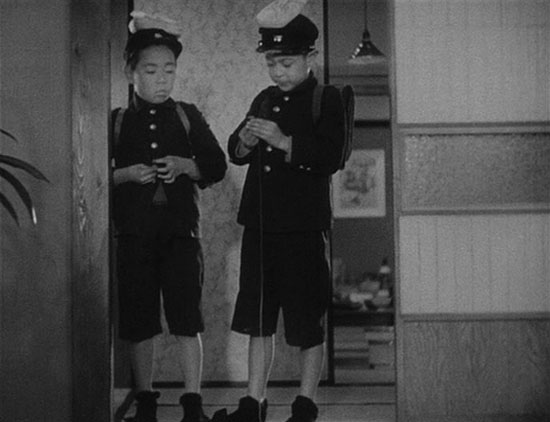
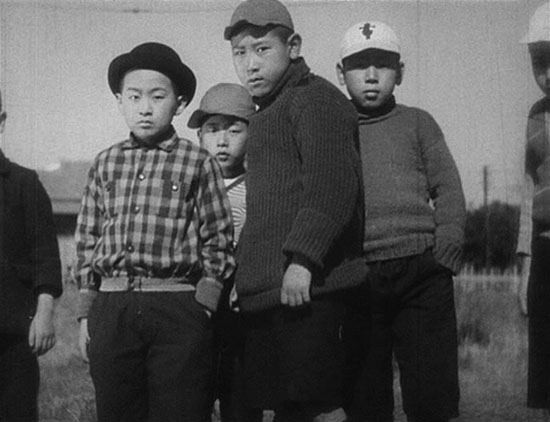
Dad’s got a new job so he moves the family close to work. Actually he moves ’em into the suburb where his boss lives, and it comes out later that dad is kind of a suck-up. The kids are intimidated by a pretty mild gang from their school until they learn to use their wooden shoes as weapons and they dominate the group. It’s kinda like the beginning of 2001: A Space Odyssey but with Japanese schoolchildren instead of apes.

image

Most of the movie seems to be this low-key power struggle with the kids which includes searching for sparrow eggs to eat raw (to prove strength) and trying to get an ‘E’ (for ‘excellent’) in calligraphy at school. A scene at the boss’s house is the turning point. Everyone is watching the boss’s home movies in which our kids’ dad is making funny faces and cracking everyone up – everyone but his kids who are ashamed that their father is playing the fool. The older boy (Ryoichi) goes home, calls dad a yellowbelly and trashes the house until he gets spanked. Moods improve later and the movie ends with the kids relatively cheery again and getting along with the boss’s son (who dresses like Oddjob).

image

One scene I didn’t get: the bully kids find a valuable coin, pool their money to make change, then hand over the change to a policeman and walk away bummed out. What happened?
image

A scene in dad’s office where the camera follows a contagious yawn made me yawn too. Yes, there is camera movement in an Ozu film. Movie is obsessed with trains and streetcars too – there’s one passing behind the action whenever possible.

image

Apparently Ozu’s Good Morning nearly thirty years later was a semi-remake.

TCM:

I Was Born, But…, which Ozu developed from his own story, is a social satire of comic delights and melancholy resignation to the innocence lost as the boys face up to the compromises that await them. The film won first prize at the Kinema Jumpo awards – the first of six such prizes he would eventually win – and is regarded as Ozu’s first genuine masterpiece.

Michael Koresky:

“I started to make a film about children and ended up with a film about grown-ups,” said Ozu, speaking to the film’s dark side. Because of this, Shochiku didn’t know what to do with the picture, even delaying its release for two months. This potent mix of comedy and pathos within the domestic space would, of course, continue to dominate Ozu’s oeuvre in the coming decades—and while the age disparity between the generations would grow smaller, the resentment gap would grow even wider.

Poyraz (2006, Belma Bas)
Rural people sure live quaint and handsomely photographed lives!
Nuri Bilge Ceylan was thanked in the credits

Why Play Leapfrog (1949, John Sutherland/MGM)
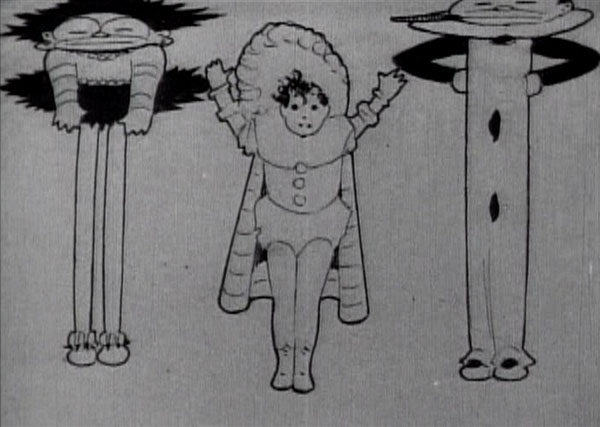
Let’s hear it for capitalism! Clever cartoon describes why inflation is okay and raw material costs don’t mean much. A boring explanation of why America is so darned great that ends by telling factory workers to be more efficient and come up with smart cost-saving ideas which will lead to greater pay increases.

Balance (1989, Christoph & Wolfgang Lauenstein)
Ominous stop-motion – five mute guys with numbers on their shirts and telescoping fishing poles in their shirts are on a balanced platform suspended in space. One catches a sort of music box and the others get greedy, leading to a fight which ends with one guy on the far end of the platform from the box.

Broken Down Film (1985, Osamu Tezuka)
It’s a popeye-like cowboy cartoon except that the film’s projection problems (hair in the gate, scratches, countdown leader, etc) are part of the story. Cute.

and a few from the Unseen Cinema box set…

Paris Exposition Films (1900, James White)
Some one-minute films at the Eiffel Tower a decade after its construction. Best part is this guy on the left side of the screenshot. People were walking up to the camera and this guy saw his chance for stardom, so he prepares himself for some manuever (maybe a backflip) but blows it, stopping instead to shake hands with an acquaintance offscreen as the film runs out.
image

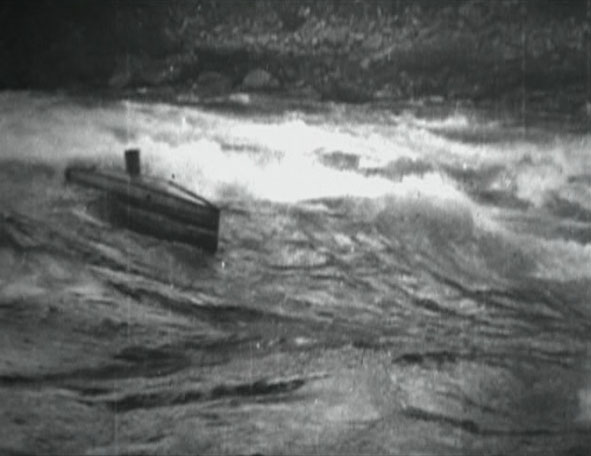
Captain Nissen Going Through Whirlpool Rapids, Niagara Falls (1901, Edison Co.)
It takes longer to type the title than to watch the film, which is of some submarine-looking craft bobbing in a river. Found a wonderful tale online of Nissen’s stupid death four years later, but unsure if it’s true.
image

Down The Hudson (1903, Frederick Armitage & AE Weed)
Much more interesting than the submarine thing – New York riverfront over a hundred years ago. I assume lots more of this stuff will be on disc five.
image

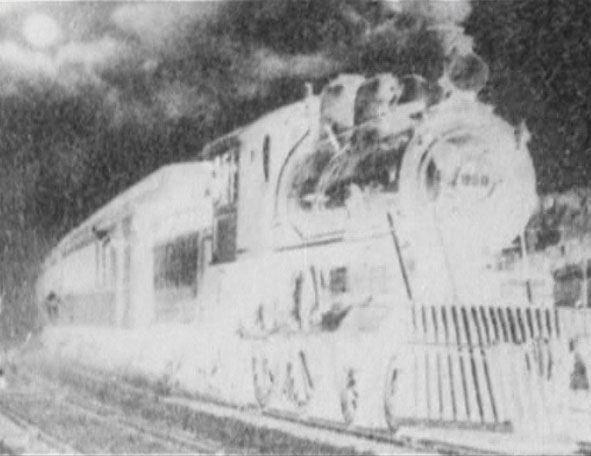
The Ghost Train (1903)
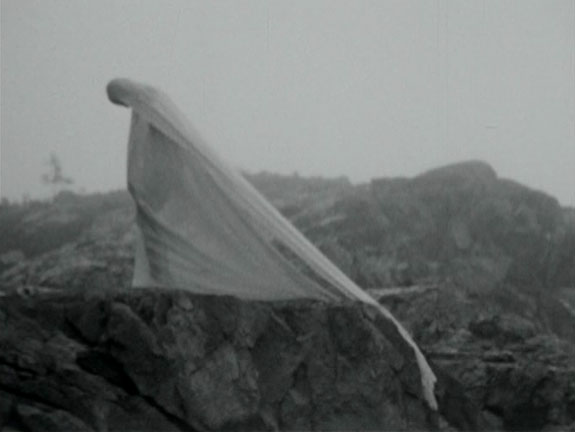
Oooh, someone learned to invert the black/white image AND to matte a moon into the upper corner. This is one of my favorites because it is neat-looking and twenty seconds long. If only you could say the same for Transformers 2.
image

Westinghouse Works, Panorama View, Street Car Motor Room (1904, Billy Bitzer)
Long factory tracking shot reminds me of the beginning of Manufactured Landscapes. Unlike in ML, all the workers stop and look at the camera.
image

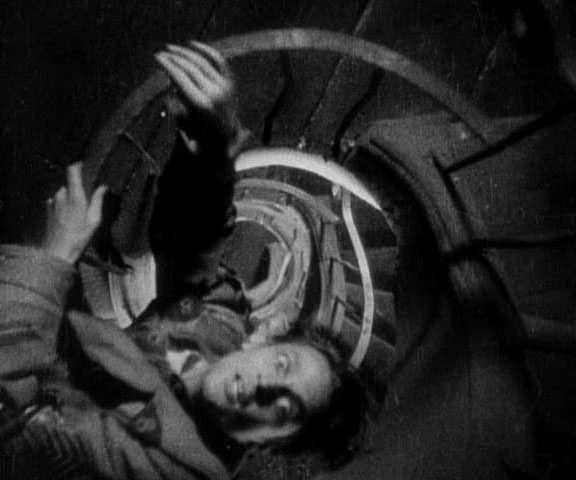
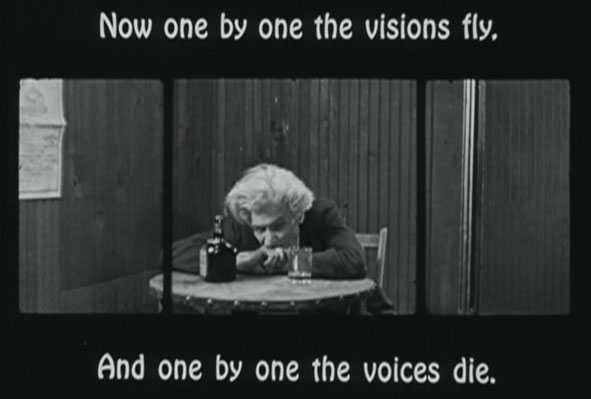
In Youth, Beside the Lonely Sea (1925-ish)
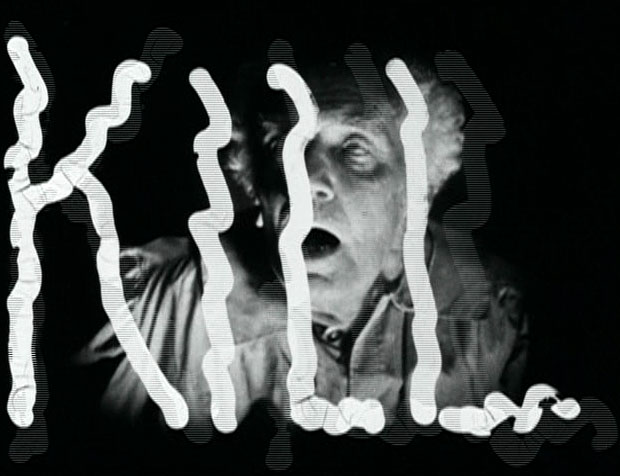
Crazy three-panel layout illustrating the poem told with text above and below the picture. Lots of ghostly superimpositions. This was so damn cool I had to lay down for a while.
image

image

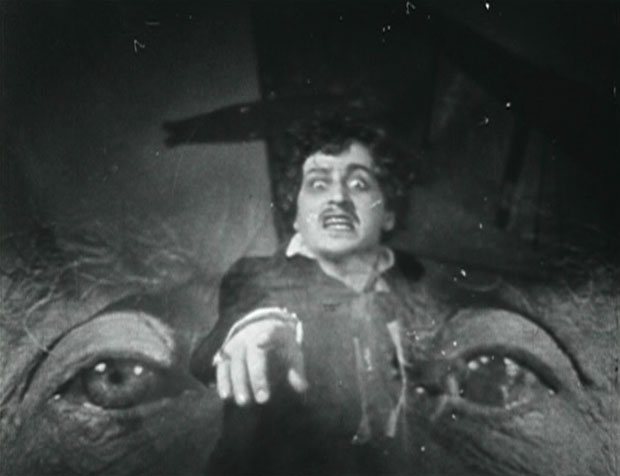
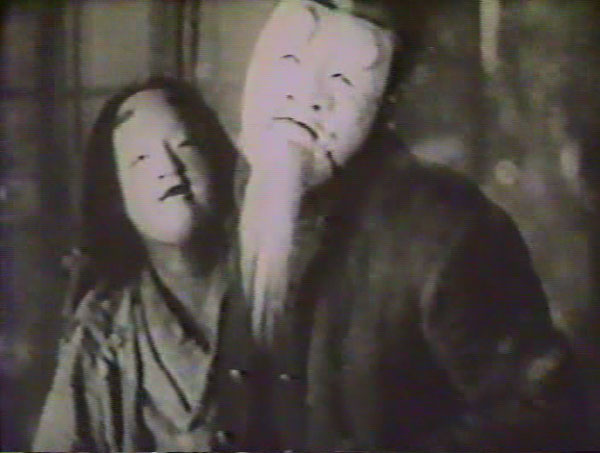
Oh man, I don’t know what happened plot-wise, but clearly (dimly) we’d have an expressionist madhouse classic to beat Cabinet of Dr. Caligari on our hands here if we had a better print copy.

image

No intertitles, and I guess I was paying more attention to images and technique than trying to puzzle through the story, so even the one-line IMDB plot-blurb “a man takes a job at an asylum with hopes of freeing his imprisoned wife” is news to me. I thought he might have always worked there, maybe he imagines she’s his wife, but he’s either hallucinating – crazy enough to be at the asylum, but gentle enough to be given menial jobs – or maybe he becomes mad from hanging out there too long, or perhaps the ending is a dream… so either Caligari or Shock Corridor.

image

Watched it with Superchunk’s score playing on the stereo. Now Superchunk are heroes of mine, but they wouldn’t be my first choice to score a bonkers dream-logic silent film… worked pretty well, but maybe next time I’ll cook up a mix CD for the occasion.

Based on a short story by Yasunari Kawabata, who has other titles with interesting names to his credit and film adaptations by Naruse, Shimizu, and Kon Ichikawa.

Kinugasa made Gate of Hell, which I think I’ve heard of, and some 100 other films. I hope somebody has looked into this.

An IMDB user: “the film makes use of every single film technique available at the time: multiple exposures and out of focus subjective point of view, tilted camera angles, fast and slow motion, expressionist lighting and superimpositions among others.” V. Petric via Midnight Eye: “These devices… are used not for their own sake but to convey complex psychological content without the aid of titles.”

Silents Are Golden has a plot description: “An elderly man, a former sailor, works voluntarily at odd jobs in a lunatic asylum where his wife is confined after having attempted to drown her baby son in a fit of madness many years ago.”

Excerpts from M. Lewinsky’s well-informed interview on Midnight Eye:

The strongest direct influence was certainly Murnau’s Last Laugh. There was much debate in Japanese film magazines about this film – it was released in Kyoto in January and in Tokyo in mid-April 1926 (A Page of Madness was shot in May 1926) – and its having no intertitles. In a published enquiry “My Favourite Film”, Kinugasa chose Last Laugh saying he had seen it five times. If you compare the two films you will find many elements and images from the German film used in A Page of Madness, but transformed and integrated in a different structure.

The comparison with Dr. Caligari is quite pointless I think. This German film from 1919, despite being popular in Japan, is too different in its mood and making, and its treatment of madness has nothing in common with A Page of Madness.

There are many instances in A Page of Madness where the film relies on benshi narration to furnish crucial information. Without narration, without dialogue, the film at times is nearly incomprehensible.

The Freshman (1925, Newmeyer & Taylor)
The sad truth about Harold Lloyd is that I loved him when I first saw him, but every time I rewatch a movie I like it less. So far I’ve seen Safety Last! and The Freshman twice, and each dropped from “great” down to around “pretty good”. I’m afraid to rewatch the ones I thought were pretty good to begin with.

image

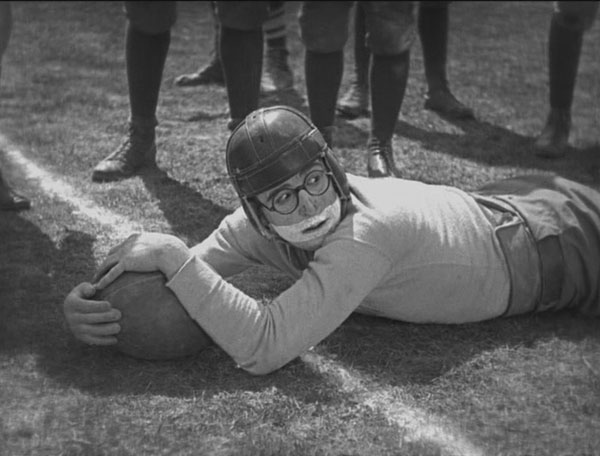
Young Harold (he was actually 32) watches imaginary film The College Hero over and over to prepare himself for college, filling his head with stupid ideas about college life. I would’ve loved it if they’d done more movie-vs.-reality comparisons, but it seems the only thing he took away from the film was the hero’s nickname (“Speedy”), catchphrase (“I’m just a regular guy”) and silly jig, which everyone at college mocks until Harold manages to win the big football game, then the jig becomes the coolest thing. It’s a wonder that nobody else at school had seen this movie and figured out Harold wasn’t even an original nut, just a nerdy guy ripping off a bad movie joke. But my biggest surprise was finding that the silly hat Harold wears wasn’t an invention of his silly movie – college kids (according to this silly movie anyway) actually wore those hats!

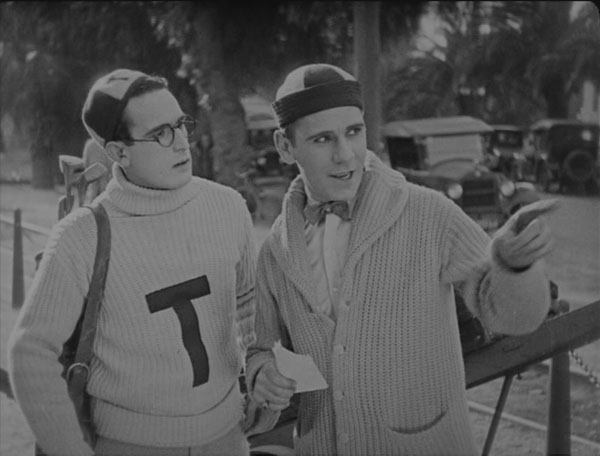
Below: Harold and “the college cad” in silly hats. The cad, Brooks Benedict, later appeared in Leo McCarey’s not-sequel The Sophomore.
image

In the scene below, Harold’s tailor hides behind a curtain, ready to patch Harold’s unfinished suit should the need arise, but the two get their signals crossed because of a dude at a table ringing a bell. Supposedly the bell ringer is Charles Farrell, star of Street Angel, but he sure doesn’t look like he does in my screengrabs from that movie.

image

The girl who likes Harold, cutie Jobyna Ralston, was in The Kid Brother and Wings, didn’t make it in the sound era.

image

The Mystery of the Leaping Fish (1916, Christy Cabanne & John Emerson)
Written by DW Griffith and Tod Browning, the same year they did Intolerance, and co-produced by Keystone. Douglas Fairbanks was apparently famous enough to play himself in a framing scene – I think he plays himself, and the rest of the film (starring himself) is his rejected pitch to a producer for a film to star himself. That’d already be plenty to wrap one’s head around for a 1916 short, but that’s before we even get to the main story, which involves incompetent and extremely drug-addicted hero Coke Ennyday trying to stop criminals from smuggling contraband via one-man inflatable toy rafts, and stop the criminal mastermind from forcing the lovely Fish Blower to marry him. Coke gets the drugs and the girl, and I didn’t know I could have my mind blown by Douglas Fairbanks. Bessie Love, the Fish Blower, appeared in three major films in the early 1980’s, sixty-five years after this one. I wonder if anyone on those sets asked her about her cult druggie silent short.

The Play House (1921, Buster Keaton & Eddie Cline)
I’d seen almost all of Keaton’s solo silent shorts, but I’d missed this major one, in which he plays all the characters in a trippy dream sequence that lasts the first half of the film. Reliable heavy Joe Roberts finally wakes Buster from his funhouse-mirrored delusion and he goes to work as a stagehand, where he’s spooked by a pair of identical twins with mirrors. A sheer delight of visual invention only grudgingly held together by a plot.
That’s two of Virginia Fox, daughter of William Fox:
image

Buster Keaton’s minstrels:
image

Cops (1922, Buster Keaton & Eddie Cline)
The Freshman was a movie about a boy whose ideas about life have been warped by the movies, Leaping Fish had Douglas Fairbanks the actor playing Douglas Fairbanks the aspiring screenwriter, and The Playhouse featured Buster Keaton playing a hundred of himself in a stage performance viewed by even more of himself. Cops has no self-conscious reflection that I can think of. It’s just a damn fine heist/love/chase flick with great invention in props and situations. However it does fit in with the outrageousness of last two films in its ending: snubbed by his intended love, Buster effectively commits suicide by running back into the police station where he has just locked up hundreds of angry cops.

Hooray, my first Borzage movie, and certainly not my last thanks to the giant Box o’ Borzage that Katy gave me.

Camera glides around a giant street set of Naples, while inside her room Janet Gaynor is being told by the doctor that she needs expensive medicine for her dying mother. Janet goes outside to imitate the local prostitute, gives up in about one minute and steals some money, is immediately caught and sent to the workhouse. What crappy luck.

image

Escapes just in time to watch her mother die, then evades the cops by hiding in a drum owned by the travelling circus.

image

Works at the circus for a while, meets a handsome painter (dark, curly-haired Charles Farrell of City Girl and Seventh Heaven)

image

Still thinking about her secret fugitive life, Janet falls when she sees a cop talking to Charles and breaks her leg.

image

They return to her home, he gets a huge contract and proposes to her. The night before the wedding she’s caught by the cop.

image

Cop incredibly gives her one last hour with her man before getting arrested (this hour feels like an hour, though it’s Janet’s big oscar-winning chance to get emotional).

image

Dark days follow… our painter, abandoned, can’t work so gets fired from the mural job, while a painting he sold for very little is manipulated by an art fraud group and sold for a fortune, and of course Janet’s slaving away in prison.

image

The day she’s out, Janet wanders the streets ashamed, while upstairs the neighborhood prostitute tells Charles his fiancee is a dirty streetwalker arrested for stealing. Charles finds Janet, chases her around, is about to strangle her when he looks up and sees his painting of her transformed into an angel – he repents, they have happy ending.

image

I know when they say Borzage was heavily influenced by Sunrise I’m supposed to look at mood and style, but the whole almost-killing-your-wife thing was similar as well. Good story (I thought), not overburdened with intertitles. Favorite bits were the wild street set, the drum escape, the strangulation rage scene (very dark) and the leg-breaking bit (excellent editing there mounts tension from both the cop questioning Charles and Janet’s balancing on stilts).

The movie likes to show us FEET:
image

Katy seemed underwhelmed but probably didn’t want to disparage the mighty Borzage. Not having watched the documentary on his career yet (or knowing a damned thing about him), I expect the thing is that he was creating artistic features at a time when few others were. This fact doesn’t hit me as hard because I didn’t go to the pictures in ’28, watching a steady stream of whatever crappy, gimmicky dramas were in theaters at that time… I’ve been seeking out the artistic ones all along. So films I’ve seen from the year Street Angel came out include great comedy like Speedy, Steamboat Bill Jr. and The Circus, thrillers Spies and West of Zanzibar, early avant-shorts like Überfall and The Life and Death of 9413, and all-time great The Passion of Joan of Arc – not exactly a representative selection.

Our introduction to Janet’s circus life:
image

Pan down:
image

Janet Gaynor won the first best-actress oscar for this (in conjunction with Seventh Heaven and Sunrise).

Janet with monkey:
image

Director of photography Ernest Palmer shot a pile of Borzage pictures, also Michael Powell’s Lazybones (not to be confused with Borzage’s Lazybones), later won an oscar for Blood and Sand.

image

According to IMDB, the director of All The President’s Men was born the week this came out – neat.

My first mid-30’s silent film. Chaplin’s Modern Times doesn’t count, and the Russian Happiness was two years earlier. Japan still had union narrators in theaters, so their cinema stayed silent longer than most.

Traveling actor Kihachi brings his troupe to the town where his ex-girl and illegitimate son live. K. has made himself scarce, sending money whenever he can, so the boy (Shinkichi, now 20) could grow up without the burden of a no-good father, and whenever Kihachi’s in town he stays with the mother and sees the boy.

Kihachi’s current woman in the troupe suspects something is up, finds out the story through bribery and sets up younger girl Otoki to go after the boss’s son. The two fall in love, and Kihachi tries to break it up, leading to the revelation that he is Shinkichi’s father. Meanwhile, constant rain means the troupe can’t perform, and finally they’re out of work long enough to have to sell off their stuff and break up. After an emotional climax, the young lovers stay behind, and Kihachi and his girl make up at the train station, heading off to form a new troupe.

Great movie, slow-building, ends up as emotional and true-feeling as the other Ozus I’ve seen. I ought to watch at least one per year. They are refreshing. Kihachi somehow stays sympathetic even though he hits everyone in the movie at some point. That’s just how he communicates, I suppose. Definitely different kinds of families here than in Tokyo Story or Equinox Flower.

This was something like Ozu’s thirtieth movie, and it’s said to be the beginning of his mature style. It’s an uncredited remake of Hollywood’s oscar-winning part-talkie The Barker from 1928, which was also remade twice in Hollywood (with Clara Bow in ’33 and Betty Grable in ’45).

Half these actors had been in Ozu’s Passing Fancy the year before. The kid had later roles in Kon Ichikawa and Seijun Suzuki movies, and his father appeared in Ozu’s own 1959 color remake Floating Weeds. Maybe Katy will watch that with me next year – Masters of Cinema’s N. Wrigley calls it the most beautiful Ozu film.