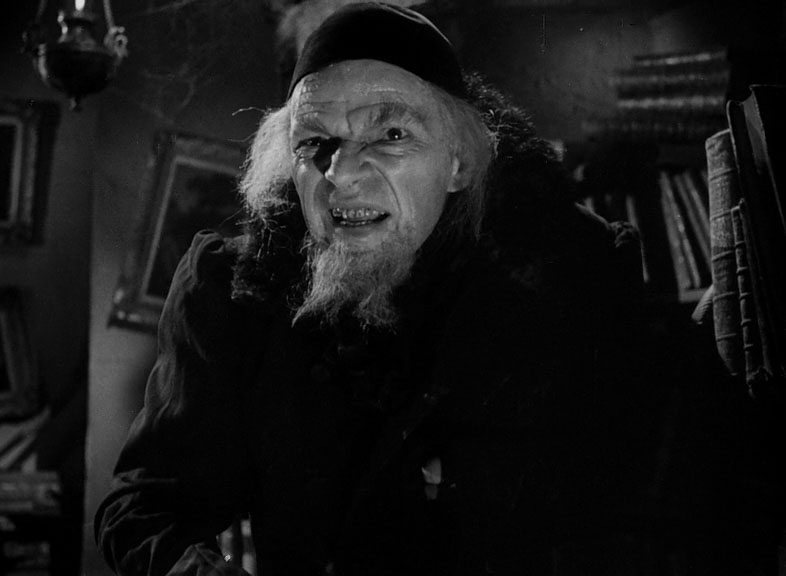
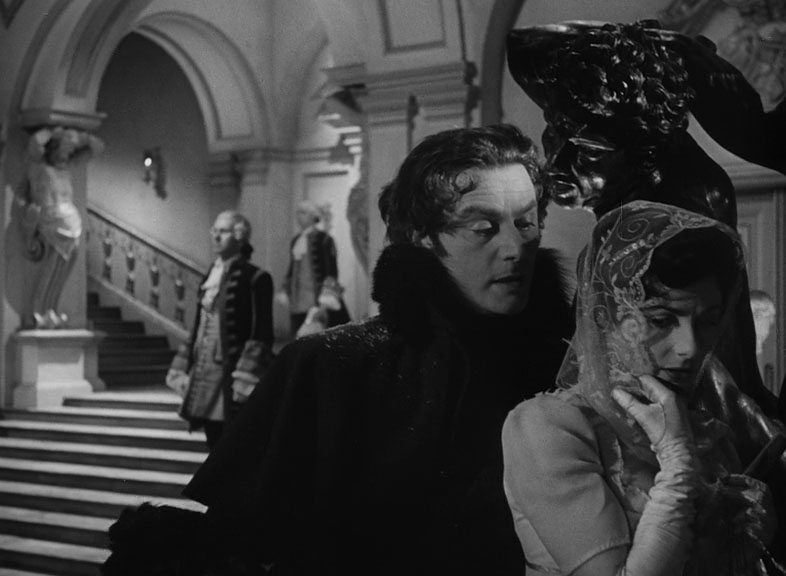
It [was] Cannes Month… but after Bacurau I got distracted and thought I might watch the Miguel Gomes epic Arabian Nights… but first, since I’ve seen the other two features in my Pasolini “Trilogy of Life” boxed set, I guess I’ll watch his Arabian Nights. It turns out both the Pasolini and the Gomes played Cannes, so Cannes Month continues!

Zumurrud is a slave allowed to choose her own master – she chooses poor boy Nureddin, gives him the money to buy her and rent a house, but the boy immediately disobeys her and they spend the rest of the movie having adventures trying to reunite.

N, realizing he got lucky:

Z, king of the realm:

Some of those adventures: an older couple bring home a teenage boy and girl, for a bet, and watch as each kid fucks the other while they sleep. A Christian kidnaps Z and has her whipped, but she escapes and comes upon a city that makes her king, then she orders her tormentors crucified. N is kidnapped and fucked by nuns, is later told a story about Chaplin guy Ninetto Davoli who’s supposed to marry a lovely girl but falls for Crazy Budur who kidnap-marries him. A prince finds a girl locked up by a demon underneath the town and loses his shoes fucking her. A girl turns herself to fire, a prince shoots a statue, N encounters a lion in the desert, and so on.

It’s easily the best of the three, despite greenscreen effects as poor as the dubbing and losing a star for killing a pigeon onscreen. Or maybe my expectations had been lowered enough, and I knew what to expect, focusing on the authentic ancient settings and landscapes as much as the silly-ass sex comedy.

Cool sights, unrelated to the plot:

The Devil is Franco Citti, who was in all three movies along with Chaplin Guy – and they were in a fourth Pasolini-written anthology sex comedy at the same time: Bawdy Tales, directed by Canterbury/Decameron assistant director Sergio Citti. Nureddin is Franco Merli, his career launched by this movie, then ruined the next year by starring in Salo. Zumurrud is Ines Pellegrini, who also went on to Salo, but worked through the 70’s, mostly last-billed. And Crazy Budur is Claudia Rocchi, later of Yor, the Hunter from the Future.

Opens with a woman returning to town to a mixed welcome just in time for a funeral featuring some light hostility – but you can tell from the Star Wars scene wipes that this is picking up where Aquarius left off, and is gonna be a good time. Not TOO good of a time – I was disappointed when the flying saucer a half-hour in just turned out to be a drone… but the drone turned out to be operated by a group of American hunters descending on Bacurau because the mayor has sold out the townspeople as wild game.

The town pulls together pretty quickly, unlike the hunters, who turn on each other whenever things go wrong. You’d think the mayor would know this, but Bacurau features at least two notorious killers, a history of violent revolution, a museum full of vintage defensive weapons, and (I’m not sure how this is related) a love for psychedelic drugs.

When two hunters pause mid-action to fuck, I’m pretty sure it’s a Cannibal Holocaust reference. Movie’s logic has an Udo Kier-shaped hole in it. After insisting that he’s more American than the Americans, he acts like they’re going on a rescue mission for the missing advance couple, then shoots one of his own guys after taking random potshots at main street, then almost kills himself, then whines like a baby at the town mayor, then says something like “we’ve killed more people than you know”, but his group was acting like they just met for this mission, then some “you haven’t heard the last of us” line as he’s being buried alive under the city. Wonder if they didn’t give him a script, and just let him make any decision he chose. I’ve been bummed out lately by some overwritten movies with predictable story arcs, so I’m not sure this is a complaint. Cinema Scope on the movie’s weirdness, not specifically on Udo Kier:

If Bacurau is a genre film, it’s one whose tension relies most on the fact that genre can no longer be relied upon. The unpredictability of these genre shifts is only amplified by the same reversals in tone or perspective already discernible from the beginning, which become increasingly jarring as the film progresses, producing an off-kilter, anything-goes atmosphere that is still careful to stop just short of the incoherent or the arbitrary.

The town doctor is Sônia Braga, lead of Aquarius, and the woman returning to town in the beginning was also in Aquarius playing Sônia’s character in flashbacks. The hunter who gets shot by Udo for calling him a nazi was in Support the Girls. Udo Kier is of course best known for Puppet Master 12: The Littlest Reich.

I hadn’t seen this since opening weekend, almost thirty years ago. I don’t recall it being good, and it has a poor reputation, but now I’m a seasoned auteurist cinephile with the keen ability to recognize David Fincher’s brilliant work within this studio disaster… oh ha, no I’m not, if anything the flaws were more apparent than ever.

Great opening, showing brief flashes of alien chaos aboard the ship full of sleeping soldiers, intercut with the quiet opening titles. The escape ship from part 2 crash lands on a prison mining planet, where Ripley washes up onshore burned and maggoty while the other cast is killed off via text on a computer screen. I try not to knock myself out keeping track of characters and personalities in these movies until half of them have died off – it was pretty doable in the last movie, gonna be harder here with this bunch of shaved-head barcoded space monkeys. Let’s start with Roc, the only actor I recognize (besides Pete Postlethwaite in a minor role), a sort of unionist preacher who doesn’t want women on his planet.

Ripley and Roc:

In this case I got what I deserved by watching the extended cut – it’s baggy and talky. So much of the movie is people floridly trying to avoid telling each other important things. Charles Dance (of Space Truckers, appropriately) is the soft-voiced medical officer. One of the other officials and also the scar-eyed psycho who teams up with the aliens against humanity are played by Withnail & I actors – lots of British accents in space jail. I forgot the scene where Ripley med-scans herself, proof that there were no new ideas in the prequels.

Spoiler alert:

It’s almost a really well-made movie, full of no-name actors who turned out to be really good at their roles, but it’s got some fundamental problems that good acting couldn’t overcome. It opens by squandering the goodwill of the second movie by killing off Newt and the others… it’s no fun for long stretches, and the last half hour is all aliens running full-tilt down long corridors, which is a visual effect they couldn’t manage. They followed up a great James Cameron movie with a film whose climax involves liquid metal… and the studio couldn’t pull off the effects… the year after Cameron’s Terminator 2 came out. They must have been so embarrassed.

Hundreds of years in the future, video cameras will look like this again:

In these uncertain times, sometimes I wanna watch some action movies I remember from cable TV. Rewatched the first movie (and Prometheus) five years ago, so it’s time to move this nostalgia trip along. It’s fine that the theatrical version still exists, for historical reference, but the auto-guns are neato, and more Aliens is a good thing, so I’m sticking with the extended cut.

da whole crew:

After drifting in cryo for fifty-some years, Ripley has outlived her daughter, as well as all the colonist families on the planet where she landed last movie. The company thinks she’s lying about the aliens, fires her, then wants to send her back as an advisor, along with droid Lance Henriksen (she doesn’t trust those things anymore, after last time) and a short-haired lieutenant who says he can guarantee her safety (didn’t catch his name, I think he died immediately).

Lots of science-nonsense and military-nonsense in the dialogue for the first hour, but the 80’s movie version of future-tech (which is supposed to be fifty-some years more advanced than the 70’s movie’s version of future-tech) feels so convincing that you have to keep reminding yourself that none of this stuff exists. They discover lone survivor Newt, lose some guys, bossman Paul Reiser starts to undermine their mission, calling the aliens “an important species” and saying “there’s a dollar amount attached.” By now, Lincoln NE’s own Michael Biehn (also of Terminator and Abyss) has taken charge of the soldiers, and seems competent. But it’s Weaver who takes the movie to new levels of badassery – I forgot the scene at the end where she duct tapes a machine gun to a flamethrower.

Strangely Ordinary This Devotion (2017)

Stones in someone’s mouth, stones on someone’s back, then without warning, HEAD SURGERY.

Graphic sex, flossing, more stones, vomiting blood, reading an interview with Cosey from Throbbing Gristle, references to children born without the need for water, movie clips taped off the TV. All starring Sheila and Dani and a kid

Higher amount of blood-red than in an Argento film. Not the highest caliber camerawork, but the description includes the term “the domestic as site of radicality,” so it’s academic art. Words are subtitled and sometimes unspoken. Usually camera sound but sometimes for good measure there’s your avant-noise-drone, once it’s kung-fu sfx, and once a deafening Prince song. Filmed in four states, apparently.

In the great Cinema Scope story that got me watching this in the first place, Michael Sicinski points out Leventhal’s “assertive editing matrices driven by colour, gesture, and shape.”

Wilson: “I was wondering what it is to be devoted to a practice at the same time that you’re devoted to a child, while you’re also devoted to being a lover …”

“I like making the argument that we could refuse to accept the domestic as a place of stasis and instead make it unknowable or unpredictable at least. While also recognizing that it has to be functional, and Rose has to get to school on time”


Fisted (2017)

The visuals of this play like SOTD outtakes (with far less blood, but still some). The sound design is much more enjoyable than the longer piece, music and loops with fun stereo panning, the closing sounds the same as the opening so this could play as a loop – ah yes, it was an installation piece.


Hearts Are Trump Again (2010, Dani Leventhal)

Card game, spider web, accordion, hair, pigeons, harvesting chard.
Dani behind the camera, talking with a German woman waiting for her sperm donor

Haiti, 1962: a guy dies after walking in shoes cursed with ashes of puffer-fish- innards, becomes part of an army of twilight zombies cutting cane, but awakens from his half-life and returns home.

Decades later, a rich white girl comes along with her petty problems and lack of belief or understanding, causing someone to ruin their life. The white girl is boarding-school Fanny, who befriends Haitian zombi child Melissa. Heartbroken after being dumped, Fanny visits Melissa’s mambo aunt Katy, paying an absurd amount for an improper ritual which accidentally summons the demon god Baron Samedi from that Goldeneye game.

Child (with killer phone case):

Zombi:

Violet Lucca in Reverse Shot:

The Baron taunts Katy for disrespecting her father, and, to use a Lynchian expression, something really bad happens to the girl and the woman. (What, exactly, we do not know, except that they are both being punished.) In the final shot, Mélissa emerges from an endless darkness wearing a white dress, the color of Dambala; for the rest of the West, it will likely read a symbol of purity. It’s perhaps the only image that could make sense at that point, unsatisfying as it may be. Receiving closure from relationships, stories, or life isn’t universally guaranteed.

Nocturama reference:

Mambo X-fade:

In a WWII prison camp, Beat Takeshi is a sadistic guard led by humorless youngish Capt. Yonoi (the film’s composer, Ryuichi Sakamoto). Lawrence (Paddington 2‘s Tom Conti) is a prisoner who speaks some Japanese and represents the Brits, a bunch of sensible dudes until David Bowie (same year as The Hunger) comes along.

Cruel Story of Middle Age. A classy-looking narrative movie with tricky subject matter, feeling more like a prestige 80’s international coproduction than those late 60’s Oshima youth films. Cool rumbling music, and lots of singing, never as fun as the pub songs in the Terence Davies movies. The story is mostly survival tactics, power games, betrayals and brutality – strange that the lead actors were two rock stars and a comedian.

In between short films, we watch couple-minute Mitchell & Webb segments about a post-apocalyptic game show. Unknown Male 282 doesn’t survive, and we are urged to remain indoors. Also, a stir-crazy, homebound Madonna sings a parody of her own song into a hairbrush, but this was on instagram so the endless scroll of horribly rude user comments next to the image is unavoidable.


It Is Here Where We Are (2018, Andrew Busti)

A 14-second flicker film loop of planets and circles and HERE.
I watched it a bunch of times, sometimes chanting along with the HERE voice.
I have Busti’s vimeo bookmarked to watch more shorts for a different but related thing, so more on him later. Busti teaches in Boulder, wonder if he knew Brakhage.


Apt. 309 (2014, Rosario Sotelo)

“Remain indoors.” Quarantine cinema, shot inside an apartment with a Timecode split-screen, unusual way to make art out of the everyday.


Victory Over the Sun (2007, Michael Robinson)

Real standard-def macroblocky quality to the trees. Some serious chanting/recitation in this. Futuristic architecture covered by weeds and trees gives a post-apocalyptic feel, then we go into flicker-film hyperspace and back again.

Apparently last time I watched this moments before seeing The Wizard of Speed and Time for the first time, which pretty much erased it from my memory (and that music that sounded “very familiar” is November Rain, duh), but this is good – apparently I like Robinson now, and can move past the Full House thing.


Life is an Opinion, Fire a Fact (2012, Karen Yasinsky)

Death scene on VHS, paused and blown up so each pixel is visible.
Hand-drawn man on fire.
Rotoscoping and filming a TV, both techniques to borrow someone else’s motion (and the latter reminds me of Paul Schrader’s Dark).
Reading material is provided for most of the films, and the Yasinsky interview is the best thing so far.

The older I get, the less I believe in just about everything involving institutions and ideology. But I believe in art, I have faith in the artistic impulse, and I believe in artists, not in some master / genius kind way but in the simple fact that our works, our gestures, are expressions of altruism in the face of the utter venality of our time.


Barneys New York (2020, Sara Cwynar)

Visiting the final sales inside a high-end store, the slashed discount prices still unreasonably high. Completely silent – I filled the audio in my head with memories of the Sabres of Paradise / Red Snapper song from that late-90’s Warp comp. Could be multiple camerapeople, but I think Sara came back on different days, once with ink all over her left hand, and once without. More Cwynar another day, but remember to come back to this one, because I want that camera mount she’s using.


37/78 Tree Again (1978, Kurt Kren)

Another one I’ve seen, another silent, and another movie where the trees are too low-res, sorry ubuweb. Last time I watched this I excerpted Huber’s article about this being the greatest movie ever made. My opinion of it has risen, watching in this program, rather than alongside Kren’s actionist crapola.


Strange Space (1993, Leslie Thornton)

Rainer Maria and hospital tests on dying Ron Vawter, grid graphics and pictures-in-picture by Thornton, mixing in what looks like moon rover images. The second intriguing short I’ve watched by Thornton.


Rehearsals for Retirement (2007, Phil Solomon)

As I said last time, “Argh, machinima.” I think it’s Grand Theft Auto, not Second Life, and reading about Solomon, I realize that Untitled (for David Gatten) is in fact the short I watched as Crossroad, and both of these were written up in Cinema Scope 30, if I could find my copy. Anyway, a single chord drone, and moody, foggy textures (weird thing about watching avant-machinima on youtube is you don’t know if the low-res texture is part of the original or not) with a dark figure looming in the foreground, airplanes in the distance. Weirdly, it’s really good.


Lachrymae (2000, Bryan Frye)

Fireflies in a cemetery. In the side reading, Frye writes about found footage and copyright law, but fireflies in a cemetery brings to mind childhood summers in Virginia, and I’m going on my own journey here and have little interest in the reading.


All My Life (1966, Bruce Baillie)

It’s perfect that the program ends with the fourth (at least) film to display low-res flora via poor digital transfers, accompanied by a Manohla Dargis article saying: “You can watch All My Life and other Baillie films online, but don’t.” This loops back to Sicinski’s intro statement: “We did not count on toxicity or being under house arrest. We didn’t count on everything suddenly becoming television.” He could’ve picked 1080p HD Jodie Mack shorts with nice bitrates and perfect color on vimeo, so all these blurry TV trees were chosen for a reason. Anyway this was fun, and there are at least six more Ultra Dogme programs to check out as we remain indoors.

The Lion and the Song (1959, Bretislav Pojar)

Accordion player wandering the sand dunes finds an oasis and amuses the desert creatures with a pantomime dance, with his cape representing his lost love. Lion is more hungry than amused, eats our man, then dies of internal accordion-related pains. Czech stop-motion puppetry, obviously very good even in my old SD copy.


My Green Crocodile (1967, Vadim Kurchevsky)

A crocodile who adores flowers meets a beautiful cow, and they fall in love based on their shared interests, though the other crocs and hippos scoff at their relationship. When autumn arrives, the cow declares their love is gone with the flowers and leaves, so the croc in desperation climbs a tree and transforms himself into a green leaf. The narrator seems to approve of this action, though it feels like a downer ending. Loved the harpist moon.


Film Film Film (1968, Fyodor Khitruk)

Opens with a slideshow/montage music video, then goes into a comic parody of the process of feature filmmaking. After the tormented, sporadically inspired, often suicidal screenwriter creates a perfect script, the valium-popping director takes a hundred meetings, modifying the script each time. And so on – equipment problems, child actors, a tense premiere. 2D animation with a few cool bits and a sixties-rockin’ theme song. I wouldn’t have pegged this as the same guy who started making Winnie the Pooh shorts the next year.

how a cinematographer works:


How A Sausage Dog Works (1971, Julian Antonisz)

Some animation techniques using gels and layers and liquids that I don’t think I’ve seen before. Narrator with a high, irritating voice, untranslated. Based on the title, I might’ve assumed the vision of a dachshund full of gears with a heart in the middle, but I didn’t predict the dachshund being squished underfoot by the devil. Without translation, I don’t have a clear idea of what is happening here, but it looks like pure lunacy, and I love it.


Apel (The Roll-Call, 1971, Ryszard Czekala)

Shadowy semi-figures – smeary motion-blurs and tops of heads.
Not much of a roll call – the only words are Down/Up/Fire – a military commander or prison guard yells commands at a mass of bald figures. After one refuses to obey and is killed, all the rest refuse to obey and are killed. Not the most uplifting little movie but it has a cool look I guess?


Crane’s Feathers (1977, Ideya Garanina)

Convincingly Japanese-looking stop-motion tale of the Crane Wife. I do love cranes, and ten-minute tragedies. Does our lead guy hang his head low at the end? You bet he does.


King’s Sandwich (1985, Andrey Khrzhanovskiy)

Weird intro, steampunk imagery over the sound of a workout video. So far, all the stop-motion shorts – the Lion, the Crocodile and the Crane – have featured butterflies. This is 2D animation with a nude man and a sausage dog and a cigar-smoking cat dancing with a busty cow – but no butterflies… oops, I watched this thinking it was Khrzhanovskiy’s Butterfly from 1972. This one’s the story of a fussy king who just wants butter for his bread, despite the gigantic queen and the dairymaid trying to convince him to try marmalade instead, while shadowy security agents lurk absolutely everywhere. Bleepy electronic soundtrack.


Repeat (1995, Michaela Pavlatova)

Sketchbook 2D with crosshatch texture. Tight repeating behaviors: a man taking his dog for a walk, a wife feeding her husband, an interrupted tryst, a dramatic breakup, repeating and colliding until the dog brings the whole thing to a halt, wakes everyone up from their motion loops, leading to an orgy, before it all starts again.


Adagio (2000, Garri Bardin)

A stop-motion funeral procession through a terrible storm by origami monk crows. All seems hopeless until a white Jesus-crow leads the way. When the white crow displays his magical powers of cleanliness, the others beat the shit out of him, but after his dramatic resurrection, they all worship him with white-crow billboards. Kind of a dour little movie with halfway decent origami.


Deputy Droopy (1955, Tex Avery)

The one where two safecrackers have to be quiet, Droopy torments them into making noise, so they keep running out to a nearby mountain to unleash their yells. Droopy’s attacks range from silly (get ’em to sit on a snapping lobster) to quite violent (wailing on ’em with a spiked board while their feet are stuck in glue). Anticlimactic hearing-aid joke at the end.

Don’t know if it counts as a short film, but we watched Spike Lee’s NYC pandemic montage, psyched that he has a new feature out in a couple weeks.