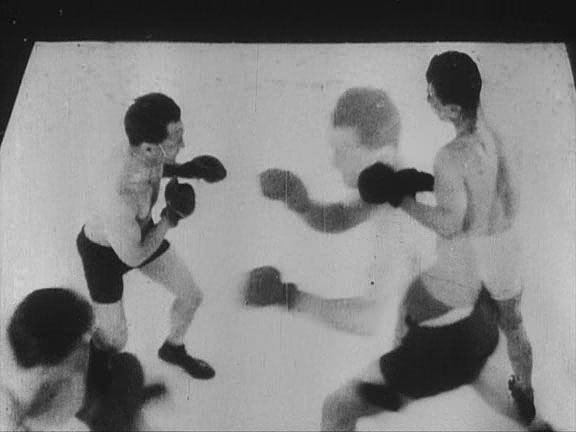
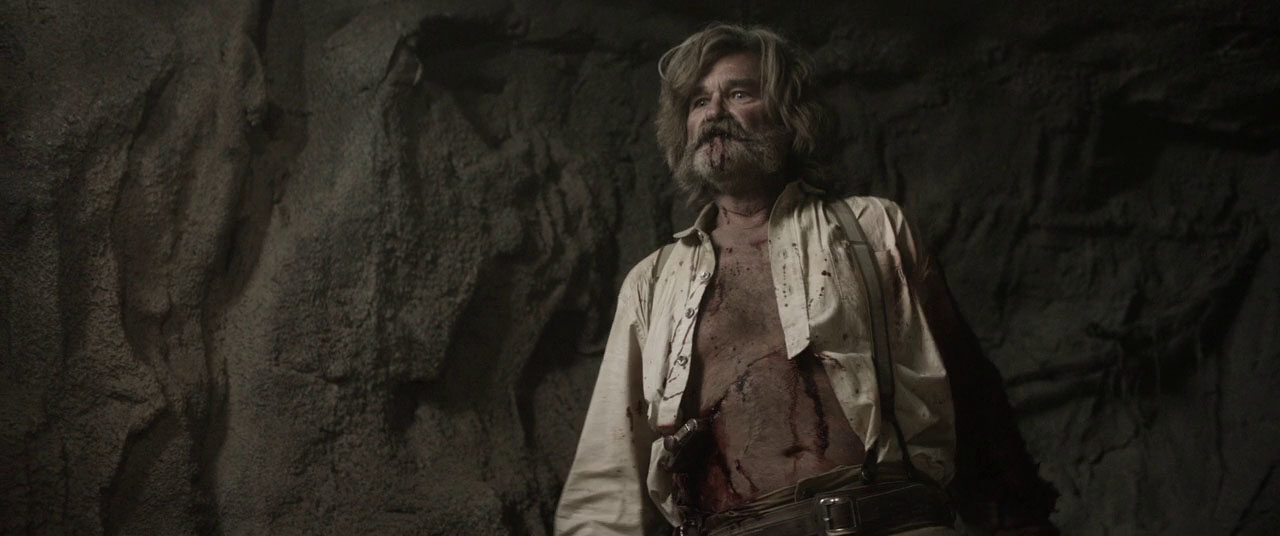
Same director, star, writer, editor, cameraman as Z. New still photographer Chris Marker and assistant director Alain Corneau. Instead of communists being attacked by the fascists in charge, this time a group of communists is destroyed by their own party. It’s a depressing slog of a movie, a feature-length torture session ending with the men delivering their well-rehearsed but completely false “confessions” and being sentenced to death.

This time we’re in Czechoslovakia in 1951-1952. Yves Montand plays one of the three who only got long prison sentences, Simone Signoret (a year after the even more depressing Army of Shadows) his wife, and Gabriele Ferzetti as his interrogator Kohoutek (not the subject of the R.E.M. song).

Haunting flash-forwards – the worst of which comes during the trial, when the fourteen men on trial enjoy a hearty laugh and the image bleeds into their ashes being scattered on a frozen road weeks later.

Warok, as always:

D. Iordanova:

The film was an important step in the public expression of Western leftist intellectuals’ disillusionment with Soviet Communism … The Confession was the first film that zeroed in on torture as a seemingly endless ordeal, a systematic and relentless process aimed at delivering a specific outcome.

The Second Trial of Artur London (1970, Chris Marker)

Marker was on-set during the making of The Confession, as was London, portrayed by Yves in the film. Marker focuses on the idea that the book and film can weaken the communist movement by showing horrid things done in its name. Obviously the participants in the film’s production would disagree, and Marker lets them explain why. Unbelievably, after the film’s completion, London is again accused of being a spy and stripped of his Czech nationality. But he is defended: “The witnesses who remained silent in 1952 speak up today.”

My favorite line about the film sets: “A retirement home, unmodified, becomes a prison.”

London:

Interview film, Shanghai stories, people talking about their parents and their own childhoods. Many stories end in death or disappearance. Very stylish looking doc, with some non-doc segments, including a recurring ghost woman (Zhao Tao of Still Life, Platform, The World).

Clips from a 1959 film by a different Wang Bing (the Coal Money director was born in ’67), from Red Persimmon, Two Stage Sisters, Spring in a Small Town, Flowers of Shanghai, Days of Being Wild, Antonioni’s China, and interviews with filmmakers and participants.

Wei Wei, star of Spring in a Small Town:

Tony Rayns:

Jia was invited to make a film “about Shanghai” to mark the opening of the Shanghai World Expo … his idea was to focus mainly on émigrés from Shanghai – politicians, soldiers, artists, gangsters – and to follow some of those émigrés to their subsequent bolt-holes in Taiwan and Hong Kong. … No film made anywhere has previously attempted a pan-Chinese view of the fall-out from the conflicts in China’s civil war.

I don’t have the context Tony Rayns has, have missed a lot in Jia’s films, but at least this one was fully narrated (and quite beautiful).

S. Kraicer:

[The interviewees] are mostly famous, and predominantly from the arts world: this is a top-down historical chronicle, unlike the bottom-up small-town tales that made Jia’s name 10 years ago … Many of the stories come from Shanghai’s two brief “golden ages.” The swinging cosmopolitan (and colonially controlled, gangster-ridden, Japanese-threatened) jazz age of the 1930s is the first. The second revival followed the Second World War during the civil war that culminated in the Communist Party victory in 1949 and the dispersal of many of the film’s interviewees to Hong Kong and Taiwan.

A pretty bad mid-80’s cop movie with average acting and horrible comedy. But oh man, when the action scenes start, there is nothing better. Cars barrel down a hill right through a shanty town, Chan uses cars as weapons and shields, and it ends with a jump/fall so great they show it three times. Plot-wise, Chan has to protect Brigitte Lin from gangsters before she testifies. He does a poor job gaining her trust (having a disguised fellow cop pretend to attack so Chan can save her) then does a poor job explaining her presence to his indignant girlfriend Maggie Cheung.

Fake-attack:

Movie puts forth the Clint Eastwoody idea that gangsters can’t be convicted in the courts because the system is corrupt, so it’s best to kill them straight away. But oh man, the action scenes. Non-action highlights include an endless court scene with all dialogue in Cantonese except the oft-repeated English phrase “I object,” and a dogshit moonwalk.

That’s Maggie on the left:

Won best picture/choreography at the HK Film Awards (vs. fellow nominee Mr. Vampire, heh), got at least five sequels. Maggie was still three years away from As Tears Go By, Brigitte starred in Peking Opera Blues the following year, and baddie Yuen Chor directed over 40 films in the 1960’s and 1970’s.

Sequelitis. Tyrannical band manager Vladimir returns from the wilderness claiming to be Moses, leads the group to Coney Island then to Siberia, stealing the nose of the Statue of Liberty along the way. Andre Wilms, star of Le Havre, plays an American agent on their tail trying to return the nose. Cowritten by two band members and featuring much of the gang from the first movie plus a Jarmusch cameo. Vladimir died of a heart attack the next year, so no more sequels, but there’s a concert film called Total Balalaika Show, which Hulu wouldn’t let me watch.

Don’t think there was any dialogue. Tired of the daily grind, Shaun encourages a revolt on the farm, but when the farmer ends up in the nearby city with memory loss, accidentally becoming a fashionable hairstylist, the sheep try to rescue him with help from a stray dog. The second movie I’ve seen this year with the animal control dept. as the villain. Great animation, slick and fast-paced and full of gags. Starzak directed the Creature Comforts series and much of the Shaun the Sheep series, and Burton cowrote Curse of the Were-Rabbit and Madagascar.

Lavishly-staged theater performance reworked for the cinema, the cameras onstage with the actors. Beautiful, worth the extra cost of whatever HD special-event screening this was. My favorite Puck (Kathryn Hunter, a countess in one of my favorite scenes of Orlando, which we just happily rewatched in HD), but Katy prefers Stanley Tucci. Duke Theseus was apparently not played by Matt Berry of Darkplace, though it looked like him. Cinematography by Rodrigo Prieto (Argo, Wolf of Wall Street).

Taymor:

We shot four performances live, with four cameras in different locations surrounding the play, and then for four days we could go onstage and do more single-camera setups: hand-held, Steadicam. The audience was invited; they were watching a movie being made, and that’s where we could get intimate.

“People have become slaves to probability.”

Been waiting for this to come out in HD so I could watch it again, and didn’t have to wait long at all – because we live in the glorious future. Cool looking movie and Eddie, in his eighth film as Lemmy Caution, is a convincingly noir hero. But it’s got a strangely somnambulist atmosphere, and sometimes it feels like I’ve been given prank subtitles.

“The meaning of words and of expressions is no longer understood.”

Lemmy is visiting Alphaville from the outer countries, guided by the lovely Anna Karina, daughter of some important professor. I think Lemmy asks some questions, tells some lies, shoots some guys, then confounds the computer controlling the city (voiced by a mechanical voice-box) using poetry.

“No one has lived in the past and no one will live in the future … The present is terrifying because it is irreversible.”

Soundtrack features big dramatic music, shrill morse-code tones and a croaky Central Scrutinizer voice, each annoying in its own way. Welles regular Akim Tamiroff plays a short-lived ally, Howard Vernon (Dracula and Dr. Orloff in France and Spain) plays the professor, and Christa Lang (not yet married to Sam Fuller) plays a “seductress third-class”.

Lang and Tamiroff:

Vernon:

K. Phipps:

The supercomputers of the early and mid-1970s inevitably shared DNA with HAL, the murderous companion computer of 2001: A Space Odyssey, whose influence can be felt throughout the decade (and beyond). But HAL had his antecedents, too, and in many respects he and his brethren share much in common with an unlikely source: Alpha 60 of Jean-Luc Godard’s 1965 film Alphaville … To create the technocratic totalitarian state of Alphaville, Godard looked no further than the newest additions to Paris: buildings made of steel and glass controlled by pushbuttons and glowing under fluorescent lights. As Jacques Tati would a couple years later with Play Time, Godard considered the price of this progress and wondered where humanity could live in it, and what kind of life people might lead there.

An inverse of Summer? In Summer, guy is waiting for girl 1, dates girls 2 & 3 in the meantime, when girl 1 finally arrives they don’t stay together. Here a girl is waiting for guy 1, dates guys 2 & 3, when guy 1 finally arrives they stay together. A fairytale true-love/soulmate movie, which seems an odd fit for the series. I was annoyed at the magical ending early on, since I saw it coming a mile away, but had time to prepare for the inevitable, and it’s hard to stay mad when things turn out so nice and deserved. But the characters seemed less real than in Spring and Summer – it felt academic. Maybe some of this is explained by the play-within-the-play, as our characters watch a production of Shakespeare’s Winter’s Tale, which is known for its abrupt happy ending.

Opens with Felicie (Charlotte Very of Blue and Lady and the Duke) and Charles (Frederic van den Driessche of Brisseau’s Exterminating Angels) very much in love. A few years later Charles has disappeared and Felicie is raising their daughter alone. He had the wrong mailing address for her, then both of them moved and they couldn’t find each other. She’s in Paris, dating academic Loic (Herve Fulric of a 1982 Les Miserables) and also her hairdresser boss Maxence (Michel Voletti, lately of The International), but doesn’t really see herself with either. She’s convinced to move away with Max and start their own business in another town, but she quickly decides that her loyalty and love are for Charles, moves back to Paris and runs into him on a bus.

Won some prizes in Berlin, playing alongside La Vie de Boheme, Center Stage, Naked Lunch and big winner Grand Canyon.

In the aftermath of the 100 Great Movies by Female Directors list making the rounds, Katy decided it was time I watched this. She played with her phone through the whole movie.

I thought the slangy dialogue didn’t sound too dated, but that’s probably just because Katy and I still use some of it (because we are old). It turns out Alicia Silverstone was actually fine, and Batman & Robin and Aerosmith videos weren’t adequate vehicles to express her talent. Her costar is Stacey Dash (Damon Wayans’s love interest in Mo’ Money). Plus Paul Rudd, Dan Hedaya, Wallace Shawn, and a bunch of people whose names sound vaguely 1990’s-familiar but I never knew who they were.

Now I just need to see Fast Times at Ridgemont High and what, Rock & Roll High School?

May 2026: Watched again with K and her mom – still a good movie, and a decade later I still haven’t seen Fast Times or R&R High School.