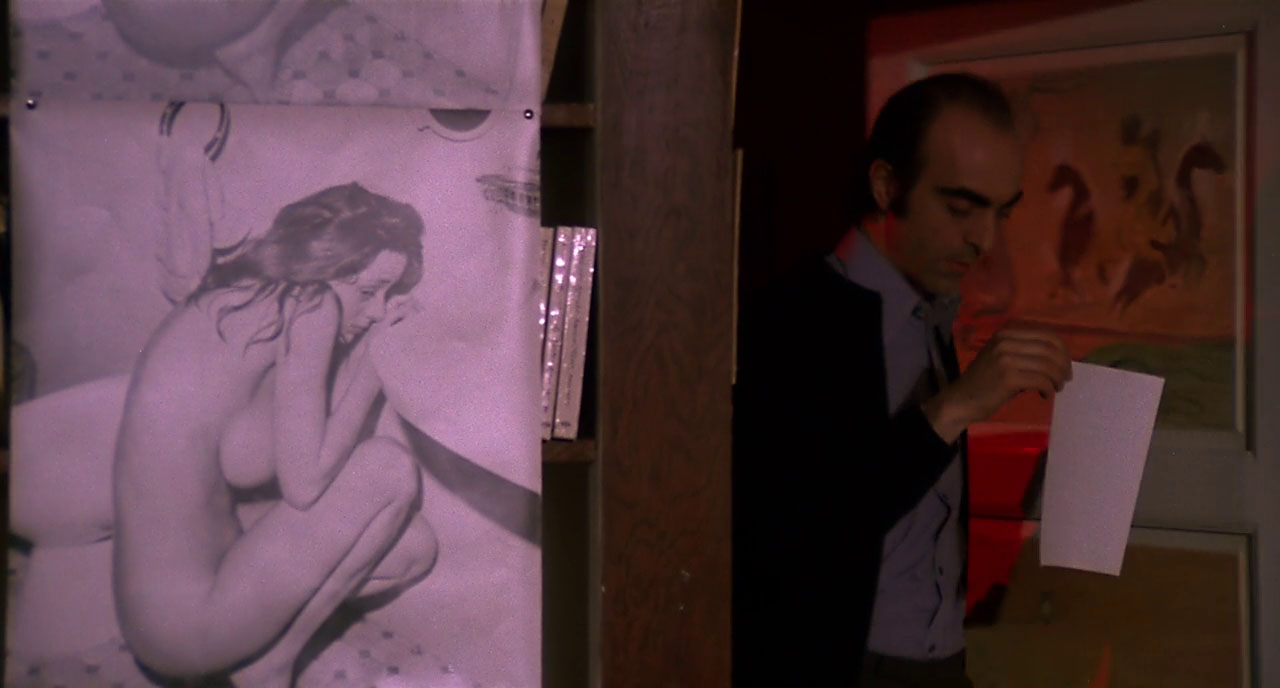
Woman returns to Afghanistan to save her suicidal sister, but has trouble finding passage from Iran to Kandahar. Wiki says it’s partly based on true story, and the lead, Nelofer Pazira, played herself – although here she’s called Nafas. She pretends to be part of a large family crossing the border, but they get robbed along the way. She gets a boy called Khak to take her partway, meets an American doctor with a false beard, then tries to follow a wedding party the rest of the way.

Poetic film, sometimes with unconvincing English dialogue but makes up for that with wonderous scenes like the one with guys on crutches racing to catch artificial legs parachuting from above. Makhmalbaf apparently had no trouble finding extras with missing limbs (neither does Jodorowsky). I have a skewed picture of Makhmalbaf – I’ve seen his appearance in Close-Up, a couple of his early documentaries, and a couple by his daughter Samira but this is the first of Mohsen’s features I’ve watched.

Ebert:

Makhmalbaf and his cinematographer, Ebraham Ghafouri, show this desert land as beautiful but remote and forbidding. Roads are tracks from one flat horizon to another. Nafas bounces along in the back of a truck with other women, the burqua amputating her personality.

“I should bloody damn and bloody blast and bugger and bloody flaming bloody well think so!”

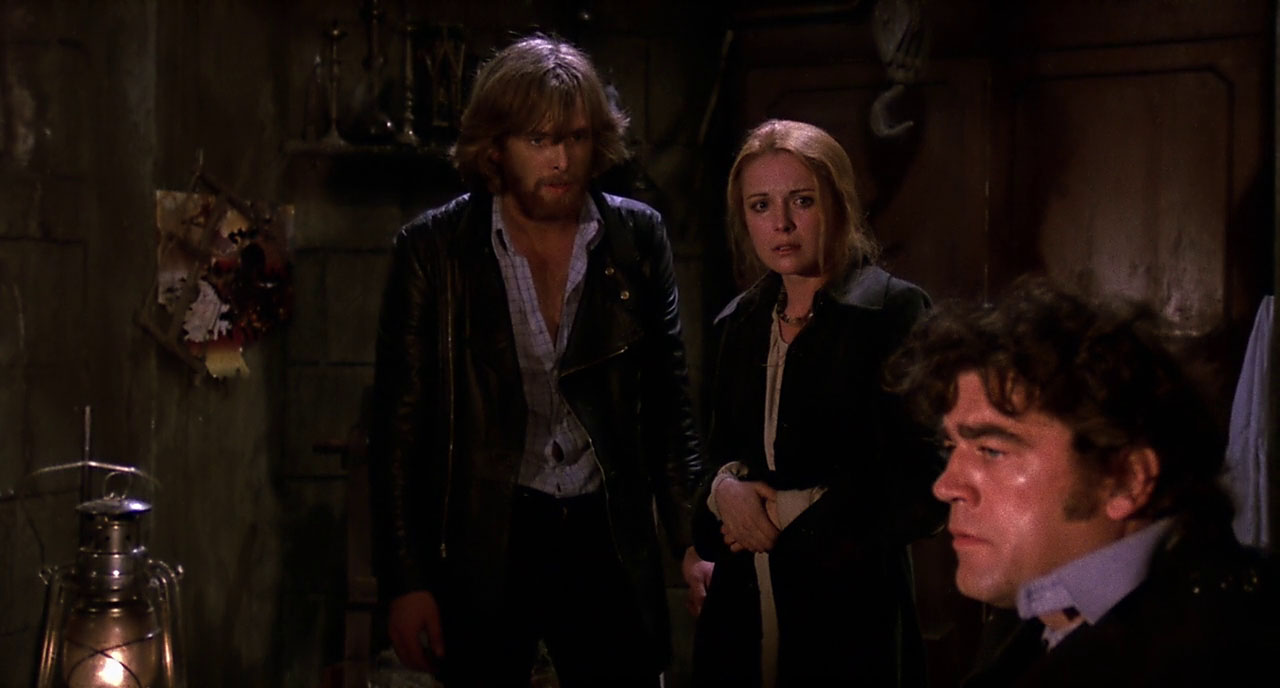
Terrific and strange, the kind of thing nobody has done before or since (correction: Potter did it years earlier with his Stand Up Nigel Barton). Grown adults portray a bunch of kids playing in the woods on a particularly traumatic day. Director Brian Gibson would go on to direct Poltergeist II, but writer Dennis Potter (the year after Pennies From Heaven) is what brought me here.

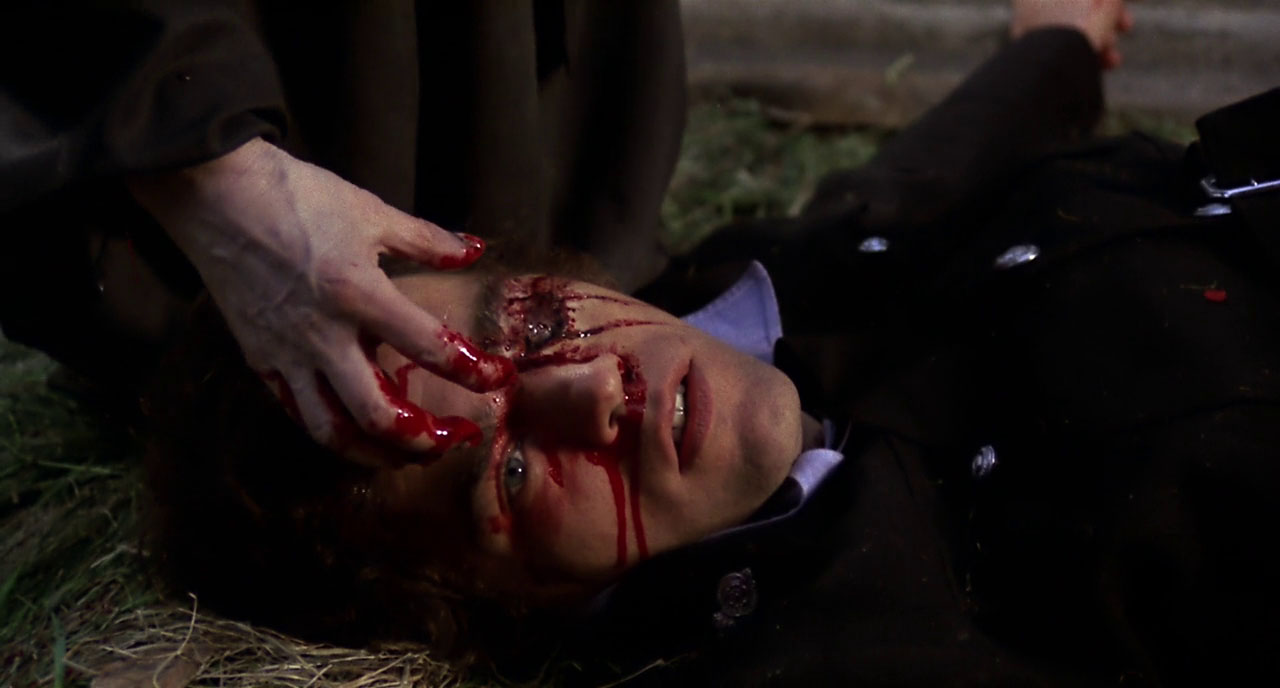
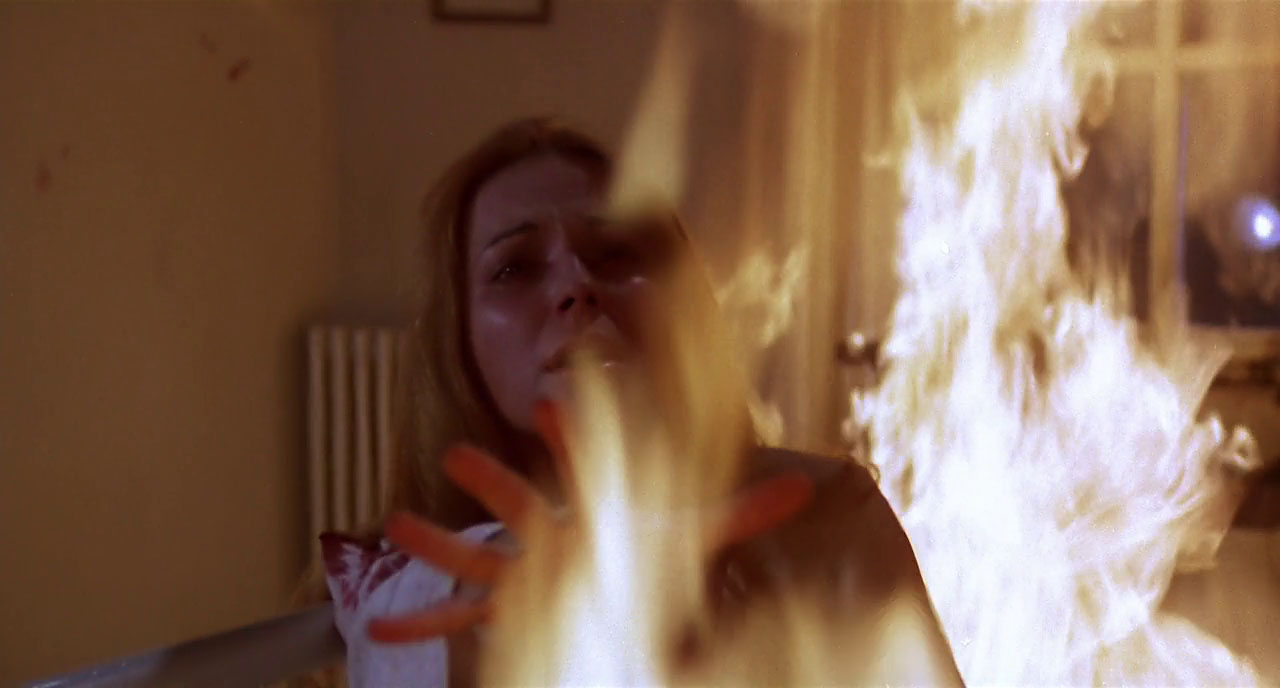
The kids play war games and house, while their parents are off at real wars and houses. They hear alarms from the nearby prison and hide. They misuse pronouns. The boys kill a squirrel then get upset about it. Later, they help to kill another boy, pyro Donald who sets the barn alight then gets trapped inside it.

foreground: Colin Welland, 45, of Kes, also writer of Chariots of Fire. with Michael Elphick, 33, of Withnail & I, star of a long-running series called Boon.

Helen Mirren, 34, between Caligula and The Long Good Friday

Janine Duvitski, 27, appeared in the Frank Langella Dracula and The New World

Colin Jeavons, 50, of a bunch of early 1960’s Dickens miniseries, later Blackeyes and Secret Friends

John Bird, 43, was playing Horace Greeley on a series last year

Not pictured: Robin Ellis, 37, known for a Revolutionary War-era series called Poldark.

Down-on-his-luck writer Derrick De Marney (Things to Come, Uncle Silas) gets even worse-on-his-luck when he discovers a dead associate on the beach and witnesses assume he murdered her. The cops have got a suspect with motive (she left him inheritance), so no reason to do any further investigating. So Derrick escapes, hides out with police chief’s daughter Nova Pilbeam (who I also liked in The Man Who Knew Too Much), convinces her of his innocence.

Second Hitchcock movie I’ve seen with an old mill – the scene in Foreign Correspondent was better. Close calls as they journey to locate Derrick’s stolen raincoat to prove that it’s not the same raincoat that murdered the woman, or something I dunno, doesn’t matter because in 1937 all men’s raincoats looked the same so it’d hardly be evidence of anything. They flee from Nova’s constable dad (Percy Marmont of Hitch’s Secret Agent) and her horrible aunt (Mary Clare of The Lady Vanishes and the silent non-Hitch The Skin Game), get help from the bum with the raincoat (Edward Rigby of A Canterbury Tale), and finally track down the twitchy, blackfaced (argh) murderer (George Curzon of Q Planes, Jamaica Inn). It’s all a good bit of fun, if not as outstanding as The Lady Vanishes and The 39 Steps.

A clunky-ass early sound feature full of outrageous pre-code affairs. Feels earlier than it is, both sound-wise and code-wise, though it’s already a remake of another early-sound pre-code, Illicit starring Barbara Stanwyck.

Bette Davis (only the second of her movies that I’ve seen, after All About Eve) is the only one here with personality, surrounded by a buncha galoots. Let’s see if I can get the galoots straight: she marries Gene Raymond (Flying Down to Rio, Mr. and Mrs. Smith) but he cheats with business partner Kay Strozzi (Captain Applejack) so Bette cheats with Monroe Righter Owsley (his real name! of the similar-sounding Indiscreet with Gloria Swanson). Oh and their drunk friend Frank McHugh (The Dawn Patrol, I Love You Again) shows up at everyone’s house to drink for free, pines for Claire Dodd.

“Dull, dull, dull,” Bette proclaims, and we said the same. She’s cute at least, with a great voice. Florey, who’d helped make the remarkable Life and Death of 9413, a Hollywood Extra, was now churning out Hollywood crapola, 3-5 features per year. Shot by six-time oscar nominee Tony Gaudio. The editor worked on Bob Wills and His Texas Playboys, a movie which I must find.

Reminds of Heat in its attempt to build drama with a career criminal’s romantic relationship endangered by his line of work. But here the girl (Rebecca Hall, Christian Bale’s wife in The Prestige) was a hostage in the gang’s previous job – Ben Affleck was supposed to check on her afterward, eliminate her if she knows too much, but falls for her instead. She is traumatized by her heist & hostage experience so it’s no surprise at all when she’s working with the FBI at the end, although somewhat surprising that Affleck manages to escape the huge shootout after their final Fenway Park heist, killing boss Pete Postlethwaite then escaping to Florida.

Solid crime flick, though Ben is better at Boston-accented dialogue scenes and filming criminals wearing weird masks in cool poses than assembling distinguished action sequences. Jeremy Renner (between Hurt Locker and Mission Impossible 4) got an oscar nomination as the hotheaded, trigger-happy second in command (so, the Joe Pesci role), whose druggie sister (Green Lantern’s Blake Lively) the FBI gets to. FBI is led by Mad Men’s Jon Hamm, are very good investigators but not the best marksmen. Small roles for Victor Garber as a banker and Chris Cooper as Affleck’s imprisoned father.

Spoof of bad action movies (all of which I’ve seen) and of Macgyver – the twist being that the hero has no actual skills (turns out he’s good at ripping baddies throats out). Movie plays it totally straight – so straight that there aren’t enough jokes for my liking, just an extended spot-on impression of a Rambo sequel with pauses for gay jokes and talking about butts. Disappointed that The Dissolve suggested this.

Most of MacGruber’s plans involve disguising friends as himself:

Will Forte (Jenna’s cross-dressing lover Paul in 30 Rock), assisted by Ryan Phillippe (last seen in Flags of Our Fathers) and Kristin Wiig (Whip It, Knocked Up), who was the only person I thought managed to be funny. Baddie Val Kilmer (the year after Bad Lieutenant 2) definitely has the ability to play a fun villain – look at his Kiss Kiss, Bang Bang performance – but again, the movie wants him to downplay the comedy. Directed by Booth Jonathan from Girls, aka part of The Lonely Island.

“If you change your mind…”

I did enjoy the part where MacGruber has sex with the ghost of Maya Rudolph, at least.

Third movie called Leviathan I’ve seen, and another has just been announced. First Andrey Z. movie I’ve seen since The Return, and this was less mystical and mysterious than I’d expected from that one. But there’s still room for ambiguity in this generally straightforward story of a family’s obliteration by greedy, corrupt government officials as well as typical relationship drama. Wonderful looking movie, making the fact that it’s relentlessly grim easier to take.

Lilya (Elena Lyadova of Andrey Z.’s Elena) is Kolya’s second wife, after the death of his first. She and Kolya seem happy, but his sullen teenage son isn’t taking the replacement mom very well, and she is obviously more attracted to Kolya’s visiting military buddy Dmitri (Vladimir Vdovichenkov of Paragraph 78), a lawyer helping try to save the family’s land, home and business from being taken by the city (to “build a town hall” according to court statements, but actually to build a lake house for friends of the mayor (Roman Madyanov of the recent Russian 12 Angry Men remake)). Dmitri’s a good lawyer and investigator, arrives with a folder full of mayor-incriminating documents in order to get a fair price for the property, but then he has a Very Bad Day, getting caught and beaten up by his friend for having sex with his wife while on a picnic trip, then getting kidnapped, beaten again and nearly murdered by the mayor’s thugs. So he straight-up ditches town, returns to the city without telling anyone, and sad Lilya stands atop a rocky cliff, then is washed up dead the following day. Kolya is sent away for murder, mayor has the house demolished and the son is adopted by neighbors. Supposedly Lilya’s murder weapon is discovered by investigators on the property, but the whole justice system has been proven to be corrupt, so we never know if Kolya really killed her (unlikely), if the son did it (he’s shown being extremely bothered by her, but the movie never suggests he’s psycho enough to kill his stepmom), if it was government thugs, or if they’re taking advantage of a conveniently-timed suicide.

Also within: the church collaborates on the corruption deals, and an absolute ton of vodka is consumed. Won best screenplay at Cannes, nominated for a foreign oscar alongside Ida and Timbuktu. In a January interview, Andrey Z says he has four new screenplays and his producer is deciding which to film next. He’s also encouraging piracy of this film within Russia since its profane dialogue has been censored in theaters. On politics: “There is discussion in society, but it’s pointless. I have a feeling of the absolute futility of pretending to the right to have a say in any situation.”

S. Tobias:

Leviathan itself feels like a brave, lonely act of rebellion against the system, deeply pessimistic about the possibility of it ever working in the people’s favor. It advocates for a stiff drink.

I watched The Talented Mr. Ripley on video 15 years ago and don’t remember it awfully well, but still, as soon as Freddy appears in this movie (Bill Kearns, short-haired American with a bad french accent) I am disappointed that he’s not Phil Seymour Hoffman. The Fire Within star Maurice Ronet as the rich asshole is no Jude Law either, but I’m a fan of his fiancee Marge (Marie Laforet) and of course Alain Delon. Delon is the primary reason to even shoot a Mr. Ripley film, with his perfect, blank face. It’s a good thriller, Ripley getting to keep his murdered friend’s money and lifestyle as long as he keeps cruising Europe as Greenleaf did without running into any actual friends (sorry, Freddy). I expect Ripley to escape, because there’s a whole series of novels, but when he sells his (Greenleaf’s) boat, it’s lifted out of the water for inspection and Greenleaf’s body is found attached to the anchor line. Author Patricia Highsmith reportedly called this “a terrible concession to so-called public morality.” Watched in HD, but looked soft – I think the Hulu streaming and heavy film grain don’t get along so well.

G. O’Brien:

When it first came out in America, Purple Noon was like an advertisement for a life of luxurious sensuality, with hints of La dolce vita-style decadence and New Wave-style modishness, pristinely opulent hotel rooms and lobbies, and large helpings of sand and sun. The passage of time has only accentuated that allure, since the Italy we sample here in such generous detail is a vanished tourist’s dream, underpopulated and unpolluted, a paradise for footloose Americans: the seaport waterfronts teeming with fresh-caught fish, the bodies bronzed from long and carefree afternoons in the sun, the luscious blues and greens of a sea made for open-ended yachting excursions.

Took a van trip to Filmstreams and watched with Katy’s class. Set in Mali but shot in Mauritania, Sissako continues in his style of portraying a central character conflict (a murder over a dead cow) while frequently cutting away to daily life and smaller events in the surrounding town. In this case, the daily life segments involve their own, larger conflict: an invasion of the town by militant islamists attempting to impose their own laws. Inevitably these things collide as the invaders’ court decides to execute the herder who killed a fisherman, as well as the herder’s wife and another guy who seems to have simply given her a ride.

Promo screenshots stolen from Film Comment:

Wonders and horrors abound. An adulterous couple is buried then stoned to death. A Rooster Lady does inexplicable things. The local imam engages the invaders in futile discussion. Music and soccer and smoking are outlawed and punished with whippings, though the invaders are shown to be hypocrites in many of these cases, enjoying the same past times on the sly. Sissako makes them seem absurd, and could’ve made a comedy with some of the same material (a man is ordered to shorten his pants so he removes them; a jihadist can’t get through his propaganda video), but their frequent, meaningless acts of violence maintain an air of menace. As in Bamako he stages a song as an act of rebellion.

The movie keeps returning to the doomed herder and his beautiful family. Despite the repression and crime of the jihadists, it’s the herder Kidane’s murder of a fisherman who killed his prize cow which is shot as a cosmic event, ending with surely the greatest wide shot of the year as Kidane runs across the waist-deep water leaving a trail of silt, the mortally wounded fisherman struggling to his feet on the other side.

Cinematographer Sofian El Fani shot Blue is the Warmest Color, which had a very different look. The only actor I think I’ve seen before is Fatoumata Diawara, a star of Genesis, as the lashed singer pictured above.

G. Kenny:

The really killing thing about all the conflict that tears this place and its people apart is how calm everyone is about it. Nobody raises his or her voices; nobody raises a hand in impulsive anger. Violence, when it occurs, is done in a very deliberate way. The jihadists need to conduct themselves “properly,” as this conveys their rectitude. But their stance only barely disguises their old-fashioned bullying. The treatment of women in particular is just misogyny with unconvincing window dressing. The jihadist who wants the young woman in marriage expects no argument; the girl is his right. And the fact that he asks for her politely, in the logic he lays out, only underscores his alleged right. It doesn’t matter anyway; if he is refused, he calmly states, “I’ll come again in a bad way.”

Peter Labuza on The Film Stage:

There is a critique here, and it is the failure of jidhadism as a cultural translator. This comes in literal form, as numerous scenes feature the jihadis having to work through translators to make their demands. … Numerous sequences feature characters simply trying to explain their point of view to one another, but the sides clearly aren’t listening. When one man confesses his deepest and most personal want to the jihadi leader, the leader asks his translator to stop. He knows that in order to continue his fight, he cannot listen. These jihadis only see prey.