Les Joyeux Microbes (1909)

Similar to Transfigurations, but now it’s a scientist trying to get an overacting scarf fella to look at different microbes under a microscope, each of which displays a different transmogrifying animated scene, usually involving cranky old people. Towards the end, one of the drawings becomes 3D, a drunk character’s paper arms wrapping around a prop bottle. Another wonderful detail: the final second of the film was presumably supposed to have the scarf guy storm out of the room, but the set door (which was working in the opening shot) bends, doesn’t open, Scarfie mooshing up against it until the film quickly cuts.


Japon de fantaisie (1909)

I guess it’s stop-motion using Japanese props. An insect lays an egg, hatches into a mask, which spews forth rats. Doesn’t seem like a very positive view of Japan… or maybe it’s a prequel to the Mothra films.


Clair de lune espagnol (1909)

These are getting more difficult to summarize now that Cohl has discovered intertitles and I don’t know French, but it looks like a matador gets rebuffed by a fan lady, so he leaps out a window… but is saved by a space-bound vessel. The man angrily shoots the moon with a shotgun, is challenged to a duel by moon men, then thrown back to earth, where the fan lady is now impressed with him. I liked the prop star that shoots sparks.


Le Songe du garçon de café aka Hasher’s Delirium (1910)

Waiter falls asleep during his shift, has loony prop-and-cartoon-based dreams. From all the bottles that appear, we can assume he’s a drunk. His appalled-looking cartoon dream-body is subjected to the ludovico technique, watching names of alcoholic drinks alternate with demons and horrors. Then he’s made to kick his own ass. Then he’s awakened in the most predictable fashion, given that just before falling asleep he gave a table of identical hat-wearing men four seltzer bottles.


Le Mobilier fidèle aka Automatic Moving Company (1910)

Debt-ridden Mr. Dubois hugs all his furniture one last time before it’s all repossessed and auctioned on a street corner. Later, each piece of furniture torments its new owner and flees (serves ’em right for taking advantage of poor Mr. Dubois, who cries and wails all through the auction), returning to Chez Dubois where they belong.

A grim movie about the two kinds of people in this world: the horrible and the miserable. Our horrible lead is Min-chul, an aggressively foul drunk introduced returning home from prison and unrepentantly stealing his daughter’s college money. Seeking revenge against a businessman who sucker-punches him in a bar, Min-chul discovers that the businessman is building a fake Christian-cult led by patsy rapist Pastor Sung. Getting no help from the cops, Min-chul, who hates nothing more than he hates fakes, sets out to destroy it himself, burning down buildings and getting in bloody fights, finally coming home victorious to his suicided daughter.

For some reason, this story is told through Adult-Swim-looking animation, like Metalocalypse with less blood and worse music. The low framerate gives a marionette, videogame quality, damaging the movie’s illusion.

Why did I watch this? Can’t find reviews by any critics I follow, but somehow it ened up on my must-see list. Yeon has two zombie-virus train movies out this year: an animated feature and its live-action sequel Train to Busan (which opened last week at Cannes, earning Snowpiercer comparisons and a positive review from Twitch).

Stories don’t just lead into each other like in The Saragossa Manuscript – they melt and morph into each other, thanks to codirector Evan Johnson’s digital manipulations, which don’t replace Maddin’s usual bag of tricks, but join the choppy editing and texture fetish and everything else. Some of his early movies had somnambulist rhythms, but this one is ecstatic from start to finish.

Had to watch this a couple times before I could report in.

Second time through, I noted the order of stories:

How to Take a Bath, with Louis Negin

Submarine: Blasting Jelly and Flapjacks

Starring Negin again with Ukranian Greg Hlady, panicky Alex Bisping, Andre the Giant-reminiscent Kent McQuaid, and mysteriously-appearing woodsman Cesare (Roy Dupuis of Mesrine and Screamers).

M. Sicinski:

Like the men in the submarine, The Forbidden Room has an overall mood of anxiety and despair, in the sense that we are asked to grapple with its heady delirium of character trajectories and stunted arcs, all the while searching in vain for some absent center, the organizing “captain” who is supposed to pull it all together. In its endless ruptures and disconnections, The Forbidden Room brings us up short, placing us back in that capsule where the image is a form of confinement, a shortness of breath.

Cowardly Saplingjacks

Cesare sets out to rescue the kidnapped Margo (Clara Furey)

Cave of the Red Wolves

with lead wolf Noel Burton, bladder slapping and boggling puzzlements!

Amnesiac Singing Flowergirl

Margo again, with mysterious necklace woman Marie Brassard (sinister Jackie from Vic + Flo Saw a Bear) and patient Pancho (Victor Andres Trelles Turgeon)

The Final Derriere

with Sparks, Udo Kier (returning from Keyhole) as a man plagued by bottoms, Master Passion Geraldine Chaplin, and the Lust Specialist (Le Havre star Andre Wilms)

Red Wolves / Woodsmen / Submarine / Bath / Submarine

Quick return.

Squid Theft / Volcano Sacrifice

With Margo, squid thief Romano Orzari and Lost Generation attorney Céline Bonnier (The Far Side of the Moon)

D. Ehrlich:

The Forbidden Room may (or may not) be inventing narratives from thin air, but whatever history these abandoned projects might have had is completely supplanted by the present Maddin (and co-director Evan Johnson) invents for them. These stories belong to him now. The Forbidden Room may forego the hypnotically autobiographical thrust of recent efforts like My Winnipeg and Brand Upon the Brain!, but it feels no less personal for it.

Mill Seeks Gardener

With shed-sleeper Slimane Dazi and unpredictable runaway Jacques Nolot

Injured Motorcyclist at Bone Hospital

Caroline Dhavernas and Paul Ahmarani

Doctor kidnapped by skeleton insurance defrauders

Lewis Furey (Margo’s father IRL) as The Skull-Faced Man, and Eric Robidoux as the bone doctor’s long-lost brother who is also a bone doctor.

Psychiatrist and madman aboard train

Gregory Hlady again, Romano Orzari again, and Karine Vanasse (Polytechnique) as Florence LaBadie

Florence’s Inner Child

Sienna Mazzone as young Florence with crazy mother Kathia Rock

Parental Neglect / Madness / Murder / Amnesia

Bone Hospital / Insurance Defrauders
Mill / Criminal / Doctor
Volcanic Island / Squid Theft / Submarine / Bath

“I haven’t finished telling you: the forest… the snow… the convict… the birthday”

Woodsman Gathers New Allies

Kyle Gatehouse as Man With Upturned Face, Neil Napier as Man With Stones On His Feet and Victor Turgeon again as Listening Man – these are the same actors who played the Saplingjacks earlier, and again they don’t enter the cave with Cesare.

Margo and Aswang The Vampire

M. D’Angelo:

The Forbidden Room was shot mostly at the Centre Georges Pompidou in Paris, piecemeal, in front of a live audience, following which Maddin and Johnson artfully distressed the digital footage and added priceless intertitles. The project took advantage of whichever actors were available to it on a given day.

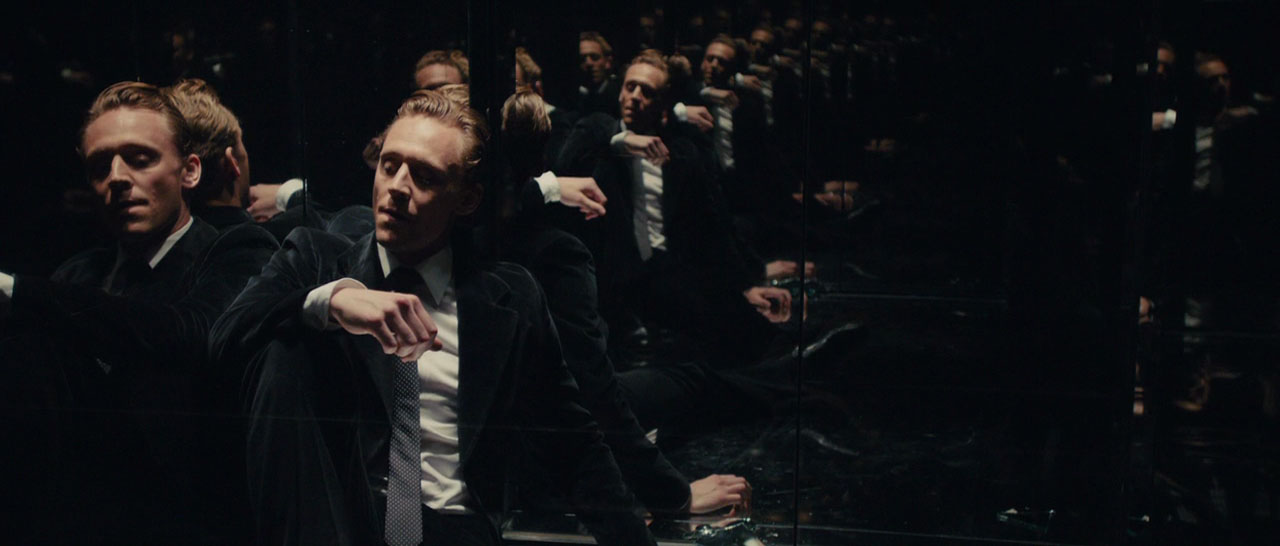
Elevator Man Unprepared For Wife’s Birthday Kills His Butler

All-star segment with Mathieu Amalric, Udo Kier and Amira Casar (Anatomy of Hell, Piano Tuner of Earthquakes).

D. Ehrlich:

[Amalric] gleefully indulges in Maddin’s pure and peerlessly florid sense of melodrama, which here becomes a mechanism for foolhardy and paranoid men to ruin their lives as they attempt to rescue, love, or murder the beautiful women who didn’t ask for their help.

Dead Butler Oedipal Mustache Flashback

Maybe my favorite segment, with Maria de Medeiros (Saddest Music in the World) as the Blind Mother and more mentions of flapjacks.

Ukranian Radio War Drama

With Stranger by the Lake star Christophe Paou as the prisoner

Mustache / Return of the Dead Father

Diplomat Memoirs of Cursed Janus-Head

M. Peranson:

Together, Maddin and Johnson have crafted a formal masterwork jolted by digital after effects, recreating the look of decaying nitrate stock, shape-shifting the image with multiple superimpositions and variegated colour fields (the general look resembling decayed two-strip Technicolor), and compositing swirling transitions that connect (or bury) one film within the other (and the other, and the other). To try and describe “what happens” in The Forbidden Room is both forbidding and beside the point, for the 130-minute film stands more as an interminable, (in)completed object on its own, like the work of one of its main influences, the French poet, novelist and playwright Raymond Roussel (from whom Maddin and Johnson borrow their technique of parenthetical asides); one comes to understand this object, and what it’s trying to accomplish, only while watching it.

Peranson’s writeup is from the Toronto Film Festival, after which nine minutes got removed from the movie. Since nobody at the festivals was able to exhaustively account for all the stories within stories, it’s impossible to track down what got lost. It seems, though, that any lost footage (and more) can be seen in the Seances.

Andreas Apergis and his fiancee Sophia Desmarais (Curling)

Night Auction Doppelganger

featuring LUG-LUG, hideous impulse incarnate!

Stealing Mother’s Laudanum

Charlotte Rampling as Amalric’s Mother, Ariane Labed (Attenberg, Alps) as his girlfriend.

Maddin (in an essential Cinema Scope interview) on the film’s 2+ hour length:

We could have easily had a 75-minute version … but viewers that like it, we wanted to feel like we’d broken their brains, really left a physical impression on them, left them exhausted. Hopefully exhilarated and exhausted, in a good way. We wanted “too much” to still be insufficient … it would be nice if it came out in one endless ribbon, that, like John Ashbery’s poetry, you just snip off for a beginning and an end, and just ask the audience how much they want.

Dead Father / Elevator Birthday Murder Plot / Margo and Aswang / Woodsmen
Red Wolves are Dead, Rescue is Cancelled
Submarine / The Forbidden Room / Book of Climaxes

Bath.


April 2022: watched the blu-ray – the ambient-morphy extras and the commentary. This included Once a Chicken, which I didn’t realize at the time is considered a short film, I thought it was more motion-posters… all overlapping images and no Louis Negin.

Guy: “I’ve long been … making movies about things I don’t know anything about and refuse to do research on.” This wasn’t shot on stage in front of an audience like I imagined, was shot “in public” in foyers and such. Each morning the actors were all put into a trance, I think I knew this. Maddin wants to go on a self-loathing party, as usual. “I think Udo is a real-life Bond villain.” Sparks wrote, recorded and delivered “The Final Derriere” in five hours. The lost movies they’re adapting-in-spirit include Allan Dwan’s 1915 The Forbidden Room, Greek musical The Fist of a Cripple, Chinese film Women Skeletons, a Blue Mountains Mystery from Australia, Murnau’s version of the Jekyll & Hyde story, and Alice Guy’s Dream Woman.

Dublin misfit kid sent to new school immediately sets to starting a band with schoolmates to impress a girl, aping styles of the hot mid-80’s music videos his older brother shows him. The girl is impressed, drops her string of unserious older boyfriends and hops a boat to London with the boy hoping to find burned-out record executive Mark Ruffalo who’s willing to take a chance on some gifted kids. Carney, who is in the news this week for an unfortunate reason, has a knack for this sort of thing – charming movie with terrific music.

Mike D’A.:

Had this placed even maybe just 25% more emphasis on Brendan living vicariously through his younger brother, it might have been one of my films of the year.

D. Ehrlich reminds me I should watch these other two young-musician flicks:

It lacks the wallop of Stuart Murdoch’s God Help the Girl and the reckless abandon of We Are the Best!, but the palpable sincerity of Carney’s personal vision allows his musical to spin a fresh melody from a mess of familiar beats.

Tina and Amy play sisters, so I was definitely going to watch this. And it was okay, keeping four of us lightly entertained after my attempt at showing off The Forbidden Room fell flat. Tina and Amy throw a final house party, wrecking the house and disappointing parents James Brolin and Dianne Wiest, get in a sister-fight over Tina’s daughter, make friends with a gaggle of nail-salon women, get their high school friends back in touch with their younger selves, hook Amy up with (and badly injure) the hunk next door (Ike Barinholtz of The Mindy Project).

Mike D’A.: “Maybe hire a screenwriter rather than one of your SNL buddies?”

D. Ehrlich: “Ah, the beauty of low expectations.”

Strong feminist single-mom “Mme Brouette” Mati (Price of Forgiveness star Rokhaya Niang) is trying to get by with her wheelbarrow business, inspiring her friend Ndaxte to leave her own abusive husband. Mati meets friendly and attentive young policeman Naago and falls for him. Unfortunately he’s actually a drunkard whose hobbies include chasing every woman in sight, shaking down local businesses for protection money, and hanging out with his trashy loanshark buddy. Now Mati is trapped and pregnant, turning to crime (smuggling) to open her own cafe, which I think Naago burns down at the end – he surely burns down something, to repay his shitty friend. Mati doesn’t initially have the nerve to just shoot the guy, but her daughter does.

Mati/Brouette is arrested for murder, the end, Kinda a depressing movie, flashing between the climactic murder scene and backstory, enlivened by musical numbers – what Time Out calls an “Afro-Brechtian griot chorus.”

Played the Berlin Fest in competition with 25th Hour, Hero, Soderbergh’s Solaris, Alexandra’s Project, Twilight Samurai and winner In This World.

Punk band witnesses the aftermath of a murder when playing a hastily-booked gig at a nazi skinhead joint, is locked in the green room while the Patrick Stewart-led thugs arrange the band members’ “accidental” deaths, band members decide to fight back.

Good use of “Nazi Punks Fuck Off,” and brilliant use of Creedence over the closing titles. The band members’ position (fighting for survival) is clear, but I liked how the movie doesn’t portray everyone else as pure evil. Some younger dudes will gladly slay for their master, but there’s also hesitation and horror and betrayal. Blue Ruin‘s Dwight as the club manager represents the morally-torn middle ground. Anton Yelchin (Ian in Only Lovers Left Alive – shouldn’t I be able to recognize him by now?) and Imogen Poots (She’s Funny That Way) are survivors, Arrested Development‘s Alia Shawkat and the others not so lucky.

Remake of a Truffaut film. Played Cannes last year in the “Director’s Fortnight” with Embrace of the Serpent and Arabian Nights.

Matt Singer:

The brilliance is all in the execution, which is just about perfect … More importantly, Saulnier’s screenplay puts a premium on logically sound decisions; this is not one of those movies where you sit in your seat moaning at the characters for going up the stairs when they should be heading for the exit. Every choice is reasonable. Every action makes sense, up to and including some of the second and third act twists. That makes the escalating body count that much sadder.

Take one of my least-favorite musicians and make a biopic about the years when he was making his worst music, but throw in lots of drug use and mouth bleeding. And add a pretty girl whom he seduces, makes promises to, and ultimately leaves. Remind me why I wanted to see this movie? Oh yeah, Ethan Hawke and Carmen Ejogo (Mrs. King in Selma, Mrs. Cross in Alex Cross) are both very good. And I just watched The Band’s Visit, where the musicians bond over Chet Baker songs. I guess it’s an okay movie for people who like this sort of thing, and at least the advanced-age crowd in our theater was able to follow the story (you could hear them recounting it to each other in the middle of the movie), though they audibly disapproved of the cunnilingus and mouth-bleeding and drug use.

First half hour covers Stanley Milgram’s (Peter Sarsgaard of Night Moves, Black Mass) obedience experiments, which I knew a fair bit about, but in school we covered their problematic ethics, not their much more problematic results, nor the connections Milgram made with nazi Germany – the elephant in the room. “The results are terrifying and depressing. They suggest that the kind of character produced in American society can’t be counted on to insulate its citizens from brutality and inhumane treatment in response to a malevolent authority.”

Jim Gaffigan as the confederate:

Winona Ryder plays his wife, and this is the second movie I’ve seen in two months with its emotional peak a shot of a distraught Ryder. Katy is actually annoyed at how much of a Winona fan I’ve become this year, but I’m sure if Beetlejuice 2 becomes a reality I’ll calm down.

Mike D’Angelo wasn’t a fan of the second half, when the movie follows Milgram’s post-obedience academic career: “Facts are the enemy of art.” Interesting though to see his other work (he came up with “six degrees of separation”) while the movie plays around with reality, using rear-projected photographs as sets, and having Saarsgard-Milgram visit the set of a TV movie starring William-Shatner-Milgram (played by Kellan Lutz of Twilight). “There are times when your life resembles a bad movie, but nothing prepares you for when your life actually becomes a bad movie.”

Also Dennis Haysbert as Ossie Davis:

Matt Singer:

Provocative stuff, much of which is tied together in the final scenes about Stanley Milgram’s philosophy that men are puppets who can be made conscious of their strings. Experimenter is almost a test to see if the same can be said of film audiences.