FITZCARRALDO (1982, Werner Herzog)

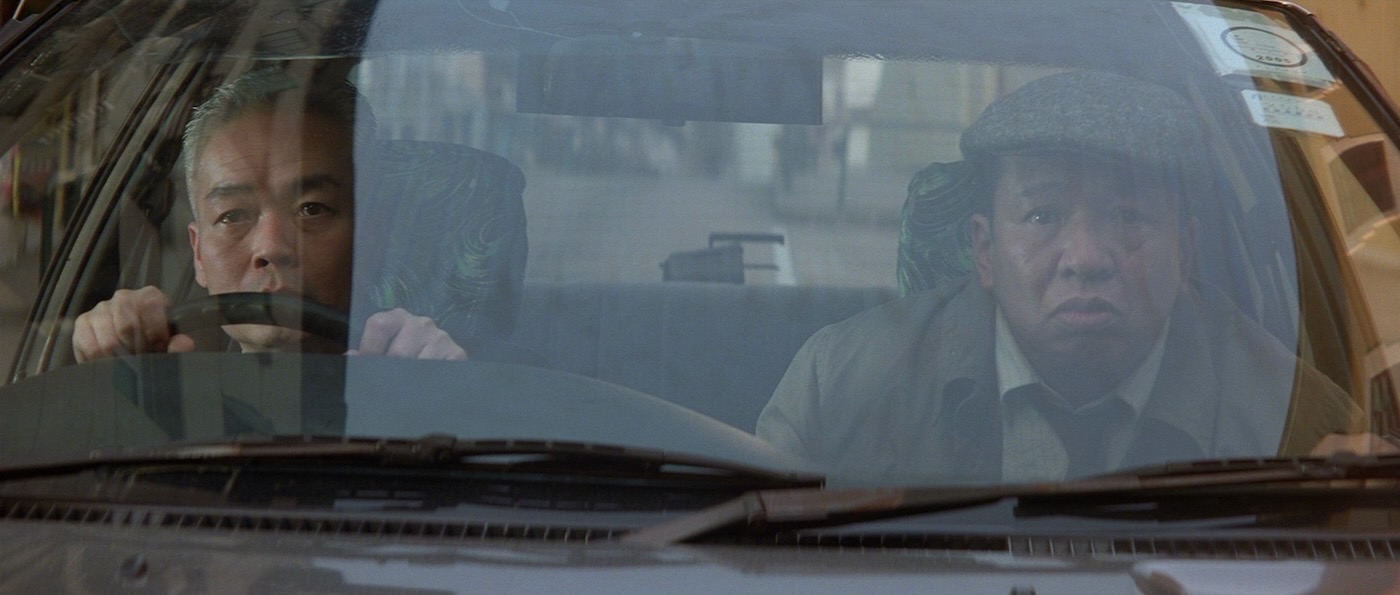
Klaus Kinski (the year after starring in Terayama Shuji’s Fruits of Passion) acts less crazy than usual as Fitz, though he’s still got that hair. And of course, his crazy actions speak for themselves. Fitz loves opera, especially the singer Caruso, whose records he collects (which places the action somewhere 1905-1915ish) and wants to build an opera house where he lives in Iquitos, Peru, but investors won’t be convinced.

image

So Fitz decides to make a fortune as a rubber baron, and build his own damned opera house. Gets his brothel-running girlfriend Claudia Cardinale (over a decade after her heyday in Once Upon a Time in the West, 8 1/2, The Leopard) to front him a steamboat and claims an unharvested plot of riverfront land in the jungle. It’s unharvested because nobody can reach it… it lies upstream from dangerous rapids. But even further upstream, another river veers within half a mile of the river in question, so Fitz plans to sail up THAT (dangerous-native-infested) river, drag his boat onto land across into the other river and harvest his rubber.

Claudia Cardinale:
image

Along with a half-blind but navigationally-keen captain, a drunken chef, and a mechanic (Miguel Ángel Fuentes, fresh from playing the mystical indian sidekick in Puma Man) who’s openly spying on Fitz for his competitors, Fitz makes it to the crossing and with the help of hundreds of natives, drags his 30-ton ship over a damned muddy mountain and into the other river. That night, after the drunken celebration party, the natives cut the ship loose as a sacrifice to the rapids, undoing months of work. In a wonderfully bittersweet finale, with what’s left of his capital Fitz hires the opera to come to Iquitos and perform from the ship.

image

Shot realistically, naturally taking its time to unfold. Herzog’s/Fitz’s ambition is immeasurable, and so a mere two hours cannot contain it. Movie doesn’t seem long so much as… huge. Actors speak English, dubbed into German and subtitled back into English.

image

Hey wow, it was shot by the guy who did Orson Welles: One Man Band, which is the other movie I considered watching tonight. He also shot bunches of Alexander Kluge films.


WERNER HERZOG EATS HIS SHOE (1980, Les Blank)

“I’m quite convinced that cooking is the only alternative to filmmaking”

image

Oh man, this was great… first of all because Werner is my hero, here being smart and funny and provocative, and second because Les keeps it lively with a circus atmosphere, bringing in clips of Herzog movies, The Gold Rush, and a Gates of Heaven outtake. Fitzcarraldo was in pre-production, and Les would follow Werner into that venture, filming…


BURDEN OF DREAMS (1982, Les Blank)

“If I abandoned this project I would be a man without dreams, and I don’t want to live like that.”

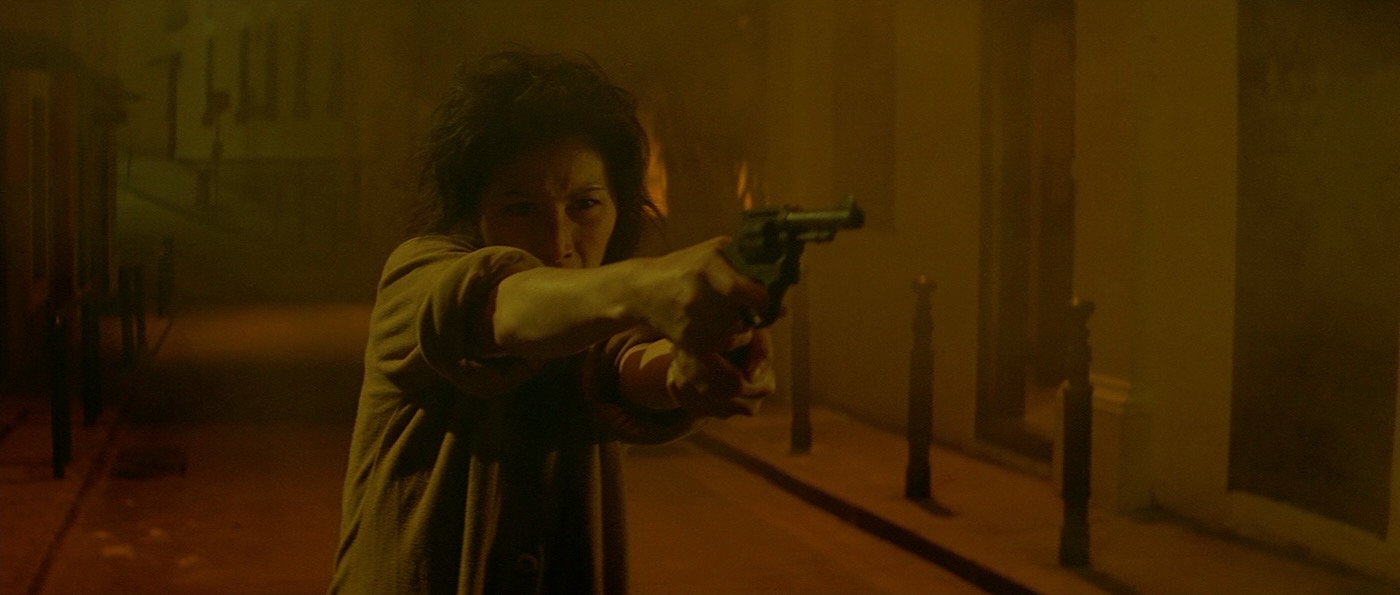
One of the most amazing docs I have seen, and essential viewing with Fitzcarraldo. Shows and tells the factors that made that film define “troubled production”, making Terry Gilliam and Francis Ford Coppola look like pansies in comparison. Attacks and intimidation by natives (their camp is burned down, a spear attack injures three), losing both stars of the film (post-Melvin and Howard Jason Robards and pre-Tattoo You Mick Jagger) and the actual pulling of a 30-ton steamship over a mountain by natives doesn’t even cover the whole story.

Burden of Dreams:
image

Fitzcarraldo:
image

On-set tantrums by a bored Klaus Kinski aren’t in this film (presumably they’re covered in My Best Fiend). This doc itself is wonderfully well-paced and shot, and Les gets choice interviews with Herzog, including his oft-quoted bit about how the jungle birds don’t sing, “they just screech in pain.” Taken as a package, Fitz and Burden are the rare cult films which exceed their reputation.

image

From Paul Arthur’s Criterion essay:

When production stalls, as it often does—Herzog claims his film is “cursed,” admitting that “the jungle is winning”—Blank filters in lively scenes of the Campa extras’ quotidian routines: food preparation, clothes washing, the blending of a local alcoholic drink made from yuca plants. It is significant that most activities are “women’s work,” a realm that Herzog’s masculinist vision rarely acknowledges. Later, Blank constructs a touching vision of cross-cultural identification by juxtaposing the sound of a Caruso aria coming from a record player in an earlier shot with loving close-ups of native women, as if they are responding to the beauty of this alien voice. The moment recalls an archetypal collision staged by romantic adventurer Robert Flaherty in Nanook of the North (1922), when the titular Eskimo marvels at a phonograph record (then jokingly decides to bite it). Unlike either Herzog or Flaherty, Blank clearly prefers the rhythms of collective effort, of sensuous community, over Eurocentric ideals of heroic individualism. In essence, he has crafted a film about the interaction of premodern tribal existence with European modernity, epitomized by a movie narrative about the invidious clash of brute nature and a singular ego bent on his own, ultimately delusional, mission of cultural enlightenment.

Thought I was supposed to be impressed with Jane Campion. I’ve liked her movies that I’ve seen – this, Sweetie and Holy Smoke – but I can’t say I love ’em to death. Very capably-made dramas with unique performances, nothing especially transcendent though. Maybe my expectations were too high… I’ve been hearing that this is a must-see classic important film for a decade and a half now.

image

Local Georgia girl Holly Hunter, who I haven’t seen since O Brother Where Art Thou, is a mute pianist come to secluded New Zealand in the mid-1800’s with her daughter (10-year-old Anna Paquin) to marry landowner Sam Neill (the year before his finest hour: In the Mouth of Madness). Right away, Holly meets brutish tattooed native-wrangler Harvey Keitel (on a roll, in between Bad Lieutenant and Pulp Fiction). He takes ownership of her precious piano and invites her over to play, offering her it back in trade if she’ll let him touch her. Harvey is obsessed with her and a music lover, which is more than Sam Neill’s got going for him, being impatient with Holly’s muteness, her music and her daughter, so eventually Holly is sleeping with Harvey. Sam finds out and chops off her finger, then apologizes and lets her go away with Harvey to live happily as a piano teacher with a Harvey-made false finger.

image

I didn’t mean to watch a bunch of oscar-nominated films from 1993 all in a row, it just worked out that way. So now I can look at the list of nominees and see how this stacked up to Orlando and The Age of Innocence, while cursing Schindler’s List and Philadelphia. At least it’s good to see that Dave and Farewell My Concubine each got a chance, and can’t argue with Nick Park winning for a Wallace & Gromit movie. Personally, in ’93 I was more psyched about Jurassic Park, In the Line of Fire, Groundhog Day, A Perfect World and Wayne’s World 2.

image

So this movie, The Piano Teacher and The Pianist all contain scenes of horror and mutilation, and Shoot The Piano Player has a perfectly unhappy ending. I wonder what awful things lie in wait with The Page Turner, The Tuner and The Piano Tuner of Earthquakes.

Emory played this for us on 35mm, introduced by poet and politician Gyula Kodolányi who watched it in Hungary during its opening run… and this is the night after I saw a perfect print of The Age of Innocence introduced by Salman Rushdie. If their film screenings are about to stop, as has been rumored, at least they’re going out on top.

Scary movie. First 90ish minutes I’m wondering “where are they going with this”, then it all comes together in the last five. Set in the 1860’s but meant to illustrate and refer to interrogation techniques of the 1960’s (surprised he got away with it). Stark black-and-white, artfully composed in widescreen, with long-ish shots (nothing over a couple minutes), set at a prison out on the plains and a few surrounding buildings.

A hundred or more prisoners are being held together, a few in solitary covered with hoods and the rest in a large courtyard, but the guards don’t know whether they’ve captured the rebel leader and which of the prisoners are his horsemen. Threat of execution turns one prisonder, a pointy-hatted murderer, into a not-so-covert inside agent for the jailers. Guards capture a local woman and torture her to death in view of the prisoners, provoking suicides. Ultimately the jailers succeed through some twisty psych tricks into getting two elder rebel soldiers to identify themselves. A competition is staged, and the winner gets to select a troop of men to leave prison and join him. It’s announced that the rebel leader has been granted amnesty, and the new troops all cheer. The guards, now having identified the rebels, descend upon them with hoods…

Bright Lights:

In the concise (20-minute) but revealing interview included by Second Run with The Round-Up, Jancsó pauses to explain the larger context intended by these films, that is, how they were meant to universalize human cruelty beyond apparent, coded references to the then recent 1956 Soviet action. Speaking carefully and succinctly, Jancsó offers two themes: “the humiliation by the powerful” and “the defenselessness of the people.”

Not gonna say too much except that I was hella impressed by this movie. It’s the sort of high-society period piece I usually stay away from, but with balls-out film technique and beautiful cinematography.

Swell, stringy music by Elmer Bernstein (Sweet Smell of Success, every 80’s comedy, Far From Heaven). Beautiful opening titles by Saul Bass. Shot by Michael Ballhaus (The Departed, Quiz Show, tons of Fassbinder) and edited by Powell’s widow. Production designer worked with Fellini and Pasolini, costumer (who won the film’s only oscar) worked with Ruiz, Gilliam, Leone and Fellini, and the set decorator worked on RoboCop 3 and The Lathe of Heaven.

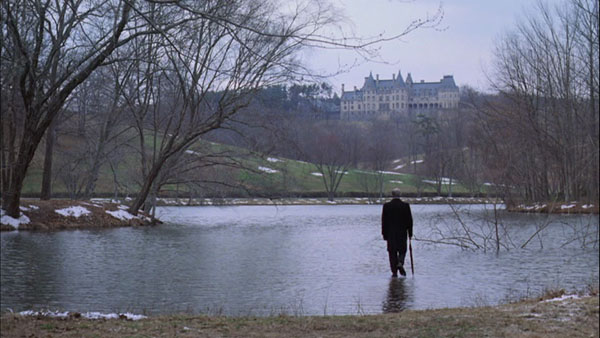
Glad to see macaws and peacocks. Noticed a Samuel Morse painting that I’ve seen at the High. Spent a whole scene staring at the actors’ clothes and the surrounding paintings, thinking about the color combinations. Distracting but very brief cameo by Scorsese as a wedding photographer. Playful transitions, irises, fades to color, rear projection and some super matte work.

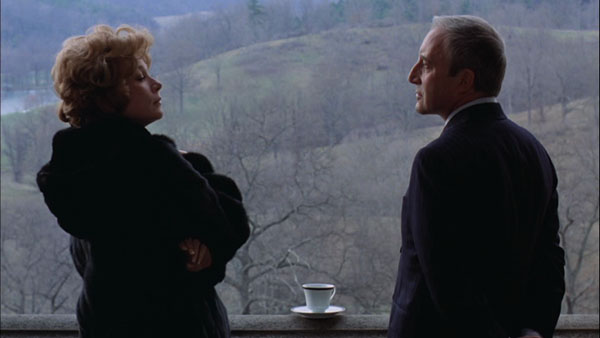
The story, okay I might not have given it my full attention because of the colors and the irises, but fully modern man Daniel Day-Lewis is paired with innocent traditional girl Winona Ryder, but then he falls for fiery scandalous Michelle Pfeiffer instead. Eventually DDL is so widely suspected of having an affair with Pfeiffer that he may as well have – but never did. Lots of unspoken thoughts going on, DDL/Ryder’s marriage in the 20-years-later epilogue seems like the Crane Wife, like society would fly apart if they ever spoke what’s on their minds. All the actors very good – I thought Pfeiffer stood out, but the academy preferred Ryder. Great to see Geraldine Chaplin, looking good a decade after Love on the Ground, though she had very little to say or do. Richard Grant played as much of a villain as the film had, a sideways-smiling scandal-slinger, and Jonathan Pryce showed up towards the end as a Frenchman (dunno why, with all the opulence on display, Scorsese couldn’t afford an actual Frenchman).

Appropriate to watch this right after the Michael Powell movies, given Scorsese’s love for Powell’s films. I wouldn’t have guessed the fight scenes in Raging Bull were influenced by The Red Shoes ballet before I heard it in the DVD commentary. Also appropriate to watch this soon after Orlando and soon before The Piano, a sort of 1993 oscar-campaign review.

2020 Edit: watched again on Criterion Channel, noticed two separate things that might’ve been stolen by A Very Long Engagement, and wondered if the narration is from the novel. Wicked line: “but what if all her calm, her niceness, were just a negation – a curtain dropped in front of an emptiness?”

A rare valentine’s day treat for me when Katy suggested (not just “went along with” – suggested!) a Powell/Pressburger double-feature. Maybe she was jealous after reading up on the good times I had watching the previous double-feature by myself, or maybe it’s because I’ve been complaining for three years that we never finished watching The Red Shoes last time, or maybe she just likes me.

A Matter of Life and Death (1946)

Movie wastes no time, with David Niven (his post-war return to film, previously in Wyler’s Wuthering Heights and Dodsworth) mid-plane-crash having a smooth, romantic radio conversation with a visibly upset Kim Hunter (of The Seventh Victim, later A Streetcar Named Desire), each photographed in close-up with washes of color behind them. He turns up on a heavenly beach, safely alive sans parachute, then finds his radio girl and they fall in love, the end.

image

BUT WAIT, Niven was supposed to be dead, so a French-accented representative of heaven (Marius Goring of the Archers’ The Spy In Black) comes down to collect him. Niven argues that his situation has changed since he fell in love on his borrowed time and challenges the system to let him live. This is hardly precedented, but heaven agrees to give it a go. Niven consults with his new girl’s doctor friend Roger Livesey (star of I Know Where I’m Going!, and it’s nice to see him again) regarding which dead man Niven should employ as legal counsel in his heavenly trial versus the rabidly anti-British prosecuting attorney Raymond Massey (the soldier in the final scene of 49th Parallel). Movie has exquisite color, innovative production design and Roger Livesey, but it’s turning out to be another propagandistic (allied U.S./Britain need to get along) war story, and one with angels, no less. Angel movies are never good.

image

BUT WAIT, new layers are added, as Niven is suspected by the doctor of having brain damage from his fall and is rushed into operation, so the whole heaven business might be in his mind. The doctor, trying to summon an ambulance on his motorcycle, dies in a crash and becomes Niven’s attorney in angel-court. Not particularly nationalist, no theologian, just a very smart and logical man who helps Niven get out of heavenly trouble while the brain surgeon is saving him on earth, leading to the inevitable happy ending.

image

I ended up liking it an awful lot. Another movie, so soon after watching Magnificent Obsession, that hinges on the untimely death of a doctor. Niven’s painfully-British dead buddy, awaiting him in stark, black-and-white heaven, was played by Robert Coote (of The Ghost & Mrs. Muir and Welles’ Othello), all hanging out with the future Sister Ruth, Kathleen Byron. Somehow, even though I’ve seen his brother in a TV series 60 years later, I didn’t recognize Richard Attenborough.


The Red Shoes (1948)

Another glorious-looking film from the Archers and Technicolor pioneer Jack Cardiff. A student composer (hey, it’s a blond Marius Goring, the Frenchman from the last movie) whose work is being stolen by his teacher Austin Trevor (of Alexander Korda’s The Lion Has Wings) ends up on the same production as ballerina Moira Shearer under the tutelage of passionate and ruthless director Boris Lermontov (Ophuls fave Anton Walbrook, also in 49th Parallel). Composer and Dancer fall in love, but her true love is dancing. Torn between the two (she wouldn’t have to be torn if she could be married and dance, but it never works that way), a tragic finale! Wonderful sad conclusion with Lermontov announcing Shearer’s demise before the curtain, the play performed with only a spotlight where she should be. Echoes the end of The Golden Coach, another climactic love vs. art decision with a final curtain announcement.

image

Of course the highlight is the Red Shoes performance, 15 minutes of ballet tricks enhanced with film tricks, one of the most thrilling cinematic montages in history. Besides that one acclaimed scene, movie mostly plays it straight, with believable characterization and classy (but not stifling oscar-classy) filmmaking, until the one bit of fiction crossover at the end, when the red shoes seem to cause Shearer to run from the play and throw herself in front of a train. Close-up on her face, horrified (recalling the finale of Black Narcissus), then a focus on the shoes during the whole run without showing her face again.

image

Robert Helpmann, who was awesome in Tales of Hoffmann (and apparently made his own movie of Don Quixote in the 70’s) is awesome here as well, as the lead company dancer opposite Shearer. Movie won some oscars, including best music, but surprisingly the composer didn’t get much work except for other Powell/Pressburger films. Maybe he wasn’t looking for any.

image

Katy liked the movies, but didn’t love them, and especially disliked the ending of Red Shoes. When asked what she would’ve preferred, she mysteriously replied “I like when we watch classic movies,” as if the Archers films seemed too contemporary.

image

Only written by Preston Sturges, but I have no problem calling this a Sturges movie, full of his witty dialogue and manic energy. Sturges, who I’d just accused of ignoring women in Christmas In July, writes a fantasy chick-flick here. Girl works hard at menial job, then out of nowhere she gets fanciness thrown at her and a hot rich guy falls for her.

God’s own Jean Arthur is the girl, cuter here than in You Can’t Take It With You (in which this movie’s stuffy rich guy Edward Arnold played an even stuffier rich guy). He tosses a mink coat out the window and it lands on her, setting into motion a rags-to-the-appearance-of-riches story a la The Million Pound Note. A young Ray Milland (minus his X-Ray Eyes, some years before The Major and the Minor), earnest son of the Edward Arnold, falls for her and Louie, a chef turned hotel owner (played by Luis Alberni, who would go back to being a chef in The Lady Eve), thinking she’s having an affair with Edward Arnold, gives her a free suite to attract other trendy, wealthy socialites. Pretty sure she ends up with Ray Milland.

Katy liked it, too.

Saw Michelle Williams before in Brokeback.
Can’t recall her in Synecdoche or I’m Not There.
Very good performance.

She drives a car, has a dog, rations cash, seeks Alaska.

Car breaks.
Arrested for shoplifting.
Dog disappears.

Pleasant man named Wally played a drugstore security guard.

The movie credits would like to mention Will Patton.
He is the prestige.
Played a mechanic.
Last seen in Road House 2 (ouch)

Larry Fessenden, directed Habit, plays a crazy person.
Apparently he does that a lot.
Cabin Fever Part 2? That won’t be good.
Did anyone know there are two sequels to the Pulse remake?

Movie is well paced, well shot.
Does not make me as sleepy as Old Joy.
A pleasure to watch.

The dog lives.
It’s so cold in Alaska.

Been enjoying this show. After reading a heated online fight between auteurists over whether a single episode of the show can be judged as “a film by” the episode’s director apart from the rest of the series, I gave the idea two seconds’ worth of thought before ruling it total bunk.

But out of curiosity, the episodes were directed by: Clark Johnson (former Cronenberg effects artist, dir. SWAT with Sam L. Jackson), Clement Virgo (movie Rude which played Cannes & starred Clark Johnson), our old friend Peter Medak (The Washingtonians, The Ruling Class), Ed Bianchi (Deadwood), Joe Chappelle (Hellraiser 4, Halloween 6 and Hackers 2), Gloria Muzio (20+ different TV shows), Milcho Manchevski (Criterion-anointed classic Before The Rain), Brad Anderson (The Machinist, Session 9, Sounds Like), Steve Shill (Knight Rider relaunch pilot, upcoming Beyonce movie) and Timothy Van Patten (star of Master Ninja).

I’d love to say that everyone mumbled in the Van Patten episode, screamed in the Medak episode, and lost 50 pounds to appear in the Anderson episode, but it don’t work like that. The true heroes: Written and produced by ex-Baltimore-PD Ed Burns (also Generation Kill and The Corner) and David Simon (those two plus Homicide: Life on the Street).

Too many actors to go through… I mean, they were all in movies I’ve seen in roles I don’t remember, so I’ll catch them next time. Noticed a few of ’em came up in the same movie though, one called Perfume (not the Tom Tykwer) written and produced by David Holzman himself. Also notably, McNulty was third-billed in 300. Of the dead, club owner Orlando has since appeared in a TV movie starring Alan Rickman and Mos Def, and young Wallace moved on to All My Children and is co-starring in an Atlanta-shot movie with Keith David and Ernie Hudson this year.

Batrou is a cute student, the privileged daughter of a hardassed military governor/colonel with three wives. His youngest wife is strong-willed and troublesome (aren’t third wives always?) and close to the daughter’s age. The daughter is in love with Ba, and they hangs out with friend Seydou, studying for exams.

I’m not sure exactly what happens with the third-wife plot, or why the boys’ failing their exams helps to launch a student protest against the government (maybe the protest was already in place, and the boys just joined it), but the result is that Ba and Seydou are arrested and sent to hard training camp, where Seydou dies from the stress, and even Batrou is arrested by the unapologetic colonel.

Suddenly we’re back in familiar Cissé territory when Ba’s grandfather hears of his arrest, puts on his tribal garb and heads for the trees to make sacrifices and wish for supernatural assistance in overthrowing the colonel’s evil plans. Walks out of the trees into the colonel’s backyard and threatens him – colonel reponds as we’d expect by shooting grandpa in the back, but the bullets have no effect.

Bulletproof robes are all the ghosts of grandpa’s ancestors can provide, though – when he gets home he finds the house has been burned down and Ba is rumored to have been killed, so grandpa burns his ceremonial outfit and joins the people’s march against tyranny, which shakes up the government enough that the colonel is ordered to release Ba, who’s now free to run off with the colonel’s daughter.

This preceded Yeelen, which featured two of the same actors (the grandfather and the colonel). It lacks much of Yeelen’s striking imagery and unhinged craziness but it’s still a good movie (I liked it more than Xala) and oughtta be more readily available than it is.

N.F. Ukadike: “Ironically, Finye was partly financed by the military government of Mali. Tolerance and maturity prevailing, the government demonstrated that it is capable of listening to constructive criticism.” Kino’s promo copy plays up the romance and compares to Romeo & Juliet, says it “casts a critical eye on both the ancient and modern values.”

M. Dembrow: “In reality, young Malians would have to wait ten years after the making of Finyé for the military regime of Moussa Traoré to crumble. But with this film—and with Yeelen as well—Souleymane Cissé gave them powerful images of hope and resolve.”