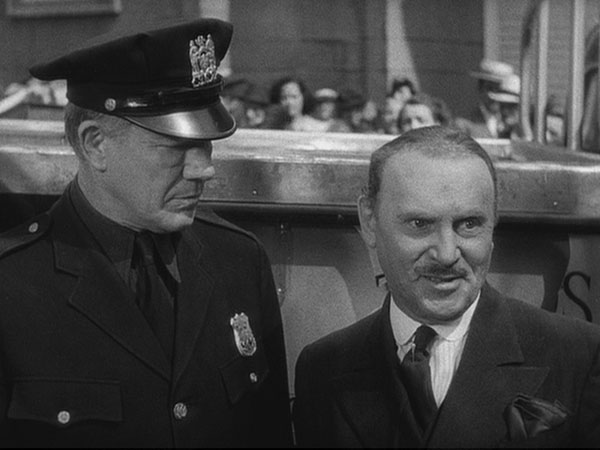
My taunting of Katy for complaining about long movies (“long” > 105 minutes) bit me in the ass today. After an hour delay the movie started, and after 2.5 hours I was the first to moan about how LONG that damned movie was.

The project may have been initiated by the country of Namibia, but it says Burnett wrote and directed, so I’m laying the blame at his feet. So what went wrong? The other Burnett movies I’ve seen centered around small communities, so maybe his style can’t support stretching out to epic scale with ten countries and a hundred characters. Katy points out that Danny Glover had the only character with any depth, and Burnett said in an interview that Glover’s character was fictional, a blending of three or four real people, so maybe Burnett has problems with writing history and his strength is in fictionalization. After the recent reissue of Killer of Sheep, every film critic fell over himself to declare Burnett an American treasure, so maybe the combined weights of feeling like he has to live up to his reputation and deliver a high-quality picture, and feeling like it’s his duty to truthfully deliver the story of Namibia to the rest of the world led to too much compromise.

Plot: Young Sam Nujoma grew up in “South West Africa” (aka Namibia), a country governed by nazi… i mean Germans and occupied by South Africa. Sam always dreamed of a free Namibia. He met some guys who also wanted that, and started a political/guerrilla movement called SWAPO. He went to church and met minister Danny Glover. Then he pissed off to the United Nations and stayed there for twenty years, finally returning as president of his newly-independent nation. Yay!

I didn’t realize that Carl Lumbly (who played grown-up Sam Nujoma in a series of fake beards) was also the easily-manipulated slacker Junior in Burnett’s To Sleep With Anger.

Quoting myself in an email:
Movie feels long, and yet each scene feels too short. Tries to tell the *entire* story of Namibia AND of [Nujoma] without leaving anything out, so it’s an epic and a biopic crammed into 2.5 hours. Script feels like a wikipedia article. And story problems aside, it’s full of traditional epic-sounding music, and traditional cutting and camerawork… doesn’t feel like the idiosyncratic artworks that the other Burnett films I’ve seen (Sheep, Wedding, Anger, the shorts) felt like. Disappointing. BUT it’s got some great shots and some fine acting, and the stories of Namibia and Nujoma are interesting, so it was at least worth sitting through. It’s not total crap (like Amazing Grace), just not the great movie I was hoping for.

Made in the middle of Capra’s streak of sincere, goodhearted dramas, a couple years before he ramped up for the war propaganda machine. I was excited to see this because I love Robbie Fulks’ song about loving Jean Arthur, but I didn’t end up loving the movie’s Jean Arthur more than I love the song Jean Arthur. Maybe Robbie was watching A Foreign Affair, or Shane, or a different Capra film.

A corporate-greed movie, pretty funny for a self-important serious-issues drama, but still feels a tad long and obvious. Jimmy Stewart is in love with his secretary Jean Arthur, but their parents disapprove. Jimmy’s very rich & proper dad owns the huge business of which Jimmy is vice-president, and Jean’s dad (Lionel Barrymore) is a giddy eccentric who lives in a house where everyone does whatever they please (which mostly means dancing and making fireworks). Ends up in jail, then in court, with Barrymore’s lifestyle on trial. Can the stuffy rich people learn to lighten up just a bit, and can the nutty eccentrics learn to conform just a bit, so that their star-crossed lover children can be happy? Of course!

Lionel Barrymore is swell as the good-hearted old commie, but better is Donald Meek as a formerly repressed corporate bookkeeper who goes to live in Barrymore’s house, gleefully inventing and exploding things. Also cool is Russian dance instructor Mischa Auer (seen almost twenty years later in my second-to-last screenshot in Mr. Arkadin) whose strict manner clashes comically with the rest of the Barrymore house.

Lionel Barrymore (right, of Tod Browning and Lubitsch movies, later in Duel in the Sun and Key Largo) shames Edward Arnold (left, in the movies since 1916, played Webster in The Devil and Daniel Webster)
image

Donald Meek is charmed by Lionel Barrymore:
image

Small-headed Mischa Auer with God’s Jean Arthur.
image

Okay, so I went overboard in saying this was better than Across The Universe, but I did find it surprisingly tolerable and entertaining and I enjoyed looking at the cool lighting and listening to the songs and watching Meryl Streep whenever she was around, and my mind wandered whenever she wasn’t. There was one great song (not counting the camp greatness of Pierce Brosnan’s awfully earnest singing), and the rest were pretty so-so. Movie is getting mad hatred from web-based critics, fans of good films and classic musicals, but I didn’t go to the screening expecting a good film nor a classic musical so I left unoffended. In that sense, it may not have been better than Across The Universe, but it was better than Indiana Jones 4.

The movie is so nihilistic and immoral, I wonder if it counts as pre-code comedy, if it would’ve been allowed three years later. Aha, IMDB says there are some bits that were lost in ’35 during a post-code re-edit, including the meaning/punchline behind the guys delivering blocks of ice to the apartment of the “college widow”.

I didn’t even know there was a straight-man Marx Brother: Zeppo, here playing Groucho’s son, a student who has spent twelve years at college hanging out with the “college widow” (apparently a common term back then after Archie Mayo’s 1927 movie The College Widow, which Horse Feathers is partly parodying).

Director McLeod (who also made comedies with Cary Grant, WC Fields, Bing Crosby, Bob Hope and Harold Lloyd) did a fine job taking strings of unrelated scenes and jokes and stitching them together into what passes for a movie. The mad energy and nonstop jokes still make it a highly successful comedy. None of the four credited writers bear the name of Marx, so I wonder how much the Marx Bros. brought to the table besides acting. No real sense in a plot summary, since the movie itself doesn’t seem to give a damn for plot. No sense in recounting the jokes either, cuz it’s a goddamned fun flick and I’d rather forget most of it so I’ll enjoy it as much the next time.

“Don’t waste your time in the so-called real life.”

image

One of my new favorite movies! Rivette must’ve dug this one, being about theatrical performances bleeding into real life, with characters and camera always behind and in front of screens and fences, sheets and curtains.

An Italian theater company arrives “in a Spanish colony of Latin America” in the early 1700’s and attempt to build a theater and make a living amongst locals who care more about bullfighting. Camilla, the lead actress of the group (Anna Magnani in an amazing, vibrant performance) entertains the affections of three fans: the local star bullfighter, the viceroy (who offers her the titular coach) and troupe member Felipe, who wants to settle down in the wilds of America. With the threat of duels, revolution, prison and worse, Camilla contrives a way out, donating her coach to the church and retreating back behind the curtain, letting all three men off the hook. Movie (this version of it, anyway) is in English, with a wild mix of accents.

In interview, Renoir says he was highly concerned with color (it is brilliant – see shot above), with Anna’s wonderful acting, with being able to change the script and with playing around with the nature of acting, on the stage and in real life.

Renoir: “My principal collaborator on this film was the late Antonio Vivaldi. I wrote the script while listening to records of his music, and his wit and sense of drama led me on to developments in the best tradition of the Italian theater.”

image

Andrew Sarris: “To claim, as reviewers at the time did, that Renoir had failed to produce a convincing narrative, is to scorn Matisse and Picasso for not painting plausible pictures.”

Andre Bazin: “Renoir directs his actors as if he liked them more than the scenes they are acting and preferred the scenes which they interpret to the scenario from which they come. This approach accounts for the disparity between his dramatic goals and the style of acting, which tends to turn our attention from his aims. The style is added to the script like rich paint liberally added to a line drawing…”

J. Rosenbaum: “As Bazin suggests, the actors are employed as if they were different kinds of paint, freely spilling over the initial designs, but it’s worth adding that the colors are employed on occasion as if they were actors – a splash of yellow or blue in an incidental decor carrying all the allure of a memorable extra.”

Rosenbaum again:

All three films are comic period fantasies in dazzling color, offering a kind of continuous, bustling choreography in which shifting power relations between upper and lower classes and between spectators and performers literally turn the world into a kind of theater. In this respect, they might be said to offer more abstract and less politically anchored versions of the films Renoir made during the thirties. Unlike their predecessors, they’re deliberately removed from real life. And given the sense of political as well as the personal defeat that came with the war and his departure from France, followed by a lengthy period of living in exile, they’re unable to hide a subtle aftertaste of regret lurking behind all that gaiety – a sense that utopia can only be found, if at all, on a soundstage, not in the Popular Front that once meant so much to Renoir. This sadness only occasionally rises to the surface, as in the memorable exchanges between actors Camilla and Don Antonio at the very end: “Felipe, Ramon, the viceroy… disappeared.” “Now they are part of the audience. Do you miss them?” “A little.”

Scorsese says there were versions in Italian and French, and that the ending (which looks like it came from a degraded print) was newly restored in the 90’s.

Don Antonio, leader of the actors group, played by Odoardo Spadaro of Divorce, Italian Style:
image

Rome’s Cinecitta studio was equipped for sync sound recording in the 50’s? You wouldn’t know it from the Italian movies I’ve seen.

A few comic reminders that we’re in the 18th century: “Tomorrow papa is being bled with leeches, the day after I have my purge.”

Cameo by French actor Jean Debucourt as the bishop, of Epstein’s silent Fall of the House of Usher, Cocteau’s Eagle With Two Heads and Max Ophüls’ Madame de…

The three men, below from left to right:
– Ramon the bullfighter – Riccardo Rioli, whose film acting career began the year before, and ended the year after with a small part in a Mankiewicz picture.
– The Viceroy – Scottish Duncan Lamont, charming in this, later in Mutiny on the Bounty and Quatermass and the Pit.
– Felipe: American Paul Campbell, who was a beef-and-cheesy enough actor to get himself cast in The Deadly Mantis. He lived long enough to have seen the MST3K version – here’s hoping he did.

image

The great Anna Magnani plays Camilla. Star of Mamma Roma, Bellissima and Rome, Open City, she also beat out Kate Hepburn and three other Americans for the 1955 Oscar for The Rose Tattoo.
image

“Where is truth? Where does the theater end and life begin?”

SEPT 2020: Katy watched this with me… and she liked it!

One of my new favorite movies, utterly beautiful images with a stunning restoration on the MoC DVD. I was sure that this movie would be exoticizing the islanders enough to make it unwatchable around Katy, but I showed it to her anyway, and it turned out pretty well for us.

image

Matahi and Reri are in love, when a ship bearing aged messenger Hitu arrives with a note saying Reri is to be sent to another island and kept as their sacred virgin. So Matahi runs away with her, washing up on a capitalist island where they live peacefully for a while, Matahi not realizing that he is running up a massive debt because nobody ever explained the money system to him. When he sees that they won’t let him leave, he braves the shark-infested waters to find a valuable pearl that will buy their freedom, but while he’s gone Hitu takes Reri, and Matahi drowns chasing after their boat. Sad movie!

image

Tidbits from the very good commentary by R.D. Smith and “the” Brad Stevens: Robert Flaherty directed and shot the opening fishing scene, then Murnau removed him from the project, finding his direction of drama unsatisfying. Floyd Crosby (would go on to shoot tons of MST3K fare and X: The Man With X-Ray Eyes), who worked with Flaherty on White Shadows in the South Seas, took over the camera. Story is a retelling of the Garden of Eden myth. Visual motif of descent grows increasingly darker. Contrast between motion and stillness. Islanders paddling furiously towards giant ship, their vibrant humanity vs. the faceless ship (called Moana!) which seems from afar to be guiding itself, on which sits Hitu, surrounded by stillness. The ship brings a spreading plague as surely as the one in Nosferatu. Heterosexual couple threatened by a powerful individual, theme present in most Murnau movies – in this case, central relationship is more sexual + physical than in the others. Tabu is unprecedented in Murnau, having a character attempt to oppose fate – unsuccessfully, “gives the film much of its tragic quality.” When they escape to the larger island and meet white-influenced civilization, similar to the pure-country vs. corrupt-city themes in Sunrise and City Girl. Murnau didn’t like intertitles, used none in this movie except for diegetic writings, all of which hold negative connotations.

Related, should try to find sometime: Island of the Demons / Black Magic by Walter Spies and Friedrich Dalsheim.

Hitu:
image

Matahi:
image

Reri:
image

image

À bientôt, j’espère [Be Seeing You] (1968, with Mario Marret)

“Almost 10,000 workers have lost a day’s pay, just like that. It is not a prowess, it’s solidarity and it is something formidable compared to TV games or trash papers. It’s far better, it’s wonderful. It’s normal, it’s the working class… that’s what we must be aware of. What is beautiful is not what is written in the tabloids. It’s what the working class does. It’s to lose 5000 francs to support our sacked mates, and to contribute today again to make up for their lost pay. If only this was advertised and spread. Isn’t that culture? I want to tell management we’ll win thanks to the solidarity they know nothing about. We’ll get you. We’re not mad at those who think wrongly they are the boss, but we’ll get those who own capital. It has to be, it’s natural, and we’ll be seeing you.”

Unfortunately this does not seem like an intricate film which will grow deeper in meaning with repeat viewings – just on-the-spot reporting, interviews with striking factory workers who calmly explain what’s wrong with factory conditions and the effects (both actual and hopeful) of their strike. The only good speech is the one quoted above, at the very end. Movie was a letdown considering the great strike movies I’ve seen lately, including Harlan County USA just last week… but this wasn’t aiming to be similar to that film, or to The Battle of Chile, just small-scale reporting of a single event, leading (hopefully, but not actually) to a revolution of working-class-created films.

image

image


2084 (1984)

Filmmakers are asked to commemorate the hundredth anniversary of the 1884 start of trade unionism in France. “They were rather at a loss, so they had this idea of simply jumping ahead a century… afraid of defining the state of the movement today.” Their software and studies predict three possible futures, color-coded.

The Grey Alternative: a never-ending crisis. “When it takes all your energy just to stay afloat, there’s not much imagination left for creating a future.” An alternative with the possibility of “a social or nuclear explosion”, “a fearful society huddled in its blankets of false security, staking its hopes on a precarious balance that is forever in jeopardy. Here the union is at best a powerful protective organization” to “safeguard your job, keep you as comfortable as possible… A union like that doesn’t bother with changing the world.” “Union ritual becomes… nothing but congresses, meetings, demos, slogans. What a drag.”

The Black Alternative: “it could be fascism, it could be stalinism… it’s not easy to forsee a world where the technical developments replace ideology… The appropriation of this technology: who is to benefit from it, who should control its development, was the overriding question of the late 20th century, its real challenge. Because we didn’t understand in time what was really at stake, it was left to a new type of leader to govern the future: the techno-totalitarians.” It forsees “violent workers revolts [in] the 80’s and 90’s and their repression.” This leads to a Wall-E utopia. “At home you get more images than your eyes can absorb and more information than your memory can stock… Anger too belongs to a bygone age. The state is a well-oiled feeding machine and the union nothing more than the engineer who keeps it working, the one who detects the little glitches, little breakdowns, and who can’t even imagine that the machine can serve some other purpose. In fact, of ‘union’, only the name remains. Trade unionism passed away with the dawn of the year 2000” because of infighting.

The Blue Alternative: a tentative hope. “before our eyes, technology is beginning to prove itself a fantastic tool for changing the world, and this transformation includes the struggle against hunger, against suffering, the struggle against ignorance and against prejudice. It is still a struggle, but in the context of the 21st century, not the 19th.”

image

“The 20th century hasn’t even existed. It was nothing but a long, painful transition from barbarism to civilization. In the 1980’s those who still felt angry about poverty, about the injustice of industrial societies were right. Those who felt there was hope for change were right too. The part unions played was to bridge the gap between this anger and this hope. They were the instrument of a new struggle, a place where imaginations could meet and create new solidarities, where people could… learn how to make good use of their differences, and how to win control of their days.”

The film proclaims that it has been “talking less about what has been done already than about what remains to be done. Nothing is programmed yet. The three alternatives are open to us.” “We’ve just got one century left.”

Definitely had to watch this a second time to make sense of it because of the rapid-fire low-key narration and the bizarre images (mostly of film students in a lab combing through 20th century film images), which I would focus on and lose the train of thought of the narration. They don’t exactly work together most of the time. It’s a great commentary though, and a strong little film.

image


Remembrance of Things to Come (2001, with Yannick Bellon)

Excellent movie by two 80-year-old artists celebrating the photography of Yannick’s mother Denise Bellon. Tells stories through Denise’s photographs of France and surrounding countries (including colonized north Africa) and of her friends the Surrealists, first in the pre-war 30’s, then the lead-up to WWII, and briefly post-war (incl. a surrealist reunion photo). Nothing afterwards, though Denise lived until 1999 – makes for a short, focused movie. Electro-sounds and female narration by the Sans Soleil crew of Michel Krasna and Alexandra Stewart.

“Each of her photographs shows a past yet deciphers a future.” This is the kind of movie I’d been waiting for while sorting through Marker’s lesser-known 70’s stuff – poetic commentary weaving history and art around the images. Don’t know how the collaboration with Yannick Bellon worked, but this feels very much like a Marker movie, and a great one at that. There are cats, of course (see below), and the second mention I’ve seen him make of the 1952 Olympics.

From what Acquarello writes about this, you’d think he was talking about Sans Soleil: “It is in this analytical deconstruction between the integral art of composing an image and the cognitive assignment of significance behind the captured image that filmmakers Chris Marker and Yannick Bellon create a compelling exposition on the processing and (subconscious) self-actualization of human memory.”

Movie opens on Dali’s Rainy Taxi, which I saw in Spain.

image

image

The Bellon sisters:
image

Auguste Lumiere:
image

image

The Pont-Neuf, which I recognized from Lovers on the Bridge:
image

The commentary on this part, about scrap metal used to fuel the war effort, is one of Marker’s finest:
image


Puisqu’on vous dit que c’est possible [We Maintain It Is Possible] (1973)

“We can now point out that the government preferred to surrender to multinationals rather than grant anything to the workers. That’s what we can say for now.” [via megaphone]

Movie about worker occupation of a factory in 1973, with an intro saying the movie was shot by “Scopecolor”, edited by Marker, and is the sole responsibility of those involved – the strike participants’ way of distancing themselves from the film, perhaps. A watch factory called Lip is to be shut down, then bought out, then restructured with massive layoffs, and the workers decide not to accept this, to take the factory and sell the watches themselves. Negotiations don’t go well (the workers have all sorts of demands, the owner simply says it’s not profitable so he’s shutting it down) then the police evacuate the building and demonstrations hit the streets.

Has much more interesting editing than À bientôt, j’espère but that’s not saying much. Still, for the most part, video interviews and a few photographs for a while, then footage from inside the factory, nothing exciting to watch. I mean, all praise to Mr. Medvedkin, and I agree that cinema can have many useful purposes, but personally I’ve seen an unusually high number of movies about worker strikes, so forgive me if I yawn when this one’s narrator goes on about how exciting are union meetings.

“The outrage lies in labor exploitation and the alienation that capitalism inflicts on workers.” says a speaker during a convincing speech – which is exactly the point here. Rich factory-owners aren’t going to freely hand their factories over to the workers, and the government isn’t going to allow one group to occupy another group’s buildings against the owner’s will, so the only way to win is the change the system, to reform capitalism. It happened, however briefly, in Chile, but the watchmakers at Lip failed to overthrow the French capitalist system.

image

image


Set Theory (1985)

An ugly slideshow done entirely in HyperStudio, accompanied strangely enough by string music by Russian composer Alfred Schnittke instead of the electronic sounds Marker is fond of using. The story goes: Noah is on his ark wondering how to sort out all these animals, when two wise owls come by and teach him set theory. “Eureka,” cries Noah, who now understands all manners of mathematics through understanding set theory. Since it uses French intertitles instead of spoken narration, I transcribed the titles and ran ’em through google translator to make a subtitle track with helpful program Media Subtitler. The movie itself was only halfway worth the effort – it seems a very minor work (though more amusing than À bientôt, j’espère) – but it was fun to play around with. Some of the clip-art and dialogue is actually pretty cute – a tiger being confused with a house cat due to faulty classification and taken home is portrayed using an oversized tiger in a bathtub, with E. Munch’s “The Scream” in the foreground.

image

image

Watched this the same month as Trouble In Paradise, not having guessed how connected the two would be – the book/script of Stavisky even mentions that they stole shot ideas from Paradise. This one seems like a correction to the other, set during the same year with some of the same reference points (such as Trotsky) but here the upper-class gentleman thief is revealed to be a sham, and rather than escaping at the end to start over with his true love, the thief ends up dead, his widow in prison. The final shot is the chauffeur (of the period Rolls they drive everywhere) placing a bouquet of white flowers for her outside the prison.

Bright and lively music by Stephen Sondheim (who had already won three Tony awards in the 70’s) kept the doomed inevitability away until it was too late. Sondheim had already won three Tony awards in the 1970’s by the time Stavisky came out. It’s one of the very few times he’s written music (more than one song, anyway) for films – the other cases were Warren Beatty’s Reds (another movie featuring Trotsky!) and Dick Tracy.

image

Another story by Jorge Semprún, who wrote the exile-themed The War Is Over. One of Stavisky’s associates (Juan Montalvo, a slimy guy who hits on Arlette but can provide Serge with lots of money) was funding the attempted coup in Spain which led to the Spanish Civil War. In researching the film Semprun found that the same police inspector (named Gardet in the movie) assigned to watch over Leon Trotsky in France was also assigned to report on Stavisky, so Trotsky’s exile was written into the movie, as witnessed by a kid named Michel Grandville. The movie is bookended with Trotsky – first arriving in France, beginning his exile from Russia, and at the end after the Stavisky scandal, being moved further into exile, far from Paris, his political influence feared by the conservatives. Stavisky himself is a Russian Jew in exile – so there are a few connections to the previous film.

The paperback book says it “represents the final scenario” for the shooting of the film, and the intro by Richard Seaver addresses something I had wondered about after reading The War Is Over and believing that Semprun’s script was shot word-for-word with very little added by Resnais: “Once the subject is established, the writer does an initial draft, or treatment, after which writer and director discuss it scene by scene, often line by line, in excruciating detail, until the distinction between writer and director blurs or disappears.” So in fact the books by Semprun represent the collaborative vision of he and Resnais – my beloved auteur is no longer in peril.

The real Serge Alexandre Stavisky was involved in ever-larger finance fraud and was connected with people high up in French government, and when this was made public in January 1934 it led to riots, deaths (incl. the semi-suicide of Stavisky himself), trials for his friends and widow (all acquitted the following year) and political upheaval. Not knowing much about French politics, the Wikipedia articles are hard to follow, but it seems the ultra-conservatives tried to overthrow the leftists in power – eventually one leftist resigned, a conservative replaced him, and somehow socialists ended up in power.

Belmondo, a decade after Pierrot le fou and still looking the same:
image

Jean-Paul Belmondo as Stavisky/Alexandre is dazzling, a con-man with absolute confidence in himself. Arlette is his glamorous wife, and he’s surrounded by associates, some complicit in his underhanded dealings like assistant Borelli and Serge’s in-pocket doctor (Michael “Thomas” Lonsdale) who keeps declaring Stavisky unfit to stand trial for a six-year-old fraud offense… and some are just content to spend time with Stavisky, enjoying his company and not asking questions, like friend Baron Raoul (an outstanding Charles Boyer).

Arlette: Anny Duperey’s debut was seven years earlier in Godard’s Two or Three Things I Know About Her.
image

The book says “Barol Raoul’s looks, gestures, diction and bearing are those one would expect a baron to possess in those films where barons play a part.” That’s hilarious… I hope those are the character notes they gave to Charles Boyer.

This was French superstar Boyer’s second-to-last film. I saw him as the star of Fritz Lang’s not-so-good Liliom. He is the second actor I’ve seen lately (after Maurice Chevalier) claimed to be the inspiration for Pepe le Pew.
image

As Stavisky’s right-hand man, beloved character actor Francois Périer of Nights of Cabiria, Orpheus, Le Samourai, also narrated some Chris Marker films. From the book: “Albert Borelli’s face is impassive, but he has a sharp eye. He is a man of few words but not of few thoughts.”
image

No wonder I had trouble with inspectors Bonny and Boussard – it’s complicated. Boussard arrested Stavisky years ago, and a couple years afterwards Serge became Boussard’s “informant” – actually Serge pays Boussard to keep an eye on things inside the police department, and the informant thing is just a front so they can meet. Bonny has it out for Serge, hires the blackmailer who comes to the theater during auditions to extort money from Stavisky by threatening to expose his past, and later engineers the police raid during which Stavisky shoots himself. Plus I always have to look hard to tell which Inspector is which, since they look and dress the same.

Inspectors Boussard (left, Marcel Cuvelier, also played an inspector in The War Is Over) and Bonny (right, Claude Rich, star of Je t’aime, je t’aime):
image

Bad Boy Bonny:
image

Michel Grandville (Jacques Spiesser of The Man Who Sleeps and Black and White in Color) and Erna Wolfgang (Silvia Badescu), who auditions for a part at Stavisky’s theater (he reads with her, playing a ghost – see quote below):
image

Lonsdale, after “Serge Alexandre” tells him to get rid of Stavisky and his problems: “The person he once was has become someone else: a ghost he despises. But a ghost who worries him.” And later: “To understand Stavisky sometimes you have to forget files. You have to dream of him and to imagine his dreams.”

Dream doctor Michel Lonsdale:
image

Gérard Depardieu got his break as a star just two months earlier. Here he has one scene as an excited young inventor trying to get Stavisky to invest in his product:
image

And back to Erna Wolfgang. I just liked this shot.
image

One more look at Thomas:
image

I wasn’t in love with the movie after I watched it, seemed like a really well-done portrayal of a controversial man with great acting and an over-complicated plot, but reading the book afterwards cleared up all the characters and the structure of the whole thing, and thinking back on the story, acting and photography, I’m now liking this better than The War Is Over. Nobody here is a good guy – not even Bonny, who goes against police corruption but for personal & political reasons – but the movie doesn’t judge them, or go into the details of the scandal. It just gets inside their characters and shows where the scandal came from, how one guy’s belief that he could fake his way into the upper echelon ended up shaking the country.

image

I.
Movie opens exactly how I would’ve opened a Tom Petty movie, with a concert performance of “You Wreck Me”. And this is a four-hour movie, a four-HOUR movie, so I thought we’d have some breathing room and could afford the four minutes to hear the whole song uncut, set the stage for your epic Tom Petty documentary by letting us hear a whole Tom Petty song, just so we know what exactly we’re celebrating here. But P.Bog goes the obvious talking-heads documentary route instead, cutting into the song so people like Eddie Vedder, Stevie Nicks, Dave Grohl and Johnny Depp can tell us that they love Tom Petty and his music so much. Damn, almost had something there. I guess P.Bog doesn’t want people tuning in and thinking it’s gonna be a straight-up concert, but still, I hope in the next four hours he finds time to play one song, just one song all the way through without voiceover. Can you celebrate a musician without actually playing any of his songs?

We may not get to hear a song uninterrupted, but we can enjoy watching Johnny Depp talk without any bothersome on-screen text saying “Johnny Depp”. But I didn’t recognize half the people who spoke, so if he doesn’t eventually start with the text, I’ll just never know.

But look at me complain. It’s an enjoyable show so far, talking ’bout Petty’s early obsession with rock music and his meeting Mike Campbell and Benmont Tench and early days in Mudcrutch. All songs I’ve heard before from the box set with nice home-movie footage to go with it.

II.
Tom drives to L.A. to find a record deal, gets a few of those, Mudcrutch breaks up because the studio wants Tom more than the rest of the band, and the Heartbreakers are quickly formed to replace it. Their record producer wrongly assumes that they mean the name Heartbreakers ironically. Tom is shot in arty black-and-white.

III.
First two Heartbreakers albums are out. There was all of one sentence about the second album being more difficult than the first before they cut to people raving about it. Some good live footage, some talk about drug use. And finally, one entire TV performance of a song with no cuts or voiceovers. Hoorah! A “required monthly test” on my tape cut out one talky segment. The band was initially popular in Britain before they caught on in the U.S.. Someone’s trying to convince us that Tom Petty was part of the Talking Heads/Sex Pistols rebel new-wave/punk movement, since the Heartbreakers’ roots-rock was out of fashion on the radio, replaced by bloated dinosaur rock and disco. I guess it’s a workable theory but I want to hear David Byrne’s opinion first.

IV.
Third album was a big deal. Jimmy Iovine shows up and tells us that third albums are always big deals. Petty found out he was being dicked around by his record company and he sued them… big unprecendented event, led to settlement giving Tom more control and royalties from his music and the eventual release of “Damn The Torpedoes,” feat Refugee, Even The Losers and Don’t Do Me Like That. Movie plays nearly the whole album over the story.

V.
Some pressure for the fourth album, “Hard Promises”, another great one, feat. Insider and A Woman In Love. Very nice segment on The Waiting that starts with Petty singing it acoustic, cuts into music video / studio version, then after an interview piece closes out the song with Eddie Vedder on vocals during a live performance. We lost a bass player (no hard feelings), gained a new one (Howie Epstein), won another fight with the record company (over album pricing), dealt with Stevie Nicks, and played the great Stop Dragging My Heart Around. First time diving into Tom’s angry youth, his abusive father (plenty of hard feelings) and sweet mother who died during the recording of this album after long illness. Iovine presents his theory: missing mother + abusive father = rock star. Towards the end of 1982 I drove back to work blasting Insider with the windows open. Man, it’s only 1982… how long can P.Bog keep this up? Did he ever watch the whole thing at once?

VI.
Next album “Long After Dark” (the one with “You Got Lucky”) isn’t as good as it might’ve been. Producer Jimmy Iovine is blamed for his involvement. Next album “Southern Accents” (feat. Eurythmics-penned “Don’t Come Around Here No More”) isn’t as good as it might’ve been. Producer Jimmy Iovine is blamed for his lack of involvement. We get a full pretty-recent concert performance of the song “Southern Accents”, and a brief description of the drug-fueled two year period around the Accents album leading to Tom’s smashing his left hand into a wall. P.Bog uses an innovative cutting style during this segment, and intimate camera work reminiscent of his film “Texasville”. Haaaa I’m just kidding, it’s the same ol’ interview stuff. I turned it off after a black screen announcing the end of part one. I hope part two is on my videotape!

VII.
The album: “Let Me Up (I’ve Had Enough)” feat. Bob-Dylan-co-penned “Jammin’ Me”. Here in part two, Petty’s rock cred and history firmly established, we take an immediate P.Bog-style veer towards talking about all Tom’s Famous Friends. Tom and his group back up Dylan (who hadn’t played with a band since The Band), hang out with ex-Beatles and Jeff Lynne and Otis Redding and finally form the Traveling Wilburys, marking the point when Tom went from rebel-rocker to a guy whose records my mom would buy. I haven’t seen The Last Waltz but mentions of The Band got me wondering if this is P.Bog’s answer to that movie, a big rock statement blending his two main talents of reminiscing about the old days and namechecking famous friends. Oh but I shouldn’t be mean to P.Bog, don’t really know much about him.

VIII.
Wilburys record comes out and is a huge hit, then Roy Orbison dies so that doesn’t go any further. Tom alienates the band by making a solo-ish record in “Full Moon Fever,” but it’s the biggest hit of his career and the Heartbreakers play the songs live and they don’t seem so bitter anymore.

IX.
Tom continues to alienate the band, this time with the help of Jeff Lynne, “Into The Great Wide Open” producer who likes to record the band members one at a time instead of all together like they are used to doing. New drummer joins during “Wildflower” sessions and is asked to stay permanently when old drummer finally quits. They hang out with Roger McGuinn, Johnny Depp, Dave Grohl, Faye Dunaway. “Greatest Hits” sells ten million copies after Tom is finished grumbling about it. The band gets a little happier. I’m starting to be thankful that the movie is so long. It’s been nine lunch hours so far I’ve gotten to hang out and listen to Tom Petty stories, and I always feel like playing some Petty albums when I get back to work.

X.
I didn’t think I’d end up criticizing a four-hour doc for its omissions, but when it acts like it’s telling the whole story, those omissions seem serious enough to mention. Firstly, they didn’t mention the Petty/Heartbreakers soundtrack to She’s The One. I can see not wanting to spend a lot of time on it, but they could at least mention it in passing… it’s a great album. More importantly, Tom’s cameo as the mayor of Bridge City in the post-apocalyptic epic The Postman went unmentioned. “I heard of you, man… YOU’RE famous.” On the bright side, the band is back together. On the less bright side, nobody seems totally happy with “Echo”, least of all Tom, who was going through a divorce at the time of recording. Back up with a new wife and a hall of fame induction for “The Last DJ”, currently the Heartbreakers’ most recent album and a very good one. And then back down again as bassist Howie Epstein dies from drugs and is replaced in the band by original bassist Ron Blair. Oh, and the band backed up Johnny Cash on “American Recordings”, something else to be proud of.

XI.
Oh augh, the summary chapter. Would that the VCR chewed up my tape sometime between last time and this one. Tom is proud of “Highway Companion” but has nothing new to say about it. There’s some more concert and video footage, but mostly this is where we throw all the clips of people saying nice things about each other to leave us feeling good about ourselves and Tom and rock ‘n roll. Might work better if you’ve been spacing on the movie for four hours and gone through a couple six packs, but as a standalone episode it’s tedious. So I’ll keep my last words to a minimum: good flick, good tunes.