Hosted by an actual BBC personality, this was a special episode of a (made-up?) show called Science Report that aired on April Fool’s Day. Plays it very straight, a well-made fake documentary. Can’t scare people with it anymore because of the dated 70’s look, but it would be fun to re-stage today, especially with global warming so big in the news.

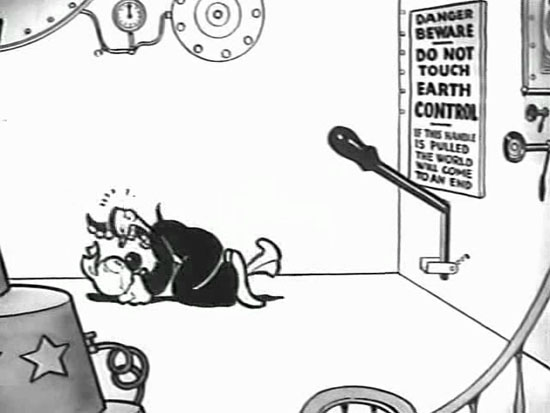
The premise is that scientists discover global warming has passed the tipping point and the planet is doomed. The space race is a ploy, and subsequent moon landings after the first few were faked on a studio lot. Really the shuttles are delivering parts for a new ship that will be launched from orbit to send some hot scientists and a representative group of people from different specialties to live on Mars, where they have recently discovered life, to begin a new society. All of this has been hidden from the Earth public to avoid panic. The BBC has carefully uncovered hints of the truth over the last six months but hasn’t learned everything. The movie ends with questions, and a challenge to the people involved in this secret project to explain themselves on-air.

This movie is as old as I am. Cool spacey music by Brian Eno. Some of the same crew later worked on Roald Dahl’s Tales of the Unexpected, including producer John Rosenberg, who died of cancer in ’91.

Unfortunately I returned this before I could get screen captures.

Lots of new-age philosophy collides with commentary on communist Yugoslavia in a way that doesn’t make much sense but involves much nudity.

Seems like this would be a fun movie, but I’m alarmed to say that I enjoyed watching critically-derided El Topo a second time more than I enjoyed seeing this acclaimed masterpiece once. This felt like a dated study or presentation, an essay of some sort. Ugly, non-sexy nude scenes in ugly, non-sexy locations, stock or documentary footage, handheld graininess and a bunch of stuff I didn’t understand. I must have missed a lot… didn’t check out Raymond Durgnat’s mash-up commentary or J. Rosenbaum’s booklet essay, so I don’t know what to do with this one, other than to compare it unfavorably to Jodorowsky and Underground and maybe rent Sweet Movie sometime to give the filmmaker another chance. Senses of Cinema: “Makavejev’s stated aim in Sweet Movie was to combine Eisensteinian montage with Buñuelian imagery.”

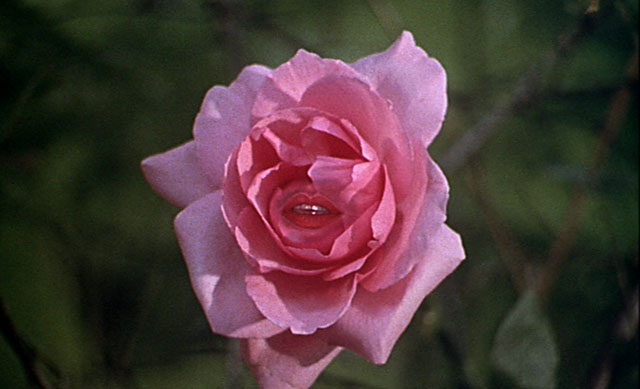
The film starts out talking about Wilhelm Reich, a therapist whose methods didn’t make much sense to me… his life, his followers and family, and how he was mistreated and ultimately died in prison. Blends into a tale of two women (roommates) and their chosen lovers and sexual politics. One of them is dating a stand-in for Lenin, an ice skater who finally beheads her and then sings a nice song to close out the film.

SoC: “The discontent of the New Wave auteurs was often toward the construction of fixed meanings through the approved systems of film language: Socialist Realism, Left-approved ‘orthodox’ Neo-Realism after 1948, wartime propaganda. Film should remain open to reality, be an aspect of that reality, and so incorporate the paradoxical, the contradictory, the ambiguous. In the East Bloc, this was a return of the repressed: the bourgeois “mystification” and dissembling that A. A. Zhdanov had railed against in 1935 at the First Soviet Writers’ Congress and the establishment of Socialist Realism. New Wave films should be, in Umberto Eco’s term, ‘Open Works’.”

This movie, are you kidding me? 100 percent awesome. Sex, drugs, rock ‘n’ roll, split screens, mobile long takes and a shower scene with a knife. It could only be Brian DePalma’s parody-tribute to Phantom of the Opera.

image

Winslow Leach is writing a rock cantata of Faust and auditions it for Swan, the hugest most important record producer in the industry. Swan steals Leach’s cantata and adapts it for his new theater (Paradise), auditions some girls (Leach meets one briefly, Phoenix, falls in love, thinks she has a perfect voice for his songs, etc), then gets Leach falsely arrested and sent to prison, where his teeth are removed and replaced with metal ones for some reason I forget.

image

Leach escapes, returns as the Phantom of the Paradise, and kills the dude hired to sing his stuff (“Beef”). But Swan finds Leach and signs a lifetime deal with him to keep writing stuff that Swan will produce… a bad deal for both of them, I guess. After a life/death struggle for creative control and the love of the girl, they both end up dead dead dead.

image

Good music, good story, great movie. What in the world happened? Why have I never heard of this before? Why haven’t my coworkers heard of it?

image

Best part: the phantom stabs himself in the heart, but can’t die because he’s still under contract.

image

Feels appropriate that I watched this over the course of a week, since it’s pretty episodic. Apparently (according to scraps of the commentary track that I checked out) it’s about the gradual enlightenment of Jodorowsky’s title character. The dude could use some enlightenment, too, what with his woman issues, his murderous obsessions, his strange attraction to people with deformities, and his tendency to kill animals on-camera.

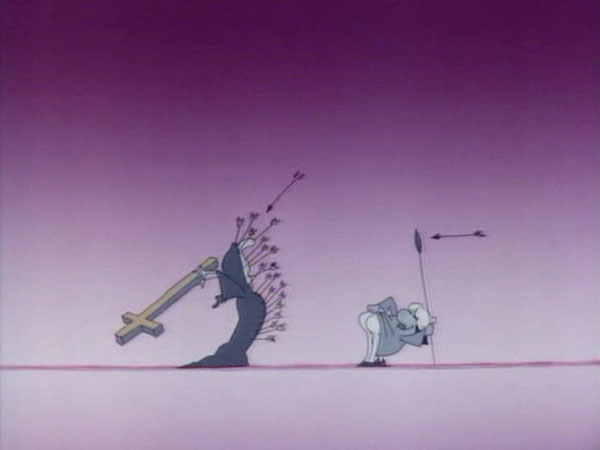
El Topo, riding across the desert dressed in black, abandons his son in favor of some woman. The woman demands he prove himself by defeating the four gun masters of the desert. Somewhere along the way they pick up an evil hot woman who talks like a man and I don’t know what that’s about. Anyway, Topo tricks and murders all four masters: blind guy; digs a hole in front of him, fall, fire… guy who always hits heart; ash tray in front of heart… guy who lives for love; distract him by crippling his wife… and crazy guy with no possessions, no gun, nothing; shoots himself to prove he has left no material desires!

Okay, but woman leaves him for the other woman, and they shoot him all up on a rickety bridge (give him the five wounds of christ, as a.j. immodestly explains on the commentary), then some mutants drag him into a hole, the end.

No! He wakes up 30 years later all white-bearded. The cripples and deformed have kept him alive as a god, and now he must leave the cave, go to the town and get help so they can all be free. Of course he does this by bringing a short woman with him and performing awful vaudeville routines for money to afford dynamite. Long story short, they free the cripples, the townsfolk mow them all down, and Topo duels his now grown son.

I had not-great memories of this one… remember most of it taking place inside the mountain (hardly any of it does!) and the picture and sound being bad, bad bad. New DVD looks miraculous… the desert sky so bright and blue. Movie not nearly as dull and drab as I remember it (and as recent restoration reviews have been saying), it’s totally watchable, and its horrible weirdness makes it worth watching.

Is it a GOOD movie then? Well it’s got some style (love the bridge scene, the rides through the desert) and it’s weird enough to recommend (most movies could stand to be weirder). I liked it more than I didn’t, so yeah, why not?

Imamura’s comeback film a decade after Profound Desire of the Gods. Flashed back and forth in time and space and starts at the end, rather like most of today’s movies, telling story of a sociopath killer with a troubled past. Iwao Enokizu is on a delivery run when he kills a couple of guys. Goes on the run for a couple months, pretends to be a professor and takes up with a girl at the boarding house he’s hiding at. They seem to like each other, but he ends up killing her (and her distrustful ex-con mother) and I think one other person before getting caught.

image

image

Style to spare. Not my favorite movie, but definitely good and possibly great, makes up for the last Imamura movie I wasn’t too sure about, The Eel. Happy to see a very modern Japanese movie, not a sloggy period piece. Watched with Jimmy Lo, who also liked. Made about the same time as Days of Heaven, Apocalypse Now, Stalker, Stroszek, Kagemusha, Zigeunerweisen, Altered States and The Elephant Man.

image

image

Definitely a spoof on Jaws. Actually makes a stronger case of “don’t go in the water” than Jaws. Piranha came three years later. Writer John Sayles’ first movie! Exec-produced by Roger Corman. Remade twice, for some reason, once starring William Katt from House. Sequel was of course Piranha II: The Spawning, James Cameron’s first movie.

I’m on a Joe Dante kick. Obviously influenced by the film critics’ strange love of his work, a nostalgic desire to see Gremlins again, and the just-learned fact that Dante was born in Morristown and grew up in Parsippany.

Kevin McCarthy was great as the crazy scientist who secretly continues an army experiment to breed ravenous fresh-and-salt-water piranha. Wish I’d gotten a screen shot of him before returning the DVD.

Ambitious is the movie with a drunken, antisocial, bearded mountain man as protagonist (Bradford Dillman: Briggs in Dirty Harry 4). He and missing persons detective Heather Menzies (of the 1979 Captain America) must warn the world of the killer piranha that they themselves accidentally unleashed… and quickly, before the fish eat Bradford’s daughter at a camp downstream. Italian horror star Barbara Steele is the crazy scientist’s ex, who tries to thwart our heroes, along with Joe Dante fave Dick Miller (of the 1960 Little Shop of Horrors), Death Race 2000 director Paul Bartel, and some army guys. I didn’t notice, but Keenan Wynn of Clonus and Laserblast also appeared. The two fail to stop the fish, but at least the daughter is saved.

Movie amazingly did not suck, was more funny than anything else. Gore/action/creature effects could’ve been edited more tightly, but I guess they wanted to show off what little they had.

Katy would not have liked it. Or would she?

Tristana’s (uncle?) guardian decides to start sleeping with her. She has an artist boyfriend. When she gets sick, the uncle has her leg cut off to save her, but when he gets sick, she opens the windows to the cold air and he dies. Also she has dreams where his head is a bell clapper.

Catherine Deneuve is very good as Tristana, and Fernando Rey is good as Don Lope. The movie is dreamlike and slow in that special late-period-Bunuel style that I’ve never appreciated. Pretty okay overall.

image missing

image missing

image missing

image missing

Katy would not have liked it. Not sure that I liked it. But at least I watched it, and now I don’t have to watch it again.

Details so that I won’t have to watch it again:
– Ringo Starr doing a fake interview show dressed as Frank Zappa
– Zappa on drums once, guitar a few times, but mostly absent
– the main guys bouncing delightedly through the movie were Flo & Eddie (?)
– some kind of devil/tempter keeps offering people dumb stuff if they’ll sign in blood
– groupie girls show up from time to time
– ten-minute animated dentist duck segment right in the middle
– Jimmy Carl Black sang “Lonesome Cowboy Burt”
– most of the music/concert scenes were really good
– lots of video (not film: video) effects. Lots. LOTS.
– some kind of druggachusetts episode where the effects were just off the hook

Not a “good” movie by any means, but interesting to see what those guys were up to. Will have to check out the footage from Uncle Meat sometimes, cuz that’s another double album that never made much sense.

Addendum March ’07: after seeing parts of this movie again while working on the DVD project, I like it a lot more. The music, the centerville segment, the endless self-referentiality of it all work together well. Gotta cut it some slack too, after watching the doc and reading about the mess of a production it turned out to be. I even like the soundtrack better now.

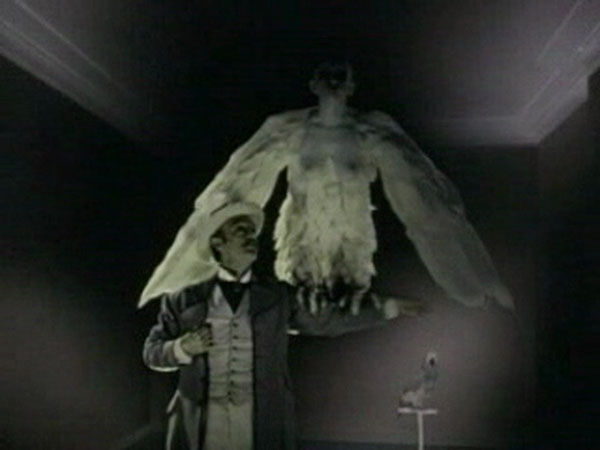
Picked a nice, short, famous one for my first Raoul Ruiz movie. Based on a fictional painter (I didn’t know until I looked it up). The curator studies “a collection of paintings by Tonnerre, a French academic painter of the mid-nineteenth century, whose rather undistinguished works, with no consistency in style or subject matter, are said to have provoked a major but mysterious society scandal”. The title is misleading, because the supposedly missing painting is not discussed so much, but rather how the paintings are connected and what scandal they could have caused. Turns out the characters within may be enacting the rituals of a secret society, but that barely seems to matter anymore by the time it’s unveiled.

image missing

Pretty amazing movie to watch (even though I fell asleep the first time). The curator is not the film’s narrator. The curator actually falls asleep once while droning on about the paintings, and the narrator whispers to us until he reawakens. The curator stages complicated tableaus, reenactments, like life-sized dioramas of the paintings in order to get a 3-D perspective on the hidden clues, which are in mirror reflections, light and shadow, and everything else. A movie all about mise-en-scene, so the paintings and stagings have interesting layouts, and the filming of them is interesting on its own. So many layers I don’t pretend to understand.

Below: Professional Jean Reno in his first film role.
image missing

Completely wild. Loved it, though I don’t know who I could recommend it to. Guess I’ll just see more Ruiz movies. Not sure whether any/all questions are answered at the end… curator seems too obsessive to be able to see the truth anymore, and may be using the ritual explanation to justify his own ritualistic beliefs. The movie’s got a few visual freakouts, like the one below, but otherwise is a sort of fictional essay film.

image missing

Where the missing painting, the fourth in the series, should have hung:
image missing

Essential essay here: http://www.rouge.com.au/2/hypothesis.html
Katy might’ve liked it. I guess. Can’t really say.