So there’s been a disease apocalypse and the survivors go around doing the usual: hoarding food, killing passers-by for gasoline, and wearing silly germ masks.

Our heroes are brothers Chris Pine (Star Trek) and Lou Pucci (last seen holding a bazooka in Southland Tales) with girlfriends, respectively, Piper Perabo (The Prestige, The Cave) and Emily Van Camp (the sequel to the remake of Ring). All is going fine until they run into Chris Meloni (Wet Hot American Summer) and his sick daughter who will trade the gas in their busted car for a ride to the doctor with the disease cure. Piper gets breathed on by the girl, gets sick and abandoned soon after they ditch Meloni at the false-hope doctor’s place. The movie’s first mistake: when you run into a celebrity like Chris Meloni in a post-apocalyptic environment, your hero should recognize their pre-apocalyptic stardom, saying “You’re famous,” then the star should respond humbly to the hero, “Naw man, you’re famous.”

Not a lot of electricity, but somewhere there’s a radio station still running on a generator, until the DJ signs off with one final song – M. Ward’s “Rollercoaster”. Won’t M. be glad that his song was considered appropriate for this bleak-ass movie. And it is bleak – without his girlfriend around to hold him together, Chris Pine gets increasingly antisocial, and increasingly infected by the killer virus, until finally his loving brother has to kill him. Next scene as Lou and Emily roll into the two brothers’ mythical beach hideout (see: Y Tu Mama Tambien), Lou’s voiceover tells us that it’s a hollow victory because without his brother there is no point in living. It’s such a futile, bleak little picture, and without the fun of Mad Max or the art of The Road – so what’s the point? Why make this movie, or watch it for that matter? The Brothers Pastor (from Barcelona) say that A Simple Plan is their favorite Sam Raimi movie, which explains a lot.

The original plan (now abandoned, along with all other plans) was to specifically catch up on acclaimed horror movies from the last decade, nothing earlier, which I’d missed so far – and A Tale of Two Sisters topped the list. I watched the well-regarded original by Ji-woon Kim (The Good, the Bad & the Weird), not the Canadian remake (retitled The Uninvited) nor the 80’s movie based on the poetry of Charlie Sheen (I am not making this up).

Firstly, who decides how Korean names are written in English? Su-yeon sounds like “Cheh-neh” to me. Secondly, I saw the ending coming from the very first scene (girl alone in an asylum tells story about herself and her sister = she never had a sister) but I still liked it plenty.

How many sisters:

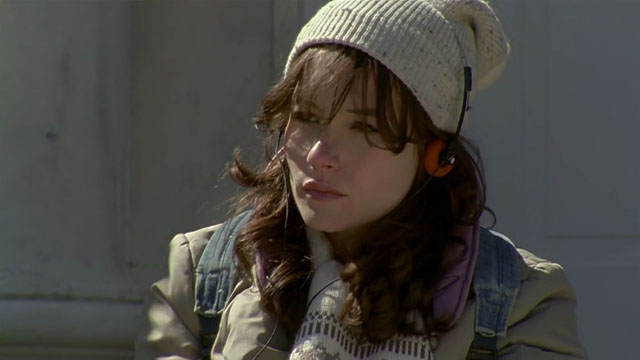
Of the two sisters, Su-mi (Su-jeong Lim, above with the cute hat – star of I’m a Cyborg But That’s OK, another movie where she is deluded in an asylum) is the more outgoing, and Su-yeon is withdrawn and afraid and has a bad haircut. They’re off at the summer vacation house with loving father and evil stepmom (Jung-ah Yum, star of the thriller H). Actually stepmom seems very nice. It’s hard to tell who is evil, and what exactly is happening, since the movie is full of things that happen which did not actually happen. Su-yeon sees ghostly things and has bad dreams, and everyone worries about a certain bedroom closet, and a guest who comes for dinner has a fit and sees a ghost, and there are birdies in the movie so of course they get killed (why else put birdies in a horror film?).

Eventually it’s clear that Su-yeon died when the bedroom closet fell on her after she found her mom dead inside, and Su-mi is having fantasies that her sister is still around. I can’t tell if Su-mi actually has a bloody all-out fight with her stepmom throughout the entire house or if that was part of the fantasy too. Anyway, stylish flick, excellently made, and totally enjoyable even if I apparently would have to watch again to make sense out of it all.

Opens with grainy shaky videocam footage of cussy drug addicts in an alley who then shoot a girl while on a hectic motorbike ride – meaningful cut to black with the words, in tiny print, “a film by daniel barber,” signaling that this will be an Important Film About Urban Problems (see also: the overbearing music throughout). That’s how Michael Caine treated it in interviews also. Normally Caine wouldn’t be into this sort of grimy personal revenge story of course, but this is an Important Work on a Meaningful Topic, not just some action catharsis. And some viewers even treated it that way – it won a couple of best-film awards – but me, I wanted some action catharsis and found that the movie delivered that well.

Also: Emily Mortimer plays a cop:

MC’s violent spree kicks off (after he has Lost Everything He Had, of course) with a parody scene of extreme urban decay. Caine visits an illegal dealer who sells him a gun while shooting up heroin into his leg while firing a pistol and smoking crack out the barrel while growing pot in his basement while sexually exploiting a young girl while threatening his partner and swearing up a storm and playing loud electro music. Predictably, that scene doesn’t end well, with Caine killing the dudes, taking the guns and burning the whole fucking place, which explodes behind him as he drives the girl to safety. There’s a long action-movie history of vigilante violence by One Man With Nothing Left To Lose Who Couldn’t Take It Anymore, and I don’t see why Sir Michael and crew have to deny that proud tradition and fake like they’re making some documentary expose about the streets, especially when their baddies are so cartoonishly evil. They could do with a few viewings of The Wire. Or hell, maybe street life is really this shitty in England – if so, I’ll take Baltimore any day.

It’s wise for Judge to dial back the visual ambition from Idiocracy, return to cheaply-shot office and home settings, since the CG in Idiocracy didn’t look so hot in theaters (during the one week it spent in theaters). Not sure why he dialed back the humor and personality as well.

Gene Simmons!

Jason Bateman is a regular white dude who owns a flavor factory (flavor-factory-related jokes in the movie: zero) and hilarious comedy actress Kristen Wiig plays his wife (number of hilarious lines given to Wiig in the movie: zero). Bateman hangs out with ringer A-list bartender Ben Affleck (less funny than ringer A-list bartender Philip Seymour Hoffman in The Invention of Lying) and decides to hire a guy to sleep with his wife in order to gain license to sleep with new hottie scam-artist Mila Kunis (Black Swan). Meanwhile, a factory worker named Step gets testicularly injured on the job and Kunis gets him to hire TV lawyer Gene Simmons (one of the funnier cast members, actually). Hilarity blandly fails to ensue as the movie rolls along on the light charisma of the cast. David Koechner plays a typical Judge character, an annoyingly socially-awkward guy, and the one surprise in the movie comes when Wiig finally unloads on him and he drops dead of a heart attack. Other than that one decisive moment, the script wants to avoid conflict, and plot threads don’t get tied up so much as quietly die off.

I’d never heard of Steve McQueen (the Hunger director, not the actor) or Tom Ford before their latest movies came out, but I sure expected to enjoy the work of “acclaimed visual artist” McQueen more than fashion designer Ford. So as usual I like all the wrong things, because I thought Hunger was alright and this was excellent. Shame about the ending though – Firth decides not to kill himself then has a fatal heart attack moments later, the kind of twist that would’ve seemed well-worn in 1962 when the film was set. But hell, that’s probably from the novel (from the writer of Cabaret, though I didn’t see that mentioned on the posters). Katy says it sounds like a typical literature ending.

Tom Ford (whose IMDB photo looks like a digital mash-up of Keanu Reeves and Kevin Spacey) is fond of jump cuts, slow-mo and focus tricks. He keeps the colors desaturated only to pump them up when his lead character’s emotions are sharp, plays with focus, edits whenever he damn well pleases, and throws in subjective fantasy scenes (like the bomb shelter above), but it all hangs together well, never calling dramatic attention to technique. I guess I could credit cinematographer Eduard Grau (the upcoming Buried) and editor Joan Sodel (Glass House 2) for the technique, but I’m surely not going to. Shout out, however, to Shigeru Umebayashi, whose music grabbed me right from the start (but only returned rarely – he’s just the “additional” composer, damn it).

Firth goes to work on the last day of his life (because he plans to kill himself), teaches his class and inspires spooky student Nicholas Hoult (the boy About a Boy was about) to stalk him. He also wishes death upon his whitebread next door neighbor (Ginnifer Goodwin of that awful movie) and her family, gives some free cash to a hustlin’ Spanish dude (Jon Kortajarena) he meets in the liquor store parking lot beneath an awesome huge Psycho poster, talks to longtime boyfriend Jim (Matthew Goode of Match Point) who died months ago in a car crash, and has a private party with old friend Julianne Moore who’s always had a crush on him. Lots of people have crushes on Colin Firth in this movie.

Shades of American Beauty… the period suburbs (actually Los Angeles but it felt like suburbs) featuring women with perfect hair while solitary men with hidden pain were threatened by gun violence and creepy young men with pointed eyebrows (Wes Bentley/Nicholas Hoult) lurked. Firth was up for an acting oscar but lost to The Dude. I thought the movie was nominated for best picture, but even after having seen both of them, I’m still confusing it with A Serious Man.

Julianne Moore gets down:

After playing the hellraiser in Le Ceremonie, Isabelle Huppert is back to being classy and restrained in this one. She’s the first and third wife of pianist André Polonski – he had a son by his second wife, who died in a car crash. In another part of town, Jeanne (Anna Mouglalis: Coco Chanel in the Jan Kounen film) learns from her mother that she was nearly switched at birth with Polonski’s son Guillaume. Since Jeanne is an aspiring pianist and looks up to Polonski, she takes this as a sign and visits his house, where he offers to give her private lessons.

Huppert and Dutronc:

It’s gradually revealed that icy Huppert, who runs a chocolate company, puts sedatives in the family’s chocolate every night, and drugged Guillaume’s mom the night of her car accident years ago. Jeanne drives off to the store at night with Guillaume in the car, knowing very well that she’s been drugged. Why does she do this, other than to offer us a climactic suspense scene? Huppert ends up like Sandrine Bonnaire in Le Ceremonie and Jean-Pierre Cassel in La Rupture: caught red-handed as the credits roll.

Mouglalis and Pauly, born on the same day:

All sorts of parallels and doubles – each kid is missing a parent, they were (nearly?) switched at birth, Huppert and Polonski were married twice, Jeanne dresses up as Guillaume’s mother – I’m not sure what it all adds up to, but it kept the movie from feeling thin even though very little happens, plot-wise, over 100 minutes. Guillaume is Rodolphe Pauly, who played the soldier who dies and swaps identities with Audrey Tautou’s beloved in A Very Long Engagement, and sharp-featured Jacques Dutronc was Pialat’s Van Gogh, also costarred with Huppert twenty years earlier in Godard’s Sauve qui peut (la vie).

Chabrol:
“Perversity guides its adept (or its victim) to a form of relative solopsism that leads us to provide other examples of relative solopsism; that of the musician, for instance, with infinitely more benign consequences that are nonetheless real. We have tried to illustrate this idea by the slow dissolution of the most definite certainties of our society – here, filial descent, and so the family. The main aim is to get across the idea that all certainties melt away as the story progresses.”

J. Reichert in Reverse Shot described it best: “The characters’ constant behavioral irrationality makes the first half of Wild Grass a frustrating watch, but these rougher waters, in which Resnais schizophrenically navigates through genres (thriller, romance, comedy), eventually calm somewhat and the film enters into a groove where possibilities become expansive and the discontinuity becomes the subject in itself.”

Halfway through the movie, it became definitely better than Private Fears and even Not on the Lips. Maybe it’s because Resnais deviated from the novel here, allowed improvisation to shape the script, and reportedly based his humor on Curb Your Enthusiasm. It felt a hundred times more free than those previous two movies – especially over Not on the Lips, which felt like it was being performed by ancient ghosts locked in the same performance for eons (hence the fading-out as they walked offstage). Not sure that I approve of the plane crash idea, and I already know I was paying attention to some of the wrong things so will have to watch it again, but that point halfway through when I realized that the irrationality of the lead characters has spread virus-like into the rest of the movie was my most thrilling moment in theaters this year.

Jeunet has made his brownest film since Delicatessen. Surely City of Lost Children and A Very Long Engagement were very brown indeed, but this one wins the brownness prize of the decade. I was very pleased with this overall – nevermind the haters, it’s more mad Jeunet fun, junkyard contraptions and insane plot contrivances help one obsessed individual win out, yay. Until the minute after it ended… then the whole thing felt kind of empty. I guess Dany Boom (My Best Friend, The Valet) had a valid reason for going after the two big arms companies in town (run by Nicolas Marié, who I’ll only recognize again if he wears those same glasses, and the great André Dussollier of Coeurs and Wild Grass) and I guess the junkyard denizens can help him out, because that’s the sort of thing that happens in movies, and I suppose he sort of succeeds (one CEO goes to jail and the other disappears). But it feels like all the thought went into the mechanisms and mannerisms, and not enough was put into the big picture. If I sound like a cranky newspaper critic, so be it – I felt like one. Maybe it’ll improve on repeat viewing – Engagement did.

More cast. Marie-Julie Baup plays Calculator, a diminutive, bespectacled number cruncher who reminds of the female lead in Delicatessen (and in case you weren’t thinking of Delicatessen, Jeunet drops a non-sequitur reference to that film in the middle of a spy sequence, just like he drops references via highway billboard to Micmacs itself). Michel Crémadès is a junk artist with a smiling, elfin face that seems like it should have appeared in Jeunet movies past, yet somehow hasn’t. Dominique Pinon gets to be his merry self. Omar Sy has a thing for turns-of-phrase sayings that doesn’t really translate (or just isn’t funny, don’t know which). Then you got cutie contortionist Julie Ferrier and parental figures Jean-Pierre Marielle (Coup de torchon, The Da Vinci Code) and chef Yolande Moreau (Amelie, Vagabond).

A very grey-brown movie (because it’s so “real”) about the “real” Jean-Claude Van Damme (“really” named Jean-Claude Van Varenberg) in his “real” hometown, who gets caught in the middle of a “real” action adventure when “real” thieves are robbing a bank (or is it a post office – I didn’t get that part). Not done mockumentary style (in fact, there are some impressive showoff long-shots), although JC does have a talk-to-the-camera monologue in the middle, where he gets real with his fans.

I’ve got nothing against JC (Steven Seagal, on the other hand…) and could’ve enjoyed this if it was more what I’d expected – a fake-reality situation in which JC kicks some righteous ass while getting real about his career. But after a not-much-happening mistaken-identity hostage situation is shown again and again from multiple perspectives, JC finally does kick a dude… in his imagination! Really he’s saved from the thieves by the cops who then arrest him for extortion, haha! It’s so real. Kind of depressing, really. I’ll take the first ten minutes and leave the rest.

Indy Week: “What could have been a crisp little concept movie (how do you say Phone Booth in French?) is instead a limply paced, murky-looking attempt to state the obvious: that big action stars are not, in fact, invincible.” But Cinema Scope calls it remarkable: “By pitting JCVD the axiom against JCVD the person, JCVD deconstructs and deepens the understanding of both. It is nothing if not a triumph of humanism.”