After an earthquake half destroys their apartment, a couple of actors (both are stars of Farhadi’s About Elly) find a new place which was formerly rented by a sketchy woman, whose former “customer” wanders into the place one day and catches the wife alone in the shower. She is traumatized, and too distracted to carry on with the play. Between rehearsals her husband gets annoyed with everybody and tracks down the assailant, an old man, locking him into their old place until he has a panic attack and dies. I assume the moral ambiguity of it all mirrors something in Death of a Salesman, but I’ve really only seen the version in Synecdoche, New York.

Richard Porton in Cinema Scope, a known hater of Farhadi’s The Past:

Both Farhadi and Miller are fond of schematic narratives and cannily deployed didacticism; the strengths and weaknesses of this sort of social realism are crucial to assessing the muddled aesthetic achievement of a film that doesn’t replicate the impact of A Separation, the director’s finest achievement, but avoids the embarrassing histrionics of his previous (and weakest) film, The Past.

I think this is Mina Sadati playing the prostitute – she complains that the play dialogue refers to her having no clothes on, while she’s always wearing a raincoat:

Ah shit, this is one of those movies I had to write up twenty seconds after watching because once I get outside its particular headspace it is impossible to remember – and it’s been a month. Anyway, this sounds like an action-grime classic: a hammer-wielding hitman on the edge of sanity is sent to rescue a senator’s daughter. Joaquin Phoenix and the director and editor and the incredible sound design keep things from becoming as generic as that sounds.

Phoenix is given a job by his boss (Major Rawls from The Wire), pops some pills, grabs a hammer and rescues the girl. She’s taken back from him by cops (!), then his contacts and his mom are killed, and he has a touching moment with a dying rival hitman before rescuing her again from the governor, who was part of the pedophile ring she’d been handed into in the first place. I think that’s what happened, but the movie is all nerves and makes you feel crazy for watching it, so I can’t be sure. I’m happy to see Ramsay redeemed after We Need To Talk About Kevin.

Opens dramatically, comparing cinema light to the flares signaling the liberation of Tavernier’s city from nazis. Tavernier has been directing features since the mid-1970’s, and I’ve never seen his work, so thought I’d start with this documentary expounding his cinematic influences. He goes long on one artist at a time, each segment feeling like a standalone TV episode.

Long initial piece on Jacques Becker’s films, and I could do worse than bingeing all of these. He discusses Renoir’s great films, sticks up for their technical skill then goes into the man’s sketchy politics, defends Jean Gabin’s politics and his postwar career, then on to Marcel Carne and composer Maurice Jaubert, all these segments linked by actor Gabin. The composer segment is welcome because film music in the 1930’s was almost universally terrible, but Jaubert’s sounds original, and it’s a nice break after 90 minutes of raving about the most obvious choices in classic french cinema. It’s kind of a square doc about square old films.

After Joseph Kosma, another composer I’m less taken with, finally some action: Eddie Constantine crime flicks. A brief look at Godard, through early Truffaut, to the French cinematheque under Langlois. Edmond Gréville looks downright innovative compared to the others, and it starts getting personal with Melville helping Tavernier to start his career in film – these two were highlights, then we coast to a shaky end with Claude Sautet. It’s got me wanting to watch some Becker, Melville and Gréville, I guess, but Tavernier seems to have aimed this at big fans of his work who haven’t seen any Renoir or Carné or Truffaut, and who would that be?

The opening scene sets up some teen school drama – girl who wants to fit in and act adult, lovestruck fool who obsesses over her, and his friends, the popular class president and their weirdo buddy Don. So it’s gonna be that kind of movie… except the lead girl (does she not have a name?) is gulping boozy drinks all at once, her throat bulging as they go down. The animation style keeps changing, and facial expressions extend off people’s heads when they get excited. It’s mentioned that the class president is famous for his cross-dressing and that Don hasn’t changed his underwear in six months. The lead dude lays out his scheme to follow the girl everywhere, bumping into her “by chance” until she thinks it’s fate that they should be together. Then she imagines she’s a train and cho-choos off into the night – this is all in the first four minutes. There’s singing and dancing, so I’m pretty sure it’s a sequel to Girl Walk: All Day.

Soon our girl is beating up a molester in another bar, meeting gamblers and gangsters and secret societies. She faces off against the droopy-eared elf leader of the criminal underworld, who she drinks under the table, the beginning of his rapid decline. There’s a nighttime book market with its own guardian spirit, a hallucinatory hot pot competition, the president using his panopticon to track down a guerrilla theater production rigged by Don Underwear to search for his missed-connection. I can’t tell if the movie believes in fate or is mocking its characters for believing in it. The night ends with everyone tired and sick, except our Girl, who delivers healing soup to everyone in town at once, Santa-like.

Don Underwear and his Apple Girl:

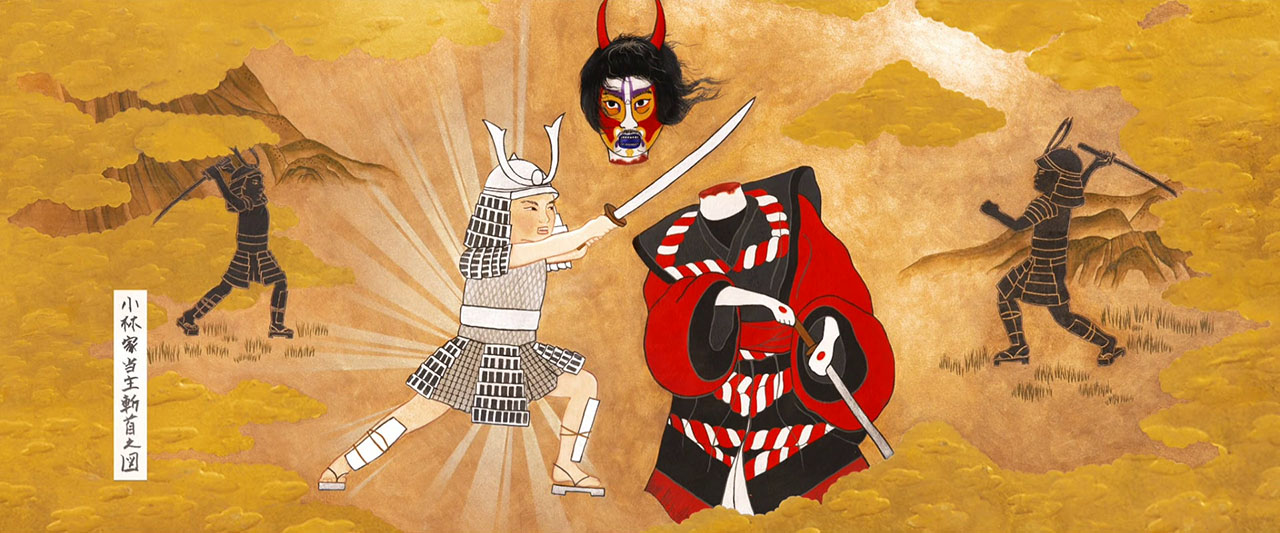
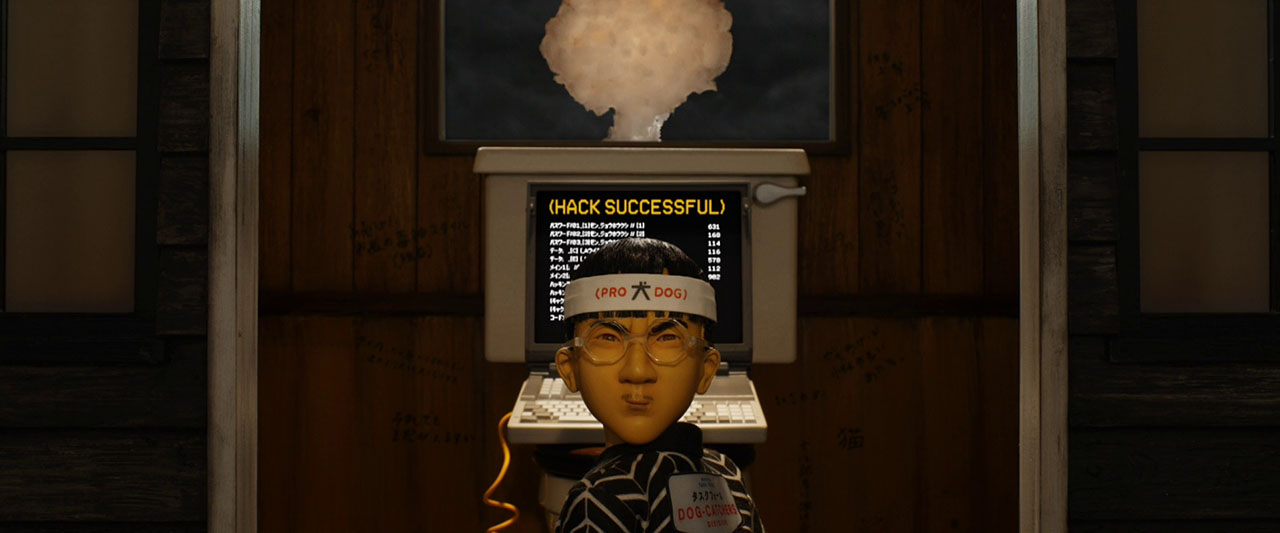
Placeholder post until I watch this again on blu-ray, since it didn’t stay long in theaters. Doomed adventure story in a hopeless land, like a post-apocalyptic Fantastic Mr. Fox. The animation, voice acting, production design all perfect, and an overwhelming joy to watch in theaters. Haven’t yet read the articles about how Wes’s representation of Japan and treatment of women are problematic, so I’m free to love the movie in blissful ignorance, for now.

Things I Can Remember: Yoko Ono is the scientist who leaks the government-suppressed cure for snout fever to the exchange-student leader of the revolutionary youth. The conflicted lead dog of the pack who finds young Atari is a long-lost brother of Atari’s companion/bodyguard Spots, who now runs with a gang of suspected cannibals. And I can’t think too hard about the ending when they swap dog-to-human translation devices because it makes me emotional.

EDIT: watched again two months later on blu-ray

“This is a distant uncle’s worst nightmare”

That familiar Fantastic Mr. Fox feeling… whenever I think about this movie for any reason, I have the strong urge to rewatch it immediately.

Does a good job building suspense, throwing misfortune and accident (and a nail sticking up through the wooden stairs) into the already-fraught situation of Emily Blunt trying to give birth while surrounded by alien predators who kill anything that makes noise. Some stock horror/thriller bits, including the dad who signs his love to the kids before his sacrificial scream to distract the sound-sensitive aliens from the kids’ hiding place. Great to see Wonderstruck star Millicent Simmonds killing it in another film already.

I watched the movie in an unquiet place… in the future the Marcus Theaters should maybe check which auditoriums are emitting a distracting electrical buzzing sound, and play movies with QUIET in their title on a different screen.

As far as the plotting goes… Calum Marsh said it best on letterboxd: “lol @ john krasinski’s huge expository whiteboard”.

Oh, spoilers.

The Avengers and the Guardians and all the new guys like Strange and Panther collide, as a space monster with a firm belief in genocide as the cure for the universe’s problems kills a few people (Loki, rainbow bridgekeeper Idris Elba, green Guardian Gamora, Vision) en route to collecting the Infinity Stones vaguely mentioned in previous movies. The heroes put up strong resistance, but the movie’s all about personal sacrifices – brothers Thor/Loki, lovers Scarlet Witch/Vision, lovers Starlord/Gamora, foster family Thanos/Gamora/Nebula, barely-just-met-allies Strange/Iron Man. Some are prepared to sacrifice, others aren’t so sure, and their hesitation gives Thanos the edge, so he gets the stones, literally snaps his fingers and kills half of everyone everywhere, including: Black Panther, Scarlet Witch, Bucky, Don Cheadle, all the Guardians except Rocket, and Samuel L. Jackson. We are assuming that either (1) Benedict Wong uses space-time powers or (2) Ant-Man uses subatomic multidimensional powers to somehow undo the carnage, or (3) everyone who wanted out of their contracts got turned to dust and we just carry on with whoever’s left, throwing in some X-Men and Captain Marvel and Young Han Solo or whoever to take their places.

I was worried that with my poor memory of the previous movies, we’d be lost as to the location and importance of each infinity stone, but the movie does a good job explaining stuff without getting bogged down Matrix-style – all you need to remember are the characters. Mostly it’s ‘splosions and wisecracks, as usual, and those are on point. We dug Peter Dinklage as a giant dwarf weapons forger, can’t make myself care about Young Spider-man or Iron Man’s wedding to Gwyneth Paltrow, didn’t miss Hawkeye. Was warming up to Strange, surprised to see him and Panther turned to dust already. It’s disappointing that these movies are doing the same things as the X-Men series but in a different order… I suppose next we’ll get Avengers: Days of Future Past.

I liked Ricky’s Spiral Jetty and his comment about using the shorts to work out ideas before shooting his first feature, so I contributed to the feature’s kickstarter last year and got a bunch more shorts as thanks.


The Stranger (2011)

This one tells a more dramatically straightforward story (and is more of a comedy) than the other three. Wide b/w, divided into chapters, with some nice Hungarian music and heavy droning narration.

“I’m not ideologically complicit about anything. I read Zizek.” Sarah-Doe Osborne and her man Michael Wetherbee are students who just moved into the perfect new apartment. They humor a stranger who asks to stay with them, then quickly convinces them to leave their lives behind and join him. “He said that moving and living with him would turn us into more admirable and interesting people.” They quit their jobs, drop their classes, tear up all their issues of The Nation and Film Comment, then there’s a quite long montage of city scenery, and the stranger never returns.


Pilgrims (2013)

Wetherbee is back as narrator, but now he’s a friend of the couple from The Stranger, who get mentioned. He’s stuck inside with health problems as protests rage outside, visited by a couple of friends and a priest. This one’s in color, dividing scenes with handwritten diary entries (some nice German music). No narration over the final unreadable entry, then he’s passed out on the ground, followed by still shots of the apartment (echoing the city scenes from the end of the previous short – these are playing well as a group).


Six Cents in the Pocket (2015)

Wetherbee in color again, but female narration – letters from Risa, whose apartment he’s staying in while she’s on vacation. Wetherbee takes a picture from the house to get reframed, goes to the movies and coffee shop and bookstore, gets stood up by dark-haired Ananda, runs short on cash (L’Argent-referencing transaction shots), visits Risa’s sister (hey it’s someone I’ve seen before, The Unspeakable Act star Tallie Medel) then learns Risa isn’t going to make it home (“460 on jet die in Queens crash”). Some nice… Italian music? Another city montage, and this one and Pilgrims both feature Wetherbee doing his own thing in an apartment while there’s chaos in the city outside. The list of thanks in the closing credits add a new familiar name with each film: Fendt, Piñeiro, Sallitt.

“I’m exhausted, I can’t remember who’s alive and who isn’t.”

Following The Road Movie, here’s another Russian dark comedy with segments that went over my head (because I didn’t try very hard to keep track who was who). The first thing I noticed is that this is a real movie, with a proper script and professional-looking camerawork and editing. I point this out because In The Loop felt like a big-screen version of a Thick of It (or Parks & Rec, etc.) episode, loose mobile cameras, cutting only for laughs and covering (sometimes badly) for dubbed lines and alt takes. Now that we get what I’ve been craving, an Iannucci movie with proper lighting and fancy sets, I guess I’ll take the In The Loop version after all. Great performances in both, but if that fake-documentary style is what’s needed to keep the comedy sharp and constant, then so be it.

This still might end up being the funniest movie of the year, with ringers Michael Palin, Steve Buscemi and Jeffrey Tambor as members of Stalin’s inner circle who start jockeying for position the moment their feared leader has fallen, having choked while laughing at hate mail sent by musician Olga Kurylenko (To The Wonder). The ringers are joined by Paul Whitehouse of The Fast Show, army leader Zhokov (Jason Isaacs of the first Resident Evil), Simon Beale (Rachel Weisz’s older husband in The Deep Blue Sea) and some others, and eventually Stalin’s idiot son Rupert Friend (Homeland) and daughter Andrea Riseborough (who also costarred with Olga K. in Oblivion).

Stalin’s children:

I’m not gonna recount every humiliation and double-cross (though Beale does end up dead and on fire) because that’ll take some of the fun out of watching this again in a few years. The blatant criminal behavior by weak-minded, disloyal men in high government offices didn’t remind me of anything in particular, no sir, just a bit of fun.