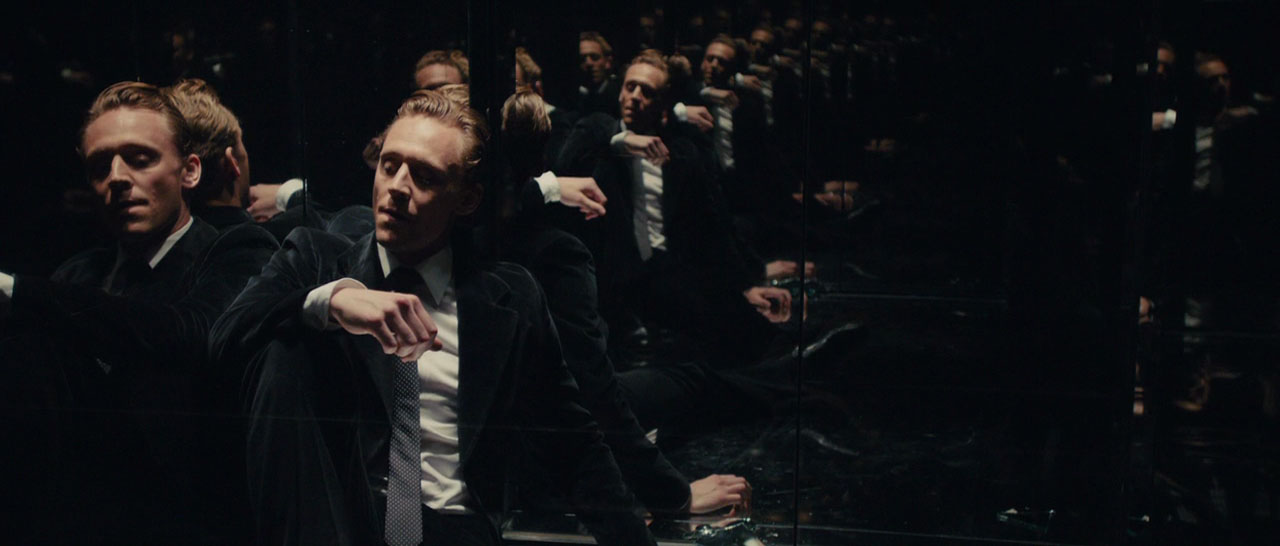
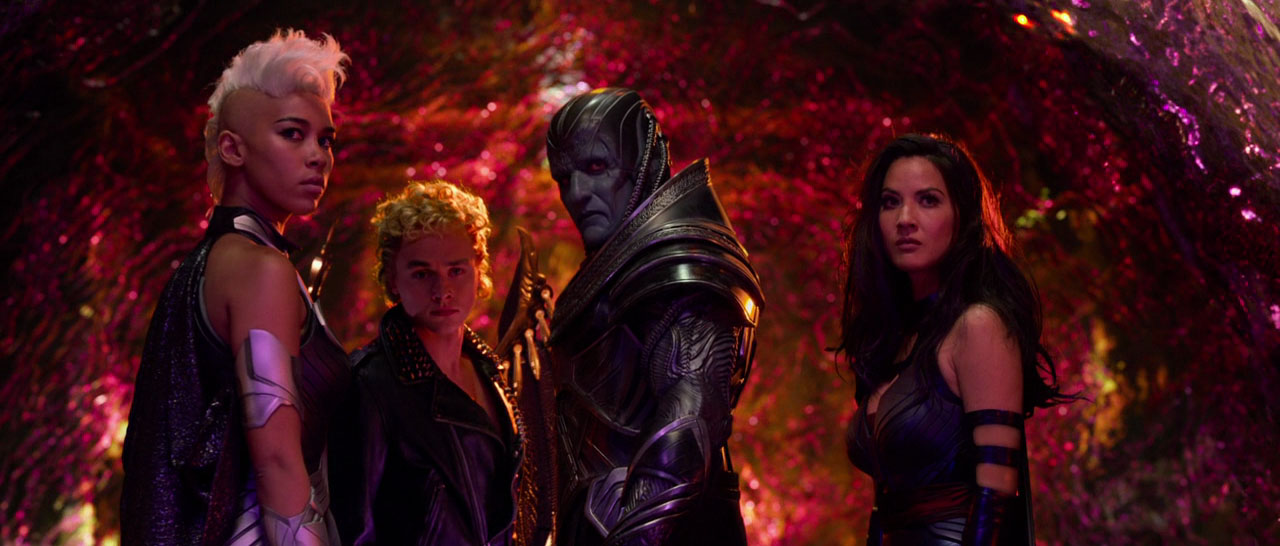
Finally watched this Laika movie. I love love loved the look, beautiful stop-motion with ghostly effects. A total visual triumph, and I wish we’d caught it in theaters. Didn’t expect the screenplay to suck, though. Overall story is fine, weird kid in town can see ghosts, has to use his powers to save the town from a vindictive witch, but most of the plot points and dialogue were boring and obvious, led by a veritable who-cares of voice acting. Maybe it’s just because we watched it on Halloween (Katy’s sole SHOCKtober film) and treaters interrupted the movie every five minutes so I couldn’t get sucked into its particular atmosphere.

The cast:

The crew:

“His favorite band was the Electric Light Orchestra. But now, he was president.”

Fascinating story of Muammar Qadaffi, history lessons combined with Tarkovsky and De Palma clips. Not as fanciful with the stock footage as earlier docs since Curtis has real news footage for most of his story now. Been pondering the movie title in different contexts. Might have to watch this again a few times.

EDIT: watched this again with Katy in the fake world of May 2017.

The famous painter Hokusai and his daughter O-Ei work in the same house, sometimes finishing each other’s works. She likes a dreamy guy, but some doofus guy likes her. She has a blind sister whom Hokusai never visits, and the sister takes up about half the movie. A few moments of grace (the paintings coming to life, blind girl making snow angels, geisha whose head escapes at night) enliven an ordinary story that opens awkwardly with out-of-place guitar rock then limps along to the end after the blind girl dies. Katy says the advertisements were misleading, implying that O-Ei would break free from her dad’s shadow and find her own style.

This is more a collection of music videos broken up by vignettes (words by Somali poet Warsan Shire) than a feature film or any sort of documentary. After the Nick Cave movie I thought perhaps I’d watch this and Frank Ocean’s Endless, the three 2016 albums which were released as movies, but the Ocean is still a store-exclusive (for future study: Let England Shake, Centipede Hz and Beyoncé’s previous album).

Pray You Catch Me:

Hold Up:

Sorry:


But oh, what music videos – some of the best photography and movement and costume/makeup design of the year, illustrating the greatest concept album of the year.

Daddy Lessons:

Love Drought:

Forward (Michael Brown and his mother):


Cinematographers include Malik Sayeed (He Got Game, Clockers), Reed Morano (Vinyl, Kill Your Darlings) and Khalik Allah (Field Niggas), and codirectors include Kahlil Joeseph (The Reflektor Tapes) and Mark Romanek (Never Let Me Go).

Formation:

Reichardt’s darkest movie, thematically and visually. Extremist environmentalist Jesse Eisenberg blows up a dam along with Dakota Fanning (providing the funds) and Peter Sarsgaard (handy with explosives), killing a camper with the ensuing flood. Days later, Dakota is freaking out from guilt, so Jesse murders her, then flees into the anonymous suburbs.

A. Stoehr:

They’re young, sensitive, brooding, idealistic — not tortured, exactly, but stung by the feeling that they have to do something and totally destroyed by the something they end up doing.

V. Rizov:

The middle-aged suburban guy selling his fishing vessel couldn’t be more innocuous in his personal manner, but we see his neighborhood through Josh’s angry eyes: the backyard waterfall is a clear misallocation of resources, the golf on TV the final insult … The way Contagion forced viewers to see every surface as a potential viral breeding ground rather than an neutral object, Night Moves makes it easier to view the everyday world’s physical components through perpetually, justifiably aggrieved environmentalist eyes.

Night Moves has a hint of a repeatedly disenchanted activist’s understandable bubbling-under stridency while adding to Reichardt’s gallery of would-be liberal American citizens navigating a hostile landscape already shaped and perhaps permanently ruined by those who came before.

Reichardt:

What should anybody be doing right now? No answer was discovered in the making of the film for that question.

“I can still get a fair way into a film and not know when the fear will come, or where from.”

One last SHOCKtober entry. The one-two punch of 31 and Neon Demon almost murdered the season prematurely, but I decided not to give in to despair. This was a supercut of horror films – including some interesting less-horror choices like Code Unknown and Post Tenebras Lux and Gravity – with a moving voiceover essay about fear and death in both film and real life.

Uzumaki:

Feels like it wants to be Mulholland Drive-ish, as young beautiful Elle Fanning arrives in the L.A. fashion business and experiences nightmarish visions before she’s eaten alive by her competitors. Dialogue delivered in weirdly silent rooms – I was expecting more keyboardy soundscapes, and maybe that would’ve helped get me on the wavelength of cool horror and deep mystery the movie seemed to think we were on together.

Elle is the Fanning from Super 8 and The Boxtrolls (older sister Dakota is the Fanning from Night Moves, War of the Worlds and Coraline). She arrives in town with her photographer friend, Karl Glusman from Love – another lethargic, sex-minded movie I had to struggle to keep from turning off. Elle meets makeup artist Jena Malone (the girl Donnie Darko likes) and a couple of evil models, gets work with famous photog Jack, and avoids her awful landlord (a miscast Keanu Reeves).

M. Sicinski:

Neon Demon is an inert object, mostly comprised of color-saturated tableaux and walking-dead, anti-psychological “performances” … Much like Matthew Barney’s films, The Neon Demon delivers in chunks and slabs, but never seems cognizant of cinema as a time-based art.

Bloody mess (in both bad ways and good) of an occult horror movie. I missed Na Hong-jin’s The Chaser and The Yellow Sea – finally checking him out for SHOCKtober this year. Lead policeman Jong-Gu (Kwak Do-won) is round-faced and dim and quite bad at his job, like Song Kang-ho’s character in The Host crossing over into Memories of Murder. He investigates a local family murder which is eventually blamed on “some fucked-up mushrooms,” and it seems like his incompetence is gonna be played for laughs until another family is killed and then his own daughter Hyo-jin starts showing the signs of possession that the other murderers displayed.

Jong-gu and his partner torment a Japanese man who recently moved in (Jun Kunimura of Chaos, Audition and Kill Bill), illegally searching and destroying his property. When the Japanese man’s dog is killed and he’s chased almost to death through the woods I started to feel bad for him, but then again he’s got a photo wall of the recent killers and victims at home, and turns out to be an evil ghost. There’s a mysterious woman who may also be a ghost, a showy shaman (Hwang Jung-min of A Bittersweet Life), naked cannibals and blood-eyed zombies, and the police all seem outmatched. Oh, and someone gets struck by lightning. I’m not always sure which parts were plot twists, and which parts were just me not being able to follow where the horror is supposed to be coming from now.

D. Ehrlich:

Demented occult nonsense that gradually begins to feel less like a linear scary story than that it does a ritualistic invocation of the antichrist … The Wailing boasts all the tenets and tropes of a traditional horror movie, but it doesn’t bend them to the same, stifling ends that define Hollywood’s recent contributions to the genre . The film doesn’t use sound to telegraph its frights a mile away (there are no jump scares, here… well, maybe one), nor does it build its scenes around a single cheap thrill. On the contrary, this is horror filmmaking that’s designed to work on you like a virus, slowly incapacitating your defenses so it can build up and do some real damage.

What a disappointment after the great Lords of Salem. All I can think is that Zombie was contractually obligated to deliver another full-length movie by the end of 2016, and after touring his band nonstop he ran out of time, so threw some actors and makeup artists in an abandoned factory and said “go nuts, we’ll film it and add some Malcolm McDowell scenes later to explain what’s happening.”

Sheri Moon and beardy Jeff Phillips and Meg Foster return from Salem, minus Ken Foree and Dee Wallace, plus two new black guys to be killed first (to be fair, Lawrence lasts quite a while). Malcolm in foppish powdered wig gambles on annual deathmatch with Jane Carr and Judy Geeson, sending waves of killers into the factory after our abducted carnival gang until only Sheri and “Doom-Head” (Richard Brake of Halloween II, whose makeup keeps changing in the opening scene) remain. Dialogue is mostly “fuck, fuuuuck” and camerawork is handheld garbage. Insultingly, the movie only got a single showtime and was billed as a “special event” with higher ticket fees, but joke’s on the theater since only six people showed up.

AV Club:

31 is set almost entirely within a smoky, leaky, dimly lit factory, like something out of a bad hair-metal video, and it has the structure of an especially half-assed video game, as the survivors creep from one boss battle to the next, confronted by assassins of escalating formidability: a little person done up like Hitler, slinging insults in unsubtitled Spanish; two clowns with chainsaws, cackling about “fucking all your holes”; a flirtatious Harley Quinn clone with a giant European partner … a messy mishmash of shit he’s done better before.