Cafe Bar (1974, Alison De Vere)

Imaginative – couple sitting at a cafe table create and remove disguises, fight dinosaurs and minotaurs, turn into The Red Baron, trek across each other’s heads and ski down each other’s fronts. Looks like this was the first of a few essential animated films De Vere made.


Manipulation (1991, Daniel Greaves)

Covered this before in an Oscar-winning shorts roundup, but rewatching with much nicer picture quality. Generic dude is drawn by animator then discarded, but the dude becomes sentient, plays with drops of ink, worries about his 2D nature. Animator torments the dude for a while until he explodes with rage, becoming freed from his paper prison. It’s fully wonderful. Looks like Greaves put out a new short, Mr. Plastimime, since last time I watched this, playing last year’s Edinburgh fest.


Little Wolf (1992, An Vrombaut)

The littlest wolf in a sheep-hunting wolf parade gets himself stuck on the moon. The others try to get him down while the sheep interferes. I especially liked the “doyyng-doyyng” sound effects. The director is Belgian, has lately been making animated kids’ TV series. According to her website, she likes giraffes very much.


Oozat (1992, Darren Walsh)

I love stop-motion with human actors. Here they’ve got replaceable facemasks with different expressions. Dude meets some guys, drinks with them at the pub, shows a different face to the lady sitting next to him, eventually mixing up his faces. I think Walsh is the creator of Angry Kid, the red-haired Aardman stop-motion hooligan I used to see… somewhere. MTV? Cartoon Network? And he worked on a Black Mirror episode I haven’t watched yet.


Deadsy (1990, David Anderson)

I think Deadsy was a disturbed young man who became a rock star then a transsexual, his story told through beat-poem narration and a mishmash of animation techniques. Not my favorite. Writer/narrator Russell Hoban was a prolific sci-fi and childrens book author… not sure what happened to Anderson.


The Sandman (1991, Paul Berry)

Timburtonian stop-motion. Kid goes to bed and a moon-faced birdman stalks into his room and steals his eyeballs to feed to baby birdmen. Cool and creepy. Based on a tale of Hoffmann. You wouldn’t think this story had been adapted for film ten times, but according to IMDB you would be wrong. Oscar-nominated the year Mona Lisa Descending a Staircase won. Unsurprisingly, Berry was later an animator on The Nightmare Before Christmas.

An unusual affair/despair story in that it felt less judgemental of the married woman than most of these. I suppose you could double-feature it with Carol, another beautifully-shot, woman-led affair/despair period drama made by a gay man.

Rachel Weisz is married to rich, older lawyer Simon Beale (of Orlando), is at the end of a formerly-passionate affair with Beale’s club buddy Loki, a hot young pilot who can’t handle settling down now that the action has ended. Rachel contemplates suicide by train and by gas, gets reluctant acceptance by her patient husband, doesn’t actually kill herself (though playwright Terence Rattigan based the story on his lover’s suicide).

Adam Cook:

Although Davies cleverly blends timelines and uses novel scene transitions the film is still, by and large, dogged by the static nature of its source material … The performances, particularly from a never better Rachel Weisz, are all magnificent. They manage to be both heightened and restrained, something only Davies manages to achieve in his work.

Shot by Florian Hoffmeister (Mortdecai, The Prisoner remake). The play has been filmed a few times before. A 1990’s version with Penelope Wilton, Colin Firth and Ian Holm sounds promising. Vivien Leigh starred in a 1950’s Anatole Litvak film. And a strange 1999 version has Samuel L. Jackson getting eaten by a shark.

It says a lot about the tone of your movie when Burial is your theme music – beautiful but fragmented vocals overlaid on a sprawling, complicated song structure. The original song even opens with the dialogue “excuse me, I’m lost.”

I learned a new word: Wahhabism. Movie gives a history lesson on Saudi Arabia and Afghanistan, then leads into the present debacle, which seems even more hopeless after watching this. Combo of staged material with rough outtakes from news footage and who knows what else. Afghanistan is compared to the planet Solaris. None of our leaders are any good at leading. Everyone is hugely corrupt.

The movie goes for long stretches without voiceover or titles – a new approach for Curtis – though not as long as the Bitter Lake trailer would suggest.

Worst part: Afghani government officials are super corrupt. Local police force become evil militias, suppressing the people. British troops don’t know this, arrive in town offering to help the local police. Townspeople say oh great, more oppression, and attack British troops, who assume they’re Taliban and bomb the shit out of them. Eventually, fighting factions realize British troops think anyone hostile to them is Taliban, start telling the Brits that people they dislike are Taliban, basically using the Brits as hit men.

The woman Julia Roberts played in Charlie Wilson’s War:

Or Don’t Speak Ill of the Dead, or The Living Dead at Manchester Morgue – all good titles, but I’m going with the name on the Anchor Bay box that used to stare at me from the shelves, unenticing with its generic cover art. Turns out it’s quite a good zombie movie, tense and well-photographed. It’s just like Night of the Living Dead but with a couple extra locations (incl. Manchester Morgue), but the hidden social message in this one is that cops are just the worst. They’re bad at their jobs, abusive, intolerant, and finally cold-blooded murderers.

Zombie Prime:

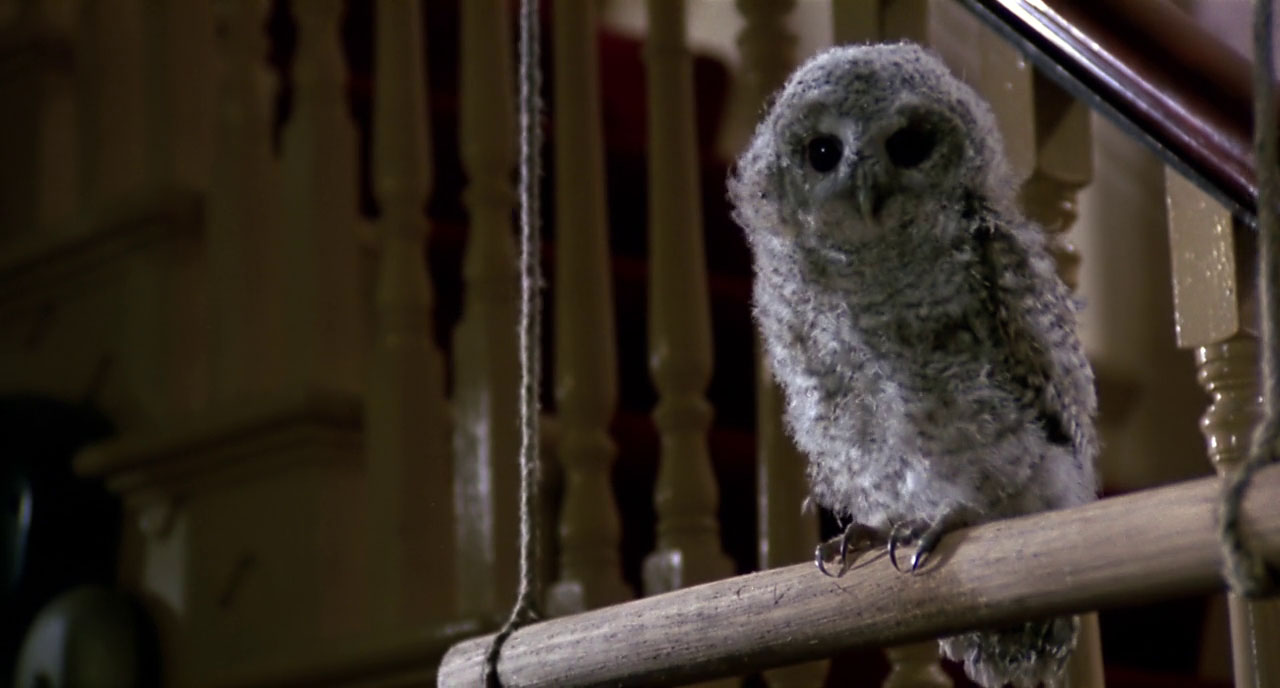
They stay at The Owl Hotel. Pet owl:

Shaky start as George (Ray Lovelock of Queens of Evil and Oh, Grandmother’s Dead) meets Edna (Cristina Galbo of The House That Screamed and The School That Couldn’t Scream) when she runs over his motorcycle, then they squabble over where she’s going to drive them. Good enough dubbing, better than any Italian movie. But these two aren’t very exciting. Fortunately, they agree to visit her sister Katie (Jeannine Mestre of Jesus Franco’s Dracula) and Katie’s husband Martin (Jose Lifante, a desk clerk in Dagon), who hate each other and live near the field where some jerk scientists are pumping radiation into the ground to keep pests away from crops, which also turns babies and the recently-deceased into violent killers.

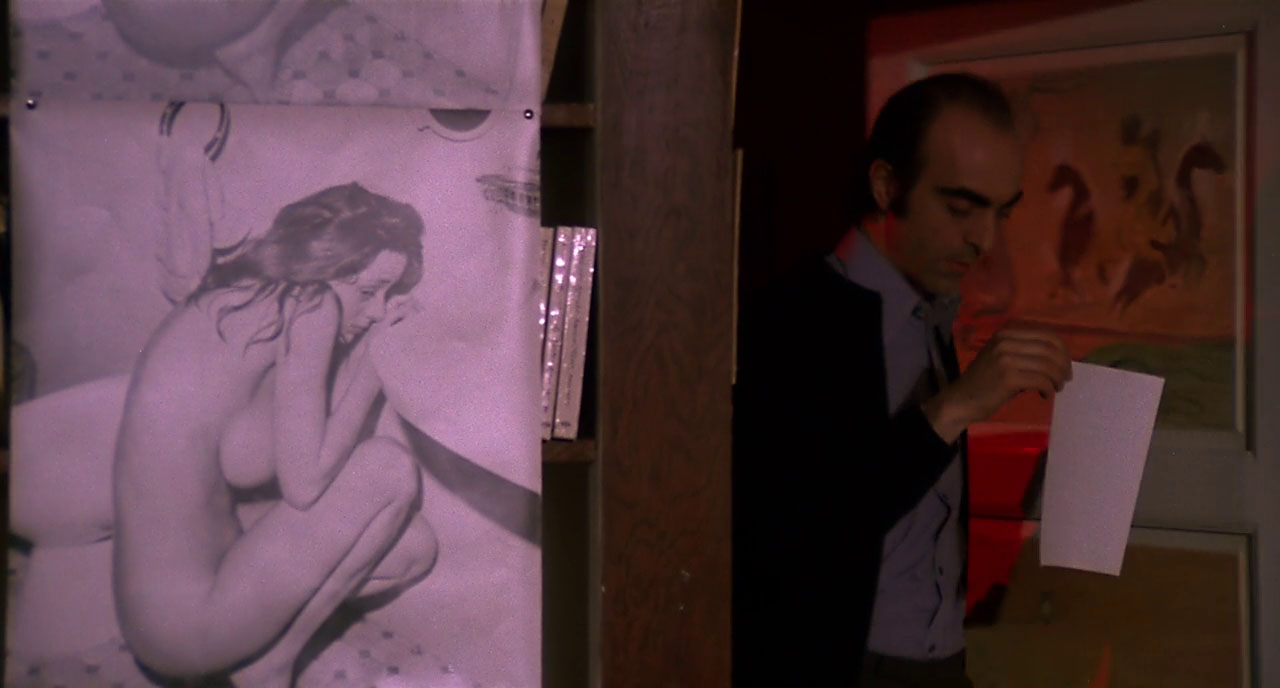
Martin’s hobby is taking photographs of his naked, afraid, drugged-out wife and hanging them around the house:

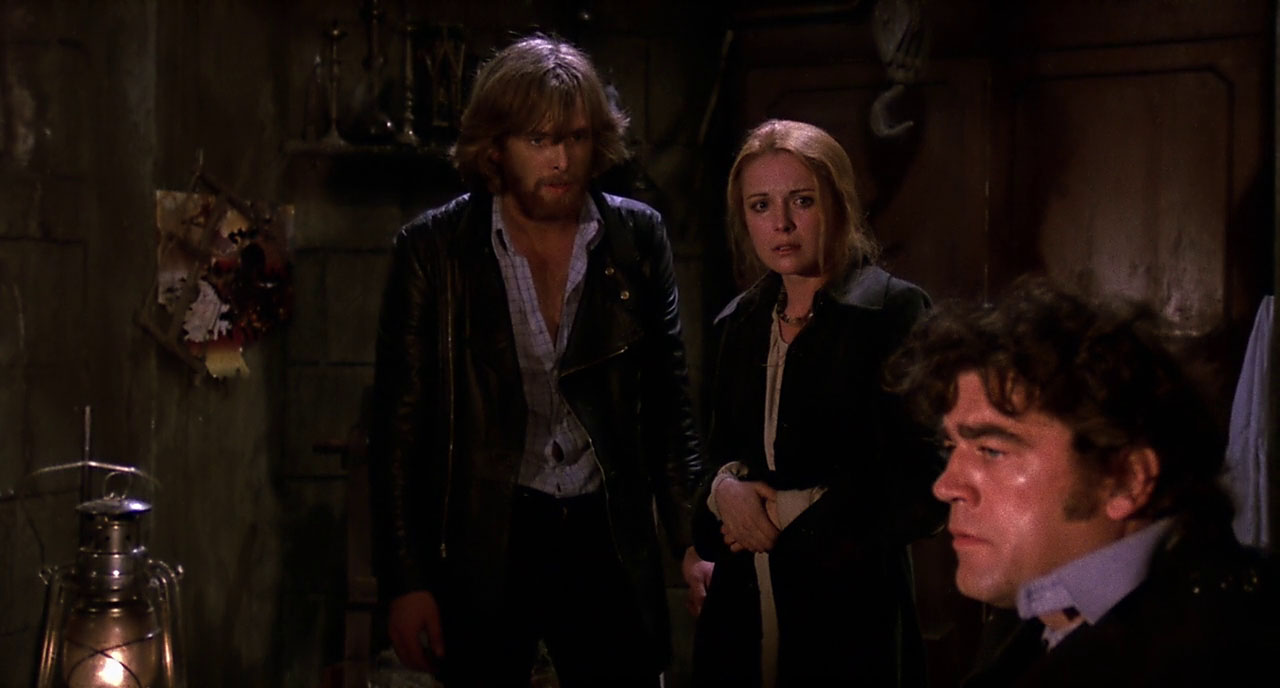
Our heroes, trapped in the morgue with the only decent cop, PC Craig:

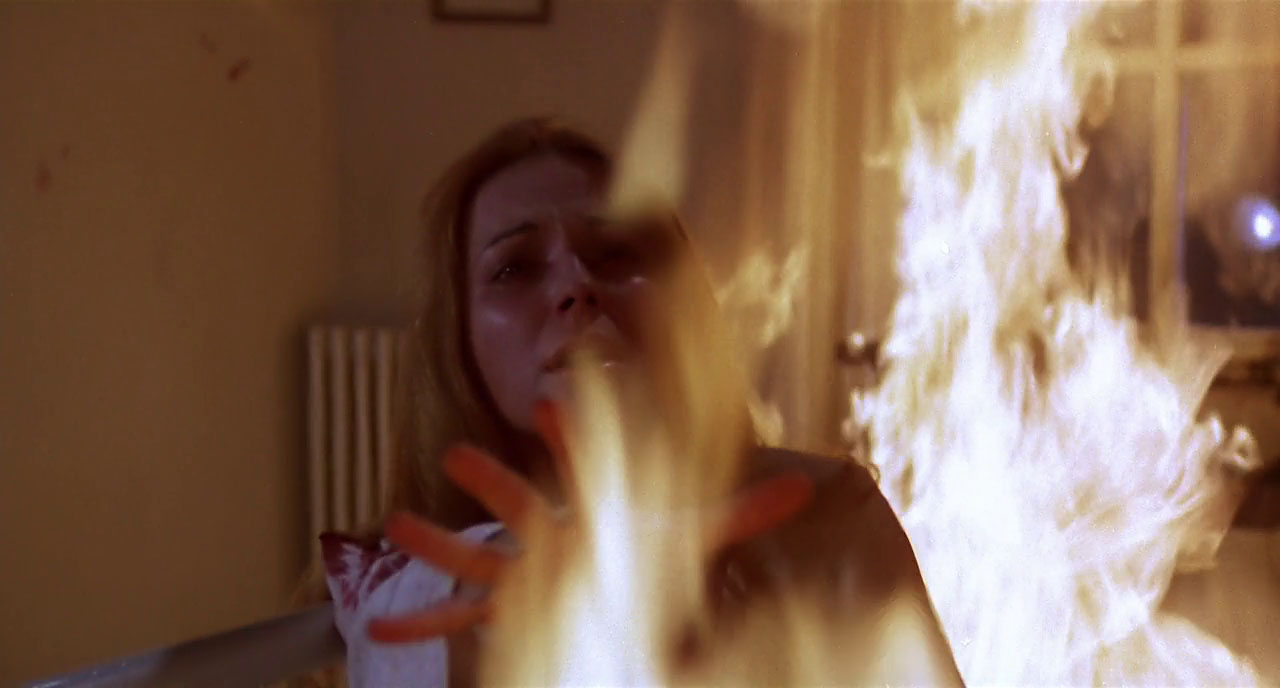
Martin is crushed to death by a wandering zombie, and enter Sgt. Aldo Massasso (of The Suspicious Death of a Minor), who immediately blames the wife because she’s a heroin addict and has her locked up in hospital. The movie’s zombie mythology gets weird, as we’re told zombies can’t be photographed, and “they transmit life to each other through the blood of the living.” Martin eventually resurrects and kills his wife, but the movie is mostly focused on biker George’s attempts to escape zombies and tell the damned scientists to turn off their machine, and the Sarge’s attempts to arrest George and Edna, who he’s now telling everyone are satanists. In the end George is screaming towards a zombie-infested hospital in a stolen police car pursued by bigot cops to rescue the woman who wrecked his motorcycle and ruined his weekend, and I’m wondering why he bothers. Then Katie is infected and set aflame, and George is shot by the cops (have I mentioned Night of the Living Dead lately?).

Things don’t end well for PC Craig:

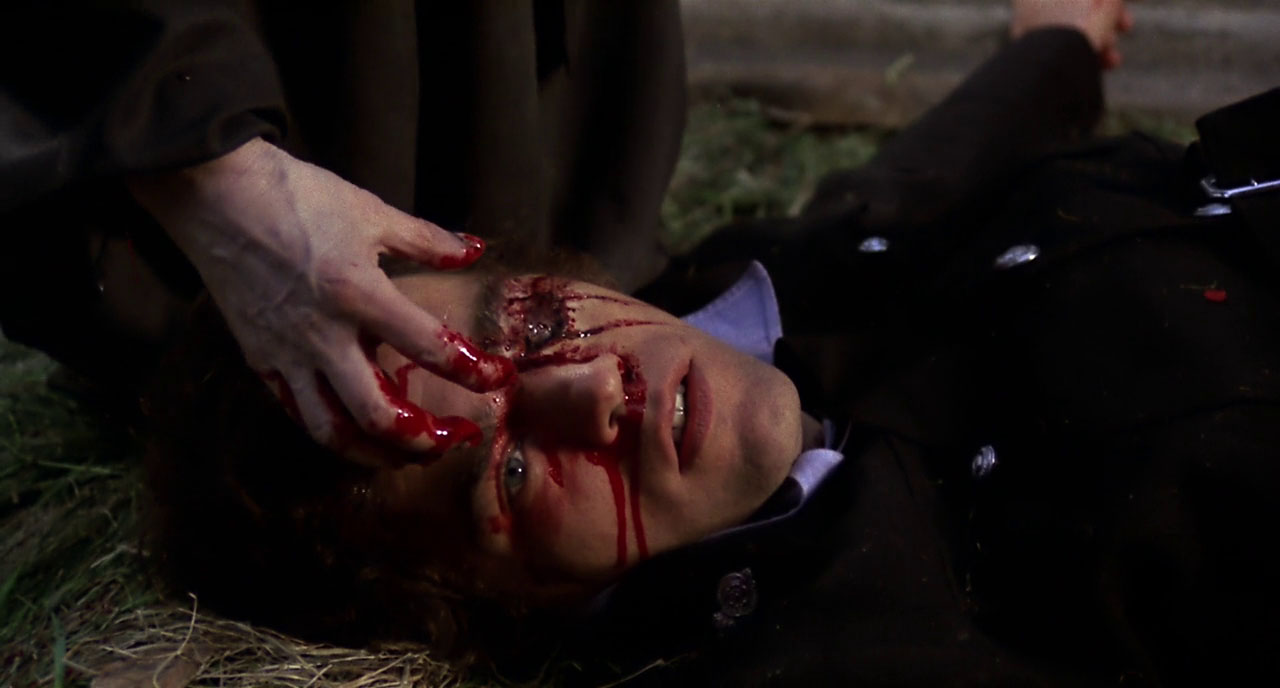
Nor for Edna:

Jorge Grau previously made Violent Blood Bath and The Legend of Blood Castle. Cinematographer Francisco Sempere also shot Blind Man’s Bluff and Death Will Have Your Eyes. Cowritten by Sandro Continenza (Crimes of the Black Cat, Hercules and the Captive Women) and Marcello Coscia (Virgin Killer, Tex and the Lord of the Deep).

Can’t figure out why this was made – straightforward haunted-house murder story with predictable twists, feeling at times like a remake of The Devil’s Backbone minus the evocative wartime setting. One character sees ghosts that lead her to the truth behind some murders, ghosts have similar look to the earlier film, phantom blood emanating from cracked-china holes in their translucent faces. But it’s undeniably a beautiful film, sumptuously designed with gorgeous candlelight and shadows and snowy mist, falling leaves, costumes, big creepy crumbling house, and so on. Nice iris-out effects complete the period look. Definitely good to see Guillermo returning to his gothic-horror roots – an enjoyable film to soak in, leaving me satisfied without that post-Martian malaise.

Mia Wasikowska has become a fave of scary/creepy movies (Stoker, The Double), plays a bookish New Yorker with rich dad Jim Beaver (TV’s Deadwood and Supernatural). Incestuous baron siblings Loki (Mia’s Only Lovers Left Alive costar) and Jessica Chastain (Take Shelter, Interstellar) are in town raising funds for their clay-excavation machine. Loki marries Mia and takes her home to England where she discovers he does this a lot, and the bodies/ghosts of his previous rich-girl wives are buried in red clay pools in the basement. Pacific Rim star Charlie Hunnam is Mia’s friend from home who comes to her rescue. Did I mention that Jessica Chastain is an axe murderer? That’s something you don’t expect.

Aging couple has run a close-knit drug operation for many years. The week after patriarch Bill and emotionally unstable son Karl get out of jail, Karl finds out his girlfriend is pregnant and Bill shakes up his friends, ends up killing most of them, trying to determine if someone ratted. Low-key movie with nice gradual escalation into ultra-violence. Cowriter Robin Hill plays Karl, his dad Robert Hill plays his dad, his wife Kerry Peacock plays his girlfriend and the great Julia Deakin (Marsha from Spaced) is his mom. Good supporting cast including Wheatley regular Michael Smiley and Tony Way (Edge of Tomorrow, Nine Inch Nails-shirted guy in Dragon Tattoo).

Twisty ending as Karl and gf kill the parents and make their escape. A family and friends affair – Wheatley and Robin say on the commentary that it was even shot in Robin’s parents’ house. They say the concept was to write a dark drama then cast funny people in it (there’s a fair bit of improv in the dialogue).

I guess I’ve seen all Wheatley’s films until High-Rise comes out in a few months. He also wrote for Time Trumpet, directed special-effects sketch show The Wrong Door and some episodes of drug-dealer comedy Ideal. Robin Hill edited Poldark, which I think Katy was watching downstairs while I watched this.

“I should bloody damn and bloody blast and bugger and bloody flaming bloody well think so!”

Terrific and strange, the kind of thing nobody has done before or since (correction: Potter did it years earlier with his Stand Up Nigel Barton). Grown adults portray a bunch of kids playing in the woods on a particularly traumatic day. Director Brian Gibson would go on to direct Poltergeist II, but writer Dennis Potter (the year after Pennies From Heaven) is what brought me here.

The kids play war games and house, while their parents are off at real wars and houses. They hear alarms from the nearby prison and hide. They misuse pronouns. The boys kill a squirrel then get upset about it. Later, they help to kill another boy, pyro Donald who sets the barn alight then gets trapped inside it.

foreground: Colin Welland, 45, of Kes, also writer of Chariots of Fire. with Michael Elphick, 33, of Withnail & I, star of a long-running series called Boon.

Helen Mirren, 34, between Caligula and The Long Good Friday

Janine Duvitski, 27, appeared in the Frank Langella Dracula and The New World

Colin Jeavons, 50, of a bunch of early 1960’s Dickens miniseries, later Blackeyes and Secret Friends

John Bird, 43, was playing Horace Greeley on a series last year

Not pictured: Robin Ellis, 37, known for a Revolutionary War-era series called Poldark.

Down-on-his-luck writer Derrick De Marney (Things to Come, Uncle Silas) gets even worse-on-his-luck when he discovers a dead associate on the beach and witnesses assume he murdered her. The cops have got a suspect with motive (she left him inheritance), so no reason to do any further investigating. So Derrick escapes, hides out with police chief’s daughter Nova Pilbeam (who I also liked in The Man Who Knew Too Much), convinces her of his innocence.

Second Hitchcock movie I’ve seen with an old mill – the scene in Foreign Correspondent was better. Close calls as they journey to locate Derrick’s stolen raincoat to prove that it’s not the same raincoat that murdered the woman, or something I dunno, doesn’t matter because in 1937 all men’s raincoats looked the same so it’d hardly be evidence of anything. They flee from Nova’s constable dad (Percy Marmont of Hitch’s Secret Agent) and her horrible aunt (Mary Clare of The Lady Vanishes and the silent non-Hitch The Skin Game), get help from the bum with the raincoat (Edward Rigby of A Canterbury Tale), and finally track down the twitchy, blackfaced (argh) murderer (George Curzon of Q Planes, Jamaica Inn). It’s all a good bit of fun, if not as outstanding as The Lady Vanishes and The 39 Steps.

“Beer has its own way of sorting things out.”

Julian Barratt (Mighty Boosh’s Howard Moon) seeks Whitehead, is looking for a field, then abruptly dies. Whitehead (Reece Shearsmith, a lead in The League of Gentlemen series) will be our movie’s lead coward, joining with some companions in a field in the midst of a filthy war in search of his dead master’s nemesis O’Neil, who stole some papers I guess.

Companions: hood-wearing Friend (that’s his name, took me all movie to figure it out) played by Richard Glover (minor role in Sightseers) with a great low voice, wide-hatted Cutler (Ryan Pope of TV’s Ideal), Jacob (Peter Ferdinando of serial killer movie Tony). They finally find O’Neil (Michael Smiley, the lead guy’s co-hitman in Kill List) at the end of a long rope (?) and a struggle ensues.

The point is less the war, the companions, the stolen papers and struggle than the weird ride. There’s a game of tug-o-war vs. mystical forces, poop humor, many mushrooms are consumed, Whitehead fasts then vomits runestones and the dead don’t stay dead. Maybe it’s Jodorowsky-influenced, seeming mythical without making any proper sense.

Set during the English Civil War, 1650ish, which reportedly caused some trouble coming up with period-appropriate words. The dialogue is great when you can make it out, which we couldn’t on my dad’s surround system (was fine in headphones). Writer Amy Jump and cinematographer Laurie Rose also worked on the other two.