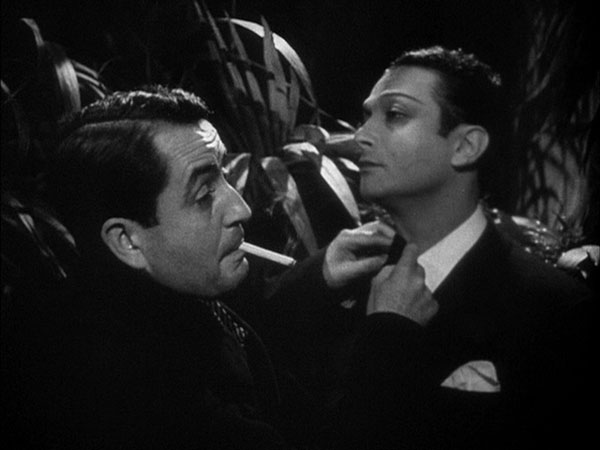
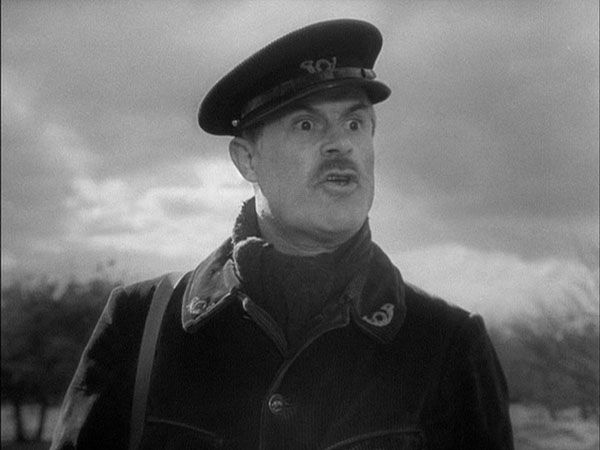
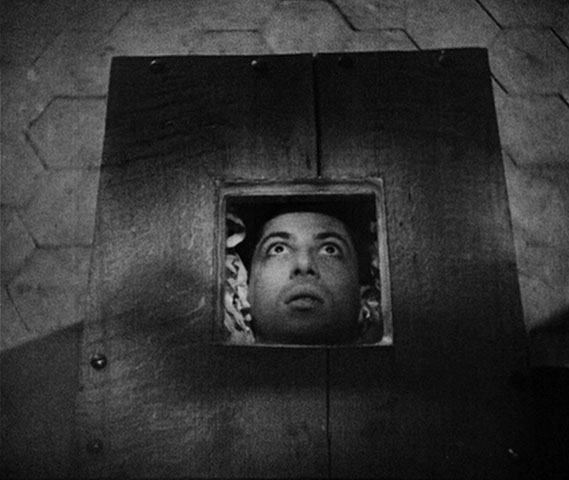
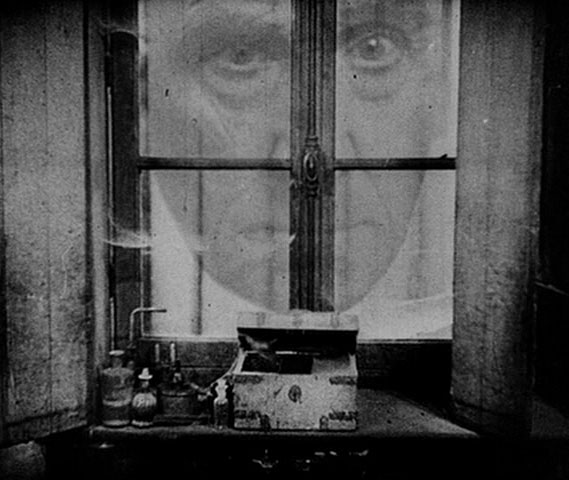
A total trip, better than I’d dared hope it would be. Would’ve been soooo nice to see in theaters, but I’ll settle for the multi-narrated DVD. Even more family-focused than Cowards, it also goes further inside the psyche of the Maddin character than that one did, with his flashbacks and memories and fantasies splayed out on the screen, cutting and fading into whatever “reality” he’s seeing at the time. Black and white, great-looking photography with subliminal flashes of color. Attractive and expressive actors do a great job with the gonzo plot before the editing rips it to pieces. More obsessions on dead fathers, hands (gloves), infidelity, sexual transgression, betrayal, and memory oh the memories!!

Shotput of butter!
image

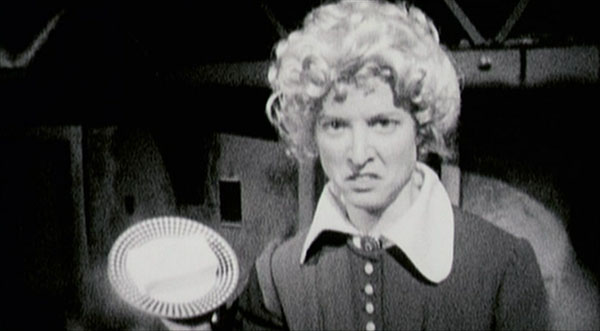
Briefly: Adult Guy Maddin returns to his childhood home, an island lighthouse orphanage, by request of his dying mother. As he paints the place he remembers his life there with older sister Sis, forbidding faux-suicidal Mom, mysteriously hard-working Dad, twitchy traumatized friend Neddie, and leader of the orphans Savage Tom. One day teen detective Wendy Hale comes to the island, but after she falls for Sis (and Guy falls for Wendy), she disguises herself as brother Chance Hale, leading to much sexual confusion for poor Guy. With the kids, Wendy finds out the terrible secret, that Dad is stealing brain nectar from the orphans (and from Sis) and selling it. Sis awakens one night and kills Dad with a knife, Guy is adopted off the island, Dad is resurrected then both parents are exiled and, after Wendy leaves, Sis burns herself up like a moth in the lighthouse lamp. Back in the present, Guy is still obsessed with Wendy, tries to get to know his mother better, and there’s almost a semi-happy ending before the melancholy memories take over once more.

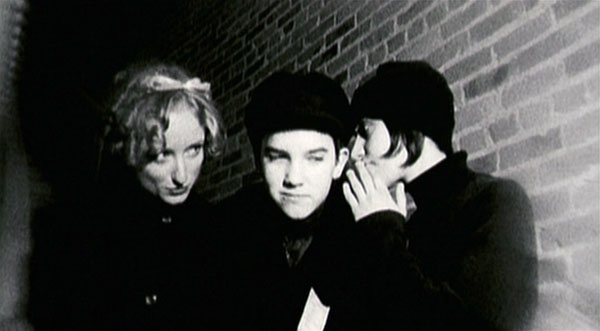
Conspirators! Guy in center, Sis on left, The Lightbulb Kid whispering:
image

New cinematographer (sorry, but you can’t tell), same editor as Cowards Bend The Knee (you can kinda tell), and music that I’d swear was influenced by the 60’s Russian song used in Heart of the World. Features no actors from anything else I’ve ever heard of (well, Guy’s mother was 33rd-billed in Henry Fool).

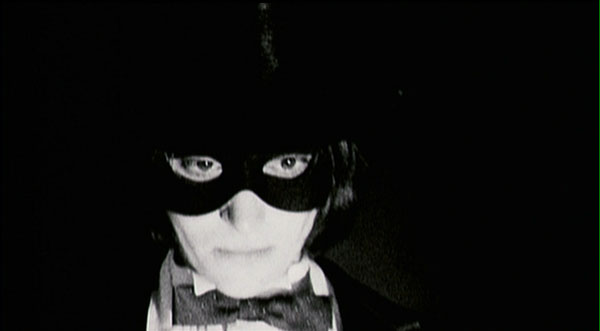
A rare glimpse of color:
image

The shorts on the disc are cool, too. It’s My Mother’s Birthday Today is a “biopic” (heh) of the “castrato” who sang with the live show – a few minutes of abstract business, with the vaguely Scott Thompson-looking guy making hard-boiled eggs and singing with a caged bird. Footsteps juxtaposes scenes from the movie with the sound crew in their lab doing foley effects, including some questionable techniques of bare-butt-slapping and horse’s-ass-kissing. Slower-cut than My Mother’s Birthday but even more fun to watch.
image

image

image

Katy wanted to close out 1930’s Month with something Great, an acknowledged classic, something she is supposed to have seen but hasn’t, so I picked the one-time Greatest Film of All Time, Rules of the Game.

An amazing looking film indeed, with some fabulous, intricate staging. Some character, actor and plot notes before I forget them yet again:

image

from left to right:
1 Andre the pilot (Roland Tautain, played “the sailor” in Lang’s Liliom) just completed some impressively long news-making flight in order to impress Christine.
2 Octave (Jean Renoir, in his final role as a film actor. He wouldn’t make another film in France until The Golden Coach 14 years later). Friend to all, father figure and wannabe-lover to Christine, a short-lived fantasy. He turns darker (along with everything else) towards the end, realizing he’s a comic figure leeching off his rich friends, goes off to make a belated attempt to be self-sufficient.
3 Robert (Marcel Dalio, had appeared in Renoir’s Grand Illusion and would later have smallish parts in films by Hawks, Fuller (China Gate), Huston and Wyler), very rich but insecure, likes noisy mechanical inventions, has a gorgeous wife in Christine but also a long-standing affair (which he is trying to break off) with Genevieve (Mila Parély, would play one of Belle’s selfish sisters in Jean Cocteau’s Beauty and the Beast).
4 Austrian Christine (played by Austrian Nora Gregor, had been a star in the 20’s and 30’s, starring in Carl Dreyer’s Michael, killed herself ten years after Rules of the Game only having appeared in one movie since), a bit naive, thinks she belongs with Robert and that Andre is just a friend, until she catches Robert with Genevieve and it shakes her up.

image

Robert (right) with his “double”, Marceau the poacher (Julien Carette, my favorite actor in the group. He also appeared in the previous three Renoir films, later died from smoking in bed). Marceau wants respectability, gets hired by Robert as an indoor servant, but that doesn’t work out so well, goes off on his own at the end.

image

Christine again (left) with servant/friend Lisette (Paulette Dubost, was in Truffaut’s The Last Metro forty years later, also a couple by Max Ophuls in the 50’s), who is more devoted to Christine and her own position than she is to husband Edouard Schumacher (below). She’s Christine’s lower-class double, married to one man but wanting another.

image

Gaston Modot (Edouard) had been in films since 1909 and would keep it up till the 60’s, appearing in one of Renoir’s final films The Testament of Doctor Cordelier (and previously in Elena and Her Men, Grand Illusion and a couple others), also The Lovers and Children of Paradise. Even cooler, he played the main guy in L’Age d’Or. Edouard is jealous for his wife for good reason, since she’s happy to flirt with Marceau. He blasts through the house with his shotgun aiming for Marceau, later teams up with Marceau and aims for Octave, whom he suspects of hooking up with Lisette in the greenhouse. But due to costume changes he doesn’t realize it’s Andre with Christine in the greenhouse, and Edouard kills Andre.


Katy was disappointed, and disputes it being the greatest film of all time. Personally it’s only my third-favorite of the six Renoir films I’ve seen. I do love it, but I wonder about the best-film-ever label (recently surpassed by the new Batman on the all-time lists, actually), so let’s go to the DVD extras.

Ah, my old nemesis P.Bog reads the commentary, but it was written by Alexander Sesonske.

Renoir called it “a frivolous story” shot to avoid talking about the war… about “a rich, complex society where we are dancing on a volcano.”

Of André Jurieux’s radio speech in the opening scene: “His angry charge of disloyalty violates the rules of the game from the very start.”

Critics cried that Renoir cast an Austrian actress and a French jew to represent the French aristocracy.

“In a society of sharp class distinctions, Octave appears as a classless character.”

Plot shows two matched sets of husband/wife/lover/mistress and interceding friend:
1. Robert/Christine/Andre/Genevieve – Octave
2. Edouard/Lisette/Marceau/Christine(?) – and maybe Octave again.

Initially “The servants seem more sensitive to impropriety than their masters.”

“Those who know Renoir films may recognize a familiar figure, for Marceau is the incarnation of that nature god or pan figure who often graces those films from Tire-au-flanc in 1928 on. In a world where nothing is natural, it only appropriate that the nature god should appear as a little poacher in disguise and be pursued with deadly intent by a gamekeeper… But his influence remains the same. When he appears, erotic influences stir in human hearts. That these impulses are destructive rather than creative becomes one more Renoir comment on the corruption of this world.”

I’m gonna get this out of the way:
“It’s like Kafka meets Lovecraft in Ingmar Bergman’s Nosferatu!”
Criterion can feel free to quote me on the upcoming blu-ray edition of Vampyr.

Not an official 1930’s Month selection since I watched it by myself while Katy was enjoying reality TV in the other room. I don’t have a hella lot to say about this movie other than it is a masterpiece of mood and weirdness, a slow, trippy phantom dream of a vampire flick. Love how three of my favorite movies are by Dreyer and those three are almost nothing alike.

Allan Gray, dreamer and occultist, drifts into town, gets a room, starts seeing weird things right away. Old guy comes in, gives Allan book on vampires, says “she must not die” then goes home and dies himself. “She” is probably one of his two daughters, Leone, who gets bitten. With help of the frozen-faced other daughter, blank-faced Allan goes off into the world of shadows… but unlike most movie heroes, he never actually does anything. The thankless house servant discovers that the lead vampire is a woman named Marguerite Chopin so he opens her tomb and stakes her, releasing the spirit of the dead father whose ghostly head scares the doctor’s henchman into falling down the stairs, while Allan himself is busy having out-of-body experiences while his body is carted off in a coffin. The death of the vampires fixes everything, Leone wakes up happy and Allan and Gisele stroll together into the sunlight as the doctor drowns in flour, trapped in the mill by the house servant. If that doesn’t all make sense, well, I don’t think a straightforward storyline was the point of this film.

an evil doctor drowning in flour:
image

Assorted gems from the Tony Rayns commentary:

What Vampyr has in common with Penelope: distributor shelved it for a year before release (Tony didn’t phrase it that way).

Main dude who played Allan Gray was no actor, but a fashion journalist, a rich baron who financed the movie. “I think Dreyer makes astute use of his blankness in this role.”

Allan Gray as a blank-faced corpse:
image

Allan Gray as a blank-faced ghost:
image

On the film’s style: “it’s full of disjunctions; it’s full of unorthodox editing, unorthodox framing and unorthodox cutting. None of it fits together in the way that one has come to expect classical storytelling in film to do… constant dislocations.” Has a lot to do with subjectivity, opening titles introduce Allan Grey as an occultist, a dreamer. Film came hard on the heels (eww) of L’Age d’Or and Blood of a Poet – indie weirdo films were briefly in fashion in Paris at the time.

At the nineteen minute mark – “etc., rendering indistinct and uncertain the offscreen spaces of the film,” he’s still going on about how weird a film it is. Like I know.

Lead vampire Marguerite Chopin talking with the Doctor (who may also be a vampire) around 19:30 is the first scene not directly witnessed by Allan Gray, but by an animated skull on the dresser. Hmmm. Allan himself is out with “the grave undigger and the world of shadows,” awesome.

Like The Passion of Joan of Arc, made up of many short shots, also many close-ups, but Joan was extremely planned, each detail carefully chosen, Vampyr by contrast is a very cluttered film, but every detail counts. Reading that again, I’m not sure that I see the difference he’s talking about.

Sybilla Schmitz (below) who plays daughter Leone (one of the only pro actors here) had a small part in Pabst’s Diary of a Lost Girl – her real-life story of morphine addiction was the prototype for Fassbinder’s story Veronika Voss.
image

Three choice quotes:

– “It’s almost like a Mike Leigh film in a sense in that people are passing cups of tea.”
– “It’s a kind of anti-Griffithian cross-cutting – but let’s not get too film-theoretical about this.”
– “He’s informing himself how to slay vampires. This, needless to say, is more than seven tenths of a century before Joss Whedon and Buffy. The modus operandi for slaying a vampire hasn’t changed all that much.”

Commentary mentions why Vampyr was a long-coming follow-up to Joan of Arc (legal/financial battles), but why was it over a decade before Dreyer’s next proper film, the hugely excellent Day of Wrath? Oh, IMDB says everyone hated Vampyr so he went back to being a journalist after that. Also there’s whole documentaries on the DVD so I should not blame the commentary for lack of stuff.

His spirit released, the old man’s head seeks vengeance:
image

Cast/crew photo. I think that’s Dreyer on the left with his hand up. Dig how Allan Grey stays in character, haha
image

Didn’t know that Pál “Lonesome” Fejös did a remake of Fantômas – it came out the same year as this and featured the actor who played the murdered master of the house in Vampyr (Maurice Schutz, below, also of Passion of Joan of Arc).
image


From the Casper Tybjerg doc/essay:

He pronounces it sorta like “Vam-pure”. I’d been wondering.

Dreyer: “I just wanted to make a film different from all other films”

All films shot on actual locations. Movie was shooting as early as April 1930.

Art director Hermann Warm also worked on Caligari, some early 20’s Murnau films, and Lang’s Destiny.

Two overtly Christian scenes were removed before the film’s release. And German censors had him tone down the staking scene and remove some shots from the drowning-in-flour scene – they’re restored in this documentary.

image

“Don’t waste your time in the so-called real life.”

image

One of my new favorite movies! Rivette must’ve dug this one, being about theatrical performances bleeding into real life, with characters and camera always behind and in front of screens and fences, sheets and curtains.

An Italian theater company arrives “in a Spanish colony of Latin America” in the early 1700’s and attempt to build a theater and make a living amongst locals who care more about bullfighting. Camilla, the lead actress of the group (Anna Magnani in an amazing, vibrant performance) entertains the affections of three fans: the local star bullfighter, the viceroy (who offers her the titular coach) and troupe member Felipe, who wants to settle down in the wilds of America. With the threat of duels, revolution, prison and worse, Camilla contrives a way out, donating her coach to the church and retreating back behind the curtain, letting all three men off the hook. Movie (this version of it, anyway) is in English, with a wild mix of accents.

In interview, Renoir says he was highly concerned with color (it is brilliant – see shot above), with Anna’s wonderful acting, with being able to change the script and with playing around with the nature of acting, on the stage and in real life.

Renoir: “My principal collaborator on this film was the late Antonio Vivaldi. I wrote the script while listening to records of his music, and his wit and sense of drama led me on to developments in the best tradition of the Italian theater.”

image

Andrew Sarris: “To claim, as reviewers at the time did, that Renoir had failed to produce a convincing narrative, is to scorn Matisse and Picasso for not painting plausible pictures.”

Andre Bazin: “Renoir directs his actors as if he liked them more than the scenes they are acting and preferred the scenes which they interpret to the scenario from which they come. This approach accounts for the disparity between his dramatic goals and the style of acting, which tends to turn our attention from his aims. The style is added to the script like rich paint liberally added to a line drawing…”

J. Rosenbaum: “As Bazin suggests, the actors are employed as if they were different kinds of paint, freely spilling over the initial designs, but it’s worth adding that the colors are employed on occasion as if they were actors – a splash of yellow or blue in an incidental decor carrying all the allure of a memorable extra.”

Rosenbaum again:

All three films are comic period fantasies in dazzling color, offering a kind of continuous, bustling choreography in which shifting power relations between upper and lower classes and between spectators and performers literally turn the world into a kind of theater. In this respect, they might be said to offer more abstract and less politically anchored versions of the films Renoir made during the thirties. Unlike their predecessors, they’re deliberately removed from real life. And given the sense of political as well as the personal defeat that came with the war and his departure from France, followed by a lengthy period of living in exile, they’re unable to hide a subtle aftertaste of regret lurking behind all that gaiety – a sense that utopia can only be found, if at all, on a soundstage, not in the Popular Front that once meant so much to Renoir. This sadness only occasionally rises to the surface, as in the memorable exchanges between actors Camilla and Don Antonio at the very end: “Felipe, Ramon, the viceroy… disappeared.” “Now they are part of the audience. Do you miss them?” “A little.”

Scorsese says there were versions in Italian and French, and that the ending (which looks like it came from a degraded print) was newly restored in the 90’s.

Don Antonio, leader of the actors group, played by Odoardo Spadaro of Divorce, Italian Style:
image

Rome’s Cinecitta studio was equipped for sync sound recording in the 50’s? You wouldn’t know it from the Italian movies I’ve seen.

A few comic reminders that we’re in the 18th century: “Tomorrow papa is being bled with leeches, the day after I have my purge.”

Cameo by French actor Jean Debucourt as the bishop, of Epstein’s silent Fall of the House of Usher, Cocteau’s Eagle With Two Heads and Max Ophüls’ Madame de…

The three men, below from left to right:
– Ramon the bullfighter – Riccardo Rioli, whose film acting career began the year before, and ended the year after with a small part in a Mankiewicz picture.
– The Viceroy – Scottish Duncan Lamont, charming in this, later in Mutiny on the Bounty and Quatermass and the Pit.
– Felipe: American Paul Campbell, who was a beef-and-cheesy enough actor to get himself cast in The Deadly Mantis. He lived long enough to have seen the MST3K version – here’s hoping he did.

image

The great Anna Magnani plays Camilla. Star of Mamma Roma, Bellissima and Rome, Open City, she also beat out Kate Hepburn and three other Americans for the 1955 Oscar for The Rose Tattoo.
image

“Where is truth? Where does the theater end and life begin?”

SEPT 2020: Katy watched this with me… and she liked it!

Fast, Cheap and Out of Control was the last movie in my documentary month series with Katy, but now Jimmy is doing his own documentary month. Katy didn’t come to this one (sadly, since it was better than almost any of the movies we watched at home). Story of coal miners in Kentucky who decide to join a labor union. The mine won’t recognize the union, so they strike. Tensions escalate between the old miners and the new scab workers, finally one of the old miners is shot and killed. A day or two later the mine lets them back to work, the union in place. Then a couple months after the year-long strike, another strike, this organized by the union leaders for higher pay and safer conditions.

Wonderful story, engrossing movie, with great bluegrass music. I’ll bet Chris Marker liked it.

Won best doc at the ’77 Oscars. Barbara Kopple went on to co-direct Dixie Chicks: Shut Up and Sing, a movie I was just mocking in the video store the other day. IMDB trivia: “When filming began, the film was intended to be about the 1972 campaign by Arnold Miller and Miners For Democracy to unseat UMWA president Tony Boyle, in the aftermath of Joseph Yablonski’s murder; but the Harlan County strike began and caused the filmmakers to change their principal subject, with the campaign and murder becoming secondary subjects.”

One of my favorite 30’s movies – a sheer delight. Thief meets thief, they shack up, scheme to fleece rich woman, thief shacks up with her, love triangle ensues, thieves get away together in the end. Bookmarking naughty/cute scenes where the thieves impress each other by showing off the stuff they pickpocketed from each other during whatever they were doing together before the camera turned on.

Thieves Like Us: Miriam and Herbert
image

My two favorite people, maybe just out of recognition from The Smiling Lieutenant, were thief Miriam Hopkins (the princess of Flausenthurm) and major Charlie Ruggles (the friend from whom Maurice steals his modern girl). Miriam is really terrific… maybe I’ll check her out in Design for Living, Becky Sharp or Dr. Jekyll and Mr. Hyde sometime. The lead male thief was regular-looking Herbert Marshall (star of Angel and Murder!, later in Angel Face and Duel in the Sun), the duped perfume CEO was dark-haired Kay Francis (of Scandal Sheet and The Cocoanuts), and another duped rich guy who, along with the major, is trying to marry Kay was Lubitsch regular Edward Everett Horton.

Great, sophisticated intro scene when the thieves first meet, both pretending to be some fake rich person in order to steal from each other. Actually I think the very first scene was E.E. Horton explaining to the cops how he got his wallet stolen by a fake doctor – in the end he publically identifies Marshall, now hired as Kay Francis’ assistant and lover. Miriam Hopkins is hired as a secretary so they’re both inside the house, but only get away with $100k and a pearl necklace instead of the intended $800k+.

image

Most interesting part of the movie was when rich (but goodhearted/generous) Kay is offering a high reward for her missing purse, having the forty-some purse-carrying hopefuls gather in her foyer, receiving them one at a time (each announced by the butler) in an upper-class, highly inefficient manner. A crazy-haired Russian-accented Trotskyite waits his turn, then comes in with no purse just to berate a woman who would spend so much on a purse during the depression, shouting “phooey, phooey and phooey” at her. This is when thief Herbert makes his opportunistic entrance, talking to the “radical” (as labeled in the credits) who then leaves peacefully but still angry. The radical is sort of a comic character, with his wild hair and repeated “phooey”s, but the movie seems careful not to ridicule him, and lets him have the last word, owning up to the fact that our main characters are too extravagant for their own good, voicing some of the resentment that audiences at the time must have felt. The Russian was Leonid Kinskey, who ten years later played one of Rick’s employees at the Café Américain in Casablanca.

Kay Francis threatened by communism:
image

Nice, well-researched audio commentary points out the title card (words displayed progressively over shot of a bed = “Trouble In [Bed]”) and tons more. Beginning of 1930’s Month for Katy and myself starts with a bang.
image

Naughty Lubitsch:
image

EDIT 2016: Eight years later, Katy does not remember 1930’s Month, nor this movie, so we watched it again.

Writer/director Altman, “third woman” Janice Rule, her cheating husband Robert Fortier and the actors who played Pinky’s parents (Ruth Nelson of Humoresque and blacklisted 30’s and 40’s director John Cromwell)? All dead now.

More similar in tone and style to 1972’s Images than to anything else I’ve seen by Mr. Altman. Unlike Images it’s not shot subjectively, showing the hallucinatory visions of a lead character; everything on screen is assumed to be happening. But there’s the tight psychological focus on just two characters and the slow (and sometimes overlapping) motion shots of the mystical ancient-looking paintings set to creepy flute music.

Woman 1:
image

Story goes that three sad women with names similar to “Millie” meet in a small California town (desperate, pathetic but high-spirited single Shelley Duvall, childish Sissy Spacek, and Janice Rule, a painter pregnant by her cheating husband). After each of two harsh breaks in their routine (Spacek’s attempted suicide and ensuing coma, then Rule’s stillborn birth attended by the other two), the women assume different identities. First Spacek becomes an unleashed and attractive version of Duvall’s character and Duvall becomes withdrawn and passive, then in the finale, the three move in together (the husband having met a mysterious shooting death) assuming the roles of daughter, mother and grandmother and speaking in spookily robotic tones. D. Sterritt says the ending “presents a parody of American family life as desolate as it is surreal.”

Woman 2:
image

Good movie, but I found it a little slow and wondered at the symbolism. Lots of humor, absolutely perfect performances by a post-Carrie Spacek and pre-Shining Duvall, and an extreme yellow-and-purple color palette.

Spacek uses Duvall’s social security number in her job application, an early sign of the current identity-theft crisis!

Woman 3:
image

Altman: “I’m trying to reach toward a picture that’s totally emotional, not narrative or intellectual, where an audience walks out and they can’t say anything about it except what they feel.”

image

Made and released before My Night at Maud’s, but it’s part four of the Moral Tales. I made a moral decision to watch the films according to their numbering in the DVD box set, and not in the order they were made.

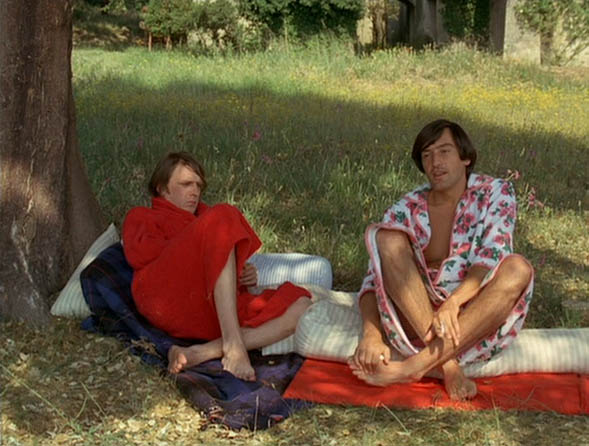
It’d be almost Antonioni-esque without the voiceover. Hardly anything actually happens, but Adrien always keeps us filled in on what he’s thinking. I considered disliking the movie for a while, a movie about idle rich young artists having self-conscious affairs, but it turns out Adrien and Haydée aren’t rich (only idle and leeching off their rich friend) and never manage to have an affair. I ended up liking it.

image

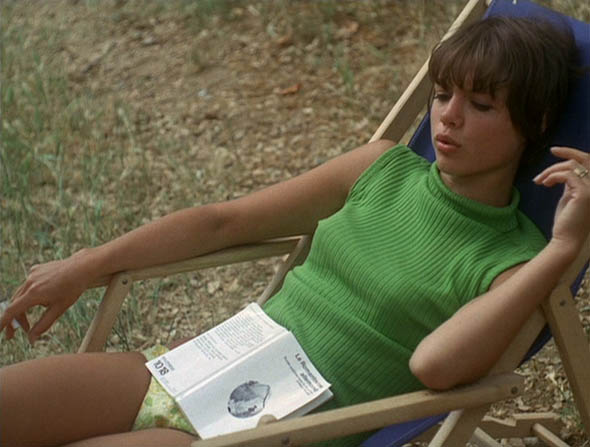
Buff 30ish Adrien comes to the beach to take his “first vacation in ten years” prior to an art opening, hopes to sit around with buddy Daniel and do absolutely nothing, not even think (they read so they don’t have to think). 21-yr-old Haydée is also at the house sleeping with a different guy every night. We don’t get much insight into Daniel – he’s the third wheel here – but Adrien and Haydée are both trying to find themselves, define their own moral codes, playing off each other and never quite getting together. At the end, Adrien pulls a standard Moral Tales move. Chances are good that he’s got Haydée for the night, but he leaves her in the middle of the road, deciding that sleeping with her would be against his character, and books a flight for London to see the girl he’s with (briefly) at the start of the film.

Leisurely-paced movie, but never slow or dull. Differently structured than the other films, with a few-minute prologue for each character before the main section of the movie begins. Rohmer and his cameraman would be happy to just stare at Haydée all day – her entire prologue is shots of her barely-clad body. Apparently that’s what defines her character.

image

Have I mentioned that it is in color? Guess that’s another good reason to watch it fourth instead of third. Nice, rich color, too. Much of the look is in the bleached grays and browns and blues of the beach and the plain interior of their villa, so what colors we get in clothing and city life and an antique vase all stand out. Adrien and Daniel wear some hilarious clothes throughout (see above). Must be a 60’s artist thing.

Adrien was Patrick Bauchau, had a smallish part in Suzanne’s Career, later in American stuff like The Rapture and Panic Room. Haydée was Haydée Politoff, immediately turned to Spanish and Italian horror movies, had a small part in Love in the Afternoon, and mostly quit acting after that. Daniel was Daniel Pommereulle, appeared in Godard’s Weekend the same year, then two by Philippe Garrel.

image

from V. Canby’s NYT review:

Much of the comedy in La Collectionneuse, as in Rohmer’s later films, is provided by the otherwise aware hero’s elegant self-deceptions about his own motives, followed by his dimly seen perceptions of what could be another truth. In this context, it is a momentous event (and, comparatively speaking, momentously funny) when Adrien begins to have doubts about the affair of Haydée and Daniel. “I couldn’t be sure,” he tells himself with complete seriousness, “that their complicity was entirely for my benefit.”

There is a certain chilliness and lack of spontaneity to all of the performances, especially Bauchau’s, which, I suspect, has as much to do with the tiny scope of the film as to the actor’s talents. My Night at Maud’s and Claire’s Knee suggest living worlds outside the films’ rarefied milieus, whereas La Collectionneuse exists in splendid, arrogant isolation. Adrien is tiresome. Daniel is enigmatic, and Haydée is sweet, and great to look at, but, after a while, sadly commonplace.

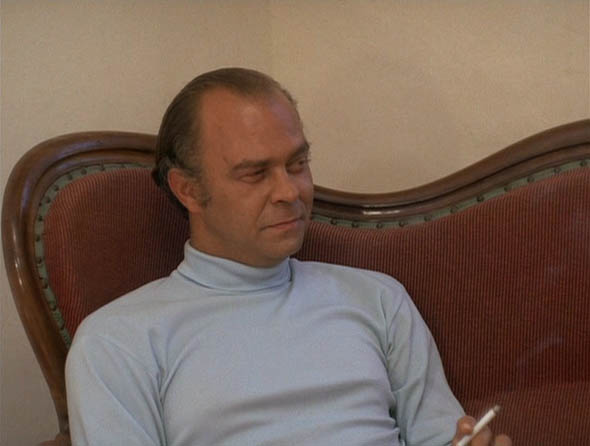
A note of interest to local film buffs: the Seymour Hertzberg who is listed in the credits (he plays Sam, the American art collector whom Adrien solicits), is the nom d’écran of Eugene Archer, a former New York Times film reviewer who, I’m told, has absolutely no intention of acting again. He is an excellent reviewer.

“Seymour Hertzberg”:
image

From P. Lopate’s Criterion essay:

Haydée is not the most articulate young woman, though she says just enough to cast doubt on the men’s interpretations. There will be other Rohmer films that take us deep into the psyches of women; this one does not, but it gives us a very daring, precise portrait of the misogynistic, entitled, self-loathing psyches of men. And unlike, say, most Woody Allen movies, it does not let the rationalizing male character off the hook. Rohmer explicitly warned us, in an interview: “You should never think of me as an apologist for my male character, even (or especially) when he is being his own apologist. On the contrary, the men in my films are not meant to be particularly sympathetic characters.”

From an appreciation in The Guardian:

Drama, for Rohmer, is made up of a number of frequently small incidents which culminate in an inevitable denouement. There are many kinds of film-making but Rohmer’s would be very difficult to beat within the confines of his chosen metier.

A Modern Coed, 1966

image

“People used to say girls went to college only to land a husband. Though today’s coed might find a husband, she isn’t necessarily looking.”

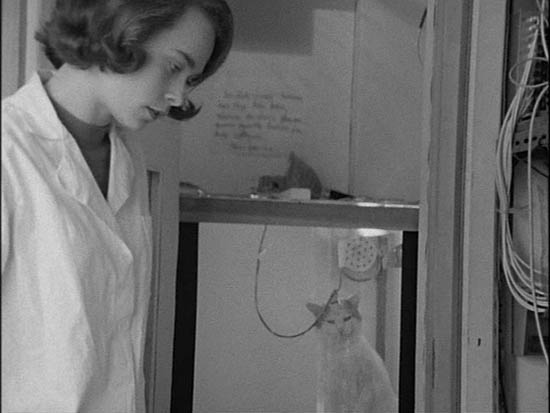
Just a short doc to tell the world that there are female college students, and some of them even study science. Its main reason to exist today is to document mid-60’s Paris hairstyles. Narrated by Vidal from Maud’s.

Foreground: our coed. Background: a cat with a hat in a box.
image

Rohmer on La Collectionneuse in 1977:
“It’s the only film I made that followed the era’s fashion. Audiences loved the new fashions, the long hair, the blue jeans. Then there was Haydée, whom audiences adored. Marcel Carné signed her for his next film right after that.”

He speaks proudly of a conversation scene in the 1976’s The Marquise of O, calling it “tiresome and static” but saying nobody else would have dared film it as written.

“This is a problem that concerns me. In the past, I was drawn by the way people spoke. I’m deeply interested in language. Currently, I find a kind of sloppiness has crept into the French language and I don’t like it very much. I like colloquial language, but today, especially as it’s used in intellectual circles, I find little of interest in it. … That said, I also believe characters in film should speak naturally. I’m getting around this currently by shooting films set in the past. When I return to contemporary films, I don’t know what my position will be. Perhaps by then language will have evolved further. Today’s spoken language is so extremely impoverished that it doesn’t inspire me. You find the same dialogue in every film now.”
image

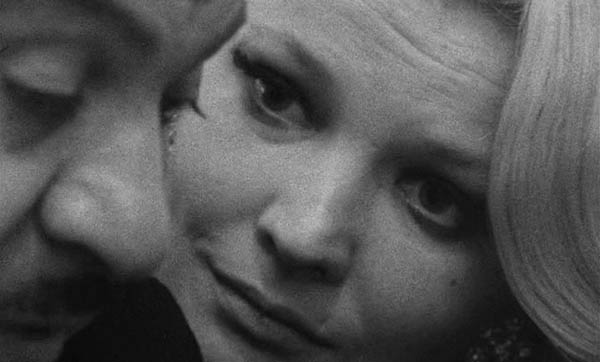
Whoa, I thought I knew lead actor John Marley, but I guess I’ve only seen him in The Godfather. Definitely know Gena Rowlands, the greatest of all actresses, as John’s new girl. Lynn Carlin is best known for this, and was oscar nominated for it, as was Seymour Cassel in his first big part, looking very young and smooth as Chet.

Cassavetes’ second canonical film after 1959’s Shadows, although he directed some others in between and co-wrote Too Late Blues.

Film looks terrific, all blown-up grainy b/w, sometimes a nice long take to let an actor’s piece play out, but it seems less like an improv than Shadows was. Wouldn’t mind reading up on Cassavetes to see how the film was conceived and constructed.

In short: Richard and Maria are rich, bored, and have no sex life, so Richard leaves her for Jeannie and Maria has an affair with Chet the same night, but they end up at home together, not exactly reconciled, but maybe resigned. Ruminations on love, sex, fidelity, aging, and being too obsessed with yourself and your wealth to have a real human relationship.

Supremely non-entertaining, an honest and hurtful film, one of the best I’ve seen.

Some faces:

image

image

image

image

image

image