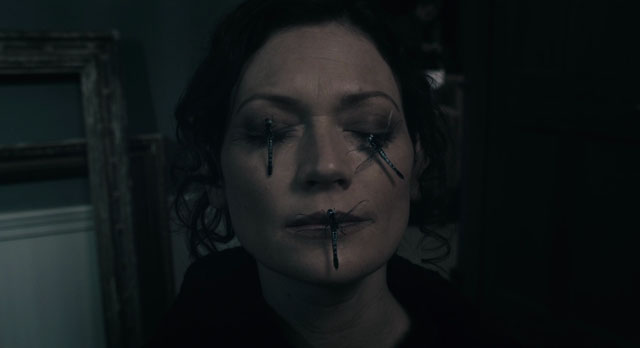
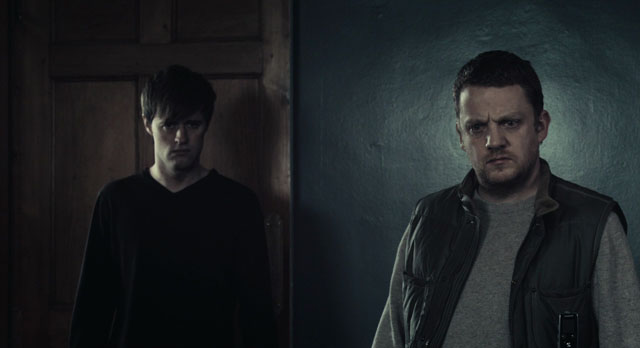
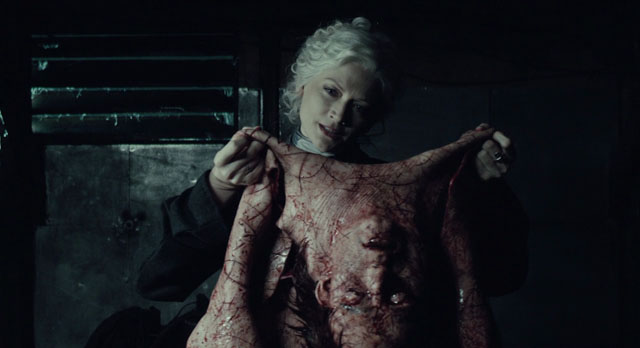
Puppetmaster

“Full Moon Productions presents…”

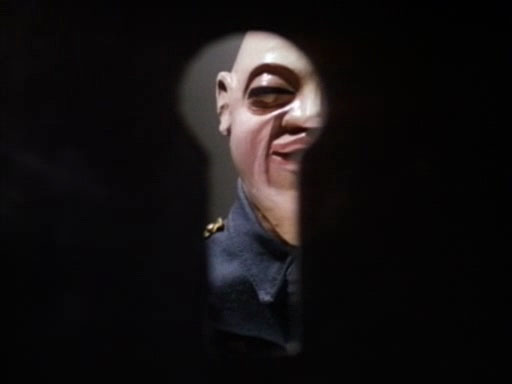
According to IMDB, this was Full Moon’s first feature. They’d go on to make some of my favorite direct-to-video absurd low-budget semi-horror movies of the early 90’s, including Stuart Gordon’s Pit and the Pendulum, the Louisiana sex/devil cult story Netherworld, and many Puppet Master sequels, plus movies that screamed “rent us” from the new-release shelf with names like Trancers, Subspecies and Dollman, but never quite seemed worth the three bucks.
image

“A David Schmoeller film”

Or more accurately, a David Schmoeller VHS tape (were any Puppet Master movies released to cinemas?). He wrote and directed a Klaus Kinski torture film called Crawlspace, which I meant to watch last week instead of Pin… but foolishly did not.

“Puppetmaster”

Titles were re-capitalized to Puppet Master for the sequels, maybe to avoid confusion with Hsiao-hsien Hou’s acclaimed drama The Puppetmaster (whose runtime is longer than any two Puppet Master sequels put together).

“starring Paul Le Mat”

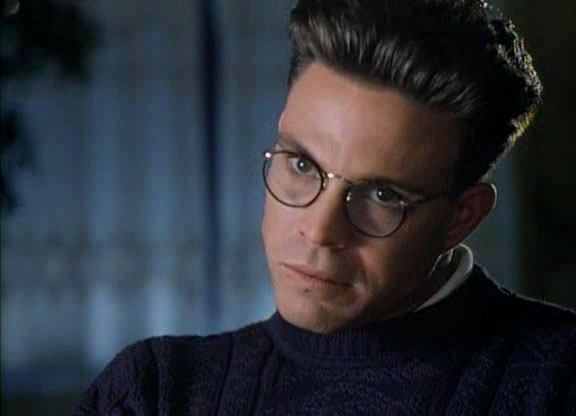
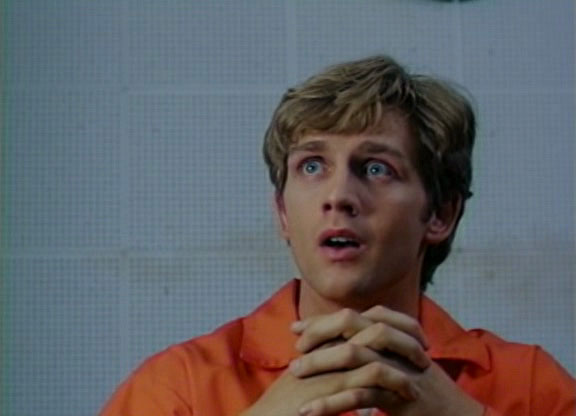
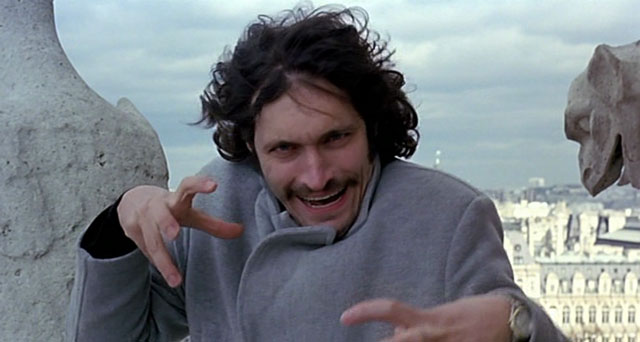
One could argue that Le Mat is an actual star, having played a title role in Demme’s Melvin and Howard and third-billed in American Graffiti. I didn’t find him photogenic, hence no screenshot… oh wait, this might be him screaming:

image

“and introducing Robin Frates”

This was pretty much the last time anyone heard from Robin Frates, except those who saw Schmoeller’s follow-up film The Arrival (not the Charlie Sheen one), which sounds appealingly like a sort of alien vampire Benjamin Button.

image

“special appearance by Barbara Crampton”

Star of Re-Animator and From Beyond! You’d think if her appearance was so special, she could’ve been given a better role than “woman at carnival.”

The theme music is nicer than this movie deserves.

Budget tip #1: Low-to-ground POV shots require no actual puppet effects, and are fun to watch. These are just great, the camera running behind feet and cars, jumping over suitcases and across piano keys.

William Hickey (Wise Blood, Prizzi’s Honor) is Toulon, the inspecifically-foreign-accented titular magician. He’s been discovered by sinister nazis, so he hides Happy/Sad Clown, Oriental Mustache and Hook-hand behind a wall panel and bites a bullet. The end.

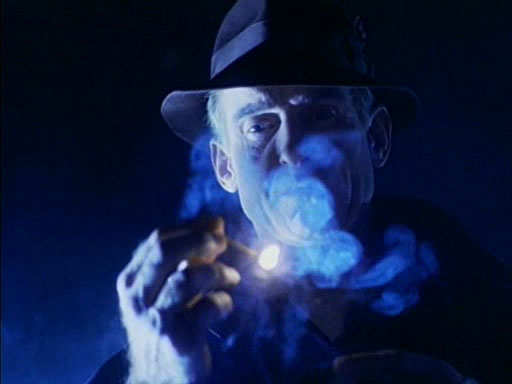
The short-lived Toulon #1:
image

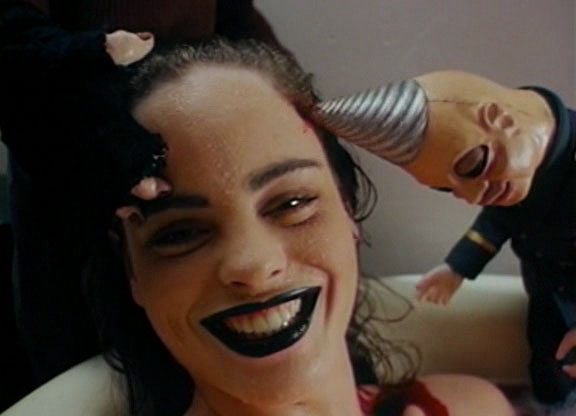
No wait! “Yale University, present day.” A dumpy Paul Le Mat dreams in color that he is dreaming in black and white while being attacked by leeches (I hope that’s exactly how the scene read in the script). Is Yale a carnival, or have we changed location to a carnival? Enter “woman at carnival,” visiting a psychic (Irene Miracle of Inferno) who lacks a stereotypical gypsy accent. Ooh they’re playing the ol’ scam-gypsy-who-sees-real-visions card as Barbara dreams up a puppet attack.

image

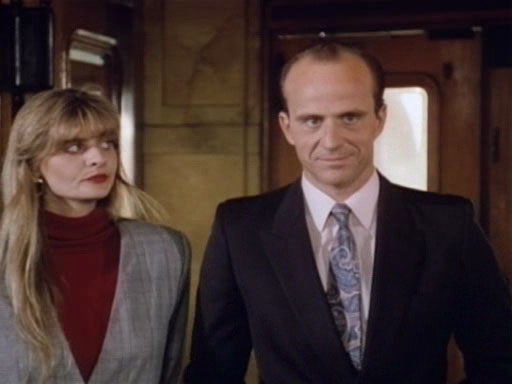
“I want you to recreate in your mind your wildest sexual fantasy.” Two sex-crazed psychic researchers (Balding Ponytail and Too Much Lipstick) call Le Mat (on the phone, disappointingly) to arrange a meeting at the hotel where Toulon died, where they’re met by their cynical psychic friend, their dead friend Neil, a crabby Mews Small (Scott Baio’s mom in Zapped!) and introducing Robin Frates.
image

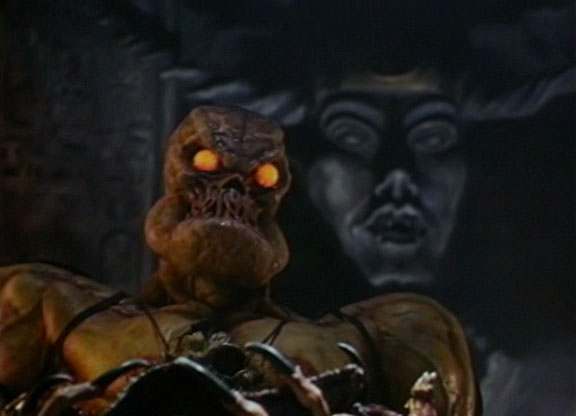
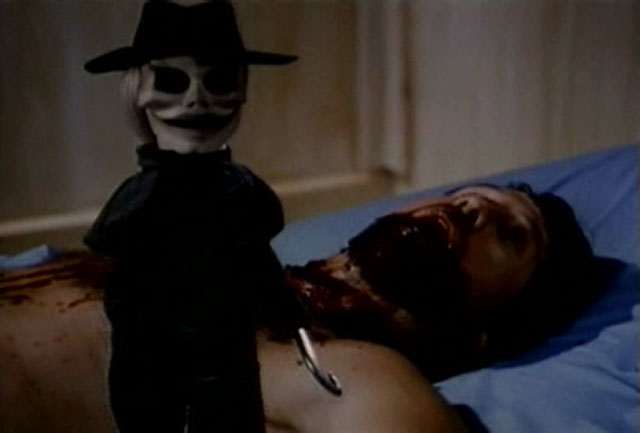
While our psychic friends creep around the place seeing visions and acting eccentric, Tiny (little puppet head and human hands emerging from a ribbed sweater) kills the peeping crabby lady and plays games with dead Neil. In true Friday the 13th fashion, the puppets go after the sexually active couple first – Too Much Lipstick is killed offscreen by Drill Head and a female puppet barfs leeches onto her tied-up husband. Tiny, boasting some impressive stop-motion, wounds the cynical drunk girl then Hook finishes her off in the elevator (if they were aiming for a Dressed To Kill reference, the editor wasn’t cooperating).

Dead Neil explains: “Metaphysically speaking, I killed myself, and using the techniques of the old puppet master I brought myself back to life.” But then Neil stupidly disrespects the killer puppets and they gang up on him, brutalizing a rubber hand before breaking out the drill and leeches (honestly the leeches aren’t very scary).

image

Written and produced by Full Moon head Charles Band, who had produced everything from Laserblast and Robot Holocaust to Stuart Gordon’s Dolls, Trancers and Ghoulies, TerrorVision and Troll, Clive Barker’s disowned first two pictures, and Sorority Babes in the Slimeball Bowl-o-rama – pretty much everything I watched on HBO at 2am in 1992. Effects by oscar-nominated Dave Allen, who worked on The Stuff, The Howling and Equinox.

image


Puppet Master 2

Hook, Clown, Drill, Tiny and Leech Woman resurrect Toulon using a magic potion before the credits even roll. This one is gonna be good.

image

“Full Moon Entertainment presents”

In the two years between the original and the sequel, Full Moon and Charles Band have involved themselves in a parallel-universe thriller, a sexy fantasy-horror starring Sherilyn Fenn (premiering the same week as Twin Peaks), Stuart Gordon’s Robot Jox and its Gordon-unaffiliated sequel

“directed by David Allen”

So they’ve handed the franchise right over to the effects crew. Part II is from the writer of Subspecies and cinematographer of Screwball Hotel (I’ll bet that’s not how they sold it on the poster).
image

A U.S. government paranormal research van is poking around the old hotel, bearing bearded Lance (Demonic Toys), dark-haired Wanda, jokey cynic Patrick, serious Carolyn (of Robot Jox 2) and older new agey “truth comes from feeling” Camille (Frightmare, Night Shift). They tell us Paul Le Mat survived the first movie but wanted too much money for the sequel so he’s locked in an asylum. Then introducing the neighborhood Comic Relief Farmer and his pitchfork-bearing wife – “They say Satan’s got a suite of rooms in there!”

Tiny and Clown take care of pseudo-psychic Camille in secret, then Drill brains Patrick with everyone watching, is captured and dissected. I hope Drill will be okay!

image

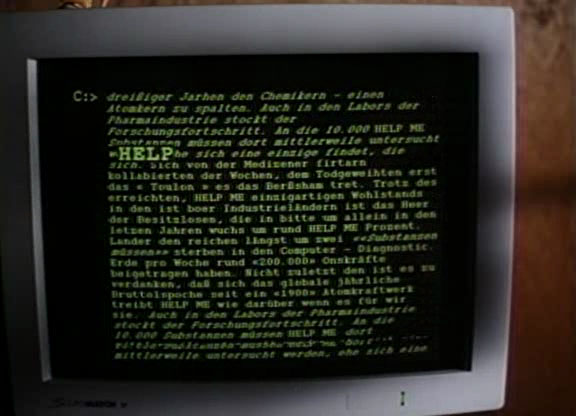
The filmmakers overestimate the computing power of an Amiga 2000:
image

Toulon (a new actor) wanders in with an Invisible Man getup, calling himself Eriquee Chaneé (get it? Chaney?) claiming the hotel is his, then the group is joined by Collin “Corbin’s Brother” Bernsen, our first glimpse of star power (heh)

image

The farmer’s brains are removed by Leech Woman (movie is really into brains; I sense a zombie connection) who is then melted by the wife, immediately replaced by Torch, who burns her up, in a particularly poorly-lit scene. So Toulon is collecting brains to brew up a new batch of magic puppet juice and live another 50+ years as a puppet himself.

image

Flashback: Toulon remembers years ago in Egypt when he was a powerful magical puppetmaster but a crappy actor, and as punishment, an old merchant burns up the puppets using his mind. Hmmm.

The scene I remember best from the entire series (below): a boy is torturing his GI Joes with a whip, tries to play rough with Torch. The scene I remember least: pointless seaside romance between Carolyn and Corbin’s brother. Even adding a flamethrowing puppet and resurrecting Toulon from the dead, it’s not a better movie than the first one, which at least had characters which weren’t all interchangeable sexy college students.

image

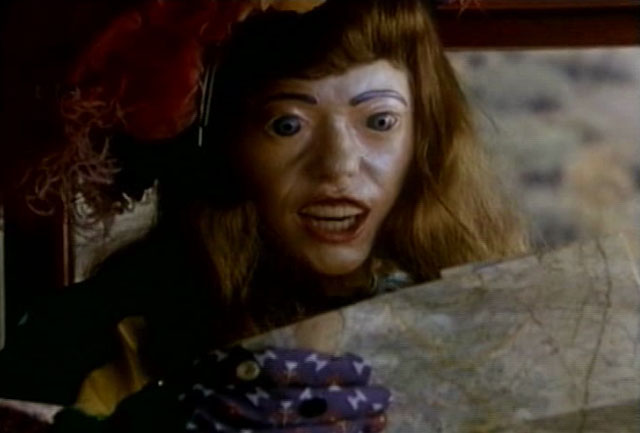
Hook carves up Lance and Wanda, Puppet Toulon (I like him, a short guy with hard marble contact lenses) threatens Carolyn, and I’m not sure why the puppets turn on him then resurrect Camille to go terrorize an institute for “mentally troubled” children, but there you go.
image


Puppet Master 3

“Berlin – 1941”

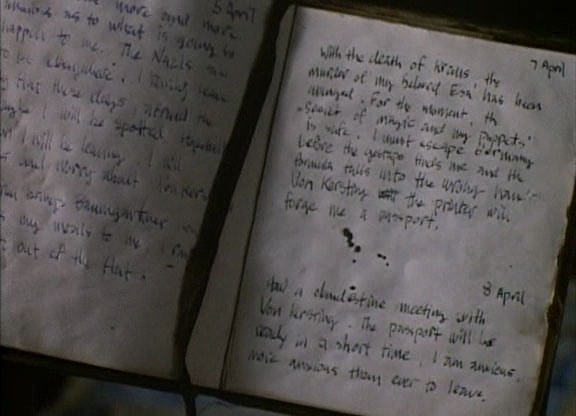
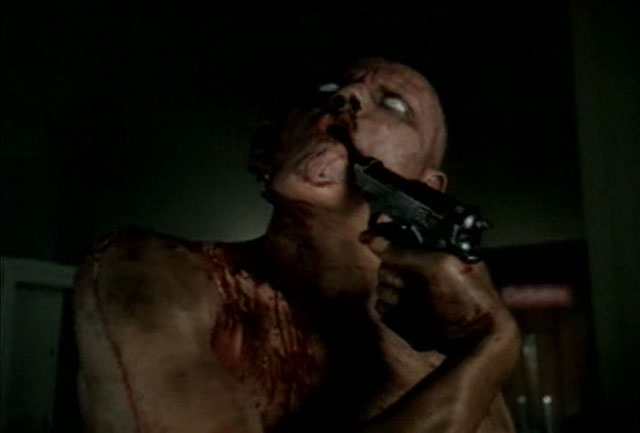
Nazi experimenters succeed in reviving the corpses of dead soldiers. A young puppetmaster is interested.

Looks like something out of Day of the Dead:
image

“Full Moon Entertainment presents”

This was Full Moon’s year. They had Stuart Gordon (Pit and the Pendulum), Trancers II (the Helen Hunt-starring sequel to a mid-80’s Charles Band film), and future sequel-bait Subspecies and Dollman.

image

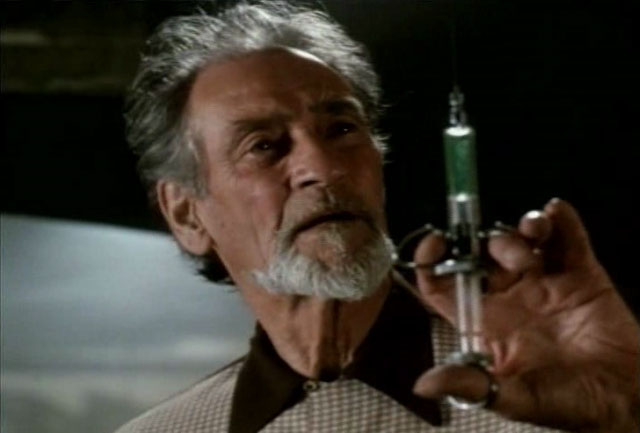
“starring Guy Rolfe”

Finally a consistent Toulon – he’d play the part through 1999. Guy had been around – not just in stuff like Dolls (in which he also played a puppetmaster), but in Tashlin’s Alphabet Murders and Nick Ray’s King of Kings in the 60’s.
image

“directed by David DeCoteau”

The prolific Mr. DeCoteau had made such classics as Sorority Babes in the Slimeball Bowl-o-rama (which I have seen more than once) and Dr. Alien, would go on to make such classics as Frankenstein Reborn!, Final Stab and Wolves of Wall Street.

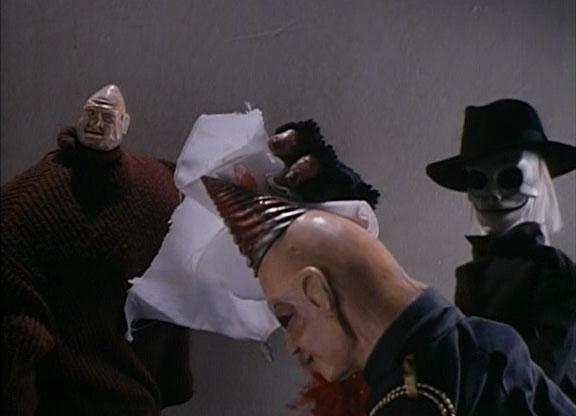
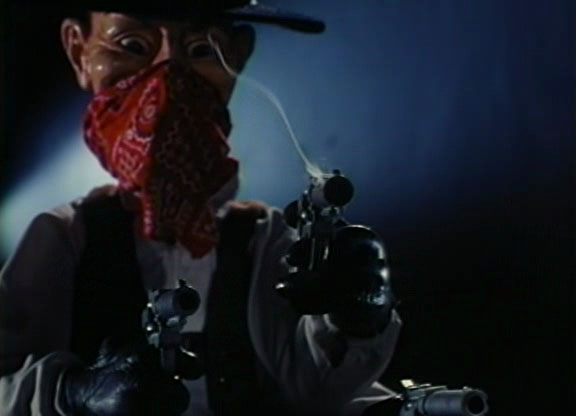
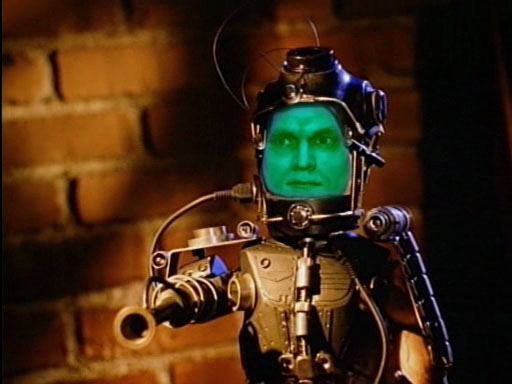
Sinister Eric Stein confronts Toulon about the Hitler-mockery satire of Toulon’s puppet show. Mrs. Toulon (Sarah Douglas of the first two Superman movies and Return of the Living Dead III) looks on. The stop-motion effects are still cool and still only one second long at a time. Two important and great new additions: the six-shooter cowboy puppet, and giving the puppets wordless voices (cowboy’s Jack Nicholson laugh is my favorite).

image

Gestapo Krauss (Richard Lynch) and Dr. Hess (Ian Abercrombie of Inland Empire) fight over Toulon’s fate. T’s wife is killed in a raid, then Tiny and Drill kill the nazis escorting T into custody – can’t argue with that. While T cries over his wife (along with the puppets, making the ending of part 2 more inexplicable) and gives his revenge monologue, the main general (a Bond movie regular) calls on the search. Leech Woman is still not interesting, even when she’s supposedly T’s murdered wife recurrected to kill Stein.

image

A distractingly weird-looking “young boy” (turns out it’s a short 22-year-old), also on the run, stays with Toulon while Six-Gun takes out the general (plenty of stop-motion plus a fall from a high window – along with the period costumes, looks like Full Moon is ramping up the budget). Toulon creates Blade, modeled after Krauss (who himself is modeled after Klaus Kinski), replacing his broken Hitler doll.

Kraus/Kinski/Blade:
image

There’s actually a story here, not just a bunch of idiots at a hotel getting killed one at a time. Hess turns out to be decent (well, as decent as any nazi scientist trying to reanimate dead soldiers can be), the father of the “boy” turns traitor to win his freedom, both die, Toulon strings up Krauss and escapes Germany with the “boy.” Weird to turn a slasher horror flick into a nazi adventure, but there you go.

image

“Photographed at Universal City Studios Hollywood” – there’s that budget I was talking about. Too bad it won’t last.

image

EDIT: Thanks to Frederic for pointing out the correct model of computer the filmmakers are misusing in part two. Apologies to Commodore 64 heads for the error.

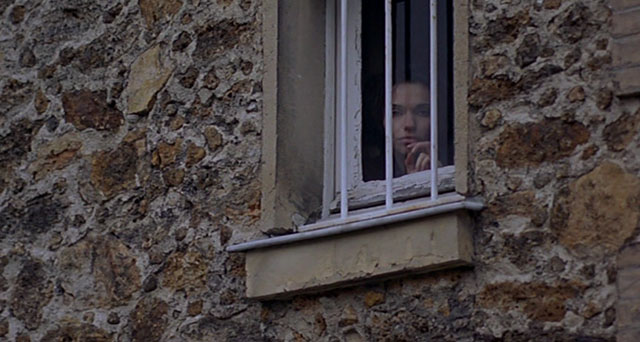
Vincent Gallo is on a plane to Paris with his lovely new bride June (Tricia Vessey, the girl who witnesses a hit in Ghost Dog), but he has dark dreams of blood.

image

Leo (Alex Descas of Irma Vep and plenty of Claire Denis movies) is cleaning up a dead body left by his wife Coré (Béatrice Dalle, Isaach De Bankolé’s blind passenger in Night On Earth).

image

Turns out Vincent and his ex-lover Coré are vampire/cannibals, and Vince is in town looking for Leo, a doctor who was working on a cure. It’s not much a honeymoon for June, nor much of a marriage for Leo – the vampires feel strong lustful urges, but always resulting in the death of their sexual partner, so June stays frustrated, Leo works in his labs, Coré sucks dry a kid who breaks into her house and Vincent rapes/eats the maid beneath his hotel.

image

That’s already an unusually juicy plot for a vampire flick, but this is also no vampire flick, it’s a Euro-Art-Film with long wordless sections and gorgeous images, my favorite Claire Denis movie so far.

image

Surprisingly, the day after I watched this it was notcoming.com’s horror movie of the day. They say:

Claire Denis seems at once unlikely and ideal as the director for a horror film. On the one hand, she seems incapable of making a purely genre film; on the other, no film director in the world more gracefully explores the physical, more pointedly employs cinema to trace the ambiguities of body, persona, and landscape. In this way, a vampire film, with its themes of metamorphosis and the alien nature of appetites is perfectly suited to her abilities as a filmmaker, even if she is unlikely to satisfy our own appetites for genre pleasure. … There are few genre signifiers to reassure us of the presence of that strong moral center so (paradoxically) common to horror films, and the narration of events is characteristically obtuse, reliant on gesture rather than dialogue. …

The metaphor is not finally about a vampire’s exertion of will or power over his victim, but more about the inadvertent draining that happens in a relationship. Shane fears that he will hurt June, that he will tear her apart, that his sexual desire will destroy his wife. It is a metaphor for intimacy and its dangers…

Gallo acts like Frankenstein for his wife’s amusement:
image

image

And a few days later the movie was the subject of a discussion on The House Next Door. It is unbelievably long and I haven’t read the whole thing yet… excerpts:
JB:

If I’m properly connecting the film’s vague dots (and I might not be), Coré and Shane are essentially infected. They are diseased. Without this infection, they wouldn’t have these perverse needs and thus wouldn’t act this way, and without the mysterious drug that caused this whole mess they wouldn’t be infected. As a result, I don’t look at Coré and Shane as portals to our dormant demons. I see nothing that reflects my own soul. What I do see in Trouble Every Day is a chilling portrait of addiction. Coré and Shane aren’t addicted to the drug that made them want blood but to the blood itself. Same difference. Now infected, they want to do nothing but “use.” Coré’s husband looks out for her, tries to protect her from herself, hopes to cure her and over and over again gets stuck cleaning up her messes. Shane, meanwhile, sleepwalks through his daily life, unable to connect with anyone outside of his addiction. If I wanted to pick a film that would exemplify the disease model for addiction, it would be hard to do better than Trouble Every Day, which shows how chemical imbalances in the brain obliterate normal rational thought so that ethics are meaningless.

image

EH:

Scenes like this make the film at least partly about the damaging cycle of an unhealthy love affair, about a man who knows he’s no good for the woman he loves but keeps trying to convince himself that he’s going to do better, that he’s not going to hurt her anymore. But we always hurt the ones we love, right? In some ways the film is about an abusive and often absent spouse, perhaps in contrast to the perverse loyalty of the marriage between Coré and Léo (Alex Descas). We feel June’s confusion and pain when she waits out in the rain, desperate for some sign of her missing man, or when she goes to visit one of his old friends, hoping for some explanation for his inconstant behavior but getting only nostalgia and vague comforting words.

image

So we can agree that the movie is about lots of things, but not necessarily that it’s a horror film. I, for one, think it’s a definite horror film, and the only reason I can think for anyone to feel otherwise is that it towers above the kinds of movies that “horror” usually brings to mind (see my upcoming writeup on the Puppet Master series for an example). I’m glad that among the direct-to-video Clive Barker junk, I stumbled across two modern horror masterpieces (see also: Pontypool) this SHOCKtober.

Opens with mournful music and slow pans across a seaside fishing town… you’d never know what you were in for, if not for the credits “screenplay by Dan O’Bannon” and “effects by Stan Winston.”

“Welcome to Potter’s Bluff,” say the townspeople as they trap and murder a vacationing photographer and, later on, a horribly comic-drunk fisherman. Sheriff Dan and his buddy Harry (Robert Englund!) investigate.
image

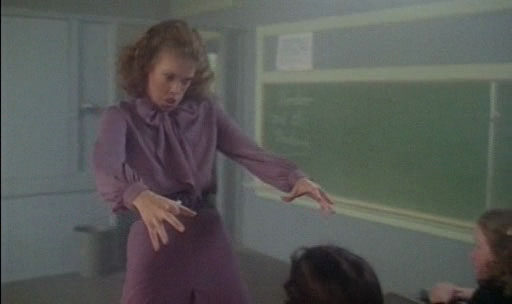
Harry puzzles over the murders with his loving wife (Melody Anderson, star of the previous year’s Flash Gordon, seen below pretending to be a zombie for the amusement of her grade-school class).

image

Killings continue, and why is Dan seeing the victims around town, alive and well? And what’s up with the coroner, who has a suspicious amount of screen time talking about the pride he takes in his work?

image

The big reveal (all big reveals should be accompanied by the madman, arms outstretched, displaying films of his crimes from hidden projectors all over his office) is that these townspeople were dead, lovingly touched-up and reanimated by the coroner to live happy undead lives – including Dan’s wife, whom Dan kills…

image

… and including Dan himself!

image

Wonder if the people who saw this felt that the following year’s Blade Runner was a ripoff. Sherman made a movie in the 70’s called Death Line that sounds awfully like Midnight Meat Train, a Rutger Hauer/Gene Simmons flick, and the ill-fated Poltergeist III.

“The dead have highways…”

It’s the only line I remember from the (very) short story, so of course it’s spoken five or six times in this 90-minute movie. I watched this in hi-def, only perhaps the third feature I’ve watched at home in HD (hello, The Fall and Night of the Creeps), and the first where I’ve sat close enough to the screen to notice how awesome it is. Actually sometimes I forget, it’s not that HD is awesome, it’s that SD is terrible and it has been hanging around far too long. Down with the tyranny of standard-definition… we welcome our new masters! I’d love to welcome them further but I can’t afford blu-ray or a nice TV – this $200 widescreen computer monitor will have to do for the next few years.

Oh, right, the movie… so as we’ve discussed I am a sucker for movies based on Clive Barker stories. I’ll watch any old shit as long as his name is attached (except the made-for-TV shit and Underworld/Transmutations). Therefore, Book of Blood, based on the titular story which served as an introduction to his anthology, and another I don’t remember called “On Jerusalem Street.” This was halfway decent, not as much a waste of time as Midnight Meat Train, maybe even worth watching. That’d be the first Barker-related movie to hit the high mark of “worth watching” in nine years, so this is a big deal.

image

The plot doesn’t sound so great: mystical whiz-kid Simon (TV’s Jonas Armstrong) is taking some college course in supernatural hoo-ha (lucky bastards – all my courses were about operating systems and design fallacies and thermodynamics and Thomas Kuhn) taught by over-serious Mary (Sophie Ward of the Crispin Glover Crime and Punishment – yes, there is such a thing and I must see it), who hangs around haunted houses in the evenings with tech guy Clive Russell (supposedly in Spaced and Neverwhere, but I don’t remember him). They find a house that is seriously badass haunted and they pay Simon to sleep there while they monitor the goings-on. Sure enough, he is haunted as hell, but they fail to record it because Simon’s actually faking the whole thing, jamming their signals and scrawling on the walls because his parents didn’t pay him enough attention.

image

The action stops for an hour or two while each character recites his or her traumatic back story. There’s the same scene of a guy with big headphones and a shotgun mic walking around a haunted house as in Spooked. I love that.

Finally the actual ghosts have had enough of this, haul Simon to the CG-riffic GHOST REALM and take turns carving their stories into his skin. Simon escapes back into the framing story – have I mentioned there is a framing story? – in which a dude is stalking Simon at a restaurant. The dude captures him, listens to his story (that’d be the bulk of our movie), kills Simon and removes his skin, then drowns when his cabin fills with Evil Dead amounts of blood and the door won’t open (funny how the doors never open). Who hired the dude to skin Simon? Could it be Mary, the only other character in the movie? Yes!

image

More 16mm screenings from Clay, Halloween-themed this time. Clay showing seasonal shorts reminds me of Robyn Hitchcock’s halloween show where he joked that since he’s only playing songs about ghosts and death, nearly half his catalog is disqualified.

The Skeleton Dance (1929, Walt Disney) was the first in the Silly Symphonies series, with good music-visual sync, but too much repeated animation. No spoken/sung dialogue, wordless skeletons playing in a cemetery until the sun comes up.

Runaway Brain (1995, Chris Bailey) is an excellent, fast-paced Mickey Mouse short with a mad scientist voiced by Kelsey Grammer, beaten for an academy award by Wallace and Gromit. Seems like nobody around me had heard of this before.

The Tell-Tale Heart (1953, Ted Parmelee), animated with some abstract imagery, overlapping shots and sharply-drawn characters. Has a deservedly high reputation, but beaten for an oscar by Disney’s Toot Whistle Plunk and Boom.

Betty Boop’s Hallowe’en Party (1933, Dave Fleischer) – always great to see a Betty short. Her party is pretty tame – kids bobbing for apples and singing like the birdies sing (tweet, tweet tweet) – until a bully shows up and she attacks him with her secret cache of ghostly evils. Full of amazing animation and visual ideas, beautifully synched to the music. I gotta get me a whole pile of these cartoons someday. I asked Wikipedia when the apostrophe disappeared from “hallowe’en” but it didn’t know.

Naturally the show was also full of TV episodes and classic commercials – Count Chocula vs. Franken Berry, of course, also a kids vehicle that looks suspiciously like the Wacky Wheel Action Bike (“you can’t ride it! you can’t ride it!”) and an awesome PSA warning kids to stay away from blasting caps.

Of the TV shows, we’ve got a Popeye the Sailor episode where an evil robot-popeye robs banks, the adventures of Goodie the Gremlin, who helps people invent the steam engine, airplanes etc. instead of tormenting people like the other gremlins want, a Spider-man episode where Green Goblin gets his hands on a book of voodoo spells, and a hilarious, surreal episode of Ultraman (featuring benign fluffy chattering Pigmon monster in a recording studio, giant plumed lizard monster with heat-seeking feather missiles, and the usual bonkers dialogue). Then the lower-tier corny garbage shows: a cartoon Sinbad the sailor, some dimwit monster who shoots smoke out of his head, Beany and Cecil meet the invisible man (1962, produced by a post-Warners Bob Clampett) and a Hal Seeger-created short called Batfink, in which BF and his dim pal Karate fight a magician.

Wow. I wasn’t prepared for anything this intense and realistic. Shaky follow-cam, extreme high and low-angle shots, extreme closeups and even the strap-on camera from Pi illustrate the adventures of a psycho killer released from prison and anxious to kill again. The filmmaker follows our man closely, obsessively – even the music is with him, speeding up intensely as he escapes from a failed abduction, then lowering tempo as his pace slows.

image

Erwin Leder (Das Boot, Taxidermia) is amazing, creepy as “the psychopath.” There’s no arguing with that noun – all he thought about in prison was killing, and all he sees around him are potential victims. His beautiful plans of glorious murder come off disgusting and clumsy, as he runs around a wealthy household eventually murdering a mother and her daughter and disabled son, caught because of a car accident a half hour later with the bodies in the trunk. All of this is captured in real-time, with the psycho’s thoughts and plans audible (and hardly any spoken dialogue – none of the hostage-screaming to which we’re accustomed). It’s one of the most impressive feats I’ve seen in a serial-killer movie – the movie being engrossing and accomplished without imparting any of its glory to the killer himself, who remains a vile embarrassment.

image

IMDB’s trivia insinuates that director Kargl does not exist, and is a pseudonym for award-winning writer/cinematographer Zbigniew Rybczynski, but an online interview with Kargl reveals that he only made one feaure, went deeply into debt, then directed commercials for years. So this is a one-off movie, and it’s uniquely wonderful (well, if getting inside the head of a psycho killer and watching him work is your idea of wonderful).

Oh, man. I was really expecting a classic, great horror film, something at least as awesome as God Told Me To. After all, this had sequels and a remake. That adds up to horror classic, right? But I guess even Maniac Cop had sequels and a (sorta) remake, so no guarantees. Not that It’s Alive sucked – it’s got that 70’s low-budget 16mm look which I always mistake for gritty realism, and an interesting central dilemma: a couple’s child turns out to be a murderous monster, so they help in the manhunt for the creature, but parental emotions win out and they end up trying to protect it.

Glimpse of the creature:
img

Dad: John Ryan of the Wachowskis’ Bound, Class of 1999:
img

Mom: Sharon Farrell of Out of the Blue, The Stunt Man:
img

Ultimately more exciting than the plot were the 70’s fashions on display.
img

This one brings back memories:
img

My favorite shot, by far:
img

Stinger: “Another one’s been born in Seattle.”

The vibe I’m getting so far from Fear Itself is “lazy.” This was pretty bad, but it doesn’t seem like the kind of bad I should hold against John Landis – he just turned in the same lazy work as everyone else on this doomed TV series. If I’m gonna blame someone for this mess, it’s writer Victor Salva, the controversial convicted pedophile behind Powder and Jeepers Creepers (I didn’t know he wrote it, so this is coincidental timing to the current Polanski brouhaha). The other three episodes (almost forgot I watched Family Man last year) at least had some aspirations to horror, and they made sense, while this one’s more plot-hole than plot.

img

The idea is that it’s the wedding day of Maggie Lawson and James Roday (costars of a show I’ve never heard of called Psych), everyone’s telling her it’s too soon to marry this guy (we never find out how soon), then she gets an anonymous note delivered via the hard-of-hearing priest (played by The Cigarette Smoking Man) that says:
img

“Person?” Strangely phrased, think I. She runs around acting panicked, has a pointless scene with new hubby’s red-herring uncle Marshall Bell (of Starship Troopers, Nightmare on Elm Street 2), while we tolerate sluggish pacing and tons of church imagery. In the end we learn that SHE is a serial killer and the warning, written by her mysterious brother, was intended for the husband… the kind of twist ending which, rather than making all the puzzle pieces fit together, invalidates the whole rest of the movie, like some stupid anti-Sixth Sense. Well, at least we got to see how the Cigarette Smoking Man has been doing since X-Files ended (he doesn’t smoke anymore; it’s not allowed on network television).

img

I watched this at random because I had it… but why did I have it? I don’t know! It’s an unremarkable little made-for-TV-looking movie (lots of close-ups!), more of a slightly-disturbing drama about coping with mental illness than a horror flick. Kinda looks like it was aiming to be a prestige suspense flick – certainly it’s not as crappy as your usual horror movie (or your usual made-for-TV mental illness drama) but only climbed the ladder as high as “slightly better than average” before losing steam.

img

Kids grow up in a small town with physician ventriloquist father who gives them important father-to-child talks through his skinless doctor dummy Pin. His daughter grows into a normal girl, but the son Leon grows into mildly psychopathic David Hewlett. After the parents die in a car crash, Leon refuses to accept that Pin isn’t a real person. Brings him home in a wheelchair, and the sister tiptoes around the matter, trying to have a normal school and love life until Leon kills his aunt (never proven) and his sister’s boyfriend (caught red-handed).

traumatic event, Leon catches a nurse using Pin as a sex aid:
img

Sandor Stern, screenwriter of the original Amityville Horror, would go on to direct its third sequel (the one about the haunted lamp). David Hewlett is good in this, and was rewarded with starring roles in Cube, Nothing and Scanners II. In fact, almost everybody here would go on to bigger and better things. His sister, Cynthia Preston, would star in Prom Night III: The Last Kiss. Dad Terry O’Quinn would become the star of TV’s Lost (stopping along the way to star in Stepfather 2: Make Room for Daddy and My Stepson, My Lover) and mom would appear in Gothika, the murdered boyfriend in Hard Core Logo and Larry Fessenden’s Fear Itself episode, Aunt Dorothy in Atom Egoyan’s The Adjuster, and even teenage backstory Leon would star in Terence Davies’ adaptation of Neon Bible.

T. O’Q:
img