“Let’s see ’em top this on television.”

image

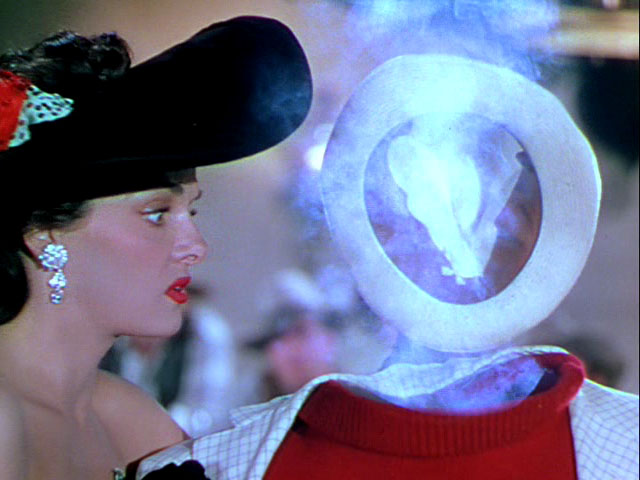
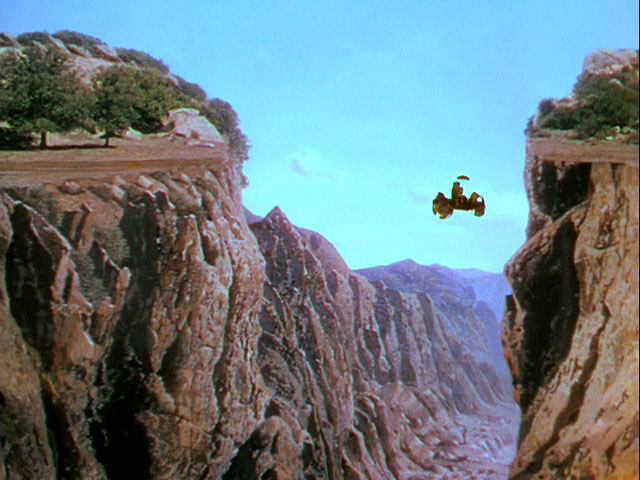
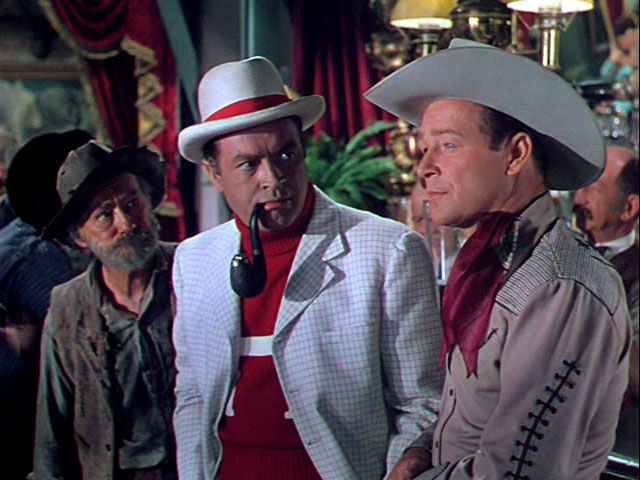
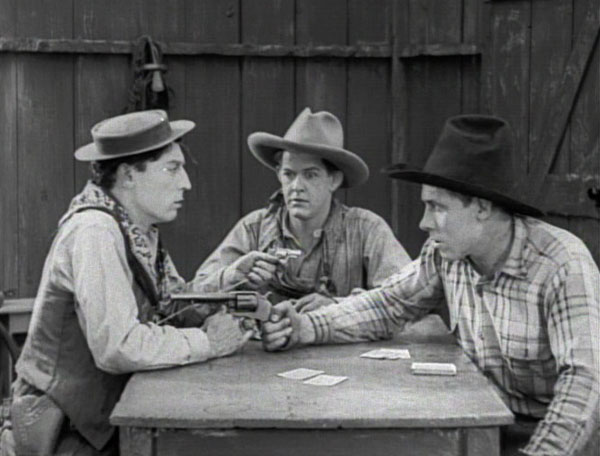
Sequel to a flick where clueless Bob Hope goes west to make his fortune, kills some Indians and causes some chaos. Now Hope plays his own son, a Harvard-obsessed goofball out to claim his dead dad’s missing wealth and escape town without being scalped by vengeful Indians or the townsfolk, their hands full of I.O.U.s from Hope’s father. More importantly, Frank Tashlin is in charge of his first live-action pic, which he treats like one of his cartoons, paying no respect to laws of reality.

image

image

Jane Russell is gold-robbing outlaw Torch by day, nightclub owner and star Mike (?) by night. Straight-arrow do-gooder undercover-lawman Roy Rogers either knows or does not know that they’re the same person. Hope wants nothing to do with Roy, but plots to marry Jane (once he realizes his inheritance amounts to an empty chest) in order to be rich enough to pay his debtors and leave town alive. Torch kidnaps him to get at his loot, his dad’s ol’ prospector friend finds where the actual Paleface loot is hidden (then gets hisself killed by Torch’s badman sidekick), Roy and Trigger do some stunts and sing a song, Jane agrees to marry Bob, and it ends with plenty of unashamed injun-killin’. Who would ask for more?

image

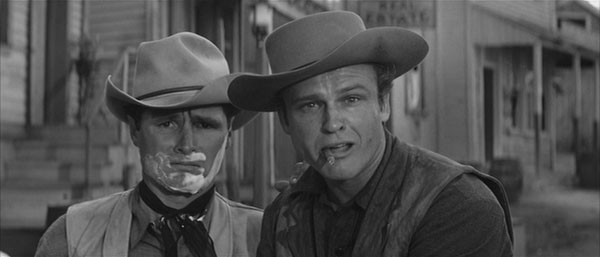
“That cowboy has no eyelashes”
image

Just as much cartoon-anarchy as I was promised from the Tashlin book, so I was pleased. Katy found out she doesn’t much care for Bob Hope, and we agreed the story was full of holes, but to please me she said she also liked the cartoony bits and she thinks Roy Rogers is neat but wishes he had eyelashes.

image

Joke cameo by Cecil DeMille, who was making The Greatest Show on Earth at the time. Looks like the cast of each movie played extras in the other. Jane Russell, returning from the original Paleface, starred in Gentlemen Prefer Blondes the next year. Hawks must’ve seen her in this – she was awesome. This was one of the few times Roy didn’t play “Roy Rogers.” He’d been starring in films for fifteen years, and this was his last (along with horse Trigger, who deservedly won an award for his performance) before moving on to television. Paul Burns (the ol’ prospector) had been in movies since the tender age of 58, appearing in Renoir’s Swamp Water along the way, living just long enough to portray “bum in park (uncredited) in Barefoot in the Park. And handsome baddy Lloyd Corrigan would appear in Tashlin’s followup Marry Me Again before following Roy to TV Land.

image

image

Not full of great gags. Seems like a feature to show off Keaton’s comic improv genius – but where’s that genius? Give Keaton a lasso and… the rope gets tangled and his hat falls off. Give him a basket of eggs and… he puts the eggs down then mistakenly steps in them. Not groundbreaking stuff here.

image

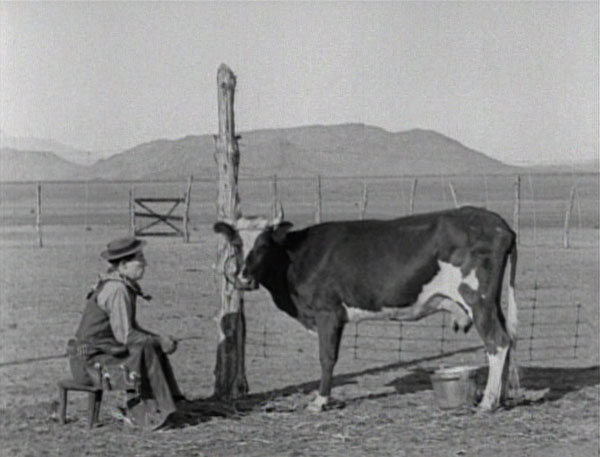
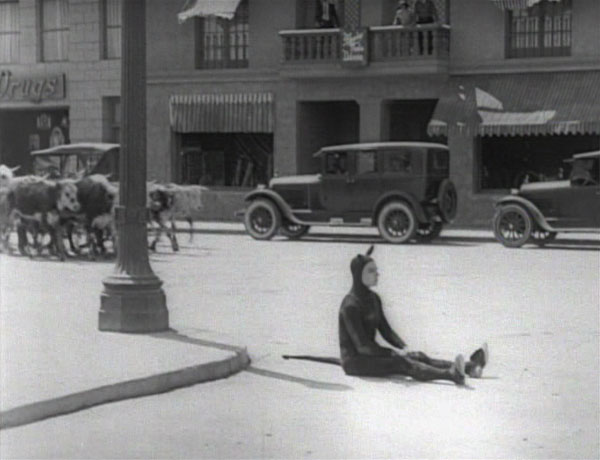
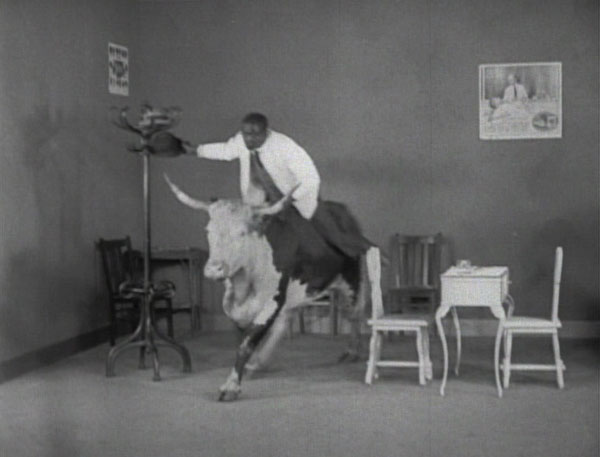
Mercifully short feature about Keaton taking Horace Greeley’s advice, moving west and falling for a cow. He hops trains, learns how to shoot, fails to learn how to milk a cow or do anything useful. When his host rancher’s herd is derailed by a rival, Buster drives the cattle through the city to the yards, saves the day, and gets to keep his own favorite cow as a reward (not the rancher’s cute daughter – the cow! ha!).

image

The city scene is the big showpiece. Has its moments (Keaton in a costume shop dressing up as the devil to get the bulls to chase him), but most of the humor derives from how unreasonably afraid of cows the townsfolk are. My favorite visual bit was early on, the movie demonstrating the passage of time by the length of his package of food as he rides the trains. After that I’m afraid it wasn’t entertaining enough to keep me awake late at night.

image

IMDB says a post-scandal Fatty Arbuckle had a cameo in the city. Guy who played the ranch foreman drowned filming one of his next movies.

image

I’d considered declaring August to be Shorts Month and watching hundreds of those, so I stocked up, but the inspiration had fled by the time the month rolled around. But we can’t let all these shorts go to waste, so I still watched more than usual.

73 Suspect Words and Heaven’s Gate (2000, Peggy Ahwesh)
Fun gimmick videos, one displaying the “suspect words” found by running the Unabomber manifesto through a spell checker, and the other listing off the search keywords of the Heaven’s Gate cult’s website. In the first the text appears quickly and fades out, and in the second the words flicker constantly.
image
image

Apocalypse Pooh (1987, T. Graham)
scenes from Apocalypse Now and Winnie The Pooh inexpertly combined. Actually the lipsync and some of the shot selections were pretty wonderful. I’m pretty sure nobody will ever care about this movie again now that a hundred thousand video mashups are clogging youtube, but it’s a cute piece of cult history. The poor video quality would turn on the guy who made Out of Print.

Thanksgiving Prayer (1991, Gus Van Sant)
William S. Burroughs hatin’ on America, being a general bummer, as is the fashion among leftists around Thanksgiving time. Decent video but I far prefer Ballad of the Skeletons with Allen Ginsberg.
image

Szalontudo (2006, Szirmai Marton)
That joke where guy 1 thinks guy 2 has stolen his food, so he starts eating from the other side, and they glare at each other eating the same food, then guy 2 walks off and guy 1 sees his food still untouched… he was eating guy 2’s food! Ah! This was terrible, with gross squishy chewing sound effects. Won an audience award in north-central Spain where they’ve never heard that joke before.
image

Le Vol d’Icare (1974, Georges Schwitzgebel)
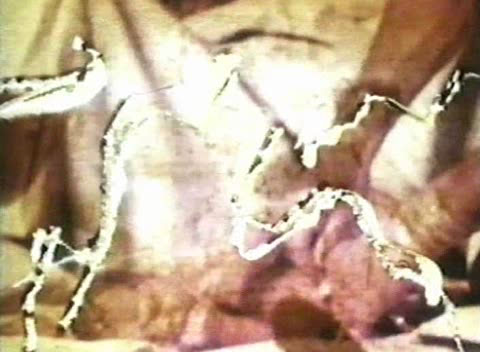
I think it’s primitive animation made on a lite-brite. Or maybe it’s HyperStudio version 0.1. Story of icarus, I suppose. I liked the flocks of birds. What is that, a harpsichord?
image

Instructions for a Light and Sound Machine (2005, Peter Tscherkassky)
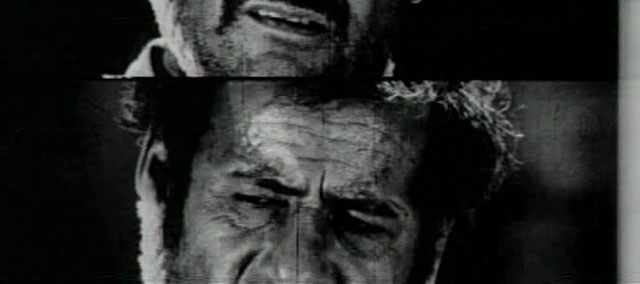
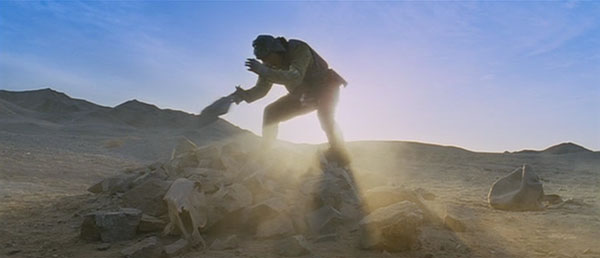
Pumping stutter-motion! Variable-speed lock-groove dude in a Leone western having a death-dream. Ends with words “Start,” “End” and “Finish” overlapping as the guy, appearing to be on fire, runs with mirrored graveyards above and below him.
image

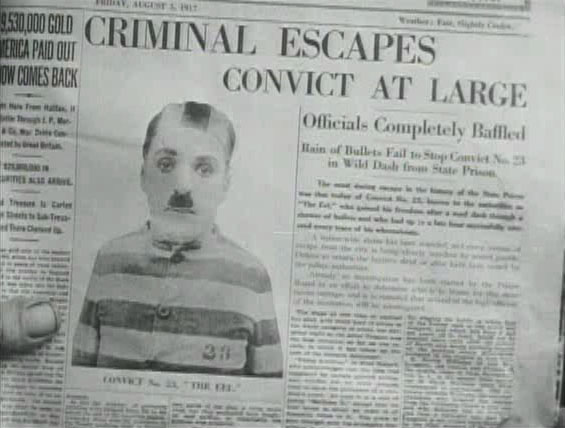
The Adventurer (1917, Charles Chaplin)
Weird to see Charlie as an escaped convict threatening cops with a shotgun. But there’s plenty of ass-kickin and cliff-jumpin so it’s alright. I forgot the encoding quality is garbage on my copy of these… must buy a better one.
image

image

Inflation (1927, Hans Richter)
Rich people, money, poor people, more money, stock traders, more and more and more money, digits rushing at the screen whilst speed-adjusted carnival nightmare music plays until the whole damn thing comes crashing down. Only two minutes long! An achievement.
image

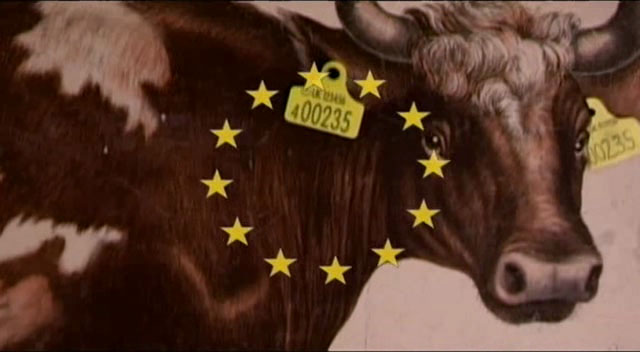
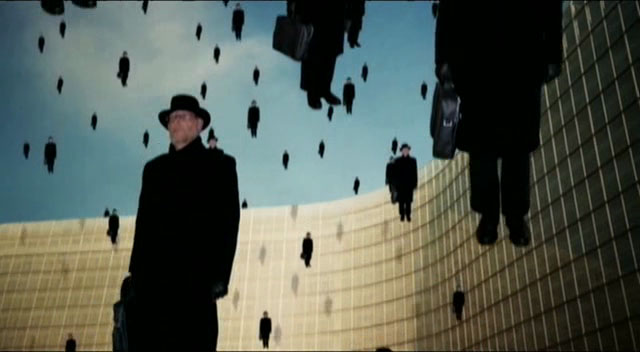
Yellow Tag (2004, Jan Troell)
In the old days we were close to our farm animals but today governments require tracking ear-tags. Fun movie… maybe didn’t need the classroom and religious art scenes, but it makes up for that in the end by going all wacky with shooting galleries and suited men raining down outside some kinda UN building.
image

image

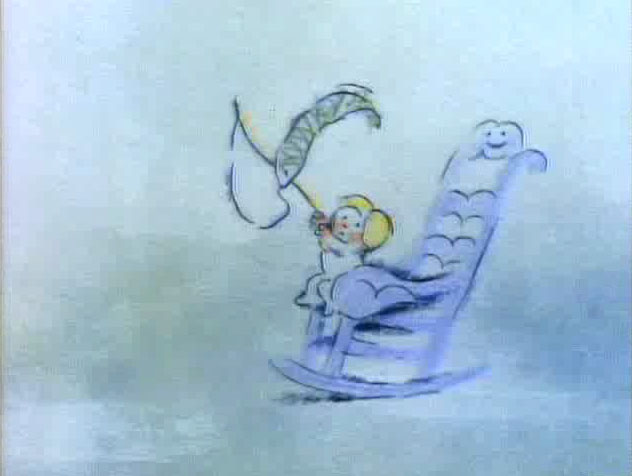
Crac! (1981, Frédéric Back)
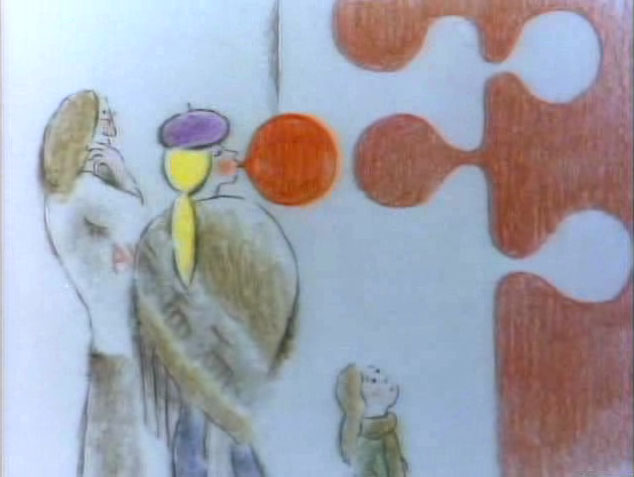
Animated story of the creation and long life of a rocking chair, accompanied by drum and fiddle music. It’s much better than it sounds.
image
image

Thigh Line Lyre Triangular (1961, Stan Brakhage)
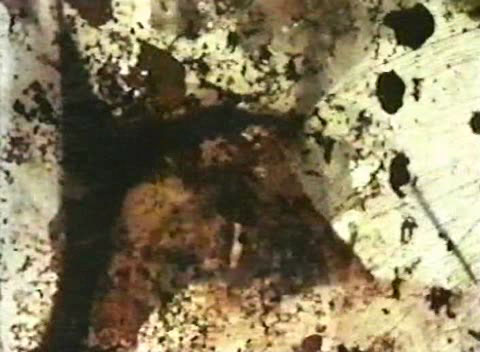
Arrrrgh, another birthing movie! Why did nobody warn me? Apparently the title is Brak-code for “vagina.” Once I got over the initial shock, this is excellent. Hand-processed frames over live-action film, intense.
image

image

I don’t know why I sat down with a Korean spaghetti-western-influenced comic action flick from the director of A Tale of Two Sisters after the disappointment of Miike’s Sukiyaki Western Django, but I’m glad I did. This was a hot pile of fun, more true in spirit to its source material than the Miike but plenty contemporary in its staging of action. Some of the most exciting (fast-cut yet spatially-coherent) editing I’ve seen in a while, certainly better than in Star Trek or Fist of Legend and great characters (the prototype super-cool good guy and super-evil bad guy are here, but the hero is an amoral thief, the comic-relief character) excuse the failure of the story to ever come together.

Action takes place in Manchuria (so truly in “the west” from Korea). Unlike Sukiyaki but like the Leone flicks, there are practically no women. A prostitute here, someone’s aged aunt there, but the wild west is a man’s world. And wild it is – ruthless and brutal, killing hundreds without hesitation, but maybe in reference to the old westerns it avoids lingering on dead bodies or showing grievous wounds, so it’s ultraviolent but more in the Sam Peckinpah body-count manner than in modern Tokyo Gore Police fashion.

image

Kang-ho Song, star of The Host, is our thief, and it’s great to see him playing a more lively soul than the dimwitted Host hero. The “Good” bounty hunter, fastest draw in the west, is secretly out for revenge on the goth-haired bad guy (Byung-hun Lee, star of Chan-wook Park’s segment of Three Extremes and soon to play Storm Shadow in G.I. Joe). A couple older guys and their men are tracking these three, but I never figured out who they are exactly, following after a mythical treasure map in the thief’s possession, and everyone is being followed by the Japanese army (Japan occupied Korea from pre-WWI through WWII). Everybody seems to be in a different underground independence movement, and the map has political ramifications that I didn’t puzzle out.

image

The bad guy dies in the end, as he would have to, in a brutal shootout with the good guy… but not before the movie strangely decides to reveal our comic thief’s past life as a finger-snatching serial killer. So the chase continues in epilogue with the bounty hunter after him. Strange choice, like at the end of For a Few Dollars More suddenly declaring Clint Eastwood is a wanted criminal in another state, Lee Van Cleef chasing him into the sunset with guns blazing.

image

Like any Leone movie it has its slow drawn-out character parts, but the movie seems well aware of what it’s doing with pacing and editing, if not story – and maybe I’ll figure that out when I see it again. Jimmy, we should’ve watched this one instead.

image

See, used to be I’d go to the video store and rent anything that looked interesting, and I’d come home with wild, awesome, insane movies. But one Tetsuo The Iron Man and a pile of Richard Kern films later, I start to get wary of the weird stuff. It seems the few weird, random films I rent these days are crappy movies trying too hard for cult success (Sukiyaki Western Django, Tokyo Gore Police). Eventually I get this crazy idea that I should seek out good movies instead of bad ones, and become obsessed with lists of great and important films and magazines like Cinema Scope. So imagine my surprise when C.S. did an article on Craig Baldwin, one of those purveyors of cult-reaching found-footage hyper-weirdness peppering the video shelves. Bug had been a C.S. recommendation and that wasn’t so bad, so I finally overcame my angry memories of Baldwin’s Negativland documentary Sonic Outlaws and I rented this.

And wow is it a mindblowing pile of awesomeness. Footage from ALL sources (godzilla/molemen/cartoons, star trek scenes played as news footage, actual news footage superimposed with sci-fi business) combine to form a tell-all exposé of aliens from planet Quetzalcoatl who landed on earth in the year 1000 and live underground for centuries, waking after nuclear bomb tests to affect global climate change and politics in South and Central America and the U.S., leading to annihilation of the planet in the future year of 1999.

Movie is a wild, hilarious masterpiece of montage, with the nutty stuff woven into actual history, then 45 minutes in, after I thought it had just ended, it refocuses on Africa and becomes kind of dull. Turns out this was the short RocketKitKongoKit (1986), with no opening title so I didn’t know what was happening. Story is more news reporting with less fanciful writing, with stuff on Mobutu (evil ruler of Zaire/Congo) and others I already can’t remember, and I think there was stuff about Germany in there. Loved the conspiratorial half-whisper of the narrator in the first film, so the dull, accented narrator of this one lost interest in comparison.

Next up on the DVD: Wild Gunman (1978), apparently featuring scenes from a dragon’s-lair live-action cowboy video game, but I guess they didn’t have laserdisc players in ’78. Clever montage of advertisements, cowboy shows, repeated bits back and forth (not quite Martin Arnold-obsessive, just for fun). All three movies are divided into numbered sections… the last one used reverse-images of a girl holding up numbers and this one’s got film countdown leader. Playful and fun, brings back the energy the middle film lost.

Internet says Baldwin is a Bruce Conner devotee – no surprise there.

Video distributor says:

Baldwin’s “pseudo-pseudo-documentary” presents a factual chronicle of US intervention in Latin America in the form of the ultimate far-right conspiracy theory, combining covert action, environmental catastrophe, space aliens, cattle mutilations, killer bees, religious prophecy, doomsday diatribes, and just about every other crackpot theory broadcast through the dentures of the modern paranoiac… a truly perverse vision of American imperialism.

T. Maloney in Senses of Cinema:

On the surface RocketKitKongoKit is the true story of a German rocket firm leasing land in the Congo (then called “Saire” under Mobutu’s reign), for testing rockets. The larger implications, that of Europe’s colonial attitude towards Africa in the 1960s and the exploitation of its people for a program the Europeans didn’t want in their own backyard, is not an entirely inaccurate one. History is, of course, highly malleable, and interpretations of any event can continue for decades – especially with relatively recent and well-documented events. The direct links between the ESA’s rocket program and deteriorating conditions in Africa are made more forcefully than would a more conservative historian, and the information is presented with the authority and integrity the documentary form affords.

and on Trib 99:

Organised into 99 chapters, each with a terrifying title screaming out in full screen capital letters, (9) the structure of the film invokes both conspiracy theories and biblical texts. And yet a great deal of the narration in Tribulation describes a readily verifiable history of American intervention in Central America from the 1960s through the 1980s. It is mixed in with vampires, voodoo and killer robots, but it is there.

“What’s happened to us is like war… easy to start… hard to stop.”

A wordless intro before the opening titles, so no dialogue until 4:30… and it’s only an 80 minute movie, so that’s significant. Once the action starts, of course, it barely lets up, led by a hero named Griff who talks like a hero should talk (sorta like the host of a news magazine show). The star is Barbara Stanwyck but she’s not in the movie half as much as Griff, which only serves to make her more of a presence when she is around.

Anyway, Griff is one of those western heroes who’s amazing with a gun, unbeatable, but hates to use it, haunted from having killed a guy some years ago. He’s an oxymoronically peaceful bounty hunter with his two brothers in tow – nice-guy Wes who falls in love with a local gunsmith girl and eager Chico who wants to be a gunfighter. Griff swaggers into town as Stanwyck’s unhinged little brother Brockie is shooting up the streets, and busts the violent asshole brother’s nose in one of the baddest-ass western showdowns ever filmed. This and Griff’s humiliating public arrest of one of her “forty guns”, a man wanted for robbery, causes a balance-of-power problem with Stanwyck, who formerly owned this town uncontested. But of course… the two of them fall in love.

Charlie Savage (played by John Wayne’s stunt man) and Brockie (John Ericson of Bad Day at Black Rock):
image

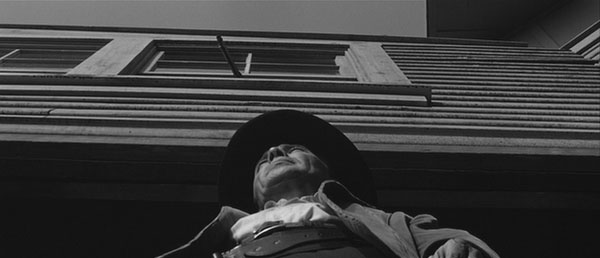
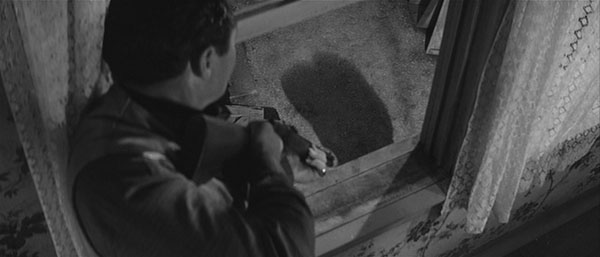
John the marshall is a slow-talkin’ goodly old man with bad eyesight whom Brockie shoots (not to death) just for the hell of it, but the cowardly nasal-voiced sheriff Logan and the local judge are friends of Stanwyck’s, so when Brockie is arrested he’s quickly let out. They have a harder time protecting Swain, the wanted man, since he’s got a federal warrant on him, so Charlie Savage kills him in his cell before Swain can say too much. Griff is on the case right away, knowing it’s Charlie because he’s the best shot in town (although why does it take the best shot in town to blast a guy through a prison window?). Charlie sets a trap for Griff, but young Chico interferes and kills Charlie.

image

“Now what did I do wrong?”
“Now you’ve killed a man.”

image

I’m out of sequence here but it doesn’t matter. Griff and Barbara have a symbolic love scene during a tornado and bond over their wild little brothers. Griff bathes in a barrel (but does not get shot up a la House of Bamboo). The movie breaks into a song about Barbara (“She’s a high-ridin’ woman with a whip”). And whenever a man and a woman are alone, the innuendo cranks way up, higher than I thought it could go in the 50’s (well, I suppose Will Success Spoil Rock Hunter was the same year). There’s talk of the death of the wild west, of a peaceful, civilized future.

image

But the kids still wanna play shoot-’em-up. Wes is predictably but still terribly, killed on his wedding day by Brockie, and that’s not the kind of thing Griff can let go. He shames the sheriff, who fails to kill Griff and so loses Barbara. The famed ending, in the writer/director’s own words:

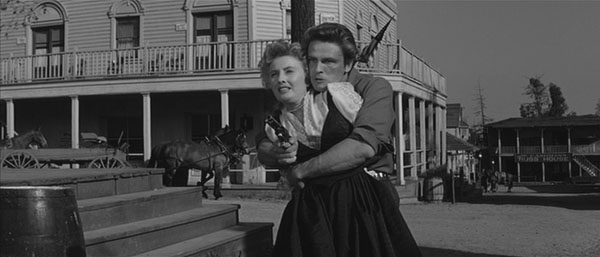
Brock knows Griff loves his sister and surely won’t shoot a woman. He’s wrong. Griff plugs Jessica in the leg and, as she slides to the ground, empties his pistol into the bastard brother.

Griff doesn’t kill Brock out of vengeance. He’s eliminating a cancer that’s terrorizing the community. But he’s disgusted with himself. By resorting to guns, Griff sees the last ten years vanish in a flash, as he becomes the killer he’s renounced.

My original script had Griff killing both Jessica and her brother, stepping over their corpses in a daze, throwing his gun down – this time for good – and walking up the dusty street without a pause. Nothing and no one exists for Griff anymore. The End. That version ran into trouble at the studio…

image

Instead Chico ends up marshall and Barbara runs after Griff as he’s leaving town and they ride away. A few months after China Gate (and somehow Run of the Arrow came in between them), the filmmaking is smooth as hell – scenes playing out in single long takes with powerful fast cutting during the action scenes.

Barbara, in her final year as a headlining movie star:
image

Fuller again:

My story hinged on America’s pervasive fascination with guns. Hell if I know why people think guns are sexy. I cooked up a helluva lot of sexual metaphors playing with the idea.

image

Our gruff hero Griff (far left) is professional tough guy actor Barry Sullivan (The Bad and the Beautiful). Gene Barry (on right, star of China Gate, played a fake Mexican in Red Garters) is brother Wes. Robert Dix (writer/star of Five Bloody Graves) is Chico, and in the light coat is Sheriff Dean Jagger (the beloved major in White Christmas, also in Lang’s Western Union):
image

Fuller:

With Forty Guns, I’d really hit my stride. I considered it one of my best efforts so far. Sure, there were some compromises – like the ending, but it came pretty close to my original vision. At the time, very few people were given the opportunity to write, produce, and direct their own movies.

image

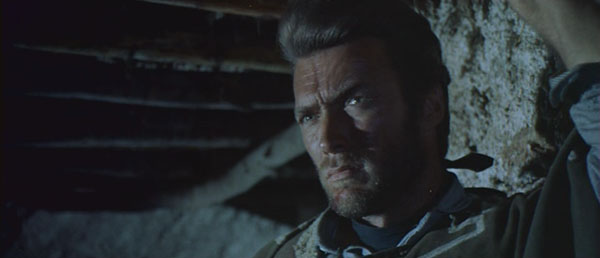
Zowie, a pip of a western, and not at all a sequel to A Fistful of Yojimbo like I’d feared. Thrilling action with all the close-ups and wide-shots, Morricone twang and badass tough guys we’d expect.

Clint, eight years before facing off against Briggs:
image

Clint is a steely young bounty killer out for heaps of money.

Lee, some six years after Ride Lonesome:
image

Lee is a steely older bounty killer out for revenge. Of course we do not know he’s out for revenge until the very end when it’s revealed that the music-box portrait chain he carries around belonged to his sister who was long ago killed by super-thug El Indio.

Gian Volontè of Hercules and the Captive Women, later in Le Cercle rouge and Sacco & Vanzetti:
image

The meaning of this musical/emotional prop is withheld until the final showdown, almost exactly like Charles Bronson’s harmonica in Once Upon a Time in the West. Lee and Indio are shown to be excellent long-range shooters. Lee, however, is the Fastest Man In The West (making the outcome of the climactic shootout a foregone conclusion). I think Clint’s special skill is a supernatural awareness of his surroundings, knowing exactly where/who to shoot. Awesome movie, anyway.

image

The Shooting (1967)

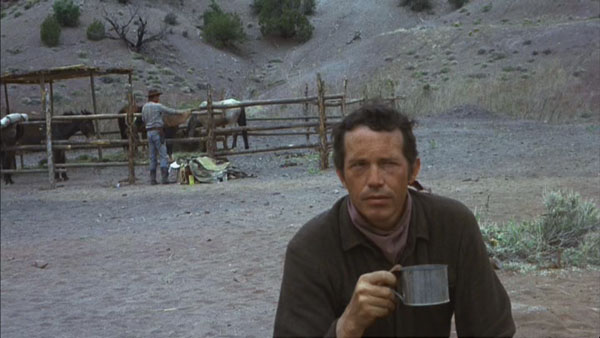
Awesome, mysterious western. Performances are understated except by Will Hutchins, who maybe tries too hard to be the stupid one, and Millie Perkins, who maybe tries too hard to be the unknowable badass.

Your comic relief: Hutchins of Merrill’s Marauders
image

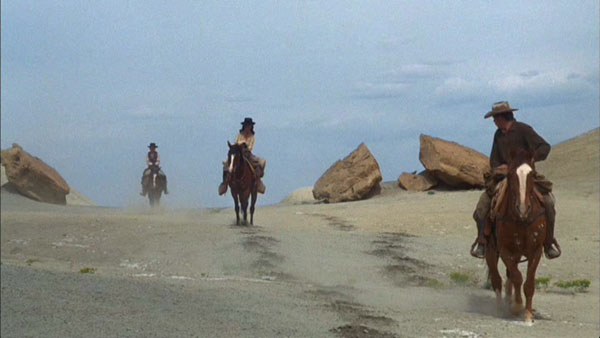
Will is hanging out with friend Leland when Leland is shot to death by offscreen persons unknown. Later on, Warren “GTO” Oates rides up looking for Leland, and both of ’em get surprised by Millie, who hires ’em to come with her.

image

The movie never explicitly tells us that she’s looking for revenge on Warren’s evil twin brother and that the men are hired to help track him, and if it had told us it probably wouldn’t enjoy the same cult success. All the carefully hidden information keeps things exciting.

image

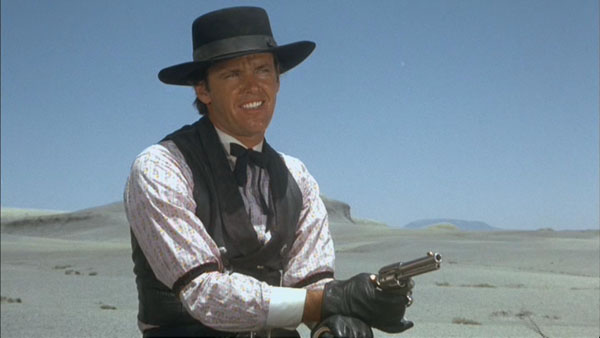
Fastest-gun-in-the-west Jack Nicholson trails them unseen for a long time, then rides openly with ’em after he’s discovered, just being a huge jerk. Starts to become clear that he and Millie are obsessed with something, and Warren and Will probably won’t make it home… then suddenly they’re hot on the trail of the brother, and a subliminal shootout leaves us wondering what just happened.

Kind of a haunting movie, well paced and shot by reliably weird cinematographer Gregory Sandor (Forbidden Zone, De Palma’s Sisters).

image

image

Ride in the Whirlwind (1965)

If you think about their relative effectiveness and beauty and straightforwardness of plot, this movie would seem like the cheapie add-on flick of the two (Hellman and Nicholson went into the desert to shoot a movie and exec-producer Roger Corman said “while you’re out there, why not shoot two movies”). But this one has more actors, more gunshots and more buildings burning down, so it was intended to be the real picture, and cult-classic The Shooting was the “aw hell, as long as we’re here” picture. Funny how things work out.
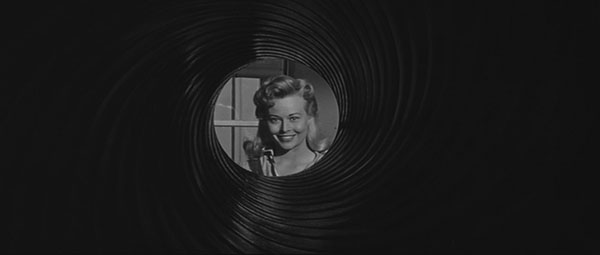
One of Harry Dean’s first credited movie roles:
image

Three plain ol’ regular-guy cowhands, not heroes or great gunfighters or brilliant problem-solvers, just plain-damn-ol’ guys, run into some bad dudes who just robbed a stagecoach. The bad dudes (led by eyepatch-sporting Harry Dean Stanton) concoct a story which our men see right through, but both decide to tolerate each other for the night. But oops, lawmen catch up with the baddies and assault their shack hideout assuming our fellas are part of the gang. Otis catches a bullet, so the other two, Vern (chewy Cameron Mitchell, then of Hell and High Water and House of Bamboo, later in Space Mutiny) and Wes (our writer Jack Nicholson, remarkably good at playing a regular guy) flee to the hills.

Otis (the good guy who gets killed) is played by the writer of sci-fi crap classic The Space Children.
image

The hills and the shack both prove hard to escape. Finally the shack is burned down, and the surviving criminals are hanged. Meanwhile, after some close calls with bullets and cliffs, our two guys find a ranch house populated by stump-choppin’ routine-livin’ dad George Mitchell (of Face of the Screaming Werewolf), his barely-there wife, and their daughter, 27-playing-18 Millie Perkins. Our guys hold ’em hostage planning to wait out the lawmen, trying not to offend or do harm while remaining threatening enough to be effective.

Rupert Crosse is credited as “indian joe” but I’m not so sure he’s Indian:
image

This is the best part of the movie, the tense waiting, since all the chases and gunfights are all pretty routine. Checkers are played, the horse stable is visited, and the family is told that our guys are gonna have to steal two horses to get away. When the lawman comes a-calling, George Mitchell tries to get sneaky, resulting in a final shootout which kills Mitchells George and Cameron (no relation?) and leaves Jack riding away (not into the whirlwind; there is no whirlwind).

image

Still not so sure I understand the auteur-stamp of Howard Hawks (some characteristics of which were discussed after watching His Girl Friday). But gosh does he make entertaining movies. Both of these built up tension and excitement, then came up with improbably happy endings for our heroes.

To Have and Have Not (1944)

A few years after His Girl Friday, same year as Wilder’s Double Indemnity. Novel by Hemingway, adapted by Faulkner – that’s some writing credentials. Bogart, so soon after Casablanca, is again trying to stay coolly neutral in a tense city occupied by wartime Vichy France (Martinique this time), falling for a girl who’s trying to skip town. This time the girl is smoky, deep-voiced Lauren Bacall (her first movie) and Bogie’s drunk friend and partner in his fishing boat business is triple oscar-winner Walter Brennan of Lang’s Fury & Hangmen Also Die. Clearly a great character actor, Brennan spiced up both movies considerably.

Bogie has been taking an obnoxious customer out fishing all week, catches Lauren picking the guy’s pocket before Bogie has been paid, but all is forgiven when guy catches a stray bullet during a police raid at their favorite hangout bar (a secret meeting place for the anti-Vichy free French underground). Now broke with no customer, Bogie takes a job ferrying a French couple in his boat, then helping the guy when he gets his stupid self shot. Suspecting Bogie’s involvement, the nazi collaborators hold Eddie (that’s Walter Brennan) hostage and refuse him alcohol until Bogie gives up the hostages. This is the point when I decided the movie is not trying to be grimly realistic. I hadn’t felt any sense of danger or suspense so far, not even when the boat was shot at, and now this kidnapping has hardly begun when Bogie shoots a guy through his desk, turns the tables on the baddies and escapes with the girl. He’s sort of an untouchable superhero version of his Casablanca character, and he’s got a sexier, younger and more independent woman.

image

Bacall sings with Hoagy Carmichael in the “Sam” role. Hoagy wrote “Georgia On My Mind” (for real, not in this movie).
image

Frenchy – the clockwork-loving party host of Rules of the Game – works the hotel bar and helps protect and organize the resistance.
image

Johnson, Bogie’s customer, is rear-projection fishing. Looks like fun – and it’s six decades before the Nintendo Wii was invented.
image

Walter Brennan manages to be a funny drunk without being a typical W.C. Fields-ish classic Hollywood drunk. In fact, he’s the most believable guy in the movie.
image


Rio Bravo (1959)

I guess I’m spoiled, since the only westerns I’ve watched in five years are this one, The Searchers, and those Budd B. pics from last week – none of the standard-quality workman stuff which everyone watching this in ’59 would’ve seen, nor the 50’s hits this was supposedly reacting against (3:10 to Yuma and High Noon). The Searchers had a darker edge to it, while this one has a giddy, explosive shootout ending in which the heroes are hardly in any danger, just a buncha bonkers western fun. Wasn’t expecting that.

One of the last films by Hawks, less prolific in his old age. Six years after Gentlemen Prefer Blondes, same year as The Crimson Kimono, North By Northwest and Ride Lonesome. Apparently his beef with High Noon was that the sheriff runs around town asking everybody for help. Hawks and Wayne thought that wasn’t right, and wrote themselves a less wussy lawman, someone who’ll take on a hundred men if he has to, and won’t even accept help from most people, let alone ask for it.

I liked this movie even better than the other. Wayne, wearing a series of colorful shirts, arrests the brother of a real badass for killing a guy in a drunken brawl, with the help of disgraced, drunken former deputy Dean Martin (best acting I’ve ever seen from him). A few years after Artists & Models, Dean had blown off Jerry Lewis and gone serious – but Ocean’s Eleven was just a year away, probably put a small dent in his perceived seriousness. Ol’ Walter Brennan from the other movie is a wacky deputy who minds the jail. Walter’s the life of the party, as usual.

Dean checks out Walter’s John Wayne impression:
image

Now Joe’s in jail and every bad dude in town is angry about it. The stage rolls into town carrying Wayne’s old buddy Ward Bond (a John Ford regular), hot chick Angie Dickinson (China Gate, Point Blank, elevator victim in Dressed To Kill) and quickdraw Ricky Nelson (teen idol and TV star). Ward offers to help, Wayne turns him down but a few hours later Ward is shot anyway.

The late Ward, and Wayne who has a colorful shirt for every occasion:
image

Ricky and Angie:
image

Eventully badass Burdette (John Russell of The Sun Shines Bright) shows up to help his brother (Claude Akins of The Killers, Merrill’s Marauders). Plans to raid the jail are derailed when they hear Walter will happily blow away the brother if anyone tries anything.

L-R: Walter, a jailed brother, a badass
image

Action! Dean is kidnapped, Helpful hotel owner Carlos and his wife are kidnapped, shootouts on the street and in the hotel, Walter Brennan gets to use that shotgun, Ricky and Dean each sing us a song, movie ends with a suspenseless comic scene, our heroes all tossing dynamite at the building where Burdette has holed up, shooting and laughing – not the kind of grim, fateful finale you usually get in a violent western. So right, I don’t know what kind of Hawksian analysis the critics apply to scientifically prove this film’s greatness, but I sure thought it was a tootin’ good time.