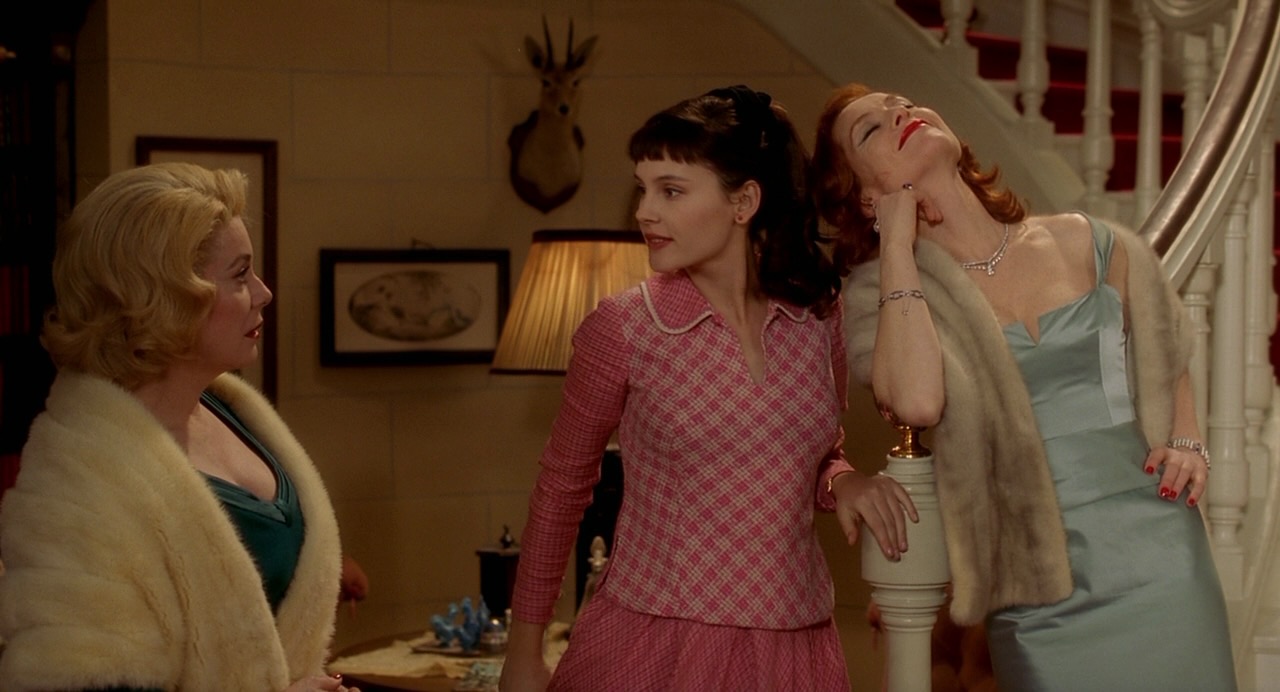
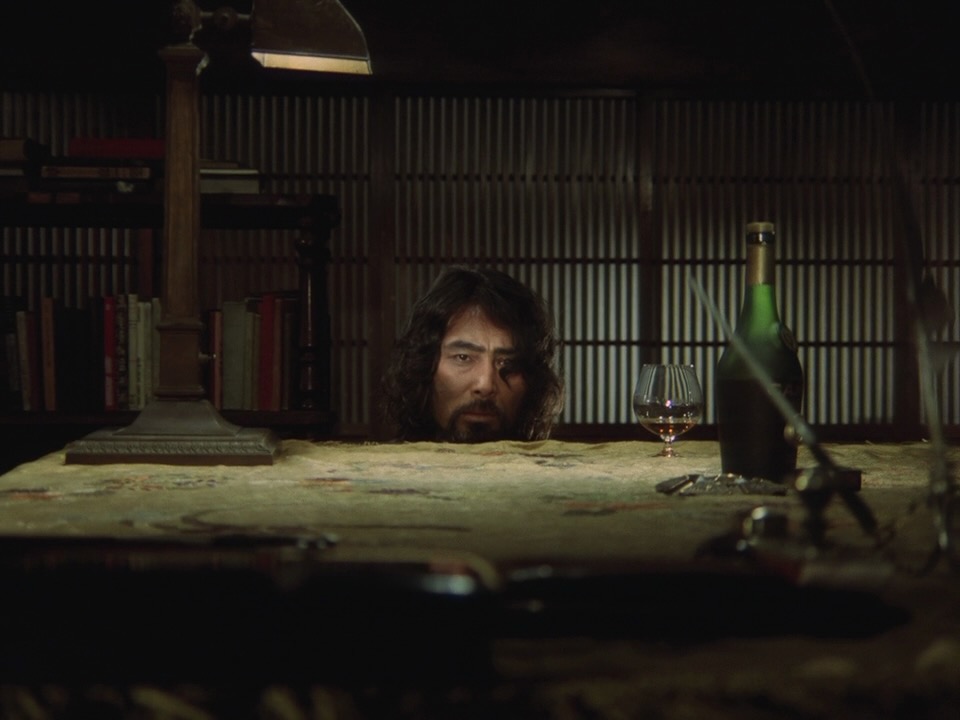
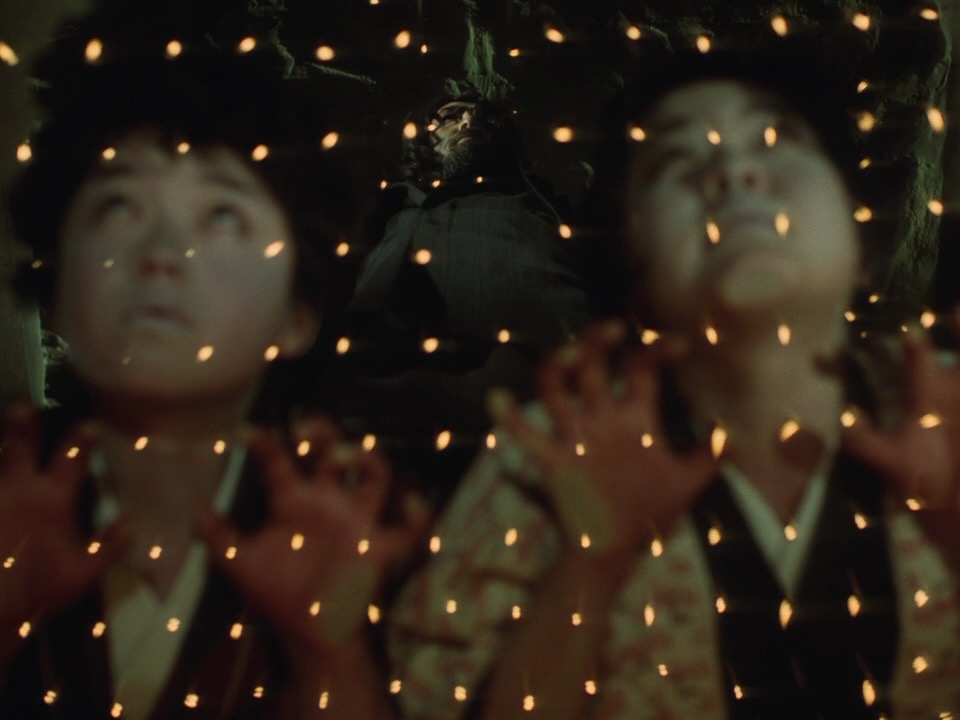
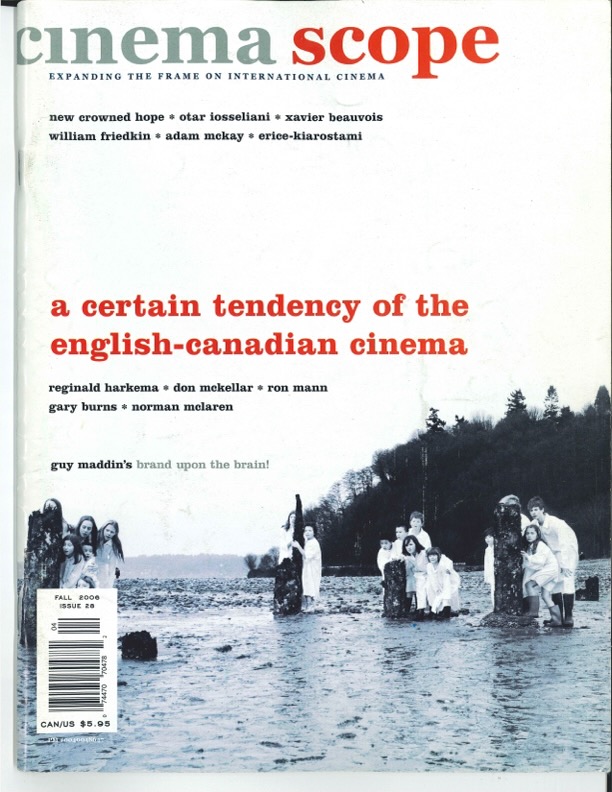
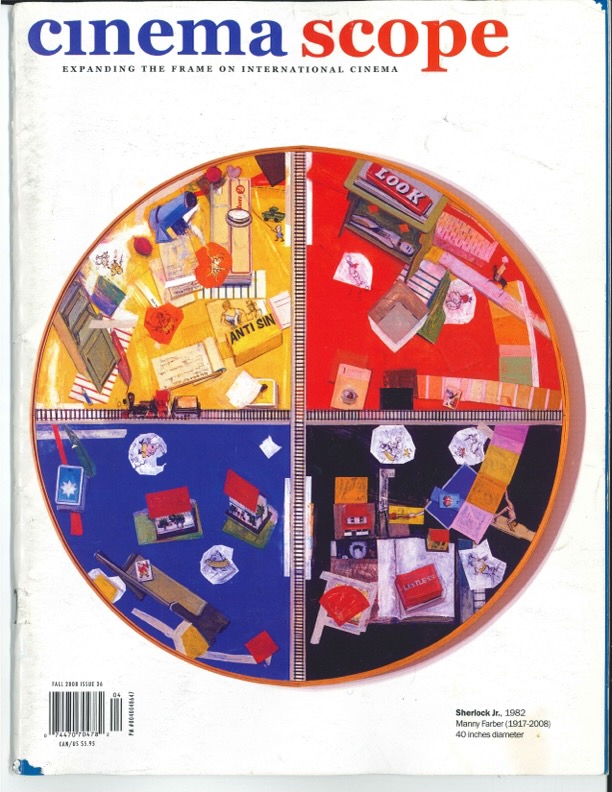
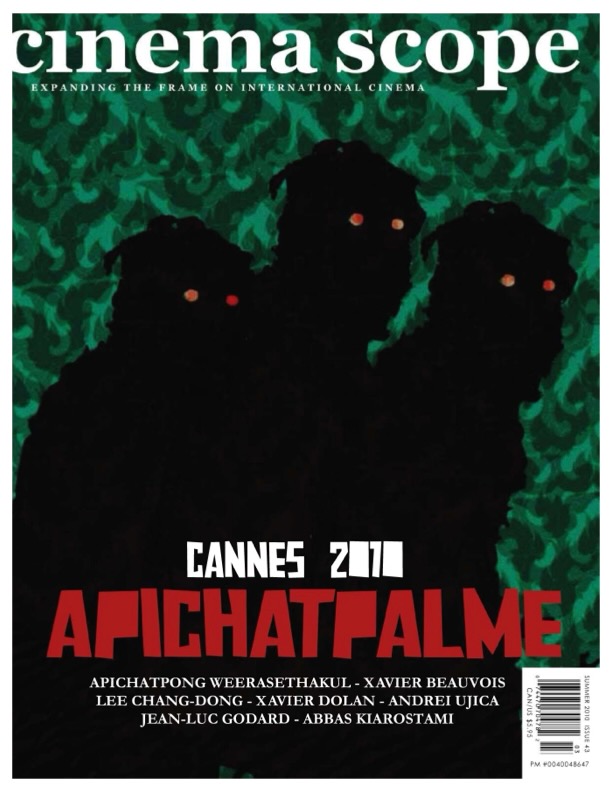
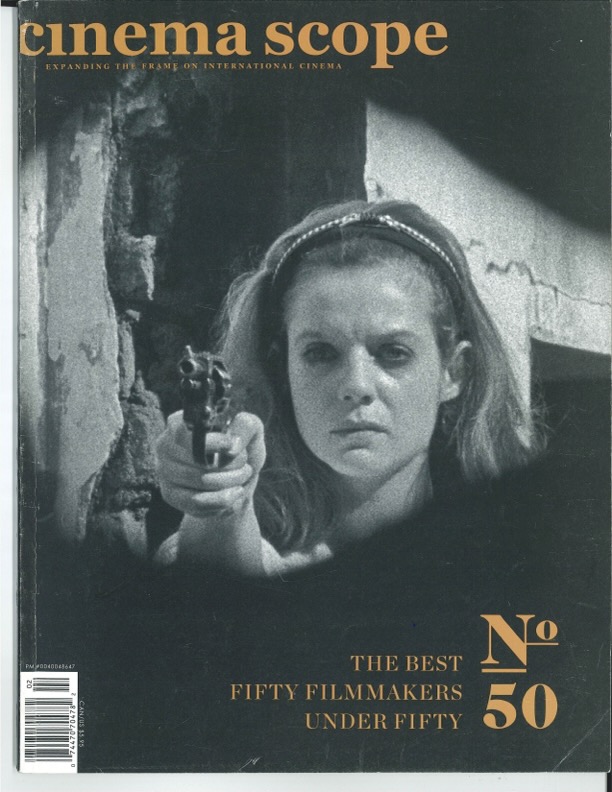
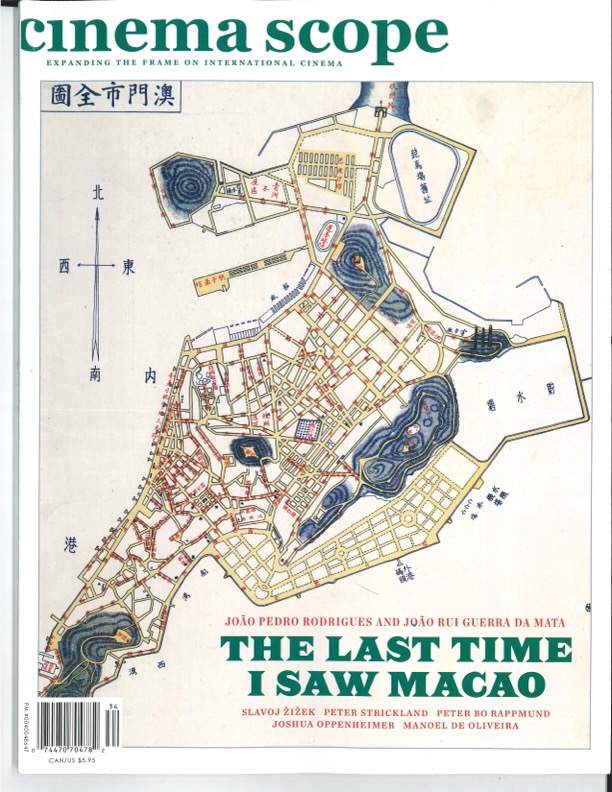
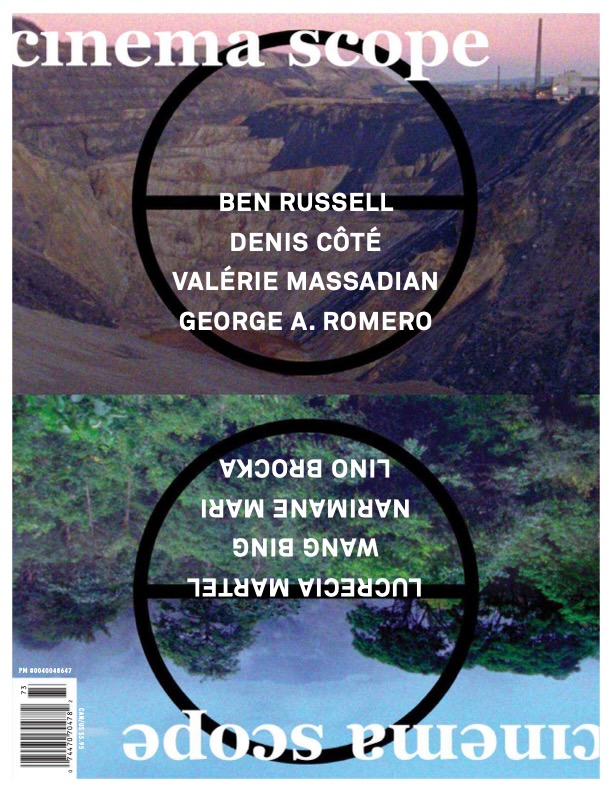
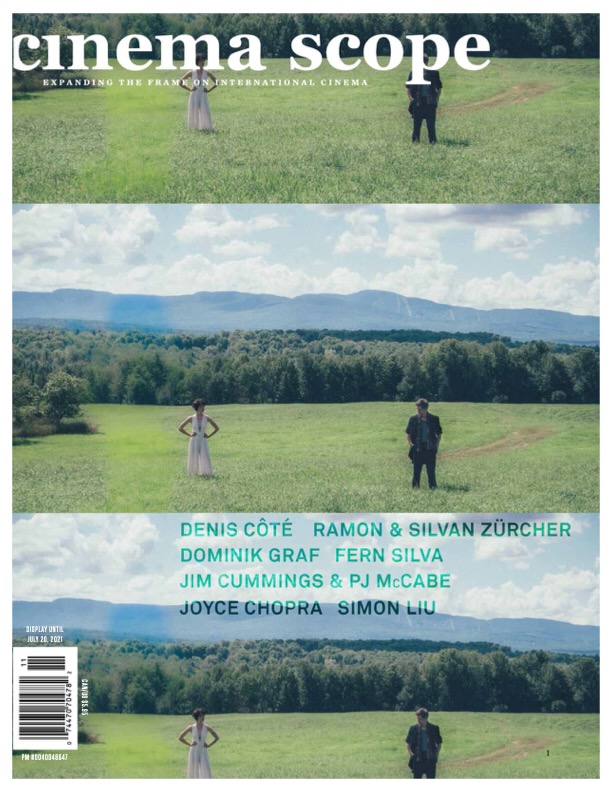
The ol’ movie blog is almost twenty years old, and for that entire time I’ve been reading Cinema Scope magazine. I subscribed after seeing Guy Maddin on the cover of issue 16 and stayed through Maddin’s cover of the final issue 97. It was a huge influence on what I chose to watch, and how I thought about film, and now that it’s gone, I won’t know how to tell which new movies to take seriously.
This past month I’ve caught up with a bunch of films that appeared on their front covers and/or year-end lists. To cap off those hastily-written entries, here’s an incomplete list of 300ish movies I watched and logged here – for better or worse – after reading about them in C. Scope’s pages. Sorted by the year they covered each movie, not when I watched it, which was often a very long time later.
–
2003-2005
Morvern Callar (Lynne Ramsay)
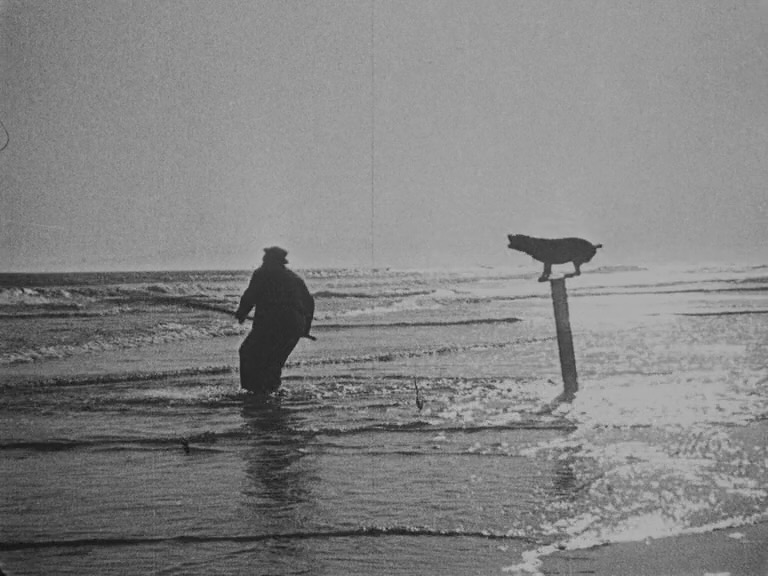
Cowards Bend the Knee (Guy Maddin)
Waiting For Happiness (Abderrahmane Sissako)
In My Skin (Marina de Van)
Tarnation (Jonathan Caouette)
Mondovino (Jonathan Nossiter)
Kings and Queen (Arnaud Desplechin)
L’Enfant (Dardennes)
Instructions for a Light and Sound Machine (Peter Tscherkassky)
The Death of Mr. Lazarescu (Cristi Puiu)
Three Times (Hou Hsiao-hsien)
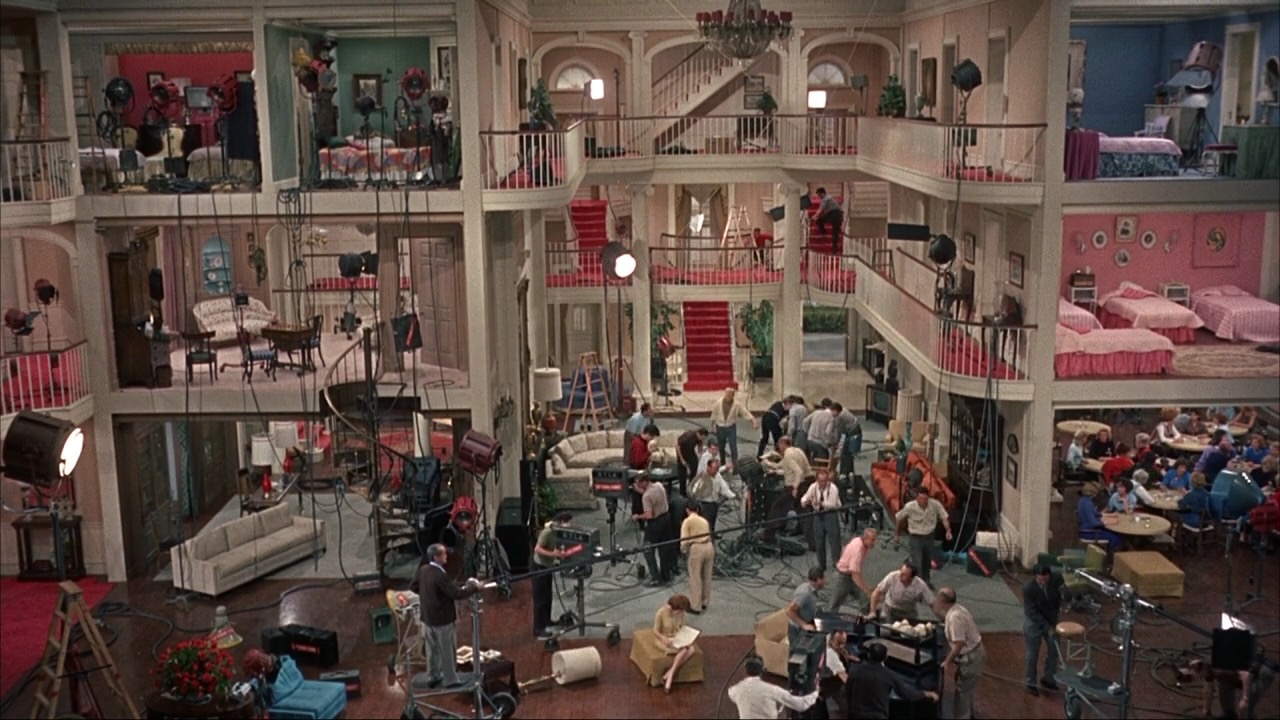
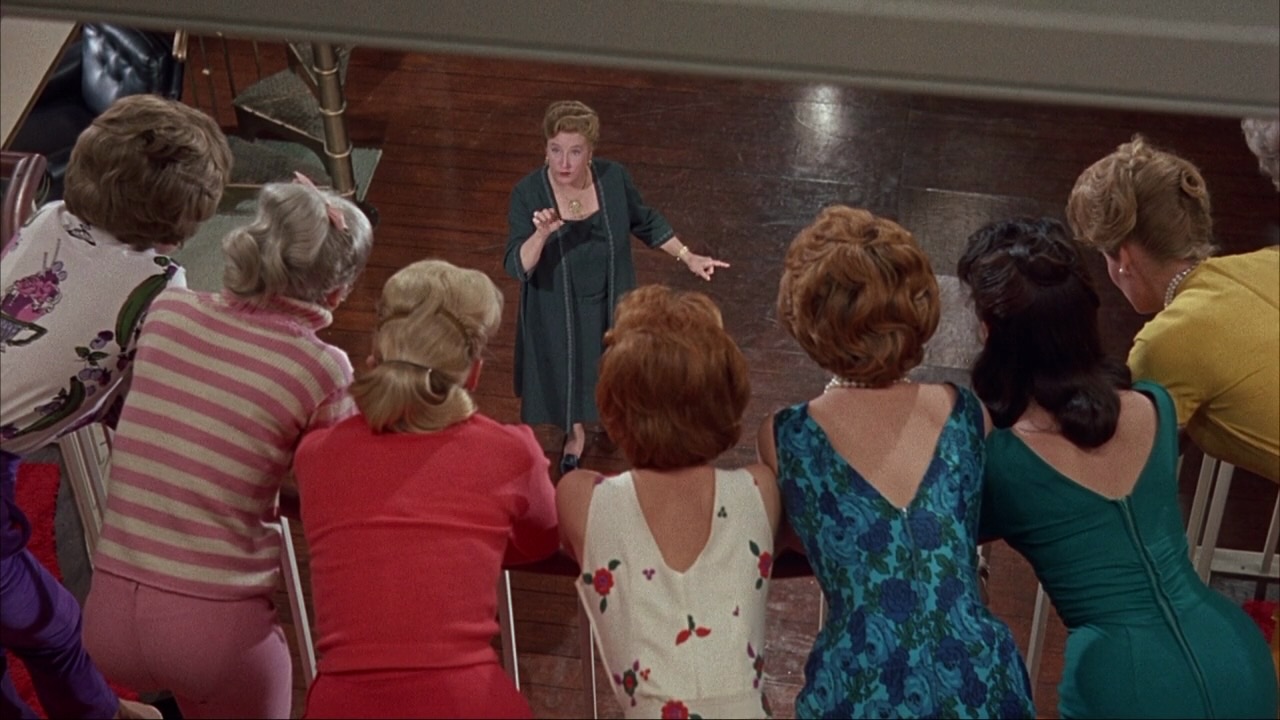
8 Women (Francois Ozon)
Bright Future (Kiyoshi Kurosawa)
Childstar (Don McKellar)

2006
Homecoming (Joe Dante)
The Regular Lovers (Philippe Garrel)
La Commune (Peter Watkins)
Iraq in Fragments (James Longley)
Old Joy (Kelly Reichardt)
Marie-Antoinette (Sofia Coppola)
Gabrielle (Patrice Chéreau)
The Wind That Shakes the Barley (Ken Loach)
Climates (Nuri Bilge Ceylan)
Colossal Youth (Pedro Costa)
Southland Tales (Richard Kelly)
Opera Jawa (Garin Nugroho)
Tales of the Rat Fink (Ron Mann)
Offside (Jafar Panahi)
Syndromes and a Century (Apichatpong Weerasethakul)
2007
The Last Winter (Larry Fessenden)
Deja Vu (Tony Scott)
Still Life (Jia Zhang-Ke)
Quei loro incontri (Straub/Huillet)
The Pervert’s Guide to Cinema (Sophie Fiennes)
12:08 East of Bucharest (Corneliu Porumboiu)
Rehearsals for Retirement (Phil Solomon)
4 Months, 3 Weeks and 2 Days (Cristian Mungiu)
Go Go Tales (Abel Ferrara)
The Trap: What Happened to Our Dream of Freedom (Adam Curtis)
37/78 Tree Again (Kurt Kren)
Profit Motive and the Whispering Wind (John Gianvito)
Paranoid Park (Gus Van Sant)

2008
The Band’s Visit (Eran Kolirin)
In the City of Sylvia (José Luis Guerín)
La France (Serge Bozon)
Chop Shop (Ramin Bahrani)
Victory Over The Sun (Michael Robinson)
RR (James Benning)
Class Relations (Straub/Huillet)
Silent Light (Carlos Reygadas)
Baghead (Jay & Mark Duplass)
Mock Up on Mu (Craig Baldwin)
The Headless Woman (Lucrecia Martel)
Of Time and the City (Terence Davies)
Happy-Go-Lucky (Mike Leigh)
Pontypool (Bruce McDonald)
JCVD (Mabrouk El Mechri)
Momma’s Man (Azazel Jacobs)
2009
Hunger (Steve McQueen)
Revanche (Götz Spielmann)
Detour (Edgar G. Ulmer)
Double Take (Johan Grimonprez)
Independencia (Raya Martin)
Bright Star (Jane Campion)
Let Each One Go Where He May (Ben Russell)
Sweetgrass (Lucien Castaing-Taylor & Ilisa Barbarsh)
Trash Humpers (Harmony Korine)
Tetro (Francis Ford Coppola)
Everyone Else (Maren Ade)

2010
Collapse (Chris Smith)
Film Socialism (Jean-Luc Godard)
Cold Weather (Aaron Katz)
Uncle Boonmee Who Can Recall His Past Lives (Apichatpong Weerasethakul)
Of Gods and Men (Xavier Beauvois)
The Oath (Laura Poitras)
Oki’s Movie (Hong Sang-soo)
I Wish I Knew (Jia Zhang-Ke)
The Ghost Writer (Roman Polanski)
Alamar (Pedro González-Rubio)
2011
In the Shadows (Thomas Arslan)
Spring in a Small City (Fei Mu)
Mysteries of Lisbon (Raoul Ruiz)
Essential Killing (Jerzy Skolimowski)
The Four Times (Michelangelo Frammartino)
El Sicario Room 164 (Gianfranco Rosi)
Attenberg (Athina Rachel Tsangari)
On Tour (Mathieu Amalric)
The White Meadows (Mohammad Rasoulof)
I Saw the Devil (Jee-woon Kim)
Road to Nowhere (Monte Hellman)
The Turin Horse (Béla Tarr)
Dreileben (Graf & Hochhausler & Petzold)
Take Shelter (Jeff Nichols)
House of Tolerance (Bertrand Bonello)
Monsieur Lazhar (Philippe Falardeau)
Drive (Nicolas Winding Refn)
Attack the Block (Joe Cornish)
Symbol (Hitoshi Matsumoto)
Martha Marcy May Marlene (Sean Durkin)
Target (Alexander Zeldovich)
Sleeping Sickness (Ulrich Köhler)

2012
Secret History of the Dividing Line (David Gatten)
Kill List (Ben Wheatley)
Two Years at Sea (Ben Rivers)
Crank (Neveldine & Taylor)
Tabu (Miguel Gomes)
Alps (Yorgos Lanthimos)
Neighbouring Sounds (Kleber Mendonca Filho)
Cosmopolis (David Cronenberg)
Holy Motors (Leos Carax)
Room 237 (Rodney Ascher)
The Loneliest Planet (Julia Loktev)
Museum Hours (Jem Cohen)
Greatest Hits (Nicolas Pereda)
Differently, Molussia (Nicolas Rey)
N:O:T:H:I:N:G and T,O,U,C,H,I,N,G (Paul Sharits)
The End of Time (Peter Mettler)
Viola (Matias Piñeiro)
2013
Tectonics (Peter Bo Rappmund)
Girl from Nowhere (Jean-Claude Brisseau)
The Act of Killing (Joshua Oppenheimer)
Stories We Tell (Sarah Polley)
Vic+Flo Saw a Bear (Denis Côté)
Chumlum (Ron Rice)
Computer Chess (Andrew Bujalski)
Norte, the End of History (Lav Diaz)
Stranger by the Lake (Alain Guiraudie)
The Past (Asghar Farhadi)
The Strange Little Cat (Ramon Zurcher)
Stray Dogs (Tsai Ming-liang)
What Now? Remind Me (Joaquim Pinto)
Grosse Fatigue (Camille Henrot)
The Strange Color of Your Body’s Tears (Cattet & Forzani)
A Spell to Ward Off the Darkness (Ben Rivers & Ben Russell)
2014
Tom at the Farm (Xavier Dolan)
Why Don’t You Play in Hell? (Sion Sono)
Mouton (Gilles Deroo & Marianne Pistone)
New Fancy Foils (Jodie Mack)
Hard to be a God (Aleksei German)
Ida (Pawel Pawlikowski)
Jauja (Lisandro Alonso)
Force Majeure (Ruben Östlund)
The Wonders (Alice Rohrwacher)
Li’l Quinquin (Bruno Dumont)
Ape (Joel Potrykus)
Stop the Pounding Heart (Roberto Minervini)
Listen Up Philip (Alex Ross Perry)
20,000 Days on Earth (Iain Forsyth & Jane Pollard)
La Sapienza (Eugène Green)
The Second Game (Corneliu Porumboiu)

2015
A Pigeon Sat on a Branch Reflecting on Existence (Roy Andersson)
The Duke of Burgundy (Peter Strickland)
Orpheus (Outtakes) (Mary Helena Clark)
Clouds of Sils Maria (Olivier Assayas)
Phoenix (Christian Petzold)
Blackhat (Michael Mann)
Wild Tales (Damián Szifrón)
Mad Max: Fury Road (George Miller)
Mia Madre (Nanni Moretti)
The Other Side (Roberto Minervini)
Arabian Nights (Miguel Gomes)
Miami Blues (George Armitage)
Ritual (Joseph Bernard)
Cosmos (Andrzej Zulawski)
The Club (Pablo Larrain)
Right Now, Wrong Then (Hong Sang-soo)
88:88 (Isiah Medina)
No Home Movie (Chantal Akerman)
Visit, or Memories and Confessions (Manoel de Oliveira)

2016
Office (Johnnie To)
The Visit (M. Night Shyamalan)
The Hitch-Hiker (Ida Lupino)
Engram of Returning (Daïchi Saïto)
Love It, Leave It (Tom Palazzolo)
Christine (Antonio Campos)
Kate Plays Christine (Robert Greene)
Sixty Six (Lewis Klahr)
The Wailing (Na Hong-jin)
The Death of Louis XIV (Albert Serra)
Bleu Shut (Robert Nelson)
Things to Come (Mia Hansen-Løve)
Elle (Paul Verhoeven)
The Challenge (Yuri Ancarani)
The Human Surge (Eduardo Williams)
All the Cities of the North (Dane Komljen)
Berlin Horse (Malcolm Le Grice)
New York Portrait and Boston Fire (Peter Hutton)

2017
The Ornithologist (João Pedro Rodrigues)
As Without So Within (Manuela de Laborde)
Austerlitz (Sergei Loznitsa)
Kékszakállú (Gastón Solnicki)
The Lost City of Z (James Gray)
Resident Evil 4 to 6 (Paul W.S. Anderson)
Columbus (Kogonada)
I Am Not Madame Bovary (Feng Xiaogang)
Good Time (Ben & Joshua Safdie)
Western (Valeska Grisebach)
Let the Sunshine In (Claire Denis)
24 Frames (Abbas Kiarostami)
Ouroboros (Basma Alsharif)
Did You Wonder Who Fired the Gun? (Travis Wilkerson)
Zama (Lucrecia Martel)
Strangely Ordinary This Devotion (Dani & Sheilah ReStack)
Good Luck (Ben Russell)
Ex Libris: The New York Public Library (Frederick Wiseman)
First Reformed (Paul Schrader)
2018
Foxtrot (Samuel Maoz)
Dawson City: Frozen Time (Bill Morrison)
The Wandering Soap Opera (Raoul Ruiz & Valeria Sarmiento)
Cocote (Nelson Carlo De Los Santos Arias)
3/4 (Ilian Metev)
Dillinger Is Dead (Marco Ferreri)
Bodied (Joseph Kahn)
The Rider (Chloé Zhao)
Burning (Lee Chang-dong)
Climax (Gaspar Noé)
Long Day’s Journey Into Night (Bi Gan)
Shoplifters (Hirokazu Kore-Eda)
In My Room (Ulrich Köhler)
Asako I & II (Ryûsuke Hamaguchi)
Rose Gold (Sara Cwynar)
Blaze (Ethan Hawke)
Night Pulse (Damon Packard)
The Grand Bizarre (Jodie Mack)
La Flor (Mariano Llinás)
Fausto (Andrea Bussmann)
An Elephant Sitting Still (Hu Bo)
Happy as Lazzaro (Alice Rohrwacher)

2019
Belmonte (Federico Veiroj)
Rojo (Benjamín Naishtat)
A Land Imagined (Siew Hua Yeo)
Synonyms (Nadav Lapid)
The Last Black Man in San Francisco (Joe Talbot)
Just Don’t Think I’ll Scream (Frank Beauvais)
Fourteen (Dan Sallitt)
The Plagiarists (Peter Parlow)
I Was at Home, But… (Angela Schanelec)
MS Slavic 7 (Sofia Bohdanowicz)
Unfriended 2: Dark Web (Stephen Susco)
Indefinite Pitch (James Wilkins)
Portrait of Ga (Margaret Tait)
It has to be lived once and dreamed twice (Rainer Kohlberger)
Diamantino (Gabriel Abrantes & Daniel Schmidt)
Atlantics (Mati Diop)
It Must Be Heaven (Elia Suleiman)
The Traitor (Marco Bellocchio)
Bird Island (Sergio Da Costa & Maya Kosa)
Martin Eden (Pietro Marcello)
Those That, at a Distance, Resemble Another (Jessica Sarah Rinland)
Oroslan (Matjaz Ivanisin)
Anne at 13,000 Ft. (Kazik Radwanski)

2020
Little Joe (Jessica Hausner)
Portrait of a Lady on Fire (Céline Sciamma)
The 20th Century (Matthew Rankin)
The Assistant (Kitty Green)
Days (Tsai Ming-liang)
The Truffle Hunters (Michael Dweck & Gregory Kershaw)
Cilaos & La Bouche (Camilo Restrepo)
This Is Not a Burial, It’s a Resurrection (Lemohang Jeremiah Mosese)
The Resurrected (Dan O’Bannon)
The Works and Days (of Tayoko Shiojiri in the Shiotani Basin) (Edström Anders & CW Winter)
Dust Devil (Richard Stanley)
Possessor (Brandon Cronenberg)
Notturno (Gianfranco Rosi)

2021
La Nature (Artavazd Peleshian)
Rock Bottom Riser (Fern Silva)
Faya Dayi (Jessica Beshir)
Taming the Garden (Salomé Jashi)
Happy Valley and E-Ticket (Simon Liu)
The Beta Test (Jim Cummings & PJ McCabe)
Fabian: Going to the Dogs (Dominik Graf)
The Empty Man (David Prior)
Woodlands Dark and Days Bewitched (Kier-La Janisse)
What Do We See When We Look at the Sky? (Aleksandre Koberidze)
Social Hygiene (Denis Côté)
El Planeta (Amalia Ulman)
The Scary of Sixty-First (Dasha Nekrasova)
Titane (Julia Ducournau)
Friends and Strangers (James Vaughan)
2022
Celia (Ann Turner)
El Gran Movimiento (Kiro Russo)
Earwig (Lucile Hadzihalilovic)
The Sacred Spirit (Chema García Ibarra)
Outside Noise (Ted Fendt)
A Man and a Camera (Guido Hendrikx)
Mutzenbacher (Ruth Beckermann)
Queens of the Qing Dynasty (Ashley McKenzie)
The Tale of King Crab (Matteo Zoppis & Alessio Rigo de Righi)
A New Old Play (Jiongjiong Qiu)
Enys Men (Mark Jenkin)
Ishtar (Elaine May)

2023-2024
Saint Omer (Alice Diop)
Trenque Lauquen (Laura Citarella)
Rewind & Play (Alain Gomis)
BlackBerry (Matt Johnson)
Fata Morgana (Werner Herzog)
Here (Bas Devos)
Everything Everywhere Again Alive (Keith Lock)
Strange Codes (Arthur Lipsett)
Fallen Leaves (Aki Kaurismäki)
Anatomy of a Fall (Justine Triet)
Do Not Expect Too Much of the End of the World (Radu Jude)
Bouquets (Rose Lowder)
Last Summer (Catherine Breillat)
Tourism and We Don’t Talk (Joshua Gen Solondz)
The Delinquents (Rodrigo Moreno)