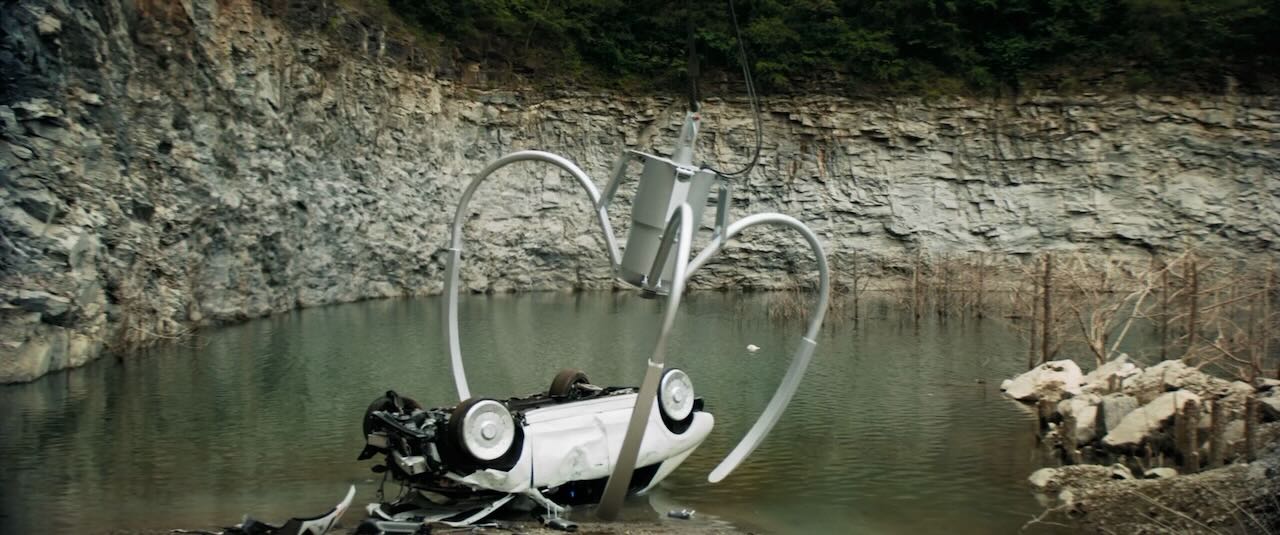
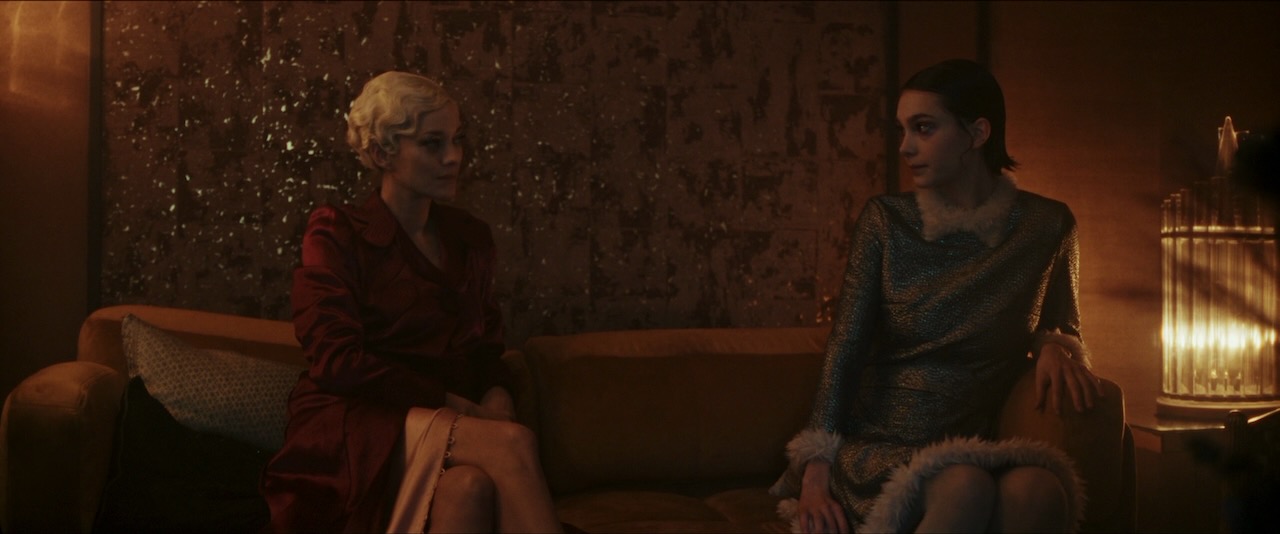
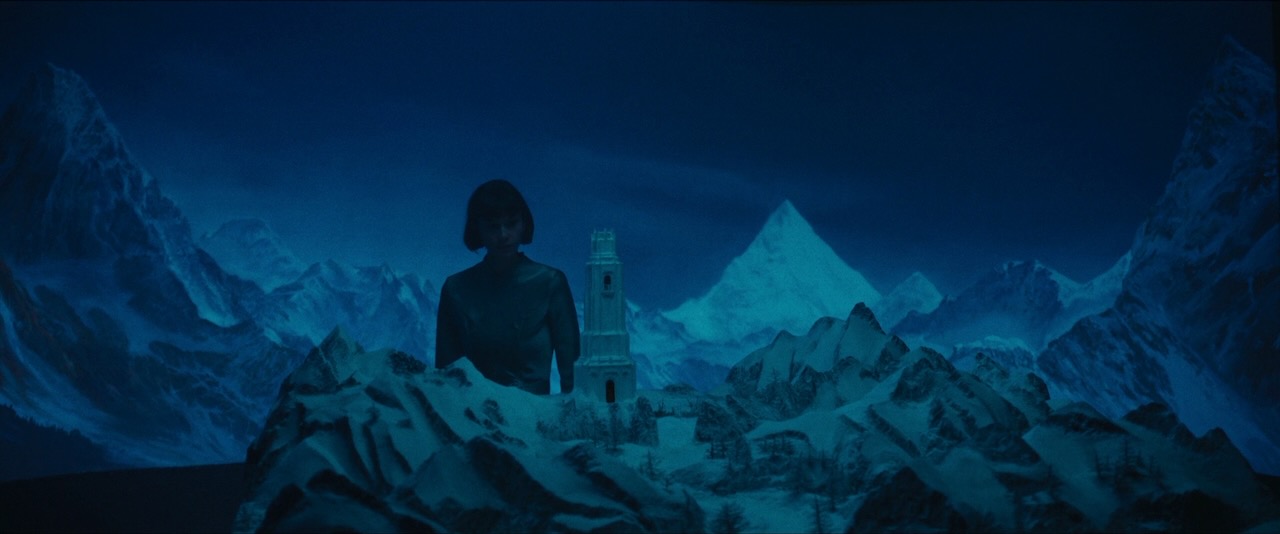
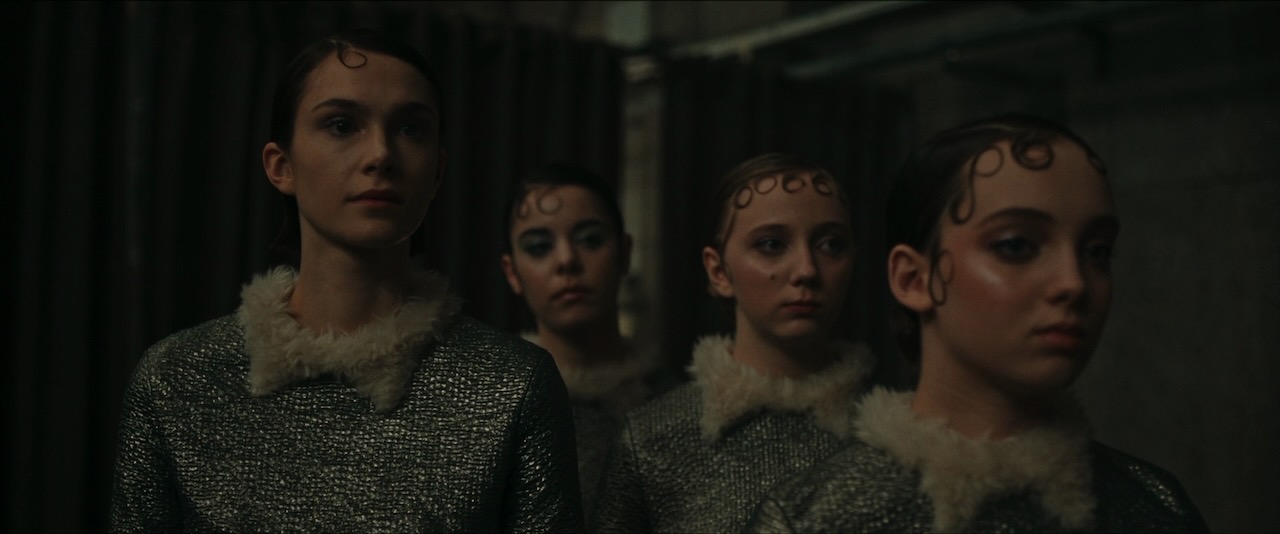
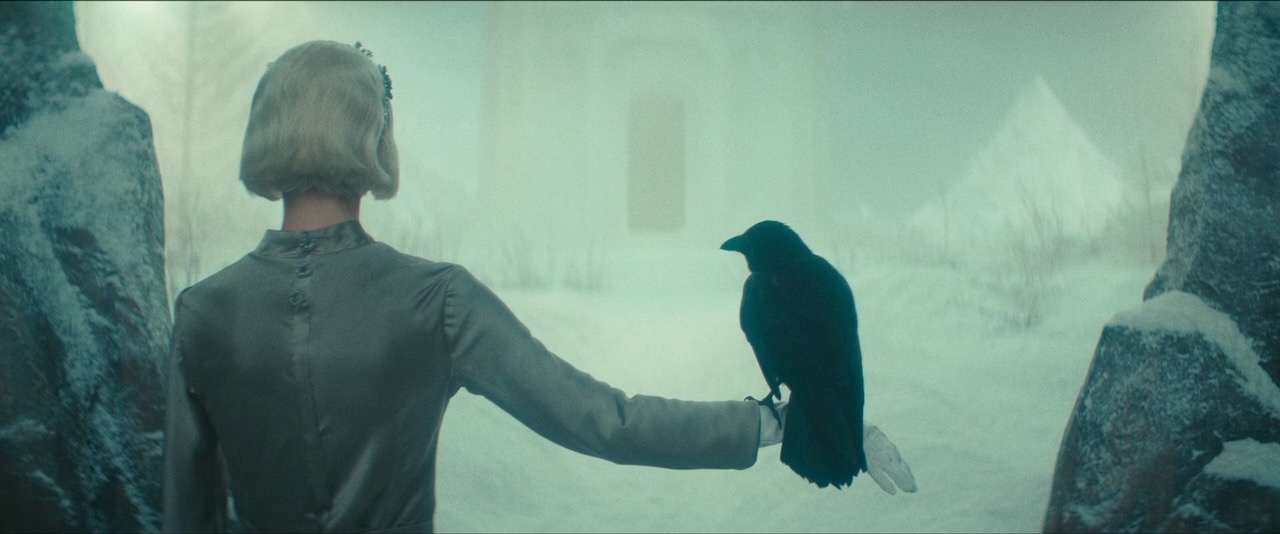
I admit I only watched this because I’m rewatching the long Rivette film with a similar title, but it turned out to be great, currently my favorite Hausner movie. Set in the 1810s, pleasantly suicidal poet Christian Friedel can’t convince Sandra Hüller to die with him, so terminally ill poetry fan Katharina Schüttler steps up. Many quotable scenes within.

This is what I imagine the Fast & Furious movies are like: filling the gaps between action scenes with sappy talk and meaningful glances between friends and family. When everyone shuts up about how meaningful are their relationships and how many times we’ve saved/endangered the world, the highlight is two nearly wordless action scenes in vehicles. In the submarine I think Cruise says one thing (“torpedo tube”), and the plane fight gets better when Esai stops supervillain-monologuing.

Coming a decade after Suzuki’s exile from studio film directing, and not long before his awesome Taisho Trilogy, I wasn’t sure where this movie stood in Suzuki’s career and I’ve put off watching it due to the dour title. Turns out it’s a real hoot, a brightly colored golf/advertising/stalker melodrama.

Taisho star (and a drunk pimp in Ronin Gai) Yoshio Harada plays the shitty boyfriend of a not-top-rated golfer, who hires trainer Takagi (of a handful of Ozu films I haven’t seen) to turn her into a golf champion, but only so an agency can sign her to a modeling contract. She succeeds, and on her first ad shoot they put her in all brown with a fluffy wig – I’d think they don’t know what they’re doing, then again it’s the 1970s.

Golfer Y?ko Shiraki was only in one other film:

The hot new star moves into a custom house with her little brother, where the neighbors don’t accept her, except for Ky?ko Enami (she starred in a Lady Gambler film series) who is starstruck, until she feels wronged by the golfer and the shitty boyfriend and turns dangerous. In the end the golfer is fired from her modeling job and getting pimped out by her stalker, the boyfriend is arrested (by Jo Shishido!) and goes violently mad on a golf course, then the little brother kills both women and burns the house down, all in high wild style.

From the writers of Naked Rashomon, Karate Bear Fighter, and Inflatable Sex Doll of the Wastelands, and the cinematographer of Female Teacher in Rope Hell. Japan is a source of neverending delight. The commentary promises to talk about “idols” in their culture, something that’s been bugging me since Perfect Blue, but I only listened to the first half hour.

I was gonna say “the movie looks artfully shot, too bad my copy is smeary low-res for some reason” – but no, it turns out they shot it on mini-DV. I don’t need to rewatch part two before the third movie, but don’t remember this one at all. Coma victim Cillian awakens into the post-apocalypse, after the extremely infectious rage virus is released from a lab by idiot activists and England is destroyed by Crazies®. He’s rescued by Naomie Harris, and they find a girl whose dad is Brendan Gleeson, and they go on adventures together, getting a flat tire in a rat tunnel, having a Grandaddy-soundtracked grocery shopping spree. Fun’s over after Gleeson gets infected by a crow and the others find a mad group of rapist soldiers. Cillian (a bike messenger who just woke from a coma) turns elite commando and wipes out the squad to save the women. Nayman and Lewis.

“They gave me a blank check as long as I don’t go over budget.” The aviation safety season – Nathan discovers a problem that only he can solve, bringing some Nathan For You energy into The Rehearsal. He thinks social difficulties between copilots prevents them from speaking up when they see something wrong, and aims to solve this by having pilots role-play during flights. Along the way he starts a game show inside the fake airport he built, then the fake crew of his fake singing competition start covertly giving fake therapy to the real pilots. “I’ve always felt that sincerity was overrated.” He goes to Colorado with a couple of cloned dogs, rehearses one dog to live the life of his original (has Fielder read The Boys From Brazil?) then Nathan speed-runs episodes from Captain Sully’s life to understand his mind (always claiming he wants to help others then turning back on himself). “I began studying footage of other comedians who went before congress” – he shows a fake senate his pilot dating reenactments, but not even HBO’s lobbyists and the help of an autism center (who all but directly state that Nathan is obviously autistic) can get him into the real senate, so he has to become a licensed pilot himself and fly a planeload of people safely around in a circle. I’m not sure what any of this proves, but every episode succeeded in being more bonkers than the last.

I’ve gotta stop sitting so close to the screen – between the closeness and the frantic editing, I’m not sure how our small team survived when fifty vampires, who’ve been shown as lightning-quick and super-strong, bust into the house. Bold music throughout, and the music not just incidental but vital to plot and theme. I’d be interested in reading about influences, since it turns From Dusk Till Dawn to Django Unchained. A little too neatly tied together, with the late revelations of the twins’ Chicago adventure (not actually becoming rich gangsters but stealing big from two rival gangs then running away while the gangs blamed each other) and the tolerant local whites’ less-tolerant motivations, and each of the three main dudes meeting a woman at the same time, then those six being the main survivors. Mostly as good as advertised though, taking place in a single day, plus a delicious Buddy Guy postscript.

The near-white girl is Hailee from True Grit, and the other Michael Jordan’s woman played the wife in His House… we saw a preview for the evil white vampire’s next horror movie 28 Years Later… the girl Sammy likes will supposedly star in a Running Man remake… I never recognize Lola “Gemini” Kirke, who doesn’t look enough like her sister… the Chinese woman who must have died in that climactic rampage is in the new Alma & The Wolf… the doorman was in Miracle at St. Anna and plays Raphael in the recent Ninja Turtle things… plus Delroy Lindo on harmonica.

Trails aka Paths (1978)

Some kind of montage of folk tales, fables, poetry, with some gratuitous nudity.

White-haired guy is a relentless storyteller. A good section where a guy is running side-quests for a sheep thief, followed by too many scenes where admittedly cool-looking people stand still and recite lines. One guy gets imprisoned by gunmen for setting their slave-labor free. I got very tired and spaced out, but we reached present day somehow. The main(?) characters are a young couple in love, of course, or maybe multiple couples, since at one point she’s stabbed and thrown into the sea, and later she and her baby get killed by werewolves. Whatever’s going on here, Monteiro sure knows how to frame a shot.


He Goes Long Barefoot That Waits For Dead Men’s Shoes (1965)

Early short containing some of his later preoccupations (doomed couples, mirrors, Luis Miguel Cintra).

We regret that we couldn’t stay for all 24 hours of The Clock in Minneapolis some years ago, so while in Boston it was easy to catch all 60 minutes of Doors, which plays on a loop with no beginning or end. People from classic movies (with some modern-auteurist exceptions: Phantom Thread, Lost Highway) enter doors, then we cut to the opposite angle and they’ve transformed into somebody different. I thought the cuts were going for maximum contrast (old person to young, man to woman, black/white to color), and I thought he was purposely choosing cheapie Brit dramas so we’d never recognize a clip/actor, but every time I thought I’d found a pattern he’d switch it up. Very funny to me that it’s 95% G-rated harmless scenes (some light gunpoint threats) except for the two minutes a class of small children was being ushered in, then it switched to Fire Walk With Me / Scream horror, and the kids were ushered right back out. We also saw Sara Cwynar’s Alphabet exhibit and her giant awesome mural in the lobby, where the desk people told me it’s pronounced “swinn-arr”. Katy watched Rose Gold with me when we got home, and felt eight minutes was long enough so she didn’t want to check out Glass Life afterwards.

Strange Codes (1975)

I meant to pair this with Everything Everywhere Again Alive but fell behind, so put together a little Lipsett fest instead – good thing, too, since I fared better with the earlier shorts. Lone eccentric makes a film at home, playing with all his props and displaying his collection of weird objects and games and papers, without coming up with an exciting way of presenting these thing cinematically. The sound alternates between Chinese opera and a cut-up monologue about 1962 computer technology. “Maddeningly impenetrable,” raves Cinema Scope. Will Sloan watched the extras.


Very Nice, Very Nice (1961)

Audio and photographic montage, good fast editing and very nice photo choices, I’m into it.


21-87 (1964)

The montage technique (not as flipbook-fast as Very Nice) with motion footage, a great 1960s time capsule with a cut-up audio track that keeps returning to religious music/topics.


Free Fall (1964)

Highly variable cutting speed, from flipbook to long-held stills, now mixing photos with motion footage while intercutting human and animal/insect portraits and behaviors. A lotta fun, especially on the audio track.