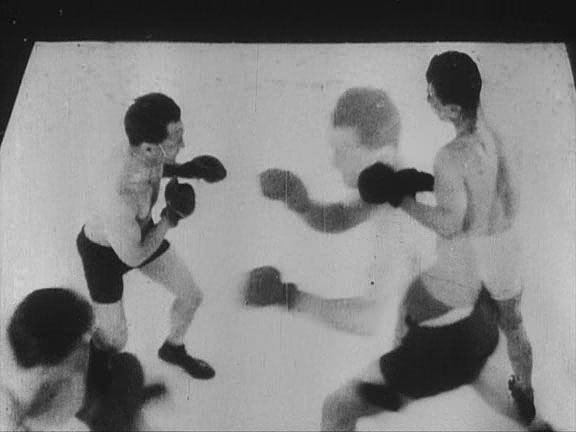
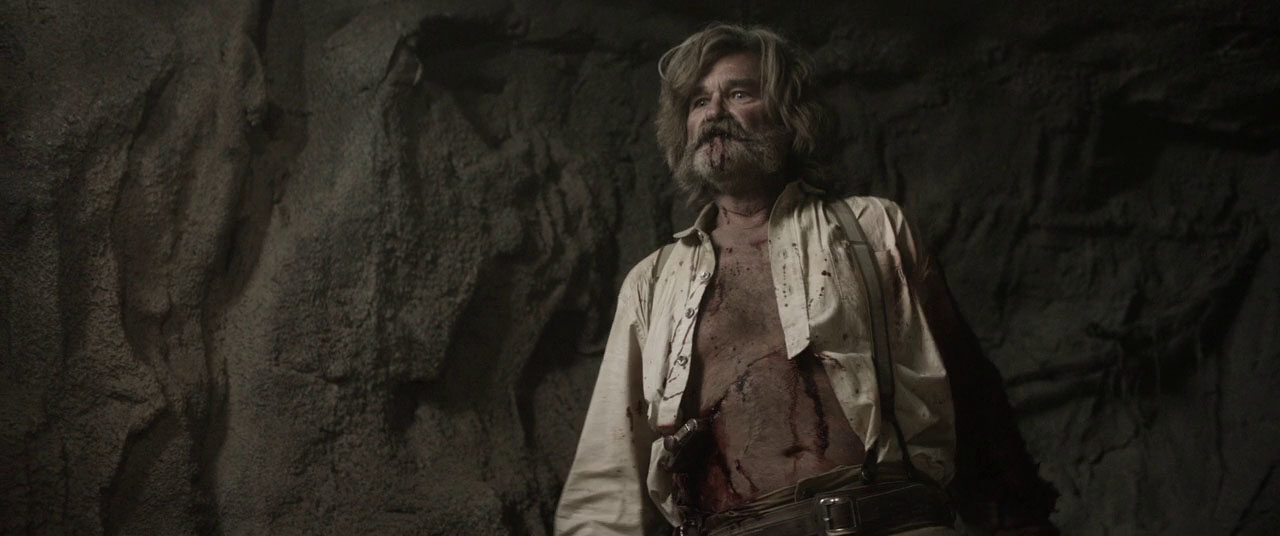
“Fedoras are worse than genocide.”

It’s starting to get rather sad-sacky for a comedy, isn’t it? There’s even an assisted-suicide storyline. I took less pleasure than usual in watching the four girls (and Ray) descend into career disappointment and make poor relationship decisions. Adam’s Broadway play was a nice development, and based on the final scene it looks like they’re changing things up next season.

Richard E. Grant is amazing as Jessa’s drug-addict buddy. John Cameron Mitchell is killed off, also killing Hannah’s book deal. Adam’s insane sister (Gaby Hoffmann) appears to be dating Laird (Jon Glaser).

Small roles by Amy Schumer, Kim Gordon (a rehab patient), Patti LuPone (as herself), Felicity Jones (Grant’s daughter) and Deirdre Lovejoy (Rhonda from The Wire; as Hannah’s aunt).

Absolutely the best scene:

As mentioned in the shorts post, Bill Plympton came to town, presenting his feature Cheatin’. I’ve always loved his work, but from vague memories of The Tune and I Married a Strange Person I’ve assumed his shorts to be far above the features. This week changed everything, as I caught up with the great Idiots and Angels on DVD and saw the beautiful Cheatin’ on the big screen.

Cheatin’ (2013)

I memorized the trailer, and rest of the movie did not disappoint.

Sure there’s a lot of cheatin’, but it’s all based on a terrible misunderstanding.

Bought on blu-ray, so will watch again and write more (with screenshots).


Idiots and Angels (2008)

First of all, any movie that uses “Kommienezuspadt” by Tom Waits is alright by me. Stylish as ever, a scribble-noir in shades of brown and gray with flashbacks and imagination sequences and inventive transitions – and no spoken dialogue.

It’s the kind of story that calls for animation. Bitter gun salesman wastes his evenings at a lonely bar until he starts growing angel wings. He’d like to get rid of the do-gooder, perpetually re-growing wings, and the man’s doctor and greedy bartender would like the wings for themselves. There’s a shooting, a resurrection, a spate of pub bombings, argument over a girl, and crazy bird dreams.

Bill Plympton came to town! I prepped by rewatching his Dog Days DVD, various shorts from other sources, and the feature Idiots & Angels.

Guard Dog (2004)

One of the first films he made without a film camera: colored pencil on paper, scanned into computer.

Guide Dog (2006)

Inspired by Charles Addams, a cartoonist who focused on death and violence. The DVD commentaries seem straightforward, but then he says he assumes he didn’t get complaints from blind people about Guide Dog because they didn’t see the film.

Hot Dog (2008)

Don’t know why I was harsh to some of these shorts in past posts, since the Plympton dog is one of my favorite animated characters. Think I overdosed on Plympton shorts a few years back and had to decompress.

Shut-Eye Hotel (2007)

Cops check in to Shut-Eye Hotel to figure out why clients who stay on the top floor wake up without heads. The culprit: a pillow with teeth. Bill says this was his first use of computer animation, but it didn’t work out financially, and he was testing out a color scheme he’d use in Idiots & Angels.

Spiral (2005)

“You think it’s easy bein’ abstract?” A circle, square and triangle are performing a repetitive abstract dance until the audience starts shooting at them. Inspired by an exasperating (and state-funded) screening of a Paul Glabicki short twenty years prior.

Santa, The Fascist Years (2008)

“They called it blitzenkrieg.” Narrated, animated newsreel of when Santa turned to weapon manufacture, invading neighboring countries to obtain raw materials. Nice Great Dictator reference.

The Fan and the Flower (2005)

Great love story from sitcom writer Dan O’Shannon.

How to Make Love to a Woman (1995)

First, finding the right woman. Then body parts, kissing, hugging, etc, all calmly explained by a narrator, always ending in grievous harm to the man onscreen.

Push Comes To Shove (1991)

Two guys hurt each other in ever more inventive ways.
Didn’t this used to run on MTV?
One of my favorites.

The Exciting Life of a Tree (2000)

Tree’s-eye-view of dangerous forest life.

Luv Race (2008)

Live event combining a dating game with a track race. Where’d this come from? Apparently a commissioned film, no credits. Chrome tried to translate the page at gauguins.com, came up with “Bill Plympton (Bill Plympton). This is the American NY resident, but is not Bill Clinton, you can find those.”

Also watched a couple musical segments from The Tune (1992) including No Nose Blues (“Talk is cheap, oh but so are you”) and Flooby Nooby (all puns, with a huckster singer who hilariously can’t handle the song’s whistling chorus) … a 2001 TV special for Cartoon Network called 12 Tiny Christmas Tales … and a great Weird Al video.

Don’t Download This Song:

Cinétracts (1968)

I watched a collection containing roughly half of the Cinetracts, an anonymously-directed series of two-to-five-minute shorts. The first few seemed to be protest-photo montages, and I thought watching a bunch of these in a row would be tiresome so I spaced it out over a few weeks. Some are very different though, telling stories/poems with intertitles or scrawling words directly onto the photos, using different forms of movement and speeds of editing. Some use zooms and dissolves, bringing the photos to life, others are simply long takes of photos interspersed with titles, wordplay, pages from books.

Contributors supposedly included Godard, Marker, Resnais, Gorin, Philippe Garrel (same year he made Le Révélateur), Jackie Raynal (editor on half the Six Moral Tales), Jean-Denis Bonan (Jean Rollin’s editor at the time), Gerard Fromanger and Jacques Loiseleux (later cinematographer for Ivens, Pialat and Yves Boisset). Marker was busy – this project overlapped his SLON collective and Groupe Medvedkine.

Gary Elshaw has by far the most useful work on the Cinetracts online, even if it’s only about Godard’s contributions.

The purpose of the Ciné-Tracts, as with most of Godard’s 1968 film projects, was to offer a critically alternative source of ‘news’ or information in contrast to the commercially offered mediums available. … The state censorship of the media throughout the events of May necessitated communication along different lines than had existed before.

Other online writing on these tends to focus on determining which ones Godard made (and they can’t seem to agree).


Casque Bleu (1995)

Info dump by a cynical Frenchman who acted as a UN peacekeeper during one of the Yugoslav wars. He speaks rapidly in close-up, with occasional title cards for different topics and cutaways to a photo album.

“When you’re in a country at war, armed, and you have orders not to use weapons, in actual fact you are on the side of the aggressor, the one who’s trying to conquer the land.”


Description of a Struggle (1960)

Watched this again with much improved picture quality and English voiceover. Had been burning to see it again since watching Dan Geva’s Description of a Memory. Still great, but I think I prefer Sunday in Peking. Noticed this time when the voiceover said “bar kokhba,” which is apparently not only the name of a John Zorn music project.

More deadpan sketches from the Songs from the Second Floor creator. Seems more despairing than funny, focusing mainly on two terrible novelty salesmen, but it’s punctuated by some crazy and memorable scenes – like when King Karl XII’s entire army passes by a modern-day bar, and the king enters on horseback – then again a few scenes later, defeated by the Russians (which actually took place in 1709). Then there’s the one scene of generous warmth and happiness, set in another bar run by Limping Lotta, who sings that she’ll trade drinks for kisses from the soldiers.

M. Sicinski:

The final shot in Pigeon, and therefore of the trilogy, involves random citizens at a bus stop, trying to help a confused man decide if it’s Wednesday. “But it feels like Thursday,” he protests. After awhile, an older man in a suit delivers the final word: “You can’t feel what day it is. Yesterday was Tuesday. Today is Wednesday. Tomorrow is Thursday. You have to keep track of these things. If you don’t keep track of that, chaos will reign.” This pronouncement, gentle but firm, is the voice of liberal democracy, avuncular but brooking no disagreement. Some of us take years to sort out what it means for us to be human. But this man knows. If Pigeon finds Andersson lost in a shell game where every move is the same, it’s probably because this voice, and others like it, are winning every time.

Won the top prize at Venice, where it played alongside Birdman, The Look of Silence and 99 Homes – and Tsukamoto’s Fires on the Plain, which has barely been heard from since.

La Luxure (1962, Jacques Demy)

Demy’s segment on lechery from The Seven Capital Sins anthology. Nice long takes, light musical feel, made right after Lola. Unshaven Jean-Louis Trintignant (My Night at Maud’s) tells his relentless ladies-man buddy Laurent Terzieff (La Prisonnière) about his early misunderstandings of the word lechery, feat. flashbacks and hell-sequences. Jean Desailly (The Soft Skin) and Micheline Presle (The Nun, A Lady Without Camelias) play flashback-Trintingnant’s parents. Quite a bit of rhyming and wordplay that’s probably not coming through in the subtitles.

Terzieff:

Puppy Love (2003, Michael Colton)

Watched some clips from the Illegal Art comp, similar to the shorts that Craig Baldwin showed in Atlanta. In this one, a dog is in love with a pikachu.

Black Thunder (2001, Brian Spinks, Bill Wasik & Eugene Mirman)

Short series of campaign ads for animals running for office.
I’m voting for the bear.

Incident by a Bank (2009, Ruben Ostlund)

Single take recreation of a comically failed bank robbery.

O Velho do Restelo (2014, Manoel de Oliveira)

Actors playing Don Quixote, author Camilo Castelo Branco and two others discuss Portuguese culture, with flashbacks to Oliveira films such as Doomed Love and Non.

Stardust (2013, Mischa Rozema)

Some beautiful celestial effects.

Haiku (2009, Frederick Wiseman)

Lion / Waiting / Legs

Haiku (2009, Naomi Kawase)

Cicada / Sunrise / Flower

Haiku (2009, Alain Cavalier)

Train / Poster of bearded man / Bearded Man
Nicely done, in one take.

Idem Paris (2013, David Lynch)

While art prints of a Lynch painting are being pressed, Lynch stalks the press, enamored with the clanking gears and spinning wheels.

Same director, star, writer, editor, cameraman as Z. New still photographer Chris Marker and assistant director Alain Corneau. Instead of communists being attacked by the fascists in charge, this time a group of communists is destroyed by their own party. It’s a depressing slog of a movie, a feature-length torture session ending with the men delivering their well-rehearsed but completely false “confessions” and being sentenced to death.

This time we’re in Czechoslovakia in 1951-1952. Yves Montand plays one of the three who only got long prison sentences, Simone Signoret (a year after the even more depressing Army of Shadows) his wife, and Gabriele Ferzetti as his interrogator Kohoutek (not the subject of the R.E.M. song).

Haunting flash-forwards – the worst of which comes during the trial, when the fourteen men on trial enjoy a hearty laugh and the image bleeds into their ashes being scattered on a frozen road weeks later.

Warok, as always:

D. Iordanova:

The film was an important step in the public expression of Western leftist intellectuals’ disillusionment with Soviet Communism … The Confession was the first film that zeroed in on torture as a seemingly endless ordeal, a systematic and relentless process aimed at delivering a specific outcome.

The Second Trial of Artur London (1970, Chris Marker)

Marker was on-set during the making of The Confession, as was London, portrayed by Yves in the film. Marker focuses on the idea that the book and film can weaken the communist movement by showing horrid things done in its name. Obviously the participants in the film’s production would disagree, and Marker lets them explain why. Unbelievably, after the film’s completion, London is again accused of being a spy and stripped of his Czech nationality. But he is defended: “The witnesses who remained silent in 1952 speak up today.”

My favorite line about the film sets: “A retirement home, unmodified, becomes a prison.”

London:

Interview film, Shanghai stories, people talking about their parents and their own childhoods. Many stories end in death or disappearance. Very stylish looking doc, with some non-doc segments, including a recurring ghost woman (Zhao Tao of Still Life, Platform, The World).

Clips from a 1959 film by a different Wang Bing (the Coal Money director was born in ’67), from Red Persimmon, Two Stage Sisters, Spring in a Small Town, Flowers of Shanghai, Days of Being Wild, Antonioni’s China, and interviews with filmmakers and participants.

Wei Wei, star of Spring in a Small Town:

Tony Rayns:

Jia was invited to make a film “about Shanghai” to mark the opening of the Shanghai World Expo … his idea was to focus mainly on émigrés from Shanghai – politicians, soldiers, artists, gangsters – and to follow some of those émigrés to their subsequent bolt-holes in Taiwan and Hong Kong. … No film made anywhere has previously attempted a pan-Chinese view of the fall-out from the conflicts in China’s civil war.

I don’t have the context Tony Rayns has, have missed a lot in Jia’s films, but at least this one was fully narrated (and quite beautiful).

S. Kraicer:

[The interviewees] are mostly famous, and predominantly from the arts world: this is a top-down historical chronicle, unlike the bottom-up small-town tales that made Jia’s name 10 years ago … Many of the stories come from Shanghai’s two brief “golden ages.” The swinging cosmopolitan (and colonially controlled, gangster-ridden, Japanese-threatened) jazz age of the 1930s is the first. The second revival followed the Second World War during the civil war that culminated in the Communist Party victory in 1949 and the dispersal of many of the film’s interviewees to Hong Kong and Taiwan.

A pretty bad mid-80’s cop movie with average acting and horrible comedy. But oh man, when the action scenes start, there is nothing better. Cars barrel down a hill right through a shanty town, Chan uses cars as weapons and shields, and it ends with a jump/fall so great they show it three times. Plot-wise, Chan has to protect Brigitte Lin from gangsters before she testifies. He does a poor job gaining her trust (having a disguised fellow cop pretend to attack so Chan can save her) then does a poor job explaining her presence to his indignant girlfriend Maggie Cheung.

Fake-attack:

Movie puts forth the Clint Eastwoody idea that gangsters can’t be convicted in the courts because the system is corrupt, so it’s best to kill them straight away. But oh man, the action scenes. Non-action highlights include an endless court scene with all dialogue in Cantonese except the oft-repeated English phrase “I object,” and a dogshit moonwalk.

That’s Maggie on the left:

Won best picture/choreography at the HK Film Awards (vs. fellow nominee Mr. Vampire, heh), got at least five sequels. Maggie was still three years away from As Tears Go By, Brigitte starred in Peking Opera Blues the following year, and baddie Yuen Chor directed over 40 films in the 1960’s and 1970’s.