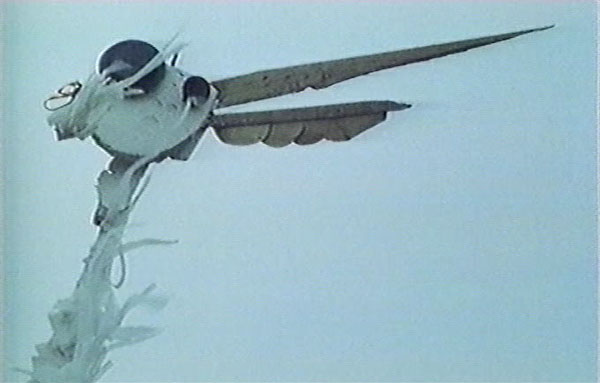
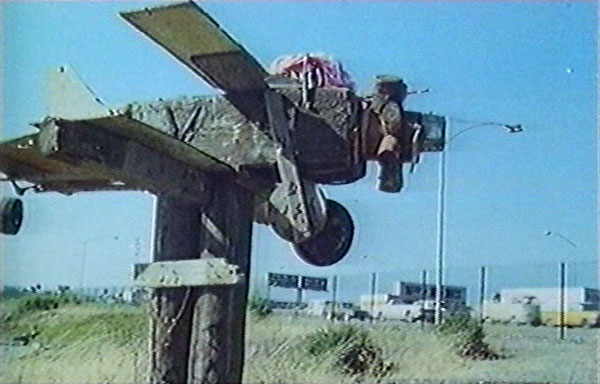
Static (mostly) shots of outdoor junk sculptures near San Francisco, 5 minutes long. Shot with a guy who IMDB knows nothing about, and a guy who worked on Wenders’ Hammett as well as Ice Cube actioner xXx 2.

image

This was titled “Shorts watched September 2009 (on land),” as opposed to “on the plane“, but I only ended up watching the one.

Dude who named his domain after the film says: “The film was shot in Emeryville, near the east section of the Bay Bridge, but unless I’m mistaken the co-ordinates in Marker’s intertitles appear to be for somewhere in Redwood City.”

image

Another great set of Clay’s 16mm cartoons, and it’s been too long since the last one.

Mysterious Mose (1930, Dave Fleischer) is a proto-Betty Boop (she looks like a dog; a sexy dog) cartoon in which she is haunted by a sorta ghost casanova. The Great Piggy Bank Robbery (1946, Robert Clampett) is a weirdly violent Daffy Duck gangster parody. Since his “Duck Twacy” fantasy is spurred by a knock on the head while reading comic books, it’d be a good short to play before Artists & Models. It’s Tough to Be a Bird (1969, Ward Kimball) is a Disney doc about birds and watchers with musical cartoon segments. And We Have Met the Enemy, and He Is Us (1973, Walt Kelly) is an unfinished Pogo cartoon with a harsh environmental message. I think all the voices were done by one guy.

Bunch of TV stuff. Spiderman fights a bank robber in a mole-man costume. There’s a Casper cartoon (in which Casper does not appear) about a watch repairman who gets attacked by an eagle at the end. Ralph Bakshi contributes an episode of Captain America. A horrible show called Hoppity Hooper (set in Wisconsin) with a Rocky-and-Bullwinkle-repetitive bit about “the traffic zone” was the low point. The high point was the hilarious 60’s-70’s commercials for Mr. Wizard, Hot Wheels, Cheerios and the like. Real fun program… too bad the next one is scheduled for the same night Art Brut is playing.

image

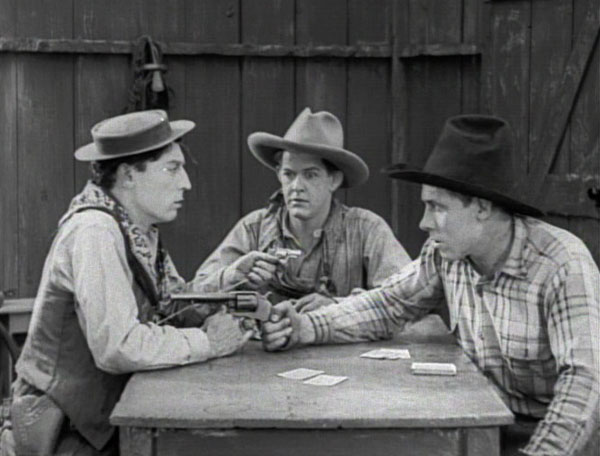
Not full of great gags. Seems like a feature to show off Keaton’s comic improv genius – but where’s that genius? Give Keaton a lasso and… the rope gets tangled and his hat falls off. Give him a basket of eggs and… he puts the eggs down then mistakenly steps in them. Not groundbreaking stuff here.

image

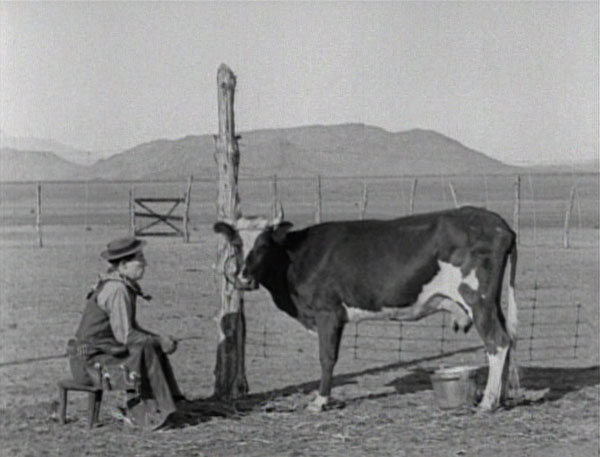
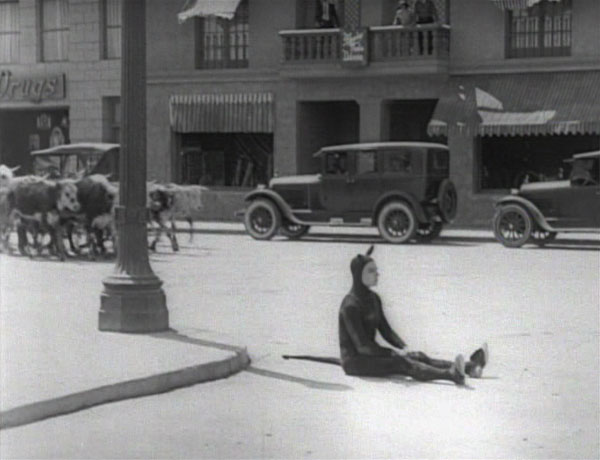
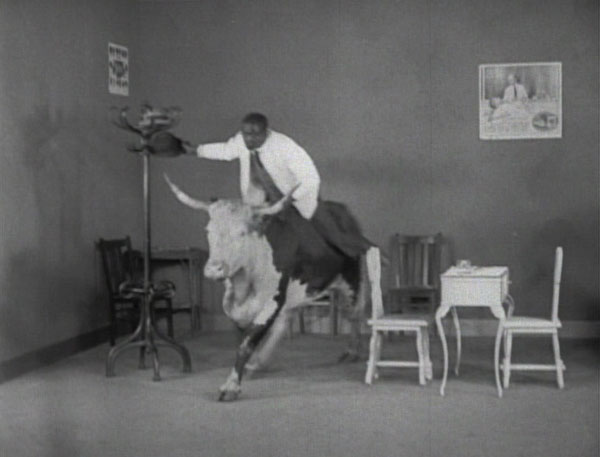
Mercifully short feature about Keaton taking Horace Greeley’s advice, moving west and falling for a cow. He hops trains, learns how to shoot, fails to learn how to milk a cow or do anything useful. When his host rancher’s herd is derailed by a rival, Buster drives the cattle through the city to the yards, saves the day, and gets to keep his own favorite cow as a reward (not the rancher’s cute daughter – the cow! ha!).

image

The city scene is the big showpiece. Has its moments (Keaton in a costume shop dressing up as the devil to get the bulls to chase him), but most of the humor derives from how unreasonably afraid of cows the townsfolk are. My favorite visual bit was early on, the movie demonstrating the passage of time by the length of his package of food as he rides the trains. After that I’m afraid it wasn’t entertaining enough to keep me awake late at night.

image

IMDB says a post-scandal Fatty Arbuckle had a cameo in the city. Guy who played the ranch foreman drowned filming one of his next movies.

image

I think these might be time-lapse shots of the tide going out, but the picture quality is too poor to be sure. This is gonna be a rough one…

image

Opens with a closeup of Catherine Deneuve smiling, a good sign, but soon she and husband Michel Piccoli are in a car crash. Afterwards, she can’t speak anymore and he has a harry potter scar on his forehead. Some eerie, powerful string music and many close-ups of crabs later, we’re at a seaside town where the couple have come to recuperate. Apparently they don’t talk with the locals much because there’s plenty of gossip going around.

Sheet salesmen:
image

Doesn’t take long for things to get weird. Small hands drop buttons into pockets. Piccoli (whose character name is also Piccoli) gets scammed by traveling sheet salesmen. Fishermen provide La Pointe-courte flashbacks for the viewer. Piccoli beats a chef with a dead cat. But it’s not a comedy! Something dark and eerie is definitely going on.

Piccoli talks with a horse. The horse talks back.

Piccoli is a writer working on a story, and when we see him writing the dialogue being spoken by a woman across town, I’m never sure afterwards what is really happening and what’s part of his meta-movie.

horse: “What is your story about?”
MP: “It’s about a man who knows how to control people by remote control. … but it wouldn’t last very long, a minute at most. This guy would be a bad person, with an evil mind. He wouldn’t be human or animal anymore.”

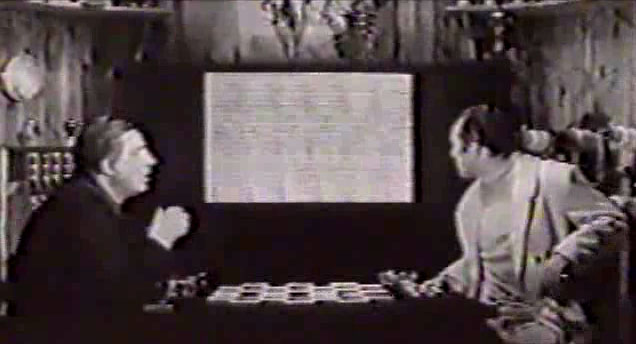
Soon Michel meets a bad man with an evil mind, Mr. Ducasse, who lives in a tower. He’s hired kids to drop magic discs into townspeople’s pockets which enable their wills to be controlled by his super computer. Ducasse calls the townfolk his “creatures”, gets Piccoli to play a game of Battle Chess with him over the fate of the town and of MP’s wife. MP is losing, but decides he doesn’t have to take Ducasse’s crazy misanthropic shit anymore, destroys the computer and tosses Ducasse from the tower. I’ll let NY Times give away the ending below.
image

Other notes I took while watching:

Catherine writes him messages, which I can’t read from the poor picture quality, and even if I could read them, they’d be in French. I have nice DVDs of Varda and Demy movies here, but I choose to watch a junk bootleg instead. Odd priorities.

The dead cat came with a piece of iron that makes the lights go out and causes people to act strange.

He just told a rabbit that his wife is pregnant.

Thief Max burns money, puts on diving suit, gets shot by partner.

You can’t tell much about the camerawork from my lo-res letterboxed videotape, but it’s one of the first films shot by William Lubtchansky (a decade before he began his 30+ year relationship with Jacques Rivette) along with two others. Interesting that all of her films until 1977 had multiple credited cinematographers.

Village Voice calls it “really botched” in their roundup for this year’s retrospective… “If it’s about anything, it’s about the creative process in action and stars that fine actor Michel Piccoli as a novelist who bases the characters in his story on friends and acquaintances.”

Ebert: “a complex and nearly hypnotic study of the way fact is made into fiction. It seems to operate on many levels, but in fact it operates on only one, illustrating how fantasy, reality and style are simultaneously kept suspended in the mind of a creative writer.”

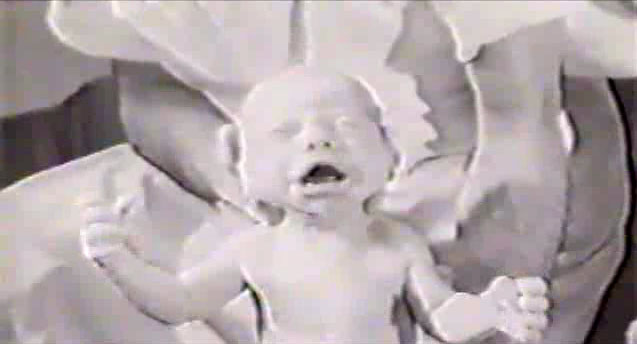
NY Times: “Then love conquers all. The survivors of the seven subplots make happy arrangements — for example, the statuesque hotel keeper (Eva Dahlbeck) gives up mistressing for the town doctor and begins with an underage busboy. The writer almost completes his novel. The wife gets her voice back, pronounces her husband’s name (“Edgar”), and has her baby — a bawling creature who at the end fills up the screen precisely to balance (and somewhat to resemble) a crab creature that fills it at the beginning.”
image

image

The movie’s studied anthropology and attack on human behavior reminds me of Resnais’ Mon oncle d’Amerique. And also of Bjork’s “Human Behavior.” There’s definitely, definitely… definitely no logic.

2025: Rewatched this in modern HD quality and replaced half the screenshots.

I am not a number – I am a free man:

Not a vampire thriller with comic parts, but an all-out comedy. I used to think Park was someone to take seriously with his vengeance trilogy, but after this and I’m a Cyborg But That’s Okay, I’m not sure he was ever serious. Maybe it has always been dark humor, and he never had anything to say about revenge – there’s nothing I can remember, anyway, and surely nothing to match K. Kurosawa’s Eyes of the Spider. Complaints aside, this was entertaining as hell and the sparse crowd was laughing and yelling in horror and delight.

Great to see the star of The Host again on the big screen, and just as good (if not better) was his 20-year-old costar Ok-vin Kim. Anyway, a priest volunteers to be injected with a painfully fatal disease in the name of science, but during a blood transfusion on his deathbed, accidentally gets turned into a vampire. Still a priest, he’s trying to be the most humane vampire he can be, killing nobody and drinking blood from coma patients through their feed tubes. But then he falls for wild young Tae-joo and leaves the priesthood to have an affair with her behind the back of her husband (Ha-kyun Shin, father of the dead girl in Sympathy for Mr. Vengeance). She’s messed up and amoral from the start, and our man begins to fall – killing his blind friend and the girl’s husband so they can be together. But then she becomes a vampire and starts killing everyone in sight, so he drives them out to the middle of nowhere and waits for the sun to come up…

No messing around with stakes through the heart, garlic or other vampire business – we never even see the original vampires who infected these two. Their super strength adds to the comic-book atmosphere, jumping across rooftops, denting lampposts, tearing apart a car with his bare hands.

This died at the theater with hardly anyone hearing about it. Weird that foreign action/horror movies don’t seem to stand a chance in theaters here, while talky family dramas do fine. I’d think The Good, The Bad & The Weird, Sukiyaki Western Django and this could pull a bigger crowd than Summer Hours and Revanche, but I guess that’s why I’m not paid to book theaters.

Steve McQueen’s Hunger was playing last week, and I meant to catch it so I could watch Hunger and Thirst back-to-back, but sadly reality prevailed over gimmickry and I missed it.

Good to see this again. Funny that all I really remembered is one of the first scenes with Agnes asking a couple reluctant women about gleaning, and Agnes talking about her own hands.

image

I’m feeling uninspired, so we’ll let Senses of Cinema do the talking:

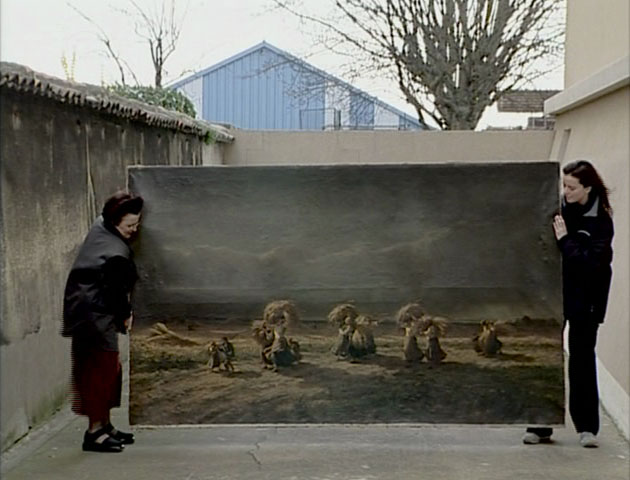
The official subject of this film is gleaning, the act of gathering remnants of crops from a field after the harvest. As Varda demonstrates, people can be discovered throughout the French countryside gleaning everything from potatoes to grapes, apples to oysters, much as they did hundreds of years ago (though no longer in organised groups). More figuratively, there are also urban gleaners who salvage scraps from bins, appliances from the side of the road, or vegetables from stalls after the markets have closed. And then there’s Varda herself, a gleaner of images, driving around France with a digital camera and a tiny crew (at times, she wields a smaller camera herself, permitting an even greater degree of intimacy).

image

Varda has a (sometimes contested) reputation as a feminist, left-wing artist, and this is very much a political film, though it offers a series of poetic metaphors and concrete encounters in lieu of an explicit, closely reasoned argument. My guess (based mainly on anecdotal evidence) is that the political outlook of The Gleaners And I has a lot to do with its popular success – even if Varda herself, who began filming back in 1999, wasn’t fully aware how thoroughly she was tapping into the zeitgeist. Without specifically referring to political movements or events, the film embodies a quasi-anarchist ethos now in the air in all sorts of ways – a resistance to consumerism, a suspicion of authority, and a desire to reconnect politics with everyday life.

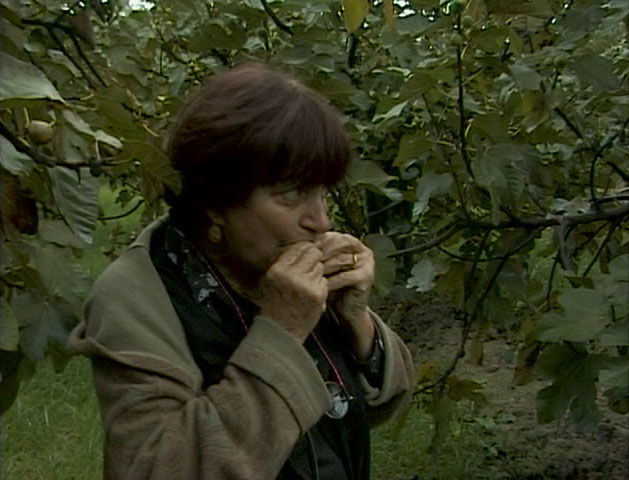
Agnès enjoys a pilfered fig:
image

Katy liked the movie, and the next day she felt like going out to pick figs. Shot on a handheld digital videocamera. The picture/framing isn’t always beautiful, but she keeps things quirky enough to stay interesting amongst all the talking heads.

image

As with Le Bonheur, Varda has taken over the DVD’s special features section herself with a whole hour-long follow-up film entitled Gleaners & I: Two Years Later (2002) Gleaners was her most locally popular and globally well-distributed films in decades, and she racked up awards and fan mail, so here she addresses concerns and gaps in the previous film and catches up with some of its stars.

image

Killer finale, the heart potatoes, symbol of the Gleaners film, old and wrinkled as it sprouts new life. As the credits roll, sudden cutaways to closeups of the potatoes, exactly as in the opening credits with the sunflower in Le Bonheur.

image

I think most Jacques Demy studies begin with The Umbrellas of Cherbourg and end with The Young Girls of Rochefort, pausing to mention that he died young and was married to Agnes Varda. I enjoyed those two so much that I figured his other films couldn’t be that bad, so I checked this out since the video store didn’t have Lola. Not only is it not-bad, but I challenge anybody to find anything wrong with it.

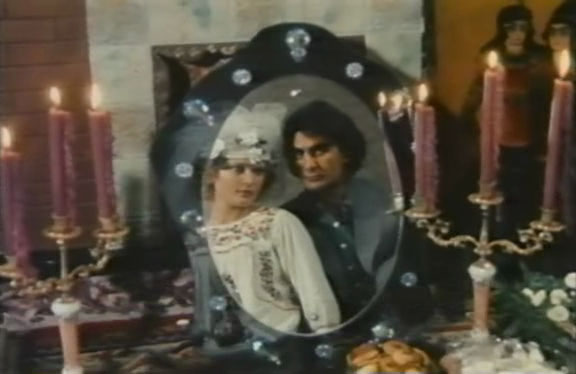
Catherine Deneuve (the same year as Tristana) plays a young princess. A few months after her mother passes away, the king (Jean Marais, not looking too different 25 years after his other fairy-tale film, Beauty and the Beast), with no other attractive princesses in the land, decides to marry Catherine.

Funeral for a queen:
image

Catherine, a sheltered princess who spends her days with parrots and blue-painted dwarfs sees nothing wrong with this – after all, she loves her father. Fortunately, her fairy godmother Delphine Seyrig (the year after Mr. Freedom, and looking much classier) knows it’s a problem so gives Catherine a series of costume-design challenges to pose to her father to delay the wedding. When he passes them all, making her dresses the color of the sky, the moon and the sun, she asks for a dress made from the skin of the prize donkey which shits gold and jewels. Seems like a cruel slap at the kingdom, but he does it, and she flees for the country wearing the freshly-killed donkey.

image

Doing small-town drudge work in public, but secretly sleeping comfortably in her shack with some magical fairy help, Cath attracts the attention of Prince Charming (Jacques Perrin, who starred in Z after playing the military poet who is driving away in the final shot of Rochefort). He meets her, loses her, then does the Cinderella thing with all the girls in the land, only instead of a slipper it’s a ring that fits only her hand, and announces they are to be married.

image

Just then, a helicopter (!) drops in carrying the king, who is going to marry the fairy godmother – a hilarious ending to a story that started pretty dark (death, incest, donkey-killing).

image

Demy (in homage to Cocteau?) uses slow motion and reverse effects as cheap movie magic to enhance the fairy-tale atmosphere. Hmmm, and painted people hiding in the walls and Cocteau’s name in the credits and his leading man in the cast – I guess he was an influence after all.

image

Lovely music by Michel Legrand and lovely cinematography by Ghislain Cloquet, both returning from The Young Girls of Rochefort.

Dialogue that prefigures the helicopter:
CD: “Can a spell wear out like a dress?”
fairy godmother: “No, but it can weaken like a battery.”
“A battery? What is that?
“Nothing – I’m getting old!”
“But fairies don’t get old.”
“You’re right. I had forgotten.”

Also: birds galore… a giant stuffed white cat as a king’s throne… iris-fades to solid colors a la Le Bonheur… force fields… talking flowers… horses painted red… pretty much a must-see movie.

image

Katy, Jan 2013: “I mostly liked it.”

Camille: “Can I come during the day, from 5 to 7?”
Marcello: “The magic hour for lovers.”

image

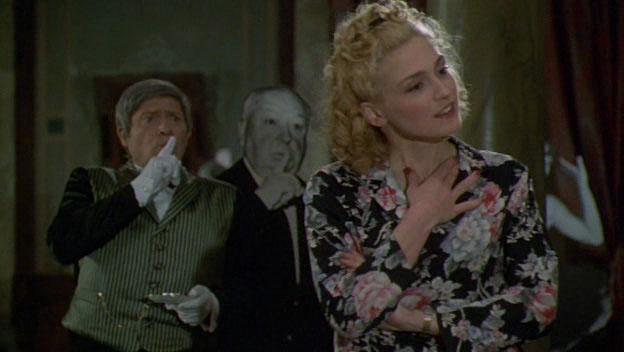
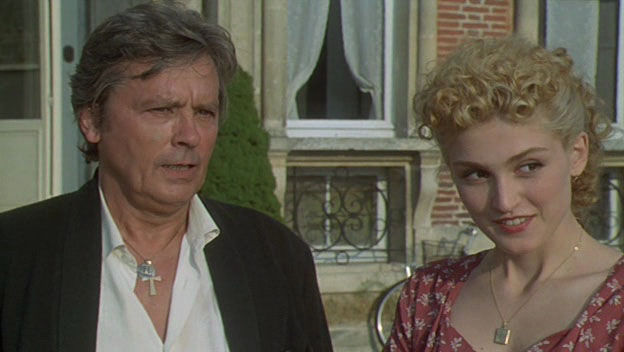
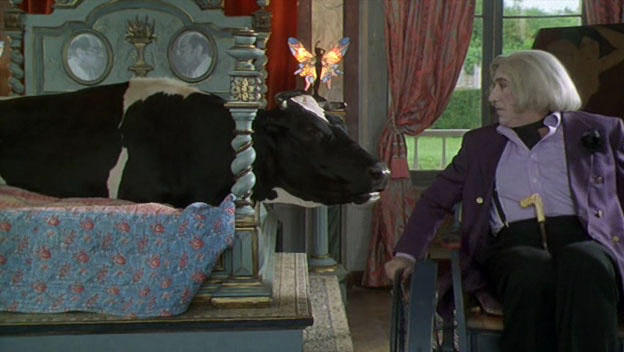
Simon Cinema (Michel Piccoli) isn’t doing too well, confined to his mansion-museum with his butler (Truffaut/Duras vet Henri Garcin) and best friend Marcello Mastroianni (as himself, sort of). Film student Camille (Julie Gayet, the girl with the giant gag vase in My Best Friend) is hired to talk with Simon about movies for 101 nights, and her boyfriend (Mathieu Demy) takes advantage of her position to cast the legendary Mr. Cinema in his student film.

Michel and Marcello:
image

Garcin and Gayet:
image

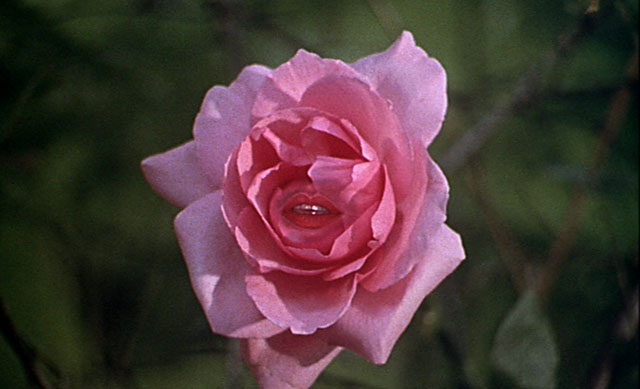
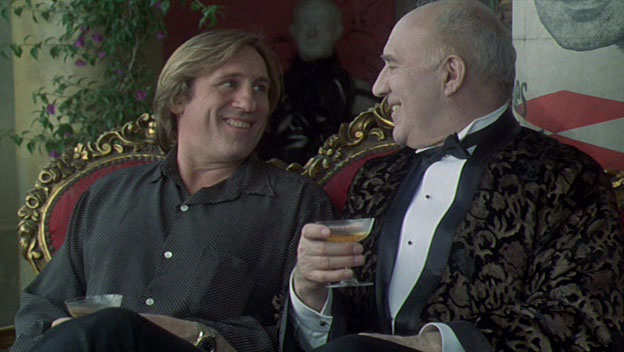
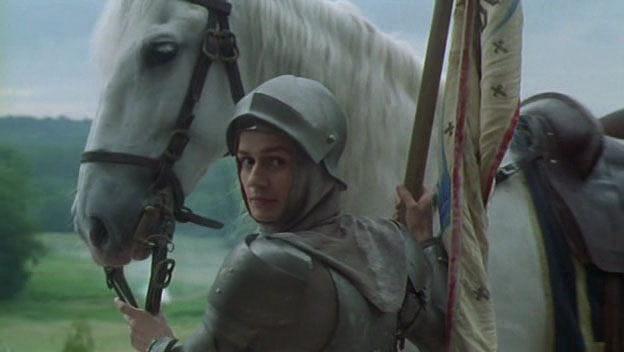
But the plot is just an excuse for some fun. Every star of French cinema shows up, major films are mentioned (nothing is discussed in any depth – no time). Anouk “Lola” Aimée, Catherine Deneuve and Robert De Niro take a boat ride. Sandrine Bonnaire appears as both her Vagabond self and Joan of Arc. Piccoli drops the Simon shtick and the white wig for a minute and compares cinematic death scenes with Gérard Depardieu (“that old devil Demy!”) before a poster of their co-starring Seven Deaths film…

Gerard and Michel:
image

Sandrine d’Arc:
image

Hanna Schygulla (Fassbinder films, Passion) and Jeanne Moreau (Jules and Jim, The Lovers) play Simon’s ex-wives. There are seven dwarfs. There’s a conspiciously Bonheur-looking sunflower shot. Alain Delon arrives by helicopter (reminiscent, though it maybe shouldn’t be, of the out-of-place helicopter in Donkey Skin).

Gayet with Alain Delon:
image

Jeanne and Hanna:
image

It’s all very light and playful. I’m sure I missed a thousand references, but it keeps many of them obvious enough to remain accessible (if you didn’t catch the meaning when a bicycle is stolen outside the mansion, someone cries “italian neorealism strikes again!”).

Mathieu Demy meets Fanny Ardant:
image

The credits list how many seconds and frames were used from each featured film – impressive – and also all the stolen music cues.

image

tour bus guy: “Glad to see you on form.”
Simon: “Form of what?”
“Why, you seem content.”
“Form and content, a debate even older than I am.”

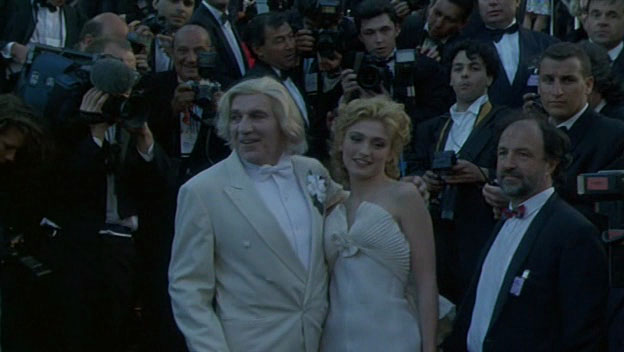
At Cannes:
image

NY Times: “While covering so many bases, Ms. Varda never makes more than a glancing allusion to anything, and at times the film is such an overloaded grab bag that it grows exasperating. Or even baffling; for unknown reasons, Stephen Dorff turns up in a pantheon of great Hollywood stars.”

image

LA Times: “Michel Piccoli plays Monsieur Cinema, who embodies the history and spirit of film, and in particular, that Fabulous Invalid, the French motion picture industry itself. (Since Varda is such a playful director, Piccoli is sometimes simply himself.) Monsieur Cinema may have been inspired by the director of the landmark Napoleon, the late Abel Gance, whom Piccoli resembles when he puts on a long silver-white wig.”

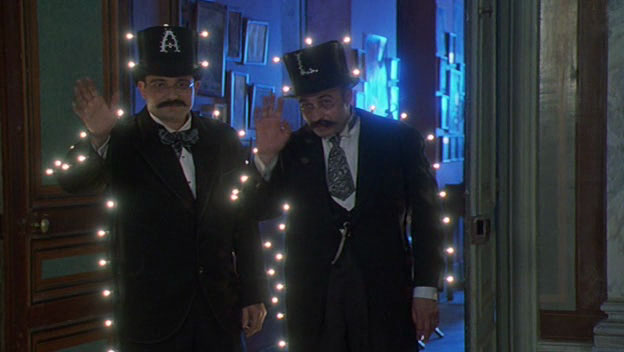
Lumiere brothers:
image

Doctor Belmondo and Jack Nance:
image

image

image

“The parent system’s no good. Pa grumbles while Ma’s sweet and silent…”

image

Fair haired girl, Pauline, 17, she sings – her ex-neighbor Suzanne, 22, doesn’t. In the early 60’s, strong-willed P is having trouble with her parents, so she visits S, who is having trouble with her boyfriend Jerome, married to another woman. S also has two kids and is unintentionally pregnant. There’s illegal abortion drama, Jerome kills himself, and a title card says “ten years later”…

image

For those who didn’t get Le Bonheur and thought it was asserting male dominance and endorsing cheating on your wife, here’s Varda’s explicitly feminist movie – exploring the joys and pitfalls and terrible music of 1970’s feminism. Unfortunately, explicit feminism (or explicit anything) doesn’t work as well for me as Varda’s more ambiguous movies have… movie is kinda obvious and messagey at times, but she still takes a multifaceted story approach to her message.

image

Anyway, ten years after the suicide, the women meet at a women’s rights demonstration. P is calling herself Apple now, sings a cheesy “my body is mine” song, playing the worst kind of acoustic guitar and tambourine folk. Actually I kinda liked the piano song she sings on an Amsterdam canal boat with her fellow abortion patients later on. S runs a women’s clinic, while P tours her music and theater group, and the two keep in touch sporadically over the years through the mail. Suzanne eventually marries pediatrician Pierre and Pauline goes to Iran with her man Darius (an economist?), and now the two have to cope with being wives and mothers while trying to keep their values uncorrupted. P finds it’s tough to be feminist in Iran so she ditches her guy and returns home. Ends with a lingering shot on Suzanne’s grown daughter, looking troubled at the thought of taking over the plot.

image

P. Kael said “Varda brings a Disney touch to women’s liberation.” Otherwise there isn’t crap about it on the internet, besides saying it’s from France, Belgium and Venezuela, which doesn’t even seem to be true.

an Apple performance:
image

Every movie released in 1977 looks dirty and cheap. Did the entire international film world’s budget go into the first Star Wars? Dialogue is in French, but credits and voiceovers are in English, hmmm. Maybe all this is because of my shady videotape copy.

image

Pauline (Valérie Mairesse) was in Tarkovsky’s Sacrifice and Lucas Belvaux’s Trilogy and Suzanne (Thérèse Liotard, above) was in a Bertrand Tavernier sci-fi flick with Harvey Keitel and Harry Dean Stanton – must see that. The composer shows up as an actor, with four-year-old Mathieu Demy in tow. Assistant camera (in the Iranian scenes?) is appropriately by Nurit Aviv, France’s first licensed female cinematographer.