Returning directors Ed Bianchi (now working on an alternate-reality King David miniseries), Steve Shill (whose Beyonce movie did pretty well) and Timothy Van Patten (of Master Ninja) are joined by Elodie Keene (two TV movies starring Linda Hamilton), Thomas J. Wright (Millennium, Firefly, a Hulk Hogan movie), Daniel Attias (Stephen King’s Silver Bullet), Rob Bailey (CSI), Ernest R. Dickerson (The V Word, Juice, cinematographer on Do The Right Thing) and series co-creator/producer Robert F. Colesberry (also first a.d. on Warhol’s Bad) who died six months after season two ended.

I briefly mentioned why I’d give a crap about TV episodes’ directors in my season one write-up – I started watching the show after reading an online fight over it. An auteurist extremist (heh) watched one late-season episode and wrote a tirade accusing the episode’s director (not the writer, not the series creator) of being homophobic and called the show “the most awful racist drek I have seen in years.” My favorite part: “The show, like a lot of current American TV, has deliberately bad exposition. This is designed to make you watch all 54 previous hours of the series, so you can figure out what the heck is going on.” This started a hundred-message discussion culminating in the dramatic exit of the list’s founder, and got me interested enough to finally watch the show which everyone but those two guys were passionately defending.

The Dead this season: D’Angelo Barksdale (Larry Gilliard Jr.) moved on to The Machinist and Brad Anderson’s Fear Itself episode and some new Patrick Swayze show. Frank Sobotka (Chris Bauer) was in Flags of Our Fathers, Broken Flowers, starred in Anderson’s Sounds Like, and is in a new vampire show. Stolen-goods warehouser George Glekas (Teddy Cañez) shows up in Law & Order from time to time. People who probably won’t be back (serving long prison terms or witness-protection): Nick Sobotka (Pablo “Liev’s brother” Schreiber) was in J. Demme’s Manchurian Candidate remake and Stuart Gordon’s Fear Itself episode (and should consider being Ben Affleck’s stand-in if he runs out of work). Ziggy Sobotka (James Ransone) was in Inside Man and Generation Kill. Dealer White Mike (Brook Yeaton) is actually The Wire’s props guy who worked with John Waters back in the day. Greek drug man Eton (Lev Gorn) played a dealer in Keane with at least two other Wire actors, and russian muscle guy Serge (Chris Ashworth) was 25th-billed in Terminator: Salvation.

I’d be here all week if I attempted a plot description. Season 2 was slow going at the start, pulling the team back together, but it got rolling towards a great/depressing ending, which should lead naturally right into another season. I wonder if there was no guarantee of a second season after #1, but after #2 a third was a sure thing.

Opening titles: we hear a nice Tom Waits song (the soundtrack is great overall) and see “JVC PRESENTS.” Didn’t JVC used to make blank tapes? The kind that weren’t even as good as Maxell?

Five segments in five cities. Has cute parts, and I guess it’s part of the greater Jarmusch body of work or whatever, but also kinda feels like something that could’ve safely stayed in 1991 (or maybe ’93; it was ahead of its time). What’s funny is that it doesn’t seem like the kind of movie that should get easily dated (except through the usual – fashions, cars, mobile phones – only period pieces are immune to those) but it has this early 90’s aura about it, like Smoke or a Hal Hartley movie, which I don’t see in Dead Man or Down By Law or Mystery Train. Maybe it’s just Winona Ryder. Anyway this remains my least favorite Jarmusch picture, though I did enjoy it overall. If you could break it up Coffee & Cigarettes-style, it’d be nice to lead from New York straight into Helsinki, and maybe add Rome every third or fourth viewing.

LA: Winona Ryder is a midget phonebook-sitting wannabe-mechanic driving fancypants cellphone-calling casting agent Gena Rowlands home from the airport. Gena’s client is looking for a tough young girl, an unknown, so predictably she propositions Winona, who turns Gena down. Jim says it’s the first movie Gena agreed to do after John Cassavetes died. I never made it past this segment when I first tried to watch Night On Earth a decade ago… pixie Winona is too hard to take as a street tough.

NY: East German Armin Mueller-Stahl (same year he did Soderbergh’s Kafka) is new to New York and cab driving, so passenger Giancarlo Esposito takes over, picking up sister-in-law Rosie Perez for a miniature Do The Right Thing reunion, wide-eyed Armin taking it all in.

Paris: Isaach De Bankolé (stolen from Claire Denis) kicks out some diplomats, picks up a blind girl (Beatrice Dalle, star of Time of the Wolf, also a Claire Denis regular) and asks her a bunch of dunderheaded questions.

Rome: Roberto Benigni picks up a priest, drives like a madman (but there’s no traffic so it’s cool) visits a couple transvestites, and tells horribly perverted stories until the priest dies after dropping his meds on the floor and Roberto quietly unloads him on a park bench.

Helsinki: Cabbie picks up three guys from a hard night on the town. Of course all four of them have been in Kaurismaki films (one of the passengers played Polonius in Hamlet Goes Business. They tell their drunk friend’s hard luck story and the cabbie replies with his own hard luck story. Way to end your movie on a dead baby tale there, Jim.

Nice color cinematography by Frederick Elmes (a Lynch regular who later shot Broken Flowers) – not seen here cuz it was a rental and I forgot to get screen shots.

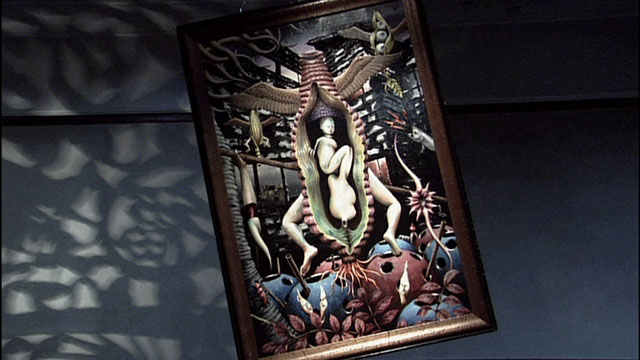
Opens with reclusive white bearded artist Yuki Aoyama making Hellraiser-inspired artworks which will pop up throughout the movie. Then we’ve gotta introduce our mismatched couple: two next-door neighbors named Raita. R. Kazama (Kazuya Nakayama, Izo himself) is a detective who, despite some slapstick scenes and his retro wardrobe, is no Maiku Hama. R. Takashima (Kuroudo Maki of Kitano’s Brother) is an upright office worker who doesn’t really want to know his imposing neighbor. Tak is the straight man who gets pulled into an investigation, contributing his mad hacker skills and acting as a center for the film (I don’t know why the more fun detective Kaz couldn’t have been our center). Tak never unpacks after moving in – I can’t figure if he’s joking when he tells Kaz that he won’t stay long since moving is his hobby.

Detective Raita:
image

Salaryman Raita:
image

Our detective’s employees are young dude Masakuni (who turns out to be the bad guy; spoiler alert) and Girl Whose Name I Didn’t Catch (played by Harumi Inoue of Miike’s Graveyard of Honor and star of Freeze Me). The mystery involves girls showing up horribly killed with some new agey earth-wind-fire metaphor business, each missing a different internal organ. The one thing they’ve all got in common: they insulted famous artist Aoyama in front of detective Masakuni, who is not only the artist’s secret son but has killed the artist and taken his place using blood and organs mixed with his paint.

Art:
image

Artist:
image

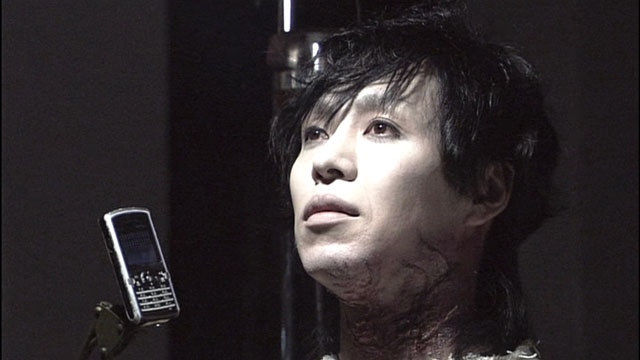
Before all that comes to light, we have to sidetrack into a giant Silence of the Lambs ripoff, with detective Kaz visiting a horribly burned isolation-cell prisoner whom he once locked up, asking the prisoner for psychological advice.

image

Miike tries to keep it fun – jump-cuts all over, two (two!) peeing jokes and a hilarious final line (“My fingers grew back!”) and Koji Endo contributes nice saxy music. Supposedly everyone knew this would be a bad, throwaway Miike movie because it was produced by the guy behind the reputably poor Silver and Family… but he also wrote Big Bang Love so how bad could the guy be? This seemed about on par with One Missed Call – throwaway, yes, but not outright bad… a fun genre flick with no higher calling.

image

The liner notes say that Cleo’s real-time progression through Paris is very accurate, and that the only cheat is that the 90-minute film wasn’t titled Cleo from 5 to 6:30. This was more documentary-like than I’d remembered. Somehow I’d turned it into a Godard film in my mind (possibly because of his appearance in the film-within, or maybe because I saw Breathless the same week), but it’s really quite naturalistic, the long travel segments in buses and cars reminding me more of Rivette than Godard.

image

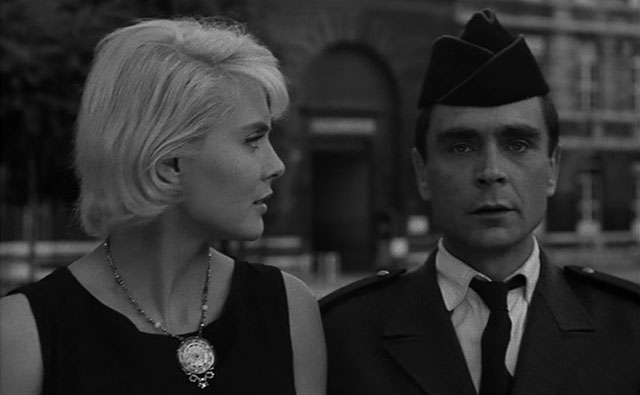
Katy actually liked it – the first French movie she has liked in a year and a half (Amelie doesn’t count). She was especially happy about the guy Cleo ends up with at the end – an army guy on leave about to return to Algeria. They share a sense of foreboding in the park. He listens to her (unlike Cleo’s rushed boyfriend who visits her apartment) and accompanies her to the hospital, where her diagnosis is not so serious. Katy thinks the two of them will meet again, or at least that he will write.

image

I haven’t seen Cleo (Corinne Marchand) in anything else, though she’s in Demy’s Lola. I loved the scene where her composer (Michel Legrand!) and lyricist come to her apartment to try out some new songs – Cleo sings one and gets lost in a close-up.

Trapped inside the song (where the nights are so long):
image

Shut up, Michel Legrand:
image

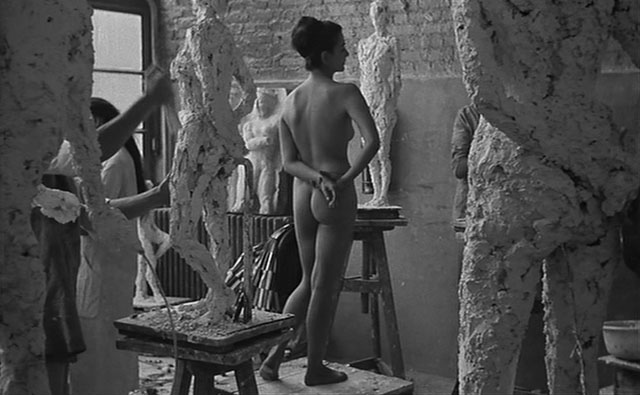
Cleo’s maid Dominique Davray had small parts in Any Number Can Win and Casque d’or, and her nude model friend Dorothée Blank is still acting today, appearing in Resnais’ new Wild Grass. Her boyfriend/lover José Luis de Villalonga was in Malle’s The Lovers. Varda (along with Antonioni with L’Eclisse and Bunuel with The Exterminating Angel) lost the golden palm to a Brazilian realist movie about a sick donkey.

Cleo with maid in awesome apartment:
image

Dorothée Blank’s backside:
image

Cleo with Villalonga:
image

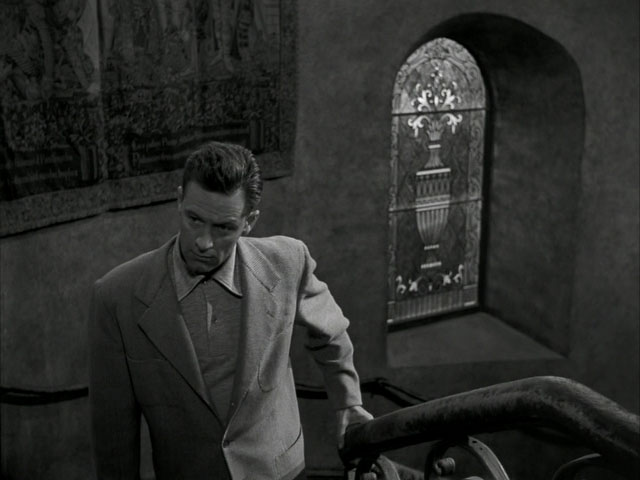
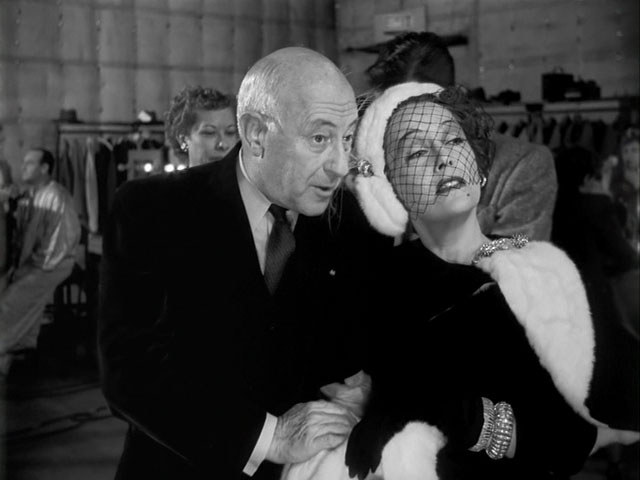
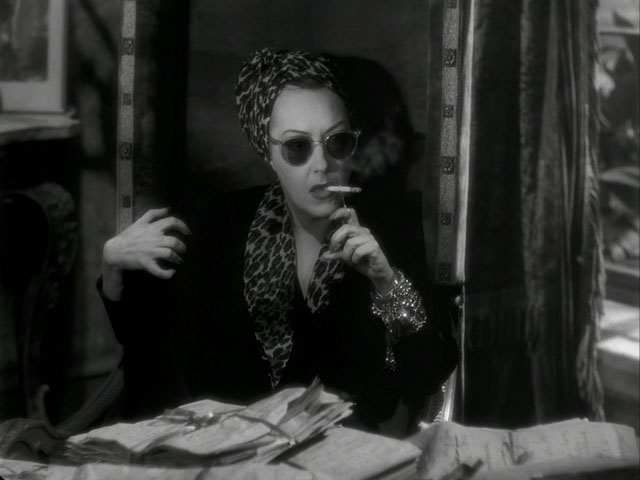
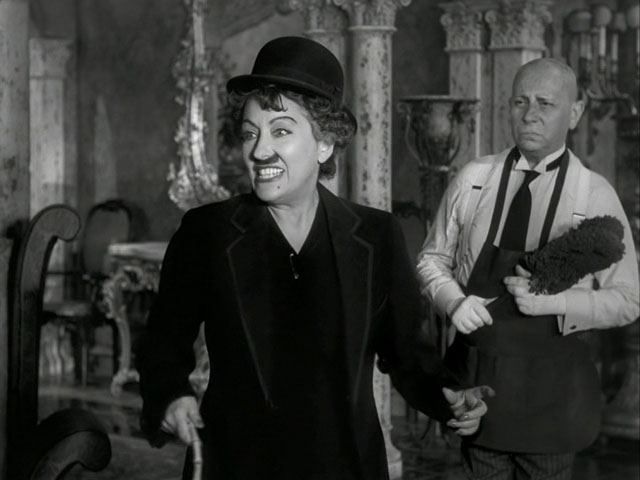
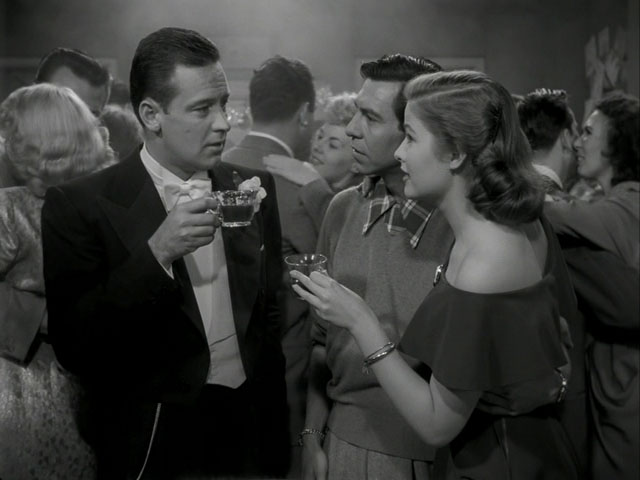
One of those long-discussed greatest-films-ever which upon first glance (and second glance) actually does seem to be one of the greatest films ever. It’s a super story with an incredible character for Gloria Swanson and boy, she nails it, but it also helps that I am a film nerd. Swanson helped destroy Erich von Stroheim’s directoral career 20 years earlier and now Wilder casts Swanson as a washed-up super-eccentric former silent actress and Stroheim as her tragic manservant. Enter William Holden and his young friends, all wannabe writer/directors, and a cameo by Cecil DeMille and Wilder’s got room to skewer damn near everything in Hollywood. And he manages to keep the mood comical while preserving a film noir (the commentary calls it monster-movie) atmosphere, without letting anybody’s flaws go unpunished.

image

Opens with William Holden dead in a swimming pool, as he introduces his own dead body then narrates his story. Sound familiar, American Beauty?

image

A dead-end screenwriter, he’s trying to avoid getting his car repoed when he pulls into a faded mansion just in time to see Swanson and Stroheim preparing to bury her pet monkey. She is pleased to meet a hot young screenwriter, hires him immediately to work on her monstrous script of Salome, which is to be her long-awaited return to the silver screen.

image

Holden had no clear prospects as a screenwriter, he’s got no cash and no girl and he dreads the shameful return home to the local newspaper he left to pursue his Hollywood dreams, so he hangs out working on her futile script for a clueless Cecil B. DeMille, realizing too late that he’s becoming her kept boy.

image

Was up for bunches of oscars but got its clock cleaned by All About Eve at the awards. Still came away with writing, art direction and music (beating Samson & Delilah, the actual film DeMille is seen shooting on the Paramount set). I don’t know if Golden Globes were important then (or if they are now) but it got picture/director/actress over there.

DeMille and Swanson:
image

Immediately preceded Ace in the Hole, a dark time for Wilder. Stroheim would only be in seven more films before his death. Holden would play Audrey Hepburn’s object of affection in Sabrina. Swanson had profitably retired from acting and did not use this as a springboard back in, though she did make quite a few TV appearances.

image

Apparently was turned into an Andrew Lloyd Webber musical in the 90’s.

image

IMDB trivia page is packed. Among the actors who turned this movie down: Double Indemnity star Fred MacMurray, Red River star Monty “Raw Deal” Clift, Mae West (who was not in silent films), early Lubitsch star Pola Negri and Greta Garbo.

image

Erich von Stroheim hadn’t directed in 20 years… Queen Kelly with Gloria Swanson having been his downfall. Norma Desmond says DeMille directed her twelve times – he actually directed Swanson six times. Love interest Nancy Olson went on to Disney flicks in the 60’s and Jack Webb (her fiancee Artie) would spend the rest of his career writing and acting for Dragnet.

Holden with Webb and Olson:
image

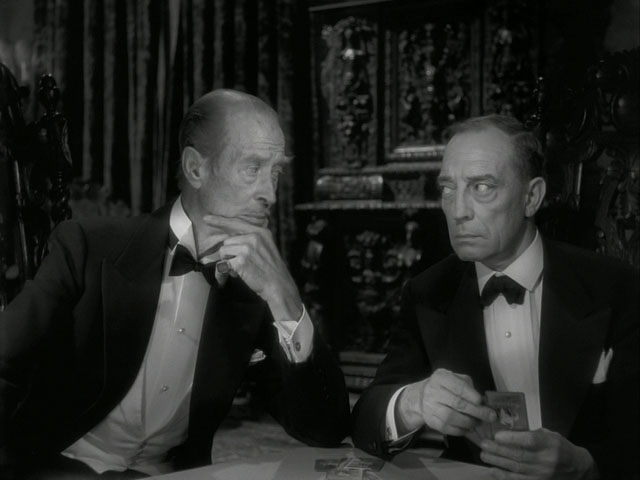
Norma’s “Waxworks” (her bridge partners): H.B. Warner (DeMille’s Jesus in King of Kings, later a Capra regular), Buster Keaton (who was actually doing alright in ’50 with his TV show, in between film roles In The Good Old Summertime and Limelight) and Anna Q. Nilsson (not pictured, who costarred with Warner and worked with DeMille).
image

Film/dialogue moment #1: “There was a tennis court… or rather the ghost of a tennis court, with faded markings and a sagging net.” We see the court already, but our screenwriter/narrator feels the need to fill spaces with dialogue and also tell us about it.
image

Film/dialogue moment #2: Norma Desmond wordlessly brushes away a microphone.
image

Ready for her close-up:
image

Another early Lubitsch musical. This one starts promisingly with wonderful shots of a wedding which the bride has abandoned (her dress deflated on a chair, the groom traveling under a row of umbrellas) and proceeds to a decent song (the foppish groom – Claud Allister – informing his guests that he will retrieve the girl). Alas, it’s to be the last decent song because after heroine Jeanette MacDonald (of Love Me Tonight) is introduced, she’ll do all the singing in Snow White screech-falsetto.

Zasu Pitts looks wary: madame could start singing at any moment.
image

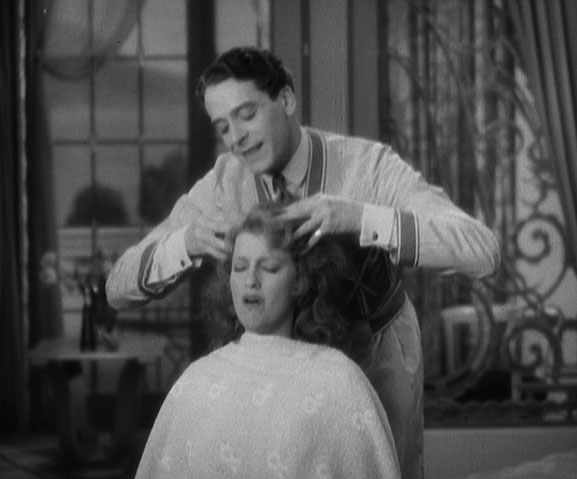
We quickly abandon the abandoned husband to follow Jeanette, escaping by train with loyal maid Zasu Pitts (Greed, Lazybones) to Monte Carlo, where she meets many hopeful fellows and hires 20 assistants – all on credit since she has no money. One especially hopeful fellow is smiley, overconfident Jack Buchanan, who singlemindedly goes after her, finally gaining entry to her hotel suite by posing as a hairdresser then taking over all her servant positions when she has to let everyone go since she can’t pay them.

image

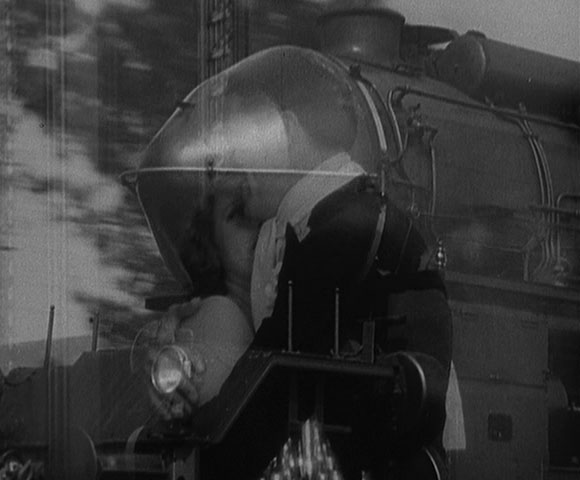
Of course Buchanan is secretly wealthy, so after Jeanette gives up hope of escape and is again going out with her prince from the beginning, Jack makes his move and she escapes again.

A train embrace:
image

Perfectly decent movie, though I didn’t notice many attention-grabbing Lubitschisms after the intro. Felt more like a simply-plotted cheapie. The only real disappointment (besides Jeanette’s singing) was a hollow-eyed, sad-mouthed Zasu Pitts, seeming to slow down the film whenever on screen. My favorite was the prince, so winning a being a loser in the opening scenes.

Pol Pot’s Birthday (2004, Talmage Cooley)
In 1985, the scrappy dictator’s men throw him a super-weak budget surprise birthday party, with grey cake and music on an old tape player. Awkward conversation ensues… P-P gets peed on by a dog and “Walking On Sunshine” plays over the credits. Kim Rew got paid?
image

Meet King Joe (1949, John Sutherland)
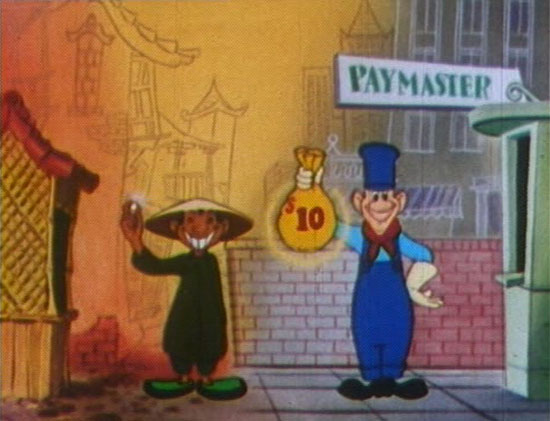
More generic propaganda with no direct sense of purpose. Joe is “the king of the workers of the world” because here in America, competition and investment in infrastructure make our jobs easier with more disposable income than anywhere else. Take that, dirt-poor chinaman! Statistics to be proud of: “Americans own practically all the refrigerators in existence. Bathtubs? We’ve got 92% of them.”
image

Hymn to Merde (2009, Leos Carax)
I agree that Merde/Lavant is wonderful to watch, but Carax doesn’t seem to know what to do with him. Protracted death-sentence courtroom drama wasn’t it, nor is a lo-res music video of him singing a Kills song translated into his own head-slapping language.
image

.tibbaR (2004, Leo Wentink)
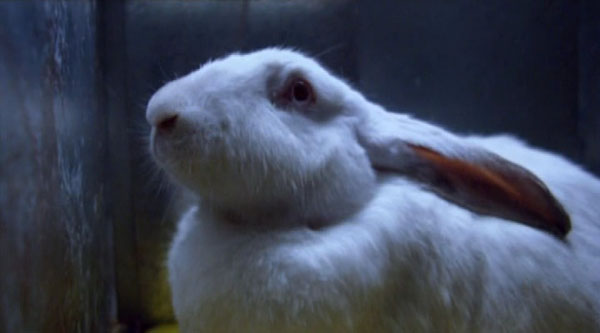
Eerie music and nervous sound effects accompany time-remapped footage of lab rabbit breeding. I never know why anything is happening in short films anymore.
image

Go! Go! Go! (1964, Marie Menken)
So damn jittery it gave me an eye-ache, exactly what I was getting away from the computer in order to avoid. All nervous time-lapse footage shot around the city. Some real nice high-angle shots of construction sites and traffic patterns, superimpositions on a wedding, lots of boats and bridges. Color/picture looked perfect on my tube TV.
image

The Spook Speaks (1940, Jules White)
Not-at-all-good short full of corny sound effects and sub-stooges gags, but it’s better than the others I’ve watched on these DVDs since it has a roller-skating penguin. Buster’s costar Elsie Ames (she was in most of these shorts, then showed up 30 years later in Minnie & Moskowitz for some reason) is terrible, but then, Buster is terrible too. Thanks Sony for slapping warnings and disclaimers and legal shit before every short on the disc. They must’ve known it wouldn’t get tiresome because we’d only watch one before quitting.
image

Who Am I? (1989, Faith Hubley)
Things morph into other things, illustrating the five (or six or seven) senses. Short!
image

Blake Ball (1988, Emily Hubley)
Didn’t love the narration in this one. The woman who says “some are born to sweet delight/some are born to endless night” (without the preceding lines) has got nothing on Nobody. I guess all the lines are the words of William Blake, but they’re not making much of an impact, and I never figured out Blake’s connection to all the baseball stuff. There’s more five senses stuff anyway. A bit too laboriously new-agey, but some great moments (like below).
image

O Dreamland (1953, Lindsay Anderson)
Boy did I ever botch the Free Cinema box set, buying it then deciding I didn’t want to watch it after all and letting it sit on the shelf for years. Finally checked this out and I kinda really like it. Could do without the evil laughing clown all over the soundtrack. Kind of like Jean Vigo’s À propos de Nice which, given If….‘s resonance with Zero For Conduct, proves Anderson saw a Vigo retrospective at some point.

These were the waning years of Doris Day (her third to last film before retirement) and Frank Tashlin (his second to last before death). Doesn’t play like anybody’s final film, just a trying-too-hard jumble of ideas. Doris still has cute comic reactions, but she’s got lump-o-nuthin Richard “Dumbledore” Harris (hope he’s better in This Sporting Life) and a young (relatively) Ray Walston to play off – so, not much.

Doris works for a beauty products company, trying to be a corporate spy and steal another company’s formula. She’s fake-caught trading her boss’s secrets and fake-fired so she’ll be hired by the competitor and steal their product for making hair waterproof. This sounds awfully familiar, and someone needs to investigate that this became available on DVD exactly two years before Duplicity opened.

The movie has a meta-theme-song… they’re in a movie theater watching a film with the theme song Caprice. There’s a Tashlinesque bit of trickery for ya. Also featured: a scene where kids are watching cartoons on television and not noticing the real chase scene happening around them.

At the end Richard Harris turns out to be a secret interpol agent, Ray Walston is dressed like a cleaning lady and I’m not sure who is the bad guy anymore. Tried to check out the commentary, but a few minutes in, Kent Jones said that the city of Paris is the third character in the film so I had to turn it off.

The movie dares you to stay awake, like a french Archangel.

Tried to watch this with Katy back in the apartment, but something went wrong. I remember her getting tired then mad, and I never tried to finish it. Then finally I watched again – then took a trip right afterwards and didn’t write anything until now, a month later. There’s not much to remember, plot-wise. A girl is packing her apartment preparing to move in with her fiancee. Stuck on the road during a transportation strike, she offers a ride to a guy (star of La Moustache). He plays it cool and eventually she’s chasing after him. Will they end up in a hotel bed together? Why yes, it’s shown there on the DVD menu, nice. Some computer animation and an iris-shot imagination scene weirdly spice up what’s otherwise a dreamy-distracted natural film. It needs its own sense of time though, maybe its own week, and I don’t give movies that sort of personal space, so I have a feeling this one’s sensitivity will get swallowed up by whatever Takashi Miike flick I watch next. Maybe I’ll try again with Katy sometime.

From E. Hynes’s just-published article in Reverse Shot:

Many films foreground, and take full advantage of, the fact that we like to watch. Rare is the film that considers and satisfies these desires equally. Rarer still is one that doesn’t make us feel guilty for our desires or their satisfaction. Friday Night is aware of guilt as an emotional response but doesn’t make it a moral imperative. … It carves out a space where desires and curiosities can be explored without corrective regret. If only for a night we’re set free to touch and feel and immerse ourselves in the moment. And our conduit—our eyes, ears, and hands—is a woman. As are our director, authors (Denis and Emmanuèle Bernheim, adapting her novel), and cinematographer (Agnès Godard). Denis’s film is radical not just for being so casually yet utterly feminist, but also for forwarding a feminine point of view as frankly universal.