Almost seven years passed between when I rented this and when I finally watched it (not counting the time I fell asleep a few years back)

Banker-type Wada (Masahiro Motoki, starred in Tsukamoto’s Gemini and the recent Departures) is sent to a rural town in China called yun nan to look at a vein of jade for his employer. An uber-tattooed gangster (Renji Ishibashi of Gozu, Graveyard of Honor, Dead or Alive) tags along since Wada’s boss owes him money. Things get weird, but in a casual, slow, satisfying manner – not all The Great Yokai War weird.

There’s style a-plenty (narrated back story shown in fast motion), some poor late-90’s digital effects, mystic business about the origins of Japanese culture, and trained swimming turtle chauffeurs. The gangster freaks out at the end, not because he’s sick of the place and wants to go home but because he’s afraid the mineral exploitation will corrupt this perfect place, so he shoots the homing turtles. Our hero spends his time talking with the girl who teaches ancient traditions of human flight (as translated by her grandfather, a british pilot who crashed in the area to local children. It’s all quite lovely.

Michael Mann switches between scenes of a master criminal and the cop assigned to catch him, until the criminal is caught because he came back for his girl… but enough about HEAT, here’s Public Enemies.

Johnny Depp is bank robber John Dillinger – previously played by Martin Sheen, Robert Conrad and Warren Oates – and Christian Bale is devoted cop Melvin Purvis – previously played by Will Patton and Dan Cortese. I also recognized appearances by Leelee Sobieski (girl Johnny takes to the movies when he’s killed at the end) and Giovanni Ribisi (wannabe train robber), but failed to recognize Stephen Dorff (my The Gate fan club membership is in peril) and Billy Crudup (as an amusing J. Edgar Hoover). Also apparently the paranoid guy from A Scanner Darkly played an FBI agent and Duke in the G.I. Joe movie played Pretty Boy Floyd.

Sometimes the digital camerawork yielded interesting perspective and depth of field effects, but sometimes in the indoor scenes it just looked like a made-for-TV movie. It’s weird that a low-light movie like Collateral looked less video-like than this one.

K. Phipps:

Mann fills the background with a lot of fascinating detail but often has a hard time keeping the foreground in focus. Sometimes literally: Mann and cinematographer Dante Spinotti opt for hard, handheld digital-video images. These lend a sense of excitement to some of the action scenes—particularly a thrilling nighttime chase through the Wisconsin woods—but often give the film an unpleasantly unfinished look. That unfortunately matches an unfinished feel. Neither Depp nor Bale get a chance to get beneath the surface of their characters, supporting characters bleed together, and a love story between Depp and his moll (Marion Cotillard) never finds a heartbeat.

Mann, as ever, remains a master of methodical pursuit, but as the film inches toward Dillinger’s fateful night at Chicago’s Biograph Theater, he doesn’t offer much beyond methodical pursuit. Depp goes about the business of not getting caught; Bale goes about the business of catching him. In the end it doesn’t really come to mean all that much.

I wasn’t sure what to think about this – it felt flat and over-long, a procedural thriller without the procedure or the thrills, a character bio-drama without much character, and a digital look that called too much attention to itself for reasons unknown. I’d been looking forward to it so much, then it wasn’t even that I didn’t like it; I wasn’t sure what I was supposed to like.

But that was before reading a convincing article by M.Z. Seitz for IFC, which makes the movie seem like a good case to study, if not a killer fun time at the theater. Maybe I’ll appreciate it more next time, focusing on the digital video’s sense of immediacy and reality, and the “moment-to-moment shifts in emotion,” instead of trying to enjoy the story and the acting. God, I’m such a failure as an auteurist… speaking of which, a whole bunch of articles in The Auteurs this month should help me feel worse about not understanding Michael Mann (and there’s an epic article/video series at Moving Image Source).

You ask me to believe that in the future, 70% of the earth’s energy comes from a mineral harvested on the moon – fine. And that the harvesting station is manned by only one astronaut, Sam Rockwell – fine. And that to cut training costs, they actually have a hundred clones of Sam Rockwell with memory implants and they wake one up every three years – fine. But then you tell me these moon-harvesting Sam Rockwell-cloning men of the future can’t spell “satellite” correctly on their satellite receiver, that’s where I have trouble suspending disbelief.

Sam is great as the only actor in the movie (people on video screens don’t count) playing clone #5 whose term is almost up and also clone #6 who was awakened prematurely when the computers thought Sam 5 had died. Interesting how the computers don’t have any biometrics on Sam, requiring him to talk to the friendly (anti-HAL, sabotaging the company to assist Sam) Kevin Spacey-voiced computer played by a ceiling-mounted roving smiley-face machine with a cupholder in front and a “kick me” sign on back. Funny also how the company’s way of disabling Sam’s live communications with Earth is to install massive radio-jamming towers around his base instead of, say, just sending an error message whenever he calls. My way would be cheaper.

But it isn’t our job to poke holes in the sci-fi movies – we’re here to enjoy them. And it’s enjoyable for sure. Sam 6 flies to earth in a jet tube meant for a can of minerals and brings legal action against Original Sam and the company in the cough-and-you’ll-miss-it audio finale. The whole thing seems vaguely anticlimactic since Sam 6 appears early in the movie. Once you’ve seen two Sams in the same room, learning about the motivation behind the clone thing is no big deal. But it’s an amusing flick to be sure.

“Racism was rife in the public school system then, as were silly uniforms”

Rented this back when it came out – so about two years ago. More intense than I’d thought. Sets up a miserable, oppressive hierarchical school system, a couple rebel friends in the middle of it, and ends with them on the rooftop merrily blowing everybody away.

Malcolm’s conspicuous entrance, three years before A Clockwork Orange:
image

Divided into numbered and titled sections, each with one or two scenes in black and white for reasons I never figured out. Turns out cinematographer Miroslav Ondricek (who worked with Milos Forman a bunch of times, earning oscar nominations in the 80’s) used it for budget and simplicity in one scene, then Anderson would request that other scenes at random be shot b/w as well. Gave critics something to talk about, anyway.
image

D. Ehrenstein:

When it was first released, it was impossible to look at If…. without thinking of Zero for Conduct, Jean Vigo’s classic 1932 featurette about a schoolboy revolt. But Vigo’s rebels pelted their hated teachers with vegetables. Anderson’s are armed with bullets. And more than teachers and school officials, it is their fellow students—the senior classmates who truly rule their lives, treating them not as equals but as prison inmates they’re guarding—who are the real targets. Consequently, it is impossible to look at If…. today without thinking of the Columbine massacre of 1991 … Still, that was real, and Anderson’s slaughter is clearly meant to be metaphoric. Why else end the film with McDowell firing straight into the camera like the nameless bandit in Edwin S. Porter’s The Great Train Robbery (1903)? By doing so, If…., like so much else of sixties culture, poses a challenging question rather than offers a glib and easy answer.

image

image

image

Rented this just a couple weeks ago on a night I knew damn well I wouldn’t have time to watch it. It’s just as good a few weeks later.

image

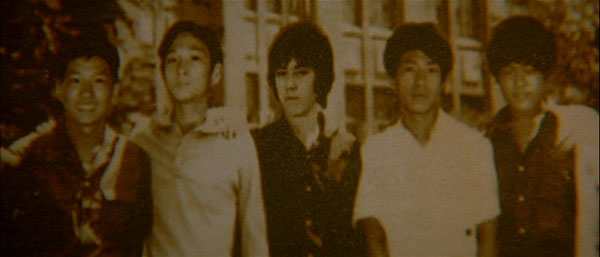
During the first half I wasn’t enjoying it so much because I was looking for the wrong things. The characters seemed to have no names or individual traits – just a group of guys who are always in the same scenes together, defined by their commitment to friendship (the backstory consists of one old photo of them together as kids) over loyalty to their mob boss (and therefore their personal safety). I didn’t know the actors (recognized a couple as Chi Wai’s multiple personalities from Mad Detective) and was waiting for the story/character scenes to kick in. But they never do, and now I can appreciate that. The photo is the backstory: these guys are friends… what more do we need for an action flick?

image

So without character development, we’re left with dark, shadowy cinematography on awesomely-staged action sequences. The one below is a favorite. The fifth friend, whom the other four were supposed to kill on orders from their boss which led them all to revolt, is wounded and being treated by the gang’s private doctor, when the boss himself, also wounded, shows up. He’s being treated, surrounded by bodyguards, while the friends hide behind curtains and furniture, the lead-up to the shoot-out being deliciously more thrilling than the shoot-out itself.

image

The fifth guy dies, and his wife goes on a shooting rampage against our heroes. They fail to kill their boss, who is now hunting them. They’re on the run and it looks like the movie is gonna break out an existential loneliness dialogue when they stumble upon a heist, a truck full of gold being defended by a cigarette-smoking super-soldier. The movie wasn’t what I’d call realistic to this point, but now it flies off the rails, and they join up with this guy to steal the gold. But narratively it’s not gonna work for the four remaining gunmen to live rich in hiding while their former boss stays in power and their dead friend’s wife raises her new baby alone, so they go back for one more suicidal fight, leaving the gold to the wife and the soldier.

image

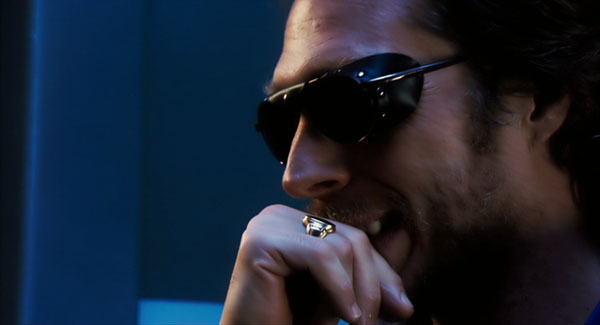
You have to think that guys wearing sunglasses and shooting guns in slow-motion is cool to properly enjoy the movie, and I do, so I loved it by the end. Set in Macau, a former Portuguese colony now in the same political situation as Hong Kong. Nice comic touch: a cop with only a couple days left on the force keeps driving by, getting shot at, and running off unharmed… he lives to see retirement.

July is “Movies I Rented & Copied But Never Watched” Month. I figure there are about 75 of those, and tragically only 31 days in the month.

Dan Hedaya + prosthetic arm:
image

Rented this for our Florida trip. Made it halfway through with Katy but she didn’t seem interested in the second half. I gotta agree that for a cult comedy it’s awfully slow and talky, and the second half is slower if anything, but I still think it’s great. A crazy movie. There are big, loud, blues-song music-video segments, a slow two-minute pull-away shot of Tom leaving the doctor’s office and petting a dog, a puppet of a hammerhead shark, and Meg Ryan in three roles, two of which are impersonations. I’d at least admire the movie for all that even if I didn’t find it hilarious and wonderful.

In Ossie Davis’s follow-up to Do The Right Thing, the movie that took on Driving Miss Daisy’s view of race in America, he plays chauffeur to a white man.

image

Abe Vigoda plays the village leader like the Three Stooges in tribal makeup:

image

The great Robert Stack (House of Bamboo, Written on the Wind) is the doctor who gives Tom his fatal “brain cloud” diagnosis:

image

The great Lloyd Bridges is the rich man who pulls the strings, including Stack’s:

image

Meg Ryan is kinda awful as Hanks’ coworker at the rectal probe and artificial testicles factory with a Little Shop of Horrors New York accent, and worse as Lloyd Bridges’ daughter, doing an over-the-top Katharine Hepburn impression, but she’s kinda good as that girl’s un-accented half-sister who captains the boat to the island.

image

Opens with a long boring backstory evoking global terrorism, virus pandemics, holocaust death camps and vampires. Ugly. This is the second Milla Jovovich movie I’ve seen where the ultimate weapon to save mankind turns out to be a person.

image

Skin looks like plastic, or a video game cutscene, for some reason.

Yay, guy from Alien is her weapons supplier. Oh wait, no he’s the guy from Contact. Remember Contact?

image

Yeah it’s cool looking, but they allow the comic-book sci-fi aspect to justify the stupidest shit, as if there’s no need to do anything sensible anymore. I’m not saying the Spiderman movies make total sense, but at least there are recognizable character motivations and straightforward plots in those.

image

Everything is explained in mumble-jumble terms by the voice of the Spaceballs ship. Tons of ultraviolence but little blood since it’s all PG-13. How come she has better guns than anyone in the entire future – and a flying motorcycle and anti-gravity devices? Did William Fichtner invent those things? All the bad guys have are tons of faceless, undertrained cannon fodder guards lined up in perfect fascist rows.

It’s actually a cool movie whenever there is no plot at all. When the kid is involved (oh btw, there’s a kid) or Dax (bad guy, dude from Con Air) or William are explaining something or we hear backstory or there’s an emotional moment, it’s a big bunch of crap.

Only my second feature by Ruiz, as much as I’m always talking about the guy – and it’s kinda what I’d expected. Good movie with some weird craziness in the plot, but at the same time, it’s a French film, a classy drama about restrained rich people.

Camille’s dad is out of town – his mom (Isabelle Huppert, the year before The Piano Teacher), uncle Serge (Charles Berling of Summer Hours) and maid Helene are taking care of him until one day he announces that his real name is Paul and he wants to go home to his real mom. He guides Huppert to another woman’s apartment – she’s not home but creepy neighbor Edith Scob (also Summer Hours) shows them around.

image

When beautiful Jeanne Balibar (the Duchess of Langeais herself) gets home, she tells Huppert about her son Paul who drowned two years ago, but also acts as if Camille is her Paul in the present tense. There’s no sense of paradox or surprise, nothing unusual, just these facts: Paul died and Paul is here. It’s not the kind of thing that could be done in an American movie without some character shrieking “how can that be? how can you say he died if you’re saying he is here in front of you?!” Huppert plays it cool though – invites Balibar to stay at her house so they can figure it out together.

image

In the climax, Balibar kidnaps Camille/Paul and takes him to the barge where Paul had drowned. Huppert shows up and Balibar surrenders and apologizes, everything back to normal.

Ruiz uses a Sam Raimi anamorphic-lens-twisting effect:
image

Is it pertinent that the maid might be having an affair with the uncle? That Balibar is after the uncle as well? That Huppert’s grandmother died of sorrow because of some incest incident? That Balibar’s neighbor Edith Scob is just as creepy and mysterious as Balibar herself? That a family acquaintance dies in a car crash near the end? That Camille has a businesslike 10-year-old friend who everyone had assumed was imaginary? All combines into an overall sense of mystery about identity, parentage, relationships, and what can be known.

image

I thought I’d heard of Denis Podalydès who played Isabelle Huppert’s husband, but it’s actually his brother Bruno I’d heard of.

Unnerving, noticeable music by loyal Chilean Jorge Arriagada and not extremely impressive cinematography by Jacques Bouquin (The Film To Come, Life is a Dream) – he does that thing where the camera is always gliding slowly past the action an awful lot. Overall I dug the movie… looking forward to Ruiz’s other 99 features.

image

I pick these movies up one at a time on cable and elsewhere so I don’t have access to the Val Lewton box set bonus material which would explain why it’s his name I always hear associated with this and Cat People instead of Robson and Tourneur. This one is more eventful than Cat People, has quite a large cast and a packed, twisty plot for a seventy minute film.

Mary (Kim Hunter of A Matter of Life and Death in her first film role) is told by her school that her sister Jacqueline quit paying her bills six months ago so she’ll have to go home. Mary heads for scary, shadowy Manhattan to locate her sister and gets caught up in all kinds of intrigue. Turns out the sister joined a satanic cult (the most gentle, mild satanic cult I’ve ever seen in a movie) and mentioned it to her psychologist Dr. Judd. Well, the first rule of the satanic cult is you do not talk about the satanic cult, so the members have been hiding her away trying to get her to kill herself. Sorta. She found time to get married (to a dude named Greg Ward) and she continues to see Dr. Judd at least once a week, and she’s spotted around town, so the seclusion thing doesn’t seem to be happening – plus the cult sends a man with a knife after her towards the end, kinda defeating the get-her-to-kill-herself angle.

Mary falls sorta in love with her sister’s husband, and a poet who hangs out at the Italian restaurant under her apartment (called Dante) falls sorta in love with her, and I can’t tell whose side the doctor is on, exactly. A craggy-faced private investigator with no known motive tries to help Mary but gets killed by Jaq by accident. Jaq shows up then disappears then is easily located again. The cult members ask very politely and straightforwardly for her to drink poison, but she just won’t. Finally Dr. Judd and either the husband or the poet (it’s not important) tell off the cult by invoking the lord’s prayer (good luck with that) and Jaq has an intriguing chat with a sick, dying neighbor then goes and hangs herself.

Kim Hunter with private eye Mr. August (Lou Lubin, was a bartender in Scarlet Street)
image

(L-R): Jason the poet (Erford Gage of Curse of the Cat People), Dr. Judd (Tom Conway of Cat People, 12 to the Moon, The She Creature, Bride of the Gorilla) and secret husband Greg Ward (Hugh Beaumont of The Human Duplicators and The Mole People, also the Beaver’s dad on TV)
image

More weirdness: The woman who bought Jaq’s cosmetics company, Mrs. Reddy, uses a satanic symbol as her brand trademark (not too subtle for a secret society). The society has presumably coerced six others to kill themselves before (hence the title). And they go on about something that sounds like “the pilates movement.”

The Satanic Cult, led by a guy whose name I didn’t catch
image

Jacqueline (Jean Brooks of The Leopard Man and some 40’s serials) stares down a glass of poison

image