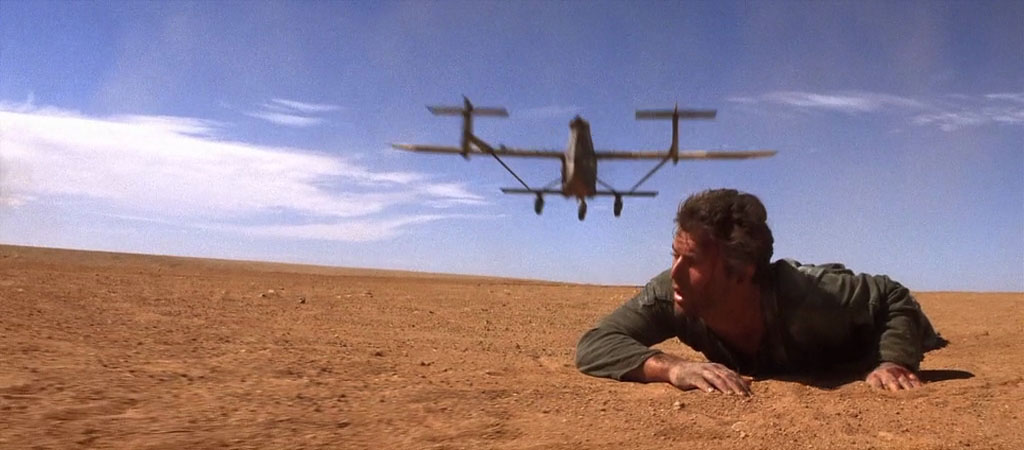
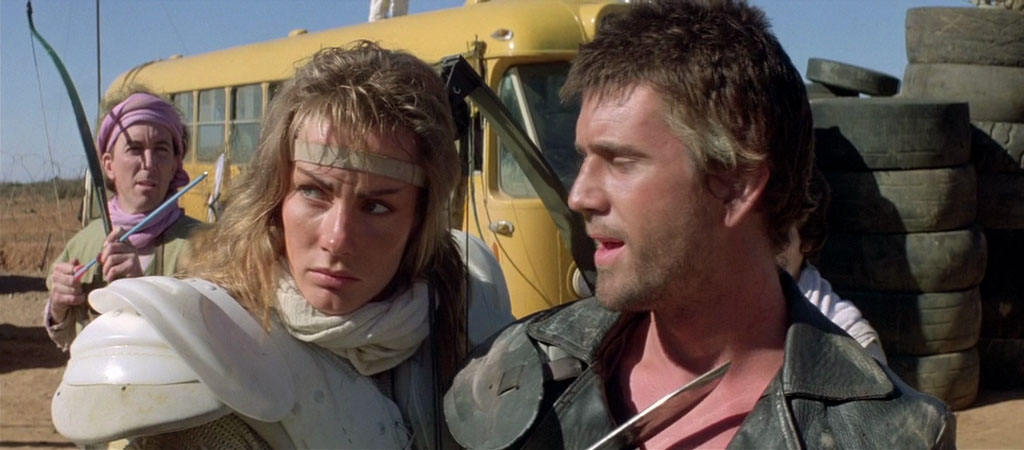
I have mixed feelings about this one. Felt like Lynch already reclaimed Twin Peaks for himself in the final episode of the series. Sheryl Lee is great, and it’s a good movie about her increasingly troubled youth, dodging her upright boyfriend James to hang out with drug-supplying Bobby (who kills a guy in the woods), and grappling with her realization that her tormentor “Bob” is actually her father. Lynch’s heart may have been on poor Laura’s side, wanting to spend time with her while she was alive, but it comes off as a redundant prequel, full of fan-servicing cameos by the show’s cast and decisions based more on actor availability than artistic concerns.

Lynch practically writes Agent Cooper out of the show, replacing him with Chris Isaak (and wonderful sidekick Kiefer Sutherland) in a long opening segment about the disappearance of Laura’s associate Teresa Banks and her mysterious ring, but he can’t write out Laura’s best friend Donna. Lara Flynn Boyle was a superstar in 1992, appearing in Wayne’s World and Matthew Modine identical-twin thriller Equinox, so Moira Kelly (With Honors, The Cutting Edge) is the new Donna. The whole Horne family is missing too (Sherilyn Fenn was costarring with Danny Aiello in a movie about the JFK assassination from Jack Ruby’s point of view) though they’re mentioned in the deleted scenes.

Peaceful domestic scene:

Rewatched this the night Bowie died. He has a tiny role in the movie, but fits into Lynch’s netherworld perfectly. I forget some of the Twin Peaks mythology (planning to rewatch some episodes before the new one comes out), but I’m into this brigade Lynch was building of dimension-hopping special agents: Kyle, Bowie and Isaak. Re-reading a Cinema Scope article from when the deleted scenes came out, there are plenty of interesting connections to the series that I missed from not having watched it in 14 years.

Who can identify all the people in Whatever Lodge This Is? There’s Bob and MJ Anderson up front, then we’ve got papier-mache-face, cane fella, old woman, suit kid, and the fake beard brothers. According to a Twin Peaks-dedicated wiki, the old woman is Mrs. Tremond and “her intentions are unclear”.

Thanks, Wikipedia… so the red-curtained, zigzag-floored place is The Black Lodge, and that’s one-armed Mike sitting with MJ Anderson (who refers to himself as “the arm” in the film) facing Bob and Leland.

Same ending as Orlando?

Coming-of-age movie with good reviews. I preferred The Spirit of the Beehive. Older and younger girl work on the family honey farm, compete on an awful traveling reality show hosted by Monica Bellucci (last seen in Shoot ’em Up), but don’t do very well. Also the family gets a mute foreign criminal kid to work for them, part of some rehab program, and he and the oldest girl (terrific Maria Alexandrea Lungu) have a weird kinda-friendship. Lungu has a trick where she puts a bee in her mouth and lets it crawl out, which only reminded me of the superior Limmy version. Spoiler: boy escapes, family loses the farm.

T. Charity in Cinema Scope:

Rohrwacher deftly sketches the stress points within the family, but the film’s real focus is the bond between eldest daughter and father. At the beginning of the summer Gelso is appreciative of her role as Wolfgang’s most trusted helper (as well as default child-minder), even if she’s also dimly apprehensive of her dad’s short fuse, his coercive methods, and obsessive personality. He’s the patriarch, but also an outsider in a house overflowing with women and girls (literally: he sleeps on a mattress out under the stars). Over the course of a couple of months, the film traces how the balance shifts from admiration towards a more nuanced understanding of Wolfgang’s shortcomings, a trajectory from daddy’s girl towards the first stirrings of Gelsomina’s emancipation and womanhood.

M. Sicinski’s letterboxd review is my favorite, but harder to break into quotable pieces.

Was in the mood for some Jeff Scher after running through my Len Lye DVD… watched the rest of the shorts on his great Reasons To Be Glad collection and searched around for more. Also a sweet film festival trailer and a 10-minute Pip Chodorov doc about Scher’s techniques. Jeff rotoscopes, using sort of a low-powered film projector on pause and tracing the projected image, with diffent color schemes on each frame. He says he spent up to an hour per frame on Garden of Regrets. Started using less labor-intensive techniques for Yours, combining different film images and rotating color techniques. Fun to take stills from these while watching because you never know what you’ll get.


Postcards from Warren (1998)

Cuts between different hilarious postcards from Warren (Sonbert, I assume), panning across some.


Bang Bang (1998)

Drums and flickering ink blots. My eyes were tired from a long week at work, and this was just the thing to hit their reset button, making them much better or worse – I can’t tell. The kind of thing that makes me wish I had a movie theater to show it in.

This one looks like Donnie Darko:


Sid (1998)

Playing with the dog from the rubber-steak’s-eye-view, complete with Eugene-in-Bob’s-Burgers-style dog-bark-sampling keyboard music.


Turkish Traffic (1998)

All flickering, transforming shapes and patterns set to (Turkish, I assume) happy horn music.


Garden of Regrets (1994)

More rapid rotoscoping magic, shots from a wide variety of sources, sometimes repeated later in the montage.


Pretty, Dead (2010)

Noirish scenes given the roto-color treatment, with a dramatic string score.


More reasons to be glad: Scher has an iBook with videos which I need to order, more movies online (including a live video of Toog) and a blog series at NY Times.

The movie that blew up my twitter the most in December, from “bear rape” to “movie pussies”. And it won the golden globe over Carol, Mad Max, Room and Spotlight. But it’s by Iñárritu, who I haven’t trusted since the putrid 21 Grams, and I was ambivalent to his oscar-winning Birdman. So surely the question on everyone’s mind is: did I enjoy The Revenant? Yes!

This one’s not done as a fake single-take – and who told me it was? – but rather shot with a grotesque wide-angle lens by the great Emmanuel Lubezki and edited by Soderbergh’s man Stephen Mirrione. I guess Leo DiCaprio is the gone-native white dude with a half-breed son and the two of them are well-paid to guide and protect a crew of trappers under siege by a group of natives looking for a kidnapped girl, rival French trappers (who kidnapped the girl), snow, bears, and worst of all, their own greedy compatriots. After Leo is half-destroyed by a bear, trapper Tom Hardy murders Leo’s son and abandons Leo to the elements, returning to camp to collect his reward for valiantly trying to help (Tom’s word against nobody’s). But Leo survives a million horrible things, makes it to camp and gets Captain Domhnall Gleeson (having a good year with Ex Machina and Brooklyn) to go after the villainous Hardy.

So yeah, I was convinced by the film, went along with the ride, edge of my seat like a disgusting, frozen, bloodied Panic Room, and didn’t even feel bad about it afterwards. Some folks weren’t as persuaded.

J. Christley:

That The Revenant is egregiously overlong is almost beside the point; audiences will manage their expectations in that regard. What pushes the film, at long last, into the icy river, is its very design, as a monument to slick, mercenary grandeur.

He makes a good point about The Big Sky being a more efficient film, but did The Big Sky have characters named Trapper Hatchet In Back and Dave Stomach Wound?

I knew this was based on a Patricia Highsmith story, but when I saw the opening scene I thought “oh no, is this a remake of Brief Encounter?” Fortunately it goes in a different direction pretty quickly, and while Brief Encounter may have a perfect ending for the 1940’s, Carol has the perfect ending for right now.

Carol (Cate Blanchett) is the interesting rich lady who makes eyes at young department store cashier Therese (Rooney Mara) one Christmas shopping season, and eventually they’re in love, vacationing across the country, not realizing they’re being pursued by private investigators hired by Carol’s husband Kyle Chandler. Not much to say about the movie, plot-wise, since it’s all about perfectly chosen moments and a beautiful visual atmosphere.

F. Zaman in Reverse Shot:

It doesn’t engage with questions of why or how its protagonists are gay, or create simplistic dynamics between homophobic villains and damaged queer heroes. It lets the characters just be, as they are, a defiant act of passive resistance against the assumption that queerness needs to be justified – and that it is the primary quality of the queer person. Just as Haynes is reinvigorating the melodrama genre in films like Carol, Far from Heaven, and even Velvet Goldmine, he is also reframing history to include others — people of color, counterculture figures, queers — in a meaningful way. Carol is also full of visceral pleasures, capturing subjective but universal experiences, like the way the world seems to blur when that certain someone touches your wrist for first time.

Sometimes I get behind on the ol’ movie blog because I watch a movie I’d been expecting to like and it turns out I have nothing to say about it and can’t even bring myself to write a plot description. Fortunately there’s Cinema Scope to tell me what to think.

Inspired by a bunch of viral videos! Yes, exclamation mark. I’m still confused by the bus-ride finale, but at least now I know it’s part of the director’s weird urge to incorporate his favorite youtube videos into the script. Full of gentle doom music, plus some Vivaldi. Won a million awards, including a prize at Cannes – where Mark Peranson wrote:

The film benefits immensely from Ostlund viewing this familial tragedy through a wry microscopic lens, which helps counteract his Haneke-like tendencies: when Tomas bursts out crying after faking tears mere seconds earlier, and then can’t stop, the situation is at the same time funny-sad and funny ha-ha. There’s a glimmer of warmth to be found in the winter chills, and Ostlund’s accomplishment is rare: Force Majeure is an example of universal distance. Here, man is the animal.

It’s actually Oostlund, or Oestlund, or O-with-two-dots-stlund, but my Macbook has decided to disable the useful feature where I used to hold down a vowel key and it would ask me how I’d like to decorate it with accent marks and such.

So this is the movie where the dad abandons his family during an apparent avalanche, and this leads to strife. It’s got the same problem as most movies (and possibly most relationships): that of communication. They can’t move past this moment because the dad refuses to talk about it, even though the mom doesn’t want to talk about anything else. They drag other couples into their vacation-crisis, sparking little sub-crises everywhere.

The family with Fanny and Mats:

Whiteout rescue – possibly staged for the kids’ benefit:

A. Muredda:

Ultimately, Force Majeure isn’t about “the crisis of masculinity” so much as the way personal edges never quite get shaved off with the adoption of archetypal roles: not just father and husband, but also mother and girlfriend. In a film rife with smart visual set pieces, from Tomas’ flight from the table to a later family excursion into whiteout conditions that allows him to reassert his dominance, the richest belongs to Ebba. Late in a day off from her family, mostly spent sitting at the hotel bar and having a private ski, Ebba relieves herself in the bushes off to the side of the hill, the camera slowly pushing in on her face as she hears what sounds like her little tribe slowly coming down the slope before her; she tearfully looks in their direction but doesn’t announce herself, troubled by her momentary separateness but not about to change it. Tomas’ actions during what ought to have been a redemptive defining moment are the ones that will surely inspire the most post-screening discussions, as they do with the couples Ebba solicits, but what sets Force Majeure apart is this heightened sensitivity to how even an event as minor as Ebba’s little breather is incongruous with the stories that families tell about who they are.

One of those Totoro/Coraline stories where the kids move to a new place and discover wonders there…kind of… but also one of the kids is a mermaid-seal, and so was her mom, and the girl needs to recover the seal pelt her dad chucked into the ocean or else all the mythological creatures in the land will be turned to stone.

Triumph of animation and design, as foretold by The Secret of Kells. It’s Irish, so Brendan Gleeson is in it (as the dad). I loved it despite the fact that owls were the villains.

Big Hero 6 and How to Train Your Dragon 2 and Miniscule and Princess Kaguya took most of the awards this was nominated for. Admittedly it was a great year for animation, also with Boxtrolls and Cheatin’ and The Lego Movie but I’m surprised this didn’t get more love.

A pretty good Cukor movie made in between really great Cukor movies. For some reason I can’t ever get into movies about rich courtesans in ill health who can’t decide between their callous rich suitor or their young and energetic, devout but poor suitor.

Stars Greta Garbo, who I’ve rarely seen in movies and doesn’t make much of a distinctive impression, in one of her final films. We’ll have to watch Queen Christina or Grand Hotel sometime to see what the hubbub is about. Henry Daniell (The Suspect, Witness for the Prosecution) is the boring old baron and Nebraskan Robert Taylor (Ivanhoe, Three Comrades, the 1935 Magnificent Obsession) is young and in love.

Based on the Alexandre Dumas novel, which has been adapted a million times, because apparently audiences love courtesans. The Theda Bara version is presumed lost. Others starred Norma Talmadge, Pola Negri or Rudolph Valentino. Isabelle Huppert and Bruno Ganz appeared together. Ben Kingsley played Colin Firth’s dad. Raymond Bernard made a version. Fortunately, the Antonioni film The Lady Without Camelias is an entirely different story.

The Little Matchgirl (2006, Roger Allers), which I saw in theaters. Huh, it was supposed to be part of a third Fantasia feature, hence the music score with no dialogue or effects. Oscar-nominated with The Danish Poet and Pixar’s Lifted. Allers worked on The Prophet, which we missed at filmstreams this year.

Lorenzo (2004, Mike Gabriel), great one, jazzy and dancey. Blue cat in a rich house taunts the street cats outdoors, gets cursed so his puffy tail will have a mind of its own. Gabriel codirected Pocahontas and The Rescuers Down Under. This was oscar-nominated along with Ryan and Guard Dog, and I’m surprised I never saw it until now. Also part of the cancelled Fantasia 3, along with Destino and South African kite-flying short One By One.

John Henry (2000, Mark Henn), strange, unfinished-looking with squigglevision pencil marks visible around the blocky human figures. Katy recognized the voice of narrator Alfre Woodard. Part of Disney’s post-Lion King discovery of non-white people.

How to Hook Up Your Home Theater (2007, Deters & Wermers), cute, fast-paced Goofy short with lots of classic-Disney references. Has a shot-on-film look to it (it wasn’t: made with cintiqs and toon boom). Played in theaters with National Treasure 2 for some reason.

Tick Tock Tale (2010, Dean Wellins), sentimental story of novelty clock in a clock shop (where all the timepieces come to life after hours, natch) who saves the others from a burglary but is destroyed in the process. Will the clockmaker repair the heroic clock or leave it in pieces in the trash? Not telling! Wellins is a writer/animator/composer involved with The Iron Giant and The Princess and the Frog.

Prep & Landing: Operation Secret Santa (2010, Deters & Wermers), where two elves are on a Mission: Impossible-referencing assignment from Mrs. Claus to retrieve a trinket from Santa’s workshop so she can give him a sentimental Christmas gift. Apparently a spinoff from a half-hour special released with the 3D version of Monsters Inc. Dave Foley played one of the elves – coincidentally since we just rewatched A Bug’s Life.

The Ballad of Nessie (2011, Deters & Wermers), poem about how Nessie the sea monster was displaced from her natural habitat by mini-golf course construction, and cried herself a new lake to live in, surely displacing thousands of mammals in her selfish quest to find a new home. Narrated by Billy Connolly, the only Scotsman known to Hollywood. I liked the tartan-patterned hills.

Then we rewatched Paperman, Feast and Get a Horse, and skipped Frozen Fever and Tangled Ever After.