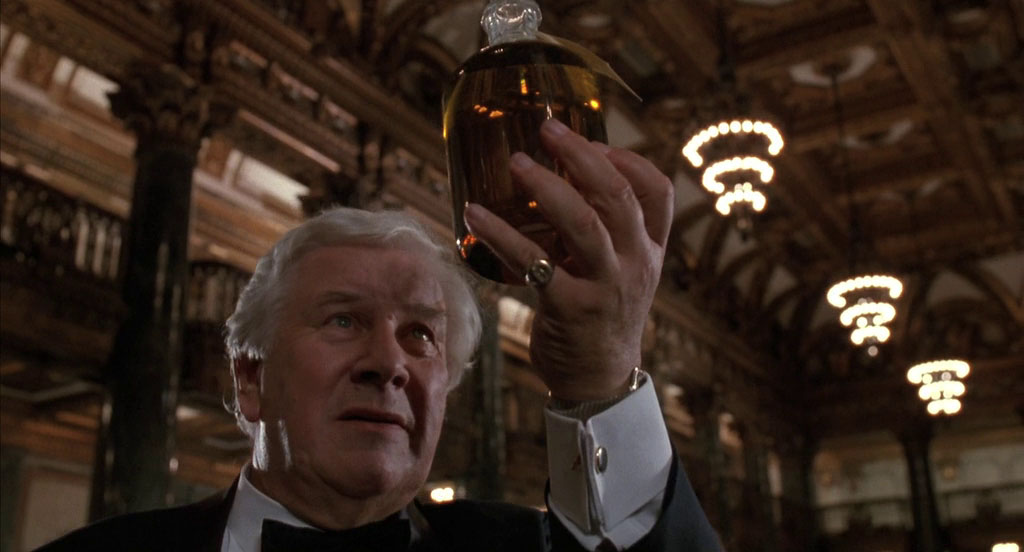
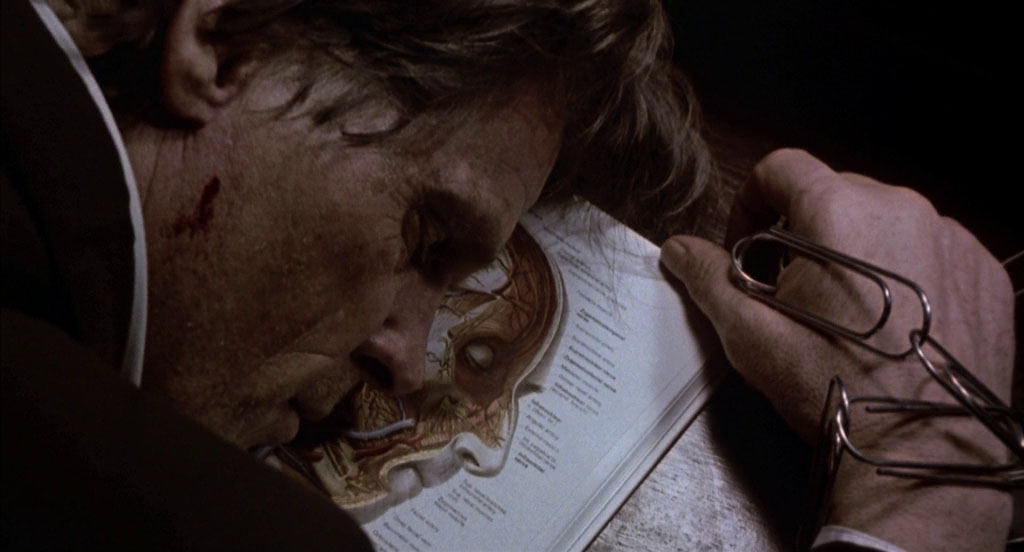
The country’s got West Side Story Remake fever, but we’ve stayed home, trying to avoid catching any other kinds of fever – and after pulling the plug on The Terror, I need a new exercise-bike show to watch, so I gave this a try, in two parts. What better way to encourage movement than to watch a propulsive road movie?

Dennis Weaver (TV’s McCloud) is chased and terrorized by a big-ass truck. His thoughts via voiceover try to apply reason to the situation, but there’s no reason to be found – the truck is dangerously toying with him. It tries to push him into a train, drives right through a phone booth where he’s calling the cops (and some roadside snake aquariums), tailgates him at dangerous speeds. Will this emasculated modern man outdrive and outsmart the giant machine? Yes! Not without difficulty – the movie is partly a PSA for proper automotive maintenance, per the advice of your mechanic, so I feel pretty good that I changed both my air filters the day before viewing.

Written by Twilight Zone vet Richard Matheson, and I thought of the Zone a few times, when the world seems to be stacked against Weaver, diner locals and schoolbus children all making fun of him, and only he senses the danger, or is maybe imagining it, and directed to hell and back by young Spielberg.

Learning about a San Franciscan fave of the Anthology Film Archives and the Visionary Film book I keep at my bedside. I’ve skimmed Broughton’s own filmmaking book Making Light of It, which I bought because of its great title, but my book collection is a shambles and I can’t find it right now.

He hangs out with other poets, including Anais Nin, starts filming with The Potted Psalm, then Mother’s Day is his solo debut. He goes to Europe with his first films and makes The Pleasure Garden in England, which goes to Cannes, where he’s presented an award by his hero (and mine) Jean Cocteau… is offered commercial film work, but turns it down, and doesn’t make another film for 15 years.

Lotta stock footage with talking heads. I respect that the doc tells its own story instead of sticking to strict chronological order, but don’t respect that it motion-graphics one of Broughton’s poems. It spends more time on his love affairs than his post-1960’s work (he had a kid with Pauline Kael, then cheerfully proclaimed homosexuality late in life).

I’d only previously seen his Four in the Afternoon, and the collab with Sidney Peterson – the hope was to watch a bunch more after this doc, but only got to one.


Loony Tom (1951, James Broughton)

Tom will not rest until he has kissed every girl in the countryside. A straightforward randy romp, with piano music and a spoken poem at the top and tail. Broughton’s friend Kermit was quite good at being a silent comedy star.

My third in a trilogy of White Nights adaptations. I belatedly discovered that James Gray’s Two Lovers is also a loose/partial adaptation, too late, will save it for my next Dostoevsky binge. All three are set in their own present-day, displaying current technology – Bresson’s tape recorder, Visconti’s jukebox, now Vecchiali’s cellphone.

He’s nasty in this one, but after a prologue where he insults an older man, he meets the girl and the dialogue veers close to the original. Video-looking long takes here, the actors standing still, one of them usually hidden in shadow. Besides the phone, her backstory monologue is interrupted by a couple things. Her voice fades out into the waves, then back in, repeating from earlier than where we left off but with the camera on him instead, reminding me of the Francisca repetitions. Also, he starts correctly guessing details of her story, as if he’s read this book before.

The long dance scene seems to reference the Visconti more than the novel. A b/w sidetrack conversation between him and his stepmom feels like filler, even if it does reference the cobwebs from the story and prove he wasn’t lying about being named Fyodor.

This played Locarno with La Sapienza and Horse Money. Vecchiali is a lesser-known Cahiers critic-turned-director, and I’ve heard his 1970’s work is good. Our lead actress is a Vecchiali regular, and our guy played the two Remis in Two Remis.

After watching the Bresson with no context, I read the Dostoevsky story it adapted, then sought out more films of the same story. Marcello is introduced socializing in this one – that doesn’t seem right. Of course, being Marcello, he can’t help but be more suave than the repressed protagonist of the story, but he’s been thoroughly movie-starred here, dancing and fighting. At least the sudden mood swings from laughter to tears are accurate to the novel. It’d make an interesting screenwriting workshop – sometimes it uses the same language as the novel to describe the same events and sometimes it does the opposite.

Great atmosphere, unbelievable set of a wintry outdoor canal city. The central bridge is only 15′ long, far from the Pont-Neuf, but the Criterion essay points out how it functions symbolically. I understand lighting is important, but shouldn’t the Italians have invented location shooting instead of making hugely complex soundstage sets if they weren’t even gonna record sound? The city of Venice didn’t hold it against him – the movie won a silver lion, second place to Aparajito (no love for Throne of Blood). Marcello is second billed, the year before Big Deal on Madonna Street, to Maria Schell, who’d just won best actress at Venice for a René Clément picture. Judging from Senso and The Leopard, I prefer modern Visconti over his period pieces.

Flashback of Schell with lodger/lover Jean Marais:

Hank Williams on the radio in a tumbleweed Texas town. Watched the night of P-Bog’s passing – lately I’ve really enjoyed his films, so I probably shouldn’t have started out with The Cat’s Meow. This got all the award nominations in its time. For such an auteurist filmmaker, it’s so actor-focused, discovering at least four future stars and pitting them against established and veteran actors.

Cybill and Randy:

Young Timothy Bottoms has an affair with his coach’s wife. The boys buy a prostitute for Mute Billy and it goes poorly. Ben Johnson, the pool hall and picture show proprietor who is everybody’s role model, dies suddenly offscreen. Jeff Bridges punches his friend’s eye out then joins the army. Everything’s shabby and everyone’s stuck – would be interesting to see the sequel made 20 years later.

Officially P-Bog’s follow-up to Targets, though he also made a John Ford doc and helped Corman with some MST3k-bait. DP Robert Surtees, who worked not with John Ford but a bunch of big directors through the 1950’s, shot the hell out of it. Written by Larry McMurtry, who also died in the past year, and filmed in his hometown.

I noted at the beginning that author/narrator Donald Richie’s comment on “the people the Japanese ought to be” sounded patronizing, but I’m also vaguely aware that Richie devoted his life to Japanese culture, so I dismissed it, and appreciated the rest of this hourlong movie as the sort of outsider travelogue that Chris Marker used to make. The mountain/island scenery is wonderful – I kept watching out for the Naked Island. Unexpected inclusions: a monk who likes Sinatra, a reference to Council Bluffs. “I wish to celebrate our differences for as long as possible.” Watched with Katy (who did not get over the patronizing thing and is now anti-Richie) from the Sundance ’92 collection – this played alongside A Brief History of Time and Reservoir Dogs and twenty others I used to see every week at the video store that didn’t look appealing enough to rent, all now available for instant streaming, not quite looking appealing enough to watch.

Been a while since I’ve seen a good essay doc. Stephens is fast becoming a fave after The American Sector and Perfect Fifths – though I have concerns about her longevity (she doesn’t expand much on her brain-cloud diagnosis in the voiceover). This is archive footage shot mainly by women on travels, in which the narrator tries to locate the feminine gaze. Chapter headings, and sections devoted to each traveler instead of mixing ’em together. Bonus points for including a sloth and a toucan.


Ida Western Exile (2015)

A little bit of Georgia O’Keeffe painting mountains, but the soundtrack of a woman making calls to companies to prep for a potentially dangerous solo trip takes over the movie – and ties it to the feature about women traveling.

Documentarian, drama therapist, and legal representative round up some men who were sexually abused by priests and let them direct short films representing past traumas or wish fulfilment, scouting locations and acting in each other’s stories. Fits in nicely with Greene’s project of making semi-docs about performance and history, also seems to exemplify some utopian ideas of collaborative film directing. Alas, no screenshots since it is a netflick.

First movie watched in 2022. I’d seen this before, but ages ago. Opens with voiceover and archival footage of mustacheless Chaplin directing. He makes fun of Edna, then introduces three classic shorts with new music.


A Dog’s Life (1918)

The Tramp kicks some cops’ asses, and fails to land a job. He gets robbed in a bar, and the proprietor responds by throwing him out – so much injustice in this movie. The bit with sausage-seller Syd is real good, as is the thief-puppeteering of Albert Austin.


Soldier Arms (1918)

He’s actually a war hero in this one, until it turns out to all have been a dream while exhausted during basic training, but for a while there Charlie had his own Inglorious Basterds, capturing the Kaiser along with a mustachioed Edna.

In disguise:


The Pilgrim (1923)

Plays the same cowboy song thrice – again he’s sort of a hero, again with a sort-of downer ending, the bet-hedging version of the better previous film. CC’s a prisoner on the run, stealing an Edward Norton-looking chaplain’s clothes. He gets the hell out of town, and the place where he lands was expecting a new minister, so he’s given lodging with a family with lovely daughter Edna. Runtime is padded when a horrible family comes to visit. More coincidences, sure why not, CC’s ex cellmate is in town and recognizes him, and Edna’s mom keeps a large amount of cash laying around. Criminal CC preventing his own partner in crime from robbing the girls he likes, somewhat ripped from His Regeneration in the Essanay days.

Awful Family feat. Syd Chaplin: