After watching all the Chris Marker movies I could get my hands on, I commemorated with an inventory post – then did the same with Jacques Rivette. I meant to follow with Alain Resnais, who I’ve been writing about since the early months of the blog, but was never sure when I was done. By the time of his great You Ain’t Seen Nothin’ Yet I had only one feature left to watch, then I caught up with the Visits and Portraits, saw his final film Life of Riley soon after he died, and finally finished watching his features a year later with the great Same Old Song. But then I held off until I could find L’an 01, then I was looking for subtitles for Le mystère de l’atelier quinze, and there are multiple new documentaries on Marienbad, and I need to rewatch Muriel sometime, etc. So, here are a couple new things I found to watch, and a Resnais Roundup:


Le Mystere de l’atelier quinze (1957, Resnais & Heinrich)

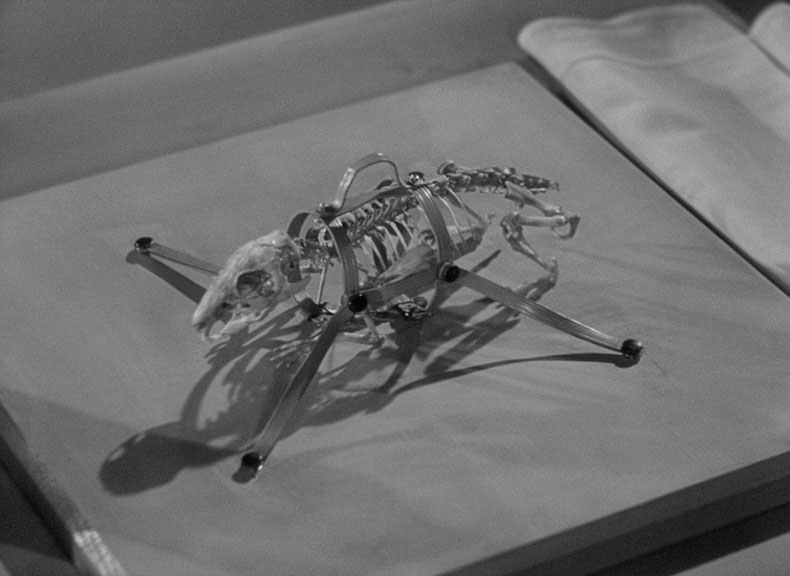
Those subtitles finally appeared! Factory worker Renard feels weak and has a noise in his head, so the occupational doctor springs into action, coordinates with medical professionals, government committees, the factory foreman, coworkers and Renard’s family, and gets to the bottom of the issue, improving factory safety so Renard and others can stay healthy and happy. It’s all depressingly utopian after seeing the modern reality in American Factory.

More of an industrial film than the Resnais factory and library shorts – again, voiceover with no direct sound. Some long Night & Fog camera tracking.

Factory Man (cropped):

Codirected by Alain Resnais. Credited director André Heinrich wasn’t prolific – looks like he was assistant to Resnais on Night & Fog, then vice versa here. He later worked on Chronicle of a Summer and appeared in La Jetée.

The whole early new-wave gang is here. Cinematographers Ghislain Cloquet (Night & Fog) and Sacha Vierny (Hiroshima Mon Amour), music by Pierre Barbaud (La Pointe Courte) conducted by Georges Delerue (Jules and Jim), Written by Chris Marker with Rémo Forlani (Toute la mémoire du monde). Also credited is “Fearless Fosdick,” who is impossible to google since the name is stolen from a Li’l Abner character.


Last Year at Marienbad, A to Z (2019, James Quandt)

An hour-long exploration of things within and around the Resnais/Robbe-Grillet feature, and a good opportunity to revisit scenes, since I haven’t watched the film since the SD-DVD days.

Resnais “insisted from the very beginning of the project that he wanted a foreign accent for the film’s narrator, to ensure that his voiceover would not be misinterpreted as merely internal monologue.”

Surprisingly, it ends on the director of La Flor, which I was just about to start watching.

Major Resnais Films:

1953 – Statues Also Die
1955 – Night and Fog
1959 – Hiroshima Mon Amour
1961 – Last Year at Marienbad
1963 – Muriel
1966 – The War Is Over
1968 – Je t’aime, je t’aime
1974 – Stavisky
1977 – Providence
1980 – Mon Oncle d’Amerique
1983 – La Vie est un roman
1984 – Love Unto Death
1986 – Melo
1993 – Smoking / No Smoking
1997 – Same Old Song
2003 – Not on the Lips
2006 – Coeurs
2009 – Wild Grass
2012 – You Ain’t Seen Nothin’ Yet
2014 – Life of Riley


Additional Features and Shorts:

1947 – Visits & Portraits
1948 – Van Gogh
1950 – Gauguin
1951 – Guernica
1956 – Toute la Memoire du Monde
1957 – Le Mystere de l’atelier quinze (above)
1958 – Le Chante du Styrene
1967 – Far From Vietnam
1968 – Cinetracts
1973 – L’An 01
1989 – I Want To Go Home (sorry)
1991 – Against Oblivion
1993 – Gershwin


Jonathan Rosenbaum, 1988:

Resnais is … quite possibly the French director who has been most frequently and unjustly maligned in this country. Despite the fact that he has substantially revised his form and style for each of his eleven features to date, working with a total of eight separate writers, his films share an emotional purity, a visual elegance, and a rhythmic grace that together constitute a recognizable signature. And his central preoccupations — memory, loss, love, death, and desire — have remained more or less constant. The problems he has posed for American aesthetes appear to have been equally constant.

Resnais, 2009: “I want to make films that describe the imaginary.”

What Did Jack Do? (2017, David Lynch)

Jack is a monkey with a human mouth composited onto his face, so he can be interrogated by detective David Lynch. “They say real love is a banana.” Willow’s review is the one to read: “This is a joke, but Lynch is also being completely sincere.”


The Capsule (2012, Athina Rachel Tsangari)

Women slither in from all over, have other women inside them via unrealistic compositing effects… there is slow-mo, nudity, colored tongues, and “Horse With No Name” a cappella. Wait, there’s more: goats on leashes, egg-absorbing bellybuttons, painted mustaches, a confession line, heads that turn all the way around.

Reminds of the Lucrecia Martel fashion short and other high-gloss ads made by deeply weird directors. Then towards the end, talk of clones and life-cycles and vampires summons Never Let Me Go and the Lucile Hadzihalilovic films. I liked it more than Chevalier!


Goldman v Silverman (2020, Safdies)

Adam Sandler is a gold-painted human statue with a kazoo, then Benny Safdie arrives as a silver-painted human statue with a kazoo, insults Goldman then sets up across the street until Goldman comes at him with a can of spraypaint. The ending is played for pathos, Silverman sad and alone with messed up clothes, but, man he started it. Really the point of this movie is that the Safdies filmed Adam Sandler in Times Square and nobody realized it.


The Fall (2019, Jonathan Glazer)

Another short with masks. This time everyone’s wearing ’em, and a mob shakes a dude down from a tree then drops him down an extremely deep hole. At some point he catches himself and starts to painstakingly climb back up. Pretty much pure nightmare fuel, no other reason for this to exist than to deeply upset everyone who watches.

Another supernatural teenage love story from the Your Name creator, this time involving weather-control instead of time/body-swapping. Shinkai is terrific with light and cloud and sky, so this was lovely on the big screen – we watched one of the few subtitled screenings before the GKids dub opened wide.

In a future Tokyo where it rains constantly, Hina is the sunshine girl who can clear the clouds with a prayer, but every time she uses her powers she gets closer to losing herself forever to the skies, a human sacrifice who will fix the weather imbalance, the countdown marked on her body like The Girl Who Leapt Through Time. The boy who likes her, Hodaka, works with a couple of gruff-but-generous reporters (Crows Zero star Shun Oguri, and The Mole Song 2‘s Tsubasa Honda), and would rescue her from the clouds even if it meant dooming the city to an existence of small cubes. Too much side-plot involving cops and guns and gangsters, but I forget all that stuff when staring at the pretty clouds on the poster hanging next to my laptop.

Opens on a mining accident in Ethiopia… camera goes inside a dark gem, though the cosmos and out of Adam Sandler’s ass (rivaling the ants transition in The Human Surge), spends a couple hours following his final few days, back into his body through a fatal bullet hole and into the gem-cosmos. The movie itself is almost a horror, in that you’re watching a character make every bad decision and you want to scream at him to chill out, but it’s also a thrill to see where this many bad decisions will lead… and the thing is, both of Howard’s big gambling bets are winners, but his history of fuckups conspire to rob him of the rewards.

Halfway through the Skandies and already three acting awards: for first time actors Kevin Garnett (as himself, but still) and Keith Williams Richards as Arno’s raspy-voiced tough-guy… and on the opposite side of the showbiz spectrum, Frozen star Idina Menzel, as Howard’s soon-to-be-ex wife, who delivered the line to Adam Sandler that drew applause at my screening: “I think you are the most annoying person I have ever met.” I assume that Sandler is due for a Skandie, and if his brother-in-law/loanshark Arno (Special Effects star Eric Bogosian) and his employee/girlfriend who makes off with the cash at the end (Julia Fox, another first-timer – Matthew Eng wrote about her perfectly in Reverse Shot) aren’t coming up, they must’ve just missed. Good Time still has the edge, but this was great.

Watched it huge, up front at the Tara.

I abandoned the Harry Potter series after part five (a movie I accurately predicted I would soon forget) so Emma Watson is just vaguely familiar to me. Florence Pugh is a revelation, and I’ve still got Midsommar and The Little Drummer Girl to catch up with. “Poor, doomed Beth, who dies, as she always does” is Eliza Scanlen of Sharp Objects and the next Antonio Campos picture. My only note: book editor Tracy Letts and paterfamilias Bob Odenkirk could’ve switched roles.

A Three Kingdoms adaptation, but the third kingdom must’ve been cut for time. The Shadow is Deng Chao (star of The Mermaid), trained as a public replacement for the military commander (also Deng Chao) hidden in a Parasite basement. Their boss is Pei king Zheng Kai (The Ex-Files trilogy) and their wife is Sun Li (Chao’s real wife, the blind girl in Fearless) and it’s not always clear who’s fooling who. Anyway, the shadow starts a fight with the next city over, and before the neighbors can strike, Pei launches a sneak attack featuring their new umbrella-based weaponry.

Only a pretty good royal-intrigue movie, for the most part – too many stabbings with exaggerated SHINNNNG-SPLORT! sound effects – but with a couple of inimitable Zhang touches. The assault on the rival kingdom begins with Pei fighters skating down a hill inside twin bladed umbrellas, deflecting enemy fire and shooting crossbows from inside their spinning shields, and continues with their new dueling technique: dodging enemy blows with a feminine umbrella sway. Then there’s the visual design, with complex black and white patterns and explicit yin-yang effects.

After a solid Loch Ness Monster open, the movie spends ten long minutes watching men with big egos converse in fancy rooms, and never really recovers. I mean it’s an overall good time, and Hugh Jackman does better as the explorer than most celebrity voice actors can manage – it’s just a hard comedown after Laika’s masterpiece Kubo. The missing link is lonely, writes a letter to summon a famous adventurer, they collect a bustley Zoe Saldana and go on adventures, chased at times by bounty hunters, rival explorers and a race of abominable snowmen. Mostly we came for the armatures, which were just fabulous. What cool dude was in charge of all those armatures?

Darkness/Light/Darkness (1989 Jan Svankmajer)

I’ve seen stills from this, but somehow never watched it before. Peak Svankmajer claymation, a human gradually assembled from pieces entering a cramped apartment, including a dumb dick joke.

Won an award at Berlin alongside a Petrov short, a Bruno Bozzetto animation, The Asthenic Syndrome and, oh, Driving Miss Daisy. One of Svank’s final shorts, post-Alice, before he turned exclusively to features.


Prometheus’ Garden (1988 Bruce Bickford)

The Svankmajer turned out to be a gentle Claymation intro course compared to this batshit epic. Like a long, vaguely narrative music video, with no fixed sense of scale or permanence of scene or set or character. Watched in SD, would be amazing to see in a larger format

Casual synth-rock on the soundtrack… in the machine-gun massacre scene, I appreciated the use of outer-space raygun effects instead of ratatatat.

Apparently unreleased for twenty years until it came out on a 2008 DVD. RIP 2019 Bruce – I need to dig up his final feature Cas’l and the other doc about him, Monster Road.


Printed Rainbow (2006 Gitanjali Rao)

Gramma lives a dreary, blurry b/w Rear Window existence until she opens a case full of colorful matchbooks and experiences an open-eyed smiley-faced adventure in crisp color fantasy. The b/w segments are in that smeary, charcoaly style where it appears that each frame is partially erased, the next frame drawn on top of it, leaving a smudge trail behind the action…OR ELSE it wasn’t animated that way at all, and my digital copy needed more keyframes. Kinda not my thing, but the ending is pretty good, and you can’t laugh off the dedication “to my mother and her cat.”

Rao also acts, appeared in a Seven Samurai remake in 1998, and she recently completed a hand-painted animated feature about Bombay’s history with Bollywood.


Old Man and the Sea (1999 Aleksandr Petrov)

Glorious paint or watercolor, with such good light and water and cloud – made for imax! English dialogue, new agey music. Shades of the Monk when he becomes one with the Fish. Won a ton of awards including the oscar – fellow winners that year were Sam Mendes, All About My Mother, The Matrix and Phil Collins.


The House of Small Cubes (2008 Kunio Kato)

Another old man in the sea, also beautiful. Dystopian story of a rising flood, building a new house atop the old one every few years, losing more items and people with each story. Hunched old man lives alone at the top, takes a diving expedition through his past.

Kato is my age, has made a bunch more shorts. This one won the oscar too, beating that great undertaker short and one of my favorite Pixars, with fellow winners Penelope Cruz, the late Heath Ledger, Danny Boyle, A.R. Rahman, Benjamin Button’s makeup artists, WALL-E, and Man on Wire.

Part of the same Landmark series where we caught For Sama – this one was much less bloody and despairing. Beekeeper has enough to deal with, uneven harvests and pricing and sales, an ailing mother, before a swarm of neighbors arrives one season and ruins everything. The movie only gets better the more you read about its making, though I can’t find the article that said the nomad family threw stones at the camera crew for the first few weeks. Nominated for two oscars tonight – I don’t know its chances, just hope Hatidze was flown in from Macedonia and given one of those $215k gift bags.