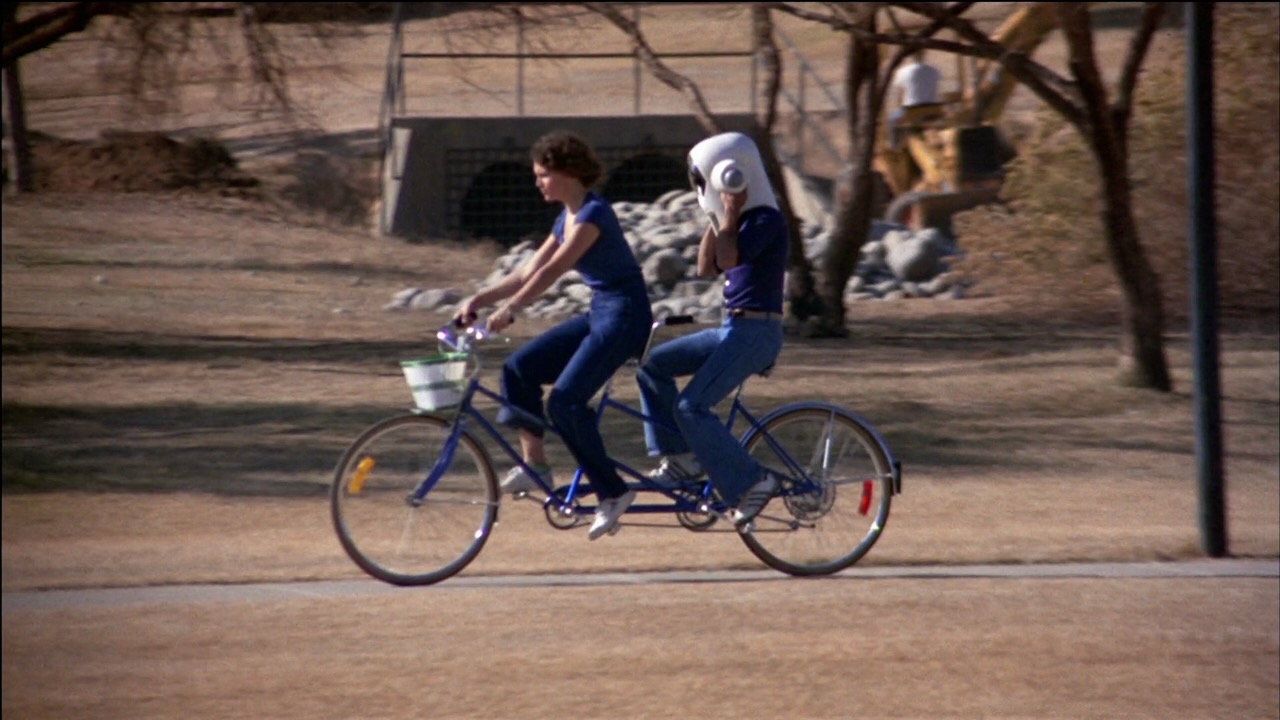
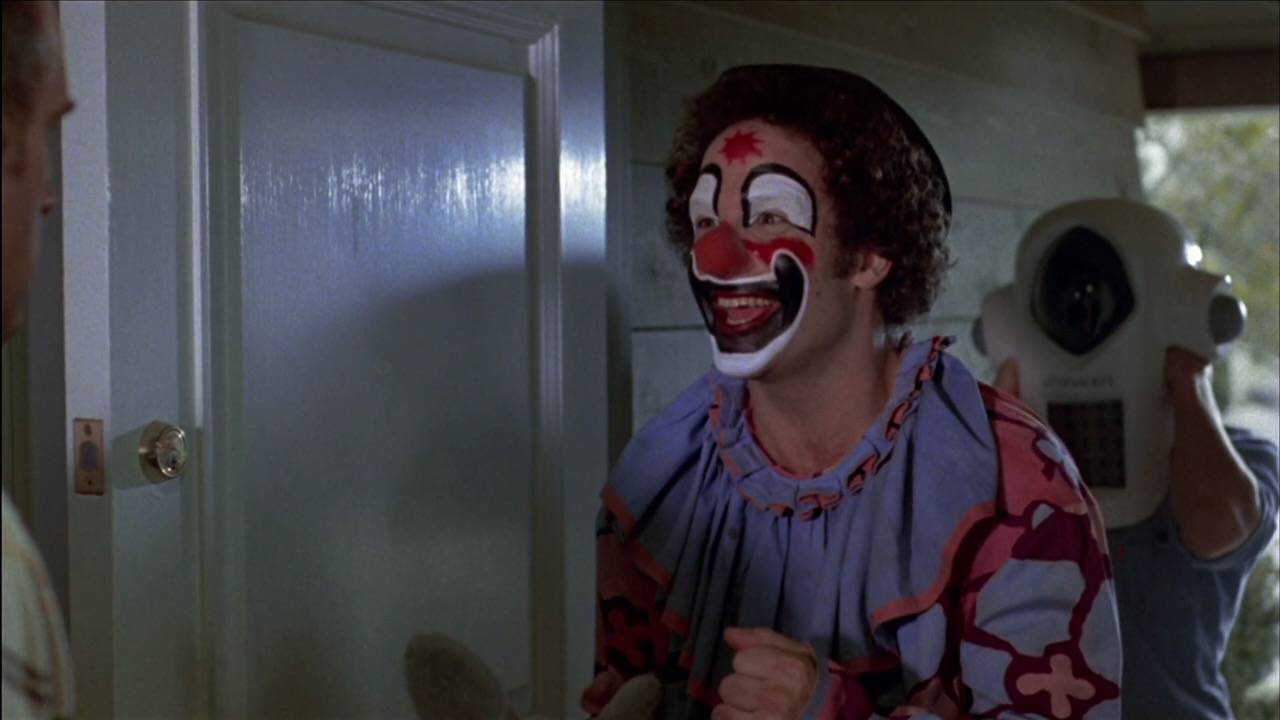
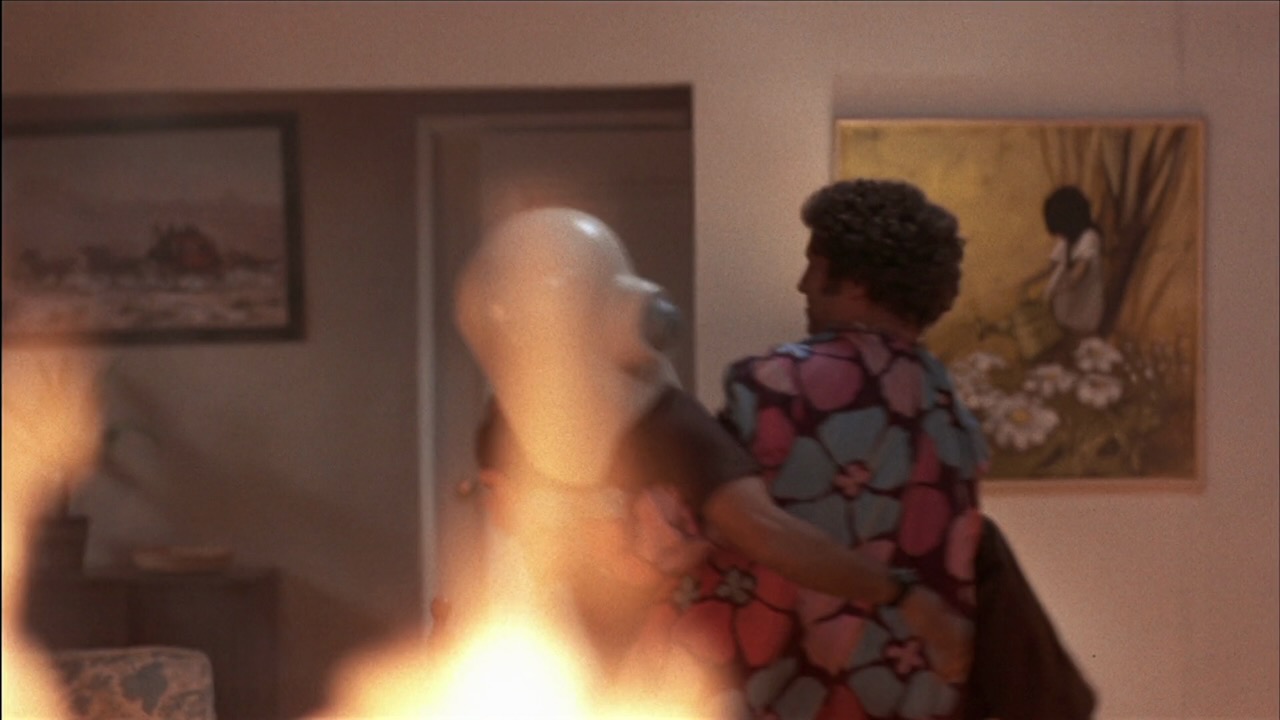
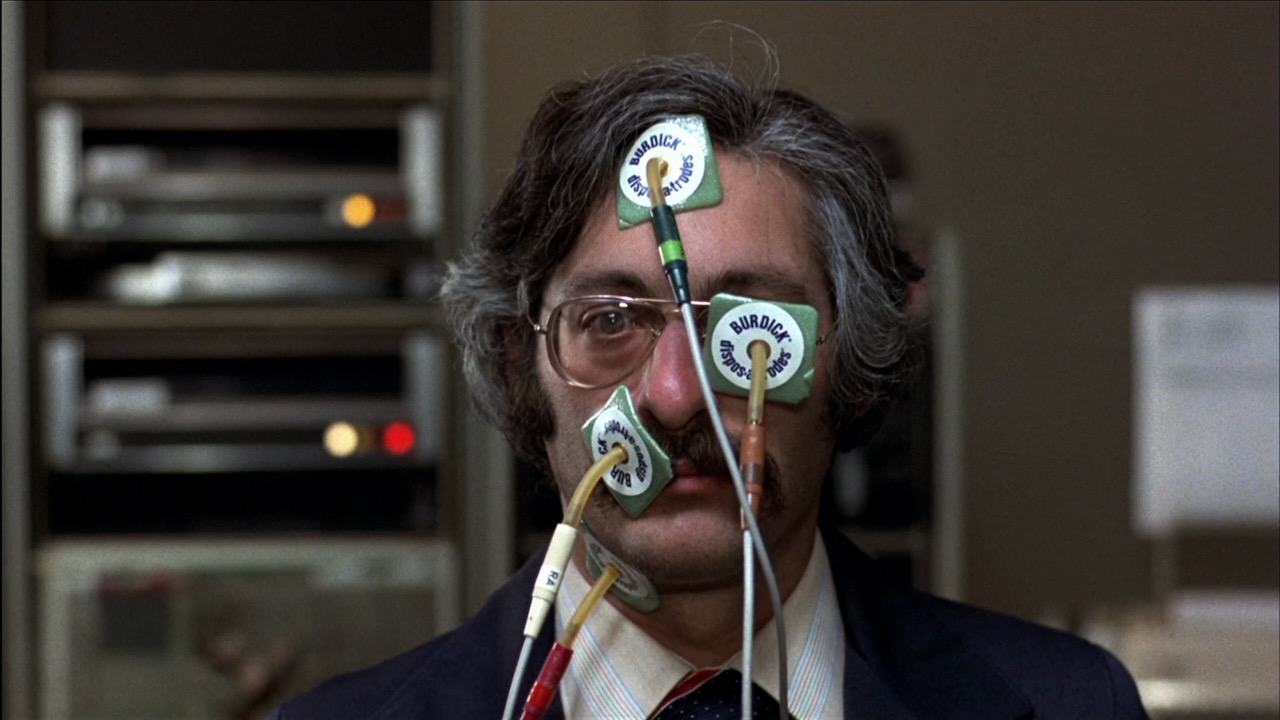
In a noir mood, and this made up for The Big Knife being mid. Monte dies in the opening shot, Mildred runs, considers jumping off a bridge, settles for trying (unsuccessfully) to pin the crime on slimeball Wally.

Rewind to MP’s home life with hubbie Burt, young tomboy kid and older pretentious Veda. Burt has a very bad day, getting fired by partner Wally and thrown out of the house for cheating. Burt will agree to a divorce the day of MP’s big restaurant opening, after she buys property from the charismatic Monte, who then flits around with the extremely spoiled and shitty Veda (her younger sister having coughed once in an early scene, then died suddenly of pneumonia). Turns out MP married Monte for business reasons, caught Veda smooching on him, then V killed her own stepdad-boyfriend and mom was trying to cover-up for her criminal daughter.

Parrots keep popping up in scene backgrounds, and you know I love that. Crawford won the oscar, her business manager Ida and daughter Veda split the vote for best supporting, and The Lost Weekend won writing and picture. Veda is Ann Blyth of Brute Force, Bert is squaresville Bruce Bennett (olympic athlete-turned-Tarzan actor), Monte starred in Bunuel’s The Young One and Renoir’s The Southerner, and Wally would have his moment in the mid-50s with Red Garters & A Star is Born & Dangerous When Wet.

The nominees:

Strange focus and framing, really attractive. Amalia’s dad is having twins with a new girl, while her mom Helen is hosting a doctor conference at her hotel. One visiting doc presses his dick against Amalia in a crowd, and later when Dr. Jano has become friendly with mom, Amalia recognizes him as the street pervert. Amalia’s friend gets busted with her boyfriend and tells the adults Amalia’s secrets to distract them. The holy part fades away, and movie ends before either revelation drops – real “formal excellence plus narrative withholding.”

The girl went on to direct A Family Submerged, which played Locarno. Mom is from La Cienaga and costarred in a couple Gael Garcia Bernal movies.

Blake Williams in Cinema Scope:

Like La Ciénaga, The Holy Girl ends with sensorial obscurity, this time with sound, smell, and even weightlessness. As in the former’s conclusion, the setting is once again a swimming pool. Amalia and her best friend Josefina take a dip, and we witness a wave of uncertainty and disturbance briefly overcome Josefina. “Do you notice that smell?” she asks, and Amalia does. “Orange blossom.” Josefina promises to take care of her like a sister would, and the two recline. Floating in the water, an unidentified woman approaches to ask them both, “Did you hear?” which ends the film. It’s a startlingly open-ended and fitting conclusion to this tale of spiritual non-awakenings — cinema as a transitory state, elongated into permanence, stagnation, and aimlessness.

Not a Buster Keaton movie, just a drama he starred in because Douglas Fairbanks was too busy, playing a pretty useless rich guy who gets mixed up in the affairs of a useless less-rich guy whilst trying to marry his adopted sister. Keaton adds minor gags where he can, but was heading down a different path, his own One Week released a few days earlier.

Shitty Mark is married to Buster’s sister, their moneybags businessman dad leaves town for a day and Mark trashes the business to distract from the discovery of his secret second family in Nebraska, who he’s pinned on Buster on the guy’s would-be wedding day. Boring business stuff ensues, while Buster blows off steam knocking off people’s hats on the stock exchange and unwittingly saving the day, and Mark literally dies of shame. Writer June Mathis also wrote Ben-Hur and Greed, was considered a major force in Hollywood when she died suddenly in 1927.

Cauleen Smith came to town to open an art exhibit and screen two nights of shorts programs – I made it to one of those.

Songs for Earth and Folk (2013)

Subtitle conversation between EARTH and FOLK
Soundtrack by The Eternals, aka Damon Locks


Sine at the Canyon, Sine at the Sea (2016)

Racism and outer space
Seems tragic that letterboxd just lists “Cast: Richard Spencer”
Learned: Kelly Gabron = Cauleen Smith.


Triangle Trade (2017)

Volcano and puppets
Collaborators include Jérôme Havre, a Toronto sculptor, and Camille Turner.
Music by Justin Hicks.


My Caldera (2022)

Part one of The Volcano Manifesto (this + Mines + Deep West). Volcano Manifesto is also the title of an actual manifesto, released as a chapbook at an art exhibit, which was also titled My Caldera, and featured the handmade banners people were holding in Deep West. Metal soundtrack by Salvadore & Diego Rafael Rivera. “Cameraless print” process, awesome. Per the notes: “The scratchy, chaotic aesthetic is created through Smith’s proprietary process of placing TikTok video stills onto 35mm film then rendering it in 4k as an artifact of the original footage.”


Mines to Caves (2023)

Geology / wild animals
This one’s also an installation.


All The Money (2024)

Photographs / fire
Music video for a Moor Mother song from her insane album The Great Bailout.


The Deep West Assembly (2024)

“to understand the world through extraction”
populations irrupt / volcanoes erupt
Closes with a sign-language interpretation of a Nina Simone song.


see also:
Last Things (Deborah Stratman, rocks)
Rock Bottom Riser (Fern Silva, volcanoes)

from Cauleen’s essay “The Association for the Advancement of Cinematic Creative Maladjustment”:

The Maladjusteds liberate image from narrative. Narrative is the oppressor of the Moving-Image … the Moving-Image can and must do more than slave for narrative. The Moving-Image must rise up and reclaim the power it has for so long surrendered to story.

The Maladjusteds project their love of the Spectator onto the screens. The Maladjusteds resist corporate pressure to fuel the desires of the Spectator. Rather they seek to excavate her needs.

The Maladjusted Spectator does not expect to be pleased. She expects to be respected … When she watches a Moving-Image, she revels in the freedom of being responsible for her heart and mind, while trusting the filmmaker to expand and enliven both.

Indie drama wih peppy editing, handheld segments, swish pans. Pica is too iconoclastic to succeed in her photography class, meets April, who dresses like a boy to avoid harassment and joins P at her night job pasting up photos after P finds her friend Malik murdered by a serial killer. It’s all cute, creative and contrived in equal measure, and gives no indication of the far-out places Smith would end up in her latest shorts.

“a tribute to the richness of what can be made with little and shared without limit” – Yasmina Price’s Criterion essay is good.

Could See a Puma (2011, Eduardo Williams)

Youths live in the ruins, someone falls and gets hurt. Camera likes to rove around, not getting too close to the action. It’s nice to see that the Human Surge guy’s stylistic weirdness was already in place at this point. A few kids go looking for a medicinal herb, do not see a puma but they do slip into another dimension.


Schody/Stairs (1969, Stefan Schabenbeck)

Clay guy comes across a sea of stairs, wanders through, up and up, until he reaches the summit of a long staircase then lies down and becomes another step in the stairs. Polish, of course. Whatever point they’re making about the futility of life, they sure spent a lot of time on stair fabrication and walking animation to make it.


The Heart of the World (2000, Guy Maddin)

This should probably play monthly in every movie theater.


Creature Comforts (1989, Nick Park)

Always assumed I’d seen this before but maybe not. Interviews with zoo patrons restaged as interviews with the clay-mated animals, started a whole trend of these things.


Inspirace (1949, Karel Zeman)

What madman would make a stop-motion film out of glass? Artist in need of inspirado spaces out on a rainy window, dreams a glass fantasy ice skater and the dandelion clown in her pursuit.


Man Without a Shadow (2004, Georges Schwizgebel)

Swirling dizzy blobby animation. The man has a shadow from the start, so I wasn’t surprised when he sells it to a devil in exchange for the promise of riches and women. But I was surprised when, after women want nothing to do with a shadowless man, he gets a pair of red boots that enable him to leap across the earth, checks out different gatherings, and settles on a shadow theater where he can manipulate the puppets shadowlessly without using rods or strings.


Passing Time (2023, Terence Davies)

Terence reads a poem with that voice of his – rougher than it was in Of Time and the City – the music piece swelling in the background – over a nice shot of some trees.


But Why? (2021, Terence Davies)

I never wrote up this Benediction-era Davies poem, in which two of his stars from that movie swap places/timelines, but I’ve watched it many times and like to quote it when I ascend the stairs, I descend the stairs… but why?

Dour noirish plotty Hollywood blackmail thing, mostly valuable for getting to watch Ida Lupino’s eyes for half the movie. She’s the estranged wife of Jack Palance, back at their fancy house to try convincing him to reclaim his art and not sign a lucrative long-term contract with a crap producer. Various friends and gangsters and agents get themselves involved, but Palance signs to make the bad guys go away, then goes upstairs and kills himself. Just six months after Kiss Me Deadly, with fancier lighting – not the kind of drama I go for, but very nicely shot and acted.

Rod “Run of the Arrow” Steiger as the producer, getting overexcited:

Singin’ in the Rain lipsyncer Lina Lamont knows everyone’s secrets:

Shelley Winters (shortnin’ bread in The Visitor) knows too much:

Welles fave Everett Sloane as the agent, with a naked Palance:

Children (1976)

Watched this after an episode of Shifty to reinforce how terrible is England. Everyone’s catatonic or an arsehole or both. Kid is bullied, his mom cries on the bus, his dad is violent, has fits, then dies. The kid also appears a decade later, gay and depressed. As far as miserable British youth movies, it’s no The Wall, whose soundtrack I happened to hear last week.

Hearse reflection:

Lawrence Garcia in Cinema Scope:

From the perspective of Davies’ later work, the film is most notable for its eschewal of a causal dramatic progression — and I use that term advisedly, for Davies’ construction refuses the temporal asymmetry that one might be inclined to impose on the film, resisting one’s impulse to fix the adult Tucker’s scenes as the stable present from which the childhood sequences would be merely reminiscence. Children is unique in that it is as much premonition as recollection. Although not yet marked by Davies’ singular use of music, it established something arguably even more central to his cinema: the principle that the tides of time flow backward as well as forward.

Every inch of England is filled with horrors, but this sign was the worst thing I saw:


Madonna and Child (1980)

Same guy (different actor) dotes on his mum, prays, suffers extreme catholic guilt. He goes to work (as an accountant, possibly). He puts on his leather and goes out to clubs or tattoo parlors or to pick up men at the toilets. Both have lot of stillness and prayer, but I liked this one better than Children. Not as much of the mother as you’d expect from the title, and she’s asleep in half her scenes (Sheila Raynor also played a mother in A Clockwork Orange).


Death and Transfiguration (1983)

Same guy (now Wilfrid Brambell of A Hard Day’s Night) old and dying, having flashbacks to when he was played by different actors. Finally Davies is using melodramatic pop songs mixed in with the christmas carols and hymns.

Garcia:

With even more concentrated force than the films that would follow, it depicts an entire life as a kaleidoscopic whirl of disjunctive images and sounds, most notably the alarming, unabated death rattle of an elderly man on his hospital deathbed, gasping for breath as the screen fades to white. It is a haunting distillation of a remark Deleuze attributes to Fellini, that “we are constructed in memory… simultaneously childhood, adolescence, old age and maturity.”

“Everyone say amen for the technical difficulties … give the technician a big hand for the difficulties.”

Aretha murdered the audience, then the choir, then the band leader, and the movie’s only half over. The choir leader (who is named Alexander Hamilton) survived. Please give everyone in this church a bottle of water.

Christoph Huber in Cinema Scope:

Franklin conceived the album as a return to her spiritual roots (her father, also a reverend, delivers a moving speech in the last quarter of the movie), and one of the reasons she set out to record it live rather than in a studio was to capture that feeling which could only be generated by audience participation. Apart from being a musical document of the highest order, Amazing Grace emerges as a skillful orchestration of communal rapture.

Max Goldberg, 13 issues later:

Whatever they say, the music documentary gets jittery in the face of actual music. Perhaps it’s not so surprising: the most potent element of the movie — in some real sense its reason for being — is the one thing the filmmaker had no part in. Is it so hard to imagine this situation creating ambivalence, even anxiety? The film needs to do something, so it cuts … For me, the story of Amazing Grace serves as a kind of parable, articulating our wildest hopes for the music documentary: to bring sound and image back into alignment, to make the music whole again.