Returning from part one are determined detective Lau Ching-wan (suddenly listed as Sean Lau online) and incompetent commissioner Hui Siu-Hung. Not returning is criminal mastermind Andy Lau, who wasn’t faking his fatal illness. In his place we get impossibly suave and brilliant magician-thief Noodle Cheng (the 2001 Zu Warriors), who keeps assaulting the police and playing mind games (is this where the Now You See Me movies came from?). You don’t think of Johnnie To cops & robbers movies as having CG-crud animal companions, but Noodle’s got a bald eagle, and Lau’s men track him down with help from some eagle-tracking ornithologists. Kelly Lin (Sparrow) is a boring important businessperson whose company is being blackmailed by art thief Noodle, and Lam Suet a gambling-addict cop who the thief is personally tormenting. The point of the thief’s scheme was to robin-hood the money from the company to charity, or some such thing. It’s all beautifully shot by the usual crew, Stephen Chow’s regular composer working extra hard on the score. A collapsing-bicycle race joins To’s pantheon of perfect nighttime street scenes along with Throw Down‘s dollar-chase and tree-balloon, Don’t Go Breaking My Heart‘s headlight-silhouette, Sparrow‘s finale, and half of PTU.

1960s movie about the threat of artificial intelligence, shot in high style for a British spy drama, which is medium-low style for a Ken Russell picture.

Caine covering up Karl and Francoise:

Villain Ed Begley is a wacked out texas oilman whose computer tells him how to overthrow communism. Oskar Homolka is the KGB man trying to stop him from starting WWIII. Karl Malden and Francoise Dorleac are getting rich playing multiple sides, toting a carton of eggs injected with lethal viruses. Guy Doleman is the British spy boss trying to retrieve the eggs. And all of these groups befriend and/or kidnap special agent Michael Caine, who doesn’t exactly solve the case, but is at least present while it solves itself.

Nazi-coded Texan:

A True/False Poto and Cabengo: twins were raised without ever being let out of the house or taught anything useful (such as language), then are set free by a social worker, who locks the dad into his own house until he agrees to cut it out. Outside, the sisters meet other kids their age, including a boy who fishes for girls with an apple on a string. Rosenbaum liked it.

Bad-luck dummy Itsushi (guy with the writing on his face in the same year’s Kwaidan) loves his student Shoko (Pale Flower) but she marries someone else. Itsushi tries to protect her by pushing some guy off a train, but is spotted and blackmailed(??) by another dummy who stole a suitcase full of money and wants someone he doesn’t know to watch it while he’s in prison. Itsushi decides he’ll just spend it all on women and let the criminal kill him when his sentence is up. First he shacks up with Hitomi (Green Maya in Gate of Flesh), the ex of a gangster who catches up with her, at the cost of her pinky finger. Then he buys Shizuko (Eros + Massacre), sending the money to her shady husband, who eventually comes to take her back. Then he’s with Nurse Keiko, who feigns illness for a whole month to avoid having sex with him, then tries walking into the sea, then marries him but doesn’t stop hating him. Finally he buys sexy deaf-mute Mari from a thug, who tries to steal the rest of the money. And when his true love Shoko comes back to him in need, he’s just finished spending it all, so she turns him in to the cops.

Hitomi with knife, about to lose a finger:

The year before Violence at Noon, based on a story by the Samurai Reincarnation guy. I’m really enjoying all the pre-1971 Oshima movies, should maybe watch more of those.

Keiko:

Mari:

Glowing restoration of a classic western – you wouldn’t know it’s the mid-1960s except for some casting failures, and the occasional Pink Panther-ass music. John Wayne is a Yojimbo-type gunman, taking the side of the MacDonald family he’s supposed to have been hired to kill, Mitchum the hopelessly drunk sheriff who needs to sober up before the big showdown. Michele Carey is very good as the pissed-off McD girl who shoots Wayne in the spine early on – too bad her career never rose past couple-episode appearances on big TV shows. Pre-Godfather James Caan and Wayne’s girl Charlene Holt both suck, however. There’s gotta be a grizzled deputy – in this case Arthur Hunnicutt, returning from The Big Sky. Baddies include Ed “Up” Asner as Black Bart and Scarface McCloud (Chris George of City of the Living Dead and Pieces) as the hired gun who takes the assassination job offered to Wayne. And gunsmith “Swede” is a Swede (played by a Dane).

Wayne and his girl:

Our heroes:

Cat Soup (2001, Tatsuo Sato)

I don’t know Sato’s work, but I know animation producer Masaaki Yuasa, and this has got the wavy woozy quality of Yuasa’s features. A cat hits the town with his catatonic sister, whose soul was half-ripped by an evil shaman, and they experience all the major elements (desert, sea, time-freeze, soup) before landing back home. Incredible. One scene is set at the “Big Whale Circus,” making this part of the Werckmeister Harmonies universe. Sato is known for a series called Martian Successor, also did animated sequel series to both Ninja Scroll and Tokyo Tribe. There’s a separate Cat Soup series from the director of a Battle Angel Alita series.


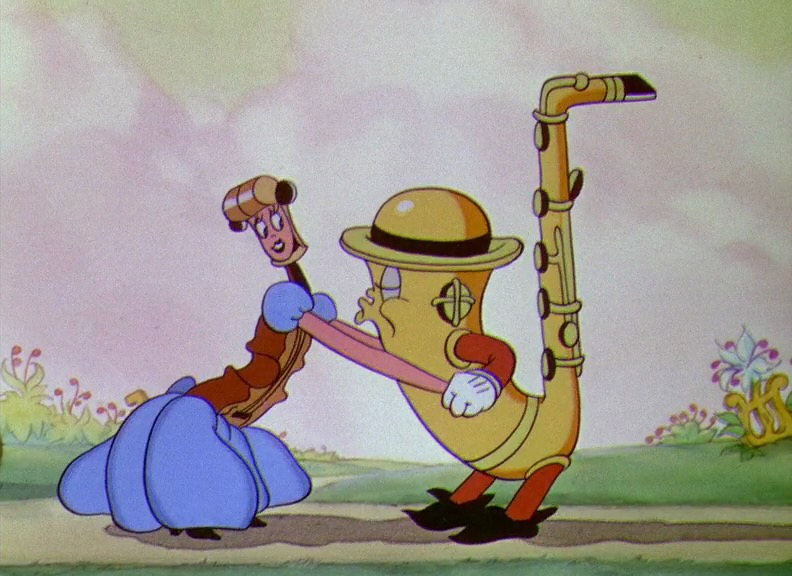
Little Pancho Vanilla (1938, Frank Tashlin)

Kid claims he’s a bullfighter, gets catapulted into the arena, lands on the bull and is awarded first prize. Not top-tier Tash, it passed the time.


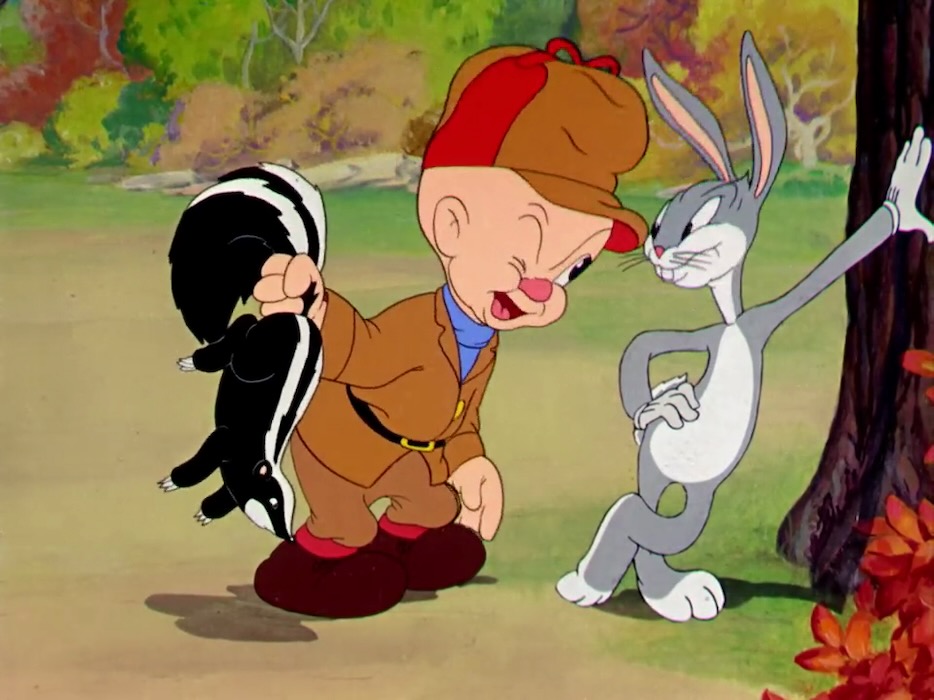
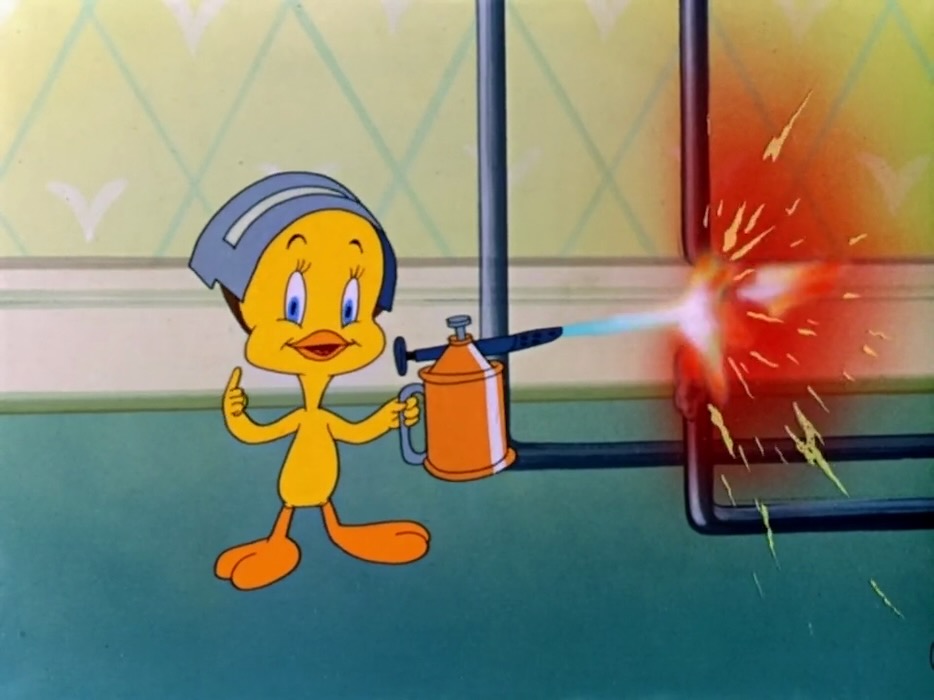
King-Size Canary (1947, Tex Avery)

Oh yeah, what if the cartoon had actual gags in it, wouldn’t that be better?


The Fantastic Flying Books of Mr. Morris Lessmore (2011)

After a major storm, books become birdies and Morris becomes a bookseller where reading turns the enchanted town residents from b/w to color. It’s all too precious for me, but wonderfully assembled – no surprise it won the oscar (over the Brave-era short La Luna). The directors are suspiciously named Brandon and William Joyce – also suspicious that each one co-directed a different 2014 11-minute Edgar Allen Poe short.


Seventh Master of the House (1966, Ivo Caprino)

Traveler asks a guy for a bed for the night, and gets sent to the guy’s father, and so on… then he gets the bed. It’s not much of a story, but it’s always good when our refined puppet animation devolves into increasingly bizarre characters until the final guy is shrunken to a quarter the height of his beard and resting in a horn hung on the wall. Some festival must’ve had a 12-minute minimum length so they added a framing story of a whitebeard man sitting in the snow writing this story (women do not exist in Norway).


Three Inventors (1980, Michel Ocelot)

2D doily-paper cutout stop-motion, oooh. Family of inventors keep creating wonderful things. The town “notables,” having no vision or creativity themselves, conclude that the inventors must be criminal philistines, and a mob burns their house down, destroying everything that is beautiful.

Mouseover to operate the magic lace pipe-organ sewing-machine:
image

Aftermath tells us it was only a movie:


George and Rosemary (1987, Snowden & Fine)

Guy is obsessed with gal across the street, when he finally builds up the nerve to march over there he learns she’s been obsessed with him too. Oscar-nominated, but against two of the greats: Your Face and The Man Who Planted Trees.


There Once Was a Dog (1982, Eduard Nazarov)

Guard dog is old and busted so he gets kicked out of the house, makes a deal with a wolf to get back into the family’s graces then repays the wolf with stolen food. Cute story and animation, and the would-be sentimental ending provided the biggest laugh of the night.


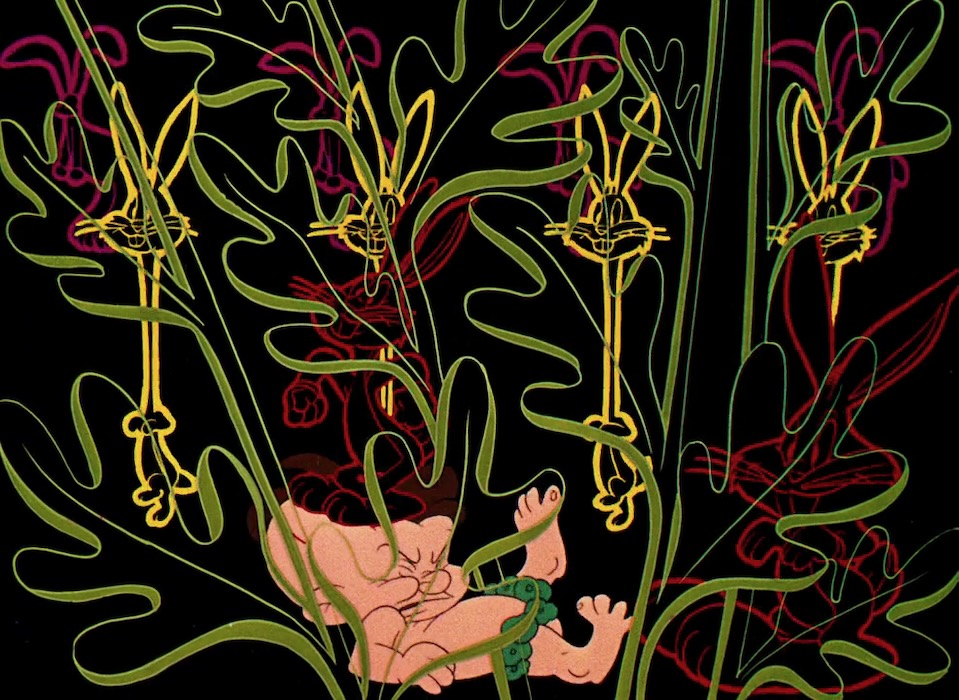
Glens Falls Sequence (1937, Douglass Crockwell)

The kind of paint-meets-clay blending that I love in The Wolf House. In standard-def I can’t even tell the difference between the 2D and 3D layers sometimes, or maybe it’s all 2D, but it’s wonderful. Feels freeform, making up new patterns according to whim, but returning to some (sexual/creature/religious) themes, like McLaren meets Bickford. I was gonna say the music is sometimes overwhelming, but I got caught up in the visuals and forgot that it’s a silent film and I’d hit play on Matmos A Chance to Cut.


Simple Destiny Abstractions (1938, Douglass Crockwell)

A later film, but feels like the early demos that became Glens Falls. We’ll call it the bonus tracks. An advertisement painter, Doug made crazy motion experiments at his home in eastern New York state.


Mind the Steps! (1989, Istvan Orosz)

B/W Escher-sketch of a perspective-defying apartment building, sometimes telling little stories of residents or political oppression and sometimes just transforming things into other things. Scraps of warped sound effects and harmonica made me forget I wasn’t still playing the Matmos.


Syrinx (1966, Ryan Larkin)

Sexy forest gods keep materializing then dissolving into abstraction. Music video for a flutey Debussy piece.


America is Waiting (1981, Bruce Conner)

Also a music video, for a good Byrne/Eno song. Not just a montage of fun stock footage, he warps the meaning of some shots by running them in forward and reverse. Lotta fun. I should’ve read that giant Conner book in the Ross library when I had the chance. At least there’s Screen Slate:

The success of [Mongoloid] led to an invitation from Brian Eno and David Byrne to make America is Waiting, a parody of paranoia that remains depressingly relevant. Using sourced material from the 1950s, he criticized reactionary politics, Western individualism, the Reagan administration, and military violence. When MTV rejected the video as part of their early programming that same year, it proved that corporate media always sanitizes rebellion.

Really good rock doc, because the talking heads feel like punctuations to the flow of music instead of vice-versa. Like most movies, it is 90 minutes long when it could be LP-length, but say la vee. A musician’s musician, impenetrable as a person, at least in the movies I’ve seen. I first heard him in another doc, his mouth wide open, playing technically-imperfect tunes, immediately striking, a true jazz weirdo. That movie’s archive footage was shot in 1969, this one’s in 1967, both released decades later.

Paul Grimstad for Criterion:

From the [1967] Blackwood footage, interspersed with other archival film, photographs, new interviews, and narration, Zwerin distilled an hour-and-a-half-long structure not all that different from a Monk composition: jumpy, elliptical, catchy, moving … As a counterpoint to the archival material, Zwerin shot new footage of pianists Tommy Flanagan and Barry Harris (both Detroit natives, like Zwerin) playing through Monk tunes as four-hand duets. We see how much fun they’re having, how generous and congenial their sharing of the music is, and how a Monk song like “Well, You Needn’t” allows for endless elaboration without its melodic outline ever becoming blurred.

Mother K receives a bit of bad news: her husband went to work and murderer-suicided his boss. She gathers the family (son Ernst and his wife Irm Hermann, dancer daughter Corinna), and their situation attracts reporter Jorg and a communist couple. Everyone involved exploits the tragedy in their own way, also a sharp movie about political fractures within families.

L-R: Mother K, son, Irm, bearer of bad news

Communists:

Mom is the lead from Fear Eats the Soul in another big role. Ernst (star of Fear of Fear the same year) and wife Irm Hermann get the hell out of there and return pregnant. Mom’s daughter Ingrid Caven (a Year with 13 Moons star and a Suspiria Remake teacher) shacks up with the reporter (the large-faced star of Eight Hours Don’t Make a Day) and finds a job in town playing off her family’s infamy. After the daughter leaves, mom calls up communists Peeping Tom and Petra von Kant, who were the last people to be nice to her, but she wants real action while they say things like “it’s a slow process / we can’t work miracles / we won’t forget you.” Falling in with increasingly radical groups, Mother K meets anarchist Horst (Matthias Fuchs of Decoder) whose plan is to bring guns to the newspaper and demand a retraction of the reporter’s sensationalist article. We get a couple of possible ways out of this: a bloody shootout via intertitle, then a happy fantasy where Mother K survives, is abandoned by everyone again, and meets a nice lonely man.

dancer, reporter:

Low-budget realistic dramas with lyrical photography weren’t a whole genre back then, so this must’ve stood out when it premiered, winning three prizes at Venice the year of Red Desert. For me that lyrical photography had to pull a lot of weight to carry the story of an idealistic hard-working union-loving Black man in a racist town/country/world, his hopes getting increasingly crushed. He wanders off from his train work to marry a preacher’s daughter and settle into a factory job, but gets called “boy” by everyone and is fired for trying to start a union. Blacklisted, tormented by whites all day, he finally throws his wife across a room then walks out to visit his deadbeat father just in time to see dad drop dead from alcoholism. Good soundtrack!

Singing star Abbey Lincoln only acted in a few films: this, a 1968 Sidney Poitier joint, and as Denzel’s mom in Mo’ Better Blues. Our Boy Ivan also starred in Car Wash a decade later. His dad was in Hell Up in Harlem, and dad’s girl was the damn Oracle in The Matrix.