Shocker (1989, Wes Craven)
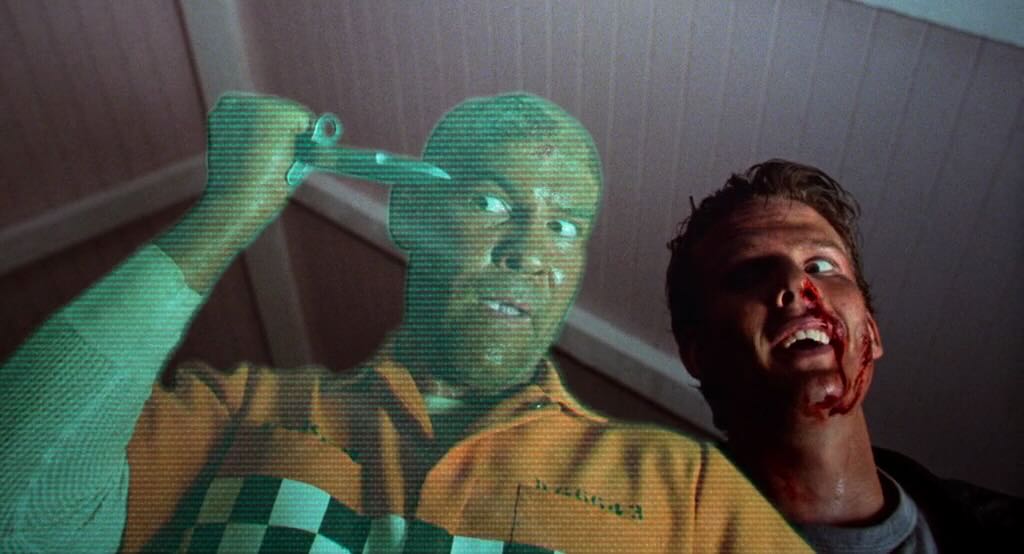
Lawnmower Man-esque story of an electrocuted guy (Mitch “Skinner” Pileggi) who becomes electricity. Our hero (Michael “Tanner” Murphy) jumps inside the television to chase the guy through a montage of TV shows, like a crappy Sherlock Jr. Tanner harnesses the power of the TV Remote Control to gain the upper hand. Someone’s head goes through a TV set (two years after Dream Warriors) while I’m watching this wearing my Videodrome shirt.
–
Deadly Friend (1986, Wes Craven)
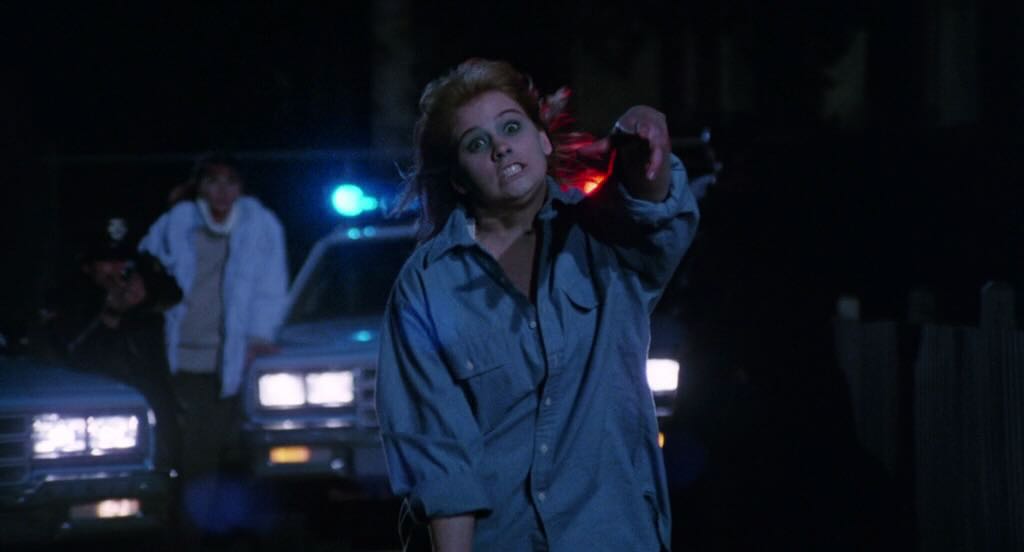
First I had to rewind far enough to see Momma From The Train’s head get exploded by a basketball, presumably the main thing people remember from this movie. D.F. (OG-Buffy Kristy Swanson) dives out a second-story window to kill Tom (of biker flick Savage Dawn), then she attempts suicide-by-cop, melts into her true robot form and kills Paul (of Little House on the Prairie) offscreen. Murder-bots turning on their owners is a timely topic since I also rewatched M3GAN tonight – after that movie’s expertly uncanny droid, this one’s robot is just a girl wearing too much eyeshadow. It’s always remarkable how bad the ADR was in 1980s movies, like nobody knew what “sounding natural” felt like, or could replicate it using any existing recording equipment.
–
976-Evil (1988, Robert Englund)
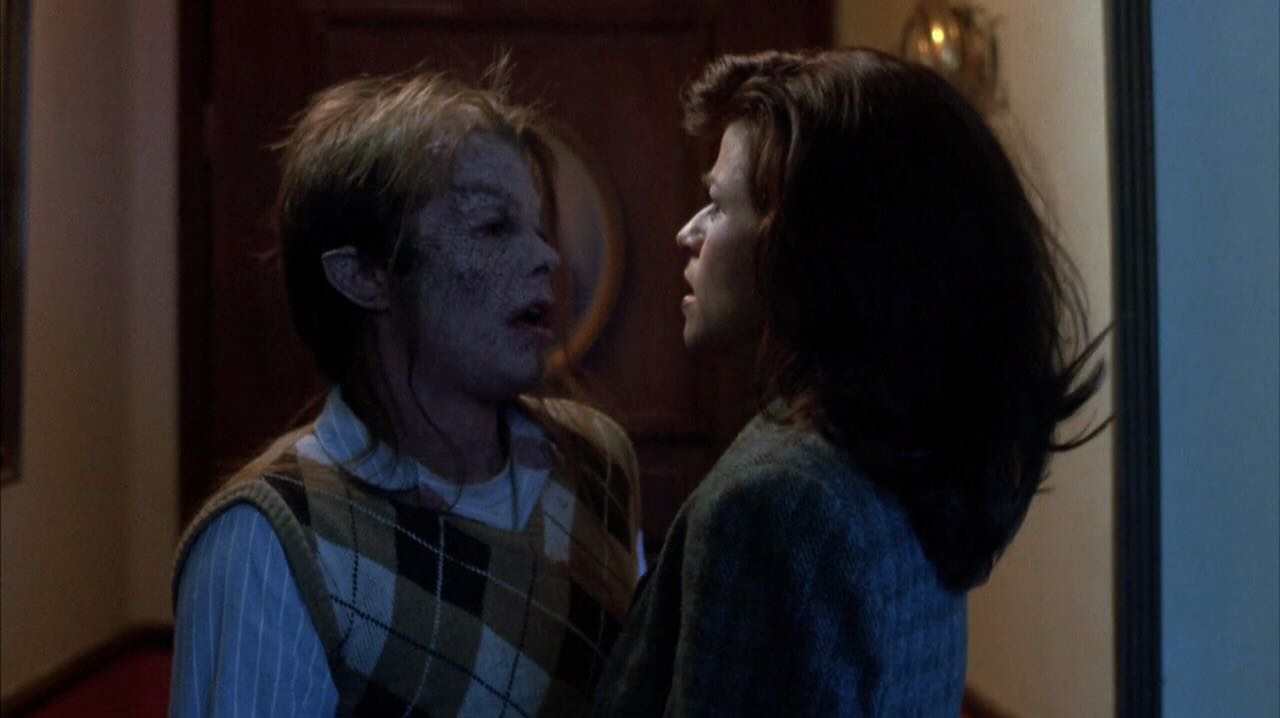
No recollection what this is about, maybe a blend between Pillow Talk and Unfriended? Mrs. Wilmouth is being devoured by her cats, then Big Hair Angela is molested by Mrs. W’s goblin child. The goblin is called Hoax – his cousin Spike (the only actor who’d return in the sequel) distracts the kid then tosses him into hell, which is in the backyard. I kinda like that every single line reading is awkward, makes the movie less generically bad and more specifically bad.
devil in a sweatervest:
–
Fright Night (1985, Tom Holland)
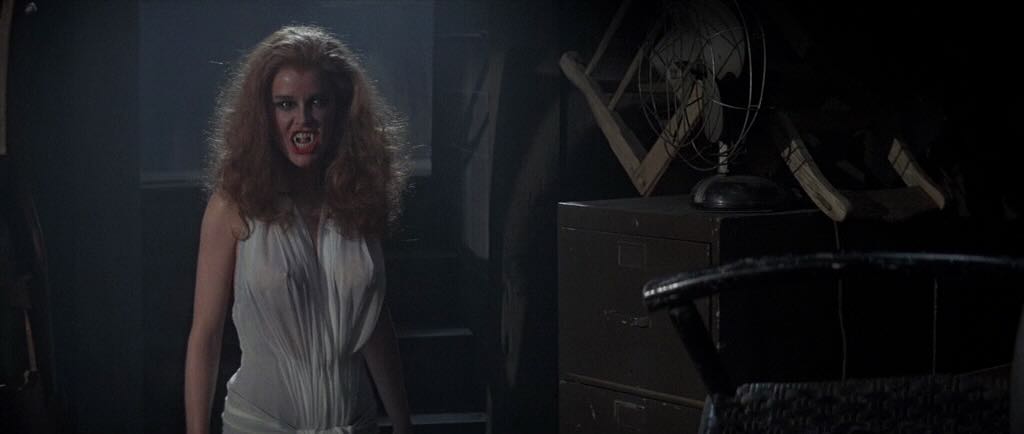
Piecing together what’s happening based on having watched the remake five years back… the vamp Chris “Jack” Skellington is too dentally distorted to recognize, old Roddy McDowall is fighting him back but the nerdy boy Herman’s Head Charlie gets bitten after a really nice bat transformation, while in the basement his girl Amy has already turned vampish. Smashing the windows to let the sunlight in is also how they won in From Dusk Till Dawn, the green-burning vampire skeleton pretty sweet. Coda: everything’s back to normal, Roddy on TV, the kid making out with his girl, and vamps living next door awaiting the sequel. Hoax from 976-EVIL is in this, but either he’s dead by now or I can’t recognize him without the demon makeup. Holland is best known as codirector of The Timekeepers of Eternity.
–
Prom Night (1980, Paul Lynch)
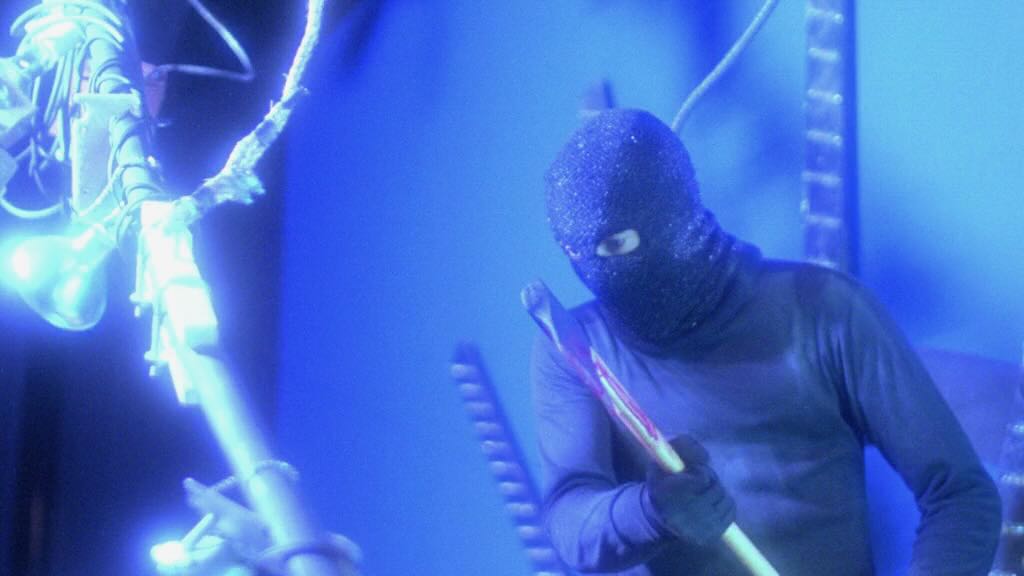
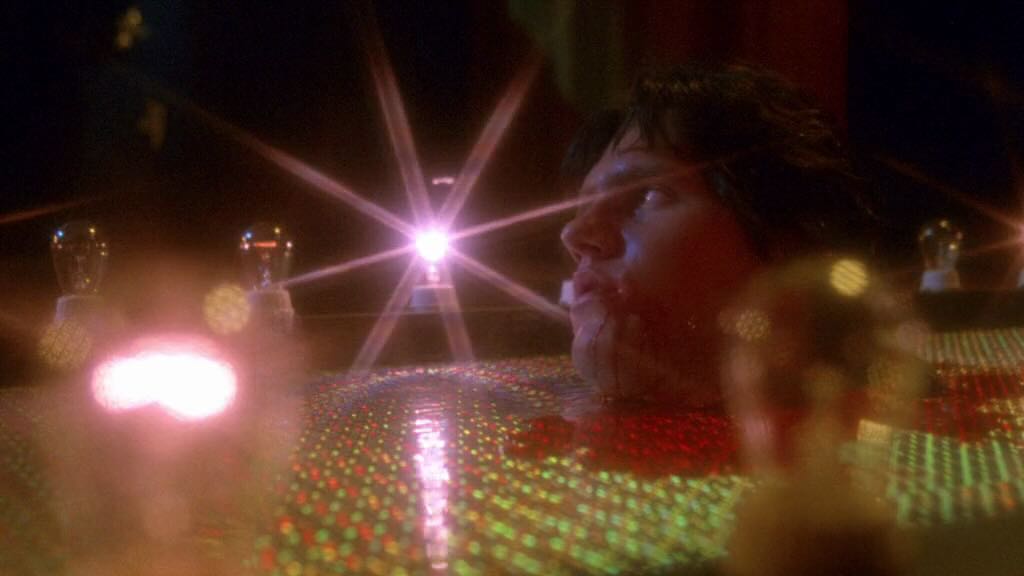
There are a lotta kids at this prom and I don’t care to figure out who they all are. Thugs beat up the prom king and steal his crown, then the movie gets its Carrie blood-bucket moment when the masked killer rolls the false king’s severed head out on stage. Hero vs. Villain fight ensues, awkward choreography but a nice disco song. The queen was Jamie Lee Curtis??
–
The Kindred (1987, Obrow & Carpenter)
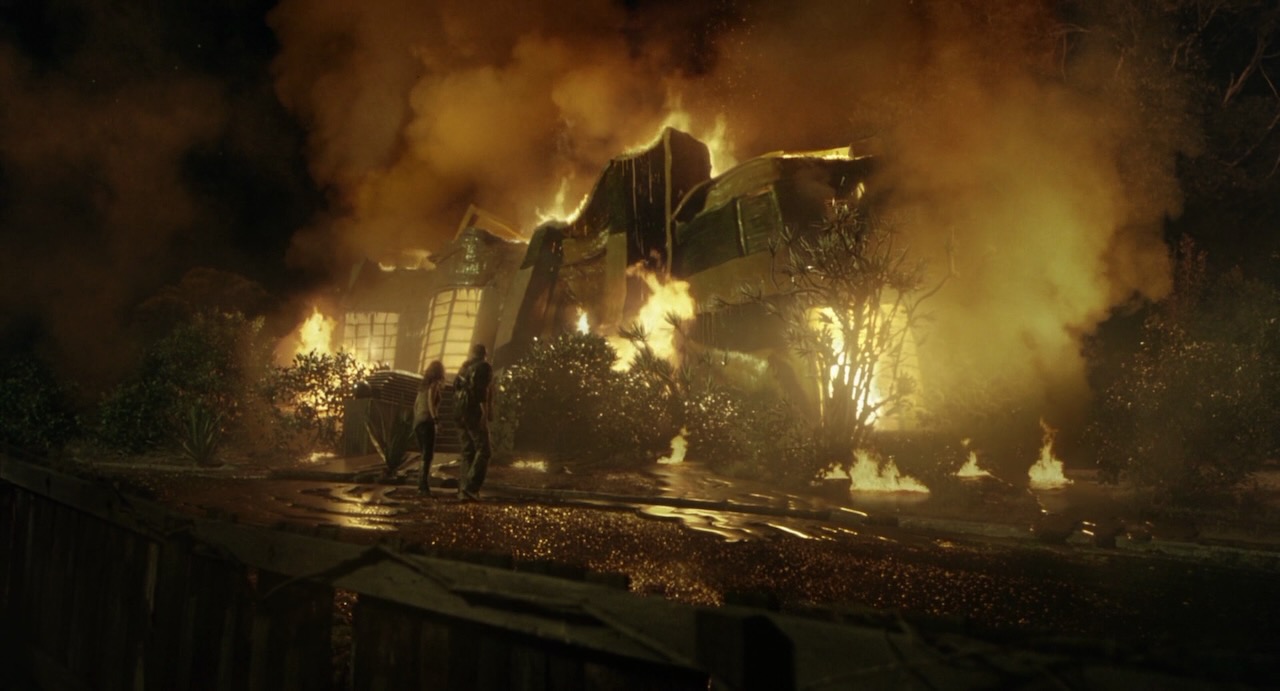
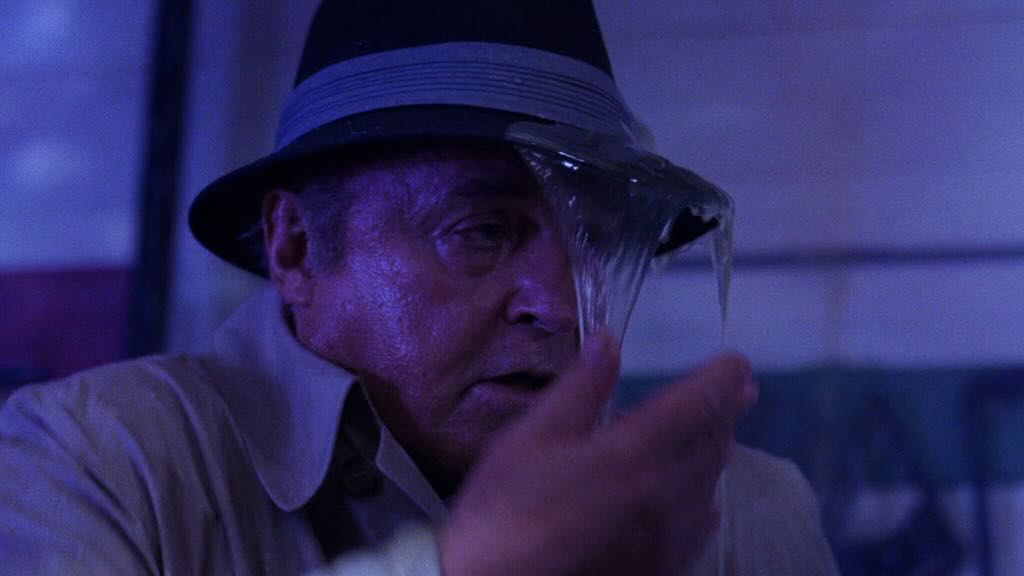
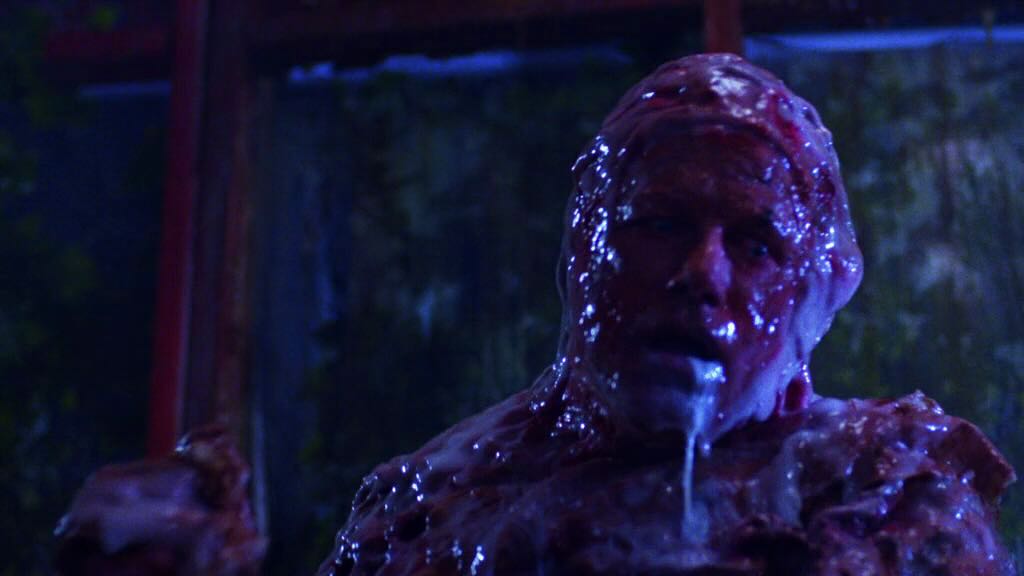
Hat Guy has arrived to collect his killer mutant baby or whatever, says the mutant beastie is John’s brother, but there’s no convincing John, who electrocutes the thing until it explodes and takes Hat Guy with it. Rubber baby beasties attack until Brad (The Hills Have Eyes 2) blows up the whole damn house. Fortunately his dead girlfriend Sharon (of Crawlspace) is somehow alive in the crawlspace. Very gloopy gloppy movie. Nobody seems to like it, but I remember it being good, oh yeah, I was eleven. The directors had made two others together, and separately Obrow did a Dean Koontz adaptation with multiple Twin Peaks actors and Carpenter did a Luke Wilson/Ken Marino ghost movie.
–
Fiend Without a Face (1958, Arthur Crabtree)
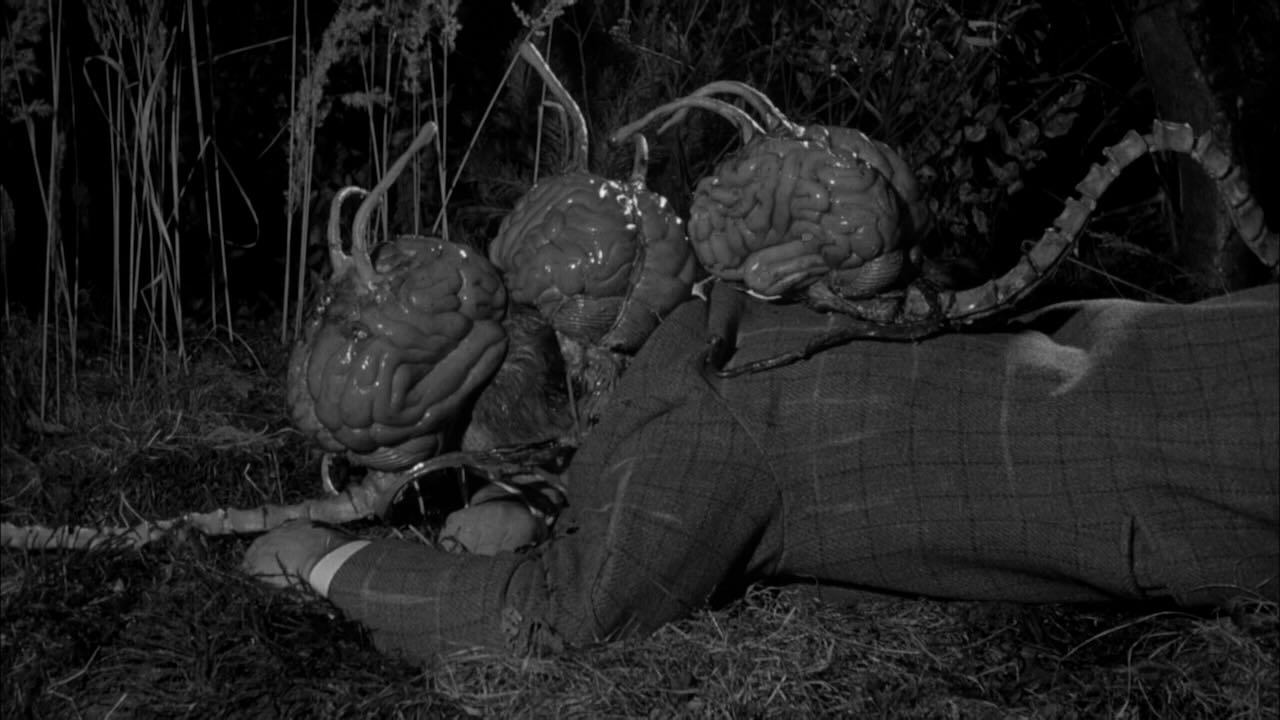
“They’re becoming visible!” Stop-motion spine/brain creatures climbing trees, cool, apparently caused by “the atomic plant,” so Jeff is going to go blow it up. “Perhaps I can control them” says the professor moments before he’s killed by brains, which make funny sputtering ketchup bottle sfx when they’re shot. Post-explosion, the brains immediately melt – this is one of the goopiest 1950s movies, the Kindred of its time.
–
Alucarda (1977, Juan López Moctezuma)
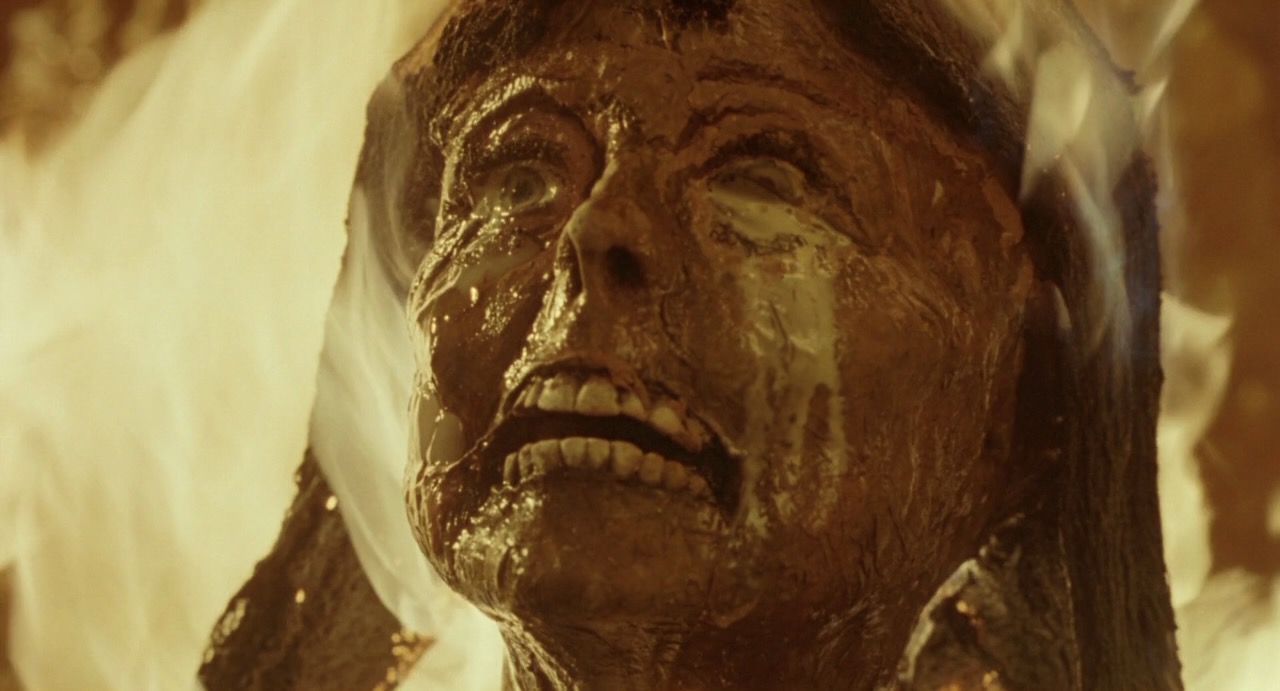
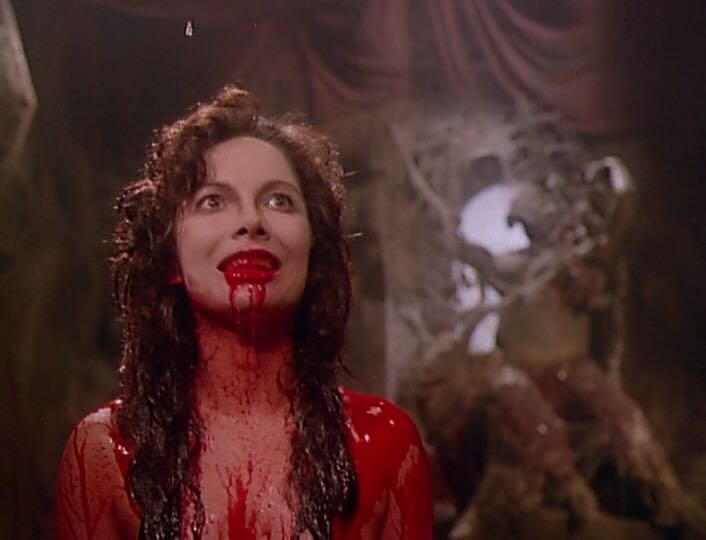
Bloody naked Justine savagely claws at a religious lady – they’ve come to a truce when the lady’s idiot doctor friend comes in splashing around beakers of holy water, J gets skeletonized and the lady bitten. As a result(?), young supervampire Alucarda speaks the magic words that cause all nuns to burst into flame. There is a lot of screaming! Al has a holy water protection field, and these bozos only had one idea, but fortunately Al is a girl, and these last two movies have demonstrated that girls’ reaction to horror is to scream and be useless to stop it, so Al goes mad from her own fiery destructive wrath and vanishes. Director made the also not-great Mansion of Madness, Al was recently in a netflix movie called Grumpy Christmas.
–
Phenomena (1985, Dario Argento)
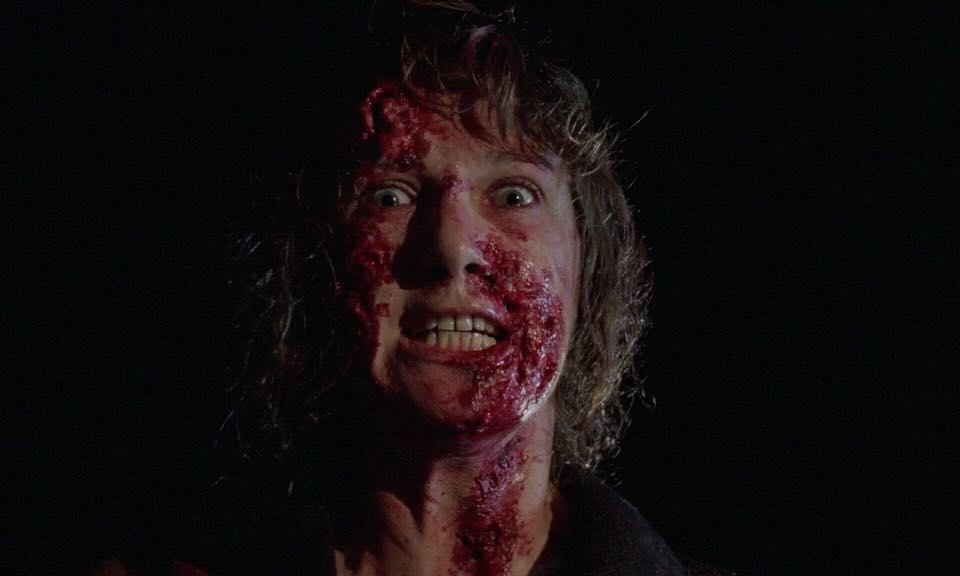
Uh oh, Jennifer Connelly is stuck in a maggoty flooded dead body dumpster, someone has been watching Poltergeist. The man chained up nearby breaks his own thumb to escape the cuffs (a common tactic lately) and attack Jen’s cackling tormentor, but Jen escapes on her own. It’s not an Italian movie until we encounter a horribly dubbed child, and this one’s got a scary face and a halberd. Jen’s terrified screams summon a swarm of flies that eat the kid’s mutant face off. She tries to escape by boat but is so technically unhandy, the boat explodes leaving her trapped in a ring of fire, then she’s saved by a razor-wielding monkey. Every line and edit and action seems a little odd – I think this is what makes Argento’s movies stand out, and I didn’t understand his vibe when I first watched this on VHS.
–
Session 9 (2001, Brad Anderson)
I remember this and The Machinist being a big deal, a hot new Anderson on the scene, but haven’t thought about either one in a long while and never watched his follow-ups. Gordon is lobotomizing guys through their eye sockets while dreaming that an imaginary labcoat guy is responsible. We’re doing the post-Fight Club pre-Shudder Island thing of revisiting all the past kills with the knowledge that our delusional protag was the killer all along. Seems like a just-alright indie movie in retrospect.
–
Sorority Babes in the Slimeball Bowl-O-Rama (1988, David DeCoteau)
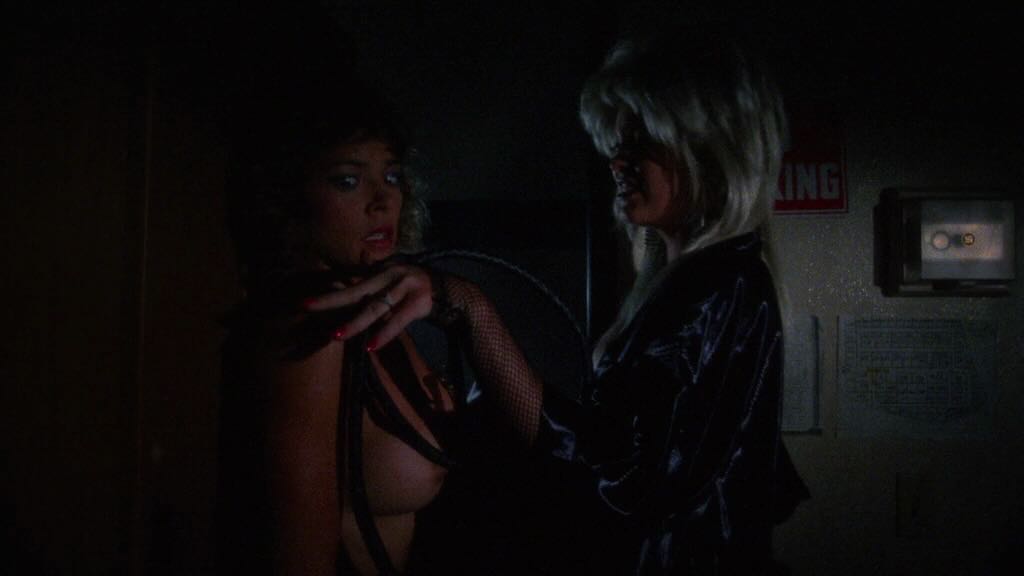
Think this was more USA Up All Night than Channel 11 Shocktober. Our intrepid heroes (a hotgirl and nerdy Calvin) are searching a foggy warehouse for she-demons, manage to clumsily set Evil Babs With Unidentified Accent on fire after she kills Nude Victim Lisa offscreen. Some more stuff happens, it’s not worth recounting. The lighting and acting are very bad – there’s boobs, but USA wouldn’t have shown them, so why did anyone watch this? We get a demon puppet, at least. Nude Victim was later in Puppet Master 3, Babs is from Slumber Party Massacre, and our heroes were both in Nightmare on Elm Street 4 the same year.