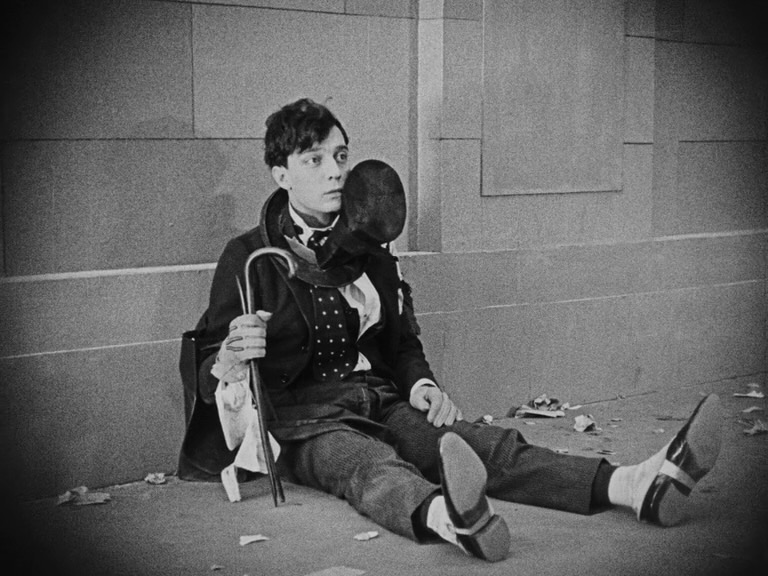
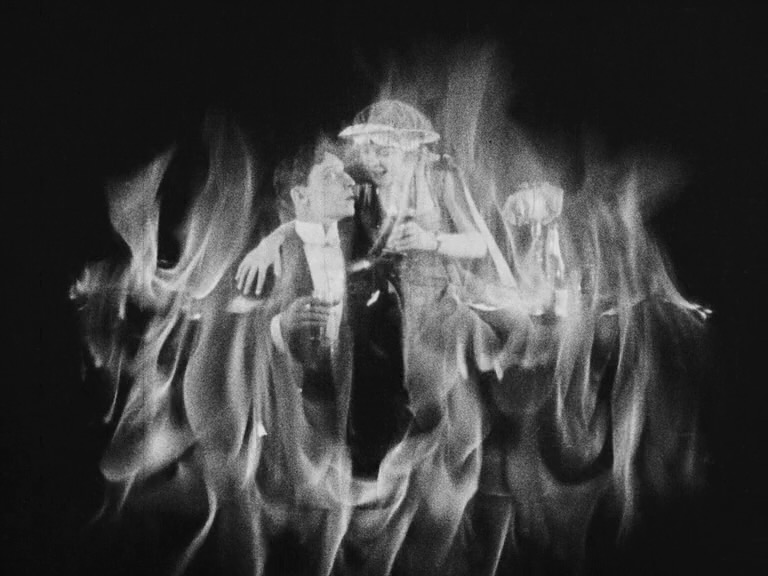
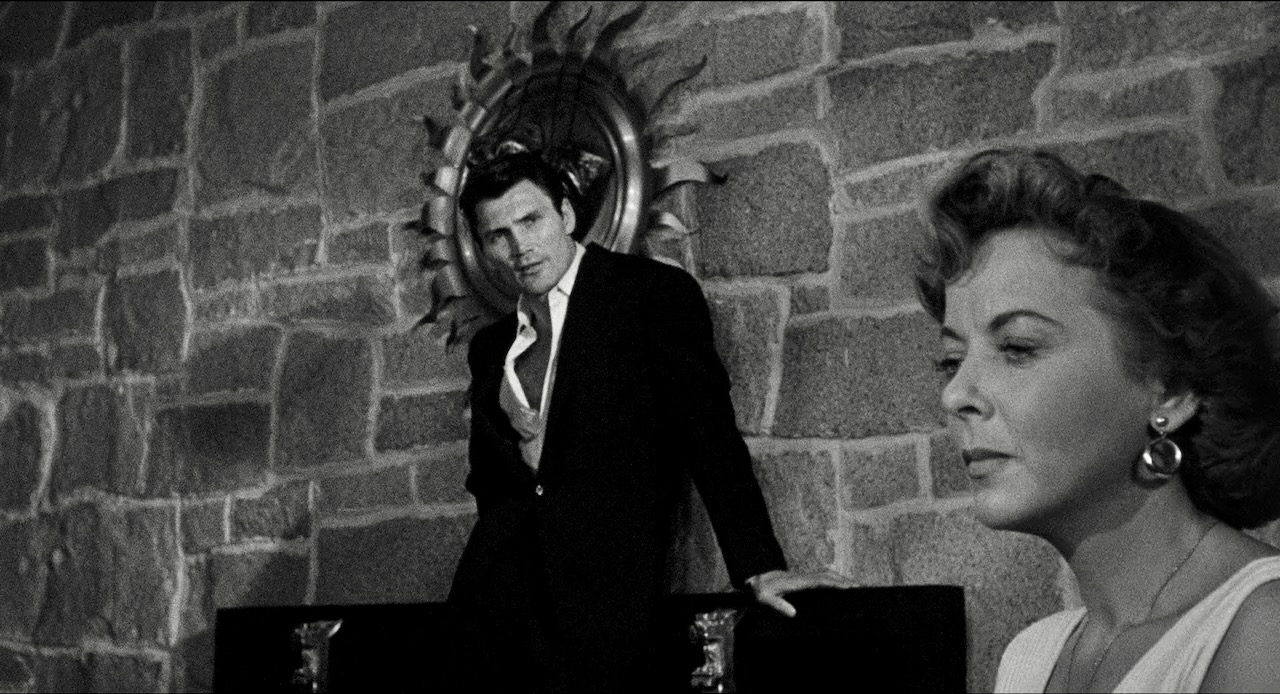
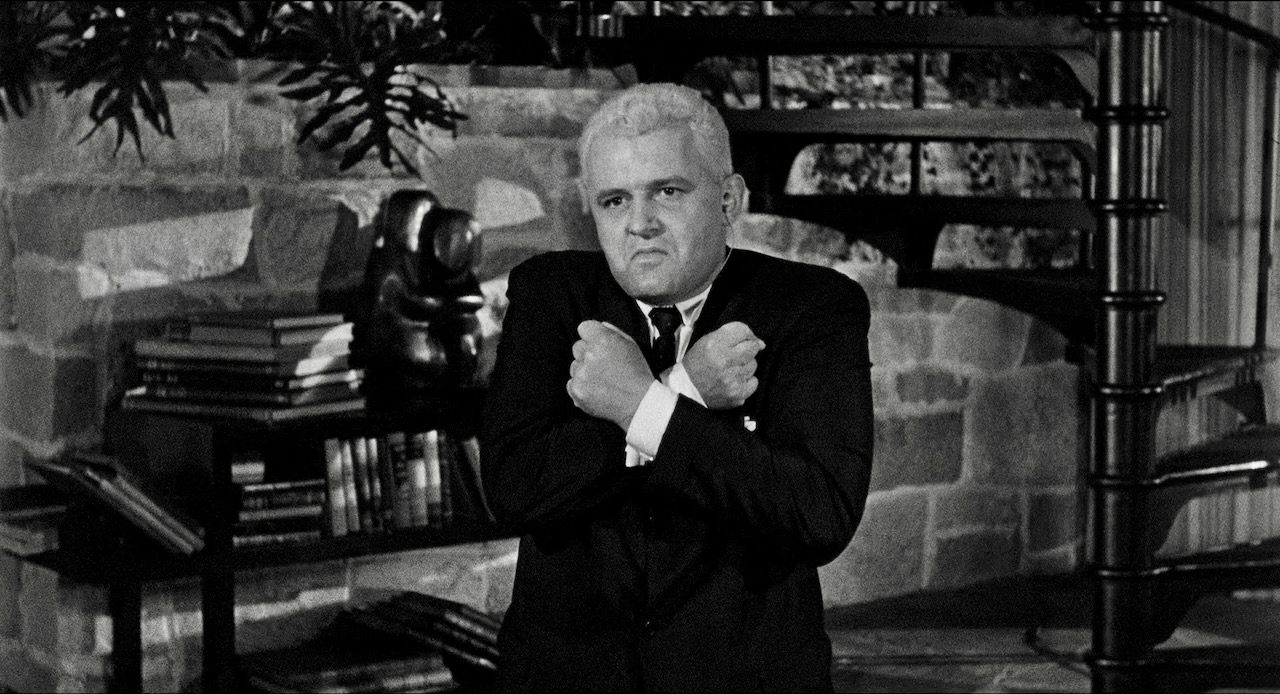
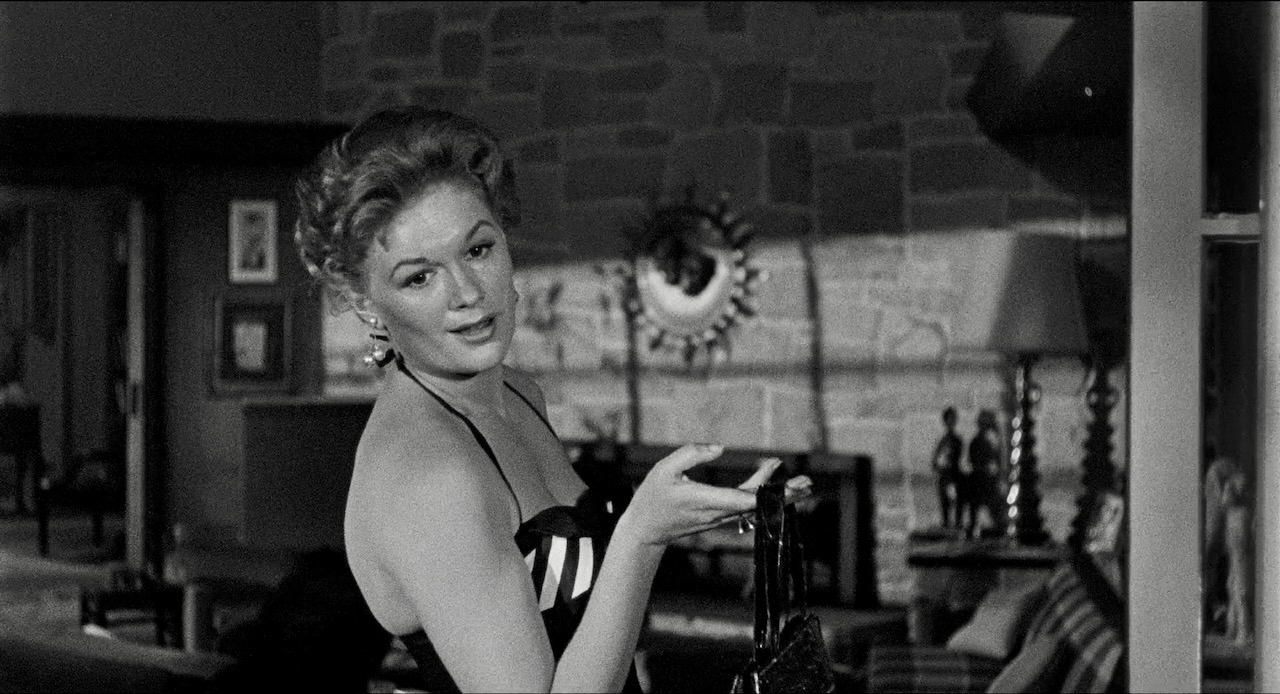
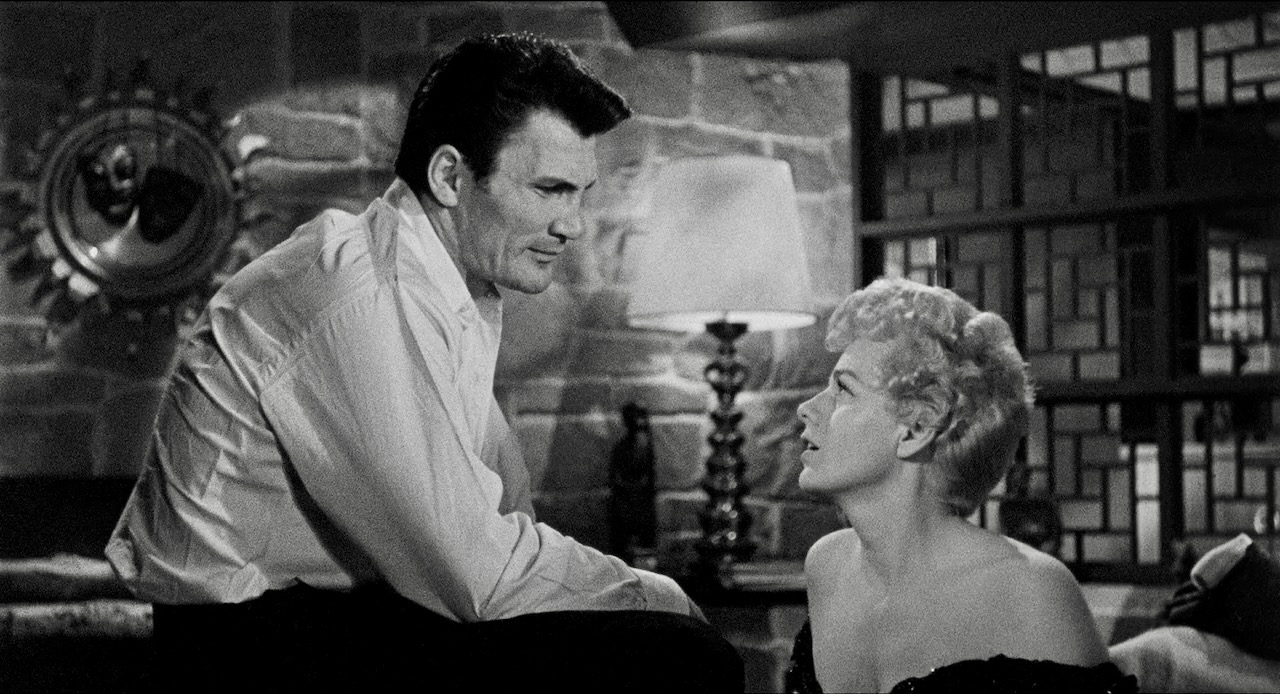
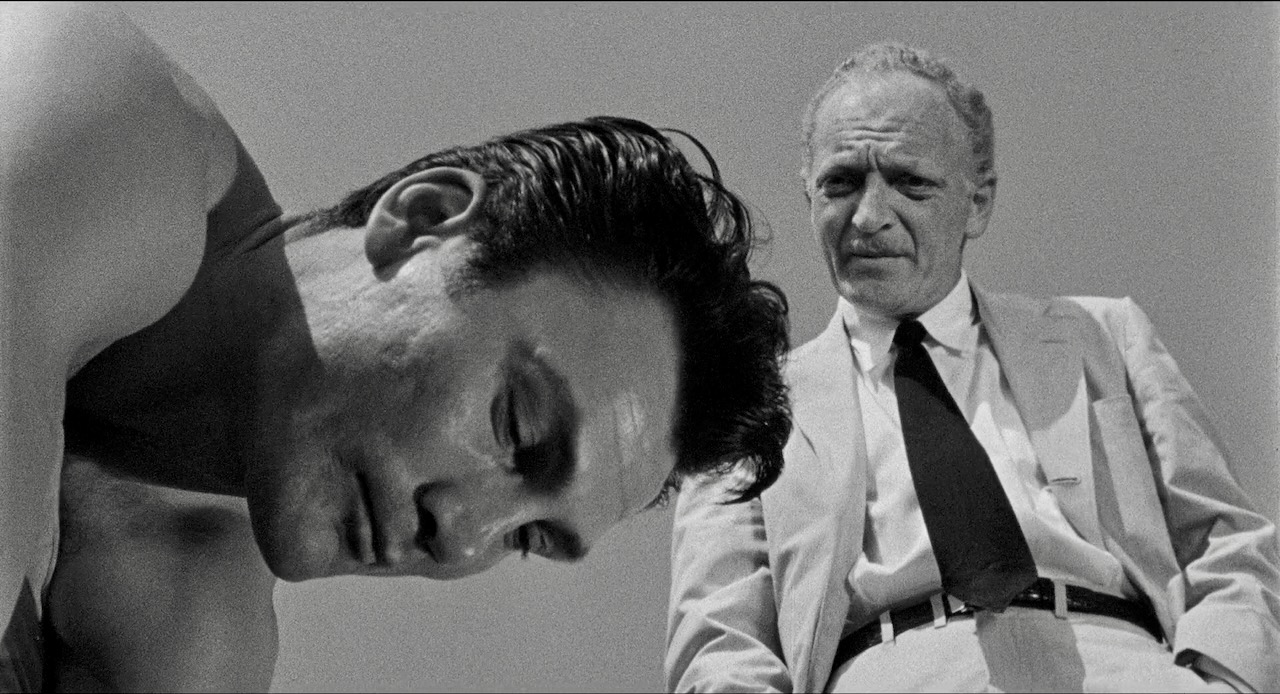
Our man Trojan is back, still doing clean, efficient jobs, and still getting screwed over afterwards when the client decides to kill his team instead of paying.

Smooth-haired hitman Viktor kills Computer Chris first, then old buddy Luca, while museum lawyer Rebecca is working both sides trying to recover the stolen painting.

Computer Chris is apparently old enough to have been in Petzold’s The State I Am In, Luca had parts in Head-On and the latest Guy Ritchie joint, new girl Marie Leuenberger does a lotta TV and hopefully has a bright future.

Same Vogel chapter as The Spanish Earth, “Left and Revolutionary Cinema: the West.” Useful to note that Vogel is never posting lists of his favorite movies, but the ones that illustrate a particular quality or movement – he spends half this chapter complaining about early 1970s Godard.

Unfortunately, the resultant films – from British Sounds to Tout Va Bien – prove that to “will” political cinema into being without the mediation of art is self-defeating. Despite brilliant sequences (reminiscent of the “old” Godard), these works are visually sterile, intellectually shallow, and, in terms of their overbearing, insistent soundtracks didactic, pedantic, dogmatic.


The Cry of Jazz (1959, Edward Bland)

“Rock and roll is not jazz.” Argument within a college(?) jazz club about whether only Black people could have created jazz, the white boys arguing that there are plenty of white players so race has nothing to do with it. Narrator Alex explains how music works (repeating chorus, changes/harmonies) and how jazz has evolved, culminating in the hottest group of today, the Sun Ra Arkestra. While the kids are stuck arguing in their musicless bland room, our camera hits the streets and the clubs seeking examples for Alex’s explanations. After a savage scene comparing Black life (pool game) to white life (poodle getting a haircut), eventually there’s a short debate over whether Americans have souls, concluding ambivalently: “America’s soul is an empty void.” For a half-hour movie that begins looking like a MST3K educational short, this sure takes some wild turns.

The two restraining elements in jazz are the form and the changes. They are restraining because of their endless repetition, in much the same way that the Negro experiences the endless daily humiliation of American life, which bequeaths him a futureless future. In conflict with America’s gift of a futureless future is the Negro’s image of himself. Through glorifying the inherent joy and freedom in each present moment of life, the Negro transforms America’s image of him into a transport of joy. Denied a future, the joyous celebration of the present is the Negro’s answer to America’s ceaseless attempts to obliterate him. Jazz is a musical expression of the Negro’s eternal recreation of the present. The Negro’s freeing worship of the present in jazz occurs through the constant creation of new ideas in jazz. These new ideas are born by improvising through the restraints of the form and the changes. Jazz reflects the improvised life thrust upon the Negro. Now, melody is one element which can be used in improvisation. The soloist creates this melody through elaborating on various details of the changes. The manner in which each change shall be elaborated upon is a problem of the eternal present. As Negro life admits of many individual solutions, so does the way in which a change can be elaborated upon. Of course the Negro, as man and/or jazzman, must be constantly creative, for that is how he remains free. Otherwise, the dehumanizing portrait America has drawn of him will triumph.

Editor Howard Alk worked on Dylan movies, and one of the jazz club girls grew up to be Magnolia‘s Rose Gator. Bland went on to arrange for Sun Ra in New York and compose orchestral works. From his NY Times obituary:

The British critic Kenneth Tynan, in a column for The London Observer, wrote that it “does not really belong to the history of cinematic art, but it assuredly belongs to history” as “the first film in which the American Negro has issued a direct challenge to the white.”


I’m a Man (1969, Peter Rosen)

“Police are always frightened.” John walks through a Connecticut town carrying a spear in order to provoke white people, then calls his wife to say he’s about to be arrested. The doc(?) interviews people from John’s court case: the whites think he’s incompetent, the blacks realize he’s an intellectual. John sees himself as a militant, says he expects to die poor and hated, but aims to increase freedom for his kids.


Wholly Communion (1966, Peter Whitehead)

Something completely different: document of a post-beatnik pre-hippie poetry reading in June 1965 at Royal Albert Hall. “This evening is an experiment” – with minor crowd disturbance or drama or movement, it’s mostly just guys reading poetry with better-than-decent sound recording.

Ginsberg listens and waits his turn:

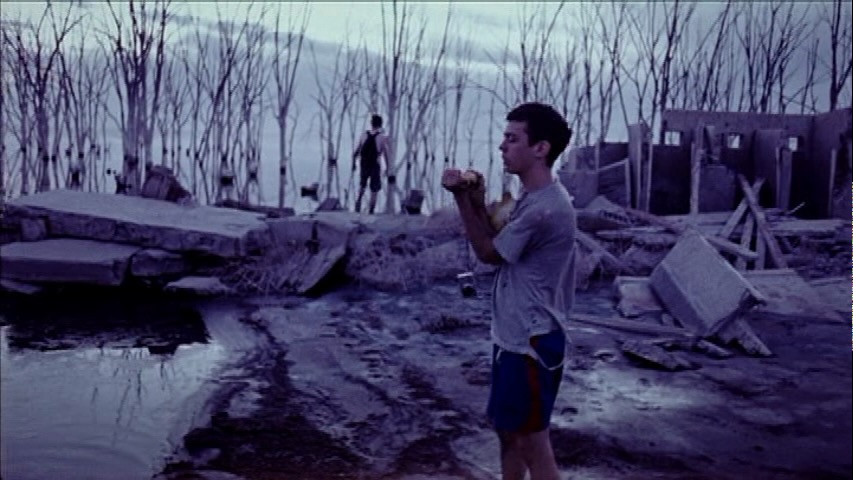
Supremely cool movie, the artificial look gave me flashbacks to Perceval Le Gallois. I guess I like Monteiro now, and there’s plenty more to see.

Without Affinity I don’t know how to remove weird watermarks:

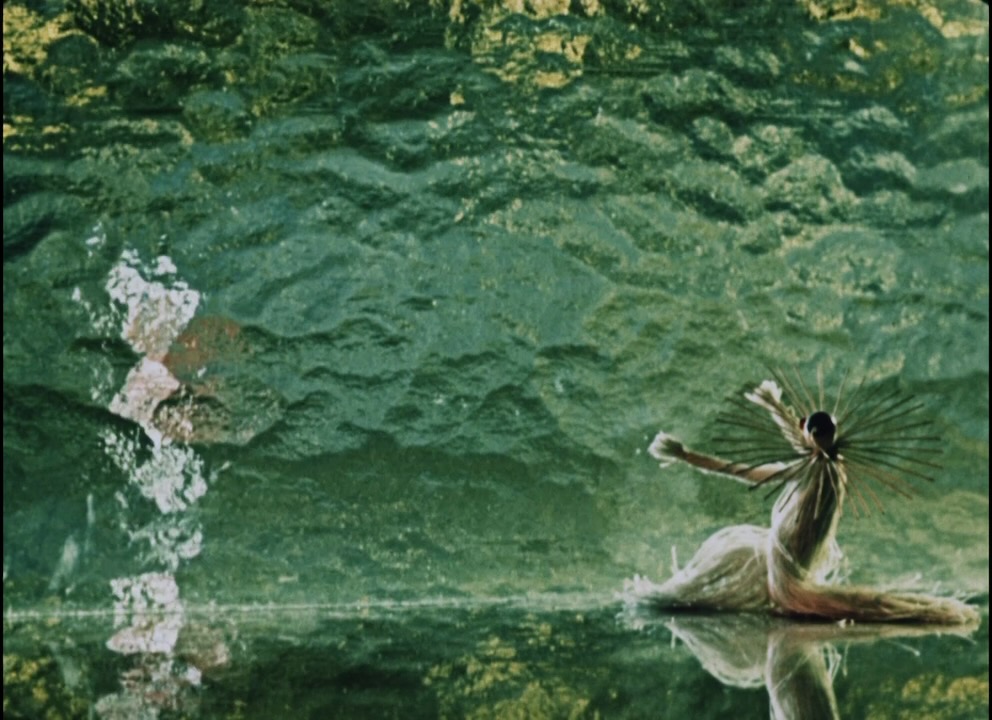
Maria de Medeiros looked exactly the same age 22 years later in The Saddest Music in the World, doesn’t transform from a damsel into the warrior Silvestre until the last 40 minutes. Her sister was in Francisca the same year, went on to star in Tabu. Luis Miguel Cintra is the villain here, and Paio also played second fiddle to Cintra in Ilha dos Amores and Satin Slipper.

This one’s your standard sort of mysterious-stranger spaghetti-western with a few twists. Firstly, it’s a white western, snowbound like Track of the Cat (and moving around in the snow can go slowly, so you’ve gotta undercrank your movie a little). Hero Jean-Louis Trintignant (just before Maud’s and Conformist) is mute, hence the title. Then you’ve got a killer “Tigrero” who is always calm and polite, so they cast “Loco” Klaus Kinski (the spoken words and subtitles don’t always agree). The biggest twist for me is the ending, as the villains (corrupt bounty hunters) kill the sheriff, the hero, his girl, then all the families he was trying to protect.

The girl was much later in To Sleep with Anger:

L-R: corrupt Pollicut (a Bay of Bloodsman), the sheriff of Salvatore Giuliano, jailed Kinski

The mythology of warring intergalactic races (the evil Zeroes and noble Ones) battling for control of the hearts of humanity is cheesy even for Dumont, but his French countryside weirdos-getting-exponentially-weirder schtick is on point. Both sides are pretty ramshackle, the antichrist kid Freddy is pretty easily kidnapped then re-kidnapped. If you follow the characters and story, it’s all deflated and lame – the long pauses and awkwardness and mismatched performances are the whole show. The space forces collide, forming a black hole over Earth which annihilates all of them and the police car belonging to Team Quinquin – Carpentier gets all the dialogue, the Captain now too twitchy to handle anything else. Elsewhere, the cellphone demon was in the latest Three Musketeers reboot, angel Jane in the latest Count of Monte Cristo.

A 1979 movie set in “the future”, which looks like… 1980. Cyrus is holding a conclave, wants to unite all street gangs to overthrow the cops and run the city, but so many gangs show up to the meeting and a Vincent Gallo-looking guy shoots Cy from the crowd then fingers the only witness as the shooter. After all this commotion the Warriors have to get back to their home borough with every creep gunning for them, but they don’t even figure out until the movie’s last 20 minutes why everyone’s mad at them. The action choreography is not great, nor sometimes are the goofy costumes (the overalls-and-rollerskates “punks” being the worst). But the comic-book Escape from New York adventure is compelling, and it was already giving West Side Story vibes with its gang stylings when I realized that the shooter is Jerry Horne, whose Twin Peaks costar Dr. Amp was in West Side.

Exactly the pose you make when you’re about to get shot:

Jerry Horne, cartoon version:

Warriors:

Mitchum and Greer had costarred in Out of the Past a couple years earlier, teamed up here because her ex ripped them both off. William Bendix of The Blue Dahlia and Lifeboat is the army guy after Mitchum for the stolen money, turns out he’s in cahoots with the ex. Everyone flees to Mexico and runs into The Inspector General (Ramon Novarro, very good, starred in the 1925 Ben-Hur). Siegel just getting started in a long fruitful career, still a decade out from making the dire-looking Hound-Dog Man.

Travel Man season 2 (2016)

– Vienna with Chris O’Dowd (they eat sausage and break a snow globe)
– Paris with British Bake Off host Mel Giedroyc (on snails: “the color of this is something I need to ignore”)
– Copenhagen with Noel Fielding (the first guest to out-joke Ayoade)
– Moscow with BBC star Greg Davies

W/ Bob & David (2015)

Haven’t seen this in a decade… wrote nothing last time… let’s rewatch it.

1. The guys travel through time… Bob becomes a work-from-home Pope… filmmaker David redefines slavery as “helperism” and lets Jay pretend to whip a Black man, which he must have enjoyed.

2. Not-great opening sketch about appeasing the Islamic heads of the network, but its final payoff mocking their own fans is worth it. B+D’s good/bad cop routine gets out of hand while Jay is a criminal (this part I believe). David plays Einstein in a biopic. Ennis has a bad experience at a dry cleaners and ends up cowriting a hit musical.

3. Bob flails on a cooking show, David flails as a consumer rights streamer at a traffic stop (Jay plays a violent authority-abuser), and David has the ability to summon people by insulting them.

4. Bob is the world’s worst bible salesman, and his one-man show mashing-up Seinfeld and Star Wars is a hit. A kid who looks upsettingly like me describes the murderers he met in heaven. Jay plays a klansman, I’m not making this up.

Since the show, director Jason Woliner did some Last Man on Earth and the second Borat movie. Scott Aukerman did Between Two Ferns. The composer worked with Mel Brooks and Bobcat Goldthwait.


The Show About The Show season 1 (2015-2017)

Caveh (KAH-vay) pitches a show where BPB and Alex Karpovsky do drugs with him, but it doesn’t fly, so he pitches a show about pitching that show, then the next episode will be about making the first episode, and so on. It’s documentary, then re-enactments, then the making-of the re-enactments, sometimes with people playing themselves and sometimes with actors, so you’re never sure what layer of reality you’re on. Caveh is neurotic and annoying and cruel, and the show is twisted and brilliant – he must have inspired Nathan Fielder. For some reason I crack up whenever Dustin Guy Defa (writer of The Mountain) is onscreen, playing Caveh’s studio boss (and rarely Terence Nance appears playing Dustin’s boss).


Uzumaki (2024)

Doomed animation miniseries from the same graphic novel as the beloved (by me alone) live-action film. The first couple episodes are more-or-less the movie’s story, with young couple Kirie and her more manic friend Shuichi. This time his dad spirals himself with no help from the washing machine, the Boy Who Likes Surprises comes back from his car crash as a zombie jack-in-the-box, and the news crew doesn’t arrive in spiral town until typhoons have driven the whole town into a massive spiral rowhouse.

The second half mostly introduces craziness that was too large-scale or wildly gruesome for the film. Kirie’s friend black-holes herself with her own spiral forehead. Mosquito swarms turn hospital patients into blood-draining zombies, while newborns are growing placenta-mushrooms. Kirie gets stalked by a whispering typhoon, and also by a neighbor transformed into a rat-eating spike monster, and the boy destroys a pottery kiln that has trapped his parents’ souls. Finally the town is leveled and our couple discovers the ancient subterranean spiral structures fueling the overground apocalypse.

One of the many credited directors worked on Ergo Proxy, which I just found out about. Music by a guy I saw play at Big Ears.


Archer season 10 (2019)

The outer space Firefly season. They meet interdimensional beings and doppelgangers, rescue various creatures, get into gladiator fights, and fight Robot Barry.


Space Ghost Coast to Coast season 1 (1994)

Really holds up.
RIP George and Clay.


Hari Kondabolu – Vacation Baby (2023)

Good, with surprisingly few gross baby jokes considering he became a dad during the pandemic.


Melomaniac (2023, Katlin Schneider)

Guy who enjoys live music becomes obsessed with recording it.
Sadly, I cannot relate.

J.S. Bach Fantasy in G Minor (1965)

Organist wedges an apple in his mouth and gets to work. The rest is a Bach music video, focused on decaying walls, locks and grates, with stop-motion interludes of gashes and holes appearing in pulsating rows. Finally all the doors are thrown open and the camera rushes into the streets, confronted with a whole new world of decaying walls and locks.


Et Cetera (1966)

Exuberant little movie with better music than the Bach (sorry). Three parts in seven minutes, each piece an action that reaches a loop point then fullscreen letters exclaim ETC, ETC, ETC. Of course the film begins with FINE so when it reaches the end, the entire piece is a loop, ETC ETC, until the film material melts in lovely stop-motion.


Punch and Judy (1966)

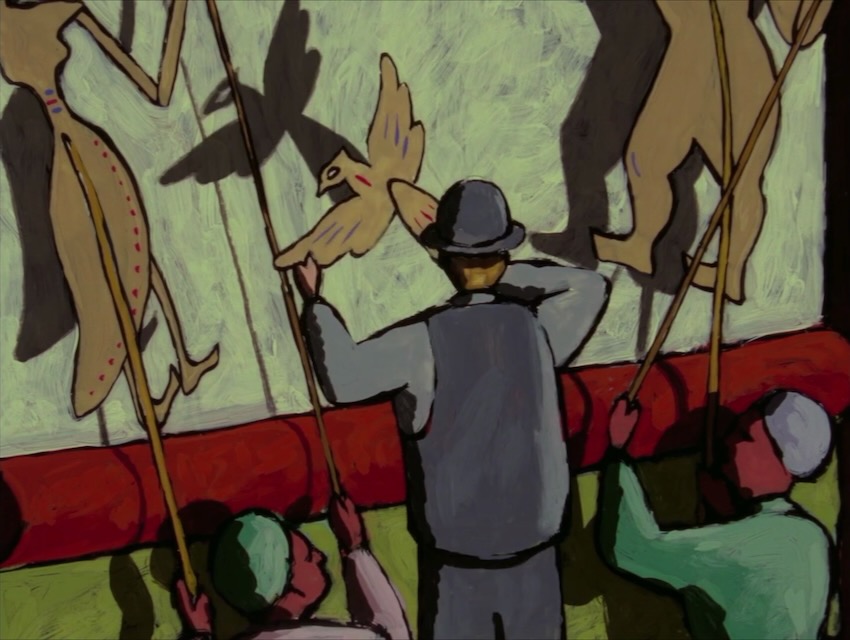
Incredible, two puppets fight over the price or possession of a live guinea pig, burying and mutilating each other in turn. Jan’s editing and close-ups have never been better.


Historia Nature Suite (1967)

Different families of animals in rapid montage (birds obvs. the best segment), combining artistic/scientific drawings, taxidermy, and live creatures into an edited whirl, each part ending with an extreme closeup of a guy eating creature-meat.


The Garden (1968)

Gardener takes his guest Fred home, tries to show off his prize rabbits but Fred is too distracted by the garden’s living fence (a chain of humans around the property holding hands). The gardener tells some secrets about the fencemen, unheard by us, and the guest immediately joins the fence. Live actors and the vaguely folk-horror scenario set this one apart.


Don Juan (1970)

Juan’s dad won’t lend him money, so the Don smashes his dad’s head in. Juan’s chosen girl’s dad disapproves, so the Don cuts the old man’s face off. Juan’s brother Felipe, beloved of the girl, seeks Juan in the forest to take revenge, so the Don stabs his brother full of holes. Then the girl’s dad returns as a vengeful ghost who sends Don Juan to hell. Some of the usual delights, and the effect of actors wearing giant eyeless marionette-suits is fun, but much of this is the people/puppets standing around and announcing their dialogue.


The Castle of Otranto (1977)

Documentary interview with a researcher who discovered that a Czech castle was the setting for an old Italian novel, with nearby caves and secret passages and armor fragments matching those in the book. Svank and the viewer grow tired of this at about the same time, and he switches focus to animating the book’s illustrations, retelling the story of a young woman being chased around by all the castle’s men until the castle is destroyed by a giant, who also interrupts the (fake) interview.


Another Kind of Love (1988)

Music video for a bland-looking British singer (Hugh Cornwell of The Stranglers) who seems to have been patient with the stop-motion process and allowed his clay doppelganger to be hilariously mutilated. Snappy editing.


Virile Games (1988)

Viewer watches a soccer game on TV but it’s a harlem-globetrottin’ version of soccer where points are scored by attacking the opposing players’ faces with foreign objects until their clay heads implode. The ball gets kicked through the viewer’s apartment window and the game is relocated to his cramped living room, not that he notices. Also: the viewer, the ref, and all the players are the same actor.