Has it been half a year since we left off in the Vogel book? Since then I’ve picked up the revised edition and found some more shorts.

Pianissimo (1963, Carmen D’Avino)

Beginning with the lowest-quality source of the bunch. Turntable and player piano are embellished with stop-motion rainbows. It’s all extremely fun and colorful, and probably one of the great animated shorts of its time, but we need a better copy to know for sure.


Skullduggery (1960, Stan Vanderbeek)

Phone call over black, the respondent just repeating “hello.” Montages of early cinema and newsreel stock footage with cut-out politician and celebrities added. Stan was obviously a favorite of Vogel’s – I found all three of his films from this section of the book.


Science Friction (1959, Stan Vanderbeek)

Sound effect loops as a score, not as abrasive as these things often are. I wonder if the mad scientist segment is original photography or stock footage. Less politician obsessed and more focused on doing surprising things to recognizable images, this one is great, real snappy and absurd, while Skullduggery felt like Mad Magazine outtakes. Advertising, the space race, hammers hitting figures in their heads causing transformation (see also: Harry Smith)… by the end, pretty much everything has been launched into space.

Stan, from various sources:

A social satire aimed at the rockets, scientists and competitive mania of our time … If this film has a social ambition, it is to help disarm the social fuse of people living with anxiety, to point out the insidious folly of competitive suicide (by way of rockets). In this film and others I am trying to evolve a ‘litera-graphic’ image, an international sign language of fantasy and satire. There is a social literature through filmic pantomime, that is, non-verbal comedy-satire; a ‘comic-ominous’ image that pertains to our time and interests which Hollywood and the commercial cinema are ignoring.


A La Mode (1959, Stan Vanderbeek)

An “attire satire” with cut-outs from glamour, art and lifestyle magazines. The audio includes taped music on fast forward and excerpts from TV episodes or radio plays. I hate to have to say this whenever I see absurd comic cutout animation, but of course it reminds me of Monty Python. Stan: ”A montage of women and appearances, a fantasy about beauty and the female, an homage, a mirage.”


A Day in Town (1958, Hulten & Nordenstrom)

The town is Stockholm, and this is a travelogue, a city symphony in miniature (a city chamber concerto). Some segments are looped. Burst of abstract animation in a skit about a man who wants his name changed. Man with a suitcase of dynamite is chased around by two cops until one cop is poisoned by snake water. Increasingly rapid and random things accumulate until the city explodes.


Sort of a Commercial for an Icebag (1970, Michel Hugo)

Artist Claes Oldenburg wants to create a soft sculpture, or a motion sculpture showing the release and tension of materials, settles on an icebag shape. He wants to mass produce these, send them everywhere “and see what kind of meaning they acquire.” Artist monologue about his hopes for an icebag society feels like a put-on, but you never can tell with artists.


The Further Adventures of Uncle Sam (1971, Case & Mitchell)

Sleepy Sam runs a desert gas station, is knocked out and abducted in a potato sack by a would-be customer, witnessed only by a cameraman apparition. A cabal of tanks, bombs and capitalists plans to blow him up and kidnap Lady Liberty next, but Sam’s bald eagle friend sort-of rescues him and they hop a blimp. When you watch underground movies from this era, you’re gonna see a lot of Nixons. After a pause for a satanic shotgun murder montage, our heroes pull off a rescue mission and dance back into the desert.

Owl (2019, Kelly Reichardt & Christopher Blauvelt)

A beautiful bird, silent in low light, turns its head in every possible direction.


Leagues (2015, Lucrecia Martel)

Low POV shots through tall grasses as a motorcyclist bitches at some kids that they can’t let their cows eat on community land. The kids go indoors where they learn about measurement and ownership of land. This felt like an educational piece even before the onscreen text told us that things are bad for Argentinean kids. Martel killing time before Zama.


A Therapy (2012, Roman Polanski)

One of of those auteur advertisements for a fashion brand, but this one is… good. I mean every minute of this is better than any minute of Carnage. Helena Bonham Carter arrives for her therapy appointment and sets to recounting her dreams (“doctor, what does it mean?”) while Ben Kingsley becomes transfixed by the fur coat she entered with, walking to it unseen by his patient and trying it on.


The Stendhal Syndrome or My Dinner with Turhan Bey (2020, Mark Rappaport)

Joan Crawford in Humoresque, “the greatest closeup ever made.” Mark references his own Rock Hudson movie. While researching orientalism he discovered Turkhan Bey, an Austrian-Turkish-Jewish-Czech actor. Discussion of stars and their admirers, the possibility that Mark is the last person in history to swoon over Bey before his work is forgotten. This was charming, with Mark’s casually delivered voiceover and carefully composited picture – the first of his cinema-history video-essays I’ve watched.

Camille is home during WWI waiting for her man, and when he sends a letter telling her to stop writing, she cuts her hair short and sneaks out of town, hoping to blend in with soldiers while tracking him down. She joins an increasingly suspicious troop company – turns out they’re deserters heading to the Belgian border, and they have a habit of pulling out makeshift instruments and singing a continuing song about a blind girl. The men get sick and fall in holes and hide in caves, she helps by killing a lookout guard, she admits her name is Camille but they continue thinking she’s a boy, somehow.

I was right to think this would pair well with A Very Long Engagement. She is Sylvie Testud (in Vengeance, stars in La Captive) and her man, who appears at the end, is Guillaume Depardieu (the same year he was very good in Don’t Touch the Axe). A European Barn Owl can be seen – and heard – towards the end, which gains the movie an automatic half star, but it doesn’t need to kiss up to me with owls, I was already charmed. On letterboxd it looks like nobody loved this, so now I guess I’ve gotta see his other features, which nobody also loved.

This was the end of a successful Cannes Fortnight, in which I watched a bunch of movies I’d never seen by directors who had new work premiering at Cannes: Serge Bozon, the Dardennes, Claire Denis, Hlynur Pálmason, Cristian Mungiu, George Miller, Sergei Loznitsa, Jerzy Skolimowski, and David Cronenberg.

Coyote (2010)

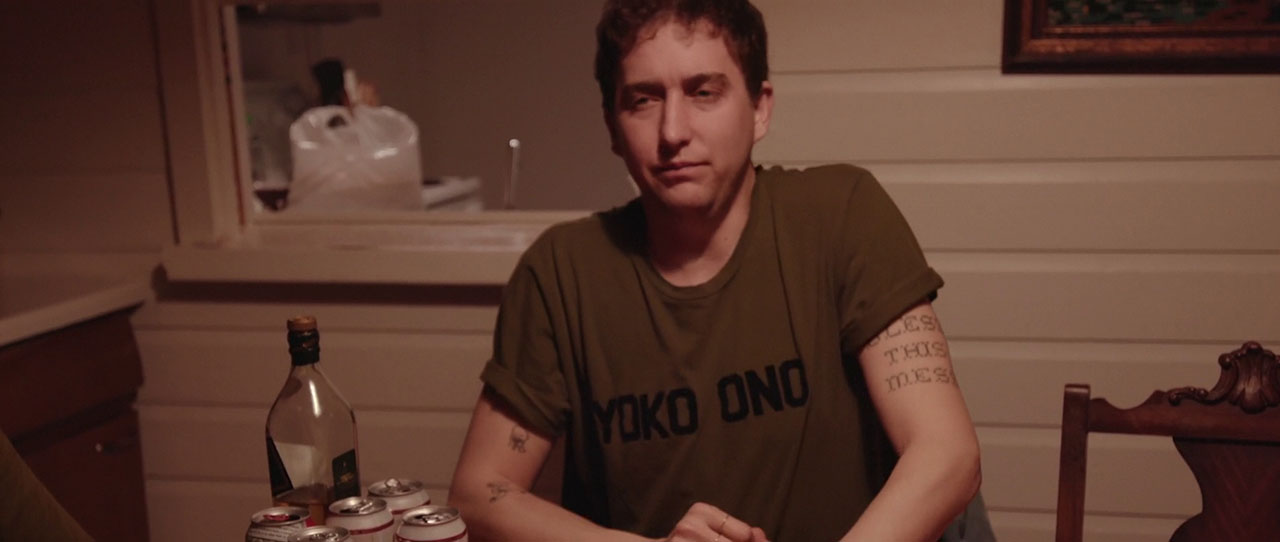
Josh Burge plays an unhealthy loser in this, if you can imagine. Josh wakes up next to a body by the river, walks back to the derelict house he stays in, lip-syncs(?) a song by Chance Jones then listens to Paul Simon and Minor Threat and shoots heroin. Wakes up by the river again, steals and pawns a boombox, smokes crack while playing a stolen tape of french songs, becomes a werewolf, goes out and kills a couple guys, just a regular week.


Thing from the Factory by the Field (2022)

“You were like in love with Michael Jackson last year. You’re not deep, or dark or whatever.” Teens starting a band bring the new, square girl in town to a field for an initiation ritual. Liz shoots her crossbow into the air and happens to hit a minor demon, then finishes it off with a rock. Now they’re worried that Liz will go to hell, so the churchy new girl takes charge, saying it’s not a sin to kill for hunting, so someone has to eat it. Not very snappy until the end, the whole thing having been a setup for a McDonald’s joke. Made me feel a little ill, so it’s partly successful.


Visited Joel’s vimeo page… I didn’t watch “Joel Calls Indie Film Type Dudes” yet, but did watch him goofing on Radiohead with an electric toothbrush.

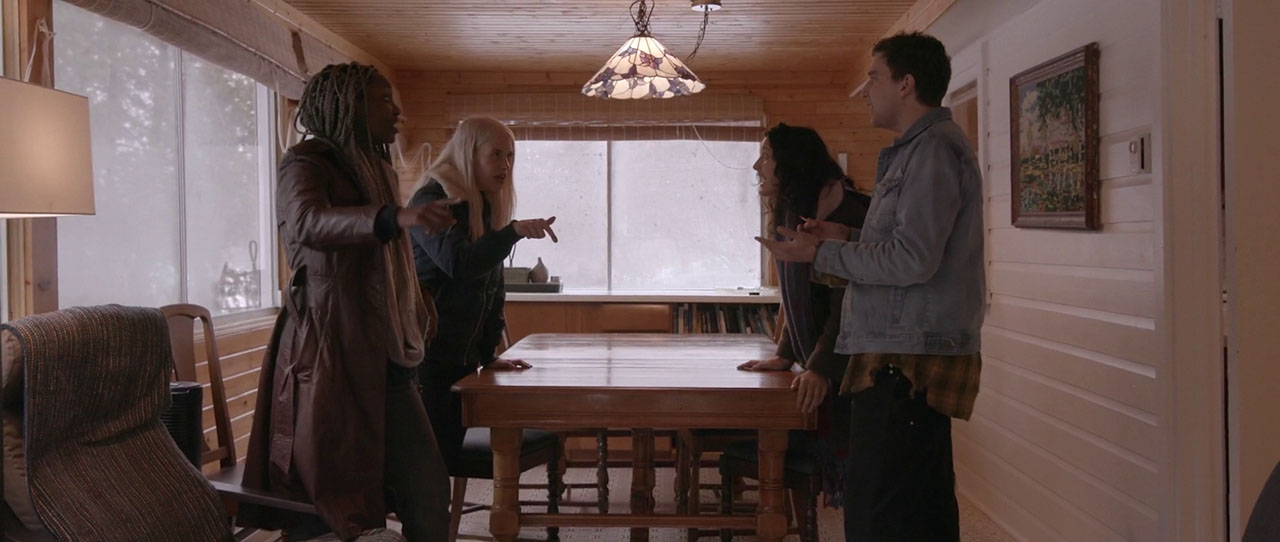
Foolish boy gets job at decrepit baths, falls into the pool immediately. Young Susan shows him around, then his first customer keeps swatting him and saying “up yours,” and the next one becomes an overheated John Waters situation. Every woman in town is hot for this 15-year-old except for Susan, who gets him arrested when he tails her to an x-rated movie. I can’t follow the currency because I dunno the 1970 guinea-to-pound-to-quid ratio, but I can follow the Can soundtrack, which is very Can. The tone stays kinda cutesy and light, even as he slashes her married boyfriend’s tires and she knocks his tooth out. Ultimately when your protagonist is a creepy insecure mumblemouthed potentially-violent teenage boy, things aren’t gonna end well – he murders her, but still in a playfully cute way.

Mike D’Angelo:

Even as his behavior gradually becomes more and more troubling, less and less defensible, the film remains too messy for a simple flipped switch in which we belatedly decide that we’ve been watching a monster … Deep End is a portrait of adolescent horniness/haplessness that always seems to be headed for tragedy (and indeed is), yet foregrounds a kid who comes across as so innocent and absurd that it’s hard to do anything but smile indulgently at him.

Couple of juvenile delinquents, looking like the French Keanu Reeves and Natalie Portman (she’s Virginie Ledoyen of The Beach) are caught stealing Deep Purple records with great close handheld camera. Gilles buys dynamite after getting kicked out of class and clashing with his parents. Creedence “Up Around the Bend” plays at a fire dance party, “Me and Bobby McGee” plays in a concrete bunker, later we hear a Nico song from The Inner Scar. This is somehow my second movie in a row where a French person gets stabbed with scissors. The couple flees together into the country looking for a place that might not exist. He wakes up with the girl gone and finds a note we don’t get to read. Good movie, full of youth and fire, though not as good as the Jesus Lizard song.

Kid does not have a bike, and lives in a group home but keeps escaping to look for his dad, a sous chef who sold the bike and doesn’t want to be a dad anymore. Enter large-hearted hairdresser (and Haute Tension star) Cécile de France, who takes a liking to the boy (even though he’s a bit of an asshole) and buys his bike back. Gaining a new mother-figure is outweighed by Dad (Jérémie Renier, naturally) telling him not to come around anymore, so Kid immediately gets mixed up with a gang of criminal youths. He stabs Cécile when she tries to keep him from going out to conk a newsseller with a baseball bat. The newsseller takes revenge, but everyone is alive and intact in the end, and Cécile remains large-hearted despite having to pay back the money her shitty adopted son stole. The Kid would go on to play Jean Renoir’s little brother in a biopic.

Voilà l’enchaînement (2014)

Alex Descas and Norah Krief (a Shakespeare actress) are a mixed-race couple, and not incidentally. She calls him a stud, asks him to tattoo her name on his body, he says both remind him of slavery/ownership. Time passes, she’s paranoid, reports him to the cops for domestic violence and he’s arrested. His prison monologue about “the trap” and his ponderings on racism afterwards feels too much like reciting the moral at the end of an educational film, though I like the rhythm of his speech.


Duo (1995)

Very short, the camera cruising around a painting (of another mixed-race couple) while Descas smokes outside the frame.


Towards Mathilde (2005)

This played at Big Ears, but we were too busy seeing live music. A rehearsal/process movie, prepping for a show that uses squirky noises and elastic materials, working out to PJ Harvey songs. One of my arms has been stiff lately and I’ve kept a small weight by the bed and the desk so I can grab it anytime and stretch out. I’m not usually inspired to do this during movies, but with this doc focusing so much on arm movements, I got a real workout. The day I watched this the new Denis hadn’t screened at Cannes yet, but the Cronenberg had, and I happened to read a Kristen Stewart interview right after watching this:

The most simple answer comes from a place of wisdom. You don’t have to complicate certain ideas. Like, “The body is reality.” At first, I was really trying to shove that concept in my head: What does it mean to me and the world and on every level? But he was like, “I shoot people.” That’s it! It’s a body. All of that is surprising. These are really lofty concepts, but also they’re not at all.

As mentioned in the Loznitsa movie, I attempted to repeat White Nights Fest here, only to realize the Loznitsa was far from a straight adaptation. But once again, Bresson can be counted on for Dostoevsky fidelity. After reading the short story I rewatched the Piotr Dumala short, which makes more sense now as an adaptation, though he added the nudity and insects. In fact there’s more sex in all the movie versions than in the book, unless it’s implicit there and I missed it. No insects in the Bresson though, just monkeys, both alive and skeletal.

Our lead pawnbroker had been a bank manager in his dark past (a soldier in the book). Bresson’s film contains much media outside the main story – she listens to LPs of tinkly instrumental music, they go to the cinema to watch a Piccoli/Deneuve film, and to the theater for a Hamlet swordfight (practice for Lancelot). Bresson solves the problem of the entire book being an internal monologue by the pawnbroker after his wife has died, simply by having him speak aloud to the maid. The actors perhaps more actory than in his previous films – deadwife Dominique Sanda would go on to a long career, eventually appearing with Piccoli herself (and if not Deneuve then Nico and Bulle Ogier and Léa Seydoux and Isabelle Huppert ain’t bad).