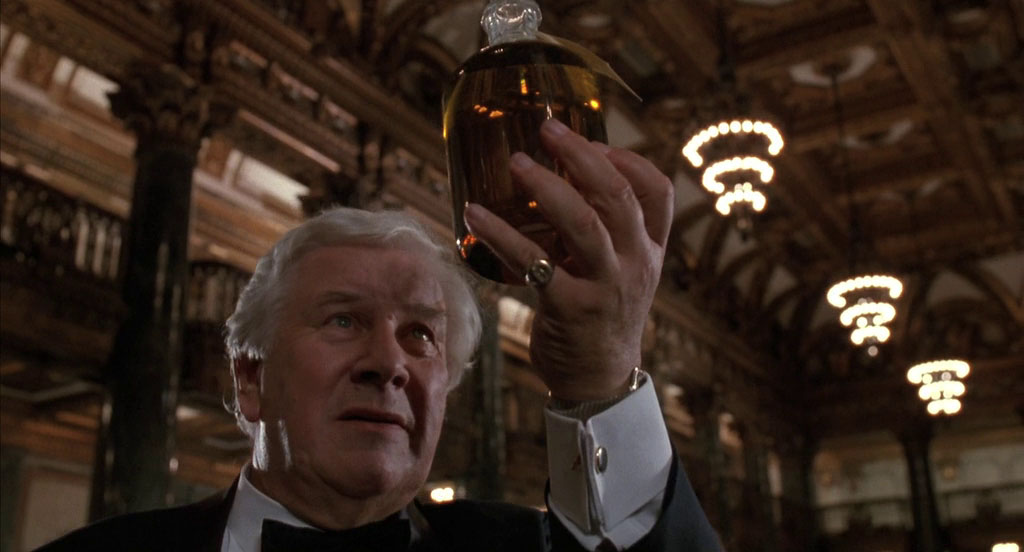
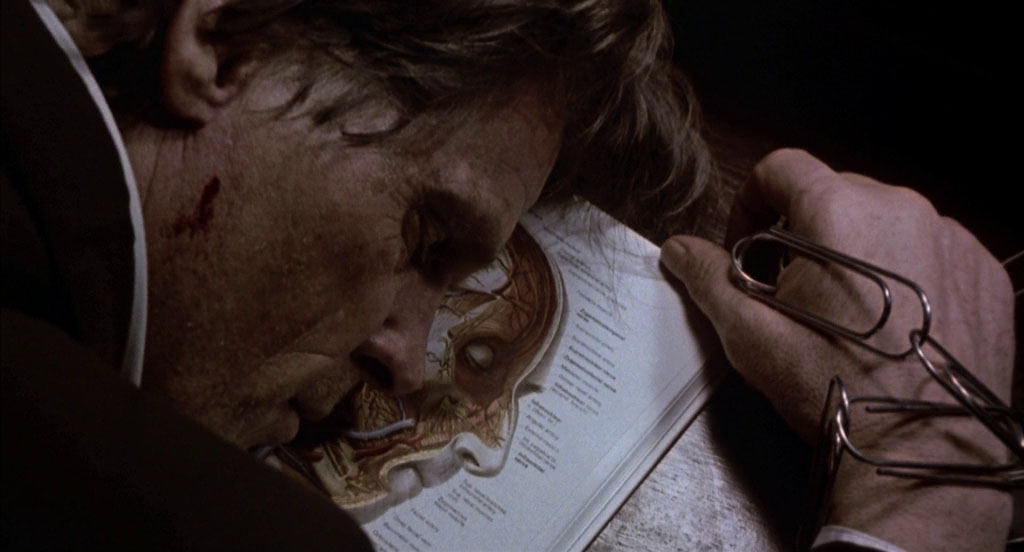
Nina Hoss is an East German rural doctor, also smuggling money and saving up to escape. Coworker Ronald Zehrfeld is friendly to her, but she’s got a secret boyfriend and is being stalked by sinister Rainer Bock.

Excellent photography and compelling story, a delight to watch. I saved this one for a day when I needed a sure thing. In The White Ribbon, Bock was a doctor, and in Phoenix Hoss and Zehrfeld were married, and Transit has the same ending (lead character is able to escape but gives their chance away to another), all my German movies coming together. Starting to think that Casablanca was a formative influence on Petzold.

Searching for Josephine Decker I found an unusual anthology – five filmmakers adapting each other’s dreams. The introduction guy recommends watching in a trance state.

Black Soil, Green Grass (Daniel Patrick Carbone, dreamed by Wolkstein)

B/W forest fire tower, a couple wearing big headphones while she sings in (Italian?). They even bathe with ear protection, to not hear destructive sheep-counting announcements coming from the tower – shades of A Quiet Place or Pontypool. Our dude keeps getting distracted by insects, but finally destroys and replaces the man in the tower. Nice tape-dubbing montage in this.

First Day Out (Josephine Decker, dreamed by Baldwin)

A big jump to color, long-take camera roving through a house of dancers, with fun choreographed camera movements and match cuts. Conversation about court trial and jail. Long takes with each dancer in their own style reminds of the heights of Climax.

Beemus, It’ll End in Tears (Lauren Wolkstein, dreamed by Bodomo)

Coach Beemus seems sensitive in one-on-one but yells “enjoy the pain!” in groups. “This is not a drill” – he prevents them from leaving when the fire alarm goes off – “your bodies will protect you.” Maybe accurate to the feeling of the dream, but it’s no fun spending time with a shouting high school gym teacher.

Everybody Dies! (Nuotama Bodomo, dreamed by Decker)

A 4:3 VHS game show hosted by Ripa the Reaper, who seems to be fighting the producers/network. Her line “especially if you are Black” cuts to “Please Stand By” color bars. After killing a bunch of children, Ripa repeatedly fails to do herself in, doomed to star in the next episode.

Swallowed (Lily Baldwin, dreamed by Carbone)

A family goes shopping then back home. When baby feeds, mom has a disassociative mirror/light reverie, with horror-film skin effects. A kebab and corndog party devolves into mute psychosis, then the next day mom has an extreme milk-fueled kitchen freakout.

I already know Decker… Baldwin has danced with David Byrne… Bodomo is from Ghana, made Afronauts and wrote for Random Acts of Flyness… Carbone produced We’re All Going to the World’s Fair (that movie’s director produced this) and Chained for Life… Wolkstein made The Strange Ones (I’ve seen the short version), is working on a Dead Ringers remake (oh no).

“Why use old code to do something new?”
“Maybe this isn’t the story we think it is.”

Extremely self-referential sequel in which Neo is a game developer whose history of reality breakdowns resurfaces when he’s asked to revisit his most famous property, The Matrix. “Our beloved parent company Warner Bros has decided to make a sequel to the trilogy – they’re gonna do it with or without us.”

Lots of reality fakeouts and good in-jokes (psychiatrist Neil Patrick Harris’s cat is named Deja Vu). There’s bullet-time action and Inception space-bending, but also a bleary slow-mo effect in the action scenes, which is sorta not as cool. I miss the 35mm grain, but this has a curious look – a hyperreal digital cleanness I’ve never seen on this scale, like if Michael Mann made an Avengers movie. An explicitly nonbinary story (Dev Neo’s cancelled game was to be called BINARY) – the future is against the “red pill” choices of one thing or another, and more into blends. It’s also more generous in spirit, not only literally resurrecting the two lead characters, but refusing to kill off good guys, while previous movies would introduce a new crew then slaughter them all.

The straight world sees Neo as an eyepatched dude (played by Carrie-Anne Moss’s husband):

Agent Smith is sorta Neo’s boss and sorta also Morpheus, I dunno, I was having too much fun to sweat all the details. The Franco-looking boss is actually Jonathan Groff (the king in Hamilton), New Morpheus is Yahya Abdul-Mateen (New Candyman), New Punk Hacker Girl is Jessica Henwick (final survivor of Underwater). Ancient Jada Pinkett is in charge of humanity, and Junkyard Lambert Wilson has become a raving Gilliam vagrant.

Red Film (2019 Sara Cwynar)

“Technology disciplines its audience.” Dense and completely wonderful, fast overlapping voiceover with new age music accompanies saturated visuals of consumer conveyor belts, makeup tests and dance poses with a lot of face touching.

From the wikis: “Cwynar’s work presents a marriage of old and new forms that are intended to challenge the way that people encounter visual and material culture in everyday life.”

Kenji Fujishima:

Compared to its deliberately messy predecessors, Red Film feels like the work of an artist who has clarified her obsessions. For all its frenetic surface activity, Red Film is a coherent commentary on the vicious cycle of capitalism, which, with the aid of modern media, perpetrates our physical insecurities, creating impossibly high standards of beauty that only feed into people’s desire to consume more in the inevitably disappointing quest to reach such standards.


Rose Gold (2017 Sara Cwynar)

Focused on the iPhone instead of makeup – tech/marketing/desire – and just as great, though it’s maybe redundant to watch these two so close together. The only thing they have in common with Barneys New York is that she always seems to have ink on her hand, and we get to see her camera mechanism (I did get to try out one of those Barneys phone gimbals and decided I don’t need one). Closing credits list all the references – not direct quotes, unless Heidegger and Wittgenstein wrote about the iPhone.

Sicinski:

Rose Gold is as much a jumble of ideas and impulses as the very society it aims to critique. This is no doubt a conscious strategy, undertaken on the assumption that linear argument is inadequate to the task of understanding our neoliberal global structure. Nevertheless, this is a film that announces its intellectual intentions but adds to the cacophony instead of parsing meaning.


At Hand (2005 Andrew Busti)

The first time I watched a Cwynar short the program opened with a Busti short, so it seems fair to keep exploring their work together. This seems like photographed scenes, slowed down, and either Decasiaed or rotoed, all texture replaced with that of liquid metal, stained glass, beer bubbles, a pebble beach. I thought for a moment that it may be the abuse of an edge-detection filter, but it looks more organic than that, a low boiling rumble on the soundtrack.


26 Pulse Wrought (Film for Rewinds) Vol I (2014 Andrew Busti)

Somebody’s been watching Hollis Frampton? Flickering shots of different objects and colors and landscapes (including the camera lens in a mirror) stuttering to a morse code rhythm. Like a video essay where the voiceover and visuals are saying different things, only we don’t know what the spoken message is saying unless we load the movie into Adobe Premiere and decode its frames using the key from the opening titles – not tonight. Annoying to listen to but once I got used to the flicker the visual choices were interesting.


26 Pulse Wrought (Films For Rewinds) Vol III (2016 Andrew Busti)

Black and white flicker film – I can’t tell if it’s in morse code or not. “These words here are meaningless,” etc, large text on screen with matching voiceover, very annoying to watch, though very short, and I was thinking if you take the word “here” from this film and the camera reflection from Vol. I you could create the other Busti short I’ve seen. According to his vimeo (which doesn’t have Vol. II) this was produced on 16mm.


Night Swells (2015 Zachary Epcar)

Photographic study of potted plants on the sidewalk outside the mall, abrupt sound editing of street noise and a record about talking to plants.


Return To Forms (2016 Zachary Epcar)

Photographic study of waterfalls, and feet, and hand models – I prefer the waterfalls. Gliding camera tour of an apartment, and surveillance scan of the building from outside. The sound editing just as abrupt, but to cleverly humorous effect. An excellent final image brings together all the previous pieces: a gloved hand fondling a plant growing through a hole blasted through an iPad. Guess I was right to play these the same night as the Cwynar films.


Life After Love (2018 Zachary Epcar)

The title only comes in at the end, as an in-car hypnotherapy session. The rest seems like a languorous car ad set in a parking lot, made by people who don’t realize cars are supposed to move.

Sicinski:

Epcar’s camera moves around this space as though it were on rollers, controlled like an automatic car window. The filmmaker sees with windshield eyes. His name is an anagram for A CA CAR ZEPHYR.


New Fancy Foils (2013 Jodie Mack)

Stills of paper samples, different orientation, with advertising text, then faster and faster. At 12 minutes there’s time for a slow build, and the rapid fancy foil flicker was worth the wait – though for ten seconds there it got so fast that my mpeg copy broke down. Silent, I played the Attacca Quartet album with the pretty bird cover art.


Let Your Light Shine (2013 Jodie Mack)

A different sort of thing – animated white line segments surrounded by rainbow prisms, in increasingly rapid succession. The crap-atari sound effects give the impression that the white figures are computer graphics, but the line texture says not. From the Cinema Scope cover story, it sounds like the original film was just the white hand-drawn figures and theatrical audiences wore prismatic glasses to create the rainbows.


Something Between Us (2015 Jodie Mack)

A real audio journey in these three Mack shorts from no sound to bad sound to great sound that carries the picture. Taking gramma’s jewelry out to the yard to play, repetitive bird and frog noises get looped and warped into music. Closer look at the jewelry, and the pond, the RGB prism artifacts from the previous film returning with a vengeance here, and taking over as the second half’s soundtrack keeps adding new layers of bells.

Sicinski:

Something Between Us plays with the cheap shine of costume jewelry … Mack intercuts these close-ups with shots of a hazy lakeside forest, its early dawn refracted by the misty fog to produce rainbow prisms and flares. In time, Mack is alternating between this “natural” light and its highly artificial facsimile, the trinkets swinging to their own chiming electronic theme song. A game show bell dings mid-film, as though we’ve found the right answer when the organic is largely vanquished in favor of Mack’s pendular, sun-dappled Claire’s Boutique of the mind.

“You Can Get It If You Really Want” is the movie’s theme song and motto. Seems like Jimmy Cliff gets to have it all here: a film spotlighting his music, starring himself as a songwriter turned rebel turned cop killer, his character dying gloriously in a shootout.

First thing he does when he gets to Kingston is get robbed, and the second thing is to watch Django. He hooks up with a preacher’s girl, semi-legitimately gets a bicycle, falls into the drug business, becomes a celebrity fugitive. The final stand is intercut with a movie theater audience, life and death becoming a show.

The director’s daughter for Criterion:

He was already well established as a musical artist in Jamaica. All those tracks on the album, except “The Harder They Come,” had already been recorded by Jimmy before he was cast. But the recording of that song depicted in the film was the actual recording, and he wrote it after a conversation with Perry during the filming of the movie.

A corny white insurance agent, family man, workout nut, kinda racist, happily obnoxious to women and everyone else, wakes up Black one day. He freaks out, and his wife calls him a white supremacist while he focuses the blame on his sun lamp and tries to figure out how to whiten his skin again. I watched this on MLK Day, which I suppose might make me a bad person, but it’s good – a goofy but not stupid comedy (usually you get neither or both).

Lead actor Godfrey Cambridge had an excellent year, also starring in Cotton Comes to Harlem. When he goes out in public he’s hassled by cops (“He stole something – we don’t know what it is yet”). Finally his wife and boss and neighbors reject him, but he comes to terms with himself, starting his own business and plotting to lead the next Black revolution.

Ma Yongzhen is a tough dude working shitty jobs with his useless friend Cheng Kang-Yeh. Ma is introduced beating up a landlord, so he’s got our sympathy, though he seems to beat up pretty much everyone he comes across… this is fine, since it’s established that everyone in town’s a crook. Ma has annoyingly high standards, is poor and homeless and will accept nothing from anyone – though as principled as he seems, his dream is to ride in his own carriage with a fancy cigarette holder. He wanders into a brutal gang fight and takes on 20 guys armed with knives and hatchets, which gains him the attention of the local bosses, beginning his brief, violent career in organized crime. He’s finally ambushed in a teahouse by Boss Yang (Nan Chiang) and takes a hatchet to the torso, but doesn’t go down before killing everyone in the room. Good action scenes – I could watch about 300 more of these movies, and fortunately that’s how many they made.

Ma and his idol David Chiang (Legend of the Seven Golden Vampires):

Scar-faced Boss Fan (Yi Feng of Fist of Fury the same year) and his yes-man:

I skipped a couple Garrels since Le Revelateur, decided to watch some 1972 films on their 50-ish anniversaries. Garrel + Nico = an unexpected rock musical. Liturgical voice and organ songs, incredible long takes in different forbidding environments.

Nico cries in the desert with Vest Guy (Daniel Pommereulle of La Collectionneuse), both of them wearing flowy sleeves – this section features a 720-degree slow pan over a Nico song – then she follows and berates him down a white road.

Another Nico song, a good one, kid leads a horse away from a flame circle, Vest Guy gives Nico a small goat, and so on… then Pierre Clémenti arrives nude. He journeys far and long, barefoot across a volcano, to bring gifts to a baby (played by his son) on an iceberg. Nico, practically the only person who speaks (in English and German), calls the nude archer “king.” There’s some kinda final confrontation near a rocky cave involving a sword. It’s all a very different kind of mythology than The Spine of Night, but felt right to be watching these two in the same week.

Watched on the exercise bike after Duel. Ultraviolent mythological epic, recalling Metalocalypse but with more rotoscoping. Swamp Witch and Ancient Guardian and Local Lord and Chief Librarian all struggle to obtain or protect or misuse a magic blue leaf that gives healing or destructive powers. I’m all in favor of this sort of thing.