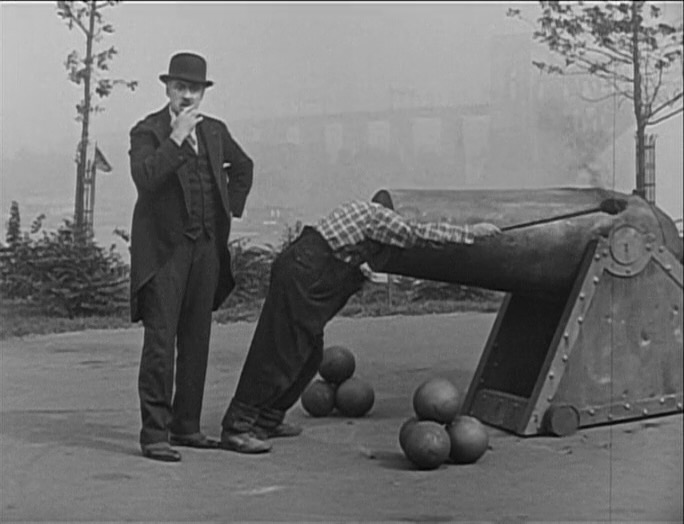
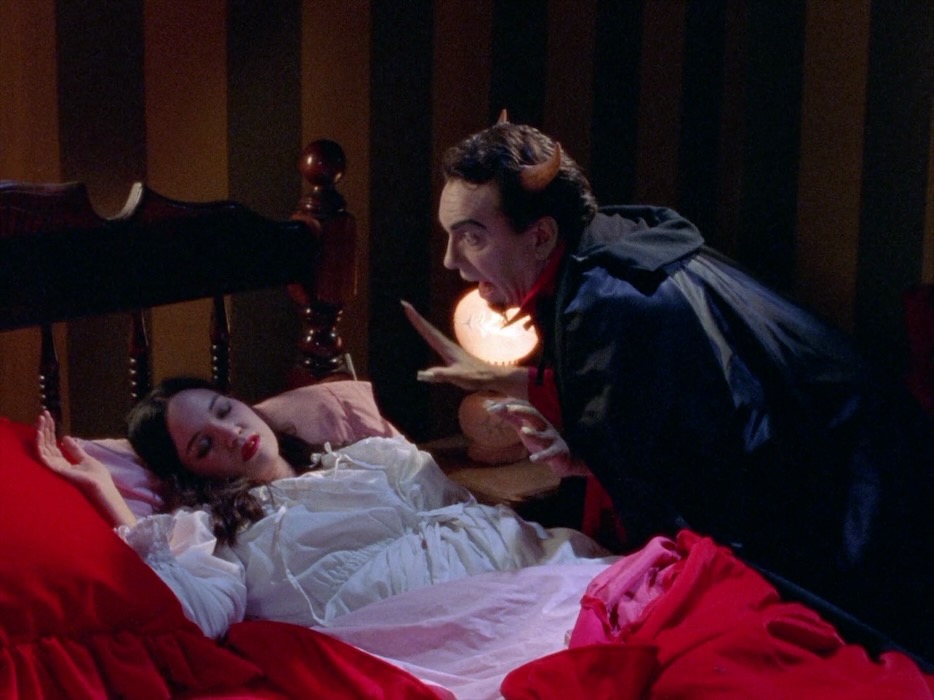
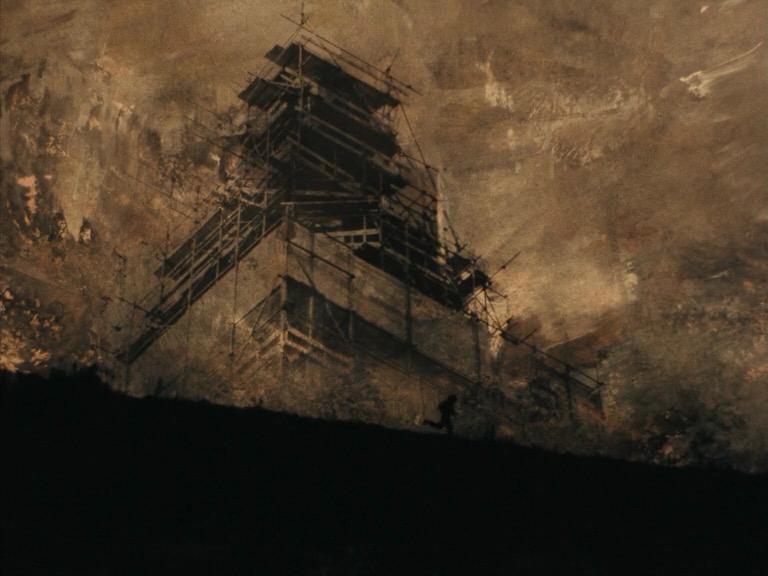
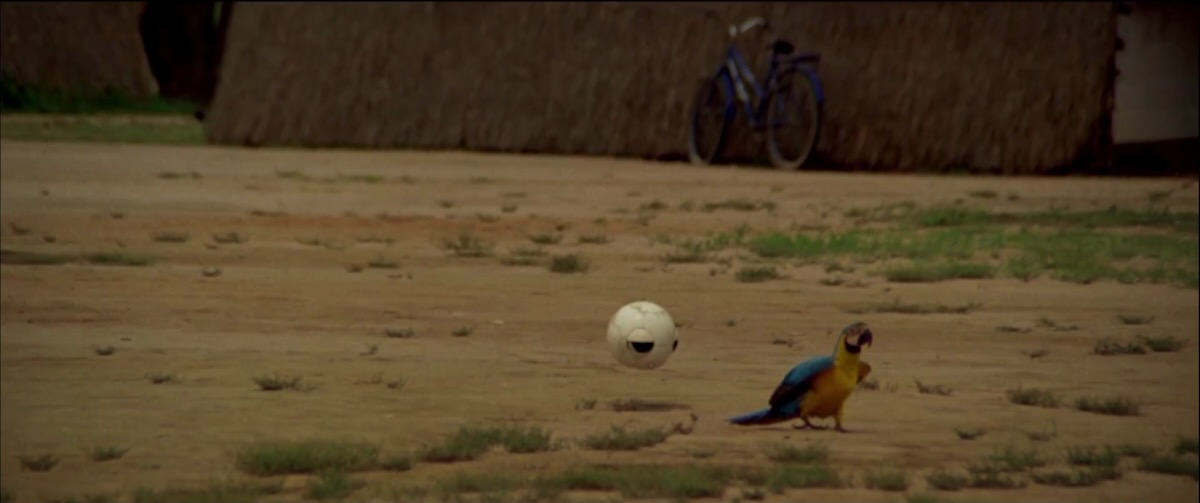
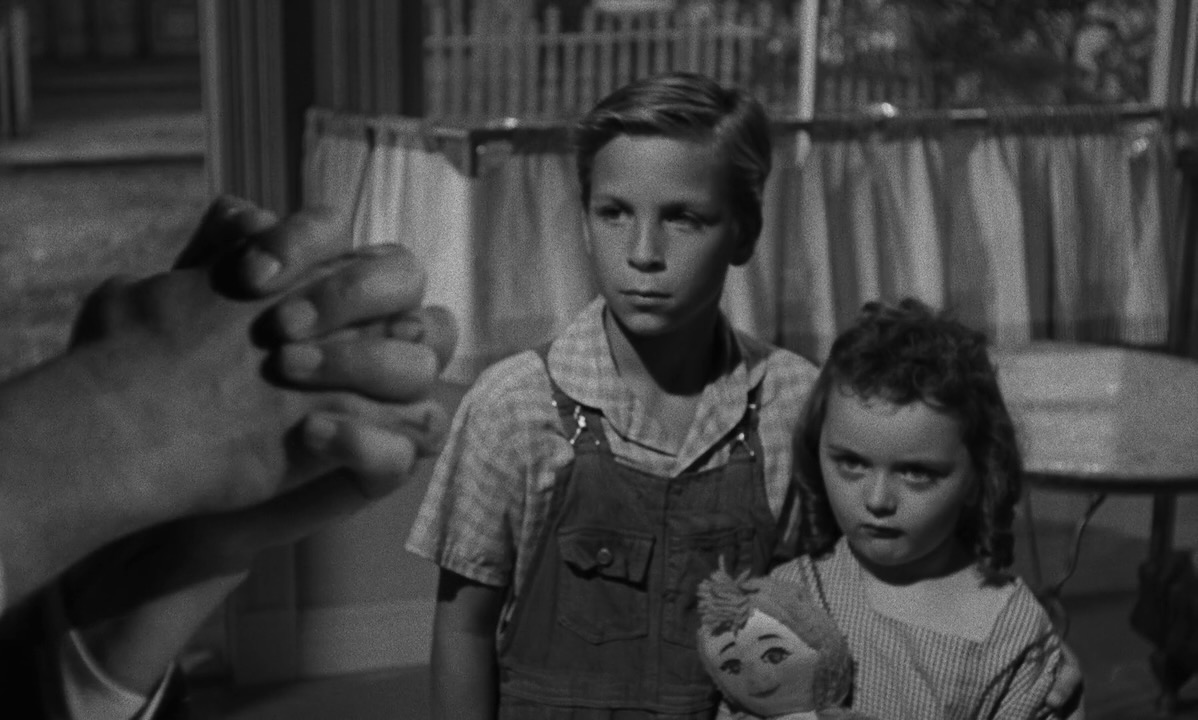
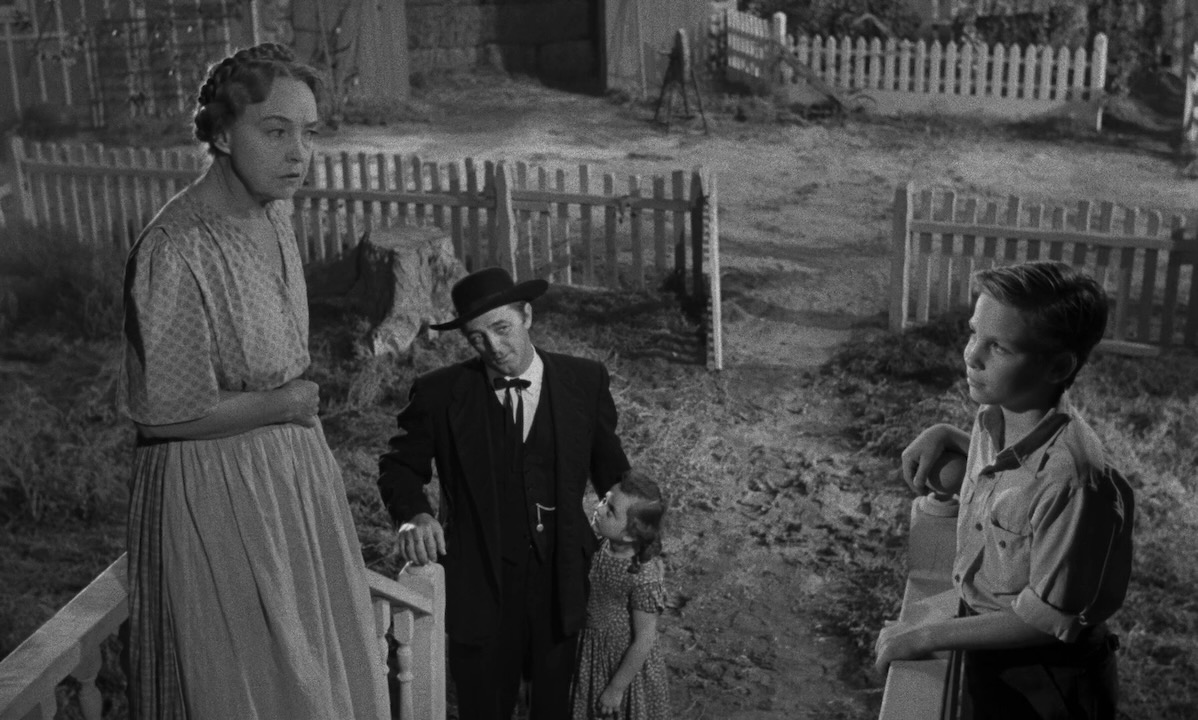
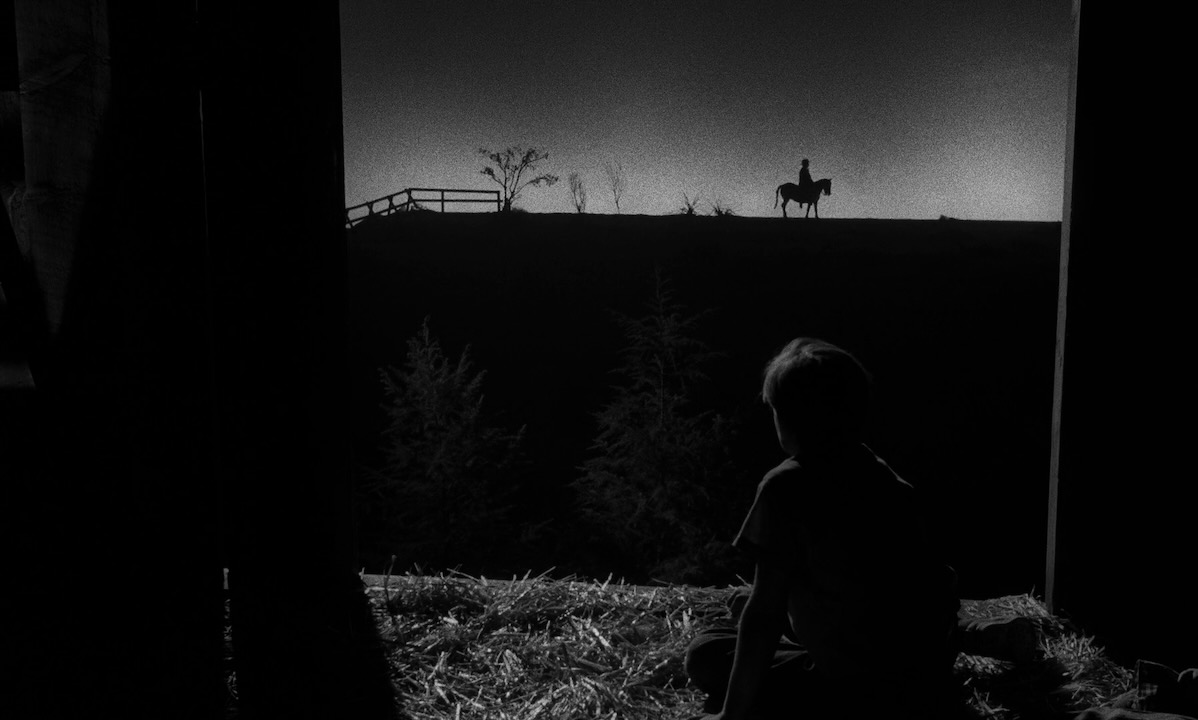
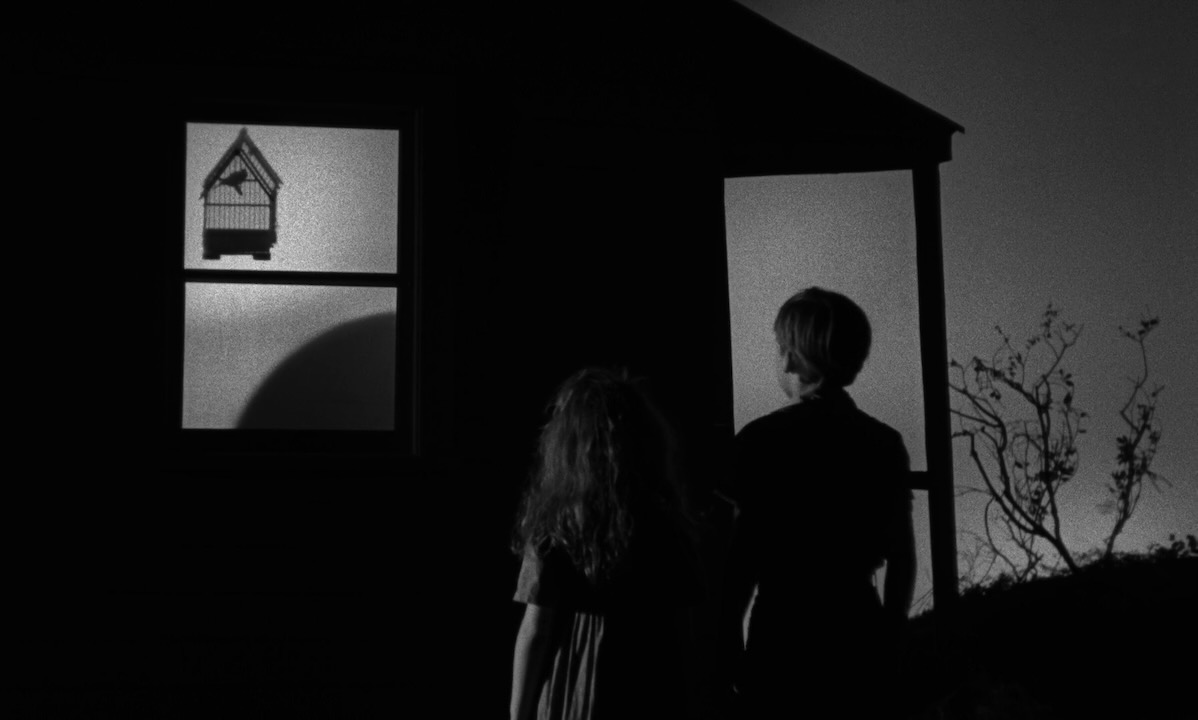
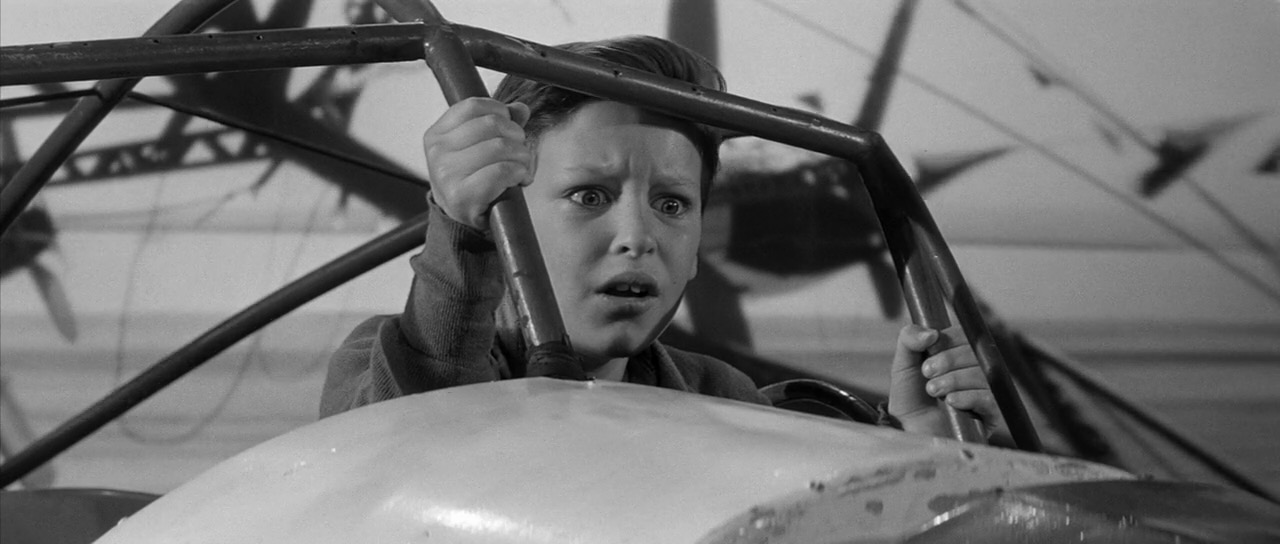
Fuller’s first great war movie. Fellow WWII vet Gene Evans plays a cigar-chompin’ slang-throwin’ tough guy, picking up a South Korean kid and a stray medic before linking up with a troop with an undercooked commanding officer. The men die off one at a time to traps and snipers and spies, then they die all at once during an all-out shooting battle at the temple where they’re camping.

Medic James Edwards is resourceful:

Our tough guy, through the clearing smoke:

Survivors:

Opens with convincingly real and unrehearsed news interviews, which they empasize are real and unrehearsed, but is the interview guy not aware that he’ll be in a movie? Why’s he gotta be so dry? From this drab beginning, the movie gets increasingly brutal, as the local casino runs a terror campaign against the voters, press, and church.

Edwards stops John from killing a casino boss, too bad:

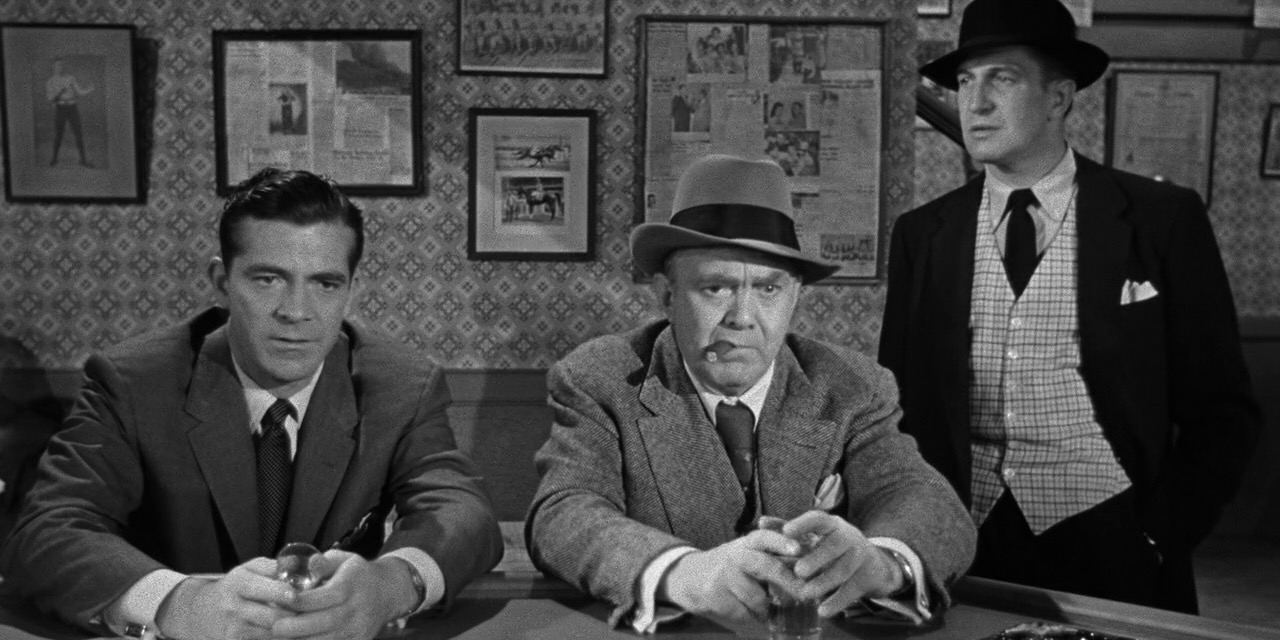
John (Pickup on South Street) comes home to Phenix with his girl, has been there a half hour before running into gang violence and police corruption. He and some others who are sick of the casino’s shit team up, and mostly get killed. RIP John’s lawyer dad, their casino worker mole friend Kathryn Grant (Anatomy of a Murder’s star witness), some do-gooder named Fred, and the innocent daughter of The Steel Helmet‘s James Edwards. The girl is Black so doesn’t even warrant a trial, but Fred’s killer is acquitted, leading to further escalations, until John calls in the national guard to shut the whole thing down. Arguably the Fort Benning army shitheads across the bridge funded all the murders and paid no consequences.

Witness:

What witnesses get:

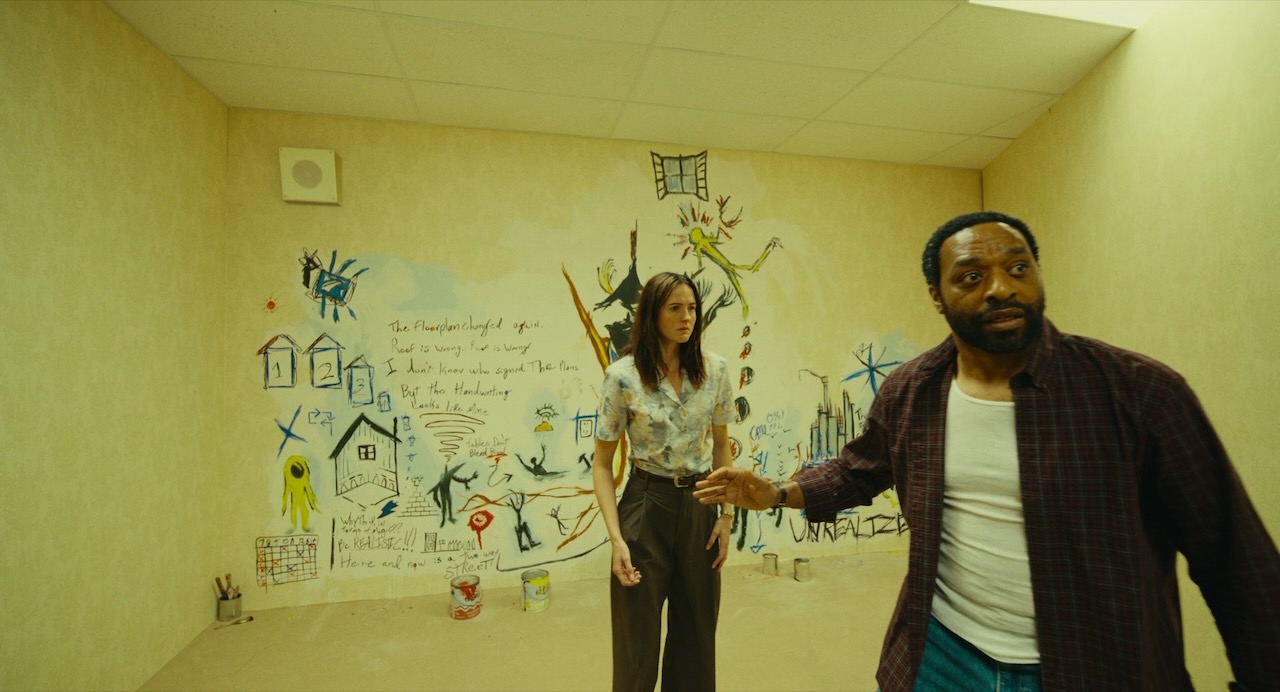
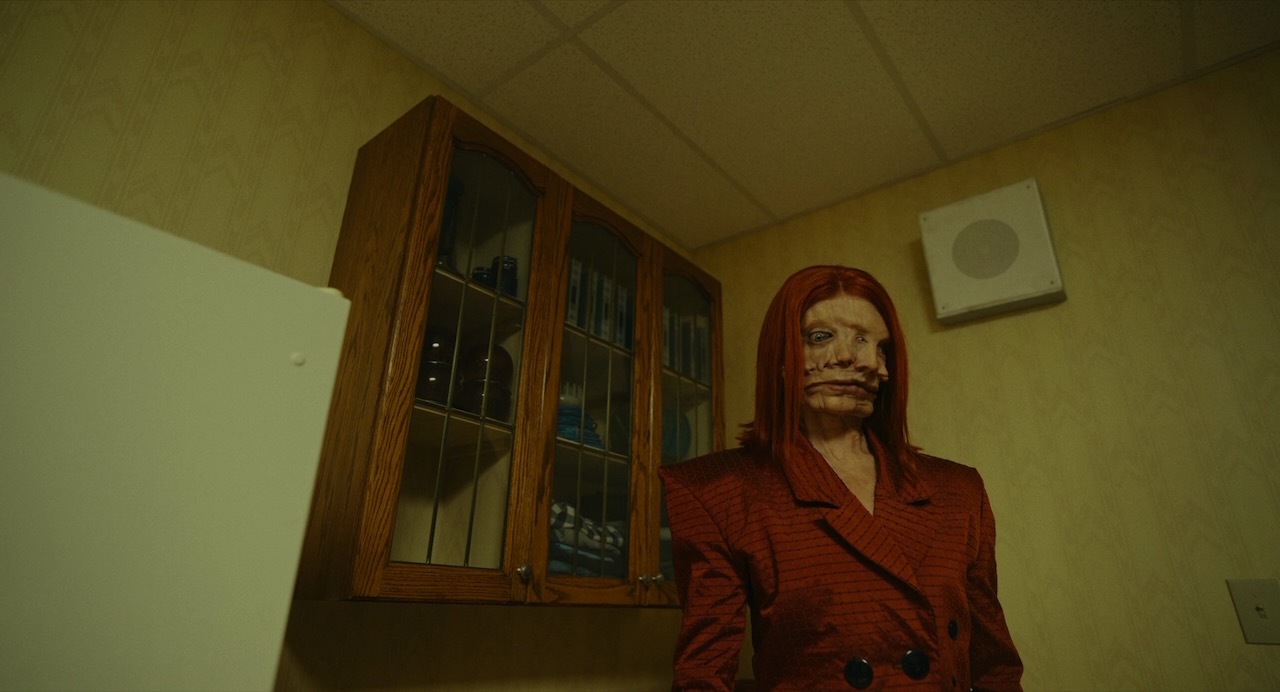
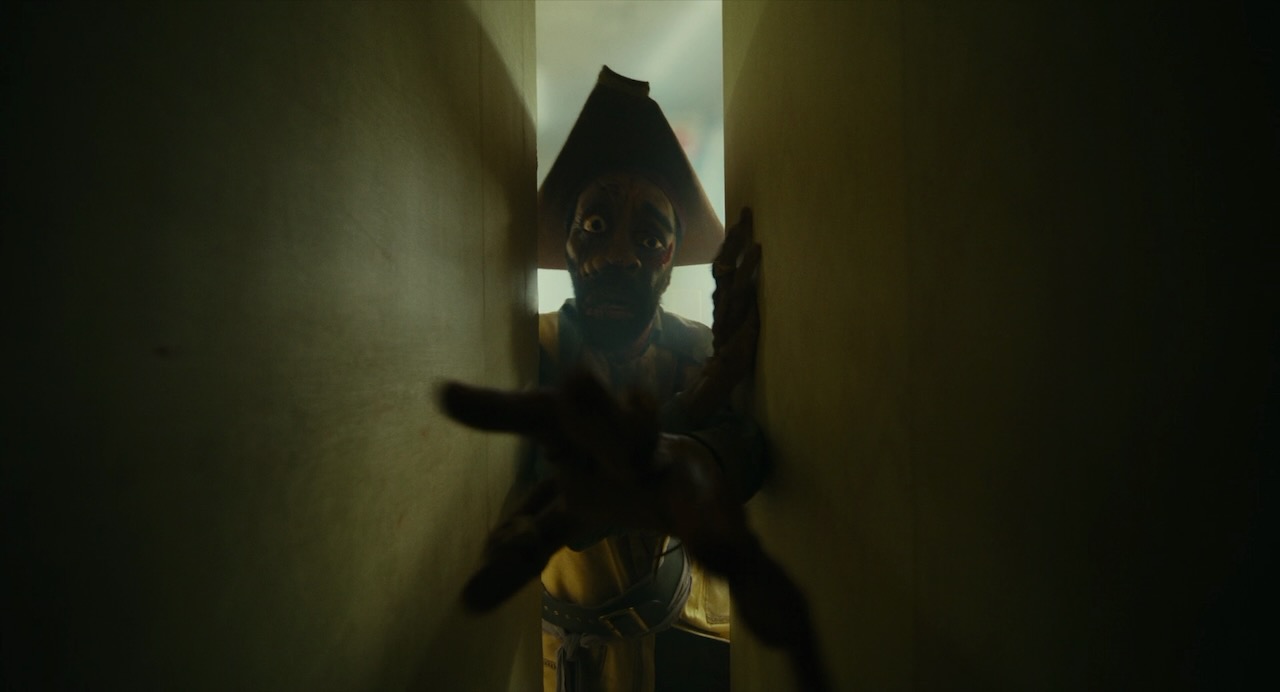
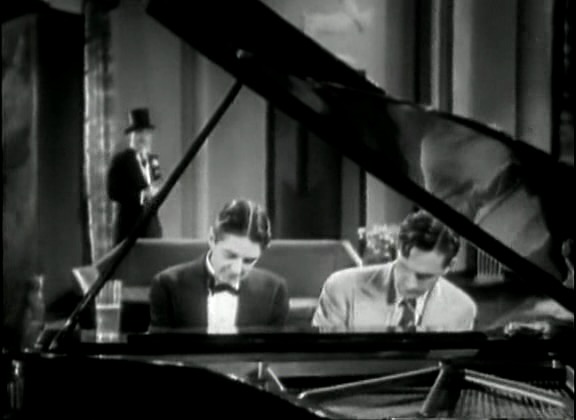
Everyone wanted Vangelis the year after Chariots of Fire, and the two movies who landed him were Blade Runner and this downbeat drama. It’s a dialogue-heavy movie, light on the music, but whenever those classy synths kick in, you float for a little while.

Missing Charles aka TV’s Lex Luthor, talks with his pet duck:

Gavras was by now typecast as the guy who makes depressing movies about leftists getting destroyed by oppressive military governments, so the coup in Chile was right up his alley. Shot and cut like a standard prestige drama, without the nervy energy of Z. The physical action can be clunky too, but casting late-career Jack Lemmon and post-oscar Sissy Spacek as the leads really helps for authenticity. The most impressive thing here is the shifts in perspective, following one character then another, jumping through time, and rewriting history (showing different versions of a past event depending who’s telling it).

Was there a rash of “parents’ worst nightmare” movies around then, or have I just seen the poster for Hardcore too many times? Lemmon’s son has disappeared during the coup, but surely he’s fine because he is a documented American, and therefore immune to foreign political violence. Straightlaced Jack reluctantly teams up with the son’s wife Spacek and their dirty leftist friends, scouring hotels and hospitals while the embassy is being prickly. Faith begins to falter in the “helpful” men in suits, the American exceptionalism, and the safety of the son, as the bodies mount up – it doesn’t help that their government contacts are played by the stalker/murderer of Klute and the guy who fails his blood test in The Thing.

I was already a sucker for this movie, another “song can save your life” narrative from Carney with winning actors and actually good songs and a cute Glen Hansard tribute, then Glen died suddenly, and now I’m ready to declare this the most important film of the year. The Odyssey wasn’t any better!
Wedding band frontman Paul Rudd has a good relationship with his wife(!) and daughter(!) until he gets depressed and obsessed after his one-night bromance with a Jonas brother ends with Nick stealing Paul’s song and making it a massive hit. On the long road to predictable redemption we get to spend time with Rudd, his buddy Peter McDonald (the film’s cowriter giving himself a plum role), and Jack Reynor as the music producer villain.
Series of Bad Decisions in the lead-up to Zendaya-Pattinson wedding. Maid of honor Alana Haim does not forgive Z for claiming to have plotted mass murder in her bullied teen years. Alana’s man Mamoudou Athie (Kinds of Kindness) fails to make peace, and Rob starts to spiral, as the accusations (and vomit) fly and people say more things they can’t take back, either stupidly or drunkenly. Pretty decent writing and performances, for every scene where an actor is impressive there’s another where they’re flailing. Borgli’s follow-up to that one where everyone dreams of Nic Cage.

Memorial screening for the great Sam Neill. He and Nicole Kidman are a bereaved couple on a sailing voyage when they meet Billy Zane, typecast as a sexy guy who wants to kill you aboard a sinking ship. His stories about his former vessel don’t add up, and when Sam goes to investigate, Billy takes control and speeds away, leaving Sam to sink and die. But this is one of those movies where the best mechanic / sailor / problem solver wins the day, and Neill is up to the task. Kidman’s no slouch either – nothing’s hotter than a woman whose reaction to running out of fuel is to hoist the sails. We get no insight into Zane and what his whole deal was, just a psychopath, finally taken out by a head-exploding flare gun. The same story Orson Welles would partially adapt as The Deep, screenwritten here by Terry “Mad Max” Hayes. Noyce made a movie the same year where Rutger Hauer plays a blind swordsman, and I’ve never watched it for some reason?

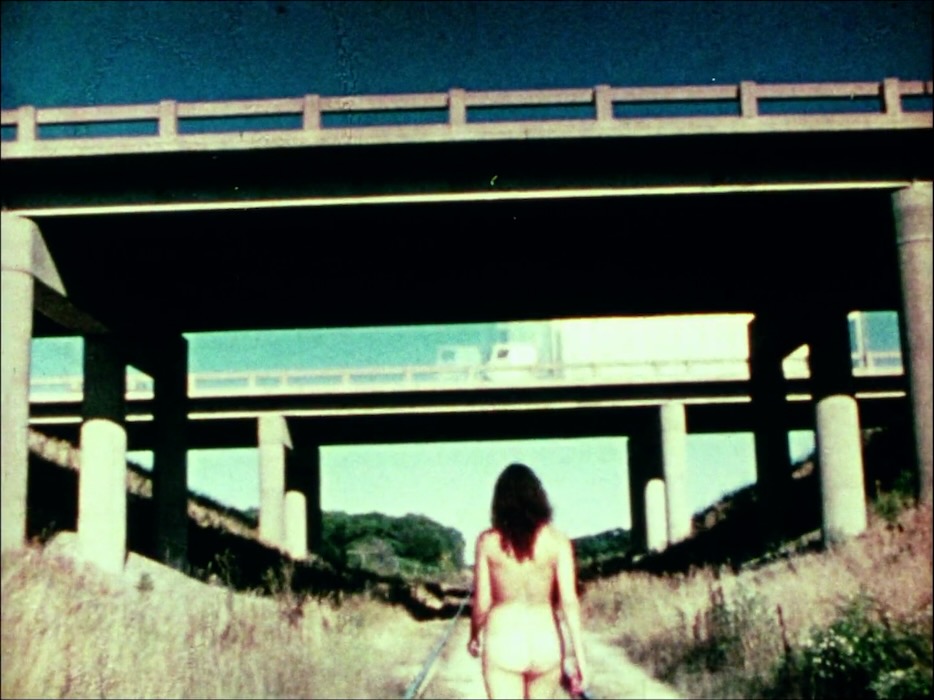
One digital motion image after another, feels like installation art. Lot of scrolling or rotating wood textures. Other recurring things: a woman’s face, a man’s hairy body, a laser light show.

Leviathan over Arizona:

Preening seagull in flames before a MST3K planet floating over a mirrored river and floating heads staring back at us: it all feels vaguely satanic

Soundtrack by George Lockwood, that’s half the movie. I was already appreciating the sound effects, then after twenty minutes someone says the movie title out of the blue, sparking a series of dialogue clips from some noirish film(s). The credits list a ton of audio sources (the Prelinger archives of course, and some MST movies to match the spinning planet).

Sicinski

Jordan Cronk in Cinema Scope:

The Chocolate Mountains stretch in a southeast direction across the Colorado Desert … this 60-mile region, almost totally closed off to the public, is home to the Chocolate Mountain Aerial Gunnery Range … utilized by the US Navy and Marines to test aerial bombing and weapons technology. So it goes that Where the Chocolate Mountains, O’Neill’s first feature in over a decade, is not a film about its eponymous locale, per se, but a film about the idea of the Chocolate Mountains; most viewers are likely unaware that these particular mountains even exist. It therefore matters little that at no point in O’Neill’s film do the Chocolate Mountains actually appear.


Horizontal Boundaries (1997)

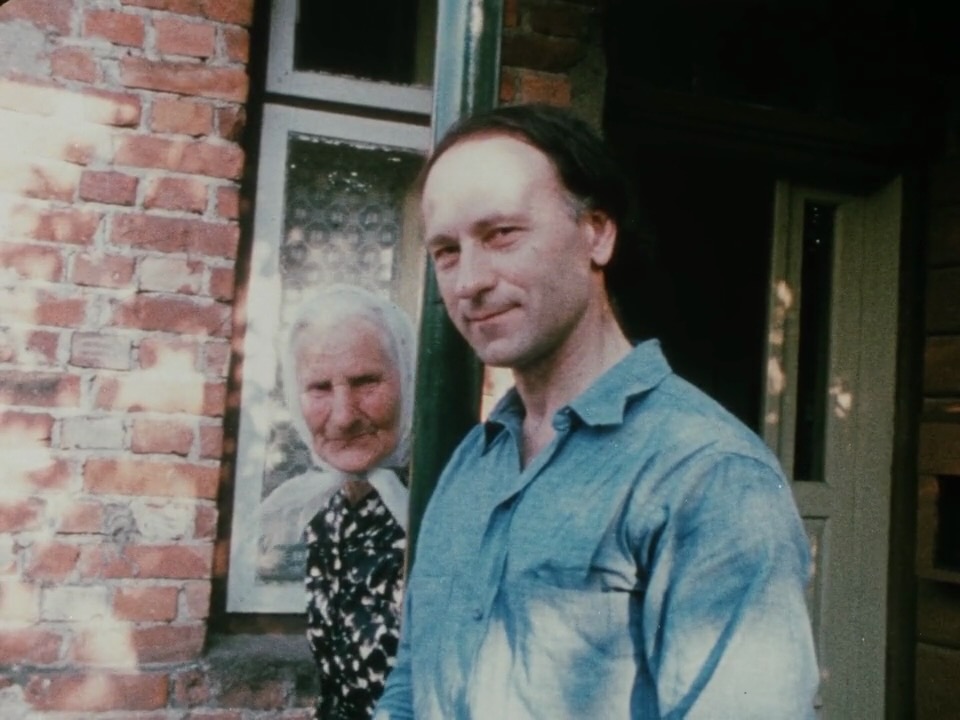
Each segment takes three or four strips of natural scenes or human activity and overlays them as they cut and move and slide over each other in a v-hold loop. After a few of these he breaks the pattern, an animation cross fading into an opening curtain, using a cloudy sky as image matte, stutter-loops from stock films on the soundtrack. Then a blaring siren loop and fast white pulses between a carousel of helicopter shots. Footage will loop around horizontally or vertically, the sense of time all manipulated and broken. Voices heard on the soundtrack were mostly from Dragnet.

Peggy is recovering from a breakdown when she and her maid Griselda kill Peggy’s husband and go on the run. They get molested by a policeman in exchange for help escaping, and make it to a shanty town run by evil queen Edith Massey. These are all Waters regulars except for their new blonde lesbian roommake Muffy (“Nightclub Stripper” in Lady Street Fighter the same year), whose gf Mole gets a sex change at the end, but gets angry-inch’d. Movie is half wonderful, and half annoying (everyone is yelling all the time).

A cheesy propaganda movie, but a moving one in the end. Charles Laughton (between Rembrandt and The Big Clock) is a schoolteacher, living with his mum and keeping his head down during nazi occupation in a town that looks very much like a set. His neighbor (Laughton’s Jamaica Inn costar Maureen O’Hara) has a brother (Kent Smith of Cat People) who is outwardly friendly to the Germans while sabotaging their trains, and now the race is on to find the saboteur before they kill a bunch of random townspeople in retribution.

Movie gets good in the second half when it starts getting into the morality of people helping the Germans to various degrees. “The occupation – any occupation in any land – is only possible because we are corrupt.” Super-conservative anti-union nazi lover George Sanders sees the error of his ways and shoots himself instead of marrying Maureen, Laughton is blamed for the shooting, and stands up for himself and his people in court on his way to execution.

The Mayor explains that we must ban Plato’s Republic because it’s too gay: