Set in Vienna, 1900, same as La Ronde. My third Ophuls movie, and the third with horse-drawn carriages.

Seems a straightforward old-hollywood love story at first, then seems a lot more grown-up and complex than its contemporaries after it’s over (and especially after checking out the DVD extras which conveniently explain everything so I don’t have to put in much thought myself).

Joan Fontaine lives in the same building as a famous concert pianist and falls madly in love with him. She lives her whole life thinking of him, but only meets him twice… once for a dream date at the end of which she gets pregnant, and again years later in a sad imitation of that date, where she desperately hopes he’ll recognize her, but he just recycles the same lines he used years earlier. She flees again, and as she and their son are dying of cholera, she writes him a letter telling her life story. He stays up all night reading it, forgetting to flee the duel he’d agreed to the night before with her husband. Nice.

Lots of graceful camera movements, one sick super excellent part I didn’t notice until watching the documentary (bottom screenshot) where she stands atop a staircase and watches him enter his apartment with a girl, repeated again later in the movie with the same camera position but with her as the girl. The kind of movie I like somewhat while watching, and like a lot more when it’s over… worth seeing again.

The novel by Stefan Zweig was filmed at least four other times. Ophuls made this between The Exile and Caught during his Hollywood period. The same year Welles made Macbeth, Hawks made Red River, Hitchcock made Rope, and the Italian Neorealist movement was taking off.

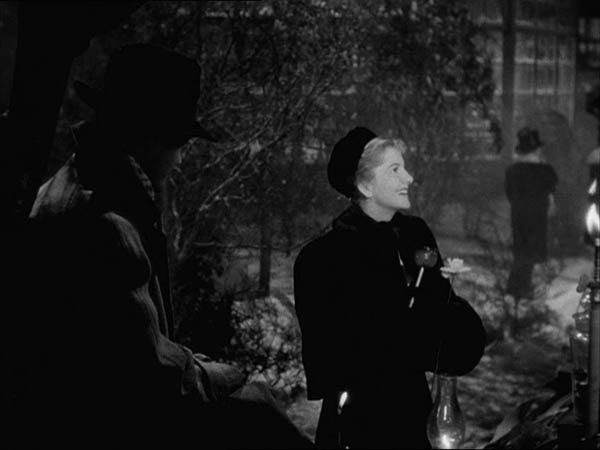
Joan Fontaine, star of Rebecca, Suspicion and Beyond a Reasonable Doubt:
image

Candy apple scene:
image

Louis Jordan, also of The Paradine Case, The VIPs, Octopussy and Swamp Thing:
image

Suspicion:
image

Postcolonial Wednesday, part two. Katy loved it because of the important story it tells, but I didn’t like it because it tells the story in the most predictably hollywood manner possible.

When the Hutus (largest group in Rwanda) decide to kill all the Tutsis (rich group that the colonialists put in charge), hotel manager Don Cheadle saves the day! Calls in all his favors from the Belgians and the UN and other Rwandans to protect his family and hotel guests. Goes pretty well for him (with some thrilling close-calls of course)… manages to save 1,000 people from horrible genocide.

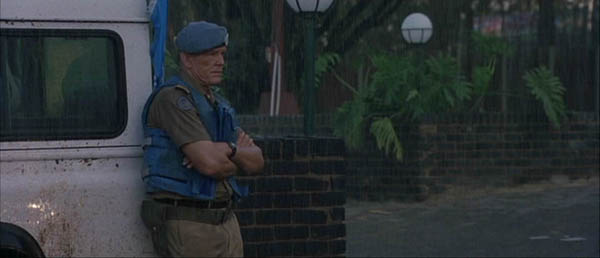
Nick Nolte plays the disempowered UN captain who wants to help but can barely protect his own men since he’s not allowed to shoot. Joe Quinn Phoenix is a journalist who’s sent home with all the other non-UN foreigners halfway through the movie.

A really really good story told in straightforward, cliche hollywood movie format. Maybe I’m being too hard on the thing… it’s clearly a must-see movie because of the subject matter, and it’s well acted and well told… but it’s the kind of movie that doesn’t have to be great because it’s a true story about a great man who saved people from death, and how dare you criticize it? I’m just not the target audience for this… with my twin Joe Dante and Jacques Rivette obsessions, this one wasn’t very exciting. It’s probably better than Last King of Scotland, and definitely better than Amazing Grace and Sometimes In April (other rwandan genocide movie katy watched), which are the other new historical hollywood movies watched recently, so I’m feeling pretty good about this one overall. Maybe a 7/10.

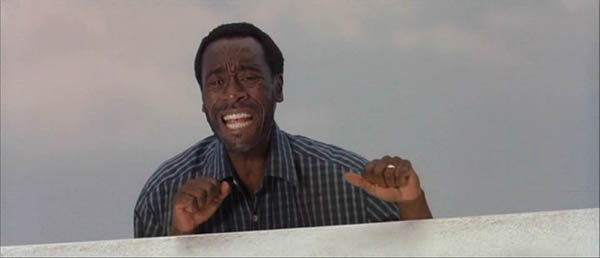
Oscar® nominated Don Cheadle:
image

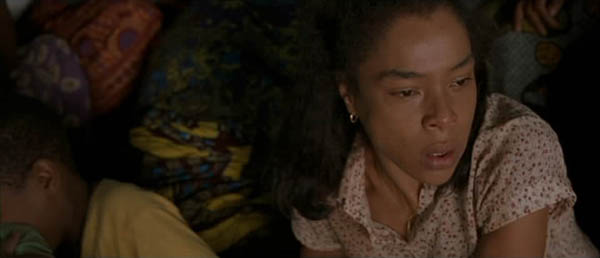
Oscar® nominated Sophie Okonedo:
image

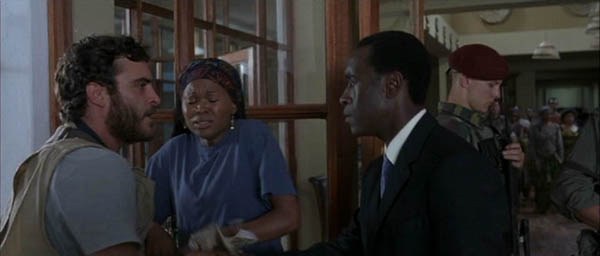
Oscar® nominated Joe Quinn Phoenix (left):
image

Oscar® nominated Nick Nolte:
image

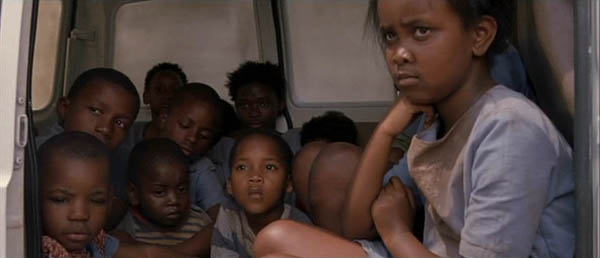
Sad Rwandan orphans:
image

Postcolonial Wednesday, part one. I loved everything about the movie, but Katy didn’t like it because of its colonialist politics.

Based on a Rumer Godden novel, and she was on set during filming. Harriet is a young aspiring poet, who thinks she knows all about India… neighbor Valerie is the daughter of a rich American… and neighbor Melanie is half-Indian with an American father (Mr. John) trying to maintain both her American and Indian heritage. One day Captain John shows up and they all fall for him, though Melania tries to hide it. Oh and Harriet’s little brother Bogey has an unhealthy (and eventually fatal) interest in animals, especially poisonous snakes.

A gorgeous movie, looked great on the big screen. Life/death/love/loss themes throughout, all loosely tied (by Harriet more than by the Indians) to the river. The dream sequence told by Melanie (featuring two Indian gods and some dancing) is so great it even impressed Katy. Renoir movies make me feel more alive.

Harriet’s father, Esmond Knight, was in some Powell/Pressburger movies. Most of the other actors were in plenty of other films, except the nanny “Nan” who was in one more IMDB-credited movie… and Harriet, who never was in another movie, and died from cancer in 1967. Her real dad, a comic movie star in the early 30’s, died three weeks later.

CONTEXT: Jean Renoir made The River semi-independently in India after his Hollywood period (Woman on the Beach, Diary of a Chambermaid, etc) and right before his return to France with the celebrated Coach / Cancan / Elena trio. Came out around the same time as Statues Also DieSamuel Fuller was getting started… Bunuel’s Olvidados, Bresson’s Diary of a Country Priest… some good sci-fi was out in the States… Fritz Lang was making House by the River and Clash by Night and Ophuls had “Madame de…” and “Le Plaisir“.