Wallace & Gromit’s Cracking Contraptions (2002)
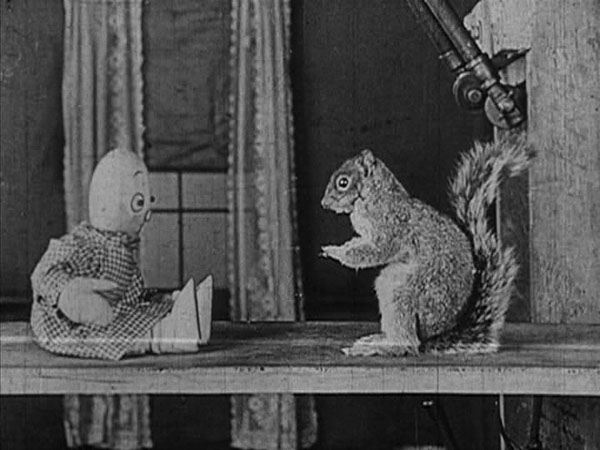
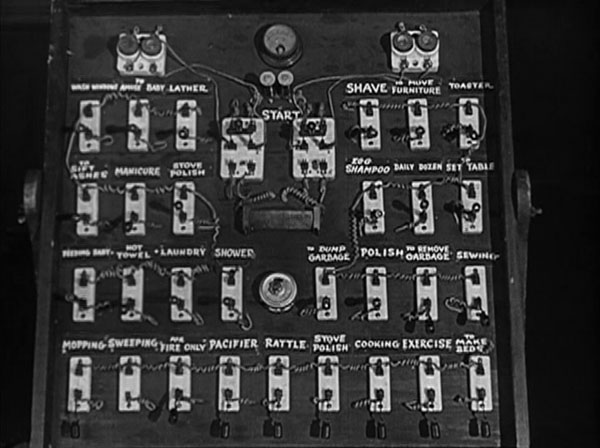
Ten W&G shorts. I think these were made to promote the full-length film… of course I had the chance to watch them back then and somehow put it off for seven years. Anyway these are cute – faves were The Snoozatron (a machine that dresses G. up as a sheep and flips him on a trampoline so W. can “count” him and fall asleep) and The Turbo Diner (a table-setting device exactly a la Charley Bowers in He Done His Best).


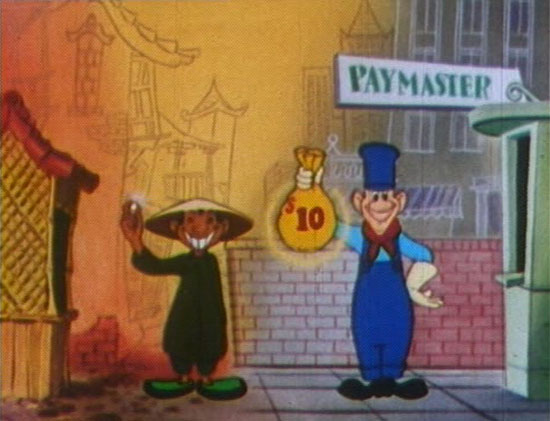
All This And Rabbit Stew (1941, Tex Avery)
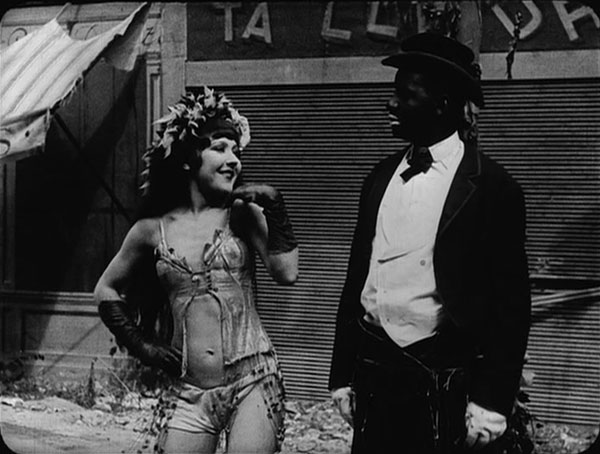
Tex’s final Bugs short before moving to MGM. Hooray, now that I’ve watched those John Ford movies I can recognize that the offensive black stereotype hunter is based on Stepin Fetchit. I tried telling myself that if he didn’t look African the character would basically be Elmer Fudd – but then Bugs gets out of being held at gunpoint by shaking some dice and that idea goes out the window. Ouch.
image


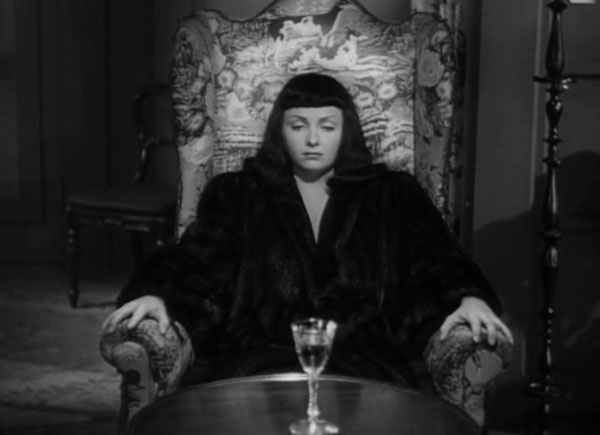
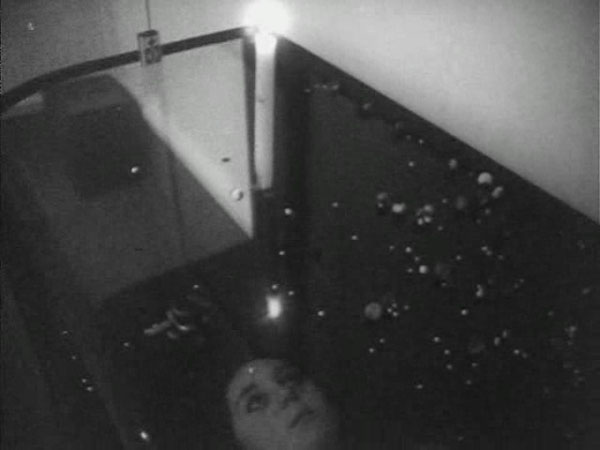
Vivian (Bruce Conner, 1964)
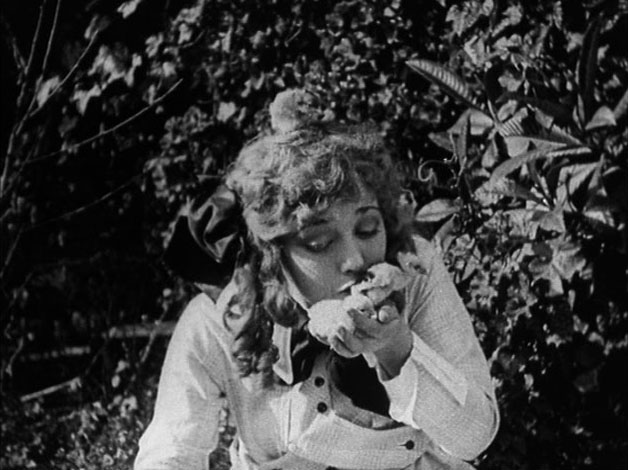
If you liked a girl in the 1960’s, you made an avant-garde film of her. Harvard Film Archive: “An ecstatic portrait of actress Vivian Kurtz that features footage of a 1964 Conner exhibition and couches a humorous critique of the art market.” Set to a pop song called Mona Lisa, loads of fun and only three minutes long. This would go on my “best of a-g” gift reel if it wasn’t such a problem to make such a thing.
image


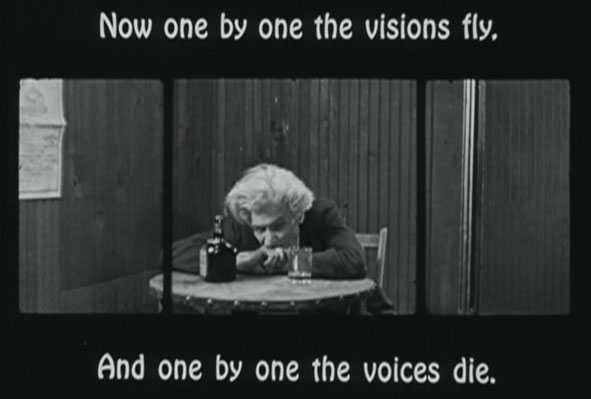
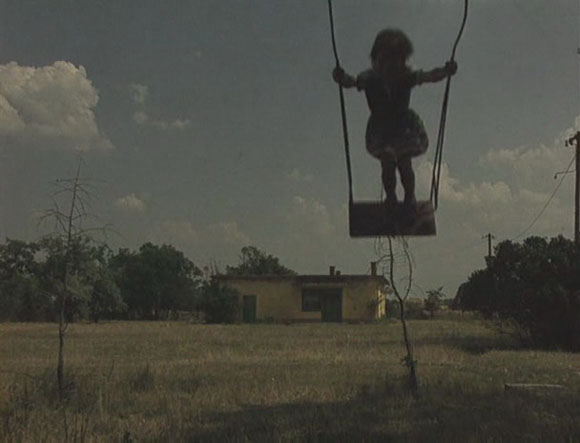
Journey on the Plain (1995, Bela Tarr)
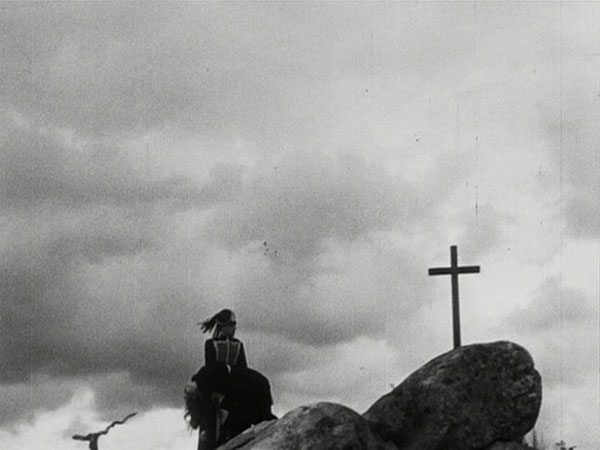
Poems about friendship loss, life and death, each with a long tracking shot (imagine that), written by famed Hungarian poet Sándor Petöfi and performed by one of my favorite film music composers, Mihály Vig (Irimiás from Sátántangó, in color!). Suddenly in one scene 20 minutes in, he’s on a truck loudly playing a doomed keyboard. An odd movie, peaceful and beautiful. I would gladly watch again, paying more attention to the words of the poems.

image

image


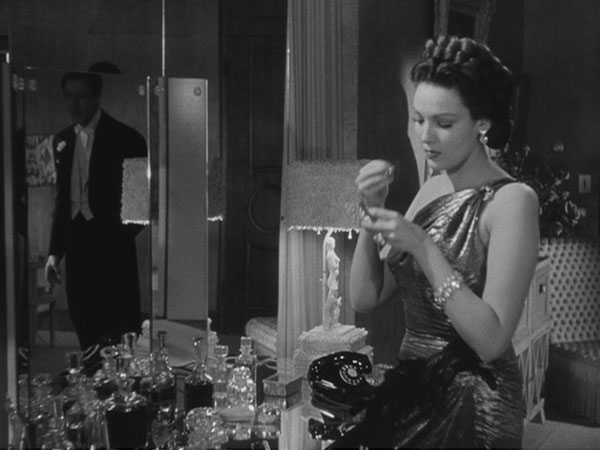
Thriller (1979, Sally Potter)

A narrator goes over the story and characters of an opera, then analyzes it while staring into a mirror, memory and identity swirling about. Very art-film, told in black-and-white stills and scenes, narrator all heavily french-accented. Kind of entrancing, really, with repeated poses and images and phrases, never quite turning into something I can make sense of (though I hear it’s some kind of marxist-feminist critique of Freud and contemplation of human existence, thanks to a useful, knowledgeable and well-considered review on the IMDB – a rare thing indeed).

Sony Pictures: “a critical re-working of Puccini’s opera La Boheme, was a cult hit on the international festival circuit.” Sudden bursts of the shower theme from Psycho. “Yes, it was murder. We never got to know each other. Perhaps we could have loved each other.” I need to see it again, obviously, but I’m not dying to do so anytime soon.

from K. McKim’s great Senses of Cinema article

Potter’s 16 mm black and white cult hit Thriller (1979) overtly equates revision with survival; the film invokes formal conventions to interrogate the narrative necessity of Mimi’s death. Inscribing this inquiry within allusion to female murder victims (Thriller cites Bernard Hermann’s screeching Psycho score), Mimi questions the conventions that locate meaning in the death of a young beautiful woman. Scripted, edited, produced and directed by Potter, Thriller transforms the opera into, as the title suggests, a thriller that uncovers operatic form’s generic and gendered hypocrisy.

image

image


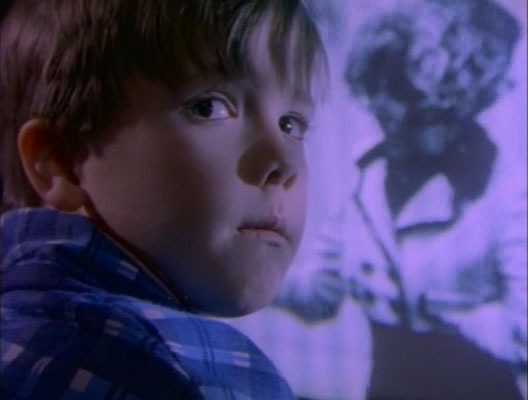
Dottie Gets Spanked (1993, Todd Haynes)
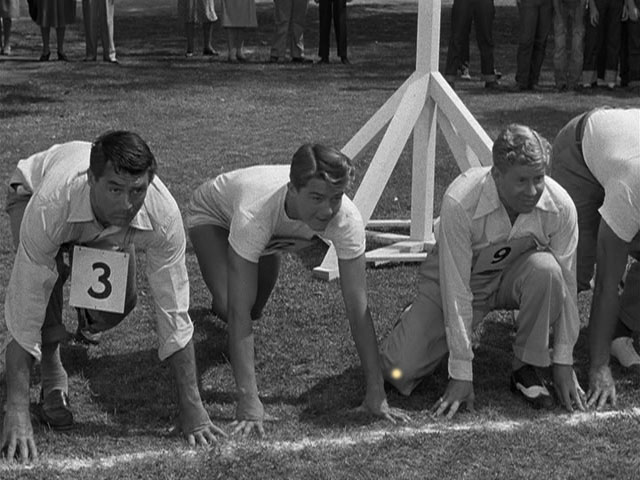
Wow, this was great. Boy with a mommy complex idolizes an I Love Lucy-esque TV show, wins a contest and gets to visit the set. Movie swirls with repression and fantasy and budding sexuality.

The distributor: “anticipates … Far from Heaven with its excavation of placid mid-century surfaces and deeply-buried emotions.” R. Lineberger: “This short film was commissioned by the Independent Television Service as part of a search for short films about American television. The pairing is perfect. Haynes is subversive, but approachable. His film deals with ominous and disturbing themes, but he never comes out and says anything objectionable. For example, Steven’s father is suggested to be violent, or at least sharply critical, but we never actually see any aggressiveness from him. The whispered consequences and punishments exist in glances, or in Steven’s thoughts.”

image

image


13 Screen Tests (1964-66, Andy Warhol)

Rented Warhol’s screen tests sorta against my will (I just wanted to hear the new Dean & Britta songs) then proceeded to half-watch ’em while listening to the music. The films were better than I thought (that Edie Sedgwick has got something, and Lou Reed and Dennis Hopper are funny) and the music was worse (standard instrumentals, a few new songs and some covers). I did try watching a screen test straight through, the way I’m supposed to, to see if I experienced a sudden tingly appreciation for the Cult of Andy, but it didn’t work; maybe I picked the wrong one.

G. Comenas:

Factory visitors who had potential “star” quality would be seated in front of a tripod mounted camera, asked to be as still as possible, and told not to blink while the camera was running. … Some of the earliest Screen Tests were those included in Warhol’s film The Thirteen Most Beautiful Boys. … More than 500 Screen Tests were made. In addition to The 13 Most Beautiful Boys, some of the footage was incorporated into other compilation reels such as The 13 Most Beautiful Women (1964) and 50 Fantastics and 50 Personalities (1964).

LA Times:

Each test lasted as long as a single 100-foot roll of film. Each was shot at 24 frames per second and projected at two-thirds of that speed, a trick Warhol often used. Each took a little less than three minutes to film, and takes a little more than four to watch. The slow-motion effect adds a discernible flicker, heightens every movement and contributes to the dreamy, ghostly quality.

image

“It’s a great script – feel how much it weighs.”

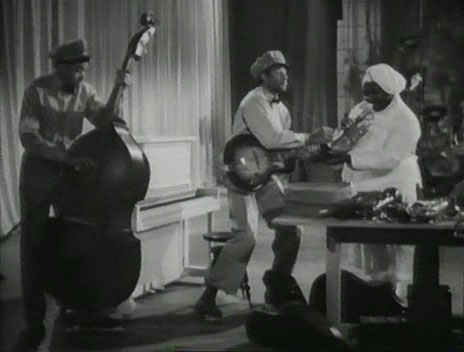
Seeing how it’s Academy Awards season, I’ve been watching bizarrely oscar-related movies… first Susan Slept Here was narrated by an oscar statue, and now this one, the only movie to be nominated by accident. It seems a song called “Pig Foot Pete” appeared in an Abbott and Costello movie with the same singer (Martha Raye) and songwriters who worked on this movie, which probably accounts for the never-properly-explained discrepancy of “Pig Foot Pete” getting Hellzapoppin’ awarded an oscar nomination. It’s all beside the point, since nothing stood a chance against the song White Christmas from Holiday Inn.

The story involves mistaken identity, Martha Raye (Monsieur Verdoux) running after Mischa Auer (My Man Godfrey) because she believes he’s an eligible millionaire, while he tries to score Jane Frazee – but the movie (based on a fourth-wall-smashing hit broadway play) is really just an excuse for popular comics Ole Olsen and Chic Johnson to riff on everything around them, including the film itself. Goofy-looking Hugh Herbert (whose “hoo-hoo-hoo!” laugh supposedly inspired the creation of Daffy Duck) of Footlight Parade, Sh! The Octopus and The Beautiful Blonde From Bashful Bend, also wanders about making jokes.

Chic and Ole – don’t ask me which is which:
image

Movies like this (and there aren’t many movies like this) make the phrase “screwball comedy” seem inappropriately applied to such relatively calm, normal films as Bringing Up Baby. Surely the Marx Brothers movies were an influence. I’d like to think that Frank Tashlin, who was working in cartoons at the time this came out, was heavily influenced by its high-energy cartoony gags and unhinged self-reflexivity. Some of the jokes (many of the jokes!) are very bad, but you’ve gotta forgive them because overall the movie is too amusingly nuts to dislike.

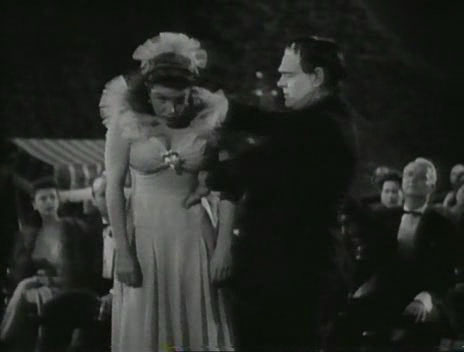
Frankenstein’s Monster, about to helpfully toss Martha Raye:
image

Kevin Lee: “The show-stopper is the much celebrated Lindy Hop sequence involving several Black domestic servants who without warning launch into the most jaw-dropping swing number captured on film.”

Here’s the precursor to that swing number, which is indeed jaw-dropping:
image

Director Potter would work with all the biggest stars in his other films, and eventually make a sequel to this year’s biggest oscar-winner Mrs. Miniver.

Pretty girls are roasted on a spit in hell – the movie opens with this!
image

The legal battle of Olsen vs. Johnson vs. Universal Pictures has led to the commercial unavailability of their work for so long that if it finally came out now, in sparkling restored deluxe DVD editions, nobody much would care since they are barely remembered. Good job there, guys.

Martha mooning after Mischa Auer:
image

NY Times called it “an anarchic collection of unfunny gags,” but then, they also spelled “alittle” as one word.

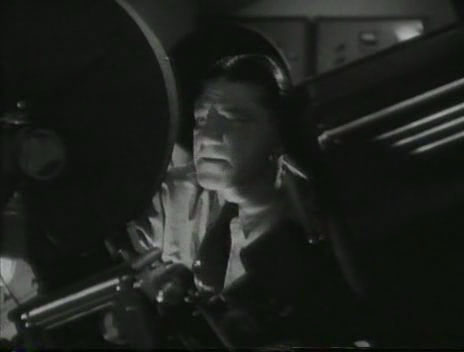
Once and future stooge Shemp Howard is the film projectionist. I love how he, not the cameraman, can change the framing of the movie by panning to follow women in swimsuits.
image

A rare valentine’s day treat for me when Katy suggested (not just “went along with” – suggested!) a Powell/Pressburger double-feature. Maybe she was jealous after reading up on the good times I had watching the previous double-feature by myself, or maybe it’s because I’ve been complaining for three years that we never finished watching The Red Shoes last time, or maybe she just likes me.

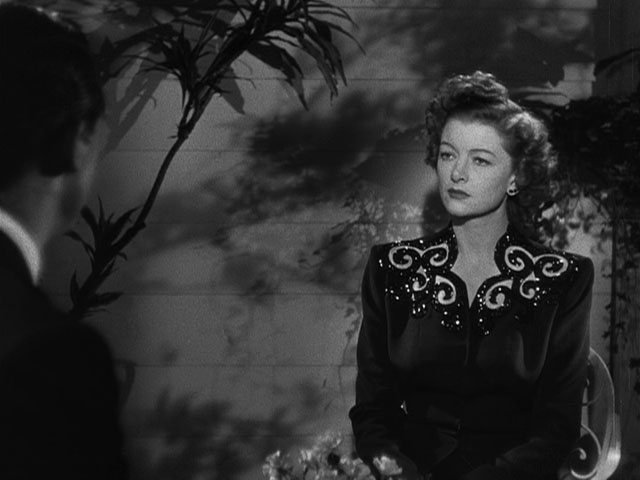
A Matter of Life and Death (1946)

Movie wastes no time, with David Niven (his post-war return to film, previously in Wyler’s Wuthering Heights and Dodsworth) mid-plane-crash having a smooth, romantic radio conversation with a visibly upset Kim Hunter (of The Seventh Victim, later A Streetcar Named Desire), each photographed in close-up with washes of color behind them. He turns up on a heavenly beach, safely alive sans parachute, then finds his radio girl and they fall in love, the end.

image

BUT WAIT, Niven was supposed to be dead, so a French-accented representative of heaven (Marius Goring of the Archers’ The Spy In Black) comes down to collect him. Niven argues that his situation has changed since he fell in love on his borrowed time and challenges the system to let him live. This is hardly precedented, but heaven agrees to give it a go. Niven consults with his new girl’s doctor friend Roger Livesey (star of I Know Where I’m Going!, and it’s nice to see him again) regarding which dead man Niven should employ as legal counsel in his heavenly trial versus the rabidly anti-British prosecuting attorney Raymond Massey (the soldier in the final scene of 49th Parallel). Movie has exquisite color, innovative production design and Roger Livesey, but it’s turning out to be another propagandistic (allied U.S./Britain need to get along) war story, and one with angels, no less. Angel movies are never good.

image

BUT WAIT, new layers are added, as Niven is suspected by the doctor of having brain damage from his fall and is rushed into operation, so the whole heaven business might be in his mind. The doctor, trying to summon an ambulance on his motorcycle, dies in a crash and becomes Niven’s attorney in angel-court. Not particularly nationalist, no theologian, just a very smart and logical man who helps Niven get out of heavenly trouble while the brain surgeon is saving him on earth, leading to the inevitable happy ending.

image

I ended up liking it an awful lot. Another movie, so soon after watching Magnificent Obsession, that hinges on the untimely death of a doctor. Niven’s painfully-British dead buddy, awaiting him in stark, black-and-white heaven, was played by Robert Coote (of The Ghost & Mrs. Muir and Welles’ Othello), all hanging out with the future Sister Ruth, Kathleen Byron. Somehow, even though I’ve seen his brother in a TV series 60 years later, I didn’t recognize Richard Attenborough.


The Red Shoes (1948)

Another glorious-looking film from the Archers and Technicolor pioneer Jack Cardiff. A student composer (hey, it’s a blond Marius Goring, the Frenchman from the last movie) whose work is being stolen by his teacher Austin Trevor (of Alexander Korda’s The Lion Has Wings) ends up on the same production as ballerina Moira Shearer under the tutelage of passionate and ruthless director Boris Lermontov (Ophuls fave Anton Walbrook, also in 49th Parallel). Composer and Dancer fall in love, but her true love is dancing. Torn between the two (she wouldn’t have to be torn if she could be married and dance, but it never works that way), a tragic finale! Wonderful sad conclusion with Lermontov announcing Shearer’s demise before the curtain, the play performed with only a spotlight where she should be. Echoes the end of The Golden Coach, another climactic love vs. art decision with a final curtain announcement.

image

Of course the highlight is the Red Shoes performance, 15 minutes of ballet tricks enhanced with film tricks, one of the most thrilling cinematic montages in history. Besides that one acclaimed scene, movie mostly plays it straight, with believable characterization and classy (but not stifling oscar-classy) filmmaking, until the one bit of fiction crossover at the end, when the red shoes seem to cause Shearer to run from the play and throw herself in front of a train. Close-up on her face, horrified (recalling the finale of Black Narcissus), then a focus on the shoes during the whole run without showing her face again.

image

Robert Helpmann, who was awesome in Tales of Hoffmann (and apparently made his own movie of Don Quixote in the 70’s) is awesome here as well, as the lead company dancer opposite Shearer. Movie won some oscars, including best music, but surprisingly the composer didn’t get much work except for other Powell/Pressburger films. Maybe he wasn’t looking for any.

image

Katy liked the movies, but didn’t love them, and especially disliked the ending of Red Shoes. When asked what she would’ve preferred, she mysteriously replied “I like when we watch classic movies,” as if the Archers films seemed too contemporary.

image

Bing Crosby quits his NYC singing/dancing team with Fred Astaire (eight years after The Gay Divorcee, his head and hands still cartoonishly large) and moves to Connecticut (another CT christmas movie) to open the Holiday Inn, where he can goof off 350 days a year, and put on spectacular shows for each holiday with a custom-written song (incl. White Christmas, Easter Parade). When the girl (Charlotte NC native Virginia Dale) whom Fred stole from Bing leaves town to marry a millionaire instead, Fred invites himself to the Inn and tries to steal Bing’s new girl Marjorie Reynolds (later in Lang’s Ministry of Fear). Lots of singing and dancing ensues, Fred gets the girl and takes her off to Hollywood to make a film about the Holiday Inn (featuring the inn sets we’ve already seen, but with all the lighting now visible – it’s the most meta movie of 1942!). A few holidays later, Bing builds up the guts to ride down there and steal her back – plus V. Dale shows up again, so now everybody’s got a pretty girl, and happy holidays and remember to buy war bonds.

The movie obviously won best song for the bestselling single of all time White Christmas, but lost a writing award to 49th Parallel. Irving Berlin would return with Easter Parade in ’48, and White Christmas (which I didn’t like as much as Holiday Inn) in ’54. Sandrich would die four years later in the middle of filming another Berlin/Astaire/Crosby musical, Blue Skies.

Bing Crosby, in between Road movies, celebrating Lincoln’s birthday:
image

Object of affection Marjorie Reynolds:
image

Actual black person Louise Beavers appeared in Freaks a decade earlier, and would become one of the first black sitcom stars a decade later.
image

Three movies that I’ve never heard of, all Christmastime classics if Robert Osborne is to be believed. Nice to see Primal’s new open (featuring myself) introducing them.

The Bishop’s Wife (1947, Henry Koster)

Robert Osbourne tells us before every single movie on TCM that the studio wanted to get Cary Grant. With every 1947 picture to choose from, you’d think he could’ve livened up Unfaithfully Yours, starred in Moonrise or cameoed in Key Largo, but instead he did this inert religious drama with David Niven (a year after Niven appeared in P&P’s probably much better angel drama A Matter of Life and Death). Niven is a bishop with pretty wife Loretta Young (of Man’s Castle, also costarred with Niven in Eternally Yours). She misses doing nice romantic things with her husband, going out to eat, seeing old friends, so when actual angel Grant shows up, in addition to helping the bishop with his church work, he starts treating the wife right and falling in love with her. In the end it turns out he’s sabotaging Niven’s attempt to build a grand cathedral, and getting the lead sponsor (Gladys Cooper, Henry’s society mom in My Fair Lady) to invest in smaller, less gaudy charities instead. A real rogue prankster of an angel, he also inspires their lonely professor friend to start writing his long-delayed history book and gives him an infinite bottle of port.

Nominated for best picture and director, but twice beaten by Elia Kazan’s important issues drama. From the director of Harvey, another movie with a Hitchcock star and an imaginary friend. Movie seems to rely entirely on Grant and a few “miracle” fx tricks for charm, otherwise full of draggy scenes and dull dialogue.

Christmas In Connectitut (1945, Peter Godfrey)

Updated: here

Another romantic comedy based on a Big Lie, Barbara Stanwyck (post Lady Eve and Double Indemnity, lacking the fire and energy of either of those) writes a newspaper column where she’s a perfect CT housewife and mother full of amazing recipes. Her editor (Casablanca’s Sydney Greenstreet, big guy) invites himself over for Christmas, so she fakes it by borrowing a house and a baby from a dapper dullard (Reginald Gardiner of The Great Dictator) and inviting her master chef buddy Felix (Hungarian Cuddles Sakall, also in Casablanca). Also over for dinner is hot young WWII hero Dennis Morgan (of Affectionately Yours & The Return of Doctor X), who makes his desire for Stanwyck and her fake life known by meddling in simply everything and being overall a nuisance houseguest. It’s all seen as good and romantic though – after all, a guy who enjoys changing diapers is a real catch – and after the Lie falls apart, Barbara barely avoids marrying the dullard and snags Dennis instead.

Director Godfrey made a nazi shock drama starring Peter Lorre the same year. Despite having the least interesting plot of the three movies, this was the best written, and Cuddles Sakall steals every scene he’s in, very friendly to everyone except the big boss, whom he calls “fat man”, conspiring to ruin Barbara’s secret wedding to the dullard so she can end up with our hero.

Holiday Affair (1950, Don Hartman)

This one raises the stakes a little. Janet Leigh, just two years into her film career, has a real kid (not fake babies like Barbara Stanwyck), and a real threat to her happy, stable relationship (not a horny angel like Cary Grant) in the form of noir hero Robert Mitchum. Working as a secret comparison-shopper for a rival department store, she accidentally gets Mitchum fired. Forced into near homelessness without a job, he doesn’t whine about it, instead takes the opportunity to stalk Janet before departing to pursue his dream job of building sailboats. Janet tries to convince herself she’s happy with her extremely boring long-term guy (Wendell Corey, Stewart’s buddy in Rear Window, costar of The Furies), whom her little boy dislikes, but eventually she falls for our Mitchum. There’s some junk about an overpriced toy train which she buys for her store, then returns, then he buys for the boy, then the boy returns to give the money back to Mitchum when he finds out Mitchum is broke. It’d be a decent subplot if the kid himself (also in The Narrow Margin a few years later) hadn’t been unbearably crappy.

Don Hartman was writing Hope/Crosby Road movies before he followed Preston Sturges into directing. This was the middle of his five-year directing career. No word what he did after (besides die in 1958). Movie is full of arbitrarily placed mirrors and stupid framing (there’s a joke about a girl roller-skating on the ice rink, but her skates are blocked from view by a park bench), but is pretty watchable just for our two stars.

All three movies got 1990’s remakes: Holiday Affair made for TV from the director of Police Academy 5Bishop’s (Preacher’s) Wife from Penny Marshall starring Denzel and Whitney… and Xmas in CT from director Arnold Schwarzenegger (his only film) with a cast too baffling to list (plus a rumored 2009 remake with Jenn. Garner).

Briskly plotted and barely over an hour long, seems like a good first movie… but it was his second, after The Great McGinty, which I enjoyed a bit more.

If you can’t sleep at night, it isn’t the coffee – it’s the bunk!
image

A very blustery, fast-talky movie with maybe one too many blustery fast-talking characters. We’ve got the president of our loving couple’s coffee company employer (Ernest Truex, a reporter in His Girl Friday the same year – the guy whose desk the killer hides inside), our guy’s direct boss the strict office manager (Capra veteran Harry Hayden), the president of their largest competitor, the company which is running the contest (Capra veteran Raymond Walburn), and department store head Alexander Carr (of Bela Lugosi movie The Death Kiss, which sounds good). Then there’s the most blustery man of all, the virtuoso, the blustermaster, Capra veteran William “Muggsy” Demarest, as the stubborn contest jury holdout who, in the most predictable twist ending of Sturges’s career, picks our man as the grand prize winner after his previous grand-prize-win had been exposed as a fraud.

Our heroes:
image

Dick Powell was already a star, having appeared in all three of Busby Berkeley’s big 1933 musicals. No singing or dancing here. Katy called him a poor man’s Jimmy Stewart. Ellen Drew was saddled with the worst Sturges-penned female role, just grabbing her man’s arm and breathlessly saying “Oh, Jimmy” with a variety of inflections. She was just getting started in the pictures, would spend the next decade acting in movies I will probably never see, ending up in Stars In My Crown, which I probably will.

Other familiar faces: Capra veteran Frank Moran as an Irish cop (the bus driver in Sullivan’s Travels), below with Alex Carr.
image

Capra veteran Franklin Pangborn as the radio announcer (played a realtor in Palm Beach Story), below with Ray Walburn.
image

And Capra veteran Snowflake as the janitor (terrified bartender in the Ale & Quail club car in Palm Beach Story). Lots of Capra actors here… maybe Katy’s right, and Sturges tried to get Jimmy Stewart and throw a total Capra-party.

Muggsy!
image

An update of one of my earliest entries. Practically all I wrote last time was “funniest movie ever, when drinking.”

Stubborn failed inventor Joel McRea (fresh off Sullivan’s Travels) is in love with his wife Claudette Colbert (puffy-cheeked oscar-winner, played the modern girlfriend in The Smiling Lieutenant). Thanks to a random cash infusion by the Weenie King (below), she’s able to leave him and go searching for a new husband, a rich one, so she can support Joel’s ridiculous airplane net idea.
image

Along the way she meets… William “Muggsy” Demarest!
image

And other members of the Ale & Quail club, who torment her until she almost crawls into bed with this extremely rich Rockefeller stand-in (played by former megaphone crooner Rudy Vallee, who would appear in two more Sturges movies)
image

Ah, but Joel also got random cash from the Weenie King and flew down to intercept her. He’s caught in a web of lies and ends up an object of lust of Rudy’s flighty sister Mary Astor (who was on a roll, having just won an oscar and starred in The Maltese Falcon)
image

Toto ain’t too happy with this, since he was after Mary Astor before Joel arrived.
image

Uh oh, Joel and Claudette are still in love. How can we keep nice rich guy Rudy from being disappointed and keep our happy-again couple from returning to their life of poverty?
image

Easy: Joel and Claudette are both identical twins, and their twins marry the lusty megawealthy siblings for an extremely goofy happy ending!
image

Katy wasn’t too sure about the goofy happy ending, because she’s unable to be satisfied by any comedy that does not star Reese Witherspoon (see also My Man Godfrey). We both thought Joel needed to lighten up a bit. It’s hard to be the straight man.

March 2025: Watched again with K’s mom, who pronounced it “weird.”

One of the least jokey of Sturges’s films (up there with Unfaithfully Yours), but makes up for that by being completely wonderful. Katy and I watched together for the first time. Even when I know it’s coming, I can’t help but jump when Sullivan says how much he wants to make O Brother Where Are Thou. No plot overview needed, watched it enough times.

William “Muggsy” Demarest, one of my favorites, plays the same type as always. More prominent in this movie are the butler and valet, Eric Blore and Robert Grieg, who were apparently professional butler-actors throughout the 30’s and 40’s. Veronica Lake was 21 when this was shot, looks younger. As famous as I thought she was, I’ve only heard of three of her movies (also The Blue Dahlia and I Married a Witch). Looks like after the 40’s, she switched careers from acting to drinking. I mainly know Joel McCrae from this, but apparently he was in a bunch of westerns. The poor “colored chef”, Charles R. Moore, has 100+ movie roles, all of them listed as porter, driver, bootblack, elevator operator or prisoner. Lot of in-film shouts-out to Capra and Lubitsch, who at this time were working on Meet John Doe and To Be or Not to Be.

image

Todd McCarthy calls Sturges “the first screenwriter to decisively break through as a director”… guess I never realized that’d never happened before 1940. Now it happens all the time (see Synecdoche New York).

The DVD commentary starts out funny, mostly a good time but sometimes one of them will resort to narrating and saying “that’s so great”. The Rise and Fall of an American Dreamer doc is better, with a full career overview of Sturges, going into the whole post-Conquering Hero part of his life which I had wondered about – it’s sad stuff.

Ahhh, Casablanca at the nearly-packed 4600-seat Fox Theater. Katy liked it!

Ingrid Bergman had been in Hollywood three years, and it’d be eight more before she met Robert Rossellini. Bogart owned the 1940’s, had already done Maltese Falcon and High Sierra. Police chief Claude Rains would play Bergman’s evil husband four years later in Notorious. Her husband in this movie, underground war hero Paul Henreid, didn’t appear in many other interesting films, but directed a whole bunch of Alfred Hitchcock Presents episodes. Nazi chief Conrad Veidt died a year after this came out. Dooley Wilson (Sam), would’ve been higher than tenth-billed if he was white.

Opened with Rabbit Seasoning from 1952, a full decade later. What, Blitz Wolf and Tulips Shall Grow from 1942 weren’t available? Or one of the Bogart-parody Looney Tunes? I have more imagination than the Fox programmers. A one-joke short, but it’s an enjoyable joke. The crowd loved it.