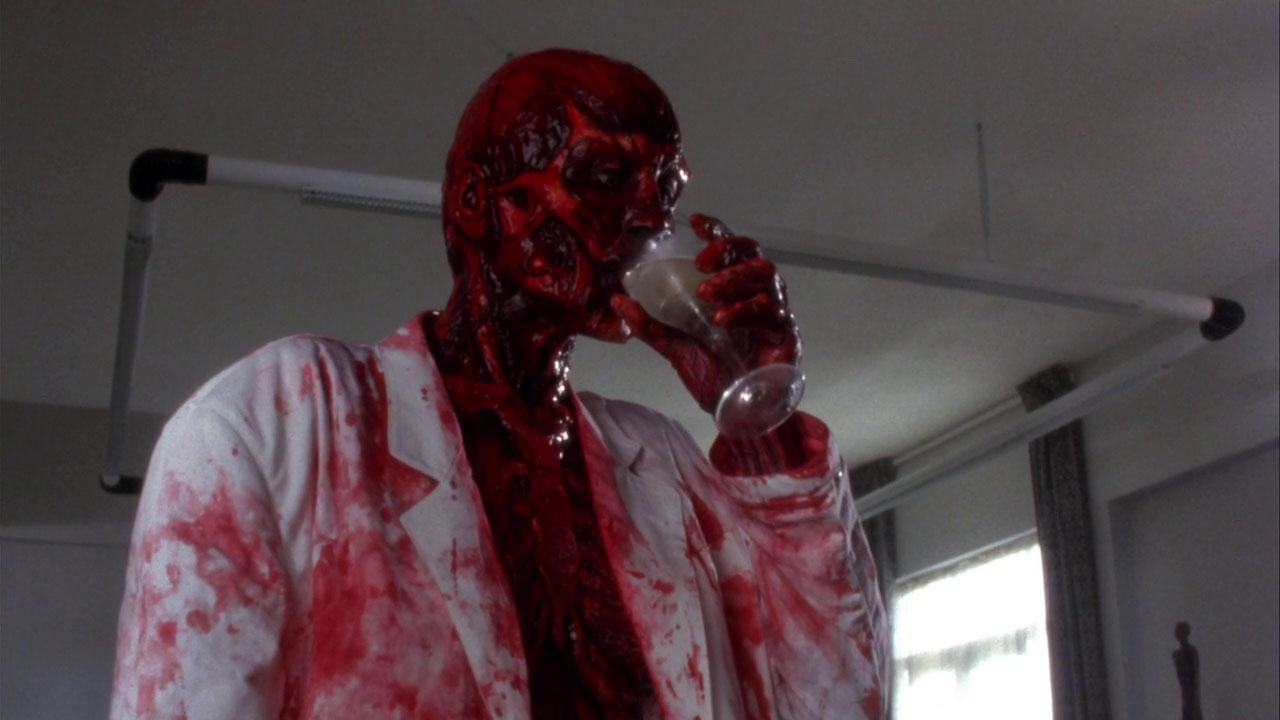
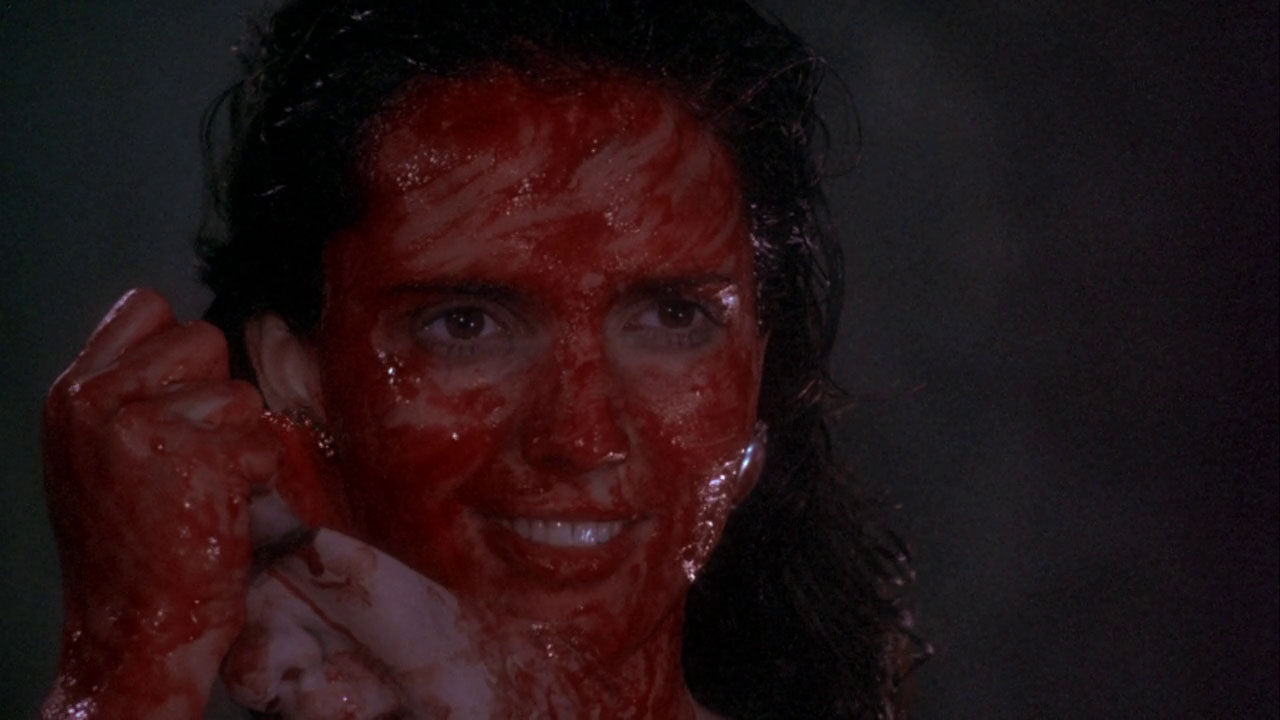
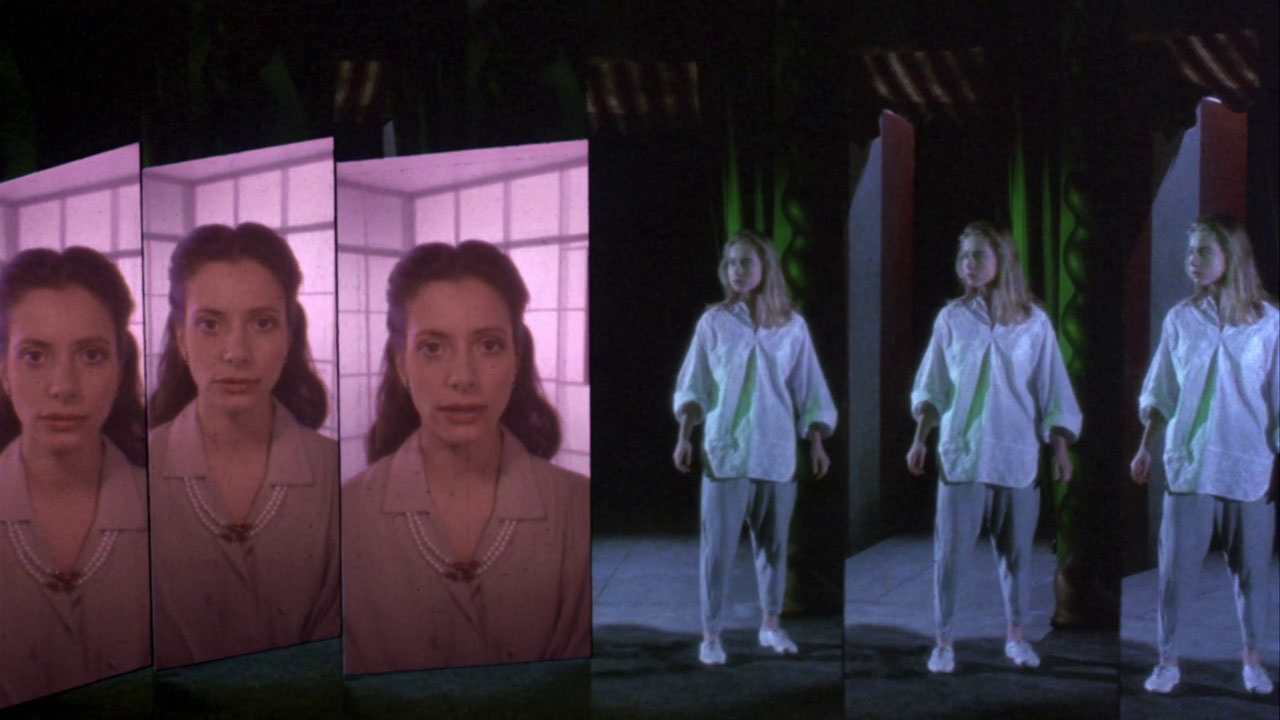
I grabbed Frantic back when I was watching a bunch of Polanski movies, then forgot about it… until one day, having misjudged the length of a flight due to time zone calculations being difficult while my mind is addled from dramamine, I watched the 45-minute Tarkovsky then found myself with a free hour, so as I often do when tired, I reached for the dumbest thing on my hard drive.

Ford, after telling everyone in sight that he’s after “the white lady:”

It’s quite a silly premise, though overall somewhat sturdy, with some convincing particulars for an 80’s movie. Harrison Ford’s wife (The Horde’s psychiatrist in Split) is kidnapped after grabbing the wrong suitcase at the Paris airport, so HF tracks down the drug mule suitcase owner (Emmanuelle Seigner, the future Mrs. Polanski) to unwind the conspiracy, figuring out that the captors are after a nuclear bomb triggering device. Along the way, we’ve got a woman in black on a Paris rooftop (I didn’t take Polanski for a Feuilladian) and music by the late Ennio Morricone, and nightclub scenes by Grace Jones, who must’ve sponsored this movie.

Seigner, screaming out the ass of a getaway car:

In these uncertain times, sometimes I wanna watch some action movies I remember from cable TV. Rewatched the first movie (and Prometheus) five years ago, so it’s time to move this nostalgia trip along. It’s fine that the theatrical version still exists, for historical reference, but the auto-guns are neato, and more Aliens is a good thing, so I’m sticking with the extended cut.

da whole crew:

After drifting in cryo for fifty-some years, Ripley has outlived her daughter, as well as all the colonist families on the planet where she landed last movie. The company thinks she’s lying about the aliens, fires her, then wants to send her back as an advisor, along with droid Lance Henriksen (she doesn’t trust those things anymore, after last time) and a short-haired lieutenant who says he can guarantee her safety (didn’t catch his name, I think he died immediately).

Lots of science-nonsense and military-nonsense in the dialogue for the first hour, but the 80’s movie version of future-tech (which is supposed to be fifty-some years more advanced than the 70’s movie’s version of future-tech) feels so convincing that you have to keep reminding yourself that none of this stuff exists. They discover lone survivor Newt, lose some guys, bossman Paul Reiser starts to undermine their mission, calling the aliens “an important species” and saying “there’s a dollar amount attached.” By now, Lincoln NE’s own Michael Biehn (also of Terminator and Abyss) has taken charge of the soldiers, and seems competent. But it’s Weaver who takes the movie to new levels of badassery – I forgot the scene at the end where she duct tapes a machine gun to a flamethrower.

In a WWII prison camp, Beat Takeshi is a sadistic guard led by humorless youngish Capt. Yonoi (the film’s composer, Ryuichi Sakamoto). Lawrence (Paddington 2‘s Tom Conti) is a prisoner who speaks some Japanese and represents the Brits, a bunch of sensible dudes until David Bowie (same year as The Hunger) comes along.

Cruel Story of Middle Age. A classy-looking narrative movie with tricky subject matter, feeling more like a prestige 80’s international coproduction than those late 60’s Oshima youth films. Cool rumbling music, and lots of singing, never as fun as the pub songs in the Terence Davies movies. The story is mostly survival tactics, power games, betrayals and brutality – strange that the lead actors were two rock stars and a comedian.

Having a rough week, I considered pulling out the emergency relief film, Paddington 2, but Brian Dennehy had just died, and I’d long wanted to see it, so chose to watch the movie about a man in constant pain whose professional and personal life falls apart until he commits suicide – great fuckin’ idea.

Composer Wim Mertens does a serviceable Michael Nyman impression – or maybe that was Glenn Branca, one of his few film credits. Architect Dennehy is in Rome with wife Louisa (Chloe Webb, just off starring in Sid & Nancy) outlining the exhibition he’s preparing on an obscure French architect. Webb is pregnant, and having a blatant affair with Lambert Wilson, who is also stealing money and discrediting Dennehy so he can take over the exhibition, and whose photographer sister Stefania Casini (Jessica Harper’s murdered friend in Suspiria) is trying to seduce Dennehy. I like how Dennehy finds her room full of photographs of previous scenes, as if whenever Casini is offscreen, she’s filming the movie we’re watching.

Opens with Wallace Shawn in voiceover – he’s a playwright taking acting gigs, doing odd errands, going to dinner tonight with a man he’s been avoiding for years, once a friend and colleague and a celebrated theater director before he disappeared. The voiceover comes back to interrupt even after they start talking, but mostly Andre’s stories begin to take over the film.

“It has something to do with living.” Andre isn’t new age or hippie exactly, but very all-things-are-connected, seeing signs, everything is beautiful, living life for the first time, unusual coincidences, etc. He went to a forest in Poland to teach forty musical women about theater, compares the group’s trance activity to Hitler’s Nuremberg rallies, after which Wallace gives him a great look. Andre had a bad trip to the desert with a Japanese monk, was buried alive in India, compares himself to Albert Speer. When Wallace finally gets a whole line in, Andre mentions nazi death camps, what is it with this guy?

After Andre dominates for the first half, Wallace gets to tell a story of his own, which is about not being able to express himself. Andre says we’re all bored because of capitalism, and volunteers that New York is a concentration camp. References to Brecht, Sense & Sensibility, The Little Prince, Autumn Sonata. This is all leading to a blow-out fight, when Wallace can’t take his friend’s nonsense anymore – but it doesn’t, it leads to a good-natured disagreement. I can’t say I thought this movie was all that special for most of its runtime, or could figure out what it was getting at, but I can say it was a shock to experience good-natured disagreement in the climax of a film, and this should happen more often.

Satire about the limited/terrible roles for black men in hollywood movies – Townsend’s directorial debut, a few months before his film of Eddie Murphy Raw (and containing some hilarious Murphy impressions). Sometimes it’s clunky and low-budget, but overall a winning comedy. There’s a main plot, where aspiring actor Townsend gets cast in a demeaning role and takes the moral high ground by walking out, but half the movie is sketches and parodies, reimagining Hollywood hits with black actors. This was a couple years before cowriter Keenan Ivory Wayans would create In Living Color. Townsend’s girl is played by Anne-Marie Johnson of Robot Jox, and Paul Mooney plays the head of the NAACP.

“To die so that the god may live is a privilege, Kevin”

British dude casually finds some 1700-year-old coins in the backyard, and an elongated skull – I thought this was Hugh Grant for a while until the real Hugh Grant appears a couple minutes later and I realized I had no idea what Peter Capaldi looked like prior to The Thick of It. They meet at a white worm party – with a white worm costume and a band playing a rowdy white worm folk song – along with the Trent sisters. Grant is out with Sammi Davis of Hope and Glory, and her sister Eve is Catherine Oxenberg of the Yugoslavian royal family, who started her career playing princess Diana on a TV movie, and most recently appeared in Ratpocalypse and Sharktopus vs. Whalewolf.

Our fearless foursome:

Everyone is talking like they’re on a sitcom, but a few short minutes later, Lady Sylvia Marsh is introduced sucking on the leg of constable Ernie (Return of the Jedi‘s rancor keeper) and the movie gets good ‘n’ crazy, and stays that way. It’s cool that Grant and Capaldi are here, but Amanda Donohoe is the movie. Looks like I can see her with Sammi Davis and Glenda Jackson in Russell’s The Rainbow, and I probably should.

Lady Marsh takes a boy scout home and feeds him to the worm-god in her basement, and Eve is taken captive next. Sylvia is excessively horny during these scenes, while the others are eating damp sandwiches, searching for signs of the long-missing Trent parents. Grant gets the Stendhal Syndrome and climbs inside a painting. Snake imagery abounds, the script is all entendres, and the visuals flit between ace makeup/lighting and insane greenscreen dream-mayhem. Most horror filmmakers are content to make normal-looking movies with a few crazy visual bits – Russell isn’t happy unless the crazy bits completely overwhelm the normal stuff.

After my second reference this month to a christian order building atop pagan grounds, Grant steps up to his destiny, and plays snake-charming music on a PA system while the team attacks the castle with help from a worm-hunting mongoose. Mary is accosted by her undead mum, then by the possessed cop, but Capaldi saves the day with snake-luring bagpipes and drops a hand grenade down the worm-god’s throat. This plan obviously took some prep, but it’s also an emergency rescue mission, so was it necessary to change into the kilt?

There’s an Oscar Wilde quote – Russell made a Wilde movie the same year. Grant appears here the year after starring in a James Ivory film, Capaldi five years after Local Hero. Partly based on a Bram Stoker novel, partly on the legend of the Lambton Worm, and I guess largely made up by Russell.

Linda comes to run an inherited old folks’ home after the death of her mum. Linda’s got a hot boy in town (John Jarratt, villain of Wolf Creek and its many sequels), the family doctor (Alex Scott of Romper Stomper) and a faithful employee who runs everything (Gerda Nicolson of The Devil’s Playground), so everything is green, but an old man dies in the tub, and someone has been sneaking around leaving the taps running and cutting the power, and Linda has flashbacks to her childhood unease with this place, while trying to make sense from her mom’s diary and the home’s patient records.

Flashback-Linda:

Present-Linda:

A family-secrets thriller with red herrings, people admonishing her not to dig into the past instead of helping makes them all seem suspicious. TV’s Jacki Kerin is very good in the lead role, but the night everyone above gets murdered and one of the patients turns out to be Linda’s insane long-lost aunt with her hammer-murderer son in tow, it’s going for Halloween but feels more Scooby Doo.

Suspicious doctor:

Appreciated the crazy angles and slow-mo screams after Linda stabs her aunt in the eye (this was shot by Gary Hansen, who died the same year) more than the crappy 1980’s synth music by Dead Can Dance collaborator and huge Richard Wagner fan Klaus Schulze. Cowritten by Michael Heath (My Grandpa Is a Vampire). Tony Williams has one other feature, the imdb description of which calls it “a story that doesn’t really go anywhere.”

Mad aunt:

The movie opens very promisingly, with an owl… then things get nuts real fast. A team of knights are led by a Gilliam-looking toadie to a cave full of witches – innocent-looking, but supposedly cursed by the cross-shaped mark under their feet. All-out massacre ensues, beheadings from Knight-POV, the camera inside their helmets with cross-shaped viewports, as a Philip Glass tune plays. After stumbling across Soavi last SHOCKtober with The Sect, I was right to check out his other work, though are all his movies about basement-dwelling satanic cults?

Soavi worked with Gilliam on Baron Munchausen the year before this:

Flash-forward a few hundred years, it’s the first day for church librarian Tomas Arana (a cook on the Red October the following year). He’s almost hit by stuff falling off an art restoration scaffold (shades of Don’t Look Now), later makes out with the artist Barbara Cupisti (Argento’s Opera), then finds an ancient parchment and imagines it could be the secret to a lost science that could turn him into a god – not bad for a first day! Genius codebreaker Tomas figures out that the ancient runes are just mirror-writing, sneaks into the church at night and unleashes demons. These crazy demonic effects scenes are where Soavi’s movies really excel, laying all other late-80’s movie demons to waste, and with his crazed angles and quick, precise camera moves, it feels like Sam Raimi must’ve been a fan.

Back to the plot, Tomas is now obviously possessed and creeping on 13-year-old Asia Argento, daughter of the churchwarden, who sneaks out to discos at night. Her dad Roberto Corbiletto (Fellini’s Voice of the Moon the next year) has also lost his mind, suicides by jackhammer on the cursed cornerstone in front of horrified priest Hugh Quarshie (Nightbreed), his blood setting an ancient rube goldberg into motion, locking everyone including a wedding-photo party and a class of kids inside the church.

Asia wearing Eastern Europe:

I can’t tell what old bishop Feodor Chaliapin (Inferno) is up to – he understands what’s happening, but doesn’t appear to be helping. Meanwhile, innocents are being abducted by caped demons or eaten by giant lizards, a woman cheerfully beheads her husband, and another escapes into subway tunnels only to get mooshed by a train.

Enraged Corbiletto:

Father Corbiletto is alive again, I guess, and has gone fully mental, kills the schoolteacher in a rage – none of the kids seem to notice, since they are in the pews bonding over Nietzsche quotes (seriously). The restoration artist is raped by a goat-devil. Fortunately, Asia remembers the opening scene from a millennium before she was born, and tells Priest Hugh that if he pulls the murder-dildo from the skull of the church architect in a basement crypt, the whole church will collapse, killing everyone and ending the curse. As the bodies of the damned rise in a giant mud-dripping mass, he triggers the ancient self-destruct sequence as Asia escapes.

The good content you crave:

The dubbing is appalling, but the music (by Glass, Keith Emerson, and Goblin) is very good – demons whisper from the soundtrack, a welcome relief from the screaming strings of the netflix movies. Filmed in Hungary, since it was hard to find any churches willing to let them shoot all this satanic shit. Originally posited as Demons 3, then rewritten when Soavi came aboard – Cannibal Ferox auteur Umberto Lenzi would finally crank out a third Demons a couple years later.