After false-starts with Flowers of Shanghai and Goodbye South, Goodbye, I figured out how to get on Hou’s wavelength with his Red Balloon and Three Times, so now trying something from his acclaimed 1980’s period. I liked it, and could follow reasonably well despite 90% of my knowledge of Taiwan’s post-Japanese-occupation history coming from a blurry bootleg of A Brighter Summer Day. Wikipedia, help us out with context here:

It tells the story of a family embroiled in the tragic “White Terror” that was wrought on the Taiwanese people by the Kuomintang government (KMT) after their arrival from mainland China in the late 1940s, during which thousands of Taiwanese were rounded up, shot, and/or sent to prison. The film was the first to deal openly with the KMT’s authoritarian misdeeds after its 1945 turnover of Taiwan from Japan, and the first to depict the 228 Incident of 1947, in which thousands of people were massacred.

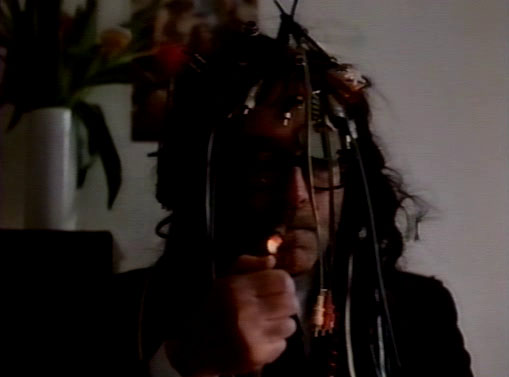
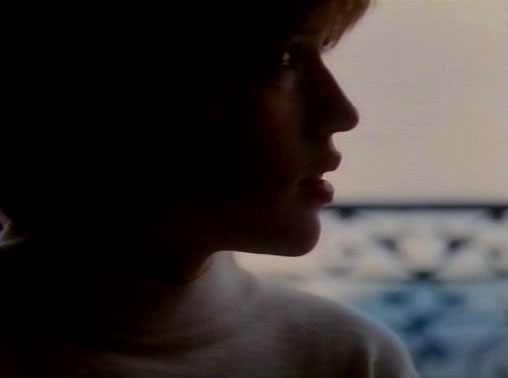
“On August 15, 1945 Japan announced its unconditional surrender. Taiwan was liberated following 51 years of Japanese occupation. The wife of older brother Lin Wen-heung gave birth to a son. They named him Kang-ming, which means Light.” Brief introductions (Wen-heung is a stocky fellow) and a photo shoot, then suddenly a woman is narrating from the mountains, introducing W-H’s brother Wen-ching as a friend of her brother. W-C (Tony Leung 1 of 2046) is deaf/dumb (this was supposedly added to the script because Leung couldn’t speak the dialect convincingly, heh), a professional photographer who communicates to customers with gestures and to our new narrator (Hinomi) with pen/paper. W-C has other brothers besides stocky eldest Wen-heung – one disappeared in the war, and the other, Wen-leung (Jack Kao of a bunch of Hou’s films), came back mad.

W-C: happy, deaf

W-L: mad

But Wen-leung gets over his condition, joins organized crime, gets himself arrested and gets the straight Wen-heung in trouble. Eventually, W-H is killed and W-L terribly beaten, other characters disappear or escape to the mountains, and W-C ends up with Hinomi – but in the epilogue, after showing him with new wife and baby, even he is arrested again, and the titles tell us “December 1949. Mainland China is lost,” when the ROC moved to Taiwan (maintaining martial law, torture and execution for 40 years) and communist PRC formed in mainland China. So the movie takes place over four years, during which it doesn’t always seem like such sadness, but it sure turns out that way in the end.

IMDB:

As revealed in scriptwriter Chu Tien-Wen’s book, the original premise of this film is the reunion of an ex-gangster (which Hou Hsiao-Hsien intended to cast Chow Yun-fat for the role) and his former lover (supposedly played by Yang Li-Hua, the top Taiwanese Opera actress in real-life) in the 1970’s. Hou and Chu then extended the story to involve substantial flashbacks of the calamity of the woman’s family in late 1940’s (where the woman was the teenage daughter of Chen Song-Yong’s character). They then abandoned the former premise and instead focused on the 1940s’ story.

from an excellent essay by K. Lee for Reverse Shot:

Any given scene in City of Sadness has its own internal history informing the logic of its characters’ behaviors. Hou’s sense of dramatic conflict—one that’s unique in cinema—arises when the recurring presence of the past collides against an unfolding present unknown to both the characters and the viewer. …

City of Sadness envisions a massive shift in a tiny island’s social fabric caused by forces well beyond the scope of any person, or even a community. Everyone is overwhelmed. No less than five languages are spoken in the film: Japanese and four forms of Chinese. Even Chinese viewers require subtitles when watching this film. … Perhaps due to being the first movie to deal openly with the “2-28 Incident,” or perhaps because of the Golden Lion it won at Venice, City of Sadness was the top grossing domestic film of its year. Nonetheless, there was public dismay at the oblique nature of Hou’s storytelling and the fact that the atrocities of the “2-28 Incident” are never depicted directly onscreen (despite that there are more fight scenes and onscreen killings in City of Sadness than in all of Hou’s other films combined). …

Scenes pass like clouds, loosely connected, the overall story arc not clearly in sight, and only in retrospect, with a final shot of an empty room that once held scores of family and friends, does the sum total of the film materialize, narrative, historical, emotional. Hou’s aim is nothing less than to enact how people live history—not as something happening right in front of them, but around them and beyond them, the same way then as now. In City of Sadness the horrors of the world occur almost always out of view, but it makes their presence all the more unsettlingly palpable.

Cool adaptation, with fine visuals by Radford (Il Postino) and the great Roger Deakins (pre-Coens), and a wonderful John Hurt performance. Hurt is not killed at the end (at least not explicitly), and the phrase “Big Brother is watching” never appears. Surprisingly good/subtle musical score by Eurythmics, which the director hated. Hmmm, or is it subtle because we heard the Dominic Muldowney score instead? Watched on netflix, so it’s hard to tell.

Hurt (in The Hit the same year), a government newspaper revisionist, falls for Suzanna Hamilton (of the Sting version of Brimstone & Treacle), dreams of escaping control of the party and finding a place where love is still possible. Richard Burton (of Exorcist II, argh) is on to their plan, and subjects Hurt to torture until he comes to truly love Big Brother. Katy didn’t much like it, putting a damper on the beginning of Dystopia Month.

After a funeral, Natasha is angry with everyone alive, quits her job and pisses off people in the street. After forty minutes of this, the movie-in-a-movie ends and Olga, its lead actress, comes on stage to complete audience indifference. “I’m already sad and tired from work. I’d like to have fun, listen to some music instead of watching such movies.”

Destructive tendencies in the film-in-a-film:

Narcoleptic Nikolai is in the audience. He’s a schoolteacher along with round, blonde Irina. To be truthful, that’s about all I can be sure of. Plenty else happens in the movie, but I’m not sure to whom, and for what reason. It’s kind of a comedy, but seems to be serious underneath. The title seems appropriate (asthenia: abnormal physical weakness or lack of energy). You could also have called it Everybody Is Unbearable. Very talky, with wall-to-wall chatter in half the scenes, languid in others.

Nikolai:

Irina attempts “strangers in the night”:

Won a prize at Berlin. The distributor calls it an “impressionistic portrait of the USSR reaching the end of its tether.” Senses calls it a “demented masterpiece,” and goes on to note: “it is interesting to note that while the rest of the world celebrated the fall of communism, the reaction of the people actually living under Soviet rule wasn’t as simple; people felt very confused, and their overall behaviour was – and still is – reminiscent of the asthenic syndrome of the film, alternatively violent and repressed. Even though Asthenic Syndrome was made during the period of glasnost, Muratova once again managed to alienate the authorities. It had the dubious honour of being the only film banned during that period.”

J. Rosenbaum:

It’s a film that alternately assaults you and nods off — usually without warning and often when you’re least expecting it. Mean-spirited and assertive one moment, narcoleptic and in complete denial the next, it bears an astonishing resemblance to the disconcerting rhythm of contemporary public life.

D. Auerbach:

If you don’t know that perestroika is seen as the source of millions of deaths stemming from deregulation, corruption, and crime, the melancholy and despair that fill The Asthentic Syndrome seem disconnected from a particular cause: what is Muratova critiquing, exactly? . . . Knowing the context reveals the emotion behind the puzzling surface.

Not an actual movie, but an admirable simulacrum. Abrams imagines a mid-80’s Spielberg adventure, complete with teenage protagonists each with a couple sympathetic personal details, aliens and intrigue (“Do not speak of this or else you and your parents will die,” says Glynn Turman, who was also the first casualty in Spielberg-produced Gremlins), likeably honest small-towners and evil shadowy government conspiracy. That’s actually the thing I liked most about the movie, watching it the same week as the politically shady Contagion. Abrams puts his unique directorial stamp on the material (just kidding – he simply floods it with lens flares).

I found a shot of the kids without lens flare:

Glynn Turman:

Kid named Joe is helping made a zombie movie with friends, who recruit his crush Alice (Elle Fanning, tiny Cate Blanchett in The Benjamin Buttons). With names like Joe, Alice and their buddy Preston, sometimes it seems like this was written as a 1940’s movie then changed at last minute. Joe’s mom died in a factory accident caused indirectly by Alice’s dad, Joe’s dad (Kyle Chandler of Katy’s football show) is the town cop, Charles (the super-8 director) has a thing for Alice – these are our token character details, the Stand By Me half of the big-budget action movie. Seems that a vindictive alien escaped from gov’t captivity when Turman drove his pickup truck onto train tracks causing an outrageously overdone crash, which throws train cars into the air like in a Transformers flick but doesn’t kill Turman or fully destroy his truck. Shadowy gov’t agent Nelec will finish the poor guy off before being dispatched by the alien, who proceeds to loot the area of all wiring, engines and other metal bits to construct a vessel home, finally turning the town water tower into a Katamari Damacy electro-magnet.

Runaway dog map:

The kid’s sentimental locket is Katamari-bound:

Great little indie movie, don’t know why I remember disliking it. Tracy Johns (her only other role was New Jack City) is Nola Darling, who strings three guys along without committing to any, finally dumps them all to stay independent. Tommy Hicks (Daughters of the Dust) is Jamie, who’d seem like a perfect man except that he keeps trying to make her settle down. John Terrell is an arrogant rich guy, and Spike (Mars Blackmon, great character names) is an immature joker, and Nola’s lesbian friend Raye Dowell is after her as well. Spike’s relatives make appearances (Bill plays Nola’s dad, Joie is her roommate).

Spike’s feature debut, with nice b/w cinematography by Ernest Dickerson, except when Tommy gives Nola a musical dance number for her birthday, shot in color.

Terayama worked with the same cinematographer and musician as the shorts plus old-school Renoir and French New Wave producer Pierre Braunberger, who included this along with shorts by Just Jaeckin and Walerian Borowczyk in a sleazy anthology, accounting for its odd 40-minute runtime.

Akira combs deserts and towns searching for the lyrics to a children’s song. He recalls life with his single mother – how she protected him from the nymphomaniac next door by writing Kwaidan-like spells on his body, how the mother tormented and attracted him and may have died with her lover before he was born. It’s a dreamlike film, then. The Internet says it’s a companion piece to his feature Pastoral.

Nice color treatment – one pan starts in full color and turns to sepia-tinted monochrome by its finish. The movie starts to get nuts in the second half, with costumes, drawings and mysterious symbolism, tons of nudity, colorful theatrical performance and imaginary ball-bouncing. On his quest, Akira meets Juzo Itami of Sweet Home, but finds no answers, or at least none that he shares with us.

I haven’t seen much writing on Terayama – here is a good piece by Tony Rayns for Sight and Sound:

Two experiences in Terayama’s childhood and adolescence were formative. He was born … in the foothills of Mount Osore – a ‘haunted’ mountain which has attracted ghosts and shamanists for centuries. He soaked up local myths and legends throughout his boyhood. And then he spent what should have been his student years confined to a hospital bed in Tokyo’s Shinjuku district, struck down by the nephritis which eventually killed him in 1983. Outside the window of his ward the alleys of Shinjuku were increasingly alive with student protests, street theatre and art happenings, plus the odd yakuza skirmish. (Shinjuku became the epicentre of Japanese counter-culture in the mid-1960s: see Oshima’s 1968 movie Diary of a Shinjuku Thief for details.) Stuck in the hospital, Terayama conceived a parallel between the ghost traffic on Mount Osore and the street-life of Shinjuku. This perception gave him a vein of imagery which fed into much of his later work.

Overlong, not particularly good, comics-influenced live-action movie. It manages some pretty cool monochrome images, but holds them for ages, static frames as the actors deliver dialogue like captions. It tries to be an art film with its patience and imaginative camera, but counteracted by fight scenes, poop jokes and silly-ass sound effects. I watched this (and kept watching after it put me to sleep every night) because I read somewhere that it was inspired by La Jetee. An IMDB plot summary also reminds me of the text in Mishima’s Patriotism: “about a man who can not let go of his past not matter how painful and dangerous it was because he never felt more alive that when he was facing death.” But when the big ending finally rolled around, I couldn’t be bothered to give it my full attention. I think maybe he dreamed the whole thing before/while taking a bullet to the head.

A glum Koichi, being forced at gunpoint to watch this movie:

This is part of a trilogy including Stray Dog and Jin-Roh – I have no memory of watching Jin-Roh but IMDB says I rated it a 6. I also don’t much remember watching Oshii’s CG-blur Avalon, which also is supposed to have Chris Marker references.

The most La Jetee-like image I could find:

In a prologue, Koichi (the lead actors are all best known for voice acting in cartoon series – Koichi is a 22-year vet of Dragonball) and his red-spectacled elite government “Kerberos” soldiers Midori and Ao/Soichiroh have gone rogue. K escapes, promising to return for the others. Either three or six years later, he’s back, trying to find his friends and figure out who’s still on his side, but mostly bumbling it. There’s some long-winded business about fast-food noodle joints being banned because too many spies used them as meeting spots. Toilet humor follows. An army of mimes is slain. And Koichi is put on the trail of his former comrades.

He’s captured by some pudgy government fellow, escapes, is captured again, escapes. He meets Ao, then Midori, finds out they’ve sold out and turned against him, but then they save his life, but then they turn on him again, etc. The final scene implies that the armor and weapons Koichi escaped with were more important than his own life – a smiling Midori slowly regains her color saturation, so I guess she’s got the weapons. Co-written with the guy who wrote the 1990’s Gamera trilogy

As a rule, I don’t like movies about precocious, lovestruck schoolkids. But I like Richard Ayoade and this got good reviews and Rushmore comparisons, so I checked it out. Extremely well-done – funny and atmospheric, two things that rarely go together. It’s Wes Andersonian without seeming derivative.

Oliver Tate worries that his parents (Sally Hawkins of Happy-Go-Lucky and Noah Taylor, appropriately of The Life Aquatic) aren’t getting along, pines after a classmate named Jordana, and envisions his own life in that sweetly megalomaniacal manner that teenagers do.

Drama: Oliver gets the girl, then loses her when he panics and doesn’t come to the hospital on the day of her mother’s cancer surgery. And Oliver’s mom might be cheating with the next-door neighbor (new-age spokesman Paddy Considine). For a movie starring a kid, it works out its conflicts in a refreshingly mature way.

Oliver checks up on his parents:

Paddy Considine:

Excerpt from a J. Rosenbaum article, graciously explaining what the film was about:

The first text, read by Huillet, is an excerpt from a letter written by Friedrich Engels to Karl Kautsky describing the impoverished state of the French peasantry on the eve of the French Revolution … we see the various places in France that are described as they appear today … The second part of the film, roughly twice as long, uses a more recent Marxist text about the Egyptian peasants’ resistance to the English occupation prior to the “petit-bourgeois” revolution of Neguib in 1952 – a more journalistic text by Mahmoud Hussein, author of Class Struggles in Egypt. In both sections, it is suggested that the peasants revolt too soon and succeed too late. Once again, the locations cited in the text are filmed by Straub-Huillet … the sites of revolutionary struggle, again mainly rural.

I wish I’d read that right before watching, instead of afterward. But even if I completely missed the filmmakers’ intentions until I researched it later on, I did enjoy the movie. It’s peaceful to watch, and I had fun trying to compare it to other films. I considered Chantal Akerman (From The Other Side) and even Michael Snow (La Region Centrale), but I slowly realized it’s a huge influence on Profit Motive and the Whispering Wind.

After the two long sections, it ends with stock footage and a radio announcer, again bringing to mind Profit Motive with its street-march finale.

Near the beginning, the camera whirls around a traffic circle while we hear something about revolution (get it? circle? revolution?) and the bourgeoisie, then on to other towns and cities. “Out of 130 families there are 60 which are impoverished.” Much space between blocks of narration, giving me time to attempt understanding of the directors’ politics. The narration itself is sometimes not much help – I wish they’d have checked to see if John Hurt had a couple free hours instead of recording it themselves.

Notes I took:
– colonialist readings of Egyptian history
– Peasant revolts vs. French occupiers
– A couple of revolts are put down, old power prevails
– Narration is directly giving us information, but so slowly
– Second narrator is better
– Ferocious repression in Egypt
– Imprisonment, military rounding people up and searching them

At least now I understand the long horizontal-pan establishing shot in Manfred Blank’s documentary that I watched with Class Relations – it’s a reference to this movie.

The longest-held static shot:

After around ninety-five minutes, the camera follows a man with a donkey cart – the first time it’s followed any living thing all movie.

“But it is the reformist petit bourgoise forces sprung from the army who took the initiative of the coup d’etet of 1952”

“And from 1955 to 1967 the mass movement would be dismantled and (courted?) by a new ruling (caste?) inheriting all the vices of the old and betraying the national dignity which had served its ascension.”

More from Rosenbaum – this is excellent:
“The very slow pans, according to Dave Kehr, always move in the same direction as the wind, and it is largely the sense one has of the film’s profound attentiveness to the material world that makes the film so singular a documentary – calling to mind the three living quotations cited by Straub before the screening of the film at the Collective for Living Cinema on April 30, 1983:”

D. W. Griffith at the end of his life: “What modern movies lack is the wind in the trees.”

Rosa Luxembourg: “The fate of insects is not less important than the revolution.”

Cézanne, who painted Mont Saint-Victoire again and again: “Look at this mountain, once it was fire.”