Allegretto (1943, Oskar Fischinger)
All colored diamonds and circles, so lovely. In close sync with the music, where in Motion Painting #1 the music seems an afterthought.
image

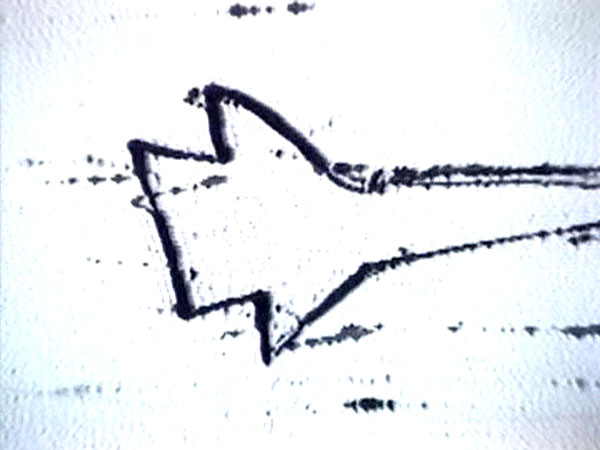
Motion Painting No. 1 (1947, Oskar Fischinger)
Like it says, a motion painting – oil on glass, all small rectangles and big spirals. In The Mystery of Picasso the tension was in figuring how the painting would be finished, where he was heading, but in this the fun is in getting from one intermediate step to another. The process is the destination. There should be more of these!
image

Franz Kafka (1992, Piotr Dumala)
Is the movie supposed to be making that sound of a cat in heat beneath the music, or is my laptop freaking out? Dark and scratchy and slow-moving, nothing actually happening. Oh wait, there’s some sex. Fulfills almost all of the Robyn Hitchcock holy keywords: sex, food and insects (what, no death?). I’m sure it’s very technically accomplished but I found it dreary and ponderous. The filmmaker made a plaster-scratch version of Crime and Punishment eight years later (or more likely he worked on it for all eight years).
image

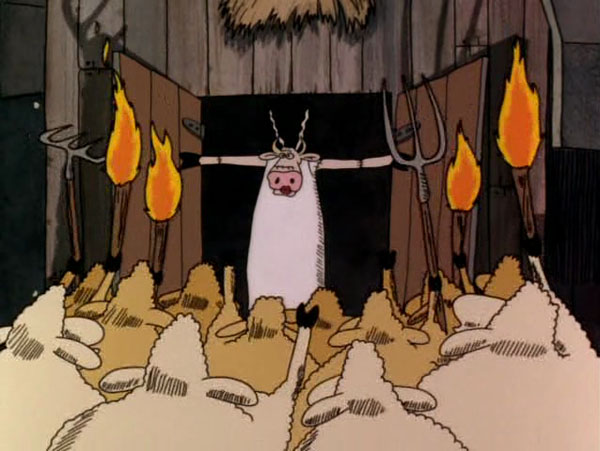
Tales from the Far Side (1994, Marv Newland)
Very inessential, slow-paced animated half-hour of Far Side cartoons. Really the most interesting bit is seeing Marv Newland’s name, 25 years after his seminal Bambi Meets Godzilla. Either he’s no longer a master of timing, or there was too much Gary Larson interference… or maybe you just can’t turn a single-panel comic strip into a 30-minute TV special. Doonesbury worked out, but that was talky and story-driven to begin with.
image

Mr. Prokouk Shoots a Movie (1948, Karel Zeman)
Czech short, part of a whole series of Mr. Prokouk adventures.
image

Prokouk is pointing at us, telling us to get off our asses and join the workforce!
image

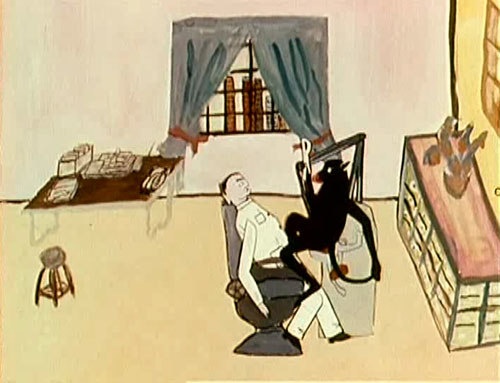
The Monkey’s Teeth (1960, Rene Laloux)
Intro is a three-minute doc of a group-therapy institution for depressed people, what follows is an animation of the film they wrote together. Sad man has a toothache, goes to a dentist who steals his teeth to sell to rich people (I wouldn’t think the teeth of the poor would be worth much, but maybe in France everyone practices excellent dental care). When the monkey wizard bicycles by, I figured the dentist would be put in his place and the stolen teeth returned, and that’s just what happens but first the sad man gets chased into a high school by some cops who get turned into children. Hmmm.
image

Dimensions of Dialogue (1982, Jan Svankmajer)
It’s been too long since I’ve watched my Svankmajer shorts. This is an all-time fave. Faces made of identifiable objects consume each other, becoming smoother until they resemble human heads. Two clay humans make love, create an unwanted clay baby then destroy each other. And so on. Not one for brevity, J.S. takes everything to its conclusion and explores all permutations of his object manipulations – this is what makes his features seem so tedious, but his shorts seem so excellently complicated.
image

Flora (1989, Jan Svankmajer)
A clay person tied to a bed and covered in rotting fruit and veg tries to reach a glass of water. Only a few seconds long, made for MTV (that’s czech for WTF).

Food (1992, Jan Svankmajer)
Oooh I love stop-motion using live actors. Guy enters a room facing a paralysed robot guy, reads instructions hanging on his neck (which are actually an MTV entry form: “Entrant must send a VHS or U-Matic, etc.”), manipulates the guy (puts money in his mouth, receives a sausage and mustard from chest, utensils from ears), then the robot guy leaves and the eater takes his place. Two guys sit at a restaurant, can’t get service so they eat their own clothes and the table. Finally, people are made gourmet meals of their own severed body parts. A classic, obviously.
image

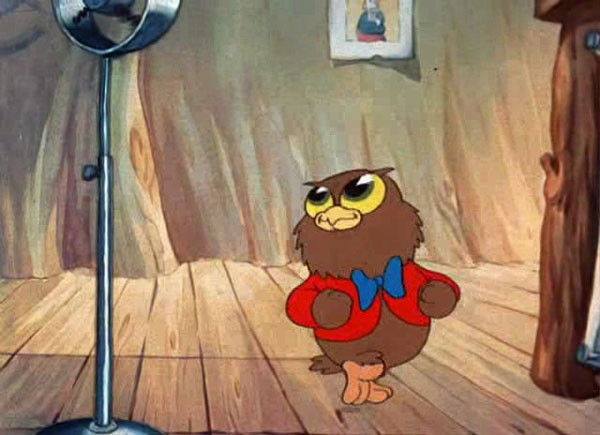
I Love To Singa (1936, Tex Avery)
“Enough is too much!” An old favorite. Owl Jolson is of course a parody of The Jazz Singer, which I’ve still never seen. Jazz and owls: a combination you don’t see often enough.
image

Point Rationing of Foods (1943, Chuck Jones)
An extra tucked away on a Looney Tunes DVD, explaining the wartime canned food rationing system to the public through cheap quickie animation. Helpful to me, since I never bothered to learn how rationing worked before. Also tucked away is the Tashlin-penned The Bear That Wasn’t, probably not because of its unworthiness but because it was made at a different studio.

I Haven’t Got a Hat (1935, Friz Freling)
A variety show of children performers, with hijinks. Porky’s first appearance – the studio intended for a more generic troublemaker character (below, right) to take over, but the public demanded a shy stutterer instead. The title song is catchy, anyway.
image

Roof Sex (2003, PES)
Stop-motion of chairs having sex. The cat is blamed.
image

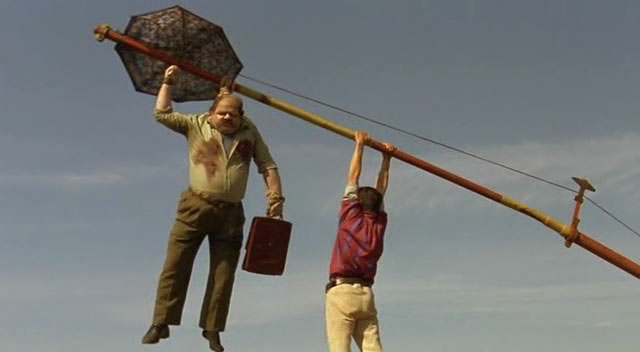
Oops, I told Jimmy this was made in 1988. I was a decade off, but we didn’t see any technology that would’ve proved me wrong. Another anarchic exuberant junkpile Yugoslavic film full of accordian music from Kusturica, but this one is a pure comedy (romantic, even) so the only person who dies and stays dead is a bad guy, and in the end everyone is married and the gangsters, scammers, rich old men, dwarf women and everyone else is dancing and happy.

Two who died but did not stay dead:
image

The main character for the first half hour – is that Matko? – gets scammed by some Russians, borrows money from his dad and from rich (?) Grga and from dangerous coke-fiend party gangster Dadan, buys a train full of oil (?) and loses that along with the money. So as payment for his debts he agrees to have his son marry Dadan’s laughably short daughter.

This guy stayed dead, but his body was used in a Keatonesque comedy bit so it’s allowed:
image

Smurfette and big Grga:
image

The son’s grandfather hides his cash in an accordian and keels over – a calculated death to stop the wedding – but Dadan will have none of that, and stashes him in the attic so nobody starts mourning until the wedding is done. The tiny bride flees, runs into Grga’s giant son, and it’s love at first sight followed by a gunfight with her dad. Son marries his crush (below), the giant marries the tiny girl, the two dead old men (I didn’t mention Grga’s dad died a few minutes ago) come back to life, and Dadan falls into a toilet, grossing out Katy who came in to watch the ending.

One of the actresses, possibly this one, was later in Big Love and Public Enemies:
image

Pitbull! (Terrier!)
image

Not just cats – movie’s got a pig eating a car, a shrieking peacock, a goose used as a towel, and cute goats. I thought the whole thing was a riot, and excellently filmed & edited, but maybe too silly for the others in the room. There’s no pleasing some people!

Black cat, white cat:
image

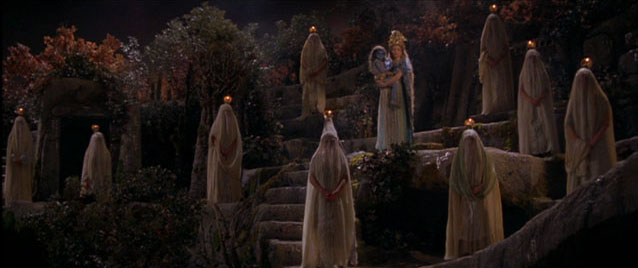
It’s not hard to find a Shakespeare play I haven’t read/seen/acted, but that never stopped Katy from exclaiming “really???” whenever I claimed total unfamiliarity with Midsummer, so we finally rented her favorite version. I liked it… of course, it’s no Much Ado About Nothing with Emma Thompson, but what is? Less zany and complicated than I’d expected. Shakespeare could’ve learned something about comedy from Howard Hawks – or maybe it’s Hoffman, director of dullsville drama Game 6 who could learn something. Fortunately he keeps things much more animated here, seems to do a good job with the so-wide-it’s-squintingly-small-on-my-TV cinematography, though there’s mysteriously no participation by Kenneth Branagh or Michael Keaton (at the time they were busy filming Wild Wild West and doing nothing whatsoever, respectively).

Elf Ritual:
image

Ally, Bale, McNutty, Friel:
image

Okay, Dominic West (The Wire‘s McNulty) loves Pushing Daisies star Anna Friel (who doesn’t?) but her fun-hating parents insist she marry boring Christian Bale (toning things down after Velvet Goldmine) who is being stalked by Calista Ally McBeal Flockhart. Unconnected to any of that, Kevin Kline’s cheesy theater group (including Sam Rockwell) is preparing a play to be performed at the royal court. And all of this would probably end badly if not for the meddling of elf king Rupert Everett (Dunston Checks In) who sends puckish Stanley Tucci to prank fairy queen Michelle Pfeiffer, and along the way he turns Kline into a half-donkey and screws with the four lovers. Mud fights and bicycle rides ensue.

Rockwell is a woman, Kline is a ham, the guy behind them is a wall:
image

Convincingly elvish elf Tucci with mopey Rupert:
image

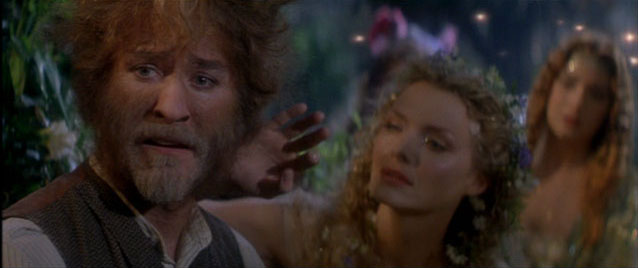
In the end everything is sorta normal except that Kline’s play is a hit, McNutty is allowed to be with his girl, and Bale magically loves Ally. I was surprised that McNutty and Ally gave the best performances of the four, even edging out all the magical beings (well maybe not Stanley Tucci), and Kline is excellent, bringing a touch of sadness to his mostly ridiculous comic-relief role. So where’s he been hiding this decade? Prepping for a comeback, hopefully.

Donkey-Kline and Queen Pfeiffer:
image

Puppetmaster

“Full Moon Productions presents…”

According to IMDB, this was Full Moon’s first feature. They’d go on to make some of my favorite direct-to-video absurd low-budget semi-horror movies of the early 90’s, including Stuart Gordon’s Pit and the Pendulum, the Louisiana sex/devil cult story Netherworld, and many Puppet Master sequels, plus movies that screamed “rent us” from the new-release shelf with names like Trancers, Subspecies and Dollman, but never quite seemed worth the three bucks.
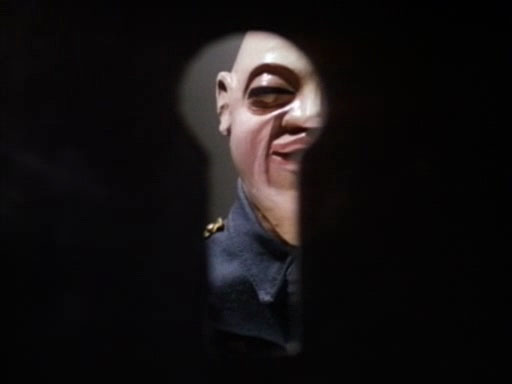
image

“A David Schmoeller film”

Or more accurately, a David Schmoeller VHS tape (were any Puppet Master movies released to cinemas?). He wrote and directed a Klaus Kinski torture film called Crawlspace, which I meant to watch last week instead of Pin… but foolishly did not.

“Puppetmaster”

Titles were re-capitalized to Puppet Master for the sequels, maybe to avoid confusion with Hsiao-hsien Hou’s acclaimed drama The Puppetmaster (whose runtime is longer than any two Puppet Master sequels put together).

“starring Paul Le Mat”

One could argue that Le Mat is an actual star, having played a title role in Demme’s Melvin and Howard and third-billed in American Graffiti. I didn’t find him photogenic, hence no screenshot… oh wait, this might be him screaming:

image

“and introducing Robin Frates”

This was pretty much the last time anyone heard from Robin Frates, except those who saw Schmoeller’s follow-up film The Arrival (not the Charlie Sheen one), which sounds appealingly like a sort of alien vampire Benjamin Button.

image

“special appearance by Barbara Crampton”

Star of Re-Animator and From Beyond! You’d think if her appearance was so special, she could’ve been given a better role than “woman at carnival.”

The theme music is nicer than this movie deserves.

Budget tip #1: Low-to-ground POV shots require no actual puppet effects, and are fun to watch. These are just great, the camera running behind feet and cars, jumping over suitcases and across piano keys.

William Hickey (Wise Blood, Prizzi’s Honor) is Toulon, the inspecifically-foreign-accented titular magician. He’s been discovered by sinister nazis, so he hides Happy/Sad Clown, Oriental Mustache and Hook-hand behind a wall panel and bites a bullet. The end.

The short-lived Toulon #1:
image

No wait! “Yale University, present day.” A dumpy Paul Le Mat dreams in color that he is dreaming in black and white while being attacked by leeches (I hope that’s exactly how the scene read in the script). Is Yale a carnival, or have we changed location to a carnival? Enter “woman at carnival,” visiting a psychic (Irene Miracle of Inferno) who lacks a stereotypical gypsy accent. Ooh they’re playing the ol’ scam-gypsy-who-sees-real-visions card as Barbara dreams up a puppet attack.

image

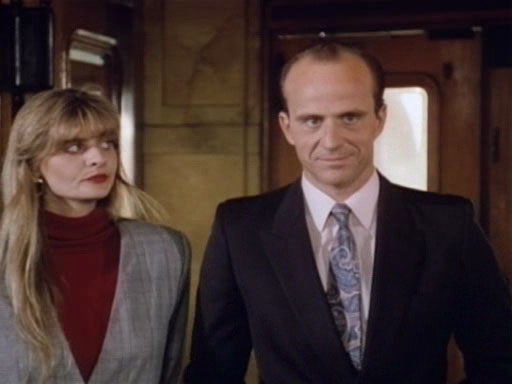
“I want you to recreate in your mind your wildest sexual fantasy.” Two sex-crazed psychic researchers (Balding Ponytail and Too Much Lipstick) call Le Mat (on the phone, disappointingly) to arrange a meeting at the hotel where Toulon died, where they’re met by their cynical psychic friend, their dead friend Neil, a crabby Mews Small (Scott Baio’s mom in Zapped!) and introducing Robin Frates.
image

While our psychic friends creep around the place seeing visions and acting eccentric, Tiny (little puppet head and human hands emerging from a ribbed sweater) kills the peeping crabby lady and plays games with dead Neil. In true Friday the 13th fashion, the puppets go after the sexually active couple first – Too Much Lipstick is killed offscreen by Drill Head and a female puppet barfs leeches onto her tied-up husband. Tiny, boasting some impressive stop-motion, wounds the cynical drunk girl then Hook finishes her off in the elevator (if they were aiming for a Dressed To Kill reference, the editor wasn’t cooperating).

Dead Neil explains: “Metaphysically speaking, I killed myself, and using the techniques of the old puppet master I brought myself back to life.” But then Neil stupidly disrespects the killer puppets and they gang up on him, brutalizing a rubber hand before breaking out the drill and leeches (honestly the leeches aren’t very scary).

image

Written and produced by Full Moon head Charles Band, who had produced everything from Laserblast and Robot Holocaust to Stuart Gordon’s Dolls, Trancers and Ghoulies, TerrorVision and Troll, Clive Barker’s disowned first two pictures, and Sorority Babes in the Slimeball Bowl-o-rama – pretty much everything I watched on HBO at 2am in 1992. Effects by oscar-nominated Dave Allen, who worked on The Stuff, The Howling and Equinox.

image

–
Puppet Master 2

Hook, Clown, Drill, Tiny and Leech Woman resurrect Toulon using a magic potion before the credits even roll. This one is gonna be good.

image

“Full Moon Entertainment presents”

In the two years between the original and the sequel, Full Moon and Charles Band have involved themselves in a parallel-universe thriller, a sexy fantasy-horror starring Sherilyn Fenn (premiering the same week as Twin Peaks), Stuart Gordon’s Robot Jox and its Gordon-unaffiliated sequel

“directed by David Allen”

So they’ve handed the franchise right over to the effects crew. Part II is from the writer of Subspecies and cinematographer of Screwball Hotel (I’ll bet that’s not how they sold it on the poster).
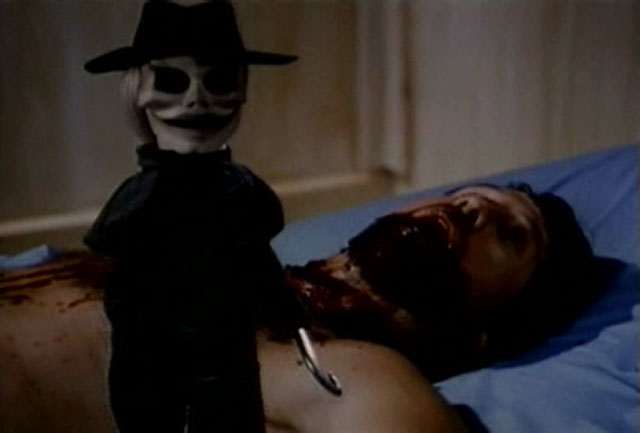
image

A U.S. government paranormal research van is poking around the old hotel, bearing bearded Lance (Demonic Toys), dark-haired Wanda, jokey cynic Patrick, serious Carolyn (of Robot Jox 2) and older new agey “truth comes from feeling” Camille (Frightmare, Night Shift). They tell us Paul Le Mat survived the first movie but wanted too much money for the sequel so he’s locked in an asylum. Then introducing the neighborhood Comic Relief Farmer and his pitchfork-bearing wife – “They say Satan’s got a suite of rooms in there!”

Tiny and Clown take care of pseudo-psychic Camille in secret, then Drill brains Patrick with everyone watching, is captured and dissected. I hope Drill will be okay!

image

The filmmakers overestimate the computing power of an Amiga 2000:
image

Toulon (a new actor) wanders in with an Invisible Man getup, calling himself Eriquee Chaneé (get it? Chaney?) claiming the hotel is his, then the group is joined by Collin “Corbin’s Brother” Bernsen, our first glimpse of star power (heh)

image

The farmer’s brains are removed by Leech Woman (movie is really into brains; I sense a zombie connection) who is then melted by the wife, immediately replaced by Torch, who burns her up, in a particularly poorly-lit scene. So Toulon is collecting brains to brew up a new batch of magic puppet juice and live another 50+ years as a puppet himself.

image

Flashback: Toulon remembers years ago in Egypt when he was a powerful magical puppetmaster but a crappy actor, and as punishment, an old merchant burns up the puppets using his mind. Hmmm.

The scene I remember best from the entire series (below): a boy is torturing his GI Joes with a whip, tries to play rough with Torch. The scene I remember least: pointless seaside romance between Carolyn and Corbin’s brother. Even adding a flamethrowing puppet and resurrecting Toulon from the dead, it’s not a better movie than the first one, which at least had characters which weren’t all interchangeable sexy college students.

image

Hook carves up Lance and Wanda, Puppet Toulon (I like him, a short guy with hard marble contact lenses) threatens Carolyn, and I’m not sure why the puppets turn on him then resurrect Camille to go terrorize an institute for “mentally troubled” children, but there you go.
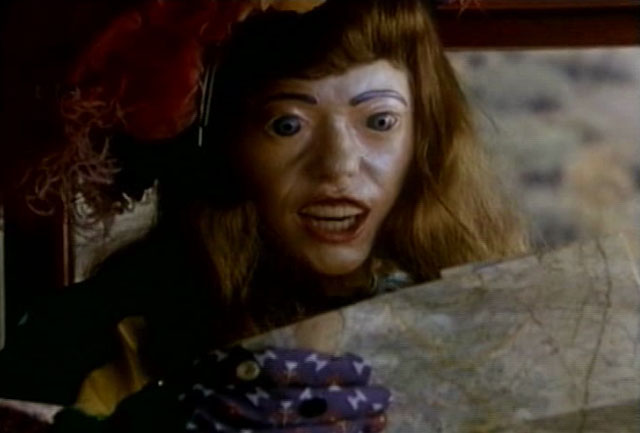
image

–
Puppet Master 3

“Berlin – 1941”

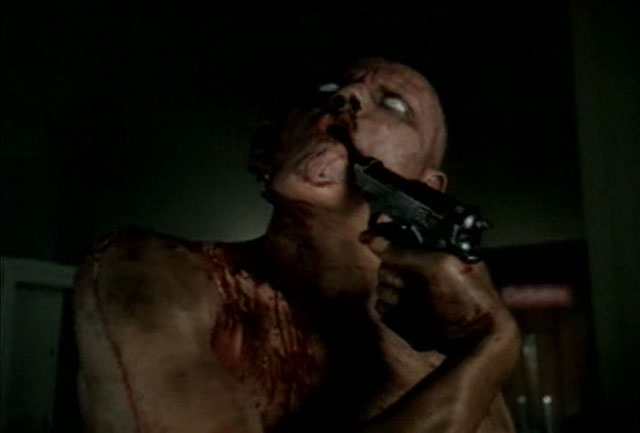
Nazi experimenters succeed in reviving the corpses of dead soldiers. A young puppetmaster is interested.

Looks like something out of Day of the Dead:
image

“Full Moon Entertainment presents”

This was Full Moon’s year. They had Stuart Gordon (Pit and the Pendulum), Trancers II (the Helen Hunt-starring sequel to a mid-80’s Charles Band film), and future sequel-bait Subspecies and Dollman.

image

“starring Guy Rolfe”

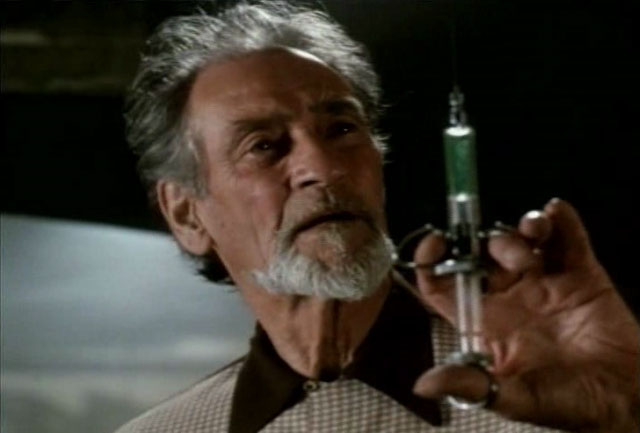
Finally a consistent Toulon – he’d play the part through 1999. Guy had been around – not just in stuff like Dolls (in which he also played a puppetmaster), but in Tashlin’s Alphabet Murders and Nick Ray’s King of Kings in the 60’s.
image

“directed by David DeCoteau”

The prolific Mr. DeCoteau had made such classics as Sorority Babes in the Slimeball Bowl-o-rama (which I have seen more than once) and Dr. Alien, would go on to make such classics as Frankenstein Reborn!, Final Stab and Wolves of Wall Street.

Sinister Eric Stein confronts Toulon about the Hitler-mockery satire of Toulon’s puppet show. Mrs. Toulon (Sarah Douglas of the first two Superman movies and Return of the Living Dead III) looks on. The stop-motion effects are still cool and still only one second long at a time. Two important and great new additions: the six-shooter cowboy puppet, and giving the puppets wordless voices (cowboy’s Jack Nicholson laugh is my favorite).

image

Gestapo Krauss (Richard Lynch) and Dr. Hess (Ian Abercrombie of Inland Empire) fight over Toulon’s fate. T’s wife is killed in a raid, then Tiny and Drill kill the nazis escorting T into custody – can’t argue with that. While T cries over his wife (along with the puppets, making the ending of part 2 more inexplicable) and gives his revenge monologue, the main general (a Bond movie regular) calls on the search. Leech Woman is still not interesting, even when she’s supposedly T’s murdered wife recurrected to kill Stein.

image

A distractingly weird-looking “young boy” (turns out it’s a short 22-year-old), also on the run, stays with Toulon while Six-Gun takes out the general (plenty of stop-motion plus a fall from a high window – along with the period costumes, looks like Full Moon is ramping up the budget). Toulon creates Blade, modeled after Krauss (who himself is modeled after Klaus Kinski), replacing his broken Hitler doll.

Kraus/Kinski/Blade:
image

There’s actually a story here, not just a bunch of idiots at a hotel getting killed one at a time. Hess turns out to be decent (well, as decent as any nazi scientist trying to reanimate dead soldiers can be), the father of the “boy” turns traitor to win his freedom, both die, Toulon strings up Krauss and escapes Germany with the “boy.” Weird to turn a slasher horror flick into a nazi adventure, but there you go.

image

“Photographed at Universal City Studios Hollywood” – there’s that budget I was talking about. Too bad it won’t last.

image

EDIT: Thanks to Frederic for pointing out the correct model of computer the filmmakers are misusing in part two. Apologies to Commodore 64 heads for the error.
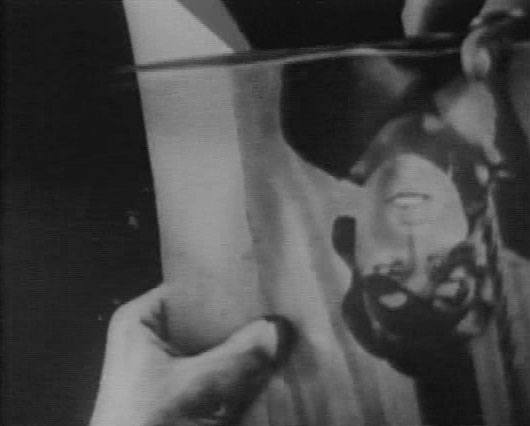
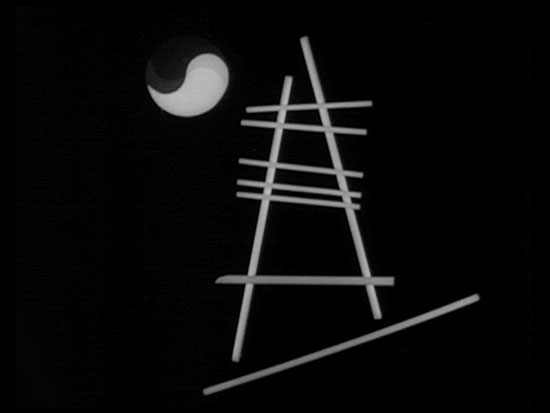
More 16mm screenings from Clay, Halloween-themed this time. Clay showing seasonal shorts reminds me of Robyn Hitchcock’s halloween show where he joked that since he’s only playing songs about ghosts and death, nearly half his catalog is disqualified.

The Skeleton Dance (1929, Walt Disney) was the first in the Silly Symphonies series, with good music-visual sync, but too much repeated animation. No spoken/sung dialogue, wordless skeletons playing in a cemetery until the sun comes up.

Runaway Brain (1995, Chris Bailey) is an excellent, fast-paced Mickey Mouse short with a mad scientist voiced by Kelsey Grammer, beaten for an academy award by Wallace and Gromit. Seems like nobody around me had heard of this before.

The Tell-Tale Heart (1953, Ted Parmelee), animated with some abstract imagery, overlapping shots and sharply-drawn characters. Has a deservedly high reputation, but beaten for an oscar by Disney’s Toot Whistle Plunk and Boom.

Betty Boop’s Hallowe’en Party (1933, Dave Fleischer) – always great to see a Betty short. Her party is pretty tame – kids bobbing for apples and singing like the birdies sing (tweet, tweet tweet) – until a bully shows up and she attacks him with her secret cache of ghostly evils. Full of amazing animation and visual ideas, beautifully synched to the music. I gotta get me a whole pile of these cartoons someday. I asked Wikipedia when the apostrophe disappeared from “hallowe’en” but it didn’t know.

Naturally the show was also full of TV episodes and classic commercials – Count Chocula vs. Franken Berry, of course, also a kids vehicle that looks suspiciously like the Wacky Wheel Action Bike (“you can’t ride it! you can’t ride it!”) and an awesome PSA warning kids to stay away from blasting caps.

Of the TV shows, we’ve got a Popeye the Sailor episode where an evil robot-popeye robs banks, the adventures of Goodie the Gremlin, who helps people invent the steam engine, airplanes etc. instead of tormenting people like the other gremlins want, a Spider-man episode where Green Goblin gets his hands on a book of voodoo spells, and a hilarious, surreal episode of Ultraman (featuring benign fluffy chattering Pigmon monster in a recording studio, giant plumed lizard monster with heat-seeking feather missiles, and the usual bonkers dialogue). Then the lower-tier corny garbage shows: a cartoon Sinbad the sailor, some dimwit monster who shoots smoke out of his head, Beany and Cecil meet the invisible man (1962, produced by a post-Warners Bob Clampett) and a Hal Seeger-created short called Batfink, in which BF and his dim pal Karate fight a magician.

Both this and Genesis required all my concentration to figure out who was who and what was happening.

A girl and her dad:
image

Magic man Mambi has a daughter Jangine, and he promises her in marriage to the son of powerful leader Guimba. Twenty years later she is beautiful and Guimba’s son is a perverted dwarf, so she wants to marry a hot dude instead. So Guimba, a scary, easily-angered man who hides from sunlight, drives her father and all hot dudes from the village and demands she marry the son as planned.

image

But the son doesn’t want to marry Jangine – he prefers his women more full-figured. This is fine with Guimba – he’ll let the son marry his large mistress while Guimba takes the girl for himself. The father sends some magic boogedy into town, Guimba kills his son then exposes himself to capture and ridicule by the townsfolk, and presumably kills himself.

image

Jangine would star in Moolaade (Katy recognized her; I didn’t). The griot appeared in Bamako, and the daughter’s father has been in everything: Finye, Yeelen and Genesis among them. We liked it alright – Katy says it was more confusing than Genesis, because at least she’d read the book of Genesis and seen Joseph and the Amazing Technicolor Dreamcoat but with Guimba we had no frame of reference.

image

R. Ames in his African Filmmaking book:

Sissoko turned away from the basically realistic approach of his first two features with Guimba The Tyrant. Already, in Finzan, Sissoko had drawn on the popular Malian koteba theatrical tradition in the portrayal of Bala, the village idiot. Now in Guimba he moved further in the use of African oral traditions to shape the whole film – creating a narrative full of abrupt shifts in time and place and unexpected digressions – the shift in style typified by the appearance of a griot at the beginning and end of the film, introducing the tale and commenting on its aftermath. The inset story, which focuses squarely on tyrnny and the need to oppose it, has obvious contemporary relevance, as many commentators have noticed, to the overthrow of the Malian dictator Moussa Toure in 1991. But the film is shaped as a fable mixing elements of farce and the supernatural and with constant shifts in mood and direction. It chronicles the rule of Guimba and his dwarf son Jangine, putting emphasis on their brutality, on the constant praise-singing of their eloquent but two-faced griot, and also on their ludicrous sexual desires: Jangine rejects the beautiful Kani, to whom he was betrothed as a child, in favor of her more than amply proportioned mother, Meya. The exile of Meya’s upright husband by Guimba, who covets Kani for himself, trigers the ruler’s eventual downfall, chronicled in an often confusing sequence of confrontations played out in splendidly evocative costumes within the visually impressive setting of Djenne, one of Mali’s ancient Saharan trading centres. As Sissoko has rightly said, Guimba “opens the door to audiences for understanding our history through our cinema. Obviously, some aspects will seem odd or not readily comprehensible, but the door to dreaming and discovery is open to those who wish to enter it.”

image

Camille: “Can I come during the day, from 5 to 7?”
Marcello: “The magic hour for lovers.”

image

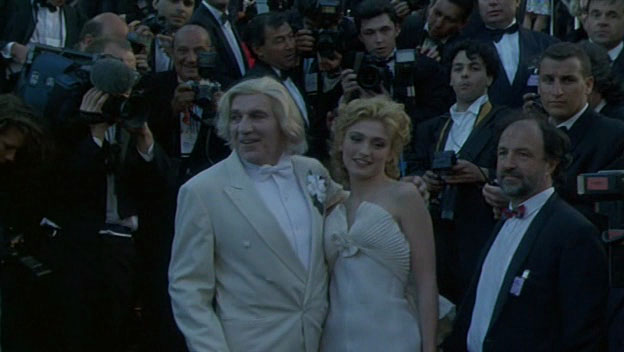
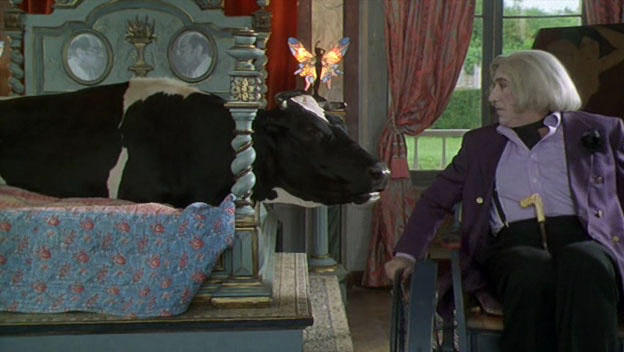
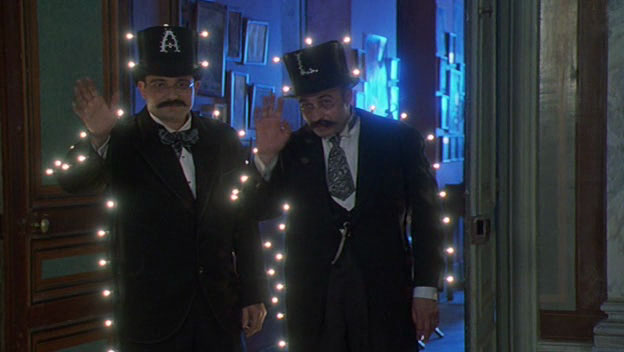
Simon Cinema (Michel Piccoli) isn’t doing too well, confined to his mansion-museum with his butler (Truffaut/Duras vet Henri Garcin) and best friend Marcello Mastroianni (as himself, sort of). Film student Camille (Julie Gayet, the girl with the giant gag vase in My Best Friend) is hired to talk with Simon about movies for 101 nights, and her boyfriend (Mathieu Demy) takes advantage of her position to cast the legendary Mr. Cinema in his student film.
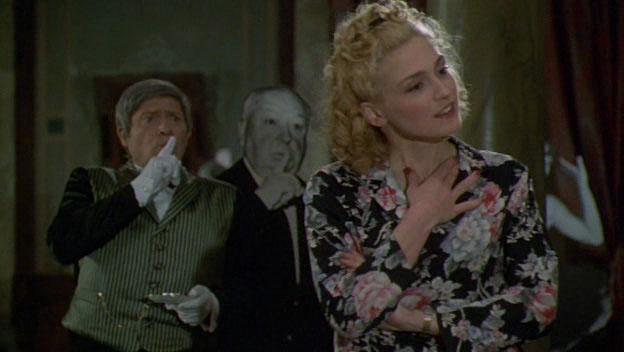
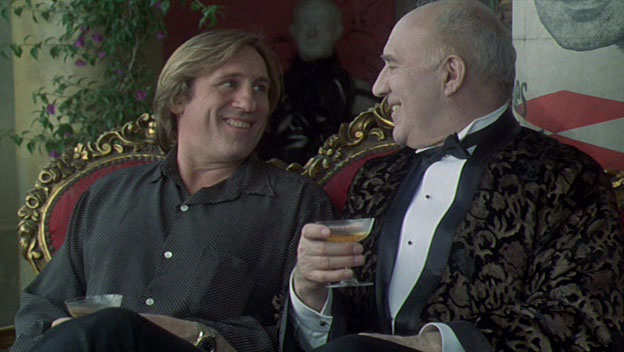
Michel and Marcello:
image

Garcin and Gayet:
image

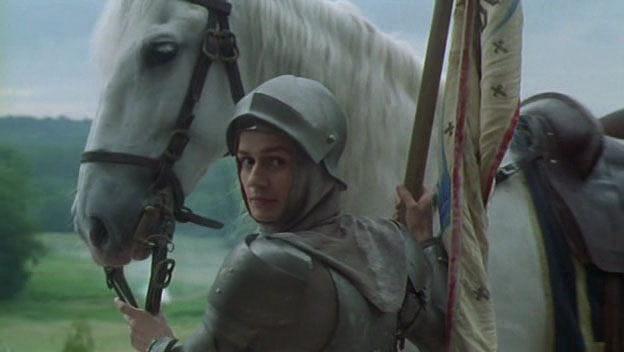
But the plot is just an excuse for some fun. Every star of French cinema shows up, major films are mentioned (nothing is discussed in any depth – no time). Anouk “Lola” Aimée, Catherine Deneuve and Robert De Niro take a boat ride. Sandrine Bonnaire appears as both her Vagabond self and Joan of Arc. Piccoli drops the Simon shtick and the white wig for a minute and compares cinematic death scenes with Gérard Depardieu (“that old devil Demy!”) before a poster of their co-starring Seven Deaths film…

Gerard and Michel:
image

Sandrine d’Arc:
image

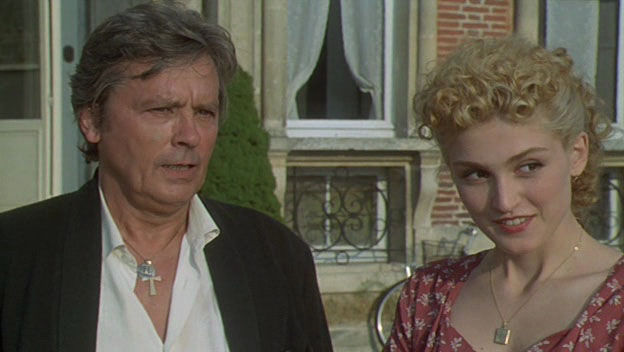
Hanna Schygulla (Fassbinder films, Passion) and Jeanne Moreau (Jules and Jim, The Lovers) play Simon’s ex-wives. There are seven dwarfs. There’s a conspiciously Bonheur-looking sunflower shot. Alain Delon arrives by helicopter (reminiscent, though it maybe shouldn’t be, of the out-of-place helicopter in Donkey Skin).

Gayet with Alain Delon:
image

Jeanne and Hanna:
image

It’s all very light and playful. I’m sure I missed a thousand references, but it keeps many of them obvious enough to remain accessible (if you didn’t catch the meaning when a bicycle is stolen outside the mansion, someone cries “italian neorealism strikes again!”).

Mathieu Demy meets Fanny Ardant:
image

The credits list how many seconds and frames were used from each featured film – impressive – and also all the stolen music cues.

image

tour bus guy: “Glad to see you on form.”
Simon: “Form of what?”
“Why, you seem content.”
“Form and content, a debate even older than I am.”

At Cannes:
image

NY Times: “While covering so many bases, Ms. Varda never makes more than a glancing allusion to anything, and at times the film is such an overloaded grab bag that it grows exasperating. Or even baffling; for unknown reasons, Stephen Dorff turns up in a pantheon of great Hollywood stars.”

image

LA Times: “Michel Piccoli plays Monsieur Cinema, who embodies the history and spirit of film, and in particular, that Fabulous Invalid, the French motion picture industry itself. (Since Varda is such a playful director, Piccoli is sometimes simply himself.) Monsieur Cinema may have been inspired by the director of the landmark Napoleon, the late Abel Gance, whom Piccoli resembles when he puts on a long silver-white wig.”

Lumiere brothers:
image

Doctor Belmondo and Jack Nance:
image

image

image

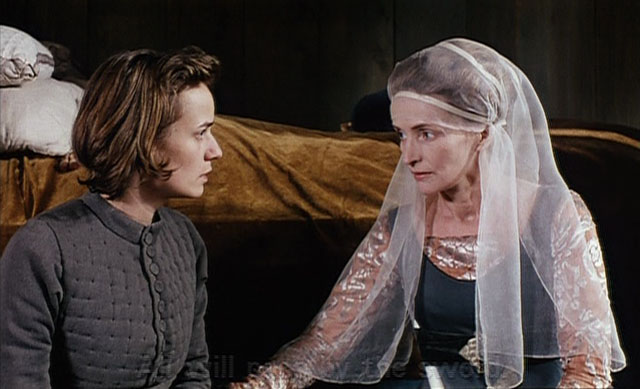
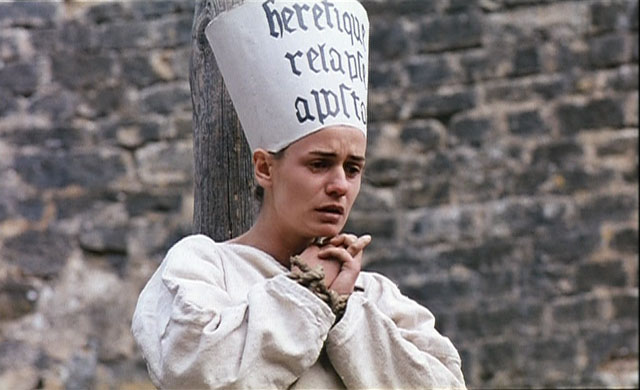
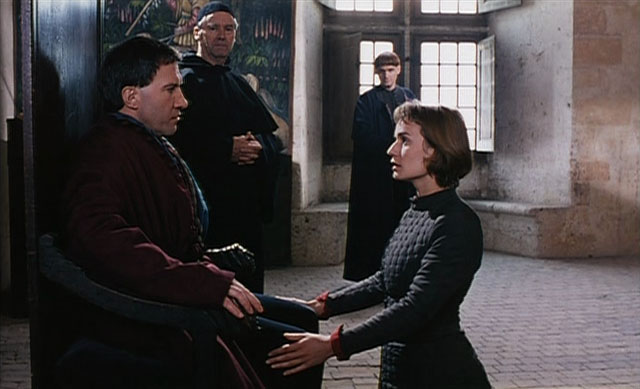
I. The Battles begins with Jeanne having had her angel visitations already, trying to convince local government to take her to the king, and halfway through the film gets to the battles she led against the English. II. The Prisons is half battles (which is good; we didn’t get enough battles in part 1) and half British prisons (with hardly any of the trial/execution scenes that Dreyer would focus on). All set 1429-1431, except for an odd intro in 1455, with Jeanne’s aged mother, a nun, telling of her daughter’s unjust execution.

image

It’s a Rivette film, all right. Long shots with medium natural lighting, deliberate camera movement, same typeface as always on the titles, brief blackouts between scenes, same list of collatorators in the credits. Quite a follow-up to La Belle noiseuse… I’ll bet nobody saw this coming. It works very well to Rivette’s strengths, though, and stays focused on Jeanne and her quest without gimmicks and without getting caught up in the scale of the story and the hundreds of side characters.

image

Sandrine Bonnaire, a decade after Vagabond and a year before The Ceremony. I didn’t recognize anyone else besides a cameo by Edith Scob. IMDB says Jean de Metz, the guy who leads her to the king’s court, was in Hurlevent, King Charles (André Marcon) is appearing in Rivette’s new film, and Quentin from Out 1 played Pierre Baillot (who was that?).

with Edith Scob:
image

Joan is charismatic and persuasive, but acts realistic. Her supernatural visions aren’t shown – we know Rivette isn’t above showing supernatural visions, but here he has Jeanne speak of them regularly without portraying them as a reality to the audience.

Unfortunately, this four-hour film has another two hours which I can’t see at the moment. Looks like Artificial Eye has released it on DVD. You know, my birthday is coming up…

image

J. Rosenbaum:

…this is a materialist version of a story that offers no miracles, though it does offer a pertinent attentiveness to gender issues (such as the nervousness and sexual braggadocio of the soldiers who sleep beside Joan) and a Joan who’s girlish as well as devout, capable of giggling as well as experiencing pain; when she wins over the dauphin the scene is pointedly kept offscreen, and when she’s interrogated by priests about her faith she could almost be a graduate student defending a dissertation.

with the king/dauphin:
image

C. Fujiwara:

As Rivette and Bonnaire present her, Joan suggests a novice movie director protected by a seasoned crew that humors her as much as obeys her. (Army life in this film is more sitting around than fighting; in this respect it’s like a film shoot.) She doesn’t do miracles; she just uses common sense and takes the initiative.

Opening titles: we hear a nice Tom Waits song (the soundtrack is great overall) and see “JVC PRESENTS.” Didn’t JVC used to make blank tapes? The kind that weren’t even as good as Maxell?

Five segments in five cities. Has cute parts, and I guess it’s part of the greater Jarmusch body of work or whatever, but also kinda feels like something that could’ve safely stayed in 1991 (or maybe ’93; it was ahead of its time). What’s funny is that it doesn’t seem like the kind of movie that should get easily dated (except through the usual – fashions, cars, mobile phones – only period pieces are immune to those) but it has this early 90’s aura about it, like Smoke or a Hal Hartley movie, which I don’t see in Dead Man or Down By Law or Mystery Train. Maybe it’s just Winona Ryder. Anyway this remains my least favorite Jarmusch picture, though I did enjoy it overall. If you could break it up Coffee & Cigarettes-style, it’d be nice to lead from New York straight into Helsinki, and maybe add Rome every third or fourth viewing.

LA: Winona Ryder is a midget phonebook-sitting wannabe-mechanic driving fancypants cellphone-calling casting agent Gena Rowlands home from the airport. Gena’s client is looking for a tough young girl, an unknown, so predictably she propositions Winona, who turns Gena down. Jim says it’s the first movie Gena agreed to do after John Cassavetes died. I never made it past this segment when I first tried to watch Night On Earth a decade ago… pixie Winona is too hard to take as a street tough.

NY: East German Armin Mueller-Stahl (same year he did Soderbergh’s Kafka) is new to New York and cab driving, so passenger Giancarlo Esposito takes over, picking up sister-in-law Rosie Perez for a miniature Do The Right Thing reunion, wide-eyed Armin taking it all in.

Paris: Isaach De Bankolé (stolen from Claire Denis) kicks out some diplomats, picks up a blind girl (Beatrice Dalle, star of Time of the Wolf, also a Claire Denis regular) and asks her a bunch of dunderheaded questions.

Rome: Roberto Benigni picks up a priest, drives like a madman (but there’s no traffic so it’s cool) visits a couple transvestites, and tells horribly perverted stories until the priest dies after dropping his meds on the floor and Roberto quietly unloads him on a park bench.

Helsinki: Cabbie picks up three guys from a hard night on the town. Of course all four of them have been in Kaurismaki films (one of the passengers played Polonius in Hamlet Goes Business. They tell their drunk friend’s hard luck story and the cabbie replies with his own hard luck story. Way to end your movie on a dead baby tale there, Jim.

Nice color cinematography by Frederick Elmes (a Lynch regular who later shot Broken Flowers) – not seen here cuz it was a rental and I forgot to get screen shots.