Puppet Master 4

“Full Moon Entertainment presents”

FM was on fire since the last Puppet Master sequel. They’ve got a Jeffrey Combs sci-fi pic, the aforementioned Netherworld, more Trancers and Dollman and Subspecies movies, at least two dinosaur pictures, two kids movies, four or five more sci-fi movies, and Charles Band involved himself in a castle horror starring Adam Ant.

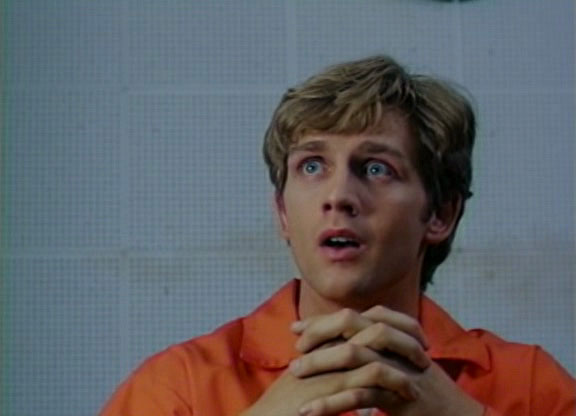
“starring Gordon Currie”

“THE Gordon Currie,” you might be asking, “twelfth-billed in Friday The 13th Part 8?” That’s the guy. He’d go on to appear in the intriguing but disappointing Waydowntown and play opposite Kirk Cameron in the Left Behind movies.
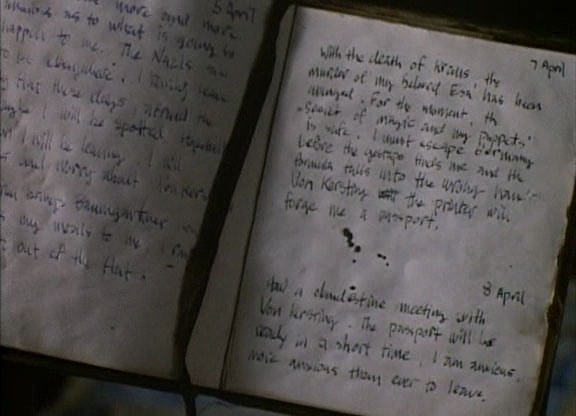
image

“Screenplay by…”

Holy crap, five writers! This is gonna be great! Among them, four are mainly known from this and part five, but Douglas Aarniokoski broke out into directing, assisting Robert Rodriguez and Terry Gilliam before helming his own Highlander sequel.

“directed by Jeff Burr”

Experienced horror director Burr had recently helmed Stepfather II and Texas Chainsaw Massacre III. IMDB reviewers rave: “Okay!” “Worth a look!” “Good enough!”

image

Judging from the glowing metal box during the credits, it seems Puppet Master might be trying to rip off props from the Hellraiser series. Oh and now they’re stealing the short glowing-eyed druids from Phantasm. “It is known that those in the upworld are close to discovering our secret, the secret Andre Toulon stole from us those many years ago.” You can tell we’ve got supernatural underground beasties here, and an attempt to get all mythological and use fancy english. Should be no trouble with five writers.

A girl in a lab is working on “The Omega Project” (not the jazz jam band, the “hot nude babes” website or the Japanese film production company – it’s something involving robot arms and colored blocks), receives a package containing a murderous alien puppet, then gets clawed to death. This is one of those movies where every time something happens, we’re gonna see the druids watching it in their magic pool of liquid. Same thing happens ten minutes later to her colleage in another lab. Are subterranean aliens hoping to harness the power of robotic arms moving colored blocks??
image

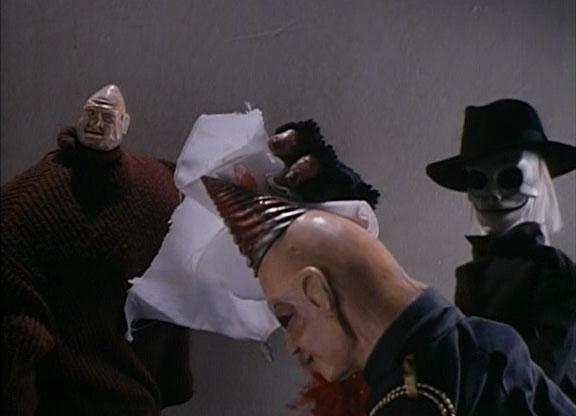
Enter our star Rick, a laser-tag-playing robot programmer prone to talking into a microcassette-corder who lives in the ol’ hotel with his doll Hook, until a visit from his girlfriend Susie, her hot psychic friend Lauren and some asshole named Cameron, Rick’s robotics rival. The artificial-intelligence thing is a nice addition, but come on movie, another psychic in the same hotel? And did they shoot this through a mirror? What is all this glare on the lens? A Bob Vila joke right next to a SCUD missile joke – timely.

Cameron, R.I.P.

image

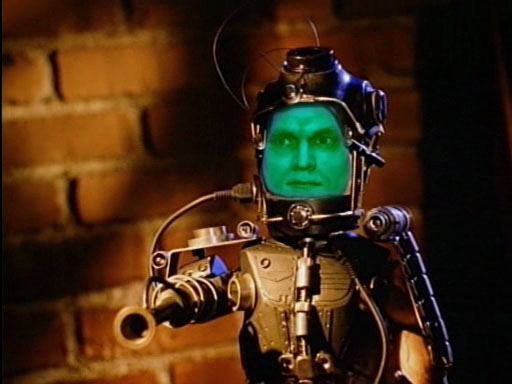
The kids happen upon Toulon’s trunk as Puppet-Toulon lurks outside. They resurrect the killer puppets with Toulon’s formula, marvel at them for a minute, then go off to bed when lightning knocks out the power. Good idea! C&L pull out the series’ first ouija board while Rick plays laser tag (no shit) with Tiny and Drill. The ouija opens a gateway through which more alien demons appear and mangle Cameron to death.

Laser Puppet Master would have been a great title:
image

Guy who plays a security guard appeared the following year in crappy Donald Sutherland flick The Puppet Masters – no relation!

The “magic to create life” is in a numeric formula on Rick’s computer. Decapitron’s head turns into a cameo by Toulon. Apparently the puppets are no longer mad at him from the events of Puppet Masters 1 & 2. I think at this point we’ve “rebooted” and are pretending those two didn’t exist. I think when Toulon, speaking through the unconscious third girl, says “you must transcend linearity,” he is telling us to forget about parts 1 & 2 and just go with it. Physics according to the movie: laser tag guns can wound alien puppets, light travels at around one foot per second, and even though puppets are made of cloth and wood they can still make kung-fu punching sounds when they collide

image

Toulon dubs Rick the new puppet master, the evil alien is defeated (but not destroyed), and we proceed to part five, which I’m guessing was shot right around the same time.


Puppet Master 5

“Full Moon Entertainment presents”

In between parts 4 and 5: a Lovecraft adaptation, some sexy business, more sequels, and Shrunken Heads from Richard Elfman, director of Forbidden Zone.

Aaand we’ve got the same director and stars as part 4. Confirmed, shot at the same time.
image

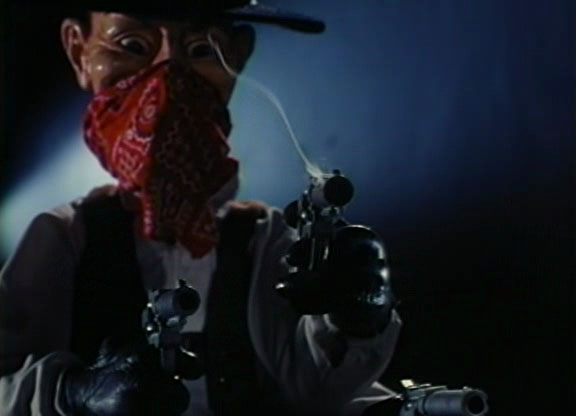
“Kind of a queer doll for a grown boy to have.” That’s Duane Whitaker, who appeared the same year in Pulp Fiction as one of the dudes who ties up Bruce Willis and Ving Rhames. Since then he’s been in both Rob Zombie sequels. A real movie star in a Puppet Master flick!

Dreeeeam seeeeequence:

image

We join Rick at the police station where he’s being arrested for all the deaths from part 4, then it’s on to the first recap of the series, greatest hits from part 4 (there’s some laser tag, of course).
image

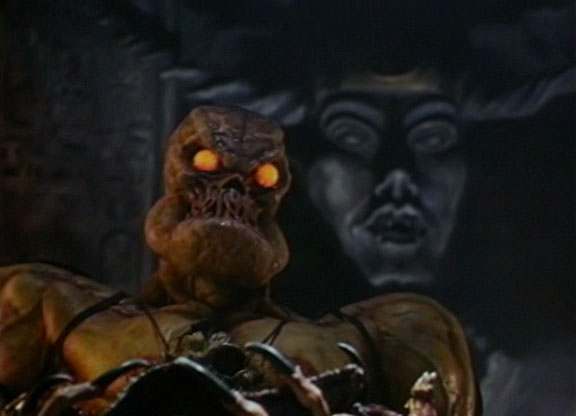
Some dullsville setup: the new head of Rick’s robotics company is pulling some weapons-dealing trickery, hires the lamest thugs to break into the hotel and steal the puppets. Meanwhile, with no Phantasm monk assistants left, the giant underground puppet transfers his soul into a demon puppet in a drawn-out bit of hammery, saying junk like “drink deep from the fountain of evil, my child.”
image

Ever since trying to gain some goodwill by fighting nazis in part III, the series has been going out of its way to bring Bad Guys into the series to become puppet victims, not just innocent psychics. It’s okay for Jester to nail one of the petty thieves in the balls with a meat hammer, but the demon puppet does all the real killing. These guys aren’t evil enough to deserve Death By Jester, just some slapstick. Hey, it’s Torch! Was he even in part 4? The Demon shoots ghost lasers at Torch until Six-Shooter wounds it. Aaaand Rick talks to his computer which is channeling the now-hospitalized psychic girl from part 4.

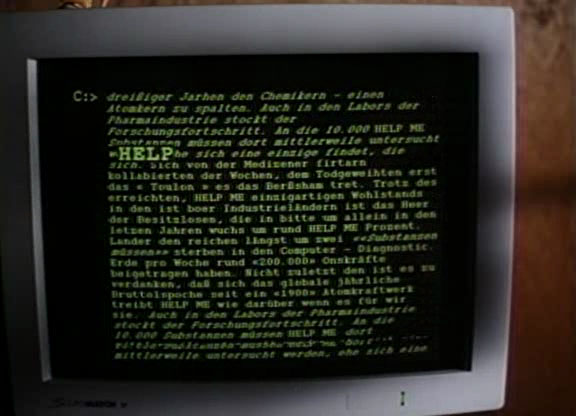
The filmmakers apparently confused computer code with German:
image

Timely references: a gross country guy uses the phrase “achy-breaky”

Up to the 65-minute mark it’s kind of boring. The thieves’ deaths are all demon-scratches and red lighting, and as before, everyone makes a huge deal of Decapitron, who doesn’t even seem all that cool to me. Oh wait, I looked down to type this and now Doctor Whoever, the weaponry robotics bigwig, is fighting Rick with a giant wrench in the elevator. Oh good, Torch is unharmed from the laser hit, and he and his buddies don’t take kindly to the bespectacled man who just konked out their friend.

Decapitron is not cool:
image

Epic (well, three-minute) puppet battle follows. All puppets survive, the demon doesn’t, happy epilogue. The movies are becoming disappointingly tame and formulaic. Fortunately they changed things up in the next movie, but unfortunately it’s the worst-rated in the series.

image


Puppet Master 6

“Full Moon Pictures presents”

Our six favorite puppets are in cages while a new fake Toulon runs off and burn/buries another cage on a cool-looking night-and-fog set. Hope he buried Decapitron (update: no, it was the deformed puppet body of his former assistant, but Decap isn’t in this sequel anyhow). Lots of editing and fancy angles… we may be in the hands of a Raimi disciple.

The poster is for a mid-60’s Italian swords-and-sandals flick:
image

“Curse of the Puppet Master”

So we’re done with the sequel numbering. A montage of puppet scenes from earlier movies plays over the credits, and it’s not for recap purposes like in part five – just good ol’ footage recycling.

image

“directed by Victoria Sloan”

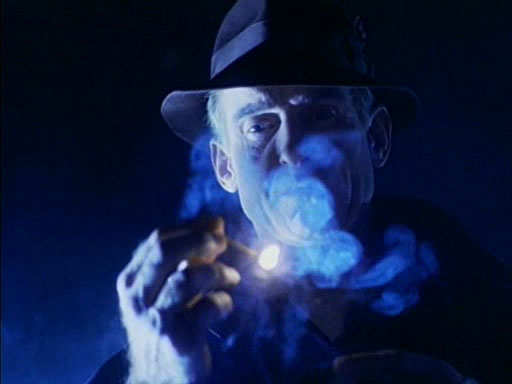
This is actually David DeCoteau from part III. Why would the guy who has only ever made bad movies use an alias for a bad movie? In fact, his previous Puppet Master entry was one of the good ones – you’d think he’d want some fan recognition. Maybe the DeCoteau table at the conventions was getting too hot. From the writer of Hellraiser Deader, ugh.
image

“Another Magoo goes to college” says the fake Toulon to his daughter. So the lead’s name is gonna be Magoo, huh? And now a guy named Tank whom I recognize from the video box. Picked-on sensitive Tank (Josh Green, who made it to 42nd-billed-in-Pearl-Harbor before throwing in the towel) makes fancy wood figurines, gets hired by puppet-crazy Mr. Magoo, introduced to our gang, who are let out of their cages for dinner. Movie doesn’t look so bad but this is some clumsy-ass dialogue.

image

Magoo bought the puppets at auction? So much for the long careful setup stringing the sequels together. Oh um Magoo (George Peck – best known as “man with luggage” in a Susan Sarandon flick) is being questioned by the cops about the disappearance of his previous assistant in an extremely drawn-out scene. Come to think of it, 30 minutes have passed and nothing has happened (pre-credits foggy mystery doesn’t count).

Magoo wants the boy to make a 444-piece puppet – that’s 2/3rds of the devil. Maybe it comes with a 222-piece accessory pack. One piece is the size of his hand – the puppet will be as big as the house!

“What is man except a being at war with himself.”
image

Jane Magoo (Emily Harrison – the best actor here – who went on to play “girl” in a David Spade film) is back and there’s some kissing and what not. Tank roughhouses with hooligans. Mr. Magoo pep-talks Tank. The last 30 minutes of this movie had better be pretty cool.

A hooligan broke Tiny! Puppets are sent after the hooligan and we have our first groin-drilling of the series. I am liking the drunkenly tilting camera. An investigation follows and our puppet friends become cop killers. The effects in this movie ain’t worth a damn – no stop-motion or cleverness, just out-of-frame hands waving puppets around, and sometimes strings I can see.

image

Magoo turns Tank into a way silly Max Headroom robot and the puppets, who were totally cool with all this a second ago, decide to kill him. Roll credits? I like the bonkers ending and the short runtime, but let’s face it, I’m just trying to stay positive over a turd of a movie.
image

I am Puppet Master’d out, so there will be a very long delay before I move on to part 7…

Surogat (1961, Dusan Vukotic)
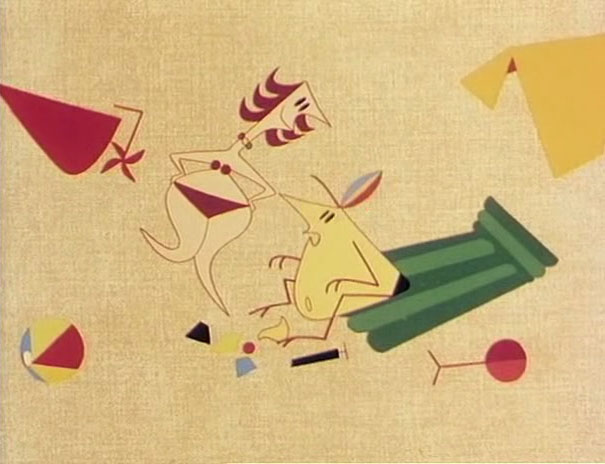
Slightly naughty beach picture about a fat guy who brings inflatable ball, boat, car, food and girl. Real great anything-goes animation. Disney, Friz Freling and Chuck Jones must’ve cancelled each other out, giving the award to the underdog foreigner.
image

The Crunch Bird (1971, Ted Petok)
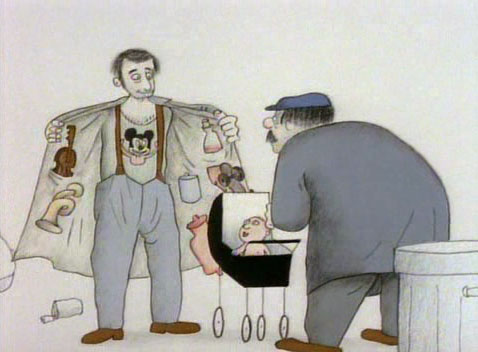
“Crunch bird, my ass!” Ugh, punchline shorts. Was there no competition this year? I would’ve awarded Thank You Mask Man over this. From a co-writer of What’s Up Tiger Lily, this beat a comic Canadian short about evolution and an adaptation of an Oscar Wilde fairy tale (OW wrote fairy tales?).
image

The Sand Castle (1977, Co Hoedeman)
A desert man with arms and legs but no body creates clay creatures to help him build a giant sand castle. All stop-motion, the short that (probably deservedly) beat Doonesbury at the oscars.
image

Every Child (1979, Eugene Fedorenko)
More of a foley demonstration than a proper cartoon. The animation is there I guess, though slightly Squiggle-visioney. Wow, someone sings the Umbrellas of Cherbourg theme. So the foley guys are telling the story of an unwanted baby… to a baby. One foley guy went on to voice the French version of Chief Quimby on Inspector Gadget. This beat a short called Dream Doll which I’d like to see, apparently an X-rated spoof of The Red Balloon.
image

Tango (1981, Zbigniew Rybczynski)
An empty room, simple tango music. A kid (looks like stop-motion cut-out photographs) throws a ball into the room, comes in, throws the ball outside, leaves, repeat. Then another person is added, then another and another, none of them interacting with each other until the very end. How’d they do it? Beat out some stop-motion from the great Will Vinton and a half-hour piece about a snowman.
image

The Man Who Planted Trees (1987, Frédéric Back)
Just about the happiest thing ever, so lovely it made my head hurt. Story of a lonely shepherd who singlehandedly reforests an entire region of France. I looked it up, hoping that it’s a true story, and unbelievably it is. Narrated by the familiar voice of Christopher Plummer and animated with lush, colorful sketches. The romantic short from the creators of Bob & Margaret and a big of head-morphing Bill Plympton hilarity never stood a chance against this beauty.
image

A Greek Tragedy (1985, Nicole Van Goethem)
The characters are man/pillars holding up a stone wall that has fallen into ruins. When it finally collapses, the pillars are free to frolic. The kind of simple cuteness you’d see at a festival with three of four similar pieces, not the kind I’d think would win a major award. Hard times in 1986. Actually this beat Luxo Jr. somehow. I guess computer animation wasn’t in style until ’88. At the same time, it’s nice
image

Tin Toy (1988, John Lasseter)
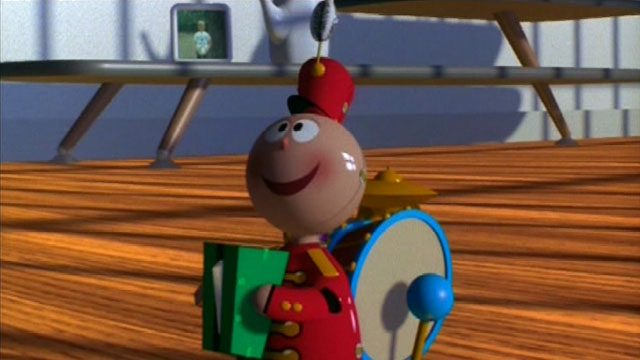
A one-man-band toy escapes the wrath of a slimy toddler, then grudgingly returns to cheer it up when it’s crying only to be ignored in favor of an empty box and a paper bag. Clear precedent to Toy Story. 1988 computer technology was not up to the task of accurate baby rendering, but it’s still pretty cool looking. It beat a Tex Avery-style short from the future director of FernGully and Cordell Baker’s great The Cat Came Back.
image

Manipulation (1991, Daniel Greaves)
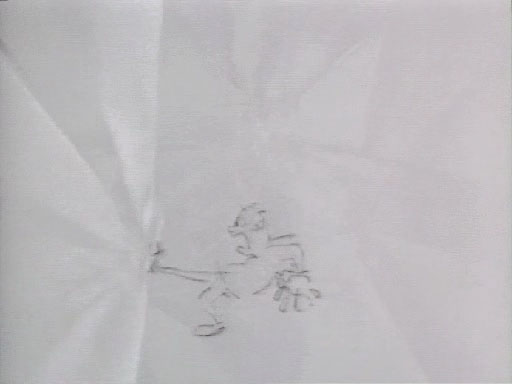
A good ol’ artist’s-hands-interacting-with-drawing-table short, somewhere between Duck Amuck and Rejected. Funny how one of the most recent shorts is the one available in the lowest quality. The line-drawing guy turns 3D at the end, which I think was done in claymation. Very inventive and fun. Apparently Greaves’ Flatworld is also a must-see. No U.S. shorts in this year’s competition – this UK film beat out two Canadian pieces (including long-time fave Blackfly).
image

Mona Lisa Descending a Staircase (1992, Joan C. Gratz)
Really wonderful little animated film which would probably be the greatest thing ever if I was an art history major. Since I only knew about five of the paintings which were mighty-morphing into each other, I probably attribute more of the film’s beauty to its director than I probably should. Oh wait, it won the oscar so I guess I’m not the only one who was impressed.
image

Then again, some of it is just silliness.
image

Quest (1996, Tyron Montgomery)
A man made of sand navigates increasingly more difficult and dangerous worlds of paper, rock, metal and water. The end is the beginning – would work as a looping DVD or art installation. Nice stop-motion, like The Sand Castle but I liked this one better, Thought it was anti-technology for a while, but now I think its just trying to say the world is a dangerous place. Competition included an Aardman, a Canadian piece I’ve seen but don’t remember, and a stop-motion short from a future Pixar animator.
image

Musco (1997, Michael Smith & Joshua White)
A fake 1984 infomercial for a music-oriented lighting equipment company. I don’t get it. It was part of an art installation, and I don’t get those in general, maybe because I don’t live in New York.
image

Flash Back (1985, Pascal Aubier)
Two-minute short – soldier is killed in combat, life flashes before his eyes represented by photos going back in time until to the earliest baby picture. Guess Pascal had to find an actor with lots of family photos for this.
image

The Apparition (1985, Pascal Aubier)
A guy’s bathroom light makes the Virgin Mary appear in a church across town. Aubier ought to be at least as popular as Don Hertzfeldt.
image

Un ballo in maschera (1987, Nicolas Roeg)
Things I like:
1. That the king is played by a woman (Theresa Russell) with a mustache
2. That the action takes place in an ellipsis (“…but”) between the opening and closing text (“King Zog Shot Back!”)

Nice piece, set to music by Giuseppe Verdi. First segment of the anthology film Aria, which I must watch the rest of when I’m not so tired (next segment put me to sleep in a couple minutes).
image

Universal Hotel (1986, Peter Thompson)
“1980, I have a strange dream. Between the fortress and the cathedral is the universal hotel.” Slow, calm analysis of photos and reports about a nazi experiment where prisoners were frozen then revival was attempted using boiling water, microwaves and “animal heat.” “I make statements about the photographs which cannot be proven. I speak with uncertainty.” Increasingly intense, with narrated dreams illustrated with photography tricks, a murder-mystery without an ending. Last line: “they come while I’m asleep.” Scary, and I would not have watched this right now had I known nazis were involved, but now I’m glad I did.
image

Universal Citizen (1987, Peter Thompson)
Now in Guatemala, Peter talks with a concentration camp survivor who told himself he would move to the tropics if he survived. He did, so he does, laying in a hammock, floating in the warm water, working on the sun roof of his house, listening to Armenian records and refusing to be filmed. Mayan ruins. This time the dream/nightmare scenes lack narration. Ends with a joke (and a shot from the beginning of the other film). Oh wait, no it ends with depression after the credits. I preferred the joke.
image

Bunker of the Last Gunshots (1981, Jeunet et Caro)
There’s an insurrection inside the bunker. A timer count backwards, people have gas masks and eyegear and prosthetic limbs, there are shootings, eletroshock, cryogenics, there is complicated machinery, tubes and wires and hidden cameras. Possibly they are Germans, it is possibly post-apocalyptic, and the soldiers possibly go crazy and kill each other. I am not entirely sure of the politics, but it’s a neat little flick, definitely full of the clutter style of their later features.
image

Opening Night of Close-Up (1996, Nanni Moretti)
That’s just what it’s about. The nervous cinephile (Moretti himself) who runs an Italian theater is opening Kiarostami’s Close-Up and wants everything to be just right.
image

World of Glory (1991, Roy Andersson)
“This is my brother. My little brother. I suppose he is my only true friend, so to speak. [both look away uncomfortably]” I just checked and yeah, Roy Andersson is the acclaimed deadpan comedic filmmaker who made Songs from the Second Floor and You, The Living. I’d believe it, and be almost excited to see those two after viewing this short, a guy grimly introducing us to his sad life, with he and others looking slowly into the camera as if we’re to blame for all this – except why did it start with a mini-reenactment of the holocaust? The whole rest of the movie I’m wondering that… he won’t let go of the “blood of christ” wine pot at mass and it’s supposed to be a funny scene but I’m thinking “the holocaust?!?”
image

Reverse Shot explains:

World of Glory locates a society — ostensibly the director’s native Sweden, but easy interchangeable with any modern European country — so paralyzed by ennui, anxiety, and desperation that its inhabitants are apparitions. The main character is a thin, pasty man who takes us on a guided tour of his life — his loveless marriage, his stultifying job, his pathetic day-to-day activities. It was not until the second time I saw the film that I realized that this character had been present in the first shot: dead center of the frame, turning away from the proceedings every so often to fix us with his gaze. His meek, self-effacing misery in the later scenes thus comes into sharper relief: a person who does not act to avert tragedy endures beneath its weight.

image

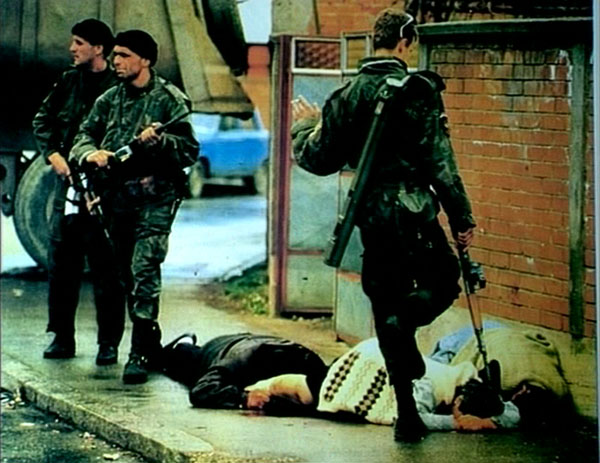
Je vous salue, Sarajevo (1993, Jean-Luc Godard)
“Culture is the rule, and art is the exception. … The rule is to want the death of the exception, so the rule for Cultural Europe is to organize the death of the art of living, which still flourishes.” This two-minute piece is a montage made from a single photograph, with voiceover. Directly to the point, I like it better than almost all of Histoire(s) du cinema.
image

Origins of the 21st Century (2000, Jean-Luc Godard)
A bummer of a film, montaging footage from news videos and feature films (The Shining, The Nutty Professor, Le Plaisir) over quiet music with the occasional commentary or block lettering, war and death, pain and happiness and a few plays-on-words.
image

If 6 was 9 (1995, Eija-Liisa Ahtila)
Sex, split-screens and supermarkets. More people looking into the camera confessionally, but all about sex this time, not too similar to Today.
image

Can’t figure what a full hour-long Ahtila film would be like, but she’s made two of them so I’ll find out eventually.
image

Zig-Zag (1980, Raul Ruiz)
Ruiz had adapted Kafka’s Penal Colony ten years earlier so surely he knows he’s making another Kafkaesque film here. A man named H. “realizes he is the victim of the worst type of nightmare: a didactic nightmare” when, late for an appointment, he finds himself part of a global board game at the mercy of pairs of dice. The game keeps changing scale, zooming out, so H. has to travel further distances more quickly – from walking to taxi to train to plane. Rosenbaum (who says it’s Borgesian not Kafkaesque) says it was made to promote a map exhibition in Paris, which to me just makes it more strange than if it was promoting nothing at all. “The history of cartography [is] the business of labyrinth destruction.”
image

Either H. or the mysterious gamer was played by Pascal Bonitzer, cowriter of some of Rivette’s best films. “We now live in the pure instantaneous future.”
image

The Bridegroom, The Comedienne, and the Pimp (1968, Straub/Huillet)
Four minutes in, it’s just been a long car ride in the rain with opera music playing (there was no sound at all for the first two minutes) and I am very suspicious.

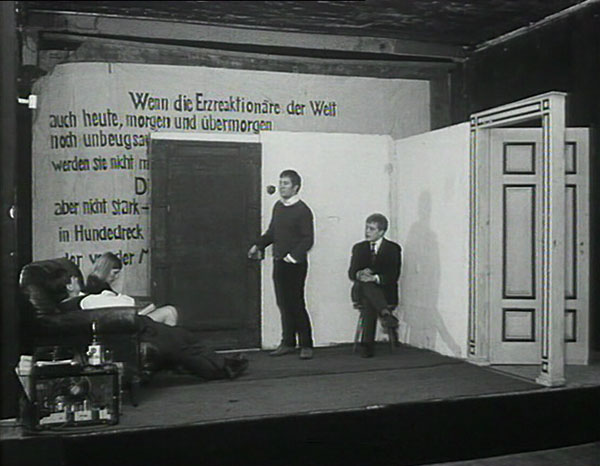
Five minutes in, cut to a stage set, with German words on the wall and a clattering wood floor. Rivette (or Michael Snow) would be pleased. A fast-paced stagey farce follows. Blackout, next scene but the camera hasn’t moved, hasn’t even cut for all I know. Actors include Fassbinder regular Irm Hermann, composer Peer Raben, and future superstar Hanna Schygulla (who I’ve recently seen in The Edge of Heaven, Werckmeister Harmonies and 101 Nights of Simon Cinema).

Bang, cut, new location, and back out on the street. An action scene. Jimmy Powell is marrying Lilith Ungerer (star of a couple Fassbinder films). They go home, the pimp (Fassbinder himself, early in his career) is there, she shoots him and gives a speech as the music returns. All affectless acting.
image

So, what was that all about? Well the title refers to the cinematic drama in the third section, that much is clear. And the actress and the pimp were in the stage play in the middle. IMDB fellow says “The film has its roots in a theatre production of a play by the Austrian playwright Ferdinand Bruckner which Straub had been asked to direct by a German theatre company. He considered the play too verbose and cut its length from several hours down to just ten minutes, and it is the production of this play which forms the centrepiece of the film.” As for the beginning, the same guy says it’s a “Munich street frequented by prostitutes.” F. Croce calls it a “mysterious, structuralist gag” and notes that “filmic subversion can prompt political revolution, and transcendence.” No revolution or transcendence here – I just thought it was a weird little movie made by an overacademic sweater-wearing type. Was only Straub’s fourth work – let’s check out his tenth, which is half as long.
image

Every Revolution is a Throw of the Dice (1977, Straub/Huillet)
It’s in French this time. Actors sit in a half-circle near the memorial site for the Commune members and recite a poem. I’m mistrustful of the English subtitle translation of the poem, and there’s not much in the movie besides the poem (the recitants are as expressionless as in the previous film, maybe even more so), so there’s not much of value for me here. Actors include Huillet herself, Michel Delahaye (the ethnologist in Out 1) and Marilù Parolini (writer of Duelle, Noroit, Love on the Ground), shot by William Lubtchansky and dedicated (in part) to Jacques Rivette.
image

Mongoloid (1977, Bruce Conner)
Music video for a Devo song using (I’m assuming) all found footage (science films, TV ads and the like).
image

Mea Culpa (1981, Bruce Conner)
Dots, cubes, light fields and… whatever this is. Conner goes abstract! The music sounds like 1981’s version of the future. Aha, it’s Byrne and Eno, so it WAS the future. I didn’t know that Conner died last year, did I?
image

(nostalgia) (1971, Hollis Frampton)
of a photo of a man blowing smoke rings:
“Looking at the photography recently it reminded me, unaccountably, of a photograph of another artist squirting water out of his mouth, which is undoubtedly art. Blowing smoke rings seems more of a craft. Ordinarily, only opera singers make art with their mouths.”
image

So far I really like Hollis Frampton. His Lemon and Zorns Lemma were brilliant, and now (nostalgia) is too. Anyway this is the one where Frampton films a photograph being slowly destroyed on an electric burner while Michael Snow reads narration describing the next photograph that we’ll see. It’s important to know that Snow is the uncredited narrator for a humorous bit in the middle. The movie also has a funny twist ending that I wasn’t expecting. This would be part one of Frampton’s seven-part Hapax Legomena series. I have the strange urge to remake it using photographs of my own, but I lack an electric burner and a film/video camera.

Gloria (1979, Hollis Frampton)
Remembrance of a grandmother, Frampton-style, meaning annoyingly hard to watch and strictly organized. Clip from an ancient silent film, then sixteen facts about gramma (“3. That she kept pigs in the house, but never more than one at a time. Each such pig wore a green baize tinker’s cap.”) then a too-long bagpipe song over an ugly pea-green screen, and the rest of the silent film. Or as a smartypants would put it, he “juxtaposes nineteenth-century concerns with contemporary forms through the interfacing of a work of early cinema with a videographic display of textual material.” I prefer my version.
image

Prelude #1 (1996, Stan Brakhage)
I don’t think that I enjoy watching low-res faded videos of Brakhage movies. I’ll wait for the next DVD set to come out (or the next Film Love screening). As a side note, I cannot believe that Raitre plays stuff like this. Just imagine: art on television. Picture a single TV station anywhere devoted to showing art. Can you? Can you?!? I feel like screaming!!
image

NYC (1976, Jeff Scher)
Shots of the city sped-up, rapidly edited, reverse printed and hand colored, two minutes long with a jazzy tune underneath. Super, and short enough to watch twice (so I watched it twice).
image

Milk of Amnesia (1992, Jeff Scher)
I’m thinking it’s short scenes from film and television, rotoscoped, with every frame drawn in different colors, with some frames drawn on non-white paper (a postcard, some newspaper). Warren Sonbert is thanked in the credits. I would also like to thank Warren Sonbert.
image

Yours (1997, Jeff Scher)
An obscure musical short from the 30’s or 40’s overlaid with rapidly-changing patterns and images from advertisements. Descriptions and screenshots can do these no justice.
image

Frame (2002, n:ja)
Black and white linear geometry illustrating a Radian song. I can’t tell if it’s torn up by interlacing effects or it’s supposed to look that way. Give me Autechre’s Gantz Graf over this any day. Between this and Mongoloid and the Jeff Scher shorts, I’m not sure where to draw the line between short-film and music-video. Not that it’s a dreadfully important question, but I’m in enough trouble tracking all the films I have/haven’t seen without adding every music video by every band I like onto the list. Although maybe videos should be given more credit… I’m sure Chris Cunningham’s video for Squarepusher’s Come On My Selector would beat 90% of the movies I watched that year.
image

Zweigroschenzauber (1929, Hans Richter)
The intertitle says “Twopence Magic: a commercian in picture rhymes.” Movie shows us a thing, then crossfades to a similar-looking thing. Much better than I’ve made it sound.
image

Dada (1936, Mary Ellen Bute & Ted Nemeth)
Shapes in motion, quick.
image

Synchromy No. 4: Escape (1938, Mary Ellen Bute & Ted Nemeth)
A Bach music video, with black bars perversely imprisoning the viewer away from the orange and blue color geometric spectacle beyond.
image

War, etc. (1983, Leo Schatzl)
Crude drawings of planes, horizontal scratches give the appearance of speed, sound fx from old arcade games. Mix it up with some TV interference. Part of an installation which surely annoyed many (unless the sound was turned down).
image

OXO Wonder Vision (1996, Leo Schatzl)
Looks/sounds like the window of a plane flying through a cloud. Then the plane slowly sinks into a giant coffee pot. It must be endless fun to be an avant-garde video installation artist.
image

The Endless Sandwich (1969, Peter Weibel)
Pretty much this shot, a guy watching a guy watching a guy, until the TVs start staticking from the inside out, until our own TV statics, closing with a quote by the filmmaker.
image

Imaginare Wasserplastik (1971, Peter Weibel)
Meta-video-art using “television as a time-space switch,” only a minute long. Not great, but so far I like this guy better than Leo Schatzl.
image

Fluxfilm 1 (1964, Nam June Paik)
“pranksters”, “playful artists”, “ephemeral humor”: the Fluxus movement sounds like fun. But then the first film I watch is a pure white screen and silent soundtrack. What’s worse, someone has punk’d my DVD player so the clock is moving at half-speed.

Fluxfilm 2 (1966, Dick Higgins)
Still silent, closeup of a man’s mouth chewing. Okay, I’m done for now.

Allegretto (1943, Oskar Fischinger)
All colored diamonds and circles, so lovely. In close sync with the music, where in Motion Painting #1 the music seems an afterthought.
image

Motion Painting No. 1 (1947, Oskar Fischinger)
Like it says, a motion painting – oil on glass, all small rectangles and big spirals. In The Mystery of Picasso the tension was in figuring how the painting would be finished, where he was heading, but in this the fun is in getting from one intermediate step to another. The process is the destination. There should be more of these!
image

Franz Kafka (1992, Piotr Dumala)
Is the movie supposed to be making that sound of a cat in heat beneath the music, or is my laptop freaking out? Dark and scratchy and slow-moving, nothing actually happening. Oh wait, there’s some sex. Fulfills almost all of the Robyn Hitchcock holy keywords: sex, food and insects (what, no death?). I’m sure it’s very technically accomplished but I found it dreary and ponderous. The filmmaker made a plaster-scratch version of Crime and Punishment eight years later (or more likely he worked on it for all eight years).
image

Tales from the Far Side (1994, Marv Newland)
Very inessential, slow-paced animated half-hour of Far Side cartoons. Really the most interesting bit is seeing Marv Newland’s name, 25 years after his seminal Bambi Meets Godzilla. Either he’s no longer a master of timing, or there was too much Gary Larson interference… or maybe you just can’t turn a single-panel comic strip into a 30-minute TV special. Doonesbury worked out, but that was talky and story-driven to begin with.
image

Mr. Prokouk Shoots a Movie (1948, Karel Zeman)
Czech short, part of a whole series of Mr. Prokouk adventures.
image

Prokouk is pointing at us, telling us to get off our asses and join the workforce!
image

The Monkey’s Teeth (1960, Rene Laloux)
Intro is a three-minute doc of a group-therapy institution for depressed people, what follows is an animation of the film they wrote together. Sad man has a toothache, goes to a dentist who steals his teeth to sell to rich people (I wouldn’t think the teeth of the poor would be worth much, but maybe in France everyone practices excellent dental care). When the monkey wizard bicycles by, I figured the dentist would be put in his place and the stolen teeth returned, and that’s just what happens but first the sad man gets chased into a high school by some cops who get turned into children. Hmmm.
image

Dimensions of Dialogue (1982, Jan Svankmajer)
It’s been too long since I’ve watched my Svankmajer shorts. This is an all-time fave. Faces made of identifiable objects consume each other, becoming smoother until they resemble human heads. Two clay humans make love, create an unwanted clay baby then destroy each other. And so on. Not one for brevity, J.S. takes everything to its conclusion and explores all permutations of his object manipulations – this is what makes his features seem so tedious, but his shorts seem so excellently complicated.
image

Flora (1989, Jan Svankmajer)
A clay person tied to a bed and covered in rotting fruit and veg tries to reach a glass of water. Only a few seconds long, made for MTV (that’s czech for WTF).

Food (1992, Jan Svankmajer)
Oooh I love stop-motion using live actors. Guy enters a room facing a paralysed robot guy, reads instructions hanging on his neck (which are actually an MTV entry form: “Entrant must send a VHS or U-Matic, etc.”), manipulates the guy (puts money in his mouth, receives a sausage and mustard from chest, utensils from ears), then the robot guy leaves and the eater takes his place. Two guys sit at a restaurant, can’t get service so they eat their own clothes and the table. Finally, people are made gourmet meals of their own severed body parts. A classic, obviously.
image

I Love To Singa (1936, Tex Avery)
“Enough is too much!” An old favorite. Owl Jolson is of course a parody of The Jazz Singer, which I’ve still never seen. Jazz and owls: a combination you don’t see often enough.
image

Point Rationing of Foods (1943, Chuck Jones)
An extra tucked away on a Looney Tunes DVD, explaining the wartime canned food rationing system to the public through cheap quickie animation. Helpful to me, since I never bothered to learn how rationing worked before. Also tucked away is the Tashlin-penned The Bear That Wasn’t, probably not because of its unworthiness but because it was made at a different studio.

I Haven’t Got a Hat (1935, Friz Freling)
A variety show of children performers, with hijinks. Porky’s first appearance – the studio intended for a more generic troublemaker character (below, right) to take over, but the public demanded a shy stutterer instead. The title song is catchy, anyway.
image

Roof Sex (2003, PES)
Stop-motion of chairs having sex. The cat is blamed.
image

Oops, I told Jimmy this was made in 1988. I was a decade off, but we didn’t see any technology that would’ve proved me wrong. Another anarchic exuberant junkpile Yugoslavic film full of accordian music from Kusturica, but this one is a pure comedy (romantic, even) so the only person who dies and stays dead is a bad guy, and in the end everyone is married and the gangsters, scammers, rich old men, dwarf women and everyone else is dancing and happy.

Two who died but did not stay dead:
image

The main character for the first half hour – is that Matko? – gets scammed by some Russians, borrows money from his dad and from rich (?) Grga and from dangerous coke-fiend party gangster Dadan, buys a train full of oil (?) and loses that along with the money. So as payment for his debts he agrees to have his son marry Dadan’s laughably short daughter.

This guy stayed dead, but his body was used in a Keatonesque comedy bit so it’s allowed:
image

Smurfette and big Grga:
image

The son’s grandfather hides his cash in an accordian and keels over – a calculated death to stop the wedding – but Dadan will have none of that, and stashes him in the attic so nobody starts mourning until the wedding is done. The tiny bride flees, runs into Grga’s giant son, and it’s love at first sight followed by a gunfight with her dad. Son marries his crush (below), the giant marries the tiny girl, the two dead old men (I didn’t mention Grga’s dad died a few minutes ago) come back to life, and Dadan falls into a toilet, grossing out Katy who came in to watch the ending.

One of the actresses, possibly this one, was later in Big Love and Public Enemies:
image

Pitbull! (Terrier!)
image

Not just cats – movie’s got a pig eating a car, a shrieking peacock, a goose used as a towel, and cute goats. I thought the whole thing was a riot, and excellently filmed & edited, but maybe too silly for the others in the room. There’s no pleasing some people!

Black cat, white cat:
image

It’s not hard to find a Shakespeare play I haven’t read/seen/acted, but that never stopped Katy from exclaiming “really???” whenever I claimed total unfamiliarity with Midsummer, so we finally rented her favorite version. I liked it… of course, it’s no Much Ado About Nothing with Emma Thompson, but what is? Less zany and complicated than I’d expected. Shakespeare could’ve learned something about comedy from Howard Hawks – or maybe it’s Hoffman, director of dullsville drama Game 6 who could learn something. Fortunately he keeps things much more animated here, seems to do a good job with the so-wide-it’s-squintingly-small-on-my-TV cinematography, though there’s mysteriously no participation by Kenneth Branagh or Michael Keaton (at the time they were busy filming Wild Wild West and doing nothing whatsoever, respectively).

Elf Ritual:
image

Ally, Bale, McNutty, Friel:
image

Okay, Dominic West (The Wire‘s McNulty) loves Pushing Daisies star Anna Friel (who doesn’t?) but her fun-hating parents insist she marry boring Christian Bale (toning things down after Velvet Goldmine) who is being stalked by Calista Ally McBeal Flockhart. Unconnected to any of that, Kevin Kline’s cheesy theater group (including Sam Rockwell) is preparing a play to be performed at the royal court. And all of this would probably end badly if not for the meddling of elf king Rupert Everett (Dunston Checks In) who sends puckish Stanley Tucci to prank fairy queen Michelle Pfeiffer, and along the way he turns Kline into a half-donkey and screws with the four lovers. Mud fights and bicycle rides ensue.

Rockwell is a woman, Kline is a ham, the guy behind them is a wall:
image

Convincingly elvish elf Tucci with mopey Rupert:
image

In the end everything is sorta normal except that Kline’s play is a hit, McNutty is allowed to be with his girl, and Bale magically loves Ally. I was surprised that McNutty and Ally gave the best performances of the four, even edging out all the magical beings (well maybe not Stanley Tucci), and Kline is excellent, bringing a touch of sadness to his mostly ridiculous comic-relief role. So where’s he been hiding this decade? Prepping for a comeback, hopefully.

Donkey-Kline and Queen Pfeiffer:
image

Puppetmaster

“Full Moon Productions presents…”

According to IMDB, this was Full Moon’s first feature. They’d go on to make some of my favorite direct-to-video absurd low-budget semi-horror movies of the early 90’s, including Stuart Gordon’s Pit and the Pendulum, the Louisiana sex/devil cult story Netherworld, and many Puppet Master sequels, plus movies that screamed “rent us” from the new-release shelf with names like Trancers, Subspecies and Dollman, but never quite seemed worth the three bucks.

image

“A David Schmoeller film”

Or more accurately, a David Schmoeller VHS tape (were any Puppet Master movies released to cinemas?). He wrote and directed a Klaus Kinski torture film called Crawlspace, which I meant to watch last week instead of Pin… but foolishly did not.

“Puppetmaster”

Titles were re-capitalized to Puppet Master for the sequels, maybe to avoid confusion with Hsiao-hsien Hou’s acclaimed drama The Puppetmaster (whose runtime is longer than any two Puppet Master sequels put together).

“starring Paul Le Mat”

One could argue that Le Mat is an actual star, having played a title role in Demme’s Melvin and Howard and third-billed in American Graffiti. I didn’t find him photogenic, hence no screenshot… oh wait, this might be him screaming:

image

“and introducing Robin Frates”

This was pretty much the last time anyone heard from Robin Frates, except those who saw Schmoeller’s follow-up film The Arrival (not the Charlie Sheen one), which sounds appealingly like a sort of alien vampire Benjamin Button.

image

“special appearance by Barbara Crampton”

Star of Re-Animator and From Beyond! You’d think if her appearance was so special, she could’ve been given a better role than “woman at carnival.”

The theme music is nicer than this movie deserves.

Budget tip #1: Low-to-ground POV shots require no actual puppet effects, and are fun to watch. These are just great, the camera running behind feet and cars, jumping over suitcases and across piano keys.

William Hickey (Wise Blood, Prizzi’s Honor) is Toulon, the inspecifically-foreign-accented titular magician. He’s been discovered by sinister nazis, so he hides Happy/Sad Clown, Oriental Mustache and Hook-hand behind a wall panel and bites a bullet. The end.

The short-lived Toulon #1:
image

No wait! “Yale University, present day.” A dumpy Paul Le Mat dreams in color that he is dreaming in black and white while being attacked by leeches (I hope that’s exactly how the scene read in the script). Is Yale a carnival, or have we changed location to a carnival? Enter “woman at carnival,” visiting a psychic (Irene Miracle of Inferno) who lacks a stereotypical gypsy accent. Ooh they’re playing the ol’ scam-gypsy-who-sees-real-visions card as Barbara dreams up a puppet attack.

image

“I want you to recreate in your mind your wildest sexual fantasy.” Two sex-crazed psychic researchers (Balding Ponytail and Too Much Lipstick) call Le Mat (on the phone, disappointingly) to arrange a meeting at the hotel where Toulon died, where they’re met by their cynical psychic friend, their dead friend Neil, a crabby Mews Small (Scott Baio’s mom in Zapped!) and introducing Robin Frates.

image

While our psychic friends creep around the place seeing visions and acting eccentric, Tiny (little puppet head and human hands emerging from a ribbed sweater) kills the peeping crabby lady and plays games with dead Neil. In true Friday the 13th fashion, the puppets go after the sexually active couple first – Too Much Lipstick is killed offscreen by Drill Head and a female puppet barfs leeches onto her tied-up husband. Tiny, boasting some impressive stop-motion, wounds the cynical drunk girl then Hook finishes her off in the elevator (if they were aiming for a Dressed To Kill reference, the editor wasn’t cooperating).

Dead Neil explains: “Metaphysically speaking, I killed myself, and using the techniques of the old puppet master I brought myself back to life.” But then Neil stupidly disrespects the killer puppets and they gang up on him, brutalizing a rubber hand before breaking out the drill and leeches (honestly the leeches aren’t very scary).

image

Written and produced by Full Moon head Charles Band, who had produced everything from Laserblast and Robot Holocaust to Stuart Gordon’s Dolls, Trancers and Ghoulies, TerrorVision and Troll, Clive Barker’s disowned first two pictures, and Sorority Babes in the Slimeball Bowl-o-rama – pretty much everything I watched on HBO at 2am in 1992. Effects by oscar-nominated Dave Allen, who worked on The Stuff, The Howling and Equinox.

image


Puppet Master 2

Hook, Clown, Drill, Tiny and Leech Woman resurrect Toulon using a magic potion before the credits even roll. This one is gonna be good.

image

“Full Moon Entertainment presents”

In the two years between the original and the sequel, Full Moon and Charles Band have involved themselves in a parallel-universe thriller, a sexy fantasy-horror starring Sherilyn Fenn (premiering the same week as Twin Peaks), Stuart Gordon’s Robot Jox and its Gordon-unaffiliated sequel

“directed by David Allen”

So they’ve handed the franchise right over to the effects crew. Part II is from the writer of Subspecies and cinematographer of Screwball Hotel (I’ll bet that’s not how they sold it on the poster).

image

A U.S. government paranormal research van is poking around the old hotel, bearing bearded Lance (Demonic Toys), dark-haired Wanda, jokey cynic Patrick, serious Carolyn (of Robot Jox 2) and older new agey “truth comes from feeling” Camille (Frightmare, Night Shift). They tell us Paul Le Mat survived the first movie but wanted too much money for the sequel so he’s locked in an asylum. Then introducing the neighborhood Comic Relief Farmer and his pitchfork-bearing wife – “They say Satan’s got a suite of rooms in there!”

Tiny and Clown take care of pseudo-psychic Camille in secret, then Drill brains Patrick with everyone watching, is captured and dissected. I hope Drill will be okay!

image

The filmmakers overestimate the computing power of an Amiga 2000:
image

Toulon (a new actor) wanders in with an Invisible Man getup, calling himself Eriquee Chaneé (get it? Chaney?) claiming the hotel is his, then the group is joined by Collin “Corbin’s Brother” Bernsen, our first glimpse of star power (heh)

image

The farmer’s brains are removed by Leech Woman (movie is really into brains; I sense a zombie connection) who is then melted by the wife, immediately replaced by Torch, who burns her up, in a particularly poorly-lit scene. So Toulon is collecting brains to brew up a new batch of magic puppet juice and live another 50+ years as a puppet himself.

image

Flashback: Toulon remembers years ago in Egypt when he was a powerful magical puppetmaster but a crappy actor, and as punishment, an old merchant burns up the puppets using his mind. Hmmm.

The scene I remember best from the entire series (below): a boy is torturing his GI Joes with a whip, tries to play rough with Torch. The scene I remember least: pointless seaside romance between Carolyn and Corbin’s brother. Even adding a flamethrowing puppet and resurrecting Toulon from the dead, it’s not a better movie than the first one, which at least had characters which weren’t all interchangeable sexy college students.

image

Hook carves up Lance and Wanda, Puppet Toulon (I like him, a short guy with hard marble contact lenses) threatens Carolyn, and I’m not sure why the puppets turn on him then resurrect Camille to go terrorize an institute for “mentally troubled” children, but there you go.

image


Puppet Master 3

“Berlin – 1941”

Nazi experimenters succeed in reviving the corpses of dead soldiers. A young puppetmaster is interested.

Looks like something out of Day of the Dead:
image

“Full Moon Entertainment presents”

This was Full Moon’s year. They had Stuart Gordon (Pit and the Pendulum), Trancers II (the Helen Hunt-starring sequel to a mid-80’s Charles Band film), and future sequel-bait Subspecies and Dollman.

image

“starring Guy Rolfe”

Finally a consistent Toulon – he’d play the part through 1999. Guy had been around – not just in stuff like Dolls (in which he also played a puppetmaster), but in Tashlin’s Alphabet Murders and Nick Ray’s King of Kings in the 60’s.

image

“directed by David DeCoteau”

The prolific Mr. DeCoteau had made such classics as Sorority Babes in the Slimeball Bowl-o-rama (which I have seen more than once) and Dr. Alien, would go on to make such classics as Frankenstein Reborn!, Final Stab and Wolves of Wall Street.

Sinister Eric Stein confronts Toulon about the Hitler-mockery satire of Toulon’s puppet show. Mrs. Toulon (Sarah Douglas of the first two Superman movies and Return of the Living Dead III) looks on. The stop-motion effects are still cool and still only one second long at a time. Two important and great new additions: the six-shooter cowboy puppet, and giving the puppets wordless voices (cowboy’s Jack Nicholson laugh is my favorite).

image

Gestapo Krauss (Richard Lynch) and Dr. Hess (Ian Abercrombie of Inland Empire) fight over Toulon’s fate. T’s wife is killed in a raid, then Tiny and Drill kill the nazis escorting T into custody – can’t argue with that. While T cries over his wife (along with the puppets, making the ending of part 2 more inexplicable) and gives his revenge monologue, the main general (a Bond movie regular) calls on the search. Leech Woman is still not interesting, even when she’s supposedly T’s murdered wife recurrected to kill Stein.

image

A distractingly weird-looking “young boy” (turns out it’s a short 22-year-old), also on the run, stays with Toulon while Six-Gun takes out the general (plenty of stop-motion plus a fall from a high window – along with the period costumes, looks like Full Moon is ramping up the budget). Toulon creates Blade, modeled after Krauss (who himself is modeled after Klaus Kinski), replacing his broken Hitler doll.

Kraus/Kinski/Blade:
image

There’s actually a story here, not just a bunch of idiots at a hotel getting killed one at a time. Hess turns out to be decent (well, as decent as any nazi scientist trying to reanimate dead soldiers can be), the father of the “boy” turns traitor to win his freedom, both die, Toulon strings up Krauss and escapes Germany with the “boy.” Weird to turn a slasher horror flick into a nazi adventure, but there you go.

image

“Photographed at Universal City Studios Hollywood” – there’s that budget I was talking about. Too bad it won’t last.

image

EDIT: Thanks to Frederic for pointing out the correct model of computer the filmmakers are misusing in part two. Apologies to Commodore 64 heads for the error.