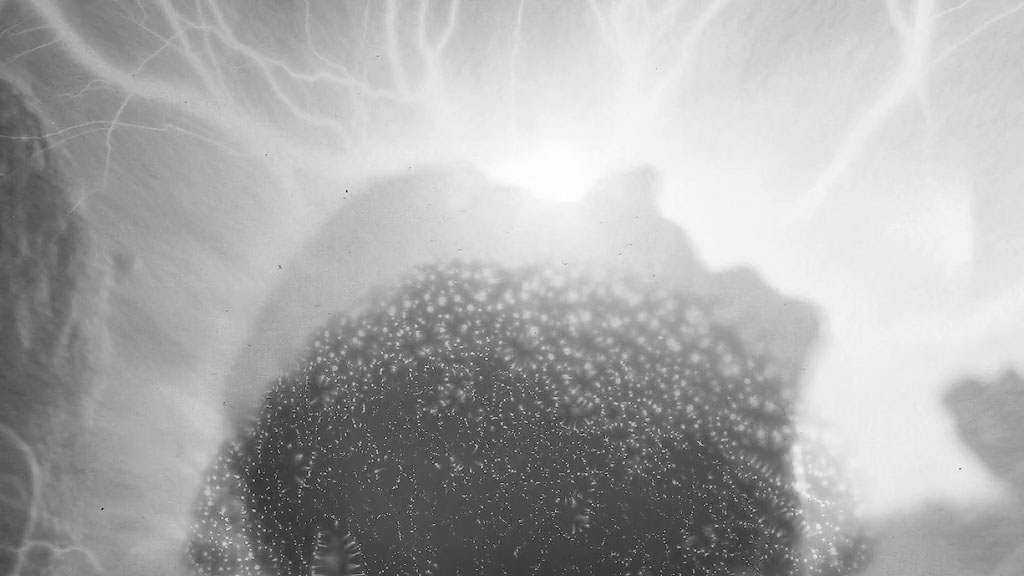
Sweeping mountain views and time-lapse skies under opera music… but lo-fi overcompressed found-footage sources aren’t what you look for in a nature doc, so what are we doing? Long focus on hurricane and tornado destruction then random cuts to tidal waves and volcanoes. My second modern b/w movie in a row – this one looked significantly worse than Macbeth. Per Phil Coldiron in Cinema Scope, Pelechian has written academically about montage, and this is his first film in almost 30 years. I wasn’t crazy about it, but still want to check out The Seasons sometime.
Tag: 2010s
Oroslan (2019, Matjaz Ivanisin)
Only 70ish minutes (watchable on the plane), but Slow Cinema, with no dialogue for 15 until a red jacketed woman notices Oro hasn’t picked up his lunchbox. Oroslan is discovered dead at home. Later, his brother tells the story of the discovery scene we just saw. Finally, neighbors tell happy Oroslan memories for ten minutes, fulfilling the official description (“re-creating his image through their tales”) but this is too little too late. Another quizzical Locarno feature.

The Reagan Show (2017, Sierra Pettengill & Pacho Velez)
Watched in prep for the director’s True/False movie. An archival doc of Reagan footage, ok. Doesn’t go as far into the off-air camera-setup territory as Adam Curtis does, and we weren’t very interested in Reagan, but it was either this or Bigbug.
Lydia Lunch: The War Is Never Over (2019, Beth B.)
Opens with Lydia’s kidnapping pervert child abuse story – I appreciate that childhood trauma lasts a couple minutes then we’re straight into NYC punk. But we spend maybe ten minutes on her music career, then follow her around just goofing off. I love how loose it is. I cringed when Richard Kern came up, but he seems kinda normal now. Weird how this movie explains the cycles of sexual abuse better than any scripted film ever has – and unlike those movies, this one’s got Jim Foetus, Donita Sparks, and a cartoon of Lydia pissing in a stairwell.


Beats (2019, Brian Welsh)
There were some beats I actually know in this, including some by Liquid Liquid, whose music was ancient when this takes place, the reissues still a couple years off. Two loser kids, a dark mophair with downturned mouth called Johnno, and fuckup Spanner with a drug-dealing bully brother, just wanna go to raves, at the time when Britain is trying to make dance music illegal. The notorious law-loophole soundtrack with no repetitive parts comes into play. Black and white except for the little red lights on stereos, and psych-freakout imagery when the kids take their pills.
There’s violence and breakups and hurt feelings and reconciliations – the whole coming-of-age teen period drama isn’t my thing, but I kept watching for the cool accents. The kids finally have their party, a moment of bliss, but the cops and the drug dealers are both descending, the plot needing to pummel the vibes, making it no better than the government order to punish ravers. It’s got nothing on the Michael Smiley episode of Spaced. Spanner ended up on Bridgerton and Johnno’s on some kinda submarine mystery.
Barbara (2012, Christian Petzold)
Nina Hoss is an East German rural doctor, also smuggling money and saving up to escape. Coworker Ronald Zehrfeld is friendly to her, but she’s got a secret boyfriend and is being stalked by sinister Rainer Bock.

Excellent photography and compelling story, a delight to watch. I saved this one for a day when I needed a sure thing. In The White Ribbon, Bock was a doctor, and in Phoenix Hoss and Zehrfeld were married, and Transit has the same ending (lead character is able to escape but gives their chance away to another), all my German movies coming together. Starting to think that Casablanca was a formative influence on Petzold.

Collective: Unconscious (2016)
Searching for Josephine Decker I found an unusual anthology – five filmmakers adapting each other’s dreams. The introduction guy recommends watching in a trance state.
Black Soil, Green Grass (Daniel Patrick Carbone, dreamed by Wolkstein)
B/W forest fire tower, a couple wearing big headphones while she sings in (Italian?). They even bathe with ear protection, to not hear destructive sheep-counting announcements coming from the tower – shades of A Quiet Place or Pontypool. Our dude keeps getting distracted by insects, but finally destroys and replaces the man in the tower. Nice tape-dubbing montage in this.
First Day Out (Josephine Decker, dreamed by Baldwin)
A big jump to color, long-take camera roving through a house of dancers, with fun choreographed camera movements and match cuts. Conversation about court trial and jail. Long takes with each dancer in their own style reminds of the heights of Climax.
Beemus, It’ll End in Tears (Lauren Wolkstein, dreamed by Bodomo)
Coach Beemus seems sensitive in one-on-one but yells “enjoy the pain!” in groups. “This is not a drill” – he prevents them from leaving when the fire alarm goes off – “your bodies will protect you.” Maybe accurate to the feeling of the dream, but it’s no fun spending time with a shouting high school gym teacher.
Everybody Dies! (Nuotama Bodomo, dreamed by Decker)
A 4:3 VHS game show hosted by Ripa the Reaper, who seems to be fighting the producers/network. Her line “especially if you are Black” cuts to “Please Stand By” color bars. After killing a bunch of children, Ripa repeatedly fails to do herself in, doomed to star in the next episode.
Swallowed (Lily Baldwin, dreamed by Carbone)
A family goes shopping then back home. When baby feeds, mom has a disassociative mirror/light reverie, with horror-film skin effects. A kebab and corndog party devolves into mute psychosis, then the next day mom has an extreme milk-fueled kitchen freakout.
I already know Decker… Baldwin has danced with David Byrne… Bodomo is from Ghana, made Afronauts and wrote for Random Acts of Flyness… Carbone produced We’re All Going to the World’s Fair (that movie’s director produced this) and Chained for Life… Wolkstein made The Strange Ones (I’ve seen the short version), is working on a Dead Ringers remake (oh no).
Big Joy: The Adventures of James Broughton (2013, Silha & Slade)
Learning about a San Franciscan fave of the Anthology Film Archives and the Visionary Film book I keep at my bedside. I’ve skimmed Broughton’s own filmmaking book Making Light of It, which I bought because of its great title, but my book collection is a shambles and I can’t find it right now.
He hangs out with other poets, including Anais Nin, starts filming with The Potted Psalm, then Mother’s Day is his solo debut. He goes to Europe with his first films and makes The Pleasure Garden in England, which goes to Cannes, where he’s presented an award by his hero (and mine) Jean Cocteau… is offered commercial film work, but turns it down, and doesn’t make another film for 15 years.

Lotta stock footage with talking heads. I respect that the doc tells its own story instead of sticking to strict chronological order, but don’t respect that it motion-graphics one of Broughton’s poems. It spends more time on his love affairs than his post-1960’s work (he had a kid with Pauline Kael, then cheerfully proclaimed homosexuality late in life).
I’d only previously seen his Four in the Afternoon, and the collab with Sidney Peterson – the hope was to watch a bunch more after this doc, but only got to one.
–
Loony Tom (1951, James Broughton)
Tom will not rest until he has kissed every girl in the countryside. A straightforward randy romp, with piano music and a spoken poem at the top and tail. Broughton’s friend Kermit was quite good at being a silent comedy star.

White Nights on the Pier (2014, Paul Vecchiali)
My third in a trilogy of White Nights adaptations. I belatedly discovered that James Gray’s Two Lovers is also a loose/partial adaptation, too late, will save it for my next Dostoevsky binge. All three are set in their own present-day, displaying current technology – Bresson’s tape recorder, Visconti’s jukebox, now Vecchiali’s cellphone.

He’s nasty in this one, but after a prologue where he insults an older man, he meets the girl and the dialogue veers close to the original. Video-looking long takes here, the actors standing still, one of them usually hidden in shadow. Besides the phone, her backstory monologue is interrupted by a couple things. Her voice fades out into the waves, then back in, repeating from earlier than where we left off but with the camera on him instead, reminding me of the Francisca repetitions. Also, he starts correctly guessing details of her story, as if he’s read this book before.

The long dance scene seems to reference the Visconti more than the novel. A b/w sidetrack conversation between him and his stepmom feels like filler, even if it does reference the cobwebs from the story and prove he wasn’t lying about being named Fyodor.

This played Locarno with La Sapienza and Horse Money. Vecchiali is a lesser-known Cahiers critic-turned-director, and I’ve heard his 1970’s work is good. Our lead actress is a Vecchiali regular, and our guy played the two Remis in Two Remis.