The faces of the leads are not shown until the fifteen minute mark. For the first sixth of the movie there’s only the poetic narration faded with shots of their bodies and hands.

I don’t know what to say when confronted with Resnais or Marker movies, keep throwing out “poetic narration”.

image

Rest of the movie is conventional by comparison with the intro and with 90% of “Last Year at Marienbad”, but then “Marienbad” came afterwards and I’ve watched it a bunch of times, so I would have to say that.

IMDB plot: “While shooting an international movie about peace in Hiroshima, a married French actress (Emmanuelle Riva) has a torrid one night stand with a married Japanese architect (Eiji Okada). They feel a deep passion for each other and she discloses her first love in times of war in the French town of Nevers to him. He falls in love with her and asks her to stay with him in Hiroshima.”

image

The film is such a dream that when I finish watching it I seem to wake up and forget most of the details. This is the second time I’ve seen it and it never quite sticks. Ahh, dvd commentary will help.

Writer Marguerite Duras is a novelist whose book is sitting on my bedside waiting for me to read (update: oooh, it was good). Lead actor Okada was in Naruse’s “Mother”, “Rififi In Tokyo”, “X From Outer Space” and “Lady Snowblood”. He played the lead in “Woman in the Dunes”, the main character’s boss in “The Face of Another” and the man in white in “Stairway to the Distant Past” (released the same year Okada died). Riva (still alive) was in “Kapo” the same year, then starred in “I Will Walk Like a Crazy Horse” and played Binoche’s mother (?) in “Blue”. Shot by super master Sacha Vierny (“Marienbad”, “Muriel”, Bunuel, Ruiz, Greenaway) and Michio Takahashi (“Gamera vs. Barugon”). Editor Henri Colpi won the palme d’or at cannes two years later (tying with Viridiana) with his directorial debut.

image

Below is from the commentary track.

The intro reminds of Pompeii and “evokes the very beginnings of life”.

On the woman’s visit to Hiroshima’s hospitals and landmarks: “it will never be more than a theme-park experience”

Scenes from “Children of Hiroshima” are used precisely for their lack of authenticity, and the images remind of Nazi death camps.

Resnais was commissioned to make a film about the atomic bomb with Marker scripting, but it fell through, leading instead to this film.

Resnais and Varda both love cats (surely not as much as Marker does!)

Duras “would become the high priestess of French literature in the 1960’s and 70’s”

Despite not writing his own screenplays, “Resnais can fairly be described as an auteur because a majority of his feature films and many of his shorts deal with the nature of memory and its relationship to the present. Memories have a vivid present-tense quality in Resnais’s cinema and in Marienbad… they are almost indistinguishable from current incidents.”
Hey wow, he mentions “The Koumiko Mystery”.

The star of “Children of Paradise” had a similar thing happen – an affair with a german officer, then publically shamed with hair cut off after the war.
Resnais is an expert on comic books.

image

image

image

image

Starts with a Jean Cocteau quote and animated/drawn images on TV. It’s “un film de Chris Marker”, no fooling around with that. Music by Toru Takemitsu (uncredited on IMDB) who scored a bunch of classics like “Double Suicide”, “Kwaidan”, “Pitfall” and “Ran”. Co-produced by “Le chat Pompon” (hmmm).

image

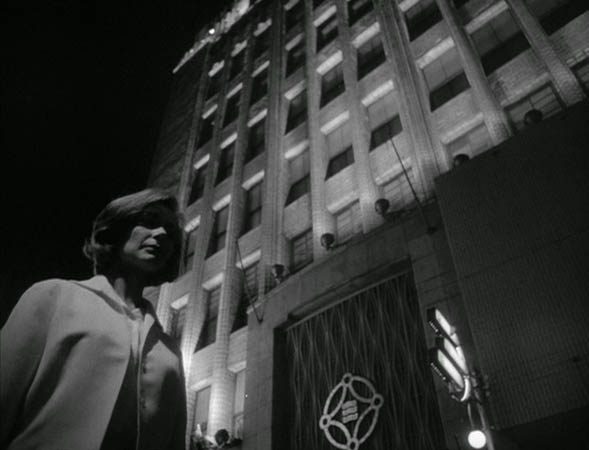
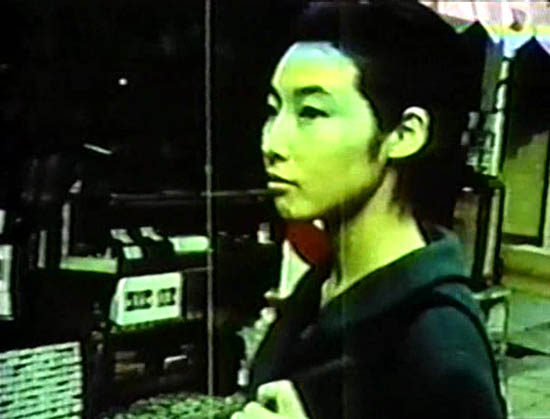
Marker meets “by chance” a young girl at the ’64 Tokyo Olympics, quickly loses interest in the Olympics themselves and instead follows her around the city, pondering shops and trinkets, symbols and national and personal identity as in Sans Soleil. Halfway through the picture, Marker “disappears”, goes back to France, and the narration is taken over by Koumiko, tape-recordings of her answers to his interview questions about current events, beauty, love, animals, and finally WWII. Catherine Lupton’s book notes that “this premise enables Marker to synthesize all the widely disparate methods and idioms explored in his films so far: a light-hearted personal travelogue, the investigative interview and the melancholy and disquieting fiction.”

image

Koumiko stops under a billboard for “The Umbrellas of Cherbourg”, then the camera follows pedestrians with umbrellas while the theme song from that film plays… nice.

Marker’s trademark animal appearances: a googly-eyed owl on an outdoor sign, a whole cat montage, and Koumiko imitating both animals.

image

Beautiful movie, just as essential as the other Marker films I’ve managed to see. I ended up liking it a lot more than I thought I would, despite the horrid video quality.

“Marker’s fond and playful homage to the French New Wave… The fluid roles that Koumiko plays for the camera mesh with the presentation of Japan as a ‘world of appearances,’ as Marker would later call it in Sans Soleil”.

image

“Washingtonians” may still be the stupidest episode of this “Masters of Horror” season so far, but this one is outright the worst. The others have been falling over themselves trying to find a new twist (“I know! george washington was a cannibal! oooh, killer ice cream man and if you eat his ice cream you TURN INTO ICE CREAM!”), but this one gives us no reason to watch, recycling three tired old horror concepts and adding no new style or twist or excellence:

1. guy is afraid of a thing [water] and must confront that thing [go on a boat ride with his boss and boss’s wife whom guy is secretly sleeping with].

2. guy and boss have killed people in the past [guy’s brother drowned, boss killed his ex-wife] who come back as ghosts to haunt them.

3. things keep happening that were just a dream… or were they???!???!??????!!!?

image

Guy’s dead brother wasn’t killed on purpose so in the end he helps take care of the malicious dead ex-wife. Still, guy and boss’s wife are left floating out in the ocean at night, and guy is bleeding from the leg, so I hope sharks eat them before morning.

image

I only half paid attention. Writer of Ring/Dark Water (who is starting to seem obsessive about drowning) and director of Scarecrow and Ring 0. The boss played the lead in “Audition” and the not-as-good white guy starred in “Captivity”.

image

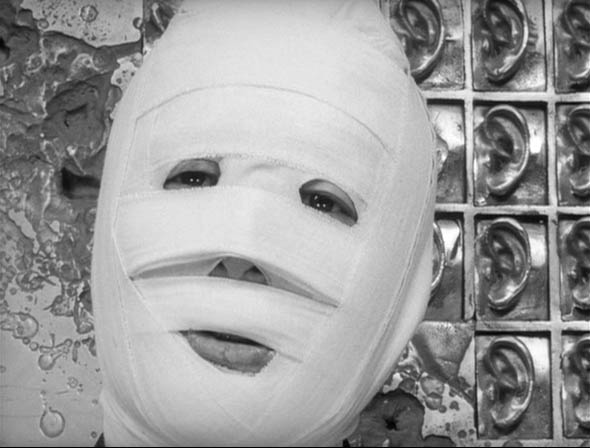
Man has accident. Needs new face.

image

Fortunately he’s friends with a brilliant tissue-replacement surgeon who wants to test his theories that facially-scarred people can reintegrate into society if their faces could appear normal again.

image

They find someone with a good face to copy (note: it’s the miner from Pitfall)

image

The doctor works hard in his all-glass laboratory.

image

The procedure is a success!

image

But the doctor’s psychological theories were wrong – the burnt man uses his new face to create a sociopath alternate personality, kind of like Hollow Man but not at all like Darkman.

image

Meanwhile, a young woman with a similarly deformed face has an unhealthy relationship with her brother.

image

Completely beautiful movie, obviously.

image

If Pitfall was a weird movie, this one just dives off a steep cliff of weirdness.

image

And it doesn’t end well. For anyone.

image

The photography & video quality on this are so excellent, the story could’ve been about nothing and I still would’ve enjoyed it. But the story is neat too.

image

A worker has deserted from the army, and runs off with his son in search of work. He’s lured to a mining town and then killed by a mysterious white-suited man. End of movie.

image

But no! First of all, he sticks around as a ghost… second, the same actor plays a lookalike union leader at one of the two mining communities. Nobody figures out who the white-suited man is, or what he’s up to, but he later kills a women shopkeeper also, the last person to see the first man alive. The union bosses flail around and finally kill each other, the dead wander among the ghost community of the town, and the murdered man’s son hides, observes, and lives off stolen candy from the shop as the movie gets quickly darker and stranger. Apparently it’s all a satire about corruption.

image

An excellent first feature. Teshigahara had his visual style down, wasn’t injecting as much surreal weirdness into the image as he later would. Reviews mention Antonioni and Resnais as visual influences, and Kafka, Beckett and Carroll as story influences. This came out right after Jigoku, Viridiana, Last Year at Marienbad, The Testament of Orpheus, Eyes Without a Face and L’Avventura, and fits right in with that early 60’s European art film scene.

Eureka says “Teshigahara coined the term ‘documentary fantasy’ for this study of the powerless, impoverished worker in postwar Japan.”

image

“You women, you know nothing about friendships between men. Besides being suspicious, what else are you good for?”

image

Edward Yang died two weeks ago. The least I can do is watch his extremely acclaimed four-hour movie from ’91 that I bought on bootleg DVD almost four years ago and never watched before.

Unfortunately, “there are over a hundred speaking parts in the film and it is necessary to stay focused in order to keep track of what’s going on and to whom, which is a good trick to make sure your audience is always paying attention” (KS Kincaid). And my copy is a fuzzy bootleg disc from a decent-quality print. Not many close-ups and picture resolution is just poor enough that I usually can’t tell who is who. I try to latch on whenever someone says a character’s name, so I struggled somewhat through the storyline and lost many of the side characters and threads. Also there’s the occasional close-up on a letter or page with no subtitle translation. Criterion has done Edward Yang’s Yi Yi, so maybe there’s enough interest that this will get an eventual nice release.

image

Set in Taiwan in the early 60’s during military rule, an uneasy time according to the intro text, when many kids formed street gangs to strengthen their sense of identity and security. I sort of lost the gang thread, but kept up with lead character Sir and his family (gov’t worker dad, mom, younger sister, MIA older brother Honey) and friends (Cat & Airplane, girlfriend Ming), so when the bloody nighttime gang war (lit only with flashlights during a blackout) comes a half hour into disc two, I wasn’t sure who was slaughtering who, or how come it wasn’t a big deal to anyone the next day after a bunch of people had been killed. Instead, the secret police round up Sir’s dad and subject him to at least one full day and night of questioning and confessions and statements at an ominous ice factory.

image

Ming is actually Honey’s girl, but ends up briefly with Sir. After he gets expelled, she ends up with one of his friends, and is rumored to never have been faithful to Honey in the first place. Sir kills her with young Cat’s sword, a shocking action, but not as senseless as it first seems, given Sir’s history of violence, his idols and friends, everything leading up to the killing.

image

During more innocent times, the kids watch a John Wayne movie (?), send tapes to Elvis Presley, and hang out at the film studio next to the school.

image

The line “Honey’s dead” was probably not inspired by the Jesus & Mary Chain album of that title.

I’m interested in what people who understood the movie better than I did thought.

IMDB reviewer:

Edward Yang’s own father fled from Shanghai. Artifacts from other countries have great impact in this film, the use of Japanese samurai swords which are ultimately used as murder weapons, Russian novels are read by teenagers and understood as `swordsmen’ novels, a family’s observation that the Chinese fought the Japanese for 20 years only to then live in Japanese houses listening to Japanese music, an old tape recorder that has been left behind by the WWII American forces is used to adapt American lyrics and American rock n roll music for the Chinese, the film features American doo-wop music, first love, cigarettes, casual dress, the influence of Hollywood motion picture magazines and movies, the voice of John Wayne can be heard in one of the movie theaters, the title of the film comes from the Elvis Presley song, `Are You Lonesome Tonight,’ a comment on the dark cloud hanging over everyone’s heads, hardly a brighter, summer day.

“Inspired by a true incident of a 14 year old boy murdering a 13 year old girl, the first juvenile murder case in Taiwan’s history, the film opens and closes with an old, broken down radio broadcasting the lists of graduating students.”

“The film is so meticulous in its construction and its feeling of community (its preparation, filming and post-production took several years) that at the same time its length automatically gives it an epic quality it is a remarkably intimate film that is about as far from an epic in the traditional (Hollywood) sense as possible.”

“Like Hou Hsiao-hsien’s City of Sadness, A Brighter Summer Day is not a political film but a work of art that shows how individual experience is impacted by the flow of time and history.”

“The film is laced with nostalgia, but never at the expense of intelligence. He deftly creates a manifesto here that sums up his volatile, often conflicting, attitudes about his country’s modern history. Watching the film, with its seemingly limitless ability to examine the country, one laments the fact that every developing nation doesn’t have a storyteller as gifted as Yang probing the history of its progress.” (Movie Martyr)

Senses of Cinema on Yi Yi: “The film conveys a magnificent sense of life being lived, of time taking its toll on these characters as we watch them, unmatched in world film outside two of the other pre-eminent auteurs of Third World cinema: Abbas Kiarostami and Hou Hsiao-hsien. Yang is gifted with a remarkable sense of framing, alternating between a tighter framing that glimpses into the characters’ interior lives, and a more idiosyncratic framing that removes the characters from the immediacy of the close-up, and inserts physical-psychological-mental space between us and them.”

J. Rosenbaum also compares Taiwanese Yang and Hou with Kiarostami (as well as Makhmalbaf). “Part of what’s valuable about these four directors is what’s also made their films relatively unmarketable here–meditative narrative rhythms combined with a preference for long shots and medium shots over close-ups, an approach that both assumes and encourages analytical distance rather than simple immersion in the action.” “I have no doubt that the 230-minute version of A Brighter Summer Day… belongs in the company of key works of our era. … Indeed, Yang’s film surpasses these other masterpieces in its novelistic qualities, richly realizing a physical and social world as dense with family, community, and other personal ties as any John Ford film, and furnished with more sheer physical presence (including characters, settings, and objects) than any other fiction film I know of from the 90s.”

Oh wow, the actor who played Sir later appeared in Happy Together, Three Times and Crouching Tiger, played Mimi’s boyfriend in 2046 and the lead in Wong’s The Hand.

Hope I get to see this again sometime with better picture clarity… would be worth the trouble.

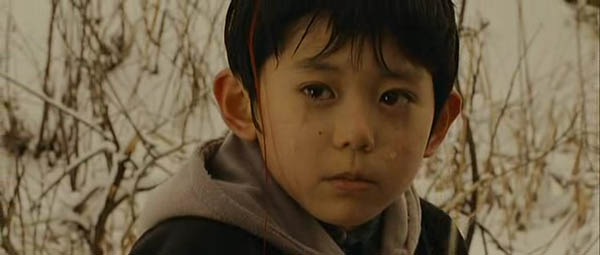
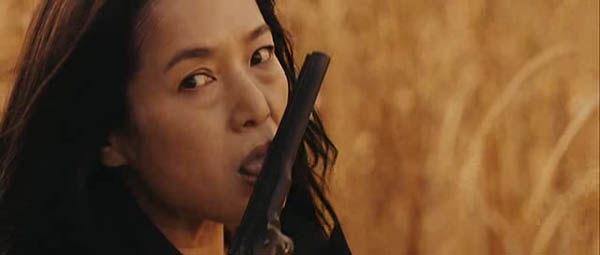
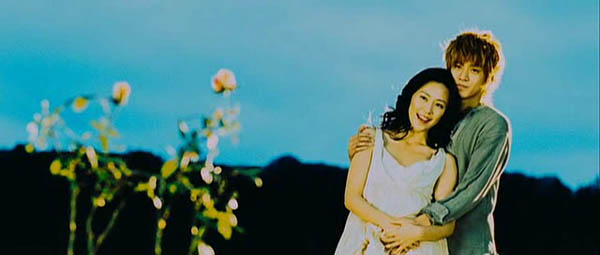
Imamura’s comeback film a decade after Profound Desire of the Gods. Flashed back and forth in time and space and starts at the end, rather like most of today’s movies, telling story of a sociopath killer with a troubled past. Iwao Enokizu is on a delivery run when he kills a couple of guys. Goes on the run for a couple months, pretends to be a professor and takes up with a girl at the boarding house he’s hiding at. They seem to like each other, but he ends up killing her (and her distrustful ex-con mother) and I think one other person before getting caught.

image

image

Style to spare. Not my favorite movie, but definitely good and possibly great, makes up for the last Imamura movie I wasn’t too sure about, The Eel. Happy to see a very modern Japanese movie, not a sloggy period piece. Watched with Jimmy Lo, who also liked. Made about the same time as Days of Heaven, Apocalypse Now, Stalker, Stroszek, Kagemusha, Zigeunerweisen, Altered States and The Elephant Man.

image

image

Portrait of a whorehouse at a certain point in time when politicians were discussing whether to outlaw the profession (voted the ban down at the end of the movie, but it eventually passed, some say as a result of the movie). Six or seven prostitutes all with different desperate situations. One has a suicidally depressing home life with sick husband and infant they can’t afford, one is trying to support her son who disowns her when he finds out what she does at work, one is a rich bitch escaping her controlling father, one is aiming to escape through marriage but her husband mistreats her and she comes crawling back, and one is bilking her clients out of extra money so she can quit and start her own business (the only happy ending here).

The same sort of feminine miserablism that I’ve come to expect from Mizoguchi after Life Of Oharu. This one has a more impressive look to it (the main house and the street outside, the costumes, the acting, all exquisite) but still a depressing movie that I didn’t enjoy very much. I may have liked it better than Ugetsu though… have to see that one again, and check out Sansho The Bailiff sometime.

A turning-point year for Japanese cinema: Mizoguchi’s final film, the beginning of the Japanese New Wave, and (according to Reverse Shot) the beginning of “more socially critical efforts” by Yasujiro Ozu. It’s also the year of The Burmese Harp, but I haven’t seen that yet.

Saw this one with Pia from work.

Ozu’s final film, released less than a month before he died. Only my second, after Tokyo Story. Another film about family life, with emphasis on the play between generations in the same family and neighboring families. I know, that’s what they say all of his films are about.

It again stars Chishu Ryu (star of most late Ozu films, who lived through the 90’s and appeared in Kurowawa’s Ran) as a father (Hirayama). His wife died young, oldest son is married (and having money trouble), younger son lives at home, and daughter is marrying age but stays home to take care of her father and brother. Hirayama’s friends tell him that he should marry her off before she gets too old, and learn to take care of himself. He soon sees the wisdom in this, and tries first to pair her with a boy she has a crush on, the older brother’s friend. But when the boy turns out to be engaged already, the father goes to a guy his friend had in mind (who I don’t think we ever see).

Some post-war bits (we find out Hirayama was in the army when one of his former soldiers recognizes him in a bar). Oh, and he goes to the bar because the barmaid looks like his late wife when she was younger… would be a sorta sad scene, him drinking alone and gazing at this woman, if not for the soldier distractingly (comically) playing battle hymns and marching/saluting along.

Apparently this was the part of Ozu’s career when he had started to sympathize with younger generations, instead of showing them to be lazy and disrespectful (see: Tokyo Story). Didn’t sympathize TOO much though, as the oldest son is spoiled and irresponsible, taking money from his dad and blowing it on golf clubs. Even only having seen one of Ozu’s films before, I was startled when the movie began because it was in color… I think of him as a black-and-white filmmaker. So happy to see that Ozu is the Master everyone says he is, that his movies are so heartfelt and wonderful to watch. I get that Jean Renoir feeling of well-being afterwards, even though Tokyo Story (and The Lower Depths) was mostly depressing. Looking forward to his other 40+ features!