So you’ve created Godzilla AND Rodan, directed The Mysterians and made almost thirty other movies. Now what?? Well, Mothra, obviously.

When a ship is in trouble (it’s always a ship in trouble with these japanese monster movies) some guys wash up on an island long thought to be empty and used by Japan for nuclear testing. They meet some natives and tiny girls who give them something to drink that makes ’em impervious to the radiation. Neat. Back home in Tokyo, scientists want to know more and set up a team to check out the island.

Amer… I mean Rolisican jerky businessman Nelson leads the expedition and intrepid reporter Fukuda sneaks along without permission. They find the “tiny beauties” (just like in the 90’s Rebirth of Mothra) and Nelson kidnaps them to make money showing off their tinyness and their beauty and their singing to sold-out theater in his home of New Yor… I mean, New Kirk City.

But their song awakens Mothra, who is drawn towards the song like a moth to… well you know. Fukuda and photographer friend Michi and some damned kid team up to return the tiny beauties to Mothra… but not before many, many models are destroyed, usually by being blown down model streets by Mothra’s giant flapping wings.

This director would later make about fifteen more monster movies and end on a high note, co-directing two of Akira Kurosawa’s final three movies.

Black Book (2006, Paul Verhoeven)
Nice, twisty little nazi suspense drama. Watched on the plane, a little drowsy, so IMDB will help remember the plot details: “When the hiding place of the beautiful Jewish singer Rachel Steinn is destroyed by a stray bomb, she decides with a group of other Jews to cross the Biesbosch to the already liberated south of the Netherlands. However, their boat is intercepted by a German patrol and all the refugees are massacred. Only Rachel survives. She joins the resistance, and under the alias Ellis de Vries manages to get friendly with the German SS officer Müntze. He is very taken with her and offers her a job. Meanwhile, the resistance devise a plan to free a group of imprisoned resistance fighters with Ellis’ help. The plan is betrayed and fails miserably. Both the Resistance and the Germans blame her. She goes into hiding once more, with Müntze in tow. Together they wait for the war to end. Liberation does not bring Ellis freedom; not even when she manages to expose the real traitor. ‘Every survivor is guilty in some way.'” Edit April ’07: saw again in theaters – a real interesting movie. I definitely like it, glad Verhoeven is directing his talents away from stuff like The Hollow Man these days. Awesome final shot, with Rachel living in Israel, having moved from one besieged state to another. I don’t think Jimmy or George liked it much.

Jackass Number Two (2006, Jeff Tremaine)
Watched in the plane right after Black Book, when everyone around us was going to sleep. KLM didn’t censor it as far as I know. Completely awesome, hilarious movie. A masterpiece in its own way. Katy says I laughed too much/loud and annoyed my fellow passengers. Most other people watched that Kevin Costner movie with Ashton Kutcher for some reason.

Badlands (1973, Terrence Malick)
After a few days at the World Social Forum, finally one evening Katy and I were both awake enough to sit through a movie. I suggested Badlands, which we both ended up enjoying. Sheen kills Spacek’s father (Warren Oates) and they go on a little shooting spree before getting captured. Another quiet and beautiful movie by Terrence Malick. EDIT: JUNE 2007: after reading a great Adrian Martin article in Rouge, I realized that Malick is the only director I’ve seen whose EVERY film I would consider great… Charles Laughton excepted.

My Migrant Soul (2004, Yasmine Kabir)
On the last day at the Forum, I found the movie tent. Watched this half hour doc about a guy from Bangladesh who got a job in Malaysia in order to send money home to his family. But the guy who sends him gives him a forged passport, and he gets hard work for short periods of time, then sits idle the rest of his weeks, unable to find other work or complain to anyone without a legitimate ID, finally gets sick and dies. Sad.

Words on Water (2003, Sanjay Kak)
They’re building dams in India that destroy small towns, I guess. I fell asleep in the first ten minutes, then left the movie to wander the Forum and listen to the drumming, so I can’t tell you much more than that. Got back just before the credits when some protestors from the village are being arrested. Sad.

7 Islands and a Metro (2006, Madhusree Dutta)
I was drowsy and it didn’t make a strong impression. Some overlong shots (because the longer you hold a shot, the artsier it becomes) and some disconnected stories about Mumbai/Bombay. The director came out and said the movie reflects how people from all over got together to form this big city, and now the city is splintering into smaller communities again, without a firm focus or center (which of course reminded me of Atlanta), and told many stories of displacement, of trying to make a home in an overcrowded metropolis. I was disappointed that so many of the stories were made-up, and some of the actors were really overdoing it, as if in a soap opera. Decent enough movie I guess. Sad.

Early in the Morning (2006, Gahité Fofana)
The next day we went to the Alliance Francaise, checked out an excellent photo exhibit and saw some free movies. This one retells the true story about two kids from Mali who froze to death in the landing gear of a plane to Europe, having written a letter to Europe’s heads of state explaining that they’ve got it bad in Guinea and need some help. A well done movie, underplayed, not sensationalistic, quietly calling attention to the country’s problems without setting up some overbearing horror of war. The kids don’t even experience the war firsthand, so we don’t see it either, just hear about it in a single scene. Sad.

Bamako (2006, Abderrahmane Sissako)
Next up at the French Alliance was this awesome movie, which we wanted to see all week and surprisingly made it out to. Good thing the Alliance was walking distance from our hotel. A (mock?) trial is being held in the center of town and broadcast on the radio, with the people of Africa (Mali in particular) versus the European powers (the IMF and World Bank). A plea for debt forgiveness, for Africa to maintain its identity and stop to think how it wants to deal with foreign countries without getting exploited. Meanwhile small-town life carries on around the trial, the central story being about a family with a husband who can’t work, a wife who sings at a nightclub and their sick child. Wonderfully and humorously shot, with strange collisions of culture and a much talked-about bit where a TV movie starring Danny Glover suddenly takes over the screen. Must see again.

Garden State (2004, Zach Braff)
Katy watched on our last night in Nairobi, after the safari. I was just listening to the dialogue and music, and finally watched the second half with her. It’s an easy movie to make fun of after the fact, but while it’s playing, it’s very convincing.

Fighting Elegy (1966, Seijun Suzuki)
An action/comedy from Suzuki! Extreeeeme sexual tension leads Kiroku (lead actor from Tattooed Life) to join a fight club, and finally form his own gang and have huge fights with other groups of kids. IMDB guy says “a satire of the militaristic attitude that eventually lead Japan into WWII”. Wonderful. Watched this and 39 Steps on the portable DVD player on the flight home.

The 39 Steps (1935, Alfred Hitchcock)
Watched twice in a row, the second time with commentary. Robert Donat, a very capable leading man, gets caught up in a plot to smuggle government defense secrets out of the country when a woman he meets at a show is murdered in his apartment. He runs all over, never believed or trusted, Hitchcock’s original “wrong man”, predicting North By Northwest in structure and the final theater scene of the Man Who Knew Too Much remake during the great ending when, about to be captured again, he shouts to Mr. Memory onstage “what are the 39 steps”, revealing the plot to everyone. Very easy to watch… one of the better Hitchcocks I’ve seen, even if completely unbelievable.

The Royal Tenenbaums (2001, Wes Anderson)
For some reason, I thought about this one during the whole safari. Is it the boar’s head that Royal rehangs on the wall? I don’t know, but I was itching to see this again, and watched it as soon as we got home. One of my favorite movies ever.

The Lion King (1994, Allers & Minkoff)
Of course we thought about this one too, and watched it the next night. Didn’t finish it, though. Best not to.

Would Katy have liked it? One day I hope to find out.

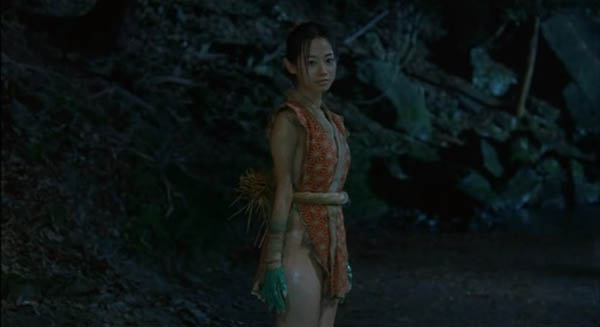
Kid has divorced parents, is picked Kirin Rider at an annual festival. Meets a red-faced guy, a cute gerbil muppet, and a hot naked girl:

image missing

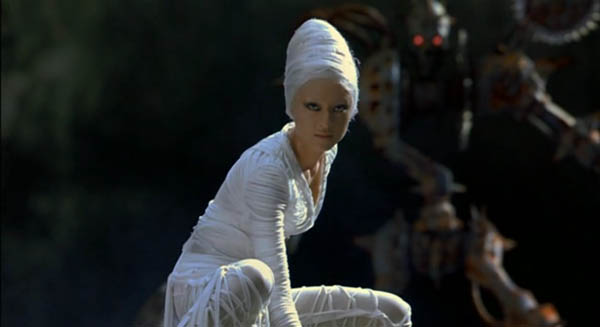
Kid must wield the legendary goblin sword and defeat the big evil guy (actor from Loft) and his hot girl assistant:

image missing

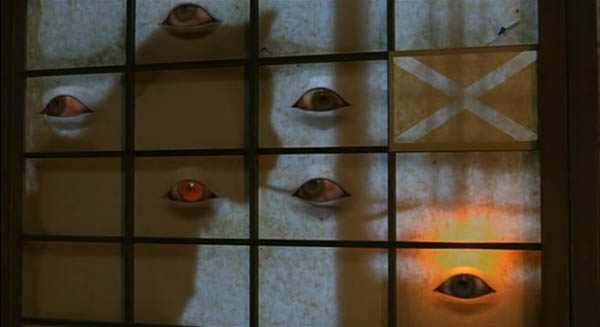
Once we have our two opposing hot girls in place, the movie just cuts loose with nutty imagery:

image missing

image missing

Awesomely disturbing children’s movie on the level of Neverending Story. Want to some day show this movie to actual children to warp them forever. Will have to narrate the japanese subtitles live, I guess, but it will be worth it. Me, I enjoyed every minute of this cruelly twisted flick.

image missing

Haze.

A complete nightmare, like Cube without any light or thought or the retard. Man wakes up in underground tunnels, finds his teeth wrapped around a pipe, crawls through water surrounded by blood and severed limbs. Eventually finds a woman stuck there too. Tries to escape with her, and he makes it out… but finds her dead after he escapes. Suddenly he’s an old man and they’re together then he’s alone again.

image missing

Strangely moving… a true horror movie, terrifying, sad and thoughtful. Ambiguous in an interesting way, not a frustrating one. Our man (played by director Tsukamoto) falls asleep, awakens, has an identity crisis, may be dreaming the whole thing, may have committed murder, but at one point in the future or present, he was happy with the woman he loved, watching fireworks. Time just melts in this movie. Would like to see again. Has been wrongly compared to the recent gorefest torture movies like Hostel, actually rises far above those. I hate that I ended up liking Tsukamoto so much… may have to someday reassess the headachey mess that was Tetsuo The Iron Man.

image missing

Renji (the guy from Dolls) may be psychologically torturing his wife, or they may have a normal, boring life. The wife may be hiding in the attic pretending she’s a spider, or she may not. Depends who you ask.

image missing

She meets a guy I don’t remember where, and talks to him about her horrible husband… one day they are caught talking or possibly he wants to hug her or something at the house and she retreats to the attic and becomes a series of bugs eventually a giant spider that comes down the stairs and is about to eat the husband then she turns back into the girl with a scissors in her hands and he hugs her and it’s all over I think then they’re packing and maybe moving out.

An okay movie, whatever.

image missing

image missing

Terrific! Maybe the best samurai movie I’ve seen. I never cared much for samurai movies, though… still, this was a blast. Stylish and musical in that late-60’s manner, with all the zooms and close-ups and depth-of-field tricks that you’d want.

Tatsuya Nakadai is Genta, “a former samurai haunted by his past, prefers living anonymously with gangsters” and Etsushi Takahashi is Hanji, “previously a farmer, longs to become a noble samurai”. Criterion’s promo blurb continues: “But when both men discover the wrongdoings of the nefarious clan leader, they side with a band of rebels who are under siege at a remote mountain cabin. Based on the same source novel as Akira Kurosawa’s Sanjuro, Kill! playfully tweaks samurai film convention, borrowing elements from established chanbara classics and seasoning them with a little Italian western.”

Tatsuya Nakadai starred in When a Woman Ascends the Stairs, Sanjuro (second-billed to Mifune), Harakiri, High and Low (again second to Mifune), Kwaidan, The Face of Another, Sword of Doom, Samurai Rebellion, Kagemusha (title role), Ran (the elderly lord) and this year’s The Inugamis. Wowie.

Lots of samurai movie recommendations in Chris D’s essay at the Criterion site. One day when I’ve completely run out of must-see movies, I must see the whole Zatoichi series. “What is so rewarding about Kill! is Okamoto’s expert balance of seemingly disparate elements. He walks a tightrope, skillfully juggling humorous moments, fierce swordplay, and more sober, dramatic sequences, all punctuated by Masaru Sato’s alternately whimsical and wistful score.” Howard Hampton’s essay is useful too, and saves me from attempting a character description: “Tatsuya Nakadai as a hobo swordsman, plus a peasant bumpkin turned would-be samurai, a dispossessed retainer, one kidnapped chamberlain and one kidnap-per-chamberlain, a mercenary who needs thirty ryo to buy his wife’s freedom from a brothel, and even seven squabbling samurai in search of a raison d’être.”

Guess I strongly prefer these late 60’s samurai movies to the stuffy, slow, traditional 50’s ones that everyone so reveres. This one, darker and more cynical, reminds me more of Seijun Suzuki than Akira Kurosawa. Fun, nimble little movie, and brilliant looking camerawork throughout.

Takeshi Kitano plays sort-of-himself, a superstar gangster actor. But mostly he plays a beat-down loser wannabe actor who keeps failing auditions for small parts on TV shows. His neighbors laugh at him, and he works at a convenience store. But one day a real gangster hides in the store then dies in the back room, and the loser Kitano finds himself with a Falling Down-style bag full of guns… goes on a mighty rampage. Or does he? Dream sequences and fantasies are flowing in and out of the picture.

image missing

There aren’t as many Kitanos as I thought there’d be, and the whole thing made more sense than I thought it would. Lesson learned again and again: when everyone says a movie is difficult and confusing, that don’t necessarily make it so.

image missing

As usual, The Internets come in handy here. A couple weeks later, I saw the dvdbeaver review with a ton of great screen shots… really a great looking movie, full of signature Kitano setups, but I was too busy following the story and reading subtitles to notice at the time.

image missing

Rotterdam Film Festival calls it “a mocking, almost surrealist film about the star Kitano, his oeuvre and his failed alter ego”.

Trivia: Tetsu Watanabe the noodle cook was in Fireworks and Sonatine, Kitano’s friend Susumu Terajima was in Brother and Fireworks and everything else, and the manager & taxi driver was Ren Osugi, the chief from MPD Psycho.

image missing

So two approaches. I’m tempted to consider this viewing a test run, this writing a rough draft, and sit down with all of Kitano’s films, watch or rewatch them, then see this one again to catch more of the references. On the other hand, even though it’s an extremely self-referential film, I know the Kitano persona well enough to get the overall joke, and I enjoyed watching this… why not take it on its own merits instead of turning it into a study project? Kitano’s films are all worth re/watching anyway… maybe I’ll get to ’em after my upcoming Seijun Suzuki fest.

image missing

In the meantime I’ll have to say I liked this one more than I thought I would… it pretty much made sense, and looked great.

After a decade of slow self-education in cinephilia, I’ve finally sat down and watched an Ozu movie.

image missing

These happy folks are travelling to the city to visit their children and grandchildren. It’s implied that they won’t make the trip again, then right after they get home, the wife dies. The kids aren’t very receptive, can’t be bothered to break away from their daily lives and jobs and make time to treat their parents with respect and attention. Their daughter-in-law, though, wife of their deceased son, takes them in, takes time off work to entertain them, and is the one who seems saddest at the wife’s funeral.

image missing

Nicely paced, very well told story. Liked it surprisingly well… figured it’d be an overlong slow-paced thing full of symbolism I don’t understand… but it’s just a modern family story. Apparently all of Ozu’s films are modern family stories, each just like the last, and all just as good. Looking forward to finding out for myself.

image missing

Listened to thirty minutes of the commentary before my burned DVD crashed the computer and I gave up. Remember allll the shots have those low camera angles demonstrated by the cinematographer in Tokyo-Ga. He says something about ellipses in continuity, how actions are implied but not shown and how characters names and positions are slowly revealed instead of being explained up front… viewer has to pay closer attention than usual to figure out what’s happening. Says Ozu’s signature dialogue is “It’s a beautiful day”, said twice in this movie. Setsuko Hara (the daughter-in-law, above) was “one of the genuine superstars of Japanese cinema”. Wenders’ Until the End of the World is a tribute to Ozu (maybe I won’t hate it next time after I’ve seen a few Ozu films). Tokyo Story is sometimes seen as a remake of Leo McCarey’s Make Way For Tomorrow. And Ozu makes “mini documentaries of Japanese middle-class life”.

Katy didn’t watch it. Can’t even guess if she would’ve liked it or not.
EDIT 2015: Katy liked it.

Cameraman Masuoka (played by Shinya Tsukamoto, director of Tokyo Fist, Tetsuo & Haze!) is obsessed with fear. He catches a guy looking terrified in the subway stabbing himself in the eye, and Masuoka is off on a goofy adventure to find out what scared the old man to death. On his way home, he’s often annoyed by a kooky neighbor claiming to be his wife, ranting about how their daughter is missing. Masuoka can’t be bothered with this – he needs to explore the magical subterranean wonderland beneath the city, where he evades monsters long enough to find and rescue a young naked woman, who he brings home. The woman doesn’t respond to much, acts like an animal, etc. Still being harassed by the kooky neighbor, Masuoka finds a way to kill her without being detected. He probably has sex with the young woman too – if he does explicitly, I’ve blocked it out already. Either way, she of course turns out to be his daughter, and of course he murdered his wife and there you go.

The movie is shaky and ugly and lo-fi and annoying all of the time, often being filtered through our protagonist’s unsteady videocams. Except when the guy goes underground and finds his daughter – really nice looking few minutes in there. Not so bad overall I guess. From the director of all seven Ju-On The Grudge movies.

Katy didn’t watch this one. Katy wouldn’t have liked it one bit!